/pre-wedding-photoshoot
Pre-wedding photoshoot in Da Lat hot season: staying fresh on camera
Pre-wedding shoots in Da Lat during hot season (May–October) succeed when you book early-morning slots—before 9 a.m.—to exploit mist over the lakes and pine hills, and avoid the 2–5 p.m. downpours and heat spikes. Humidity peaks mid-afternoon; makeup and hair sweat through easily. Local photographers know the microclimate: which valley floors stay cool, which ridges clear first after rain, and how to schedule around daily weather patterns. Cáo Studio does not operate in Da Lat, but the approach is the same: one team (photographer, makeup artist, stylist) coordinates on location to touch up and reframe fast, rather than three vendors arriving separately. Plan for lightweight, breathable layers; consider renting ao dai or suits locally to avoid shipping wrinkled fabric in tropical moisture. Confirm your photographer's experience with humidity—ask for a portfolio shot in the same season and their backup plan if morning rain delays your slot. ---
Does early morning really change the light in Da Lat?
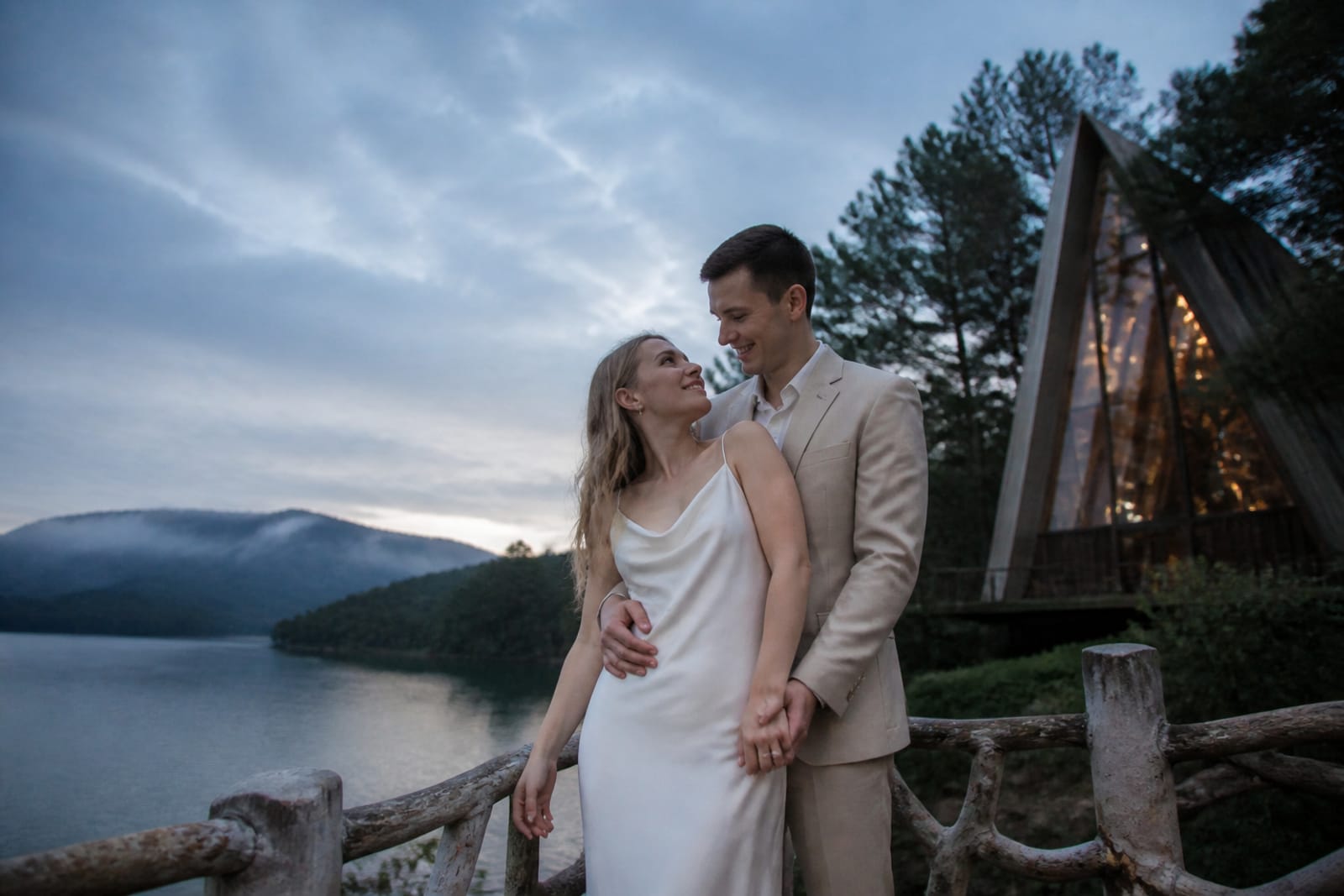
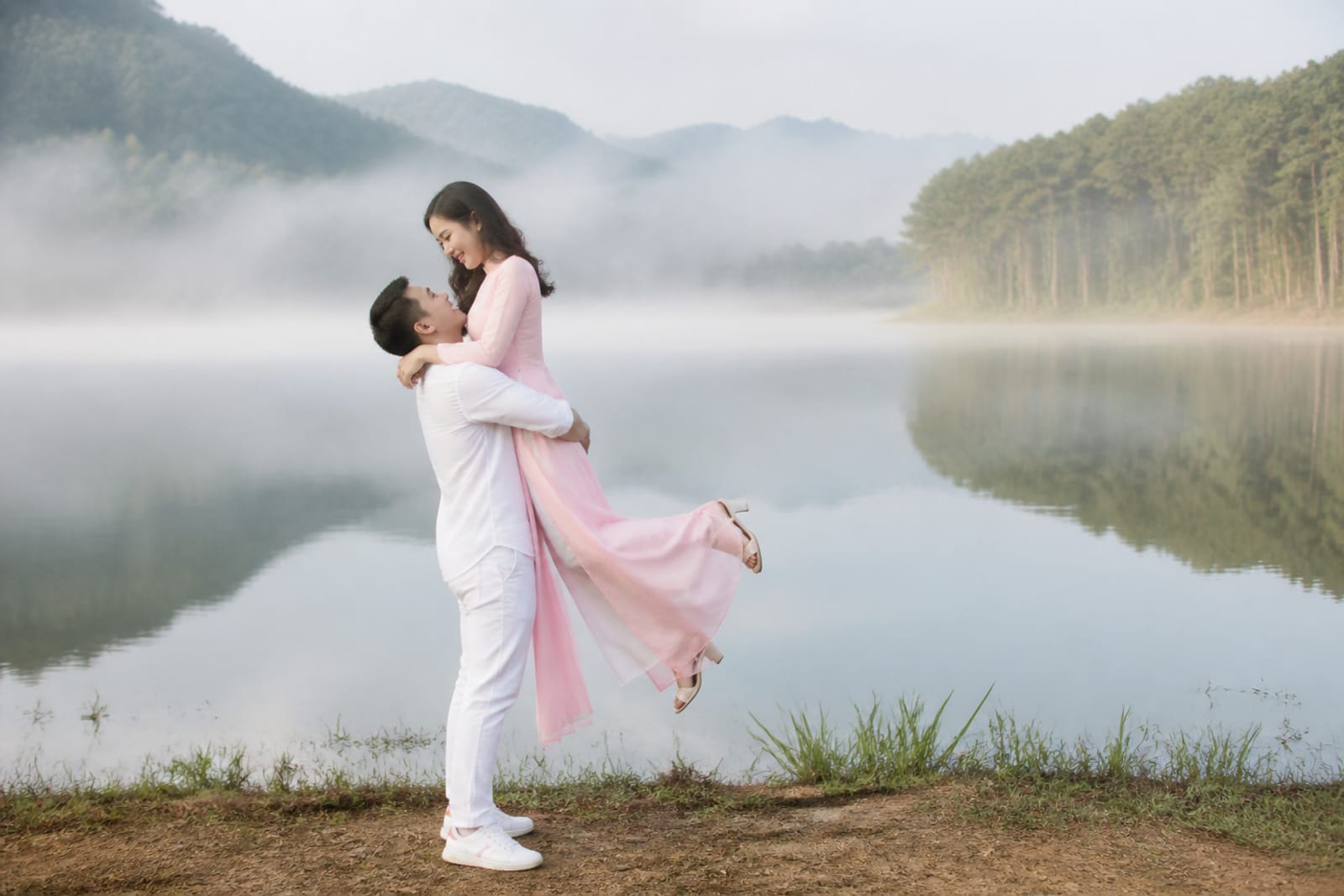
Yes—dramatically. Da Lat sits 1,500 m above sea level and is ringed by pine forests and lakes. Before 9 a.m., mist clings to water and hillsides, diffusing sunlight into soft, flattering side light with minimal harsh shadows. By 10 a.m., mist burns off and light hardens. After 2 p.m., afternoon showers arrive (May–October average: short, heavy bursts lasting 30–90 minutes). This timing window is non-negotiable for hot-season shoots. A local photographer will know which lake valleys (Tuyền Lâm, Xuân Hương, Langbian Plateau viewpoints) clear mist fastest and which retain cool shade longest. The tradeoff: you start shoot at 6:30 or 7 a.m., which means hair and makeup happen in your hotel room by 5:30 a.m.—non-negotiable if you want the light.
Why does humidity wreck makeup and hair faster than heat alone?
Humidity above 75% (common May–October in Da Lat) breaks down makeup adhesion and causes hair to frizz or lose set within 30 minutes, even in cool air. Sweat mixes with powder and foundation, leaving patchy coverage. Hair spray and gel soften. A single-team approach—photographer, hair artist and makeup artist working together on location—allows real-time touch-ups between outfit changes and location moves, rather than waiting for a separate makeup artist to arrive an hour later (by which time your base is already compromised). Ask your photographer: do they work with a makeup partner who arrives early to the shoot? Can they do quick powder/spray touch-ups on set? Lightweight, long-wear formulas (powder-based rather than cream foundations, setting sprays, waterproof mascara) survive humidity better than luxury alternatives. Budget 15–20 minutes for touch-up between shots.
What should you wear under an ao dai in hot season?
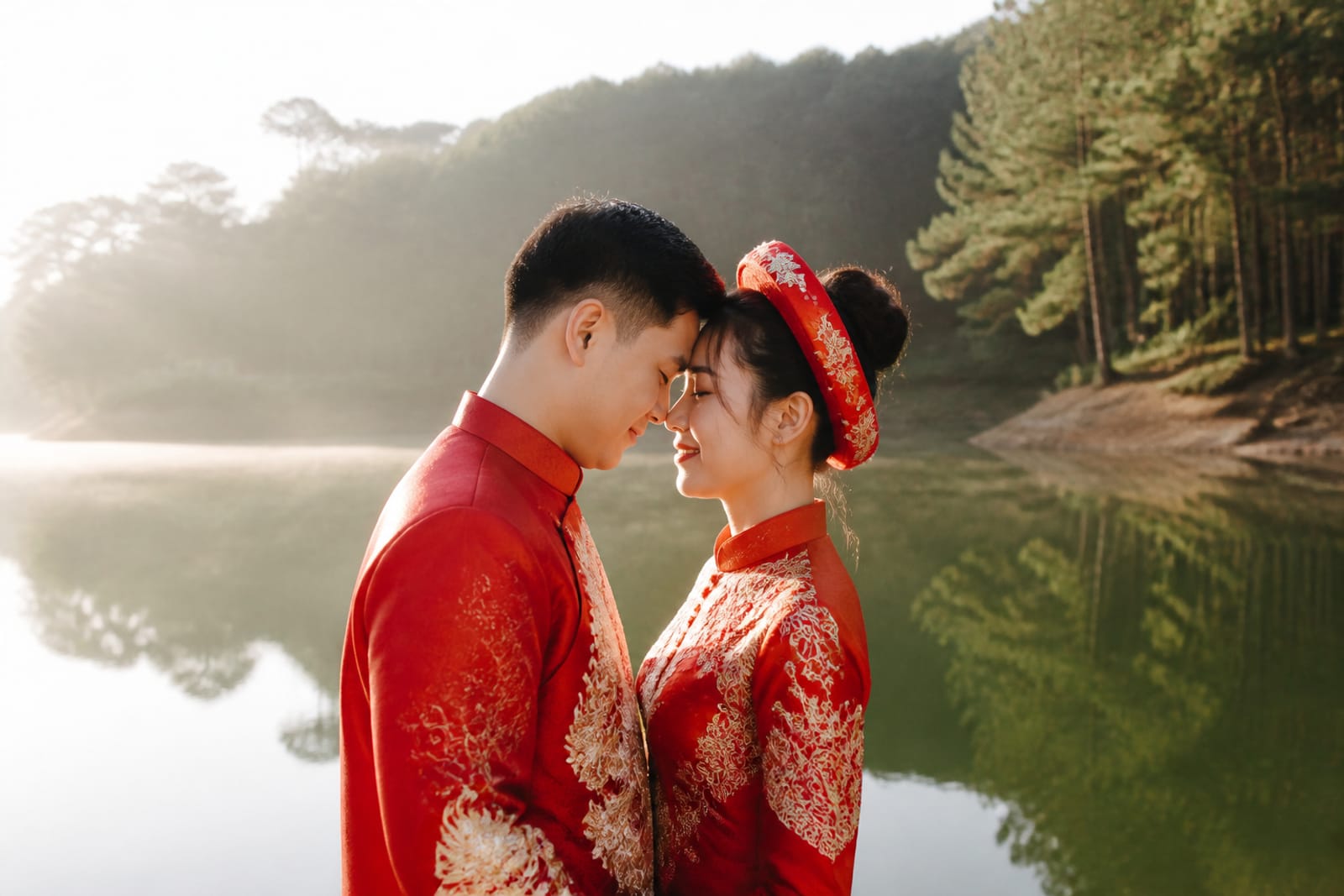
An ao dai's silk or polyester exterior breathes poorly in heat and sticks to sweat underneath. Wear a thin, light-coloured cotton or linen slip (knee-length, plain white or cream) under the outer layer. Avoid thick undergarments; they trap heat and create visible panty lines under fitted fabric. For groom's áo dài, wear lightweight cotton or linen shirt underneath (short-sleeved, loose fit). If renting locally in Da Lat, confirm the slip or undershirt is included; if not, buy a simple slip on arrival rather than ship one from home. For non-áo dài outfits, prioritize natural fibres (linen, cotton, silk blends) in light colours. Dark fabrics absorb heat and show sweat marks fast. Bring a spare layer (a thin scarf, a linen overshirt) for later-morning light changes and for modesty at temples. Avoid heavy fabrics, multiple layers, or anything requiring ironing after packing—humidity and heat will wrinkle them within hours of arrival.
How do you compare hiring a Cáo Studio team versus a local Da Lat photographer?
| Aspect | Local Da Lat photographer | Cáo Studio (fly-in) |
|---|---|---|
| Weather knowledge | Knows microclimates, daily patterns, seasonal pitfalls—key advantage | Must brief on location; less intuitive weather pivots |
| Setup speed | One person, familiar with local permits and spots; fast logistics | Team of 3–4, coordination overhead, but faster on-set touch-ups and reframing |
| Makeup & hair | Usually freelance; you coordinate separately, risk of delays or mismatched vision | One message: outfit, hair, makeup, framing all aligned to director's intent |
| Turnaround (edit & video) | Varies widely; many offer 2–4 week delivery | Cáo Studio standard is 48 hours edited photos + short vertical film |
| Cost factors | Lower day rate; you pay separately for makeup/hair artist; local transport lower | Higher upfront; all-in-one package; no hidden vendor costs |
| Best for | Budget-conscious; couples comfortable coordinating vendors; shorter shoot (2–3 hours) | Couples who want one vision, fast turnaround, guaranteed team cohesion and direction |
A local photographer is the pragmatic choice if you want to minimize cost factors and work with someone who knows Da Lat's daily rhythms intimately. Cáo Studio's value is the single director leading makeup, hair and camera in one message—which avoids the chaos of three people arriving at different times with different ideas of what "romantic" or "fresh" means. Neither is objectively better; choose based on your priorities (budget, coordination comfort, turnaround speed, vision unity).
What specific checks should you make before booking?
Portfolio in the same season. Ask your photographer to show 5–10 pre-wedding images shot in Da Lat between May–October. Look for skin tone evenness, makeup crispness, hair texture (not frizz). If they have no hot-season work, that's a red flag—they lack humidity experience.
Backup plan for rain. Afternoon showers are guaranteed. Your photographer should describe: do you reschedule, shoot indoors, or have a covered location scouted? A vague answer ("we'll figure it out") signals poor preparation. Cáo Studio and professional locals will have two backup spots and a 48-hour flexibility window built into booking terms.
Touch-up kit on set. Confirm your photographer brings (or arranges for) a makeup artist with powder, setting spray, hair pins and touch-up tools. If the answer is "you bring it," they're under-resourced for humidity.
Outfit rental or laundry logistics. If you're shipping outfits from abroad, humidity will wrinkle them during travel and storage. Renting ao dai or formal wear locally in Da Lat (or nearby Ho Chi Minh City / Hanoi before you travel) avoids this. Ask your photographer: do they recommend rental partners? Can they advise on fabric care in transit?
Delivery format. Clarify: how many edited photos will you receive? Raw files or JPEGs only? Will they deliver a short video? When? Ask for it in writing (WhatsApp or email) before you pay a deposit.
📸 Book on WhatsApp — ao dai photoshoot
---
A decision framework: should you hire a local or travel to book a studio?
Hire local (Da Lat–based photographer) if:
- You want the lowest cost factors and are comfortable managing three separate vendors (photographer, makeup, hair).
- You're shooting 2–3 hours and don't need post-production video.
- You live near enough to Da Lat to do a site visit or have a trusted local contact vet them.
- You're flexible on delivery time (2–4 weeks is normal).
Bring in a studio team (or book one from Hanoi/Saigon) if:
- You want one person directing the entire vision—outfit, makeup, hair, light, movement—so nothing contradicts the story.
- You need edited photos and a short film within 48 hours (useful for engagement announcements, website updates, or tight timelines).
- You value reliability; a studio team has standard terms, insurance and contractual accountability.
- You're willing to pay higher upfront cost for simplicity and guaranteed cohesion.
Cáo Studio does not operate in Da Lat; the studio is based in Hanoi and Ho Chi Minh City, with shoots in Hoi An by appointment. If you're already planning a pre-wedding trip to Hanoi or Saigon, consider booking your shoot there instead—you'll get the one-team advantage. If Da Lat is non-negotiable, hire a respected local and use the checklist above to vet them rigorously.
---
What to check before you book
- Confirm shooting time. Your photographer should propose a 6:30–9 a.m. window. If they suggest 11 a.m. or later, they don't understand Da Lat's hot-season light.
- Ask for a rain contingency. Not a vague promise—a named backup location or a rescheduling clause.
- Verify makeup artist is included or coordinated. You should never be scrambling to find one on the morning of your shoot.
- Request a sample edit. Ask to see one finished (edited, colored) image from a previous hot-season shoot. This shows their post-processing style and whether they understand skin tone in humidity.
- Clarify deliverables in writing. Number of photos, format, video or not, delivery date. Get it on WhatsApp or email.
- Check cancellation and rescheduling terms. What if rain forces a 24-hour delay? Who pays the makeup artist's rescheduling fee?
- Ask about outfit rental. If you need áo dài or formal wear, ask your photographer to recommend a local rental shop or vendor they've worked with.
For a pre-wedding photoshoot anywhere in Vietnam, the fundamentals are the same: timing, team coordination, and clear communication. Da Lat's hot season simply narrows the window and raises the humidity stakes—which is why your photographer's seasonal experience matters most.
---
Not sure if Da Lat is the right choice?
Consider alternatives if your pre-wedding shoot is flexible on location. Hanoi's cool season (December–February) has crisp, dry air and longer morning light windows. Ho Chi Minh City's dry season (December–April) is also more forgiving. If you're set on Da Lat's pine-clad mountains and romantic lake views, commit to early mornings and book a photographer with a strong hot-season portfolio. The mist, the cool air, the soft light—they're worth the 5 a.m. call time.
Need help planning a pre-wedding shoot in Vietnam? Cáo Studio shoots in Hanoi, Ho Chi Minh City and Hoi An. Message on WhatsApp to discuss your vision and dates.
📸 Book on WhatsApp — pre-wedding photoshoot
FAQ
Can I shoot my pre-wedding session in Da Lat with Cáo Studio?
Cáo Studio is based in Hanoi and Ho Chi Minh City, and shoots in Hoi An by appointment. We don't operate in Da Lat. This article guides you to find and vet a local Da Lat photographer. Ask us on WhatsApp if you'd like to book a shoot in Hanoi or Saigon instead—you'd get the one-team advantage and 48-hour turnaround.
What's the best month to shoot pre-wedding in Da Lat?
December–April (cool, dry season) is ideal—no afternoon showers, lower humidity, longer morning light windows. May–October (hot season) is harder but possible if you book 6:30–9 a.m. slots and work with a photographer experienced in humidity.
How much will a Da Lat pre-wedding shoot cost?
Cost factors include photographer's day rate, makeup artist fee, outfit rental, location permits and your accommodation. Ask your photographer for a quote after confirming scope (hours, locations, editing). Local rates vary; Cáo Studio's pricing applies only to Hanoi, Saigon and Hoi An shoots.
Will my makeup stay on during a hot-season shoot in Da Lat?
Makeup lasts 20–30 minutes before touch-ups are needed in 75%+ humidity. Wear long-wear, powder-based formulas and set with waterproof spray. Have your photographer or makeup artist (same team, ideally) touch up between outfit changes—don't wait hours between reapplications.
Should I rent or ship my áo dài to Da Lat?
Rent locally in Da Lat or nearby Ho Chi Minh City before traveling. Shipping ao dai abroad risks wrinkles and humidity damage in transit. Rental is cheaper, easier and the garment arrives in better condition. Ask your local photographer to recommend a rental shop.
What if it rains on my shoot day in Da Lat?
Afternoon rain (May–October) is common but brief. Book your shoot 6:30–9 a.m. to finish before showers. Confirm your photographer's backup location (covered pavilion, indoor spot, alternative outdoor site) before you pay a deposit. Rescheduling is common—confirm their policy in writing.
FAQ
Can I shoot my pre-wedding session in Da Lat with Cáo Studio?
Cáo Studio is based in Hanoi and Ho Chi Minh City, and shoots in Hoi An by appointment. We don't operate in Da Lat. This article guides you to find and vet a local Da Lat photographer. Ask us on WhatsApp if you'd like to book a shoot in Hanoi or Saigon instead—you'd get the one-team advantage and 48-hour turnaround.
What's the best month to shoot pre-wedding in Da Lat?
December–April (cool, dry season) is ideal—no afternoon showers, lower humidity, longer morning light windows. May–October (hot season) is harder but possible if you book 6:30–9 a.m. slots and work with a photographer experienced in humidity.
How much will a Da Lat pre-wedding shoot cost?
Cost factors include photographer's day rate, makeup artist fee, outfit rental, location permits and your accommodation. Ask your photographer for a quote after confirming scope (hours, locations, editing). Local rates vary; Cáo Studio's [pricing](/pricing) applies only to Hanoi, Saigon and Hoi An shoots.
Will my makeup stay on during a hot-season shoot in Da Lat?
Makeup lasts 20–30 minutes before touch-ups are needed in 75%+ humidity. Wear long-wear, powder-based formulas and set with waterproof spray. Have your photographer or makeup artist (same team, ideally) touch up between outfit changes—don't wait hours between reapplications.
Should I rent or ship my áo dài to Da Lat?
Rent locally in Da Lat or nearby Ho Chi Minh City before traveling. Shipping ao dai abroad risks wrinkles and humidity damage in transit. Rental is cheaper, easier and the garment arrives in better condition. Ask your local photographer to recommend a rental shop.
What if it rains on my shoot day in Da Lat?
Afternoon rain (May–October) is common but brief. Book your shoot 6:30–9 a.m. to finish before showers. Confirm your photographer's backup location (covered pavilion, indoor spot, alternative outdoor site) before you pay a deposit. Rescheduling is common—confirm their policy in writing.
Ao dai, makeup, hair and a local photographer in Hanoi or Saigon — one WhatsApp message.