/pre-wedding-photoshoot
Pre-wedding photoshoot in Da Nang for French couples
A pre-wedding photoshoot in Da Nang captures your story against golden-hour My Khe Beach, marble-cliffside temples, and French-colonial Han Market before you wed. Sessions run 2–4 hours with a local or booked photographer; best dates are February to August (dry season, calm light). Cáo Studio – Makeup & Photoshoot, based in Hanoi and Ho Chi Minh City, does not operate a Da Nang studio; however, the team can travel for longer bookings—ask on WhatsApp. For a stand-alone Da Nang shoot, you'll hire a local photographer and coordinate timing around tide, cloud cover, and temple opening hours. Budget factors include travel time from your hotel, outfit changes (ao dai rental, wedding dress), and makeup/hair logistics. French couples often pair one location shoot with an ao dai session elsewhere or split days between Da Nang beach and Hoi An's Ancient Town (30 km south, accessible by car). 📸 Book on WhatsApp — ao dai photoshoot ---
Why do French couples choose Da Nang for pre-wedding photos?
Da Nang sits at Vietnam's geographic and cultural crossroads. The city mixes French-era architecture (Cham Museum, Dragon Bridge) with untouched beaches and spiritual sites—temples perched on Marble Mountains with views across the Han River. For French couples, the colonial history resonates; for everyone, the light is forgiving. My Khe Beach (4 km of sand, best at sunrise) rivals Bali without the crowds if you shoot before 7:30 a.m. The dry season (February–August) means predictable morning mist and sharp afternoon definition; by contrast, October–November brings typhoon risk and heavy grey skies that ruin posed couples work.
Central-coast climate means humidity year-round; French brides often underestimate sweat under ao dai silk or dress fabric in May–August, when heat peaks.
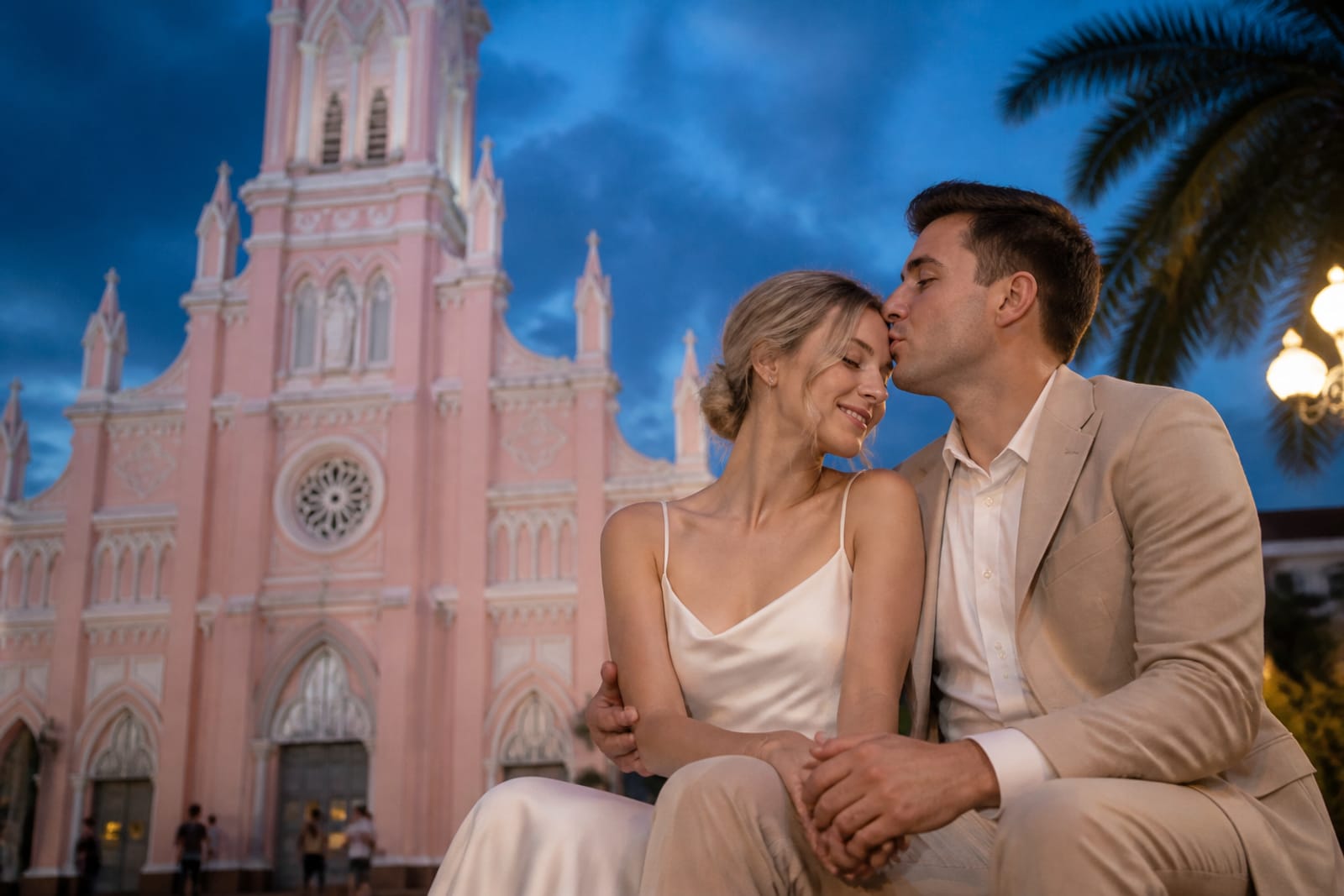
What's the difference between Da Nang beach, Hoi An, and a mountain temple shoot?
| Location | Best for | Light & Season | Why it works |
|---|---|---|---|
| My Khe Beach (Da Nang) | Romance, sunrise, casual wear | Feb–Aug: golden hour 6–7 a.m., calm tide | Open space, natural reflectors, minimal crowds early |
| Marble Mountains (Da Nang) | Spiritual, ao dai, elevated drama | Feb–Aug: side light 9–11 a.m., temple shadow play | Stone temples, incense, mystique; steep steps (wear flat shoes) |
| Hoi An Ancient Town (30 km south) | Cultural, lantern backdrop, dusk | Feb–Aug: late afternoon 4–5 p.m., golden lanes | Narrow streets, tourist flow (book sunrise slot to avoid crowds) |
| Dragon Bridge (Da Nang) | Urban geometry, night shoot | Feb–Aug: dusk 6:30–7 p.m., LED colors | Iconic but post-processed; hire a rig (stroboscopic risk) |
Sunrise My Khe demands early mobility—hotel pickup at 5:15 a.m., 20 min drive, setup by 6 a.m. Marble Mountains require temple etiquette (covered shoulders, no shoes inside shrines). Hoi An's Ancient Town is 30 km away; add 45 min travel each way. Most couples shoot two locations in one day, which means makeup refresh and outfit transport—a stress point. Cáo Studio's makeup & hair at your hotel service eliminates the logistics scramble if you're based in Hanoi or Ho Chi Minh City; for Da Nang, coordinate locally.
How do you book a photographer in Da Nang if Cáo Studio doesn't have a branch there?
Cáo Studio operates in Hanoi, Ho Chi Minh City, and Hoi An (by appointment—ask on WhatsApp for Hoi An dates). Da Nang requires a local hire. Start by checking Instagram portfolios of Da Nang photographers tagged #danangphotographer or #danangprewedding; read recent reviews in French and English on Google Maps. A solid local shooter understands temple permits, tide tables, and early-morning access to My Khe. When you message, send:
- Wedding date and two backup dates (weather safety).
- Locations you want (beach + Marble Mountains, or Hoi An + dragon bridge).
- Outfit plan (ao dai, dress, suits—so they know pacing and touch-up needs).
- Sunrise or golden-hour preference.
Ask for a shot list, assistant availability (crowded spots need crowd control), and edited timeline. Compare two to three photographers; budget factors are session length, location travel, and number of edited files—not amounts, but how those items affect scope. Request a contract in English or French covering usage rights and delivery dates.
What should you wear under an ao dai to feel confident during a multi-hour shoot?
Ao dai—the traditional Vietnamese gown—fits snug around the torso and flares below the waist. French brides accustomed to tailored silhouettes sometimes misjudge the sensory experience: humidity, silk static, and the weight of layered fabric. Underneath, wear:
- Thin cotton undershirt or tank: prevents sweat staining the inner silk; choose white or skin-tone.
- Fitted slip or body shaper: keeps the outer gown smooth; avoid underwear lines (ao dai clings).
- Flat slip-on shoes or barefoot beach socks: temple etiquette means removing shoes; stairs on Marble Mountains are unforgiving in heels.
In February–August heat (25–35°C), silk absorbs sweat and clings to skin within 30 minutes of activity. Plan a makeup and hair touch-up halfway through the shoot. If you're renting ao dai locally (ask your photographer), confirm sizing (many rentals run one-size-up) and that alterations are included. Cáo Studio's ao dai photoshoot page details styling if you're based in Hanoi or Saigon; for Da Nang, your local photographer can recommend a trusted rental shop.
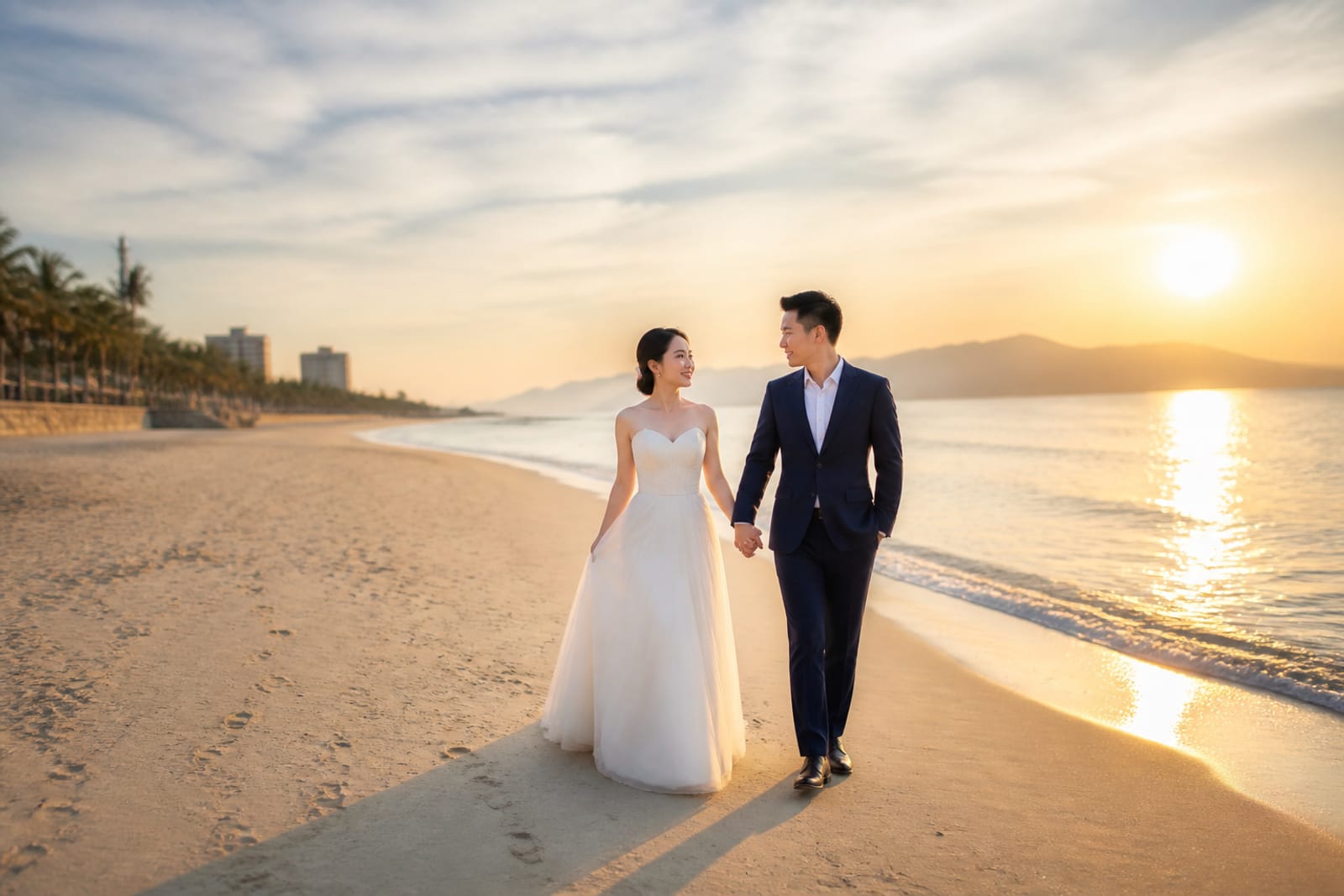
What's your step-by-step checklist before booking a Da Nang pre-wedding shoot?
- Lock the date: Choose February–August; confirm the photographer is available for two backup dates (weather contingency).
- Scout locations with your partner: Walk My Khe at sunrise, visit Marble Mountains at 10 a.m. (gauge light and crowds).
- Plan outfits in advance: Ao dai (rent or bring), wedding dress, suit. Confirm the photographer has styled shoots in similar styles (ask for a portfolio shot with similar fabric/color).
- Confirm makeup and hair: Will you use the hotel, hire a local artist, or bring your own? Budget travel time for the artist to reach your locations.
- Set a shot list: 15–20 "must-have" poses (couple walk, portrait, candid embrace) so the photographer understands your priorities.
- Get a written contract in your language: session length, number of edited photos, usage rights, and delivery date (14–30 days is standard).
- Plan transport: Early shoots demand 5:15 a.m. hotel pickup. Confirm the photographer has a vehicle or recommend a hired driver.
- Check temple hours and etiquette: Marble Mountains temples open 7 a.m.–5 p.m.; dress respectfully (shoulders covered, no photos at altars without permission).
- Prepare for humidity: Bring blotting papers, setting spray, hair ties, and a backup undershirt for outfit changes.
- Confirm editing timeline and delivery format: Raw files, JPEG, albums, prints—discuss before signing.
A pre-wedding shoot often runs 4–6 hours with two locations and outfit changes. Budget for two separate makeup applications (one at the hotel, one on-location refresh). If you're marrying in Vietnam and want a full pre-wedding experience—ao dai photoshoot, couple session, wedding-day photography—consider booking multiple services. Cáo Studio's pre-wedding & elopement page outlines packages for Hanoi and Ho Chi Minh City; for Da Nang, your local photographer may bundle pre-wedding with wedding-day coverage.
How does season and weather change your pre-wedding plan in Da Nang?
February–April: Dry, 22–28°C, low humidity. Sunrise is crisp; light is even. Ideal for all outfit types. Crowds begin mid-March.
May–August: Hot (28–35°C), afternoon rain (short bursts, 15 min). Humidity peaks; skin shines, ao dai clings. Sunrise shoots work best; skip 12 p.m.–3 p.m. Light is still golden, but sweat management is critical.
September–November: Typhoon season, rainy, grey 60–80% of days. October–November are worst (erratic weather, flash floods). Avoid unless you love moody, overcast aesthetics (some photographers excel here).
December–January: Cooler (18–24°C), dry. Comfortable, but sunrise can be duller (mist takes longer to lift). Tet (late January–mid February) closes many services for 3–5 days.
For French couples, February–August is non-negotiable. Book sunrise shoots (6–8 a.m.) to dodge heat, humidity, and crowds. My Khe is calm and empty before 7:30 a.m.; by 10 a.m., tourists and locals fill the beach. Marble Mountains are best 8–11 a.m. (side light, fewer pilgrims). Avoid noon–3 p.m. for outdoor work.
---
What to check before you book a Da Nang pre-wedding shoot
- Photographer experience with Western couples: Ask for portfolios from at least three recent pre-wedding shoots (couples, ao dai, beach, temples).
- Contract clarity: Session hours, number of edited images, revisions, and delivery timeline must be in writing and in your language.
- Backup plan for weather: What happens if typhoon rain or unexpected cloud cover strikes? Do you reschedule, shoot anyway, or receive a partial refund (terms matter)?
- Makeup and hair inclusion: Is it part of the fee, or hired separately? Confirm who coordinates timing.
- Transport and assistant: Does the photographer drive, or do you hire a separate driver? Are assistants included for crowd control and lighting?
- Usage rights: Can you post on social media, use for printing, or only personal use? Clarify copyright.
- Touch-up supplies: Will the makeup artist attend the second location, or will you refresh in-car?
---
For a full pre-wedding photoshoot experience that spans Hanoi and Hoi An, Cáo Studio – Makeup & Photoshoot coordinates flights, local shoots, and creative styling. Reach out on WhatsApp to explore multi-destination options or for advice on Da Nang referrals.
FAQ
Can Cáo Studio shoot my pre-wedding in Da Nang?
Cáo Studio operates in Hanoi, Ho Chi Minh City, and Hoi An (by appointment). Da Nang is not a regular service area, but longer bookings may be possible—ask on WhatsApp +84 338 762 340 to discuss travel logistics.
What's the best month for a Da Nang pre-wedding shoot?
February–August is dry and predictable. May–August is hottest (plan sunrise shoots). September–November are typhoon and rain season; October–November are worst. Avoid December–January if you dislike grey dawn light.
How much does a local Da Nang photographer cost?
Pricing varies by photographer experience and session scope. Compare three photographers on Google Maps and Instagram; request detailed quotes that itemize session length, locations, edited files, and usage rights.
Should we rent or bring our own ao dai to Da Nang?
Renting locally is simpler (no luggage, easy tailoring). Confirm sizing in advance—many rentals run one-size-up. Bringing your own means custom fit but requires careful packing and humidity management.
Do we need a permit to shoot at Marble Mountains temples?
Temple worship is free; photography is permitted in public courtyards but not during prayer. Respect posted signs. No formal photo permit is required, but etiquette (covered dress, removing shoes) is mandatory.
How early should we arrive at My Khe Beach for sunrise shots?
Arrive by 6 a.m. for golden hour (6:30–7:30 a.m.). The beach is calm and empty. By 8 a.m., joggers and swimmers arrive; by 10 a.m., vendor stalls open. Sunrise itself is around 5:30–6:00 a.m., depending on the month.
Can we shoot at Hoi An Ancient Town on the same day as Da Nang beach?
Yes, but it's a 45-minute drive (30 km). Plan beach sunrise (6–8 a.m.), return for lunch and makeup refresh (11 a.m.–1 p.m.), then Hoi An golden hour (4–5:30 p.m.). This is an 8–10 hour day with two outfit changes.
FAQ
Can Cáo Studio shoot my pre-wedding in Da Nang?
Cáo Studio operates in Hanoi, Ho Chi Minh City, and Hoi An (by appointment). Da Nang is not a regular service area, but longer bookings may be possible—ask on WhatsApp +84 338 762 340 to discuss travel logistics.
What's the best month for a Da Nang pre-wedding shoot?
February–August is dry and predictable. May–August is hottest (plan sunrise shoots). September–November are typhoon and rain season; October–November are worst. Avoid December–January if you dislike grey dawn light.
How much does a local Da Nang photographer cost?
Pricing varies by photographer experience and session scope. Compare three photographers on Google Maps and Instagram; request detailed quotes that itemize session length, locations, edited files, and usage rights.
Should we rent or bring our own ao dai to Da Nang?
Renting locally is simpler (no luggage, easy tailoring). Confirm sizing in advance—many rentals run one-size-up. Bringing your own means custom fit but requires careful packing and humidity management.
Do we need a permit to shoot at Marble Mountains temples?
Temple worship is free; photography is permitted in public courtyards but not during prayer. Respect posted signs. No formal photo permit is required, but etiquette (covered dress, removing shoes) is mandatory.
How early should we arrive at My Khe Beach for sunrise shots?
Arrive by 6 a.m. for golden hour (6:30–7:30 a.m.). The beach is calm and empty. By 8 a.m., joggers and swimmers arrive; by 10 a.m., vendor stalls open. Sunrise itself is around 5:30–6:00 a.m., depending on the month.
Can we shoot at Hoi An Ancient Town on the same day as Da Nang beach?
Yes, but it's a 45-minute drive (30 km). Plan beach sunrise (6–8 a.m.), return for lunch and makeup refresh (11 a.m.–1 p.m.), then Hoi An golden hour (4–5:30 p.m.). This is an 8–10 hour day with two outfit changes.
Ao dai, makeup, hair and a local photographer in Hanoi or Saigon — one WhatsApp message.