/pre-wedding-photoshoot
Pre-wedding photoshoot in Da Nang for Indian couples
A pre-wedding photoshoot in Da Nang combines the city's coastal beauty—My Khe Beach, Marble Mountains, Dragon Bridge—with cultural landmarks (temples, old town streets) and modern urban settings. The central coast's dry season runs February to August; light is best at sunrise (5:30–7:00 am) and golden hour (4:30–6:00 pm). Sessions typically run 2–4 hours on location. Couples choose a local photographer based on portfolio style (romantic, vibrant, minimalist), experience with their cultural traditions (bridal mehendi outfit, jewelry, ceremony wear), and logistics (transport to spots, backup gear for beach wind and salt spray). Cáo Studio – Makeup & Photoshoot operates in Hanoi, Ho Chi Minh City, and Hoi An; for Da Nang shoots, you'll hire a based photographer and use our Hoi An team by arrangement—ask on WhatsApp for Hoi An dates and Da Nang referrals. --- Da Nang is a growing destination for Indian pre-wedding shoots, yet many couples struggle to find a photographer who balances technical skill, cultural awareness, and local knowledge. This guide walks you through the real decisions: which neighborhoods to shoot, when to book, what your photographer needs to know, and how to spot red flags before the booking.
What makes Da Nang's light and season work for pre-wedding shoots?
Da Nang sits on Vietnam's central coast, with a dry season from February through August. Light quality varies dramatically by month. February–April brings cooler, stable weather and soft morning light; May–August heats up (30°C+) but stays rain-free, with harsh midday glare. The sky is clearest in March–April and July–August. Clouds and mist roll in September onward as the typhoon season approaches, making October–November risky for outdoor planning.
For pre-wedding work, arrive early. My Khe Beach glows from 5:30–6:30 am; by 7:30 am, sun seekers and joggers crowd the sand. Golden hour (4:30–6:00 pm) offers warm, directional light on Marble Mountains and urban streets, but fades fast by 6:30 pm. Midday (11:00 am–3:00 pm) is harsh and exposes skin texture—avoid it unless you're shooting silhouettes or moody temple interiors. Wind off the coast intensifies after 9:00 am, which can wreck hair and lightweight fabrics; this is why lehenga and saree folds need extra pinning on beach shoots.
Shoot in February–April or July–August for consistent dry light; book two morning and one evening session to maximize soft hours.
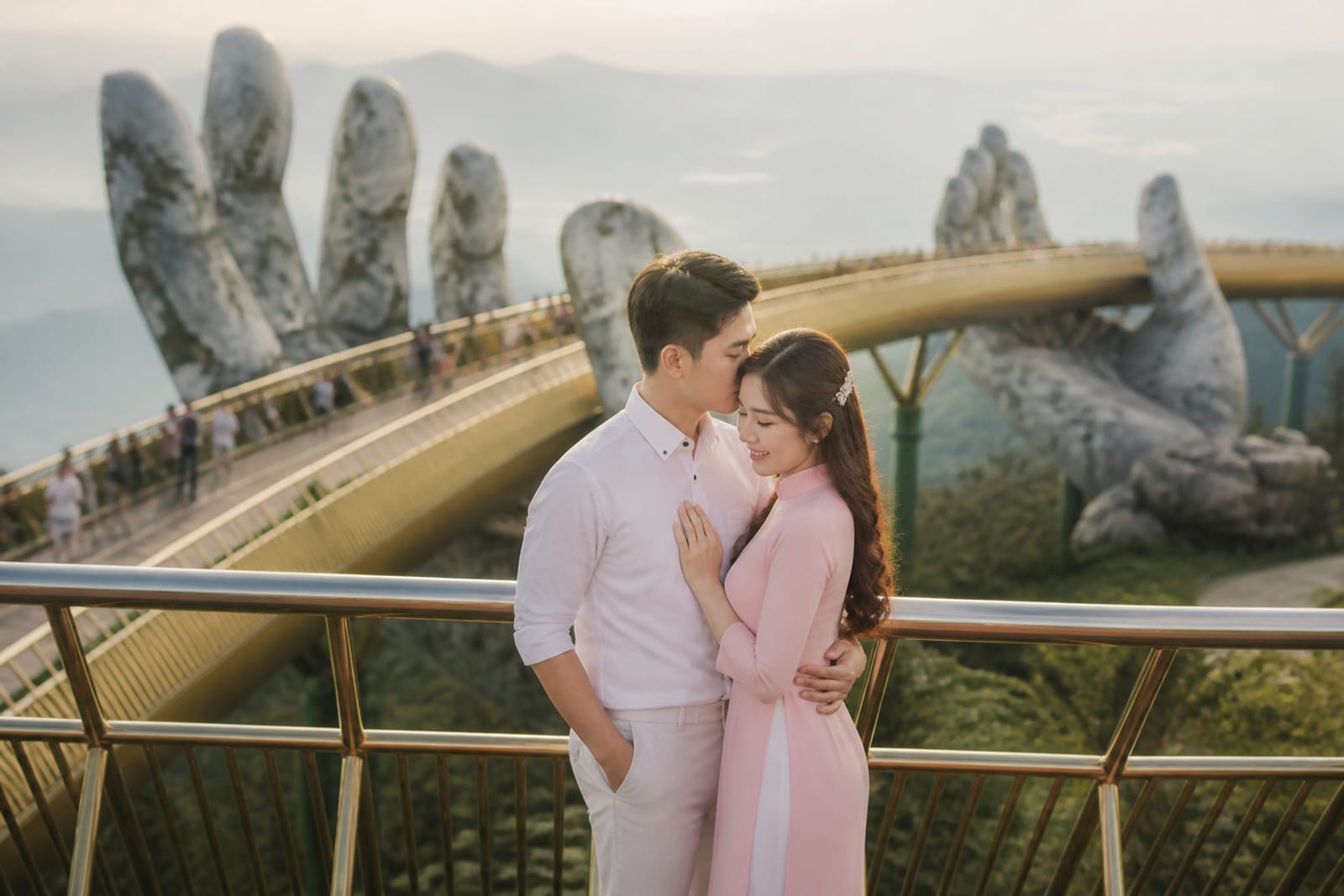
Where should your photographer take you in Da Nang?
Da Nang has distinct zones, each with light and crowd patterns. My Khe Beach is iconic but crowded by 7:30 am; arrive for sunrise or accept tourists in background shots. The Marble Mountains (Ngu Hanh Son) offer temple interiors (soft, diffused light), stone steps (leading lines), and summit views (clear days only)—climbing in heels or heavy bridal wear is tough, so factor in rest time and outfit changes. Dragon Bridge is striking at night (lit up, few crowds) but requires a stationary vehicle shot; not ideal for movement or close-up jewelry detail.
Hoi An Ancient Town (30 minutes south) has lantern-lit streets, wooden shophouses, and Japanese bridges that suit romantic, warm tones—less common in mainstream Da Nang. Local temples (Cao Dai, Buddhist) offer authentic cultural backdrops if permits and dress codes are met (cover shoulders and knees; ask your photographer to arrange access). Urban streets in the business district (Tran Phu, Ong Ich Khiem) provide modern contrast and clean, repeatable backgrounds during early morning when traffic is light.
Pair a primary location (beach, mountains) with a secondary urban or cultural spot; scout during daylight to check sun angle and pedestrian flow.
How do you vet a Da Nang photographer for Indian wedding shoots?
A photographer who shoots Indian pre-weddings needs more than technical skill. Request a portfolio filtered by Indian couples, mehendi outfits, bridal jewelry detail, and couple dynamics (interaction, not just poses). Ask directly: Have you shot Indian ceremonial wear or Hindu/Sikh traditions? A yes with examples is stronger than a generic "yes, I've done weddings."
Check their gear. Backup cameras and lenses matter on beaches (salt spray corrodes electronics) and in variable light (afternoon clouds need faster lenses). Ask about their color grading—do they enhance skin tones naturally or oversaturate? Indian skin tones need careful white balance and warm tones; a portfolio with blown-out or flat subjects is a red flag.
Discuss logistics. Can they transport you between locations, or do you hire a driver? Do they have a backup if weather closes the beach? Ask about delivery: when will you see previews, and how long until the full gallery? A photographer who answers "1–2 weeks" is more reliable than vague timelines. Check reviews on local platforms (Facebook, Instagram tags) and ask for references from past couples in your city or India.
Interview at least two photographers; compare their beach/temple experience, backup plan, and delivery timeline before committing.
What should you wear under and over an ao dai for comfort on a Da Nang shoot?
If you're including an ao dai photoshoot, comfort and fit affect the final image. An ao dai is a two-piece tunic worn over fitted pants; under it, wear a thin, seamless camisole or slip (many photographers recommend strapless or skin-tone colors so seams don't show). In Da Nang's humidity and wind, a camisole reduces chafing and keeps the tunic's drape clean through multiple locations.
For pre-wedding shoots, you'll likely wear lehenga, saree, and Western bridal or couple outfits. Lehenga blouses and saree pallu pins need extra grip on sand and when climbing (Marble Mountains). Wear nude or flesh-tone shapewear if you're self-conscious; humid heat makes regular shapewear uncomfortable, so modern, breathable options are worth the investment. For beach shots, lightweight layers (dupatta, shawl) add movement without weighing you down.
Bring footwear in at least three styles: heeled sandals or juttis for temple and urban shots (easier to remove for barefoot sand photos), flat sandals for climbing, and backup shoes in case sand works into the first pair. Nail polish, bangles, and jewelry should be secure—the wind and movement will test them. Your makeup & hair at your hotel team should know your outfit plan so they can use waterproof products and secure pins for outdoor conditions.
Pack breathable layers, backup shoes, and secure jewelry; coordinate outfit detail with your makeup artist two weeks before the shoot.
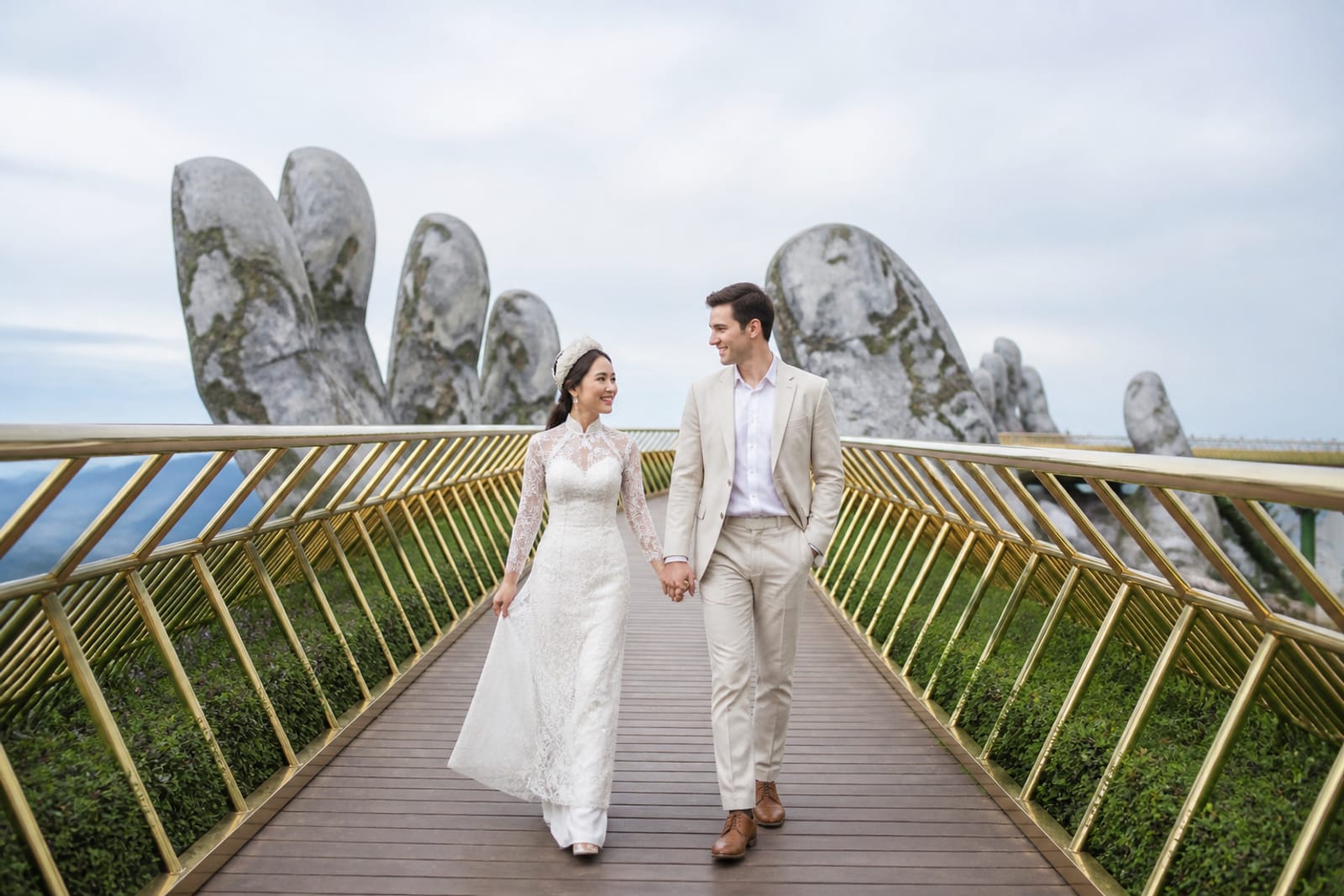
How do the timing, cost factors, and logistics differ from other destinations?
| Factor | Da Nang (local hire) | Hoi An (Cáo Studio team) | Hanoi / HCMC (Cáo Studio studio) |
|---|---|---|---|
| Best season | Feb–Aug (dry, stable light) | Feb–Aug (same coast climate) | Hanoi: Oct–Nov, Mar–Apr; HCMC: Dec–Feb |
| Light quality | Sunrise/golden hour critical; midday harsh | Same; lantern streets work at dusk | HCMC evening year-round; Hanoi misty winter adds mood |
| Location variety | Beach, mountains, temples, urban—2–4 hour drive between | Ancient town, river, rice fields—compact area | Urban landmarks, parks, lake—walkable or close-range drive |
| Photographer sourcing | Hunt locally; vet portfolio carefully | Cáo Studio team knows Hoi An logistics | Studio manages scheduling, location access |
| Transport & logistics | You arrange driver or photographer handles | Team coordinates (ask on WhatsApp for Hoi An dates) | Studio coordinates; less coordination burden |
| Makeup & hair support | Hire local artist or coordinate from afar | Ask about team pairing; Cáo Studio can advise | Full makeup & hair service at your hotel included in options |
| Cost factors | Photographer day rate, driver, location permits | Travel cost for Cáo team to Hoi An; shorter distance than Da Nang | Studio pricing based on session type and location coverage |
Da Nang requires you to hire and coordinate independently; budget time for vetting photographers (2–3 weeks before) and confirming logistics (1 week prior). Hoi An is closer to Cáo Studio's base and operates by appointment—the team travels there regularly, so ask on WhatsApp for current availability dates. Hanoi and Ho Chi Minh City offer full in-studio coordination and makeup & hair support, reducing your planning burden.
📸 Book on WhatsApp — pre-wedding photoshoot
What to check before you book a Da Nang photographer
Before committing, request a 15-minute video call or chat. Confirm:
- Portfolio match: At least five pre-wedding shoots with Indian couples, visible detail (jewelry, expressions, outfit fit).
- Cultural knowledge: Ask about your specific traditions (mehendi, sangeet, outfit styles, religious sites). Generic answers are a yellow flag.
- Gear & backup: Two cameras, backup lenses, battery/memory redundancy. Especially critical for beach (salt, water risk) and variable light (clouds, temple interiors).
- Timeline: First preview within 3–5 days, full gallery within 2 weeks. If they can't commit, they're overbooked.
- Location scouting: Have they shot your chosen spots before? Do they know traffic patterns and light angles? A photographer who offers a pre-shoot scout is more thorough.
- Delivery format: Digital files (resolution, color space), prints, album, video—clarify what you get and in what format.
- Communication: Do they reply within 24 hours? Are they clear about what's included vs. extra? Poor communication before booking predicts frustration after.
- Weather backup: If monsoon clouds roll in, can they pivot to indoor locations or reschedule?
Ask for references from one or two past couples (preferably based in India or expat in Vietnam) and check their untagged photos on their social handles.
Why consider Cáo Studio for your pre-wedding if you're shooting in Hoi An
Cáo Studio – Makeup & Photoshoot operates full studios in Hanoi, Ho Chi Minh City, and Hoi An. If your itinerary includes Hoi An (30 minutes from Da Nang), the team can handle your pre-wedding photoshoot there, combining a working Hoi An team with full studio support. This removes the hunt for a local photographer; you're coordinating with one familiar, vetted studio. The Hoi An location is available by appointment—ask on WhatsApp for current dates and whether the team can travel to specific Hoi An sites or tailor a session to your couple's vision.
For shoots in Da Nang itself, you'll hire a local photographer, but Cáo Studio can offer referrals or guidance on what to expect. Our team's experience with Indian couple shoots, bridal wear (including ao dai rental and styling), and makeup ensures you know what professional pre-wedding coordination looks like—use that as a benchmark when vetting Da Nang photographers.
See our full couple & family photoshoot service and lookbook for style inspiration.
---
Key takeaways for your Da Nang pre-wedding
- Season: Book February–August for dry, predictable light. Sunrise and golden hour are non-negotiable for the best images.
- Location: Pair a primary spot (My Khe Beach, Marble Mountains, temple) with a secondary urban or cultural backdrop. Scout light angles 1–2 weeks before.
- Photographer: Hire someone with a proven Indian pre-wedding portfolio, backup gear for beach conditions, and a clear delivery timeline. Vet at least two; ask references.
- Outfit & comfort: Breathable layers, secure jewelry, backup shoes, and coordination with a makeup artist about waterproof products and wind-resistant pins.
- Logistics: Arrange transport, confirm location access (temples require permission and dress codes), and have a rain/cloud backup plan.
- Hoi An option: If your trip includes Hoi An, ask Cáo Studio about pre-wedding shoots with the local team—removes photographer hunting and ensures cultural awareness.
Use this framework to narrow your search and avoid common delays (poor communication, unmatched style, logistics breakdowns). Start vetting photographers 4–6 weeks before your planned date; confirm all logistics 1 week prior.
---
FAQ
Is February or April better for pre-wedding shoots in Da Nang?
Both are excellent. February is cooler (slightly less heat stress), while April has clearer skies. Choose based on your travel dates; light quality is similar. Avoid May onward if you're heat-sensitive (30°C+) or want the most stable weather.
What do I do if the beach is too crowded at sunrise?
Arrive 20–30 minutes before sunrise (around 5:00–5:15 am) to secure empty sand. Alternatively, shoot the day before or after your main date, or pivot to urban/temple locations in early morning when foot traffic is minimal.
Do I need permits to shoot at temples or Marble Mountains?
Most temple visits are free and open to tourists, but ask your photographer to confirm access and any dress codes (covered shoulders, knees). Marble Mountains charges entry fees (check the official site for current pricing). Professional photography inside some temples may require advance permission—your photographer should know this.
Can Cáo Studio shoot my pre-wedding in Da Nang?
Cáo Studio operates in Hanoi, Ho Chi Minh City, and Hoi An. For Da Nang, hire a local photographer or contact us on WhatsApp to ask about referrals. If your trip includes Hoi An, we can shoot there by appointment—ask for current team availability dates.
What's the cost range for a Da Nang pre-wedding photographer?
Rates vary by photographer experience and package scope. Cost factors include session length, number of locations, outfit changes, and album/print delivery. Get quotes from multiple photographers; discuss what's included (editing, digital files, prints) before comparing numbers. For a Cáo Studio session in Hanoi, Ho Chi Minh City, or Hoi An, ask for a quote on WhatsApp.
How far in advance should I book a Da Nang photographer?
Book 6–8 weeks before your shoot date, especially during the peak dry season (March–April, July–August). This gives time to vet portfolios, confirm logistics, and scout locations. Late booking (2–3 weeks out) risks photographer unavailability or rushed planning.
Should I include an ao dai shoot in my pre-wedding itinerary?
Yes, if you want cultural fusion in your album. An ao dai photoshoot blends Vietnamese tradition with your pre-wedding narrative and works beautifully in temple and ancient-town settings (ideal in Hoi An). Coordinate styling and makeup to complement your other outfits.
FAQ
Is February or April better for pre-wedding shoots in Da Nang?
Both are excellent. February is cooler (slightly less heat stress), while April has clearer skies. Choose based on your travel dates; light quality is similar. Avoid May onward if you're heat-sensitive (30°C+) or want the most stable weather.
What do I do if the beach is too crowded at sunrise?
Arrive 20–30 minutes before sunrise (around 5:00–5:15 am) to secure empty sand. Alternatively, shoot the day before or after your main date, or pivot to urban/temple locations in early morning when foot traffic is minimal.
Do I need permits to shoot at temples or Marble Mountains?
Most temple visits are free and open to tourists, but ask your photographer to confirm access and any dress codes (covered shoulders, knees). Marble Mountains charges entry fees (check the official site for current pricing). Professional photography inside some temples may require advance permission—your photographer should know this.
Can Cáo Studio shoot my pre-wedding in Da Nang?
Cáo Studio operates in Hanoi, Ho Chi Minh City, and Hoi An. For Da Nang, hire a local photographer or contact us on WhatsApp to ask about referrals. If your trip includes Hoi An, we can shoot there by appointment—ask for current team availability dates.
What's the cost range for a Da Nang pre-wedding photographer?
Rates vary by photographer experience and package scope. Cost factors include session length, number of locations, outfit changes, and album/print delivery. Get quotes from multiple photographers; discuss what's included (editing, digital files, prints) before comparing numbers. For a Cáo Studio session in Hanoi, Ho Chi Minh City, or Hoi An, ask for a quote on WhatsApp.
How far in advance should I book a Da Nang photographer?
Book 6–8 weeks before your shoot date, especially during the peak dry season (March–April, July–August). This gives time to vet portfolios, confirm logistics, and scout locations. Late booking (2–3 weeks out) risks photographer unavailability or rushed planning.
Should I include an ao dai shoot in my pre-wedding itinerary?
Yes, if you want cultural fusion in your album. An [ao dai photoshoot](/ao-dai-photoshoot) blends Vietnamese tradition with your pre-wedding narrative and works beautifully in temple and ancient-town settings (ideal in Hoi An). Coordinate styling and makeup to complement your other outfits.
Ao dai, makeup, hair and a local photographer in Hanoi or Saigon — one WhatsApp message.