/pre-wedding-photoshoot
Pre-wedding photoshoot in Da Nang in September: weather, light, crowds
September pre-wedding shoots in Da Nang require early starts and flexible backups. The central coast is in its rainy season (Sep–Dec, worst Oct–Nov); expect afternoon thunderstorms and occasional typhoon watches. Early light at My Khe beach (5:30–7:00 am) is your best window — soft, side-lit, crowds thin. By 9:00 am, clouds thicken and rain risk climbs. Hoi An's Old Town works mid-morning (8:00–10:00 am) before tour groups peak, but plan an indoor contingency (covered market, hotel hallways). Cáo Studio shoots in Hanoi, Ho Chi Minh City, and Hoi An by appointment; for Da Nang, hire a local photographer familiar with monsoon timing and this season's light windows. Confirm a rain date before you book, and scout locations in advance if possible. 📸 Book on WhatsApp — pre-wedding photoshoot | 🌸 See the lookbook ---
Why does September rain make Da Nang harder for pre-wedding shoots?
September marks the peak of the central coast's monsoon: the southwest wind drives warm, moisture-heavy air inland. Rain typically arrives mid-morning (10:00 am onwards) and builds through afternoon. Typhoons—tropical storms tracking the coast—add unpredictability; they're rare but can close highways and flood low-lying spots. This means your golden-hour window (sunset) is often obscured by cloud cover, and mid-day light is flat and grey. A morning shoot (5:00–8:00 am) on an open beach or river walk captures the clearest skies and softest side light, before the day's heating triggers convection. Confirm a 48-hour forecast the week of your shoot and keep a second date in reserve.
| Location | Best time | September light | Why it works |
|---|---|---|---|
| My Khe beach (sunrise) | 5:30–7:00 am | Soft, gold, low cloud | Early before rain builds; sidelight on water |
| Hoi An Old Town (morning) | 8:00–10:00 am | Diffused, cool | Fewer crowds; roofed walkways shield light changes |
| Han Market (covered) | 7:00–9:00 am | Warm mixed interior | Backup if rain starts; authentic mood light |
| Dragon Bridge (dusk) | 5:30–6:30 pm | Grey, cloud-diffused | Avoid; cloud cover flat; rain likely |
| Hotel suite or villa | Any time | Controlled | Best safety net; professional backdrops work indoors |
---
How do you shoot in a September storm without cancelling?
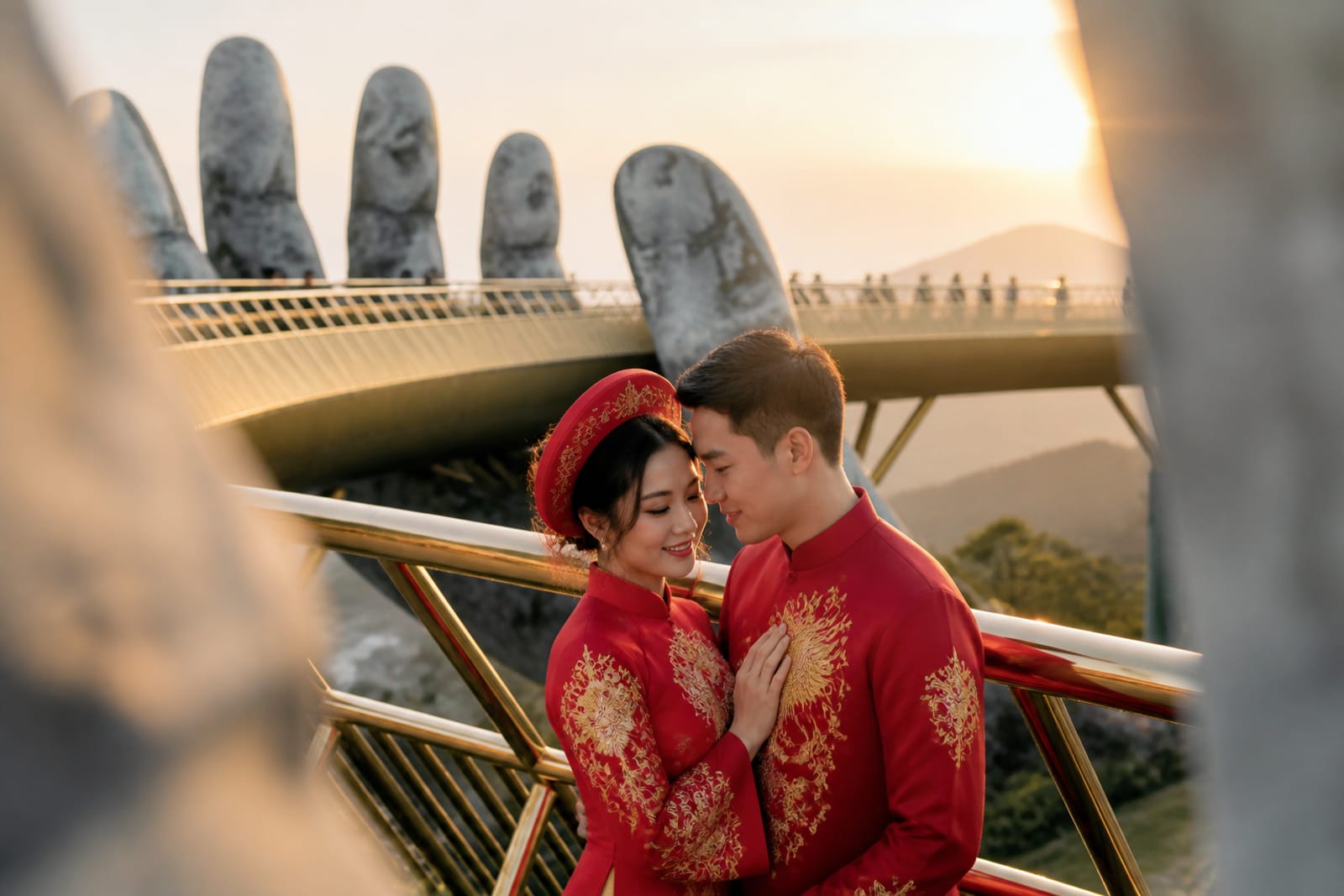
Pivot, don't cancel. If rain arrives during your 7:00–10:00 am slot, a skilled local photographer moves indoors: narrow laneway walkways in Hoi An have natural roof cover; Han Market's overhead awnings frame vendors and light beautifully; a hotel suite or riverside villa becomes a styled shoot space. The key is booking a photographer (or team) who has scouted these places and knows how to use mixed light (window light + interior reflectors) to keep the images warm and alive, not flat. Outdoors, rain on your ao dai or suit can read cinematic (wet fabric catches light differently), but this requires fast film settings and a second camera—logistics only a pre-planned team manages smoothly. Book your photographer at least 4 weeks ahead; ask specifically how they handle rain and what indoor spaces they've pre-scouted. Do not rely on "we'll figure it out on the day."
---
What should you wear to flatter September's grey light?
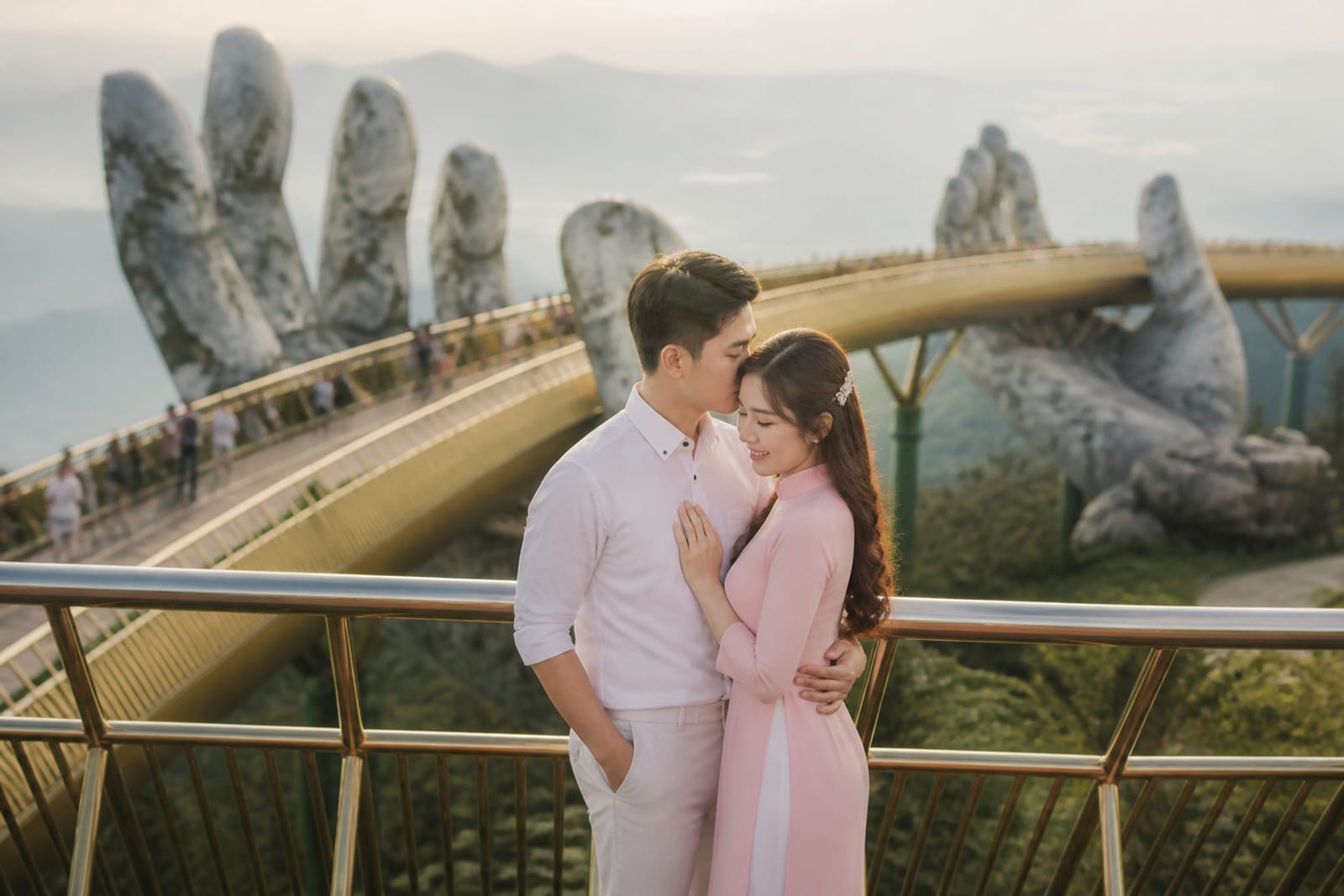
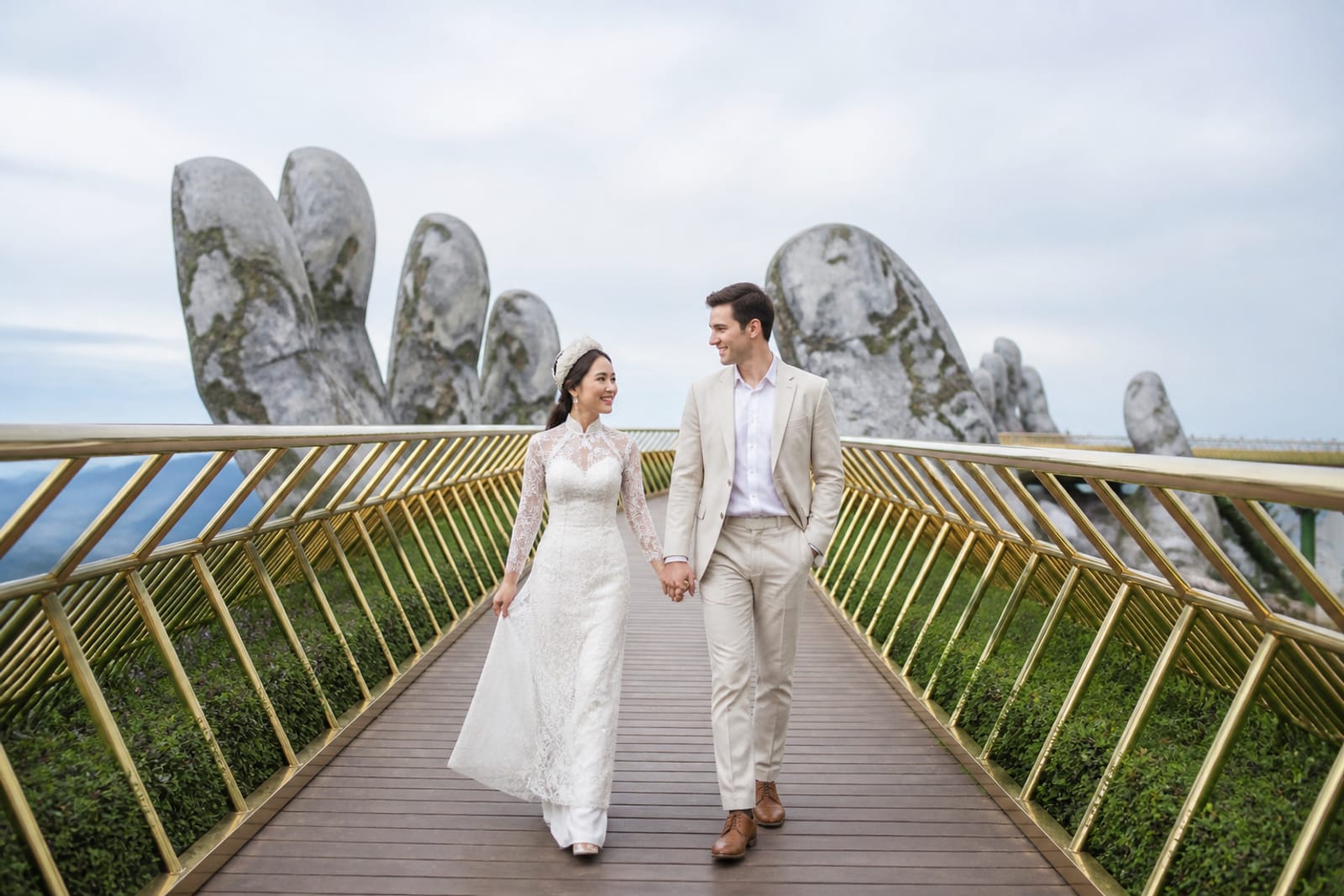
Grey, overcast skies flatten saturated colors and make pastels glow. A white or cream ao dai (or white linen suit) bounces soft light and photographs crisp against a moody sky. Deep jewel tones—emerald, sapphire, burgundy—hold their weight under flat light and look richer in post-editing. Avoid pastels (pale pink, peach, light gold) unless you want a dreamy, washed effect; they blur into grey skies. If wearing an ao dai, choose one with fine embroidery or silk sheen—texture reads in soft light when color saturation drops. Bring a second outfit (lighter for dawn, darker for covered markets or villa interiors). Discuss outfit choices with your photographer before the shoot; they'll know how each fabric and color behaves in a monsoon sky and can guide you toward frames that sing even when clouds dominate.
---
What's the difference between booking Cáo Studio and a local Da Nang photographer?
Cáo Studio operates in Hanoi, Ho Chi Minh City, and Hoi An by appointment. For a Da Nang shoot, you'll hire a local photographer directly. The tradeoff: a local knows September light, monsoon timing, and weather pivots in real time; they have relationships with vendors and spot scouts in Da Nang. Cáo Studio's model is one integrated team (photographer + stylist + makeup + outfit) coordinated from a single brief, which reduces miscommunication but requires travel logistics to Da Nang. If you're already in Hoi An (30 km south of Da Nang) for your wider Vietnam trip, book Cáo Studio's Hoi An team—no extra travel, same coordinated approach. If Da Nang is your hub, hire a trusted local photographer (ask your hotel concierge, wedding planner, or check portfolios on Instagram for monsoon-season work). Vet them: ask for September samples, confirm their backup plan, and check whether they've worked with couples in rain before. A good photographer costs the same effort to find, wherever you shoot.
---
How do you prepare a backup plan when rain is likely?
Start here: identify three location types before your shoot date.
- Outdoor (primary): My Khe beach at 5:45–7:15 am. Scout the exact sunrise angle (east-facing, unobstructed). Check tide: low tide reveals sand bars and textures. Bring a beach bag with towels and a cover-up; sand sticks to wet fabric.
- Semi-covered (secondary): Hoi An's Old Town alleys, Han Market, or a riverside pavilion. A local photographer will already know these; ask them to shoot test frames there the week before your date to lock in light angles and reflector placement.
- Fully indoors (emergency): Your hotel suite, a hired villa, or a restaurant private room. Scout the light from 7:00 am on a dry day: north-facing windows give cool, even light; south-facing windows glare. Bring a simple outfit backdrop (a plain wall, draped fabric, or a mirror) and rely on your photographer's skill with reflectors and mixed light.
Build this plan into your quote conversation. Confirm the photographer has scouted all three and agrees on timing. Send them a voice message with the final date 7 days ahead, and a reconfirm via WhatsApp 48 hours prior. If rain is forecast above a certain threshold (check the official forecast at weather.gov.vn 2–3 days ahead), discuss a reschedule offer—this should be part of your contract. Do not shoot in heavy rain without agreement on extra fees for technical difficulty (batteries drain fast, equipment risk rises).
---
What to check before you hire a Da Nang pre-wedding photographer
- Portfolio: Do they have September work? Look for clear skin tones, sharp fabric texture, and natural color even in flat light. Avoid portfolios where every image looks hyper-saturated or over-processed—that masks poor exposure.
- Monsoon plan: Ask directly: "What happens if it rains at 8:00 am? Where do we pivot? How long does the shoot still run?" A confident answer is a green flag.
- Local spots: Can they name 3–4 locations they've shot pre-wedding sessions in Da Nang this year? Generic answers (beach, old town, temples) without specifics suggest they haven't scouted.
- Backup date: Do they offer one free reschedule if weather is unsafe? Confirm in writing.
- Gear and team: Is it a single photographer or a team? How many cameras do they carry? Do they have a light reflector and a backup battery pack? September shoots need redundancy.
- Turnaround time: Ask how many edited images you'll receive and by when. Confirm they deliver digital files (not just prints or a USB that takes weeks).
- Language: If you don't speak Vietnamese, confirm they understand your direction. Miscommunication in bad light costs time.
---
How does light change hour-by-hour on a September Da Nang morning?
- 5:00–5:45 am: Deep blue hour. Light is cool, almost monochromatic. Wear white or cream to stand out. Water and sky merge; this is moody and cinematic but needs a photographer who trusts underexposure and can recover shadow detail in editing.
- 5:45–6:30 am: Golden hour begins. Sun low on horizon, warm side light hits your face and fabric. This is the safest, most forgiving window. Skin reads warm and alive; fabric sheen catches light. Shoot wide first (full figure, location context), then medium (waist-up), then detail (hands, fabric texture).
- 6:30–7:30 am: Golden light rises but stays warm. Shadows lengthen and add dimension to fabric. By 7:15 am, clouds often thicken on the coast; light diffuses and stays warm but flattens texture. Still shootable.
- 7:30–8:30 am: Transition to neutral. Light cools slightly as sun climbs. Clouds build. Skin tone stays true, but fabric color becomes more important (greys, blacks, jewel tones read better than warm pastels).
- 8:30–9:30 am: Overcast or cloudy-bright. Light is even and cool. Colors are honest and not glamorous. Backups (Hoi An, markets) work well now; outdoors, flat light demands strong clothing color or dramatic location geometry.
- 9:30 am onwards: Rain risk rises sharply. Light is dull. Shoot is usually finished or pivoting indoors by now.
This is why dawn is non-negotiable in September Da Nang: six hours of decent light in the morning, then rain builds. Your photographer knows this; confirm they're ready for a 5:15 am meet time and have transport arranged to your location.
---
Why Hoi An (30 km south) might be your better September choice
Hoi An Old Town sits slightly south of Da Nang's typhoon track and has more covered shooting spaces. The town closes to car traffic before 8:00 am, which means empty lanes and perfect light for walks and detail frames. Rain here doesn't cancel—it feeds the mood. Lantern reflections in wet alleys, water on ancient tile, fabric clinging to fabric—all of these read beautifully in monsoon light. Cáo Studio offers pre-wedding photoshoots in Hoi An by appointment; the team travels and shoots with the same integrated approach (photographer, stylist, makeup). You get the same one-day turnaround (edited images plus a short vertical film) as Hanoi or Saigon shoots, minus the Da Nang logistics. If you're considering both cities, Hoi An is the safer bet for September certainty.
📸 Book on WhatsApp — pre-wedding in Hoi An | 💄 Makeup & hair at your hotel
---
Ao dai or Western wedding dress: which photographs better in September grey?
Ao dai (traditional Vietnamese silk tunic): A cream, white, or pale silk ao dai glows in overcast light—silk sheen bounces what little directional light exists. Fine gold or silver embroidery reads beautifully in grey. A darker ao dai (navy, burgundy, gold-threaded) photographs richer and more dramatic when color saturation drops. Fabric drapes softly and moves for video. Wrinkles disappear in dim light (a practical bonus). Ask your ao dai rental shop if they steam and fit you 2–3 days before; September humidity swells fabric slightly.
Western wedding dress (white or cream gown): A satin or silk Western gown photographs crisp and formal in flat light. Beading or lace reads in close-up frames. Lace skirts in particular catch diffused light beautifully. However, pure white can blow out (overexpose) under certain morning angles, requiring the photographer to watch exposure closely. Tulle and veiling work well; heavier satin holds texture better than chiffon under monsoon humidity.
Hybrid approach: Many couples shoot an ao dai for Hoi An morning (location, cultural tie-in) and a Western gown indoors or late afternoon (backup light, formal portrait). Discuss wardrobe with your photographer and stylist; they'll advise which fabric and color suit the schedule and light windows you're targeting. For outfit rental in Vietnam, check ao dai rental options or ask a local stylist.
---
Bringing a professional team from outside Da Nang: costs and logistics
If you're flying in a photographer or styling team from another city, factor in:
- Lead time: Book at least 6–8 weeks ahead; September dates fill fast (it's still considered wedding season in Vietnam).
- Travel: Confirm they arrive the day before, not the morning of the shoot. Fatigue and jet lag degrade decision-making in real light.
- Local fixers: A local assistant or guide who knows Da Nang locations, weather patterns, and vendor contacts is invaluable. Your photographer should either be local or hire one. This is not optional in monsoon season.
- Equipment insurance: Humidity and salt air (if beach shooting) damage cameras. Confirm your photographer has waterproof bags, UV filters, and backup gear.
- Backup date guarantee: Get it in writing. A reputable team offers one free reschedule if weather is unsafe (typhoon alert, flooding).
Cáo Studio operates with this model in Hanoi, Ho Chi Minh City, and by appointment in Hoi An. For Da Nang, work with a local photographer who already carries this risk and expertise. A quote conversation should address all of the above; if a photographer glosses over monsoon logistics, keep looking.
🌸 See the lookbook | 📸 Book on WhatsApp
---
Real timeline: what a September Da Nang pre-wedding day looks like
- 4:45 am: Photographer and stylist arrive at hotel. Makeup artist does final touch-ups (5 min).
- 5:00 am: Transport to My Khe beach (10 min drive). Photographer scouts light while you change.
- 5:15–6:45 am: Shoot on beach. Wide frames (full figure, location), then mediums, then details. Move locations once if light shifts dramatically (e.g., moving from shoreline to wet sand).
- 6:45–7:00 am: Check frames on camera. Discuss if light is still improving or if clouds are rising.
- 7:00–7:45 am: Secondary location (riverside walk, alley in Hoi An if you've traveled south). Continuity frames—outfit change or same outfit in new light.
- 7:45–8:15 am: Touch-up and wrap, or pivot indoors if rain is imminent. Pack gear carefully (humidity is high).
- 8:15 am onwards: Breakfast and debrief, or travel to backup location if needed.
The shoot is usually done by 8:30 am. Afternoon light in September is rarely usable (clouds, heat haze, rain building). By 9:00 am, you're back at your hotel. The photographer begins culling that afternoon, delivers a first pass (selects) within 24 hours, and full edits within 48 hours. You'll have digital files + a short vertical film (30–60 seconds) ready by the day after tomorrow.
---
Final checklist before you book a Da Nang September pre-wedding shoot
- ✅ Confirm photographer has September portfolio samples.
- ✅ Agree on a 5:00–5:15 am start time and primary location (My Khe, Hoi An alley, etc.).
- ✅ Identify and scout three backup locations (semi-covered, fully indoors, alternative outdoor).
- ✅ Get a written 48-hour monsoon reschedule clause (free if rain/typhoon alert).
- ✅ Confirm outfit choice (ao dai, gown, hybrid) and ask photographer for color/fabric advice.
- ✅ Book makeup + hair the evening before or 6:00 am day-of (sweat and humidity are real).
- ✅ Ask how many images, video, and turnaround time. Confirm delivery is digital files, not prints.
- ✅ Reconfirm 72 hours before; check weather forecast at weather.gov.vn and agree on go/no-go decision by Friday for a Sunday shoot.
If you're in Ho Chi Minh City, consider a couple photoshoot there instead—more predictable September light in the south. If you're set on Da Nang or Hoi An, start your photographer search now (8+ weeks lead time) and prioritize portfolios with rain-season work.
---
FAQ
Is September too rainy for a Da Nang wedding pre-wedding shoot?
September has frequent afternoon rain and some typhoon risk, but early-morning shoots (5:00–8:00 am) capture dry conditions and the best light. Confirm a backup date and indoor locations before booking. Local photographers navigate this regularly; hire one with monsoon-season samples.
What time should we start a September pre-wedding shoot in Da Nang?
5:15 am latest. Golden hour and clear skies peak 5:45–7:30 am. By 9:00 am, clouds thicken and rain risk rises sharply. Plan the entire shoot for completion by 8:30 am to stay ahead of the day's weather build.
Should we do our pre-wedding in Da Nang or Hoi An in September?
Hoi An is slightly safer (more covered locations, south of typhoon track, one-team model available via Cáo Studio). Da Nang has My Khe beach light but requires careful local knowledge. Both work if you hire an experienced photographer with September samples.
How do we reschedule if it rains on our shoot day?
Confirm in your contract that the photographer offers one free reschedule if a typhoon alert or unsafe weather is issued. Check the official forecast (weather.gov.vn) 48–72 hours before and agree on a go/no-go decision by the Friday before. Do not risk it; reschedule is safer.
What should we wear to look good in September's grey light?
White, cream, or jewel-tone fabrics (emerald, sapphire, burgundy) photograph well in overcast skies. Silk ao dai or satin gowns catch soft light through sheen. Avoid pastels (pale pink, peach) unless you want a washed, dreamy effect. Discuss color choice with your photographer before the shoot.
Can we do an indoor backup shoot instead of rescheduling?
Yes. Scout a hotel suite, riverside pavilion, or restaurant private room 1–2 weeks ahead with your photographer. Confirm the venue allows photography and has usable light (north-facing windows are ideal). This pivots the shoot indoors without losing the date, though the mood and aesthetic shift significantly.
FAQ
Is September too rainy for a Da Nang wedding pre-wedding shoot?
September has frequent afternoon rain and some typhoon risk, but early-morning shoots (5:00–8:00 am) capture dry conditions and the best light. Confirm a backup date and indoor locations before booking. Local photographers navigate this regularly; hire one with monsoon-season samples.
What time should we start a September pre-wedding shoot in Da Nang?
5:15 am latest. Golden hour and clear skies peak 5:45–7:30 am. By 9:00 am, clouds thicken and rain risk rises sharply. Plan the entire shoot for completion by 8:30 am to stay ahead of the day's weather build.
Should we do our pre-wedding in Da Nang or Hoi An in September?
Hoi An is slightly safer (more covered locations, south of typhoon track, one-team model available via Cáo Studio). Da Nang has My Khe beach light but requires careful local knowledge. Both work if you hire an experienced photographer with September samples.
How do we reschedule if it rains on our shoot day?
Confirm in your contract that the photographer offers one free reschedule if a typhoon alert or unsafe weather is issued. Check the official forecast (weather.gov.vn) 48–72 hours before and agree on a go/no-go decision by the Friday before. Do not risk it; reschedule is safer.
What should we wear to look good in September's grey light?
White, cream, or jewel-tone fabrics (emerald, sapphire, burgundy) photograph well in overcast skies. Silk ao dai or satin gowns catch soft light through sheen. Avoid pastels (pale pink, peach) unless you want a washed, dreamy effect. Discuss color choice with your photographer before the shoot.
Can we do an indoor backup shoot instead of rescheduling?
Yes. Scout a hotel suite, riverside pavilion, or restaurant private room 1–2 weeks ahead with your photographer. Confirm the venue allows photography and has usable light (north-facing windows are ideal). This pivots the shoot indoors without losing the date, though the mood and aesthetic shift significantly.
Ao dai, makeup, hair and a local photographer in Hanoi or Saigon — one WhatsApp message.