/pre-wedding-photoshoot
Pre-wedding photoshoot in Da Nang July: weather, light, crowds
July pre-wedding shoots in Da Nang require early timing and monsoon-ready planning. The central coast enters peak wet season: mornings are calm with soft, diffused light; afternoons bring sudden rain and haze. Sunrise (5:30–6:30 a.m.) on My Khe Beach or Ba Na Hills at first cable-car opening (both around 5:00–5:30 a.m.) offer clear skies before humidity builds. Wear lightweight, quick-dry fabrics under ao dai. Cáo Studio operates in Hanoi, Ho Chi Minh City and Hoi An; for Da Nang, book a local photographer experienced with monsoon conditions and July heat. Scout locations the day before and confirm rain contingencies with your team. ---
Is July actually a good time to shoot in Da Nang?
July ranks among Da Nang's least ideal months for outdoor shoots, but it is not impossible. The central coast enters monsoon season (May–Nov, worst Oct–Nov), meaning midday humidity peaks and afternoon rain is common. However, sunrise to early morning (5:30–7:30 a.m.) delivers soft, diffused light that rivals cooler seasons—clouds diffuse harsh sun before the heat builds. If you must shoot in July, treat it as a dawn-focused plan. Late evening (5:30–7:00 p.m.) is secondary, but rain risk rises then. Midday (9 a.m.–4 p.m.) is best avoided. The payoff: fewer tourists at dawn, and soft pre-sunrise light that professional wedding photographers prize.
---
Where should you scout locations for July light?
📸 Book on WhatsApp — ao dai photoshoot | 💄 Makeup & hair at your hotel | 🌸 See the lookbook
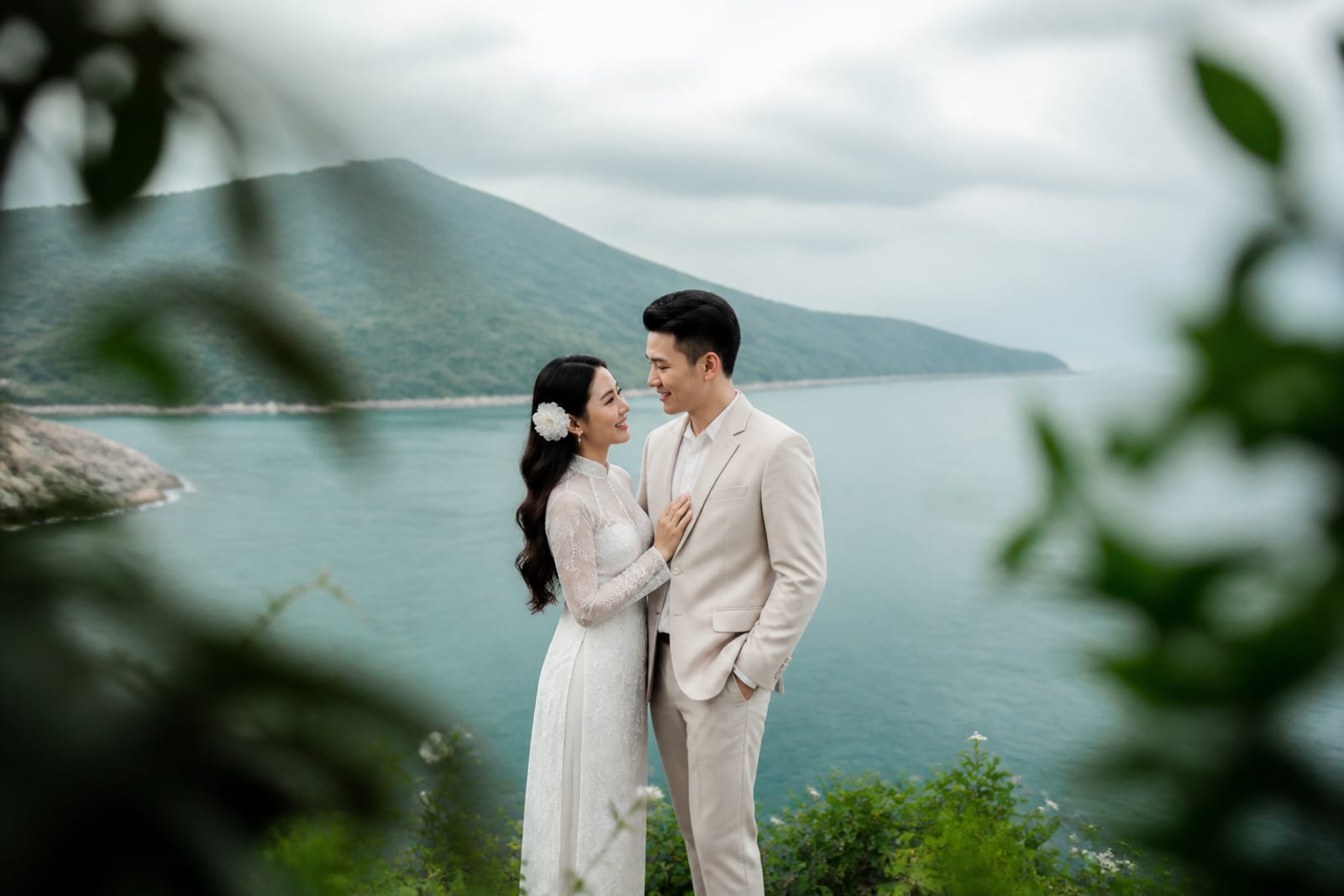
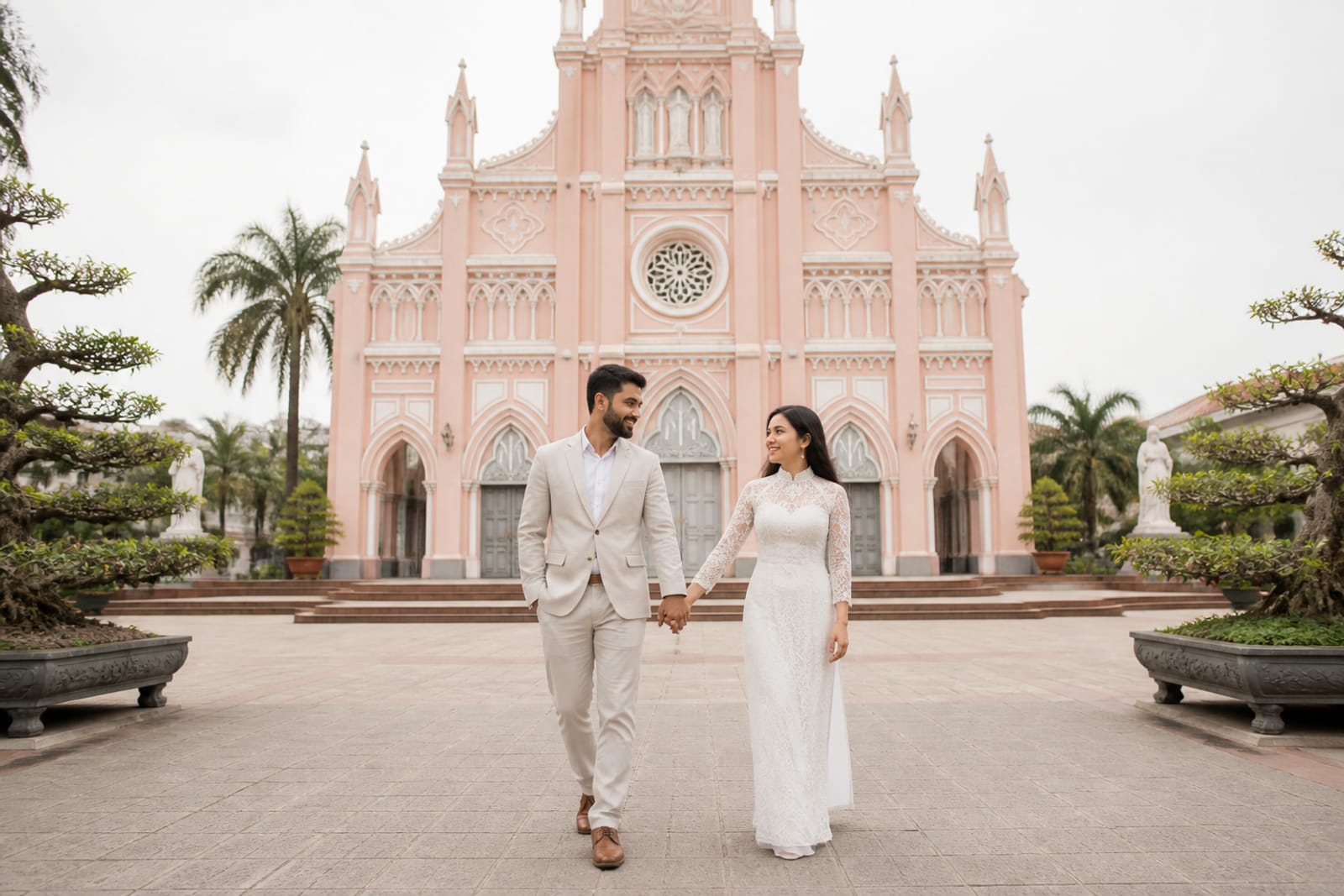
My Khe Beach (4 km of sand, faces northeast) catches golden, side-lit light from 5:30–6:30 a.m. before crowds arrive around 7 a.m. Walk south toward Tien Sa Port for quieter stretches. Ba Na Hills Golden Bridge (1,400 m elevation, much cooler) often wears mist and cloud in early morning—use it to your advantage for soft, moody frames. Arrive by 5:45 a.m., before cable-car queues form. Dragon Bridge (Rong Bridge, downtown) offers urban geometry and is nearly empty at 6:00 a.m.; the river catches dawn reflection. Linh Ung Pagoda (Son Tra Peninsula) perches above the city with sea views, cooler air, and shade—worth the steep walk if you have energy post-dawn. Son Tra Market area (if you want local texture) is lively from 5:30 a.m., but crowded by 7:00 a.m.; scout it the night before and secure a spot with a clear background. For each, scout the day or week prior to check light direction, obstacles, and crowd flow.
---
What weather facts should you plan for?
| Factor | Best for July shoots | Why it matters |
|---|---|---|
| Sunrise timing | 5:15–5:45 a.m. | Dawn light is your safest window before humidity and crowds. |
| Temperature | 27–30°C by 7 a.m., 32–35°C by 10 a.m. | Lightweight fabrics and frequent shade breaks prevent heat exhaustion. |
| Humidity | 75–85% at dawn, near 90% by noon | High moisture diffuses harsh shadows—a silver lining for soft light. |
| Rain probability | 40–60% in July (mostly afternoon) | Morning rain is rare; confirm weather the night before and have a covered backup spot. |
| Wind | Light, variable (sea breezes from 6–9 a.m.) | Helps cool skin and moves hair naturally; plan outfit photos when breeze is steady. |
July humidity is actually an ally: clouds and moisture soften shadows, mimicking overcast-day light. Plan your main shots (couple's first look, walking frames, detail sequences) for 5:45–7:30 a.m. Save lighter outfit changes or close-ups for 7:30–8:30 a.m. if the sky holds clear.
---
How do you dress and style for July heat and humidity?
Ao dai worn over lightweight slip dresses (cotton voile or silk linen blends) keeps the fabric from clinging to skin. Choose slip fabrics in white, cream, or pale pastels—they dry quickly if touched by sea spray and breathe in heat. Avoid polyester slips; they trap moisture and wrinkle under sweat. For the groom, linen or cotton suits in cream, light grey, or off-white over breathable shirts are standard. Skip heavy silk; it darkens with sweat visibly and reflects light awkwardly in humid conditions.
Hair and makeup require heat-resistance: waterproof mascara and setting spray rated for humidity are non-negotiable. Avoid heavy foundation or cream blush; go for powder-based products that won't slide. Hair should be set with humidity-resistant spray the night before and pinned loosely—tight styles show perspiration on the scalp and limit retakes. Bring a makeup touch-up kit (blotting papers, powder, lipstick) and water bottle for the team. Lightweight jewelry (avoid heavy metal chains that heat up) moves better on video and photographs truer in soft dawn light.
💄 Makeup & hair at your hotel can be scheduled early (4:30–5:30 a.m.) at your accommodation, so you arrive at location camera-ready without travel sweat.
---
How does crowd flow change timing and framing?
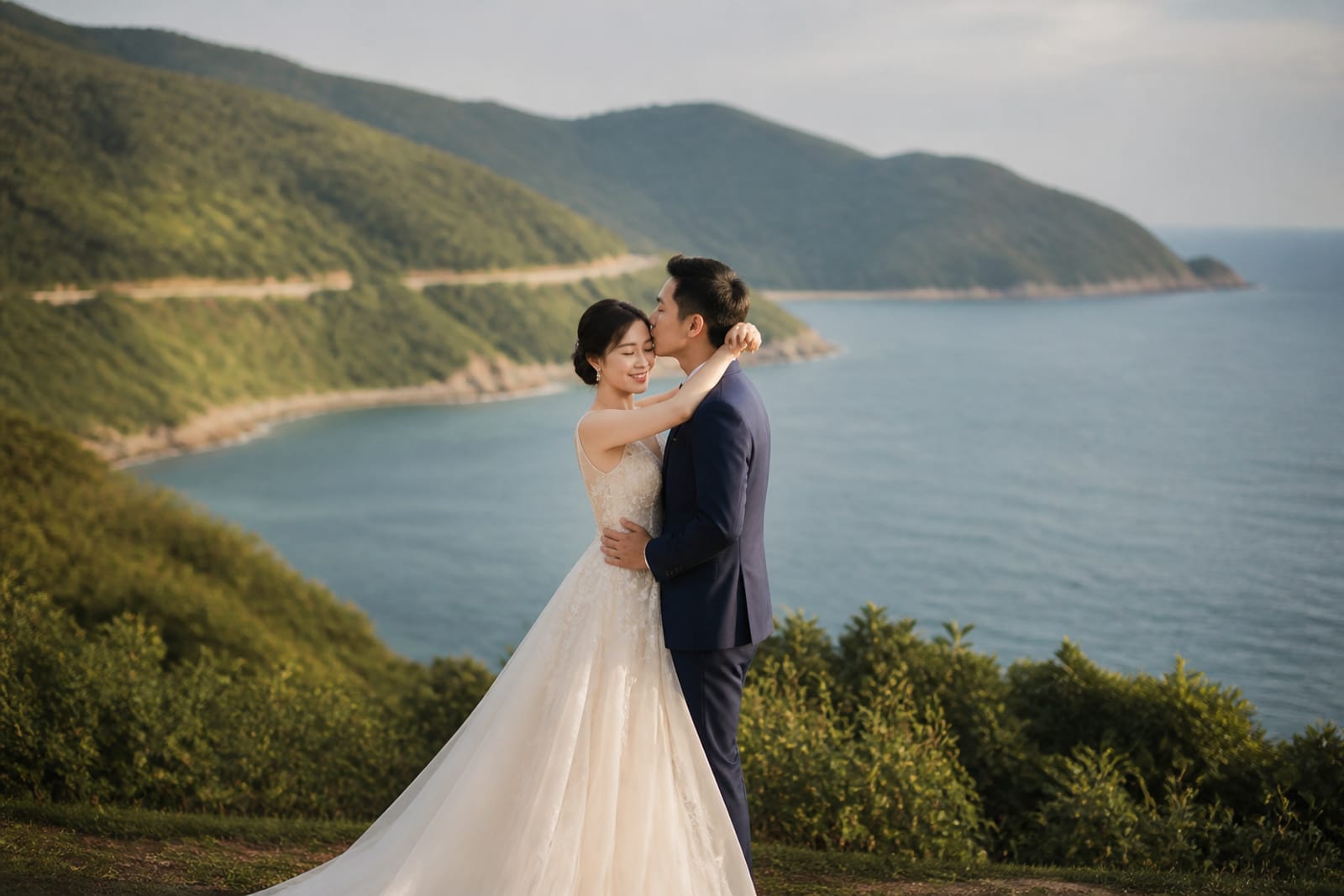
My Khe Beach fills predictably: 5:30–6:30 a.m. is nearly empty (locals swimming, joggers passing), 6:30–7:30 a.m. light traffic, 7:30 a.m.+ peak crowds with tour buses and resort guests. Arrive with your team 15 minutes before first light to claim a clear foreground. Dragon Bridge is busiest 6:30–8 a.m. for commute traffic and sunrise chasers; 5:45–6:15 a.m. is genuinely quiet. Ba Na Hills crowds hit hard after 8:00 a.m.; first cable-car slot (around 5:30 a.m.) means you summit by 6:15–6:30 a.m. and walk the bridge with only staff and early birds. Linh Ung Pagoda is calm until 8 a.m., but the walk is steep and tiring before dawn—start 20 minutes earlier to acclimatize.
Local photographers familiar with July know which spots have predictable light windows and which are blocked by construction or seasonal boat traffic. Ask your photographer to walk the location with you 1–2 days prior, time the crowd flow, and identify a rain shelter (hotel lobby, temple overhang, covered market section) within 30 seconds of each primary shot location.
---
What to check before you book a local Da Nang photographer
| Criteria | How to verify | Red flag |
|---|---|---|
| Monsoon experience | Ask: "What do you do if rain hits at 6:30 a.m.?" Listen for contingency plans, not promises it won't rain. | Vague reply or "it never rains that early." |
| Early-morning logistics | Do they offer 5:30 a.m. start times? Can hair/makeup reach the location by 5:15 a.m.? | Only offer 8 a.m.+ slots or require travel time in the quote. |
| Light knowledge | Ask for a sample from a July or August pre-wedding. Check: is dawn light soft or blown-out? Are faces backlit without fill? | Portfolio shows only midday sun or studio work; no dawn examples. |
| Backup location | Do they know 2–3 rain-proof spots (covered market, temple interior, hotel corridors)? | No contingency plan or say "we'll just reschedule." |
| Post-editing | Do they correct humidity haze in post? Check: are distant mountain/sea views clear or washed-out in their samples? | Heavy processing of shadows, or images look flat/desaturated. |
Vet your photographer with a 15-minute WhatsApp call or video chat. Ask them to explain their July workflow—early starts, outfit changes between dawn and 8 a.m., rain protocol, and turnaround time for edits. Trust photographers who are specific ("We'll shoot 5:45–7:00 a.m. at My Khe, then move to Dragon Bridge 7:15–8:00 a.m. if light holds") over those offering vague itineraries.
---
How to build your pre-wedding plan for July in Da Nang
Step 1: Decide if July timing is fixed or flexible. If flexible, consider late February to August (Feb–Aug is dry season). If you must shoot in July, commit to 5:30–7:30 a.m. primary shooting window.
Step 2: Book accommodations close to your chosen location (hotel within 10 minutes of My Khe or Ba Na Hills base). This allows 4:45–5:00 a.m. wake-up without rushing makeup.
Step 3: Hire a local photographer 4–6 weeks prior. Share your location preferences and July-weather concerns; ask for a written itinerary and contingency plan via WhatsApp.
Step 4: Scout locations yourself or have the photographer do it. Check light direction at dawn (use Google Maps' sun position tool, or visit in person). Identify one primary shot location and two backups (one rain-proof, one shaded).
Step 5: Confirm hair/makeup logistics. If using makeup and hair at your hotel, book for 4:30–5:30 a.m. to land at location by 5:45 a.m. or 6:00 a.m.
Step 6: Plan outfit changes. Bring 2–3 ao dai or wedding dresses, but only change in cool spaces (car, hotel, shaded pavilion). Between 6:00–7:00 a.m., one outfit for primary light; 7:00–8:00 a.m., a second outfit if energy and light allow.
Step 7: Agree on delivery timeline. Ask for first-pass edits within 48–72 hours and final gallery within 1–2 weeks.
---
📸 Book on WhatsApp — ao dai photoshoot | 🌸 See the lookbook
If you're open to other months or considering a shoot elsewhere in Vietnam, Cáo Studio operates in Hanoi, Ho Chi Minh City, and Hoi An. Hanoi's cooler pre-wedding season (Oct–Nov, Feb–Mar) offers easier morning logistics and softer light without the monsoon risk. For a pre-wedding photoshoot in Ho Chi Minh City, December–April is dry and cooler. Hoi An photoshoots can be arranged year-round; ask on WhatsApp for July availability and light timing in that area.
A pre-wedding photoshoot is a chance to practice with your photographer, test locations, and build frames you'll actually use in your wedding album. July in Da Nang is challenging but achievable with early starts, monsoon-ready logistics, and a photographer who treats heat and humidity as a light opportunity, not a problem.
---
FAQ
Can I shoot a pre-wedding photoshoot in Da Nang in July without rain interrupting?
July carries 40–60% rain probability, mostly in afternoons. Morning shoots before 8 a.m. are safer, but there's no guarantee. Always have a covered backup location (hotel lobby, temple overhang, market pavilion) within 30 seconds of your primary spot.
What time should I wake up for a 5:45 a.m. photo shoot in Da Nang?
Plan to wake at 4:15–4:30 a.m. Hair and makeup take 45–60 minutes; travel to location takes 10–15 minutes. This gives you a 10-minute buffer before the photographer is ready to shoot.
Is the humidity in July good or bad for pre-wedding photography?
High humidity (75–85% at dawn) diffuses harsh sunlight and softens shadows—ideal for portraiture. The trade-off: your team sweats more, makeup runs faster, and distant subjects (mountains, far shorelines) appear hazy. Waterproof makeup and frequent touch-ups solve the first; accepting atmospheric haze is part of July shooting.
Should I wear an ao dai or a white wedding dress for a July Da Nang shoot?
Both work, but ao dai breathes better in heat and humidity. Lightweight silk or linen ao dai over a breathable slip (cotton voile, not polyester) keeps you cooler and dries quickly if sea spray touches you. A heavy satin wedding dress will show sweat and wrinkle by 8 a.m. If you prefer a dress, choose lightweight cotton, linen, or silk blends and plan the dress shoot for the earliest, coolest window (5:45–6:45 a.m.).
How do I find a photographer in Da Nang if Cáo Studio doesn't shoot there?
Ask your hotel concierge or search "pre-wedding photographer Da Nang" with filters for monsoon and July experience. Vet candidates by asking for July or August portfolios, monsoon contingency plans, and a sample early-morning timeline. Check their reviews for mentions of heat, humidity, and delivery speed. A good local photographer knows Da Nang's light, crowd flow, and weather intimately—worth the extra vetting time.
What is the best backup location if it rains during my Da Nang July shoot?
Hoan Kiem Lake Park has covered pavilions and temple interiors (Ngoc Son Temple). Ben Ngu Lau (historic building near the lake) offers colonial architecture and indoor/outdoor framing. Son Tra Market has covered sections with local texture. Da Nang Museum has clean, simple corridors and outdoor courtyard. Scout these with your photographer beforehand so you can pivot within minutes if rain hits.
FAQ
Can I shoot a pre-wedding photoshoot in Da Nang in July without rain interrupting?
July carries 40–60% rain probability, mostly in afternoons. Morning shoots before 8 a.m. are safer, but there's no guarantee. Always have a covered backup location (hotel lobby, temple overhang, market pavilion) within 30 seconds of your primary spot.
What time should I wake up for a 5:45 a.m. photo shoot in Da Nang?
Plan to wake at 4:15–4:30 a.m. Hair and makeup take 45–60 minutes; travel to location takes 10–15 minutes. This gives you a 10-minute buffer before the photographer is ready to shoot.
Is the humidity in July good or bad for pre-wedding photography?
High humidity (75–85% at dawn) diffuses harsh sunlight and softens shadows—ideal for portraiture. The trade-off: your team sweats more, makeup runs faster, and distant subjects (mountains, far shorelines) appear hazy. Waterproof makeup and frequent touch-ups solve the first; accepting atmospheric haze is part of July shooting.
Should I wear an ao dai or a white wedding dress for a July Da Nang shoot?
Both work, but ao dai breathes better in heat and humidity. Lightweight silk or linen ao dai over a breathable slip (cotton voile, not polyester) keeps you cooler and dries quickly if sea spray touches you. A heavy satin wedding dress will show sweat and wrinkle by 8 a.m. If you prefer a dress, choose lightweight cotton, linen, or silk blends and plan the dress shoot for the earliest, coolest window (5:45–6:45 a.m.).
How do I find a photographer in Da Nang if Cáo Studio doesn't shoot there?
Ask your hotel concierge or search "pre-wedding photographer Da Nang" with filters for monsoon and July experience. Vet candidates by asking for July or August portfolios, monsoon contingency plans, and a sample early-morning timeline. Check their reviews for mentions of heat, humidity, and delivery speed. A good local photographer knows Da Nang's light, crowd flow, and weather intimately—worth the extra vetting time.
What is the best backup location if it rains during my Da Nang July shoot?
Hoan Kiem Lake Park has covered pavilions and temple interiors (Ngoc Son Temple). Ben Ngu Lau (historic building near the lake) offers colonial architecture and indoor/outdoor framing. Son Tra Market has covered sections with local texture. Da Nang Museum has clean, simple corridors and outdoor courtyard. Scout these with your photographer beforehand so you can pivot within minutes if rain hits.
Ao dai, makeup, hair and a local photographer in Hanoi or Saigon — one WhatsApp message.