/pre-wedding-photoshoot
Pre-wedding photoshoot in Ha Long Bay: complete guide for couples
A pre-wedding photoshoot in Ha Long Bay typically runs 4–6 hours on a private or chartered cruise, with a photographer who knows the light on the water and the best anchor points for framing. The bay spans three climate zones — best light runs March to May and September to November, when seas are calm and skies are clearer; avoid June to August (typhoon risk, cancelled cruises) and December to February (misty, cool, unpredictable). You'll need a boat operator's permission for a photographer aboard, edited files in 48 hours, and realistic budgets for the cruise permit and the shoot itself. Cáo Studio does not operate in Ha Long Bay; this guide helps you plan with a local photographer and decide if a bay shoot fits your timeline and vision.
Ha Long Bay draws couples for one reason: the water and stone are unmatched. But a successful pre-wedding shoot here is not about renting a boat and hoping. It's about understanding the bay's seasonal rhythms, the limits of light on the water, and how to work with a local operator who has shot in these conditions before.
Why does Ha Long Bay demand a different approach than land shoots?
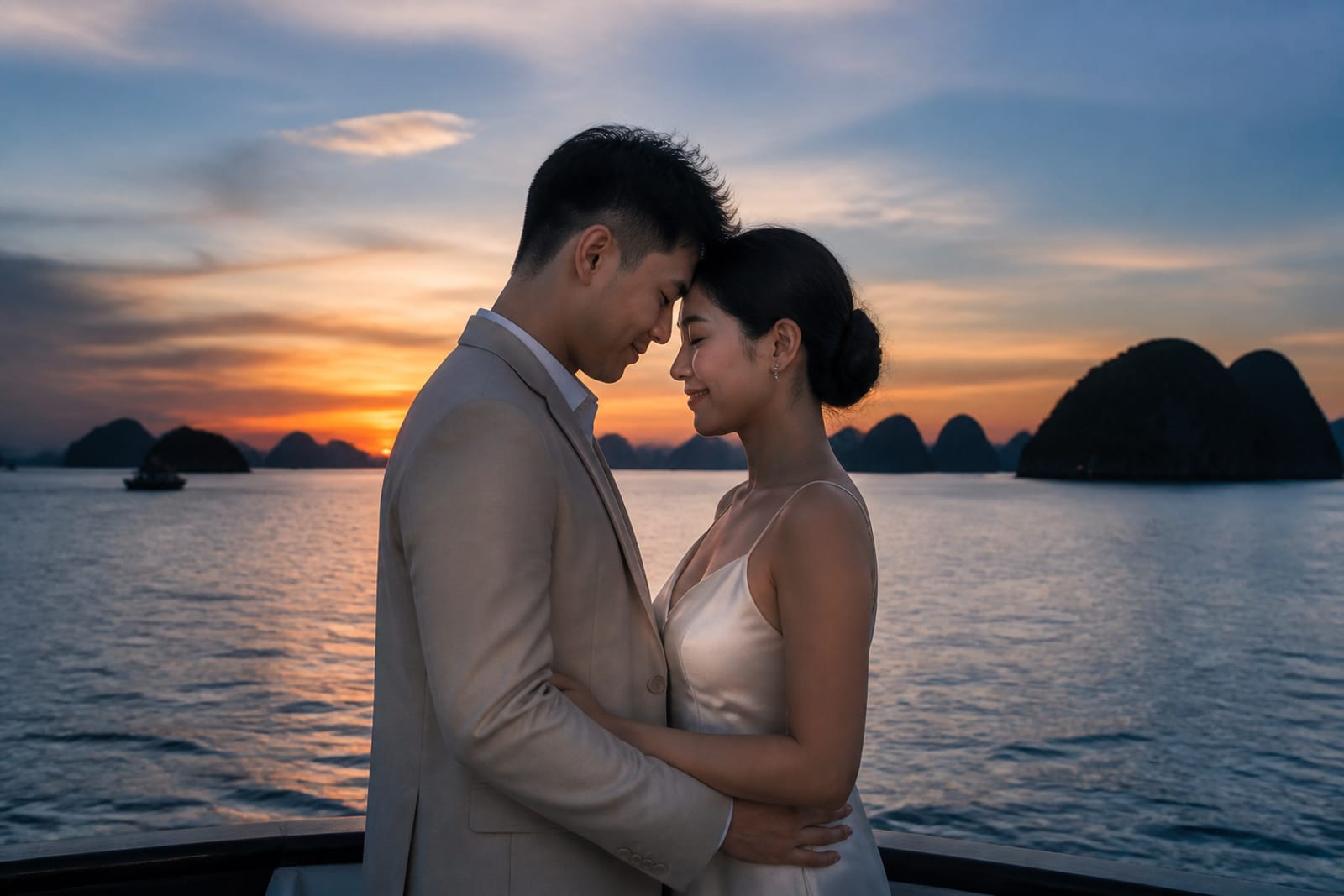
Water light is unforgiving. Reflections off the limestone and sea flatten skin if you shoot at midday, and the bay's narrow channels mean you lose direct sunlight by 4 pm. A photographer who has worked Ha Long knows to shoot at sunrise (between 6–7 am, before cruise crowds arrive) or in the soft 2–3 hours before sunset, positioning you against the cliffs so the light wraps around your face instead of flattening it. You'll also move between decks, narrow railings, and moving platforms—unlike a temple or street location, you can't reset a missed shot. The bay shifts with every tide and season, so a photographer's familiarity with anchor points and their light at different times is what separates sharp, composed frames from rushed, blown-out images.
Which season actually works for pre-wedding shoots here?
Season Comparison Table
| Season | Light quality | Sea conditions | Crowds | Best for |
|---|---|---|---|---|
| Mar–May | Soft, golden mornings; clear skies | Calm, predictable | Moderate | Sunrise shoots; ao dai in lighter fabrics |
| Jun–Aug | Harsh midday; afternoon haze | Typhoon risk; port closure possible; afternoon downpours | High | Not recommended; cancellation risk high |
| Sep–Nov | Clear skies; even morning light | Calm; best visibility | Lower (Sep–early Oct) | Sunrise or late-afternoon frames; all outfit types |
| Dec–Feb | Soft but often misty; cool mornings | Calm but grey; visibility poor | Moderate | Limited—mist obscures cliffs; frames feel flat |
March to May and September to November are your only reliable windows. March to May offers golden light in early morning and clearer water for wider shots of the bay. September to November brings stable seas and sharper midday visibility if you're willing to shoot later in the day. Avoid June to August entirely—the port authority cancels cruises without notice during typhoon season, your shoot date becomes uncertain two weeks before, and afternoon downpours trap you indoors. December to February looks calm but the limestone disappears into mist by 8 am, making wide frames feel washed out. If you're arriving in January or February, a pre-wedding shoot in Hanoi or Hoi An with guaranteed light is a safer choice.
What do you actually need to book before you arrive?
Start with the boat operator—they set permissions and safety rules. Not all cruise operators allow photographers aboard (some fear equipment accidents or exclusivity conflicts); some require advance notice of professional shoots. You'll also need clarity on whether your photographer can move freely between decks, shoot during meal times, or use a drone (most operators require a separate drone permit or restrict flights entirely).
Once the boat is confirmed, hire a photographer who has shot on Ha Long cruises. Their familiarity saves hours of scouting; they'll know which anchor point gives you morning light without silhouettes, where the wide-angle frame works, and where to position you so the boat's railing or other guests don't drift into the frame. A photographer who only shoots land locations will waste time figuring out light angles on water and may overexpose or underexpose faces against the reflective sea.
Cáo Studio does not shoot in Ha Long Bay, but we can advise on how to vet a local photographer: ask for a portfolio of at least three previous couple shoots on the same or similar cruises, check the editing style (is it consistent? are skin tones natural or oversaturated?), and confirm they have a second camera and backup batteries (equipment failure on water is costly). Ask them directly about the cruise operator's rules and whether they've worked with that specific operator before.
Finally, plan for edited files to arrive within your travel timeline. If you leave Ha Long on day 4 and your photographer needs 10 days to edit, you'll collect files at home. Some photographers offer a quick 48-hour turnaround for a smaller edit batch (wide and medium frames, no intricate retouching); others deliver fully edited sets in 5–7 days. Agree on this before the shoot.
Should you wear an áo dài on a boat, and what else matters?
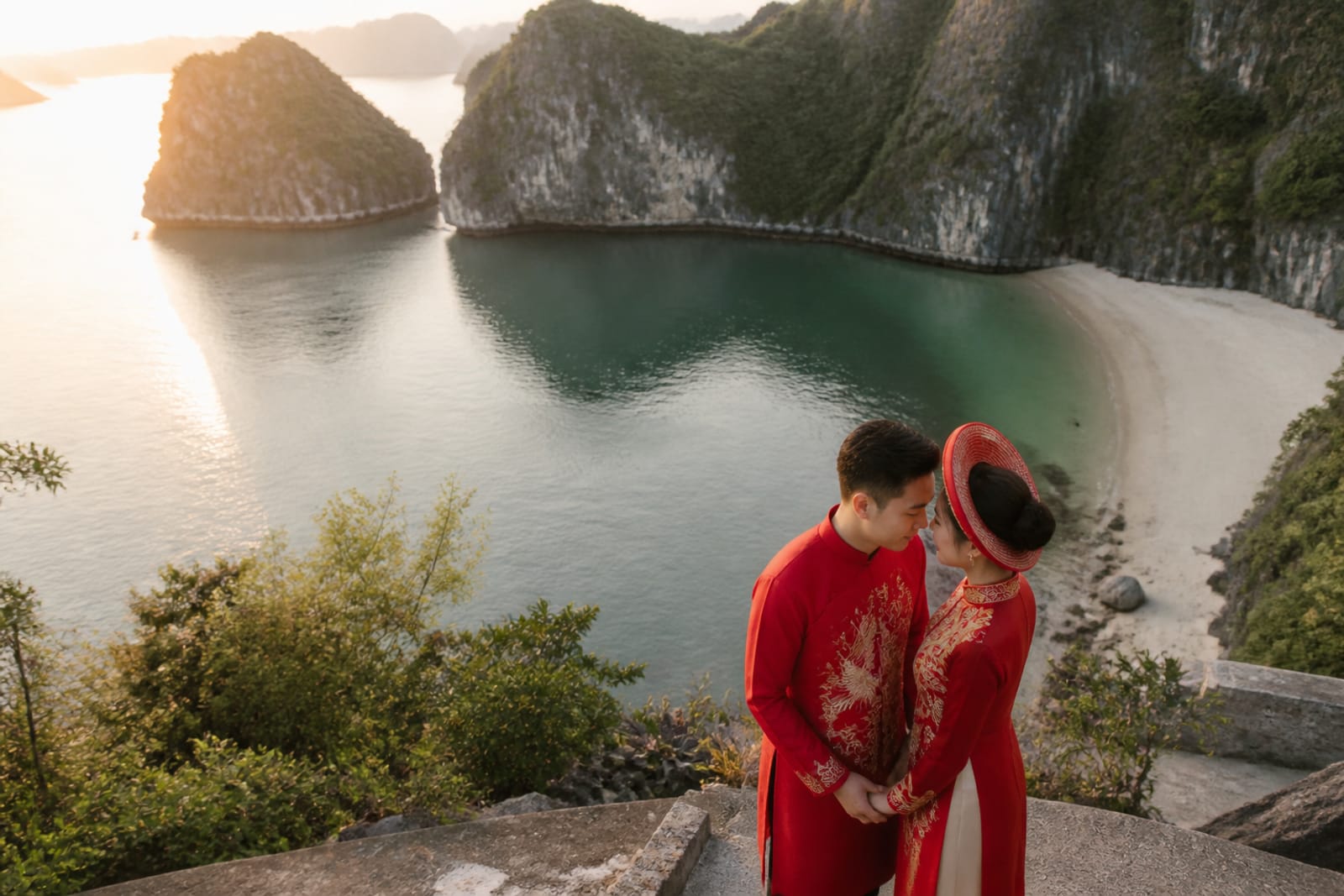
An áo dài reads beautifully in wide shots—the fabric flows over the railing and against the limestone. But boat conditions are narrow: railings are your only anchor, and the garment's length means stepping carefully. Wear it if the shot is truly your vision, but plan for two outfit changes. Start in your áo dài for sunrise or golden-hour frames when the light is soft and the fabric moves. Switch to lighter, more mobile clothing (a simple dress or tailored shirt and trousers) for mid-morning or afternoon frames when you need to move across decks or lean toward the water's edge for closer shots.
Hair and makeup must withstand sea spray and wind. Water-resistant makeup primer is not optional—humidity and salt spray will break down standard foundation by midday. A light, matte powder and a long-wearing lipstick or tint work better than gloss. Hair should be pinned or braided; loose waves look romantic in stills but tangle with salt spray within minutes and read as chaotic in video frames.
Check the boat's toilet facilities and cabin space. You'll need somewhere to change outfits and touch up makeup between shoots. Some cruises have open bathrooms shared with other guests; others have private cabins. Ask the operator before booking.
How do you plan the actual shoot day?
A professional shoot runs 4–6 hours, usually split: sunrise session (6–7:30 am, before other guests wake), breakfast break, mid-morning session (9–11 am, if light is still soft), lunch, and golden-hour session (3:30–5 pm, if the boat is anchored in a western-facing location). You won't shoot continuously—the boat moves between anchor points, you'll eat with other guests, and your photographer needs time to check frames and plan the next location.
Arrive on the boat the evening before your shoot date so you're relaxed and the photographer has time to scout morning light. Sleep well—the water reflects light harshly, and tired eyes read as unfocused in close-up frames. Bring sunscreen, a light scarf for wind, and water in a non-spill bottle.
Coordinate with the boat's other guests. Most cruises carry 12–20 people; let them know a photographer will be present. Some guests enjoy being in wide background frames; others prefer to avoid the lens. Respect their space, and they'll stay out of yours.
One angle many couples miss: ask your photographer to shoot a few frames of you walking, looking at each other, or watching the sunrise together—not posed. These frames feel alive because they capture a moment instead of a position. On water, movement is harder to fake, so genuine moments read stronger than careful poses.
What to check before you book with a photographer
- Portfolio: At least three previous couple shoots in Ha Long Bay or similar cruise settings. Check if the editing style and light handling match your vision.
- Backup plan: Do they have a second camera and spare batteries? Will they refund or reshoot if technical failure loses frames?
- Boat permission: Have they confirmed in writing with your cruise operator that professional photography is allowed?
- Edited timeline: When do you receive final files? If you travel for 5 days, will files arrive before you leave Vietnam?
- Weather clause: If a typhoon warning closes the port or heavy fog obscures the bay, can you reschedule without losing your booking fee?
- Drone coverage: If you want aerial frames, is a separate drone permit required, and who pays?
📸 Book a pre-wedding or couple shoot in Hanoi | 💄 Makeup & hair at your hotel | 🌸 See the lookbook
If you're planning a pre-wedding trip to Vietnam but Ha Long's unpredictable season concerns you, consider alternatives. Cáo Studio shoots pre-wedding sessions in Hanoi and Hoi An year-round, with guaranteed light and fewer weather variables. We also offer áo dài photoshoots in controlled locations where you can focus on frames instead of boat logistics. A proposal or anniversary shoot in Hanoi or a family photoshoot in Saigon gives you the same emotional result with less risk.
If Ha Long remains your vision, this guide should help you hire a local photographer with confidence and set realistic timelines. The bay will reward patience and planning.
FAQ
What is the best time to shoot in Ha Long Bay?
March to May and September to November offer calm seas and reliable light. June to August carries typhoon risk (port closures); December to February brings mist that flattens wide frames. For guaranteed season-proof light, pre-wedding shoots in Hanoi or Hoi An work year-round.
Can I wear an áo dài on a boat during a pre-wedding shoot?
Yes, but plan carefully. Boats have narrow railings and limited space; the áo dài's length requires careful stepping. Shoot it during sunrise or golden hour when light flatters the fabric, then change to more mobile clothing for mid-morning or afternoon frames. Water-resistant makeup is essential because sea spray will break standard foundation.
Do I need permission from the cruise operator for a photographer to shoot aboard?
Yes. Not all operators allow professional photography; some require advance written notice, and many restrict drone use. Confirm this with your boat operator before hiring a photographer, and ask the photographer if they've worked with that specific operator before.
How long does a pre-wedding shoot on a Ha Long cruise take?
Typically 4–6 hours, split across sunrise (6–7:30 am), mid-morning (9–11 am), and golden-hour (3:30–5 pm) sessions, with breaks for breakfast, lunch, and boat movement between anchor points. Not every minute is shooting time.
When do I get my edited photos after a Ha Long Bay shoot?
Timing varies. Some photographers deliver a quick 48-hour batch of wide and medium frames; others require 5–7 days for full editing. Confirm the timeline before booking, especially if you're leaving Vietnam within a week of the shoot.
FAQ
What is the best time to shoot in Ha Long Bay?
March to May and September to November offer calm seas and reliable light. June to August carries typhoon risk (port closures); December to February brings mist that flattens wide frames. For guaranteed season-proof light, [pre-wedding shoots in Hanoi or Hoi An](/pre-wedding-photoshoot) work year-round.
Can I wear an áo dài on a boat during a pre-wedding shoot?
Yes, but plan carefully. Boats have narrow railings and limited space; the áo dài's length requires careful stepping. Shoot it during sunrise or golden hour when light flatters the fabric, then change to more mobile clothing for mid-morning or afternoon frames. Water-resistant makeup is essential because sea spray will break standard foundation.
Do I need permission from the cruise operator for a photographer to shoot aboard?
Yes. Not all operators allow professional photography; some require advance written notice, and many restrict drone use. Confirm this with your boat operator before hiring a photographer, and ask the photographer if they've worked with that specific operator before.
How long does a pre-wedding shoot on a Ha Long cruise take?
Typically 4–6 hours, split across sunrise (6–7:30 am), mid-morning (9–11 am), and golden-hour (3:30–5 pm) sessions, with breaks for breakfast, lunch, and boat movement between anchor points. Not every minute is shooting time.
When do I get my edited photos after a Ha Long Bay shoot?
Timing varies. Some photographers deliver a quick 48-hour batch of wide and medium frames; others require 5–7 days for full editing. Confirm the timeline before booking, especially if you're leaving Vietnam within a week of the shoot.
Ao dai, makeup, hair and a local photographer in Hanoi or Saigon — one WhatsApp message.