/pre-wedding-photoshoot
Pre-wedding photoshoot in Mai Chau and Pu Luong: complete guide
A pre-wedding photoshoot in Mai Chau or Pu Luong means two days hiking limestone valleys, shooting in real morning light (mist, golden rice, local villages) with a photographer who knows the terrain and light windows. Best seasons are late May–June (green rice, fewer crowds, soft light) and September–October (golden rice, clearer skies). Mai Chau (Hoa Binh province, 3.5 hours southwest of Hanoi) suits couples who want accessible trails and homestays; Pu Luong (Thai Nguyen province, 2.5 hours north) is steeper, wilder, better for golden-hour drama. Cáo Studio does not operate in these valleys — you'll need a local photographer fluent in directing couples through water, mud and temperature shifts. This guide shows you what to check, how to prepare and why one small team beats stitching vendors together. ---
Why does season matter more than location in these valleys?
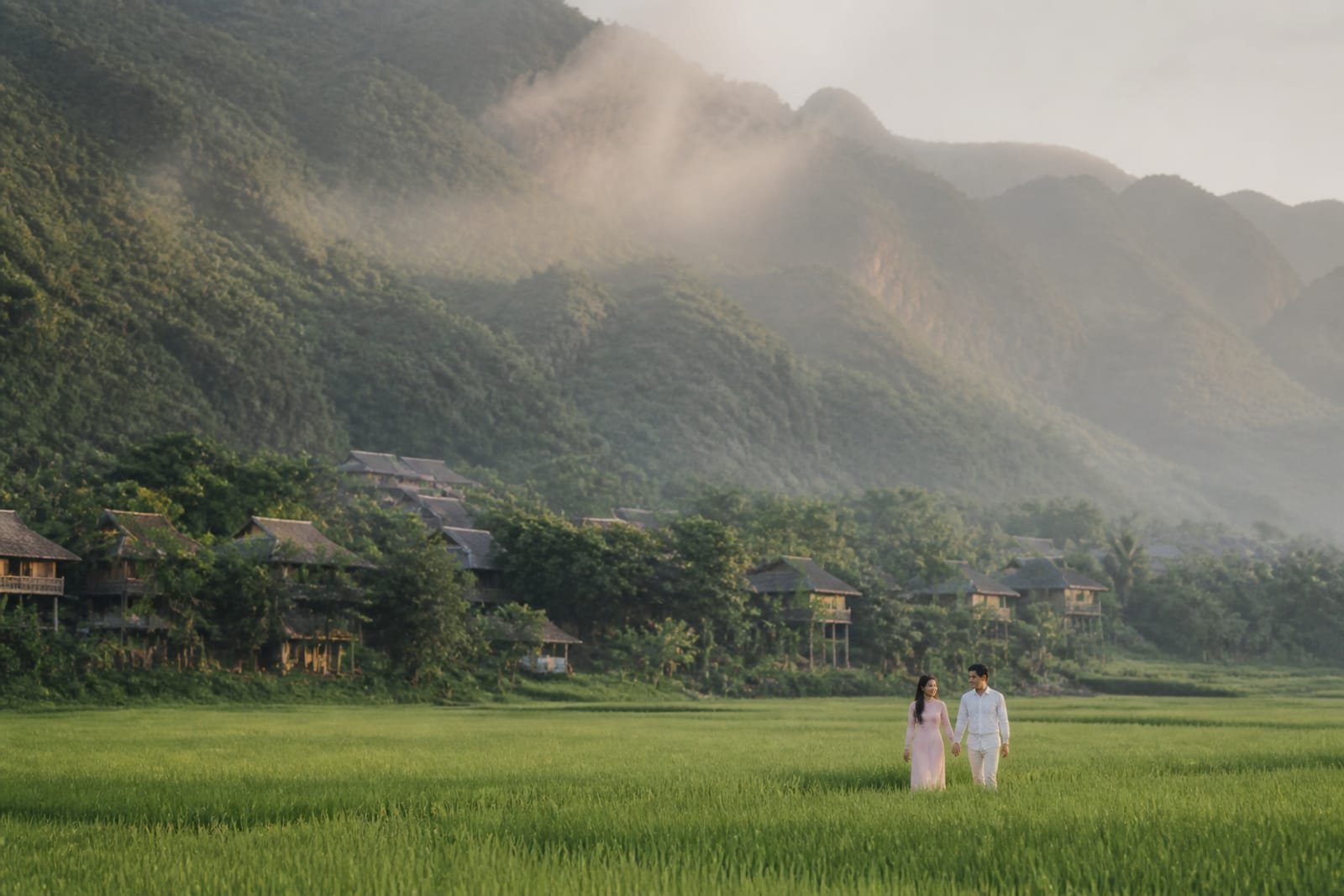
Light and rice color change everything. Late May through June: rice is green, the air is misty, and you'll shoot in soft, diffused morning light—ideal for romantic, understated frames. September through October: terraces turn golden-yellow, skies clear, and side-light at sunrise is dramatic and warm. December through February is cool and grey; rice is already harvested. April through August (except May–June) is either overgrown or muddy. The difference between a mediocre shoot and a keeper often hinges on season choice, not which valley you pick.
📸 Book on WhatsApp — pre-wedding photoshoot
Which valley fits your style: accessibility or drama?
| Option | Best for | Light & terrain | Why it works |
|---|---|---|---|
| Mai Chau | Couples with less hiking experience; homestay + rice in one trip | Softer morning mist; moderate slopes; accessible water buffalo paths | homestays, villages close together, 2–3 hour gentle walks; easier outfit changes |
| Pu Luong | Couples seeking wild, high-contrast frames; adventure-ready | Sharp sunrise side-light; steeper trails; fewer villages; more solitude | dramatic elevation, fewer tourists at dawn, golden hour burns cleaner |
Mai Chau is busier (homestay tourism is established) but logistics are simpler: your accommodation, your light, your villages are close. Pu Luong demands more fitness and a guide, but you'll have valleys to yourself at 5:30 am. Neither is objectively "better"—they answer different questions.
How do you move an ao dai, makeup and two people through mud and mist?
A pre-wedding shoot in rice valleys requires one coordinator who knows the walk, the light window, and the bride's dress inside out. Here's what actually works: (1) Choose a photographer + guide duo—one person directs, one knows the trail and weather. (2) Pack the ao dai in a garment bag in a dry bag; change into it 20 minutes before golden hour, not on the trail. (3) Wear hiking shoes and a change of socks; mud cakes off, sweat doesn't. (4) Hire a porter if you have makeup and two outfit changes—that person carries everything while the photographer and bride walk. (5) Start 1.5 hours before sunrise—you'll shoot in mist, then move to open terraces as light hardens. Couples who skip planning step (1)—thinking they'll coordinate the photographer, the guide and makeup on arrival—end up chasing light instead of finding it.
What should you ask a local photographer before booking?
| Question | Why it matters | Red flag |
|---|---|---|
| Have you shot a full pre-wedding session (2+ days, multiple outfits) in this valley before? | One-off sunset shoots ≠ logistics and pacing | "I shoot couples all the time" / no specific valley experience |
| Do you own or co-own a car and know a local guide? | Strangers hired on the day cause delays | photographer relies entirely on apps or recommendations |
| How many frames per hour, and how do you direct movement? | Posing = static; real movement = usable footage | "You just walk naturally, I'll shoot" (means no direction) |
| What happens if weather closes the sunrise window? | Weather pivots mean backup light and routes | no backup plan, refund-only clause |
| How do you deliver photos, and in what timeline? | Edited delivery tells you if they're organized | "I'll send within a month" or no mention of editing |
A strong photographer answers with specifics: "I've shot 12 pre-wedding sessions in Pu Luong; I partner with Duc, a guide who speaks English and knows every valley. We shoot 60–80 frames per hour—I direct you to walk, turn, look at each other while I track the light. If fog closes the sunrise, we pivot to misty-light portraits in the village and reschedule the golden-hour walk. I deliver a Lightroom-edited gallery within 2 weeks." Vague answers ("I adapt to what feels right") are cheaper but won't give you consistency or safety.
What does outfit planning look like in a valley with no changing rooms?
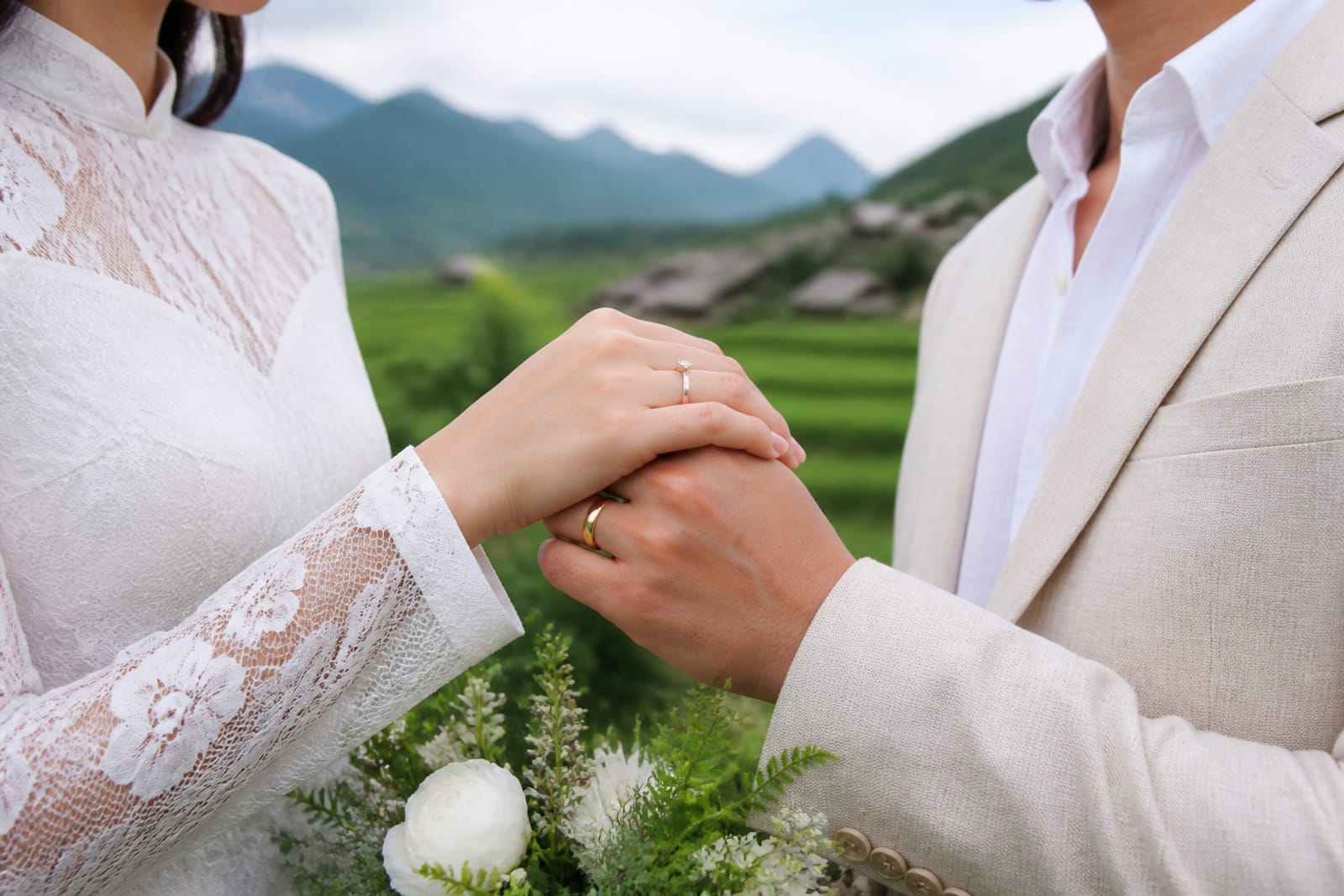
Two outfits in a rice valley means: (1) Ao dai + traditional hairpiece for golden hour (lightweight silk, easier to hike in); (2) Western dress or casual look for misty morning light (jeans, linen, a cardigan—things that read well in grey light). Skip outfit three; changing twice with makeup touch-ups and photo moves takes 4+ hours. Here's the sequence: arrive at 4 am, change into your Western outfit in the homestay or car, shoot mist and village light 5–6:30 am, hike to open terraces, change into the ao dai at 6:45 am (behind a large rock or a makeshift screen), shoot 7–8:30 am in golden light, rest, revisit a secondary location for detail shots (close-ups of hands, embroidery, rings) in softer afternoon light around 4 pm. This rhythm lets light do the work instead of outfit changes doing the work. Couples who try to change three times or bring heavy Western dresses end up tired, sweaty makeup, and fewer usable frames.
Why book a local photographer instead of flying in a Hanoi studio team?
Cáo Studio shoots in Hanoi, Saigon and Hoi An—not in remote valleys—because the best photoshoots require a team that knows the terrain, has local relationships and can scout at sunrise the same week. A Hanoi photographer flying to Pu Luong arrives the day before, doesn't know the porters or the homestay owner, and has to burn an hour figuring out which trail has the best light. A local team (photographer + guide) has shot that valley 20+ times; they know which homestay has the least tourists, which field lights up first, and where the backup plan lives if weather shifts. Local photographers also cost less—no travel, no hotel, no per-diem. The trade-off: fewer high-end retouching and styling compared to Hanoi studios. For rice valleys, that trade-off is worth it: a sharp, simple frame of you two walking into golden light beats an over-processed studio setup every time.
---
What to check before you book a local photographer
- Portfolio: ask to see 3–5 full pre-wedding sessions (2+ days each), not single couple shots
- Communication style: can they direct you clearly, or do they expect you to pose? (Real light = real movement, not stiff framings)
- Weather backup: what's the pivot plan if sunrise is rained out?
- Editing: ask for an unedited sample so you see their baseline (over-processed is a sign they're hiding light issues)
- Delivery timeline and files: do they give RAW files or only edited JPEGs? When do you receive them?
- Local knowledge: can they name three specific locations by light quality (not just "the main terrace")? Do they know a backup route if crowds arrive?
---
How to prepare: checklist for your valley shoot
Before booking:
- [ ] Decide on season (May–June or Sep–Oct; check current weather on local sites, not averages)
- [ ] Choose valley based on accessibility and light preference (Mai Chau vs. Pu Luong comparison above)
- [ ] Research and vet 2–3 local photographers using the questions in the section above
- [ ] Confirm photographer has a backup guide and a car; this is non-negotiable
Two weeks before:
- [ ] Confirm ao dai fits and is hemmed (or arrange rental with a local tailor; ask photographer for referral)
- [ ] Book homestay directly and tell them you're doing a photoshoot; ask about quiet times for hair/makeup
- [ ] Ask photographer to send you the exact timeline: when to wake, when to be ready, where to hike, when light is best
One week before:
- [ ] Break in hiking boots; practice walking in them (blisters kill momentum in light windows)
- [ ] Plan outfit 2: check how it reads in grey morning light (bring a mirror or take a test photo outdoors at sunrise in your home city)
- [ ] Confirm weather for your dates; if forecast is poor, ask photographer about rebooking options
Day before:
- [ ] Lay out both outfits, check ao dai for wrinkles (steam it in the bathroom with hot water if needed)
- [ ] Get a good night's sleep; early mornings in valleys are cool and you'll feel the difference
- [ ] Ask the homestay owner to set water for tea/coffee at 3:30 am
---
FAQ
Can we do a pre-wedding shoot in Sapa or Ha Giang instead?
Sapa and Ha Giang are further north and subject to cold, grey winters (Dec–Feb) and monsoon rain (May–Sep). Mai Chau and Pu Luong have better predictability: golden rice (Sep–Oct) or green rice + mist (May–June). For Sapa, you'll need a local photographer; the same vetting questions apply.
How many photos will we get from a 2-day valley shoot?
A local photographer shooting 60–80 frames per hour across 8–10 shooting hours (dawn, morning, evening on two days) will deliver 500–800 raw frames. Edited selects are typically 80–150, depending on their style and your preferences. Confirm exact numbers with your photographer before booking.
Should we hire hair and makeup locally or bring someone from Hanoi?
A local hair/makeup artist costs less and knows the homestay layout. A Hanoi artist offers more consistent styling but requires travel. Either works if they've done outdoor shoots before—ask to see photos taken in natural light, not studio light.
What if it rains during our shoot window?
Rain in May–June and mist are the same thing photographically (soft, grey light). Rain in Sep–Oct is rarer but happens. A good photographer uses rain for moody texture; a great one has a secondary location (village, interior homestay, forested path) ready. Confirm the weather pivot plan before booking.
How long does it take to get edited photos?
A local photographer typically delivers within 2–4 weeks. A Hanoi studio can turn around in 5–7 days but at higher cost. Ask and confirm timeline in writing before you book. ===INTERNAL LINKS (required use in body)=== 1. pre-wedding photoshoot — pillar, appears ≥3 times ✓ 2. Cáo Studio does not operate in these valleys — Hanoi base ✓ 3. couple photoshoot — related service ✓ 4. makeup & hair at your hotel — logistics mention ✓ 5. lookbook — style reference ✓ 6. ao dai rental — outfit option ✓
FAQ
Can we do a pre-wedding shoot in Sapa or Ha Giang instead?
Sapa and Ha Giang are further north and subject to cold, grey winters (Dec–Feb) and monsoon rain (May–Sep). Mai Chau and Pu Luong have better predictability: golden rice (Sep–Oct) or green rice + mist (May–June). For Sapa, you'll need a local photographer; the same vetting questions apply.
How many photos will we get from a 2-day valley shoot?
A local photographer shooting 60–80 frames per hour across 8–10 shooting hours (dawn, morning, evening on two days) will deliver 500–800 raw frames. Edited selects are typically 80–150, depending on their style and your preferences. Confirm exact numbers with your photographer before booking.
Should we hire hair and makeup locally or bring someone from Hanoi?
A local hair/makeup artist costs less and knows the homestay layout. A Hanoi artist offers more consistent styling but requires travel. Either works if they've done outdoor shoots before—ask to see photos taken in natural light, not studio light.
What if it rains during our shoot window?
Rain in May–June and mist are the same thing photographically (soft, grey light). Rain in Sep–Oct is rarer but happens. A good photographer uses rain for moody texture; a great one has a secondary location (village, interior homestay, forested path) ready. Confirm the weather pivot plan before booking.
How long does it take to get edited photos?
A local photographer typically delivers within 2–4 weeks. A Hanoi studio can turn around in 5–7 days but at higher cost. Ask and confirm timeline in writing before you book. ===INTERNAL LINKS (required use in body)=== 1. [pre-wedding photoshoot](/pre-wedding-photoshoot) — pillar, appears ≥3 times ✓ 2. [Cáo Studio does not operate in these valleys](/hanoi) — Hanoi base ✓ 3. [couple photoshoot](/couple-photoshoot) — related service ✓ 4. [makeup & hair at your hotel](/makeup-and-hair) — logistics mention ✓ 5. [lookbook](/lookbook) — style reference ✓ 6. [ao dai rental](/ao-dai-rental) — outfit option ✓
Ao dai, makeup, hair and a local photographer in Hanoi or Saigon — one WhatsApp message.