/pre-wedding-photoshoot
Pre-wedding photoshoot in Mai Chau and Pu Luong: February light and cr
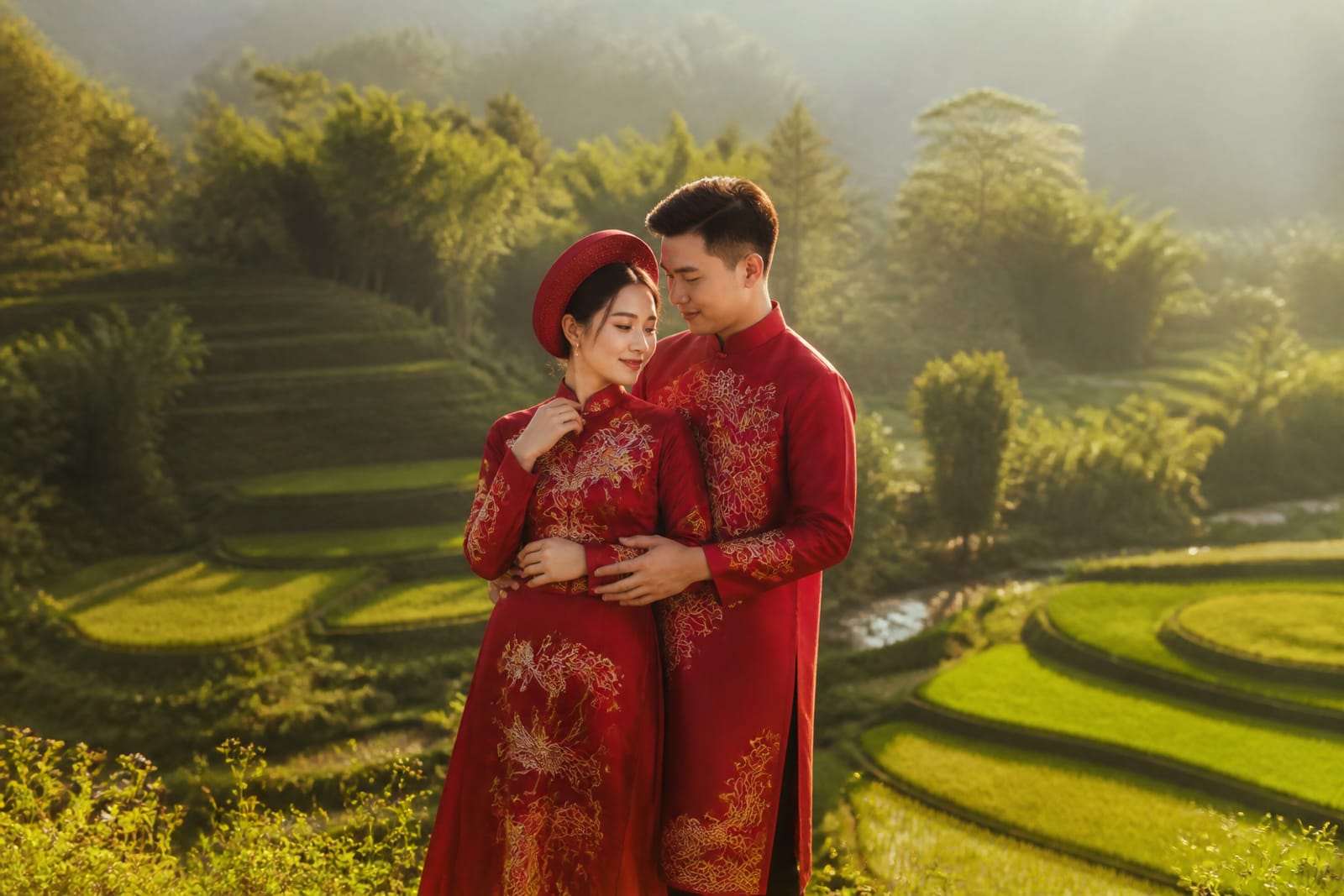
February is ideal for pre-wedding shoots in Mai Chau and Pu Luong: temperatures hover around 15–18°C, mornings are clear and cool (soft, directional light from 6:30–8:00 am), and rice terraces stay bright green after winter irrigation. Tourist crowds are lowest before Tet (late January–mid February). Unlike city shoots, you'll need a local photographer and transport coordinated in advance — there's no studio base here. Plan 2–3 days on location: one for scouting light and terrain, one for the main shoot, one for backup weather. Avoid the Tuesday–Friday school holidays (if your dates fall near Tet) when domestic tourists spike. Cáo Studio operates in Hanoi, Ho Chi Minh City and Hoi An; for Mai Chau and Pu Luong, we guide you to local photographers and offer pre-wedding editing and prints back at home. ---
What makes February special for a pre-wedding shoot in these valleys?
February is the clearest, coldest month in northern Vietnam's mid-altitude zones. Mornings (6:30–8:30 am) are almost cloudless, with gentle side light that sculpts terraces and pulls warmth from outfits without harsh shadows. Days warm to 18–22°C by noon — comfortable for walking and outfit changes. Rice paddies absorb winter irrigation, so greens are saturated and reflective. Humidity is lowest of any season; your hair stays in place and skin looks fresh in unedited frames. The trade-off: late afternoon (after 4:00 pm) cools quickly, and the sun sets by 5:15 pm, cutting shoot windows short.
📸 Book on WhatsApp — ao dai photoshoot
How do crowds and bookings differ from Hanoi shoots?
Mai Chau and Pu Luong lack the infrastructure of Hanoi. Guesthouses fill by mid-February; most book out 4–6 weeks early. Tourist numbers spike only on Saturdays and Sundays (Vietnamese families and tour groups); weekday shoots are quiet, with fewer homestays and trek groups visible in frames. No studio means no walk-in appointments — everything must be arranged by WhatsApp or email with your chosen photographer before arrival. Unlike a city couple photoshoot, you can't book hair and makeup on location; plan to do these at your guesthouse or bring a small kit. Local photographers typically ask for a deposit 2–3 weeks ahead and expect payment in cash on the shoot day.
Which locations offer the best light and what should you wear?
| Location | Best time | Light character | Walking effort | Outfit fit |
|---|---|---|---|---|
| Mai Chau terraces (west rim) | 6:45–8:15 am | Side light, terraces lit gold; misty valleys below | Gentle uphill, 20 min walk-in | Ao dai works; long skirts catch dew |
| Pu Luong canopy bridges | 7:00–8:30 am | Dappled, soft (forest shade + morning sun) | Moderate, slippery after rain; stairs | Casual ao dai or fitted dress; avoid trailing fabrics |
| Pa Co village (Pu Luong) | 8:00–9:30 am | Diffused (houses, trees); warm tones | Flat, 15 min; locals may photograph you back | Lightweight ao dai; easy movement |
| Ban Lac (Mai Chau) homestay grounds | Early morning or late afternoon | Soft backlight (river valley); moody | Minimal | Best for relaxed poses and transitions |
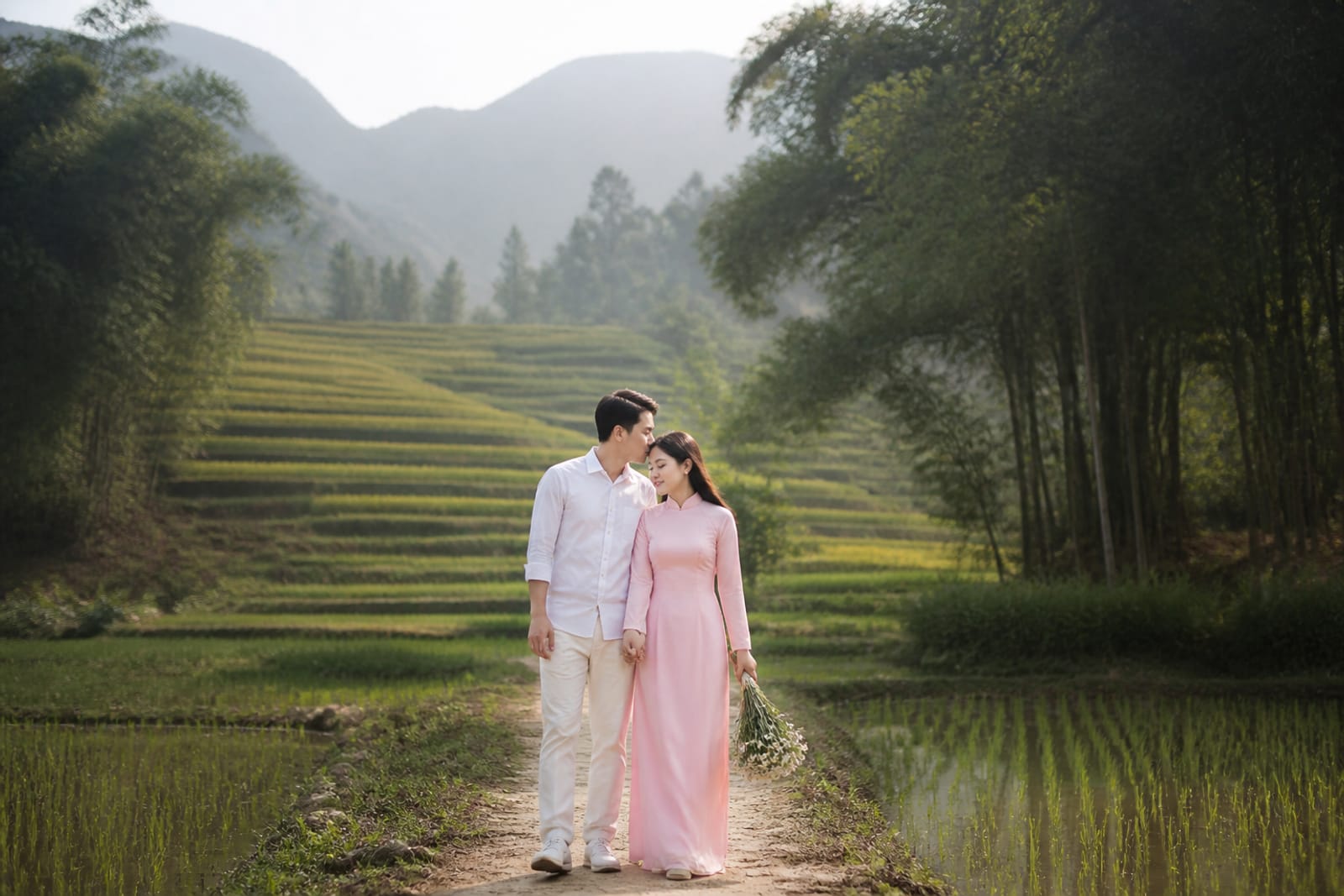
Ao dai works beautifully on terraces but absorbs dew; ask your photographer to shoot higher angles and consider a second outfit (lightweight printed dress or casual trousers + tunic) for mid-morning. Footwear must have grip — terraces are slippery after morning moisture. Layers are essential; you'll shed a jacket by 9:30 am but need it by late afternoon.
How do you find and vet a local photographer?
Contact local tourism boards or ask your guesthouse directly — they know photographers with reliable equipment and cultural respect. Ask to see portfolios from at least three previous couple and family shoots (not just solo tourists or real-estate work). Red flags: photographer unwilling to share contact or past client references, no backup camera, or unclear pricing (confirm whether editing is included). Ideal candidate has a mirrorless or DSLR with a stabilized wide lens, experience on uneven terrain, and comfort with ao dai and slow-paced framing (not rushed, pose-heavy shooting). Request a test call or WhatsApp video to confirm language and communication before committing. Budget for transport (photographer may ask a share of jeep or motorbike hire) and a longer shoot day than you'd book in the city — natural light windows are shorter, and walking between locations takes time.
What weather and safety things should you plan for?
February is dry, but morning dew and microclimates create risk. Terraces can be slippery until 8:30 am; wear non-slip footwear and scout locations briefly before the shoot. Expect temperatures to swing 15–22°C between dawn and mid-day — bring a cardigan or light jacket to drop once shooting starts. Sunscreen is essential; even February sun reflects off water and terraces. No medical facilities exist on-site; the nearest clinic is 30–45 minutes by jeep in Mai Chau town or Cuc Phuong (Pu Luong). Bring a basic first-aid kit for blisters and minor cuts. Mobile signal is spotty in deep valleys — pre-load offline maps and confirm your photographer has a charged phone. If weather turns grey (rare, but possible), have a backup indoor location (homestay common room, covered market) scouted in advance.
How does editing and delivery work after you shoot locally?
Unlike a Cáo Studio shoot (where we deliver edited photos and a short film within 48 hours), a local photographer will set their own timeline — typically 3–4 weeks for edited galleries. Ask in advance whether the file count, editing style (warm, cool, contrasty, or natural), and revision rounds are included. Confirm file format (JPEG, RAW) and ownership before paying. If you want professional album design, prints or heirloom video editing, Cáo Studio can work with your local photographer's RAW files or JPEG gallery once you're home — ask on WhatsApp about our photo album and photo prints services.
---
What to check before you book a local shoot
- Photographer portfolio: at least 5 recent couple/family shoots in Mai Chau or Pu Luong, not one-off tourist shots.
- Backup gear: does the photographer carry a second camera and backup memory cards?
- Transport: who arranges the jeep or motorbike? Are costs split or included in the fee?
- Editing timeline and style: confirm when you'll see a draft gallery, how many edits are allowed, and what the final look will be.
- Contract or agreement: get a WhatsApp message or email confirmation of the date, locations, outfit count, and payment terms — no verbal-only bookings.
- Communication test: have a brief call or video chat before the shoot to confirm language and vision alignment.
---
For shoots in Hanoi, Ho Chi Minh City or Hoi An, Cáo Studio handles the full production: one team (photographer, makeup artist, hair stylist, director) arrives with outfits, coordinates on location, and delivers edited galleries plus a short film within 48 hours. For Mai Chau and Pu Luong, a pre-wedding shoot requires working with a vetted local photographer — but the planning, light windows and outfit strategy remain the same. Reach out on WhatsApp if you'd like guidance on finding the right local team or want to book editing and album design once your shoot is done.
FAQ
Is February really cloudless in Mai Chau and Pu Luong, or should I expect grey days?
February is the driest month, but mountain microclimates mean 30-minute cloud bursts can occur. Expect 70–80% clear mornings; afternoon clouds increase after 3:00 pm. Scout a backup indoor location (homestay, village market) on your arrival day to stay flexible.
Do I need an ao dai for a pre-wedding shoot there, or are casual outfits better?
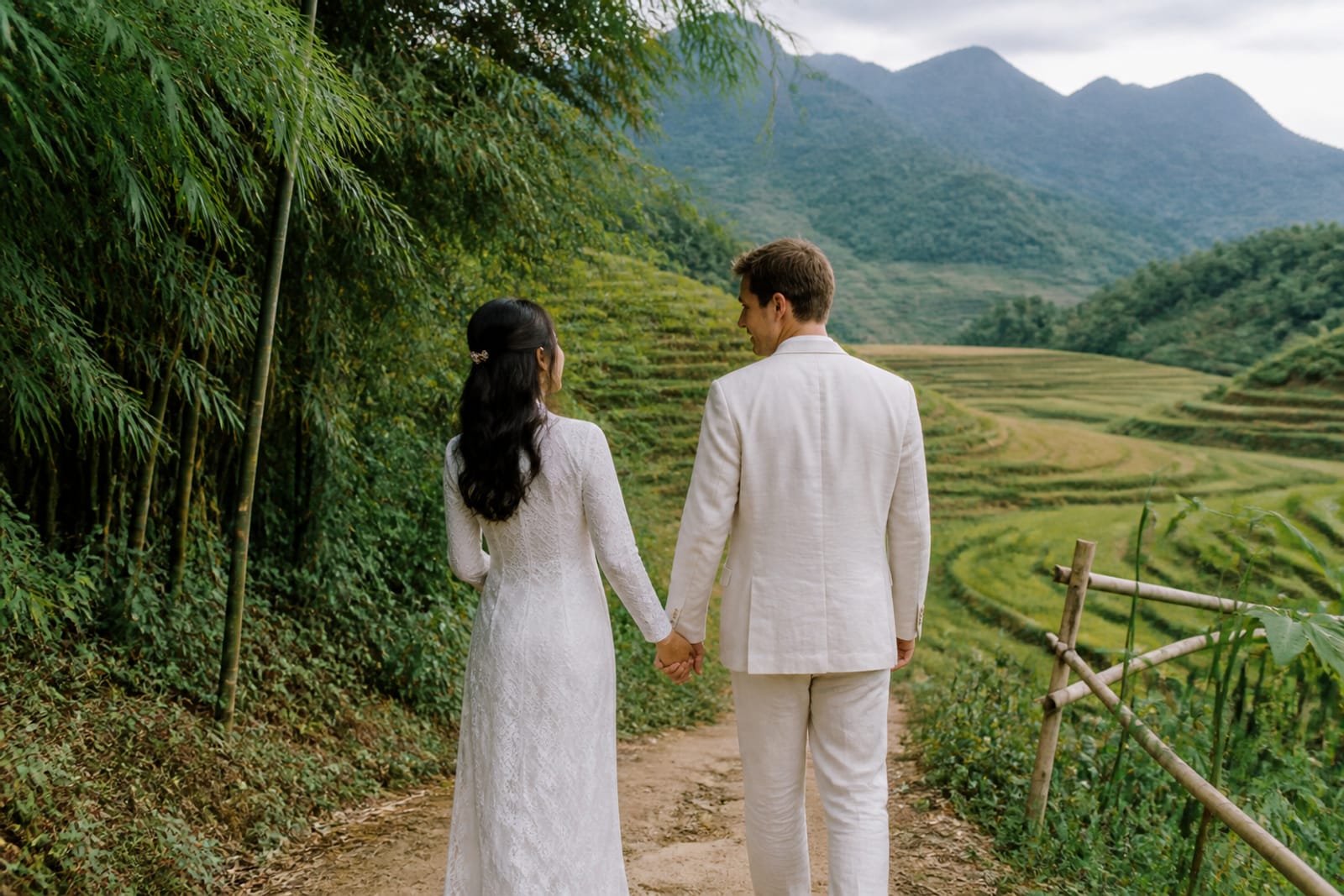
Ao dai looks stunning on terraces but absorbs dew and limits movement. Plan two outfits: ao dai for early morning (6:45–8:15 am when light is softest), then switch to a fitted casual dress or trousers + tunic for mid-morning walks. Your photographer will advise based on the day's weather.
How far is Mai Chau or Pu Luong from Hanoi, and how do I coordinate a shoot with travel time?
Mai Chau is 135 km southwest (2.5–3.5 hours by car); Pu Luong is 100 km south (2–3 hours). Arrive one day early to settle, acclimatize and scout light. Plan a two-day stay minimum: day one for reconnaissance and outfit prep; day two for the main shoot; optional day three as a weather buffer.
Can I book Cáo Studio to shoot my pre-wedding in Mai Chau or Pu Luong?
Cáo Studio operates in Hanoi, Ho Chi Minh City and Hoi An only. For Mai Chau or Pu Luong, we guide you through finding a local photographer and can edit your photos and produce prints and albums once you return home. Message us on WhatsApp for recommendations.
What's the best time of day to shoot, and how long should a session be?
Shoot 6:45–8:30 am for clear, warm light on terraces. Plan 4–5 hours total: 15–20 minutes setup and scouting, 90 minutes main shoot (two outfits, multiple locations), 30 minutes travel time between spots, 30 minutes buffer for light and mood changes. Afternoon shoots are feasible (3:00–5:00 pm) but cut shorter due to early sunsets.
Do I need a permit or permission to shoot on the terraces?
No formal permit exists, but ask your guesthouse or local photographer before shooting. Respect homestay owners and villagers — they may charge a small courtesy fee or ask to be excluded from frames. Your photographer should know local etiquette; confirm this during your vetting process.
FAQ
Is February really cloudless in Mai Chau and Pu Luong, or should I expect grey days?
February is the driest month, but mountain microclimates mean 30-minute cloud bursts can occur. Expect 70–80% clear mornings; afternoon clouds increase after 3:00 pm. Scout a backup indoor location (homestay, village market) on your arrival day to stay flexible.
Do I need an ao dai for a pre-wedding shoot there, or are casual outfits better?
Ao dai looks stunning on terraces but absorbs dew and limits movement. Plan two outfits: ao dai for early morning (6:45–8:15 am when light is softest), then switch to a fitted casual dress or trousers + tunic for mid-morning walks. Your photographer will advise based on the day's weather.
How far is Mai Chau or Pu Luong from Hanoi, and how do I coordinate a shoot with travel time?
Mai Chau is 135 km southwest (2.5–3.5 hours by car); Pu Luong is 100 km south (2–3 hours). Arrive one day early to settle, acclimatize and scout light. Plan a two-day stay minimum: day one for reconnaissance and outfit prep; day two for the main shoot; optional day three as a weather buffer.
Can I book Cáo Studio to shoot my pre-wedding in Mai Chau or Pu Luong?
Cáo Studio operates in [Hanoi](/hanoi), [Ho Chi Minh City](/saigon) and [Hoi An](/hoi-an) only. For Mai Chau or Pu Luong, we guide you through finding a local photographer and can edit your photos and produce [prints and albums](/photo-album) once you return home. Message us on WhatsApp for recommendations.
What's the best time of day to shoot, and how long should a session be?
Shoot 6:45–8:30 am for clear, warm light on terraces. Plan 4–5 hours total: 15–20 minutes setup and scouting, 90 minutes main shoot (two outfits, multiple locations), 30 minutes travel time between spots, 30 minutes buffer for light and mood changes. Afternoon shoots are feasible (3:00–5:00 pm) but cut shorter due to early sunsets.
Do I need a permit or permission to shoot on the terraces?
No formal permit exists, but ask your guesthouse or local photographer before shooting. Respect homestay owners and villagers — they may charge a small courtesy fee or ask to be excluded from frames. Your photographer should know local etiquette; confirm this during your vetting process.
Ao dai, makeup, hair and a local photographer in Hanoi or Saigon — one WhatsApp message.