/pre-wedding-photoshoot
Pre-wedding photoshoot in Mai Chau and Pu Luong in January
January in Mai Chau and Pu Luong offers cool, dry weather (roughly 10–18°C), stable light, and minimal rainfall—ideal for pre-wedding work. Rice terraces are golden only in late May–June and September–October, so expect green to brown fallow fields; the real appeal is misty mornings, villages, water buffalo and uncluttered paths. The season is busy with domestic tourists around Tet (late January–mid February), so book early. Because Cáo Studio is based in Hanoi and Saigon, we do not operate a branch here; instead, we guide you on local logistics and recommend vetting a Mai Chau or Pu Luong photographer on their portfolio, previous clients and responsiveness on WhatsApp. If you'd prefer a familiar creative team, pre-wedding shoots at /hanoi offer the same directed, one-team approach—you travel to Hanoi for a day, or we plan a session during a Vietnam trip stopover.
January light in these valleys is clearer than summer humidity suggests, but not warm. Mornings (6–9 am) are coldest and misty; side light softens faces and outlines terraces. By 10 am, mist burns off and light flattens—acceptable for wide landscape shots, less flattering for close portraits. Late afternoons (4–5:30 pm) return side light but fade quickly in mountain shade. Plan your shoot in two short windows: a misty dawn session (bring layers) and a 4–5 pm golden-hour walk through a village or by water. Expect overcast days; they diffuse light evenly, hiding shadows but flattening depth—fine for editorial, less dramatic than clear skies.
📸 Book on WhatsApp — ao dai photoshoot
Is January the best month for a Mai Chau or Pu Luong pre-wedding shoot?
January is excellent for light and weather, but not for rice color. Dry, cool conditions mean no rain delays and clear morning skies ideal for soft side-light portraits and landscape framing. Crowds are moderate until Tet week (late January–mid February), when roads jam and homestays fill. The trade-off: fields are dormant (green in early months, brown when fallow)—if golden rice is a priority, you'll miss it. Book pre-Tet weeks if possible; post-Tet (mid-February onwards) offers fewer tourists but less stable weather.
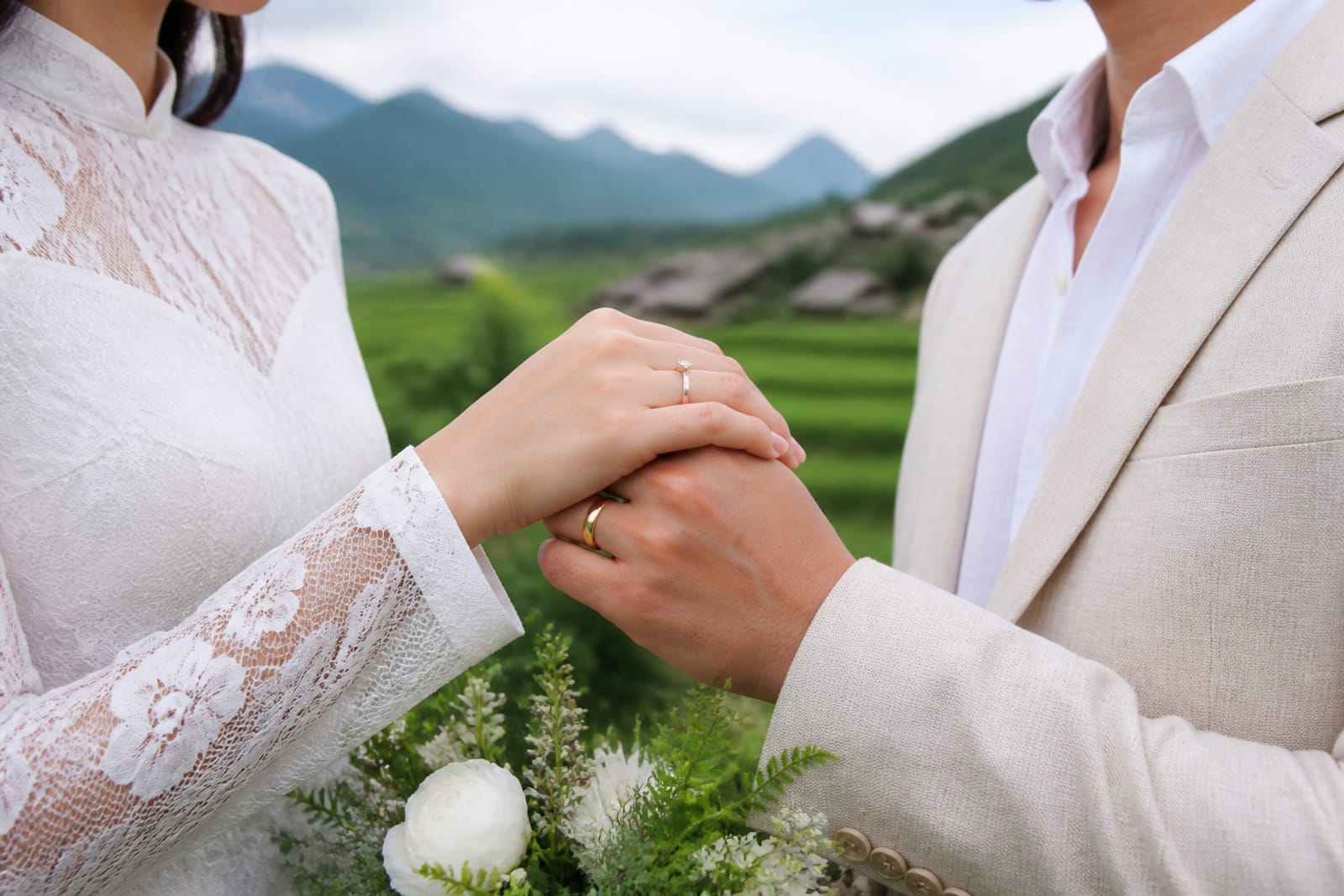
Should you shoot in ao dai, Western dress, or both in January?
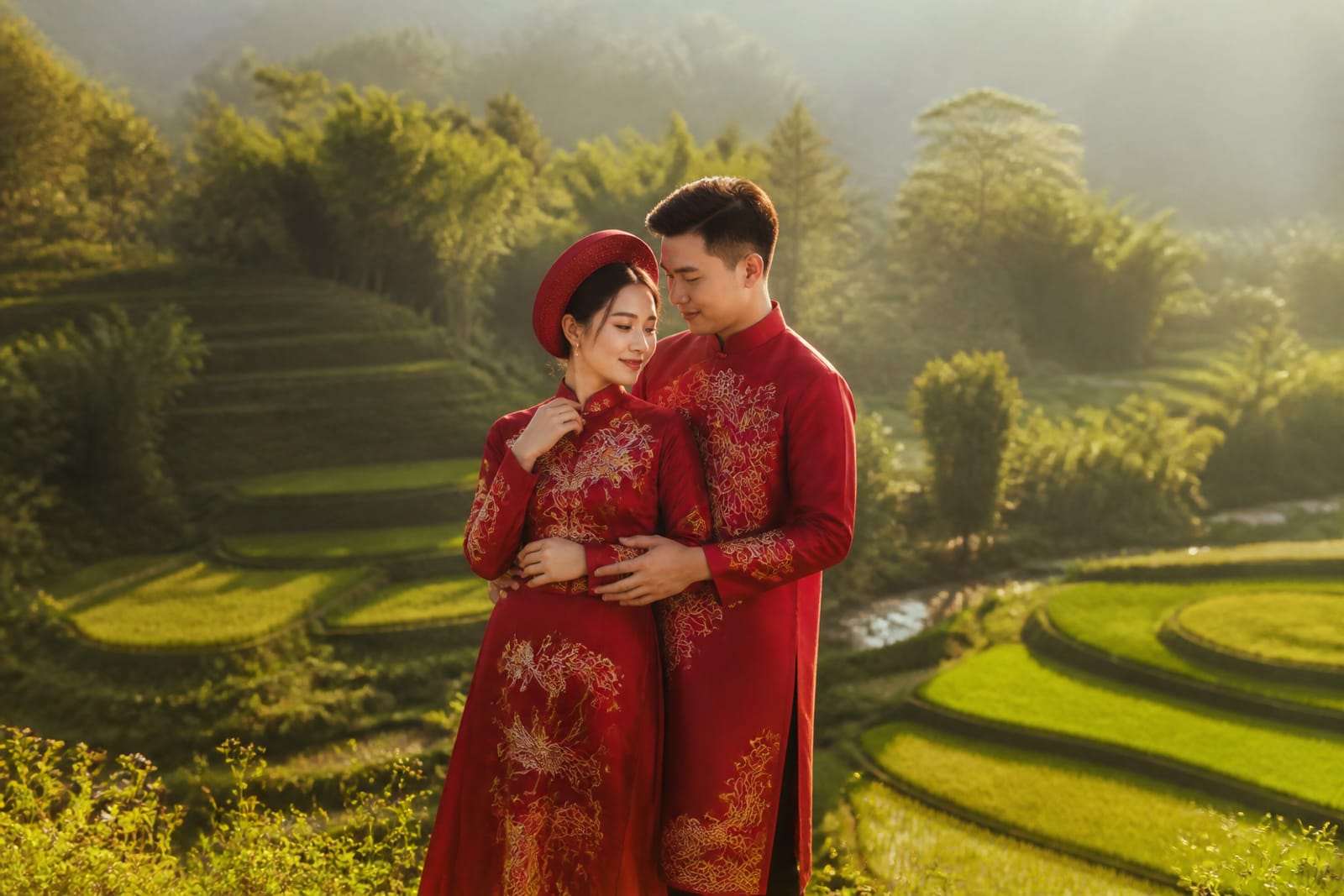
An ao dai works beautifully in January light and plays well against mist and green terraces. Silk and cotton ao dai breathe in cool air; cream, gold and jewel tones read clearly in soft, side-lit morning conditions. Wear thermal leggings underneath (ao dai trousers alone are thin). A second outfit—casual jeans, a sweater or linen—works for village walk-throughs and candid moments. Heavy fabrics (wool, leather) are unnecessary; layers (a light cardigan or shawl) matter more for warmth and visual interest in wide shots. Flat shoes or barefoot walking boots grip wet stone paths and homestay courtyards better than heels. If you're unsure how to layer for both warmth and camera, the makeup & hair team at Cáo Studio Hanoi can advise on day-of changes during a Hanoi pre-wedding session; for a remote shoot, WhatsApp the local photographer your outfit list two weeks ahead.
How do you find and vet a photographer in Mai Chau or Pu Luong?
Start with Instagram hashtags (#MaiChauPhotoshoot, #PuLuongWedding) and ask homestay owners for referrals—they work with photographers weekly and know responsiveness and reliability. Request a portfolio of at least five full sessions (not single highlight reels); look for consistency in light handling, how couples interact (posed stiffness vs. natural movement), and whether the photographer directs framing or just shoots. Ask for two client references and message them on Messenger or Zalo asking about turnaround time, communication and editing style. Confirm the photographer brings backup gear (second camera, extra batteries), has liability insurance, and will deliver edited images within 2 weeks. If you're uncomfortable vetting a stranger, book a pre-wedding photoshoot in Hanoi with Cáo Studio; we handle direction, styling and editing as one team, and you can integrate a Mai Chau or Pu Luong location scout into your wider Vietnam trip.
What's the difference between morning mist shoots and afternoon light in these valleys?
| Timing | Best for | Light quality | Why it works |
|---|---|---|---|
| 6–8 am (mist) | Moody, editorial couples | Soft, directional, misty | Shadows fade into fog; faces glow; fields stay textured |
| 9–11 am (post-mist) | Wide landscapes, family groups | Diffused, even, cool | Clouds spread light; no harsh shadows; details read clearly |
| 1–3 pm | Village walks, candids | Flat, overhead (avoid) | Shadows under eyes; less flattering; use for wide establishing shots only |
| 4–5:30 pm (golden hour) | Portraits, intimate moments | Warm, directional, low | Best light of the day; short window; fast fading in valleys |
Morning mist sessions require an early wake (5 am drives), cold hands and layers, but deliver the editorial mood Mai Chau is known for. Afternoon golden hour is flattering but brief—plan a village walk to use the light in motion, not stationary poses. Overcast days (common in January) flatten the difference; use them for detail and editorial work rather than dramatic backlighting.
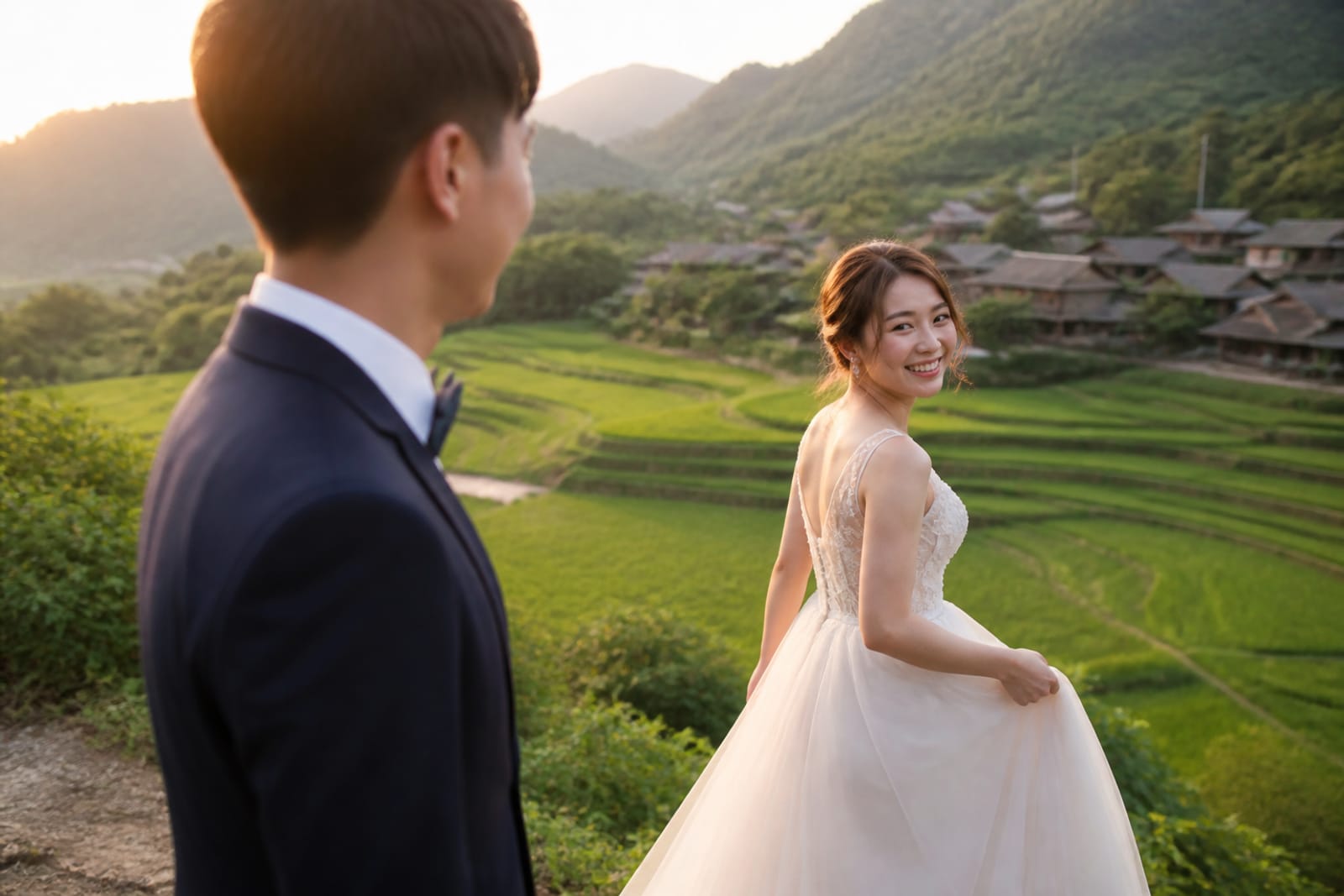
How does local logistics differ from booking a Hanoi studio team?
If you hire a Mai Chau or Pu Luong photographer directly, you coordinate: makeup artist (if separate), outfit delivery or storage at your homestay, hair touch-ups between scenes, timing and transportation to shoot locations, and managing the photographer's schedule around their other bookings. You also manage weather pivots (if it rains hard, can you reschedule?) and edit revisions across WhatsApp. With a Cáo Studio Hanoi pre-wedding session, one team handles creative direction, styling, makeup, hair and photography; you arrive ready, we drive and set the narrative, and you have images in 48 hours. The trade-off: you travel to Hanoi (or book us as part of a wider trip), not shoot in your chosen valley. Many couples combine both—a Hanoi ao dai session for the couple story, and a local Mai Chau photographer for a casual morning walk and village details.
What permits or permissions do you need to shoot in Mai Chau and Pu Luong?
Tourist photography in public homestays and village paths is generally unrestricted, but customs vary by location. Ask your homestay owner if drones are allowed (some valleys restrict them). For Pu Luong Limestone National Park (if you're shooting inside), check whether a guide or permit is required—regulations change, so contact the park directly. Respect local practice: don't photograph people, children or spiritual spaces (temples, family shrines) without permission, even if it's beautiful. Homestays may ask for small fees if you're shooting professionally (clarify whether you're a couple doing a personal shoot or hiring a crew). Always confirm local rules with your photographer and homestay two weeks before arrival; they know current requirements better than online guides.
What to check before you book a local photographer or travel for a pre-wedding shoot.
Weather and flexibility: Check the forecast 5 days before. January is generally stable, but overcast days are common; confirm the photographer is comfortable shooting in flat light, and that you have a rain date option.
Communication timeline: Does the photographer respond on WhatsApp within 24 hours? Will they send a shooting schedule (times, locations, outfit changes) one week ahead, or wing it on the day?
Editing and delivery: Get a written agreement on how many edited images you'll receive, the style (bright, moody, film-like), and the delivery date. No verbal promises.
Outfit and hair: If you're not hiring a separate stylist, ask the photographer if they've worked with couples in your outfit type (ao dai, wedding dress, casual) and whether they'll give feedback on fit or color while shooting.
Payment and cancellation: Agree on a deposit, final payment timing, and cancellation policy. Travel can shift; know your options if you need to reschedule.
Reference check: Ask for a previous couple's WhatsApp and message them directly—not a generic review.
If any of these steps feel unclear, book a pre-wedding shoot in Hanoi with Cáo Studio instead, or ask us on WhatsApp for a photographer recommendation in Mai Chau or Pu Luong. We've worked with couples in both valleys and can point you toward reliable creatives.
FAQ
Does Cáo Studio shoot pre-wedding sessions in Mai Chau or Pu Luong?
Cáo Studio is based in Hanoi and Saigon and does not operate in Mai Chau or Pu Luong. We guide you on how to find a local photographer there, and we offer pre-wedding sessions in Hanoi as an alternative—you travel to the city, or we plan a session during your Vietnam stopover. Ask on WhatsApp if you'd like a photographer referral.
Can you shoot an ao dai session in Mai Chau in January?
Yes—January weather is ideal for ao dai. Cool temperatures mean the silk sits well and breathes; misty mornings and soft side light flatter the fabric. Wear thermal leggings under the trousers. If you'd prefer a team that handles styling, makeup and photography together, book an ao dai photoshoot in Hanoi and combine it with a separate local photographer for landscape detail in the valley.
What's the best time of day to shoot in a Mai Chau or Pu Luong valley?
6–9 am (misty, directional, soft) and 4–5:30 pm (golden hour) are best. Midday (1–3 pm) light is flat and harsh. Expect overcast skies often in January; they diffuse light evenly, ideal for portraits but less dramatic than clear days. Plan two short shooting windows rather than one long session.
Will rice fields be golden in January?
No. Golden rice occurs in late May–June and September–October after harvest. In January, fields are either young green or brown fallow. The real appeal of January is clear light, mist, villages, water buffalo and uncluttered paths. Choose this month for light and weather, not rice color.
How long should a pre-wedding shoot in Mai Chau or Pu Luong take?
Most couples book 4–6 hours (two short sessions: early morning and late afternoon) and shoot one or two locations. A longer day (8+ hours) risks fatigue and diminishing light. With a local photographer, confirm the package includes a scout visit or a detailed shot list one week before, so you're not figuring out locations on the day.
Should we hire a separate makeup artist or rely on the photographer's recommendation?
If you're booking a local photographer, ask if they work regularly with a makeup artist. If yes, ask for a portfolio and confirm availability. If no, hire one independently—message makeup artists in Hanoi (they travel to Mai Chau) or ask your homestay for a local recommendation and meet them before the shoot. A makeup & hair team in Hanoi can prep you before you travel, so touch-ups during the shoot are minimal.
FAQ
Does Cáo Studio shoot pre-wedding sessions in Mai Chau or Pu Luong?
Cáo Studio is based in [Hanoi](/hanoi) and [Saigon](/saigon) and does not operate in Mai Chau or Pu Luong. We guide you on how to find a local photographer there, and we offer [pre-wedding sessions in Hanoi](/pre-wedding-photoshoot) as an alternative—you travel to the city, or we plan a session during your Vietnam stopover. Ask on WhatsApp if you'd like a photographer referral.
Can you shoot an ao dai session in Mai Chau in January?
Yes—January weather is ideal for ao dai. Cool temperatures mean the silk sits well and breathes; misty mornings and soft side light flatter the fabric. Wear thermal leggings under the trousers. If you'd prefer a team that handles styling, makeup and photography together, book an [ao dai photoshoot in Hanoi](/ao-dai-photoshoot) and combine it with a separate local photographer for landscape detail in the valley.
What's the best time of day to shoot in a Mai Chau or Pu Luong valley?
6–9 am (misty, directional, soft) and 4–5:30 pm (golden hour) are best. Midday (1–3 pm) light is flat and harsh. Expect overcast skies often in January; they diffuse light evenly, ideal for portraits but less dramatic than clear days. Plan two short shooting windows rather than one long session.
Will rice fields be golden in January?
No. Golden rice occurs in late May–June and September–October after harvest. In January, fields are either young green or brown fallow. The real appeal of January is clear light, mist, villages, water buffalo and uncluttered paths. Choose this month for light and weather, not rice color.
How long should a pre-wedding shoot in Mai Chau or Pu Luong take?
Most couples book 4–6 hours (two short sessions: early morning and late afternoon) and shoot one or two locations. A longer day (8+ hours) risks fatigue and diminishing light. With a local photographer, confirm the package includes a scout visit or a detailed shot list one week before, so you're not figuring out locations on the day.
Should we hire a separate makeup artist or rely on the photographer's recommendation?
If you're booking a local photographer, ask if they work regularly with a makeup artist. If yes, ask for a portfolio and confirm availability. If no, hire one independently—message makeup artists in Hanoi (they travel to Mai Chau) or ask your homestay for a local recommendation and meet them before the shoot. A [makeup & hair team in Hanoi](/makeup-and-hair) can prep you before you travel, so touch-ups during the shoot are minimal.
Ao dai, makeup, hair and a local photographer in Hanoi or Saigon — one WhatsApp message.