/pre-wedding-photoshoot
Pre-wedding photoshoot in Mai Chau and Pu Luong: March light and crowd
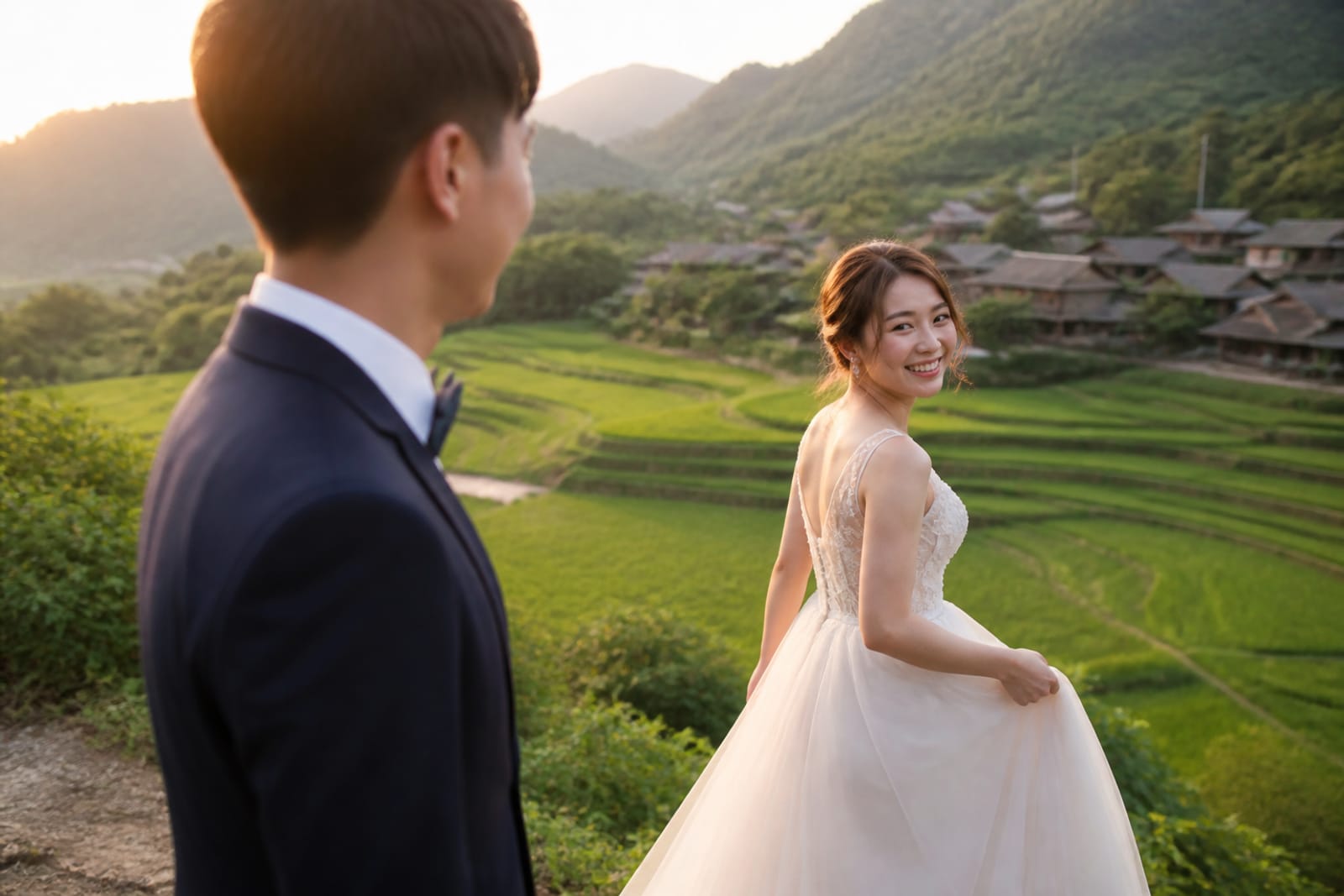
March in Mai Chau and Pu Luong offers near-perfect pre-wedding light: warm, horizontal rays across golden rice terraces, clear skies, and minimal rain. Daytime temperatures sit around 18–24°C, cool enough to move without overheating in formal wear. Crowds are lighter than February and April because Tet holiday traffic has ended and Easter travel hasn't started. Rice is mid-to-late golden (depending on exact planting date), terraces are lush in lower fields, and morning mist burns off by 6:30 a.m., giving you 5–6 hours of clean shooting light. Cáo Studio shoots pre-wedding sessions in Hanoi and Saigon, and we can coordinate hair and makeup if you shoot locally with a vetted photographer; ask us on WhatsApp to discuss your location and timeline. ---
Is March actually dry in Mai Chau and Pu Luong?
Yes. March falls entirely in the cool, dry season (roughly December–April) for both valleys. Rainfall is minimal—most days see no rain at all—and morning dew lifts completely by 6:30–7:00 a.m. This is why the light is so clean: no haze, no sudden downpours to interrupt your session. The trade-off is that waterfalls are lower than in the wet season (May–November), so if cascading water is central to your vision, you may want to reconsider the timing.
📸 Book on WhatsApp — ao dai photoshoot
How does the rice look in March?
This depends entirely on planting. Most farmers in Mai Chau and Pu Luong plant wet rice in May, harvest in September, and plant a second crop (dry season rice) in October, harvesting around February–March. By mid-to-late March, the first wet-season crop (from May planting) is just beginning to emerge as bright green shoots. The second crop is harvested or stubbled. Late March to early April is the golden window—between harvest and replanting—when terraces glow warm ochre and reflect afternoon light dramatically. Plan your shoot for late March (25th onward) if rice color is your priority.
What time of day gives the best light for a pre-wedding shoot?
Morning (5:30–7:30 a.m.) and late afternoon (4:00–6:30 p.m.) are strongest. Sunrise over the terraces is soft, diffuse, and cool-toned—ideal for romantic, wide frames of you walking through valleys. Midday (10 a.m.–3 p.m.) is harsh and flat; avoid it unless you're shooting in deep shade or forest. Late afternoon light turns golden and warm, casting long shadows across the ridges—perfect for couple portraits and detail shots of your ao dai or dress against the landscape. Mist lingers in shaded valleys until 7:30 a.m., adding moody depth; shoot through it rather than waiting for it to clear entirely.
What should we wear under an ao dai in March?
March temperatures drop to 16–18°C at dawn, rising to 20–24°C by late afternoon. Wear a lightweight long-sleeve undersuit (thin cotton or silk blend) under your ao dai—it keeps you warm at sunrise and allows you to move freely without chafing. If you're in a Western wedding dress, bring a lightweight cardigan or shawl; the valleys are cool enough that bare shoulders become uncomfortable after 30 minutes of standing still. Avoid heavy fabrics or dark underlayers that show through in backlighting. For grooms, a lightweight linen shirt under a suit jacket is ideal; you can remove the jacket for movement shots and tie it around your waist.
How do you find and vet a local photographer in Mai Chau or Pu Luong?
Mai Chau and Pu Luong are rural communes with no established photography studios. Your options are:
Ask your hotel or homestay – they often know local photographers or can recommend a guide who photographs well. This is the fastest route; homestay owners have years of reputation at stake.
Check Instagram for "Mai Chau photographer" or "Pu Luong photographer" – look for portfolios with strong light discipline (directional shadows, no blown-out skies, walking/moving frames rather than stiff poses). Follow the account for consistency: do they shoot different times of day? Do their couples look relaxed?
Hire through a Hanoi-based studio – studios like Cáo Studio can coordinate makeup and hair for your session and advise on local partnerships, but we recommend you book a local photographer directly to avoid communication delays. Most Hanoi studios will not travel to Mai Chau for a half-day session.
Interview the photographer – confirm they've shot in your exact location (Mai Chau or Pu Luong—they're different valleys with different light patterns), that they shoot in RAW format, and that they deliver edited images within 5–7 days. Ask to see a full session (not just highlights) and check for consistent exposure, sharp focus on faces, and natural posing.
What to compare:
| Factor | Local freelancer | Hotel photographer | Hanoi-based partner |
|---|---|---|---|
| Local knowledge | Excellent; shoots here weekly | Good; knows homestays | Variable; may not know exact light |
| Gear & backup | Check portfolio; verify backup camera | Usually basic | Professional; full backup |
| Turnaround | 5–7 days; may be delayed by weather or work | Slower; part-time role | 4–7 days; fixed deadline |
| Styling & direction | Photography only; you coordinate hair/makeup | Photography only | Can coordinate makeup & hair if booked through studio |
---
Do I need a permit to shoot in Mai Chau or Pu Luong?
No formal permit is required for pre-wedding or portrait photography in the valleys themselves. However, you may want to hire a local guide (ask your hotel) for access to private terraces, forest paths, and waterfalls—guides also keep you from trespassing or disturbing farmers. If you're shooting near minority villages or homestays, it's respectful to ask permission from the family or village head first. Some areas near Pu Luong National Park (particularly the Tram Trau waterfall and Cham cave zones) may require entry or guide fees; ask your hotel for current policies.
---
What should you pack and prepare before the shoot?
Clothing & backup:
- Two outfits (ao dai + Western dress, or two ao dai in different colors)—changes refresh light and frame composition.
- Comfortable shoes for walking terraces (flat, grip-soled); bring backup socks.
- A light jacket or shawl for early morning and transitions between sun and shade.
- Undergarments you've tested in the outfit (no surprises at 5:30 a.m.).
Logistics:
- Confirm your photographer's meeting point and time the day before (phone signal in valleys is spotty).
- Arrange transport: a driver or guide who stays with you or picks you up at a fixed time.
- Bring water, electrolyte powder, and snacks; shooting on terraces is physically demanding.
- Check sunrise/sunset times locally—Google times may be 10–15 minutes off due to valley altitude and ridgelines.
On the day:
- Wake 90 minutes before your planned shoot start to allow for hair, makeup, and travel delays.
- Do a light sound check on your phone with your photographer before the session begins.
- Bring a small towel or bandana to blot sweat or dew without ruining makeup.
---
What do other couples choose for their pre-wedding vision?
The best pre-wedding shoots in Mai Chau and Pu Luong fall into clear patterns based on light and season.
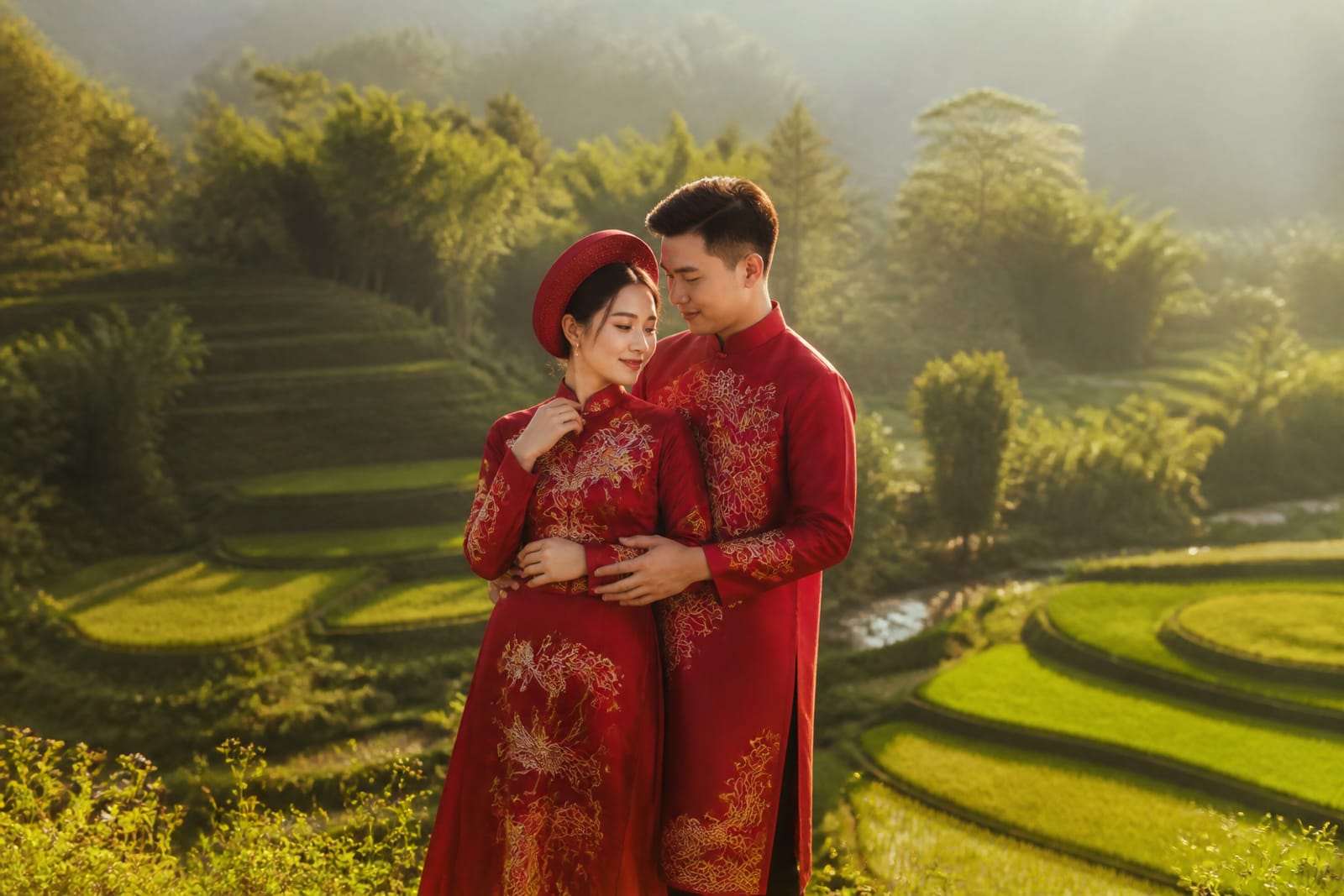
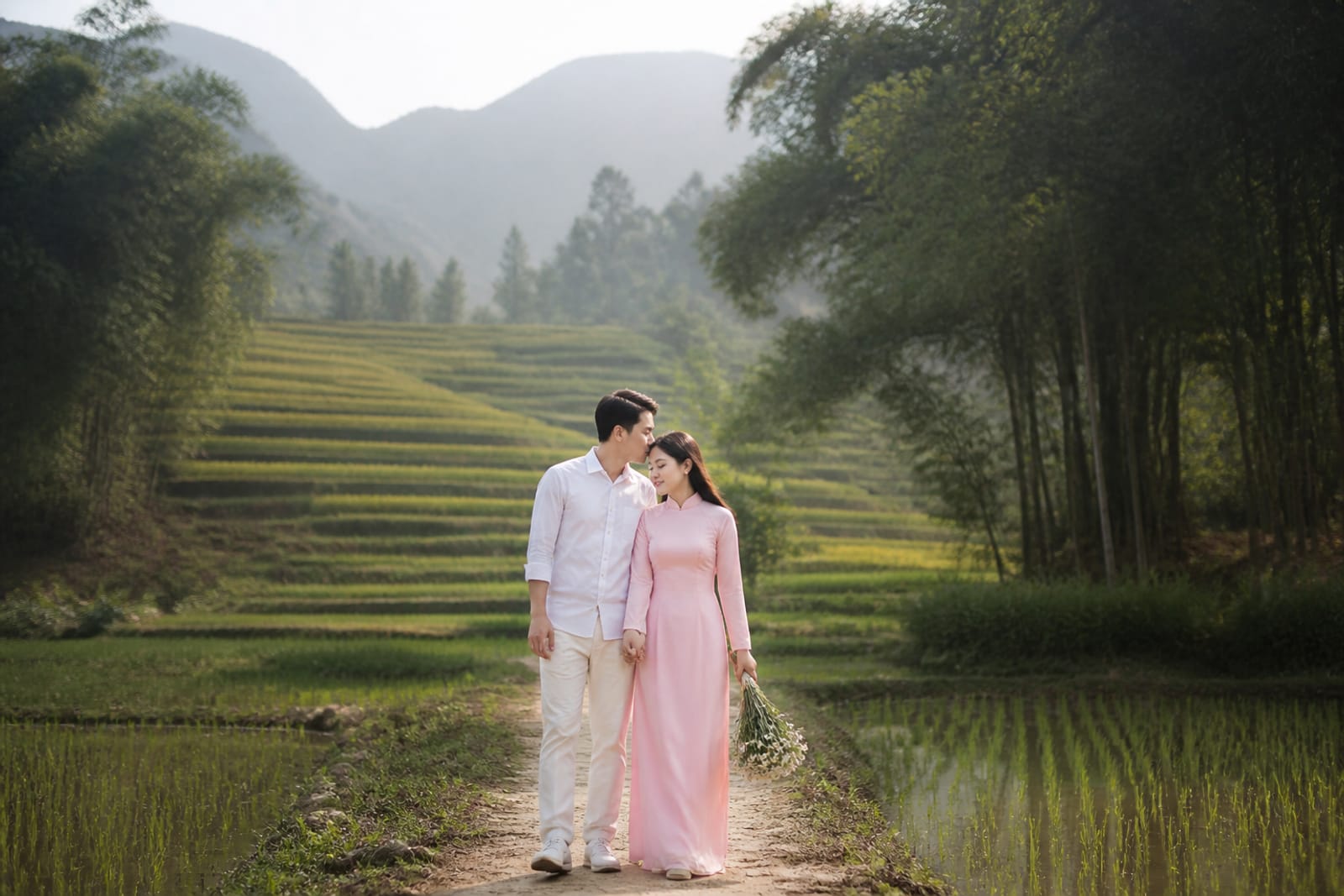
Late March (golden terraces, clear light): Couples choose warm, romantic tones—ochre and cream ao dai, natural hair, walking frames. Light is soft and directional. No fancy styling; the landscape carries the story.
Early March (green terraces, cool light): Those who prioritize lush, moody color pick early March. Light is cooler and mist lingers. These shoots feel intimate and serene, with close-ups of fabric and faces.
Combined with ao dai rental: If you don't own an ao dai, ask your photographer or hotel about local rental options in Hanoi or Da Nang beforehand. Ao dai fit and color are crucial—poor fit reads in photos. Cáo Studio offers ao dai rental for Hanoi shoots; if you're shooting locally in the valleys, confirm rental quality with your hotel or photographer weeks ahead.
---
What to check before you book a pre-wedding shoot in Mai Chau or Pu Luong
- Photographer experience: Confirm they've shot at least 3 pre-wedding sessions in your exact location and show you full galleries (not just 5 best photos).
- Light timing: Verify they understand the valley's sunrise/sunset times and have shot both morning mist and afternoon gold.
- Backup gear: Ask what happens if their camera fails—do they have a backup body and lens?
- Delivery timeline: Confirm they deliver edited images within 5–7 days and in high-resolution files suitable for printing.
- Communication language: If English is not their first language, confirm they understand your direction clearly (use photos or video references to show your vision).
- Local knowledge: Ask if they have access to private terraces, hidden paths, or waterfall locations—generic valley shots are everywhere.
- Contract: Even for a local photographer, a simple written agreement (WhatsApp message is fine) should confirm date, time, outfit count, photo count, and final file format.
---
Coordinate makeup and styling across locations
If you're traveling from Hanoi or Saigon for a Mai Chau shoot, consider booking makeup and hair at your hotel the morning of. Cáo Studio's team can travel to your homestay and prepare you there, ensuring your look matches your photographer's vision without the stress of finding a local salon. This works best if you book your photographer at least two weeks ahead and align both timelines on WhatsApp.
For a full pre-wedding experience that includes direction, styling, and video—combine a professional shoot in Hanoi (where Cáo Studio is based) with a self-guided second session in Mai Chau using a local photographer. This splits your story: formal, directed frames in the city, and candid, intimate light in the valleys.
---
Honest reality: what goes wrong and how to avoid it
Scenario 1: You arrive and the rice is not gold yet. Solution: Book late March (after the 20th) and confirm planting dates with your hotel two weeks ahead. Have a backup vision (green terraces, forest, waterfalls) ready.
Scenario 2: Morning mist doesn't lift; light stays flat until 9 a.m. Solution: Embrace it—misty light is moody and romantic if your photographer shoots tight on you two rather than wide landscape. Plan a second shoot location for noon if open, golden light is a priority.
Scenario 3: Your photographer arrives late or doesn't answer their phone. Solution: Hire through your hotel or homestay, not as a stranger you've only messaged. Have your guide's number and a backup plan (a second photographer's contact, or shooting with a good smartphone camera + tripod if needed).
Scenario 4: Your ao dai color doesn't photograph well in golden afternoon light. Solution: Shoot morning (cool light) in warm colors (cream, peach, burgundy) and afternoon in jewel tones (emerald, navy, deep plum). Test your outfit outdoors at the same time of day, on a previous trip or with a friend, before the shoot.
---
What to know about working with Cáo Studio on your pre-wedding planning
Cáo Studio is based in Hanoi and Saigon and specializes in pre-wedding shoots and couple photoshoots within those cities and Hoi An. We do not operate a branch in Mai Chau or Pu Luong. However, we can help you prepare:
- Styling & direction: If you shoot in the valleys and want professional direction before you go, book a pre-wedding session in Hanoi first. We'll nail your vision, outfit, and posing so you know exactly what works when you're on location with your local photographer.
- Makeup & hair coordination: If your local photographer doesn't include hair and makeup, we can advise on logistics or coordinate your hotel team via WhatsApp.
- Ao dai rental & tailoring: If you don't own an ao dai, book through our rental service and we'll help you collect in Hanoi before you travel north.
- Post-shoot editing guidance: Share your local photographer's RAW files with us on WhatsApp and we'll advise on editing style to match your creative brief.
Ask us on WhatsApp +84 338 762 340 to discuss your vision and timeline.
---
FAQ
Is March better than April for light in Mai Chau and Pu Luong?
March offers cooler mornings, cleaner air, and fewer crowds; April is warmer and slightly hazier but still excellent. Both are dry. Choose March if you want mist and cool tones; April if you prefer warmer light and are fine with slightly more tourists around homestays.
How much does a local photographer cost in Mai Chau or Pu Luong?
Pricing varies by photographer experience and whether they provide a guide or travel far. Ask your hotel for a referral and discuss rates directly via WhatsApp or phone. Most local photographers charge per session or per day, not per photo.
Can I rent a wedding dress in Mai Chau?
No formal rental shops exist in the valleys. Rent in Hanoi or Da Nang before you arrive, or pack your dress carefully in luggage. Check with your homestay if they've stored dresses for guests before—many have experience with delicate fabrics.
What if it rains on my shoot day in March?
March rain is rare but possible. Have a backup date or location planned (forest, covered pathways, or indoor homestay settings). Confirm your photographer's rain policy before you book.
Should I hire a guide as well as a photographer?
Yes, if you're unfamiliar with the valleys. A guide handles logistics, finds hidden light spots, and smooths communication with farmers or villagers. Many local photographers also guide; ask if that's included in their rate.
How far in advance should I book a local photographer?
Book 4–6 weeks ahead via your hotel or Instagram to secure your preferred date and time. Last-minute bookings (under two weeks) risk unavailability or higher rates.
Can Cáo Studio shoot in Mai Chau for me?
Cáo Studio is based in Hanoi and Saigon. We do not operate in Mai Chau or Pu Luong. We can help you coordinate styling, makeup, and editing remotely, and recommend how to vet a local photographer. Contact us on WhatsApp to discuss your broader pre-wedding vision.
FAQ
Is March better than April for light in Mai Chau and Pu Luong?
March offers cooler mornings, cleaner air, and fewer crowds; April is warmer and slightly hazier but still excellent. Both are dry. Choose March if you want mist and cool tones; April if you prefer warmer light and are fine with slightly more tourists around homestays.
How much does a local photographer cost in Mai Chau or Pu Luong?
Pricing varies by photographer experience and whether they provide a guide or travel far. Ask your hotel for a referral and discuss rates directly via WhatsApp or phone. Most local photographers charge per session or per day, not per photo.
Can I rent a wedding dress in Mai Chau?
No formal rental shops exist in the valleys. Rent in Hanoi or Da Nang before you arrive, or pack your dress carefully in luggage. Check with your homestay if they've stored dresses for guests before—many have experience with delicate fabrics.
What if it rains on my shoot day in March?
March rain is rare but possible. Have a backup date or location planned (forest, covered pathways, or indoor homestay settings). Confirm your photographer's rain policy before you book.
Should I hire a guide as well as a photographer?
Yes, if you're unfamiliar with the valleys. A guide handles logistics, finds hidden light spots, and smooths communication with farmers or villagers. Many local photographers also guide; ask if that's included in their rate.
How far in advance should I book a local photographer?
Book 4–6 weeks ahead via your hotel or Instagram to secure your preferred date and time. Last-minute bookings (under two weeks) risk unavailability or higher rates.
Can Cáo Studio shoot in Mai Chau for me?
Cáo Studio is based in Hanoi and Saigon. We do not operate in Mai Chau or Pu Luong. We can help you coordinate styling, makeup, and editing remotely, and recommend how to vet a local photographer. Contact us on WhatsApp to discuss your broader pre-wedding vision.
Ao dai, makeup, hair and a local photographer in Hanoi or Saigon — one WhatsApp message.