/pre-wedding-photoshoot
Pre-wedding photoshoot in Mai Chau and Pu Luong: November weather, lig
November is the strongest month for pre-wedding shoots in Mai Chau and Pu Luong: cool, dry weather (no rain, clear skies), golden rice fields at harvest (late May–June and Sep–Oct), and moderate crowd flow before December's tourist peak. Light arrives soft and warm from 6:30–7:30 am and 4:30–6:00 pm — enough for a full morning or afternoon session. The landscape is ready: terraces gleam, villages stay quiet, and mist rises predictably from valleys before 8 am. Cáo Studio does not operate in these destinations, but this guide covers season timing, location scouting, outfit choices and how to find and vet a local photographer who understands pre-wedding direction — then you can book with confidence and bring the frames home. ---
Is November the right month for a pre-wedding shoot in Mai Chau or Pu Luong?
Yes. November sits in the northern cool season (dry, stable), after the rainy summer ends in September and before December crowds spike. Temperature drops to 15–25°C (comfortable for walking, no sweat marks on silk), and rain is rare — storms belong to May–September. Rice harvest occurs roughly September–October, so fields show golden stubble and fresh-cut terraces, or patches of new green if planted late. Mist pools in valleys until 8 am, then lifts by 9 am — ideal for wide landscape frames. The trade-off: mornings are cool (bring layers under your ao dai), and you must wake early to catch soft light before the sun hardens midday. Conclusion: November is peak season because weather, light and landscape all align without compromise.
What time of day captures the best light in these valleys?
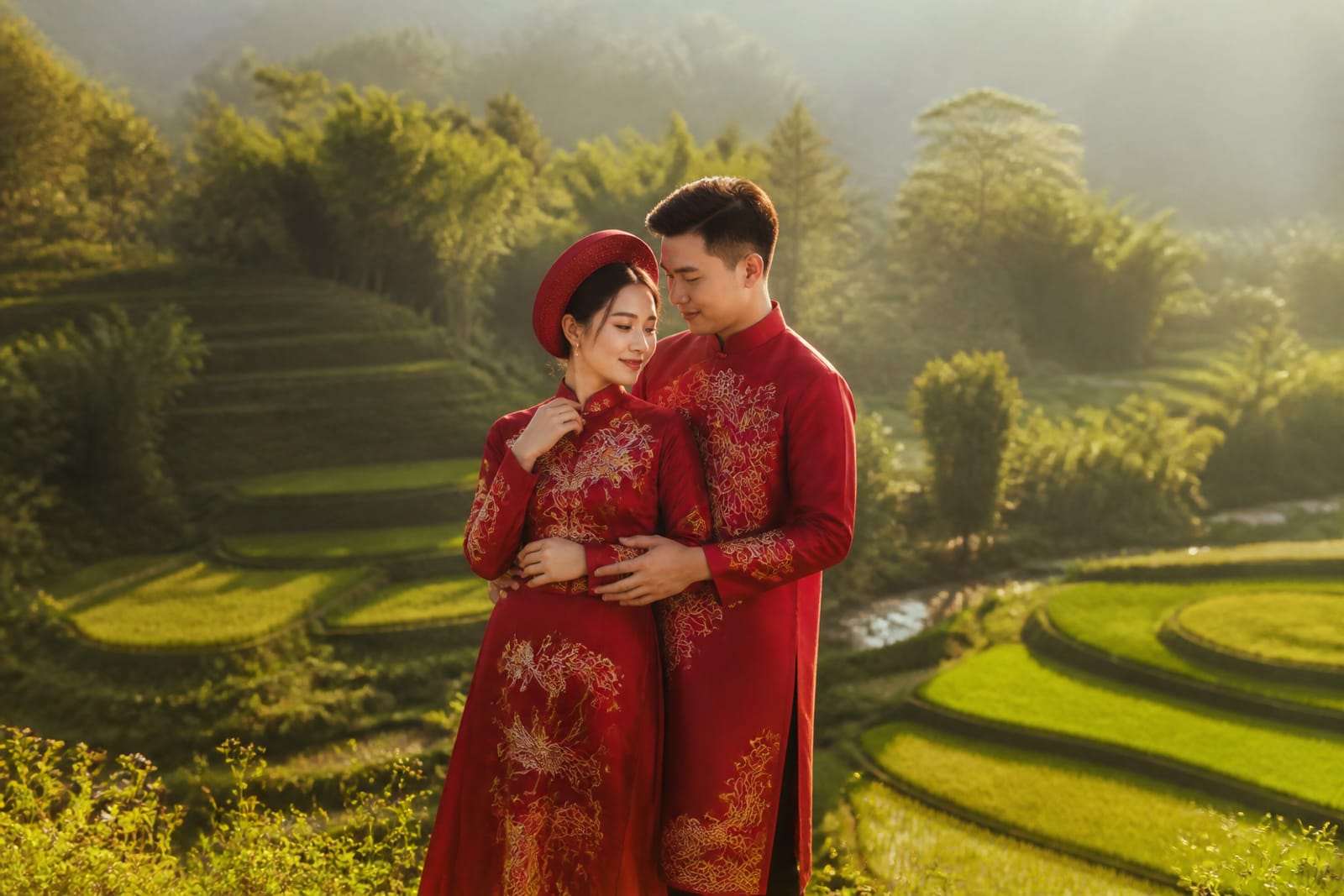
Golden hour dominates both shoots — 6:30–7:30 am or 4:30–6:00 pm. Early morning wins for romance: mist still clings to rice terraces, light comes warm and low from the east, and villages sleep (no motorbikes, no crowds). Shoot for 1–1.5 hours and finish by 8:30 am before the sun flattens color. Afternoon light starts around 4 pm, warming westward; by 5 pm the slopes turn amber. Bring your outfit — the photographer will scout the best angle within the light window (a standing figure against a sunlit ridge, two figures walking into shadow). Midday (10 am–3 pm) produces harsh shadows and faded colors; avoid booking full-day sessions that lock you into these hours. Conclusion: choose early morning for mist and intimacy, or late afternoon for landscape drama — never mid-day.
How crowded are Mai Chau and Pu Luong in November?
Moderate, and manageable if you time it right. November brings domestic tourism (school holidays start mid-month) and some overseas visitors, but nothing like December or Tet. Rice harvest brings local activity — farmers in fields, trucks on roads — but they don't dominate walking trails at dawn. Tourist lodges fill on weekends; weekday mornings (Monday–Friday, before 8 am) stay quiet. Main viewpoints (viewpoints at Ban Lac in Mai Chau, the Pa Co suspension bridge in Pu Luong) see foot traffic from 9 am onward — plan your wide shots for 6:30–7:45 am to avoid silhouettes of other visitors. If you book a local photographer experienced in the valleys, they'll know which terraces empty first and which hamlet paths keep clear until 8:30 am. Conclusion: early mornings bypass crowds; weekdays quiet down faster than weekends.
| Destination | Best for | Light & landscape | Outfit fit | Crowd level |
|---|---|---|---|---|
| Mai Chau (Thai minority villages, lower altitude) | Couple walks through fields, village interaction, ao dai on narrow paths | Soft until 8 am; mist until 7:30 am; slopes face east (morning sun ideal) | Ao dai works well; narrow trails require care with train | Light; viewpoints busy after 9 am |
| Pu Luong (higher elevation, forest ridges, Pa Co valley) | Dramatic ridge light, forest frames, solitude | Golden light 6:45–7:45 am; afternoon 4:45–5:45 pm; ridges catch sun first | Ao dai + sturdy shoes; elevation gains require stability | Lighter than Mai Chau; trails are quieter |
Conclusion: Mai Chau suits ao dai ease and village color; Pu Luong suits dramatic landscape and escape. Both peak November, both need early light, both clear of crowds by 8:30 am on weekdays.
What should you wear under and over an ao dai in November valleys?
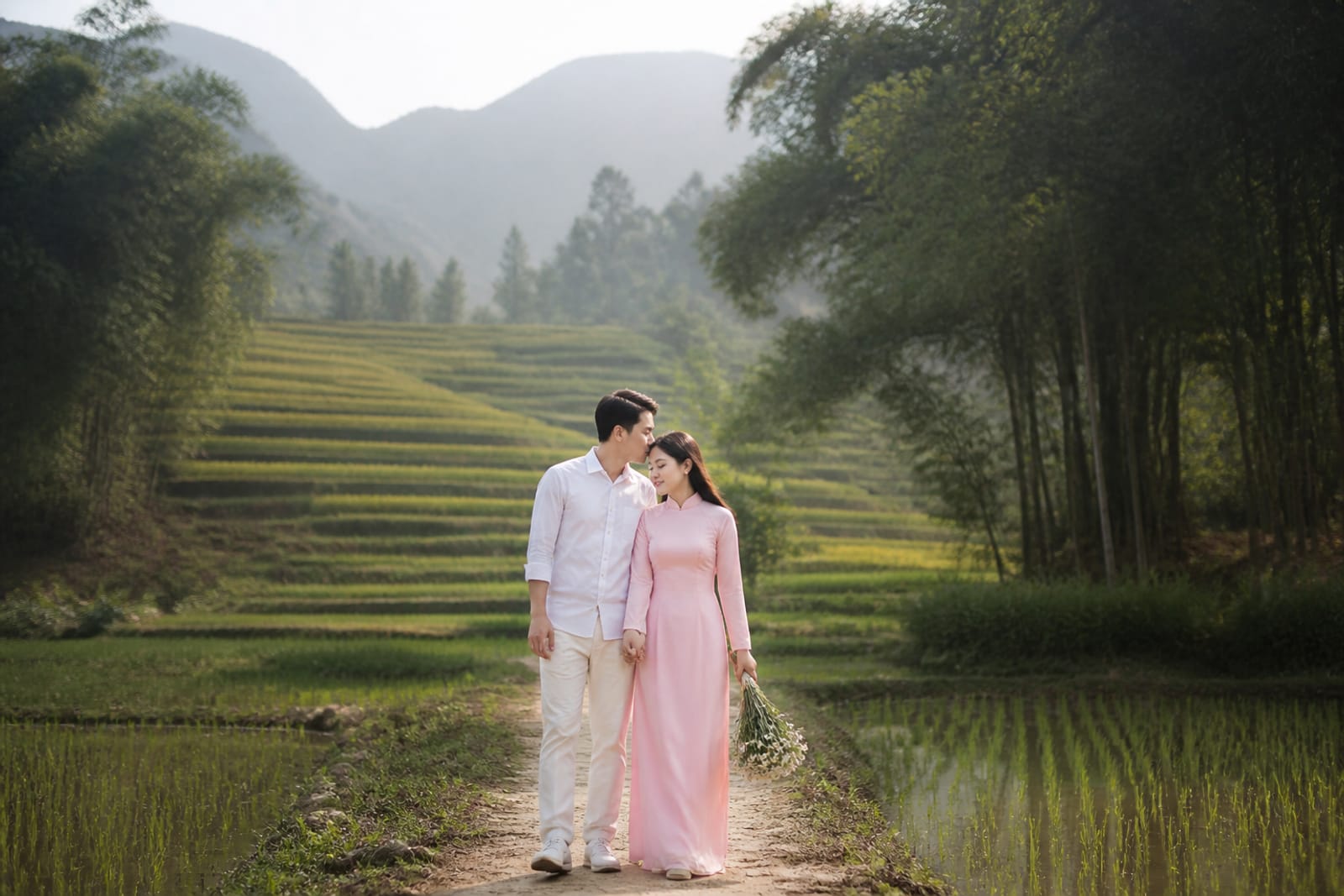
Layer, because mornings are cool but you'll warm as you walk. Wear a thin long-sleeve undershirt (breathable cotton or linen) under your ao dai — it provides warmth without bulk and keeps the ao dai's silk from clinging if there's dew. Bring a light cardigan, linen overshirt or pashmina for the first hour outdoors; remove it once the sun rises and light thickens around 8–9 am. For bottoms, wear close-fitting cotton or silk pants (the ao dai sits over them); avoid thick layers that create bulk under the skirt. Shoes matter: waterproof hiking sandals or canvas sneakers work for terraced paths in Mai Chau (many narrow, sloped trails require grip). Pu Luong, higher and more forested, demands proper hiking shoes. Avoid white ao dai if you'll kneel or sit on earth; cream, sage, deep indigo and rust tones hide dust and photograph warmer in golden light. A second outfit of a fitted dress or simple tunic lets the photographer switch mood midday if the session is long. Conclusion: prioritize layers and footwear; your photographer will work around whatever you choose, but comfort means better frames.
How do you find and book a local pre-wedding photographer in Mai Chau or Pu Luong?
Cáo Studio shoots in Hanoi, Ho Chi Minh City and Hoi An but does not operate in Mai Chau or Pu Luong. To book locally:
- Search by language and style: Use Google Maps or Instagram to find photographers in "Mai Chau photographer" or "Pu Luong photographer" who post pre-wedding or couple work in English captions. Avoid tourist lodge "free" photographers; they rush and over-edit.
- Check portfolios for November light: Look at their past work — do frames show golden morning light, mist, real landscapes? Or are they all bright midday, flat and over-saturated? Real pre-wedding photographers in the valleys understand direction (where couples stand, how light moves) and shoot multiple angles of the same moment.
- Ask about timing and weather: Ask the photographer how many hours they book, when they scout, whether they adjust for mist-clearing and light shifts, and how they handle rain. A good answer is detailed and honest (e.g., "We shoot 6:30–8:30 am for mist, scout the evening before, and have a weather backup plan").
- Verify edits and turnaround: Request sample edits from recent November shoots (not summer) — do colors match what you see online, or are they over-processed? Ask delivery time: reputable photographers in these areas turn around edited images in 48 hours to 2 weeks. Slow delivery often means overload or lack of workflow.
- Confirm inclusions in writing: Agree upfront on outfit changes, makeup (if any), number of locations, and whether you get raw files, edited jpegs or both. A local photographer may not have makeup+hair services — book a beautician separately via your hotel if needed.
Cáo Studio's pre-wedding and elopement service runs with a single team (photographer, makeup artist, stylist, and director) in Hanoi and Saigon; this ensures one message across every frame. For Mai Chau and Pu Luong, you'll coordinate separately with a local expert and a makeup artist, but the same principle applies: direction and story beat posed perfection. Conclusion: vet by portfolio and process, not price; a thoughtful photographer who understands November light will deliver frames you return to for years.
What other planning factors matter for a November pre-wedding shoot in these valleys?
Transportation and logistics: Mai Chau is 140 km from Hanoi (3 hours by car); Pu Luong is 160 km (3.5–4 hours). If you book a photographer in the valleys, ask them to confirm shooting time — early light demands you arrive the evening before and rest. Arrange a driver or hire a local guide who knows roads. Pu Luong has rougher access; some paths require walking 20–30 minutes uphill to reach viewpoints.
Weather backup: November is dry, but odd showers happen (forecast before you book). Ask your photographer's rain protocol — do they reschedule, move indoors, or adapt? A contingency frame inside a village home or under eaves can work beautifully if framed right.
Permits and access: Neither valley requires photo permits, but some homestays or minority villages appreciate a small donation for hospitality. Pu Luong has a national park entrance; check if day-visitor fees apply.
Prepare your story: Unlike couple photoshoots in urban studios, these landscapes demand a narrative. How did you meet? What does this place mean to you both? Share this with your photographer — they'll compose frames around your story, not just backdrop. A director-led approach (like Cáo Studio's method) works best: tell the team what moment matters, and they'll find the light and angle for it.
Outfit rental and styling: If you rent an ao dai locally, book by early November; high season sells out. Pair it with simple jewelry and minimal makeup — the landscape and light should dominate, not rhinestones. Cáo Studio offers ao dai rental for Hanoi and Saigon shoots; for the valleys, ask your accommodation to recommend local tailors.
Photo album and prints: After your shoot, consider how you'll keep the frames. A wedding photo album or framed prints from a professional lab last longer than digital files alone. Order these before you leave Vietnam if possible — shipping takes weeks.
Conclusion: logistics and story preparation separate rushed shoots from timeless ones.
---
What to check before you book a photographer in Mai Chau or Pu Luong
- Portfolio: See at least 5 pre-wedding or couple shoots from November or other cool months (not summer). Colors should feel warm and natural, not blown-out.
- Timing flexibility: Confirm they start before sunrise and adjust for mist clearing and light shifts. Sessions locked to fixed hours rarely capture the best moments.
- Makeup and hair: Ask if they coordinate with a local beautician, or if you hire separately. Cáo Studio handles this in-house for Hanoi and Saigon pre-wedding shoots.
- Turnaround and format: Edits within 1–2 weeks, delivery as jpegs and RAW files (negotiate this). Slow labs lose details in November's soft light.
- Backup plan: Rain, mist lasting past 9 am, or unexpected crowds — what's their contingency? Professionals reschedule or offer alternative locations.
- Written agreement: Names, dates, times, locations, outfit changes, and what you receive. Email confirmation avoids misunderstandings.
---
📸 Book on WhatsApp — ao dai photoshoot | 💄 Makeup & hair at your hotel | 🌸 See the lookbook
For shoots in Hanoi, Ho Chi Minh City or Hoi An, book directly with Cáo Studio — one team handles photography, styling, makeup and direction so every frame tells the same story. For Mai Chau and Pu Luong, use this guide to find a local photographer who understands November light and can deliver the frames you'll treasure.
FAQ
Can I do a pre-wedding shoot in Mai Chau in November if I've never worn an ao dai before?
Yes. Wear a trial ao dai a few days before to check comfort and movement on slopes. Bring fitted undergarments, sturdy shoes, and a light overshirt for cool mornings. Your photographer will guide posture and walking so the fabric flows naturally — no stiff poses required.
Will the rice fields be green or golden in November?
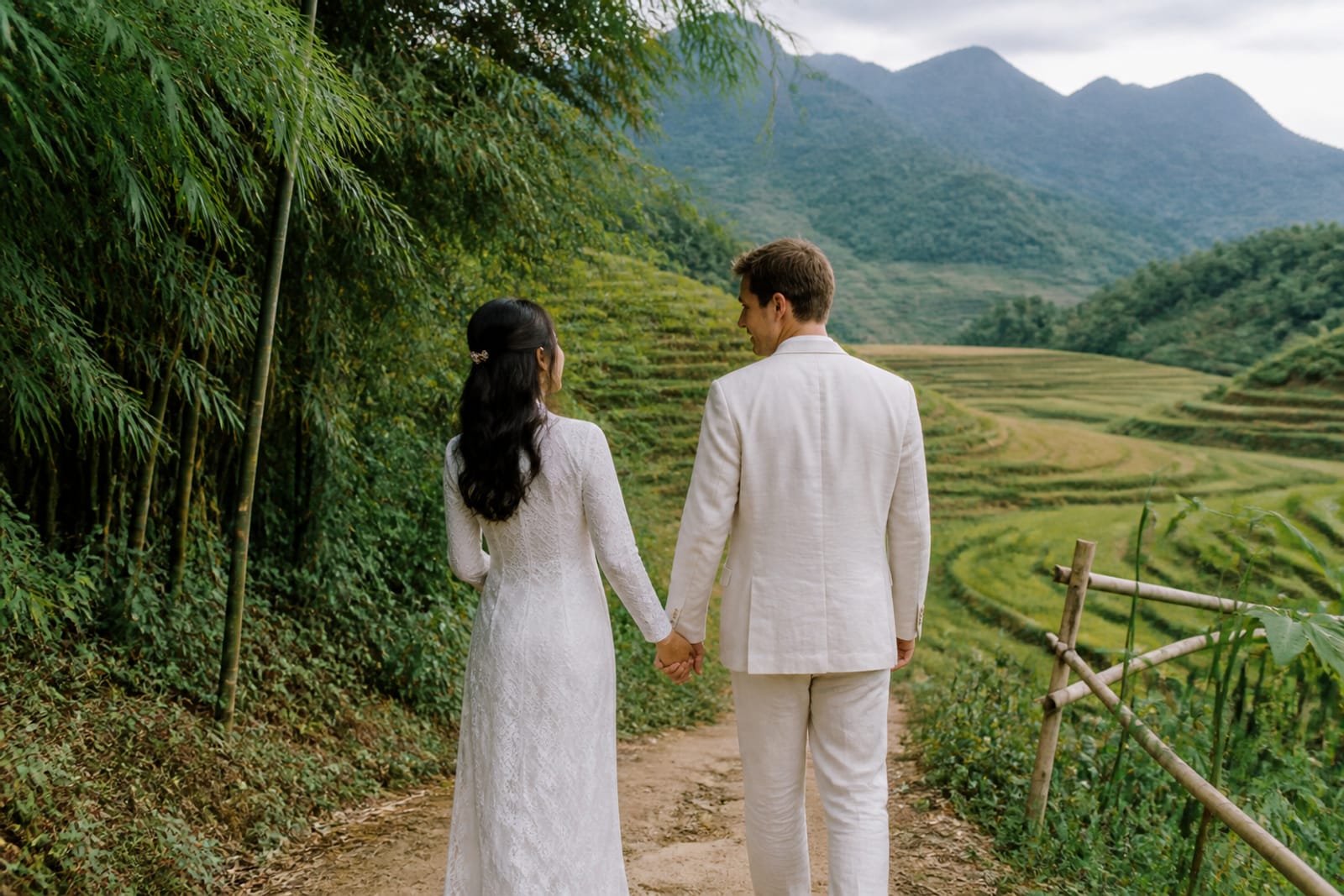
Harvest happens September–October, so most fields show stubble or bare terraces in early November. Late plantings in protected valleys turn pale green by mid-November. Both look beautiful — ask your photographer which lighting angle makes stubble glow and which suits green. Golden truly comes mid-October; November leans toward amber light on browns.
Is Pu Luong better than Mai Chau for a pre-wedding shoot?
Neither is objectively "better" — Pu Luong offers forest drama and solitude; Mai Chau offers village warmth and easier terrain in an ao dai. Pu Luong peaks late afternoon (ridges catch golden light), Mai Chau peaks early morning (mist and east-facing slopes). Choose based on the mood you want: intimate valley or epic landscape.
How far in advance should I book a photographer in these valleys?
4–6 weeks before November travel ensures the photographer is available and can prepare a location scout. November fills fast; last-minute bookings may conflict with other couples or holiday tourism. Email potential photographers in late August or early September.
What if it rains or the sky is grey on my shoot date?
Light softens (no harsh shadows — ideal for portraits), but color dulls. A good photographer uses grey days to emphasize texture (wet stone, moss, fabric drape) and emotion over landscape grandeur. Reschedule only if rain is heavy or mist doesn't clear by 8:30 am. Ask your photographer's weather policy upfront.
Can I get my photos edited and printed before I leave Vietnam?
Most local photographers deliver edited jpegs within 1–2 weeks; printing in Hanoi or Ho Chi Minh City is possible if you stay longer. Digital albums and framed prints ship after you leave. Order by mid-November to receive prints before year-end if you're an overseas traveler.
FAQ
Can I do a pre-wedding shoot in Mai Chau in November if I've never worn an ao dai before?
Yes. Wear a trial ao dai a few days before to check comfort and movement on slopes. Bring fitted undergarments, sturdy shoes, and a light overshirt for cool mornings. Your photographer will guide posture and walking so the fabric flows naturally — no stiff poses required.
Will the rice fields be green or golden in November?
Harvest happens September–October, so most fields show stubble or bare terraces in early November. Late plantings in protected valleys turn pale green by mid-November. Both look beautiful — ask your photographer which lighting angle makes stubble glow and which suits green. Golden truly comes mid-October; November leans toward amber light on browns.
Is Pu Luong better than Mai Chau for a pre-wedding shoot?
Neither is objectively "better" — Pu Luong offers forest drama and solitude; Mai Chau offers village warmth and easier terrain in an ao dai. Pu Luong peaks late afternoon (ridges catch golden light), Mai Chau peaks early morning (mist and east-facing slopes). Choose based on the mood you want: intimate valley or epic landscape.
How far in advance should I book a photographer in these valleys?
4–6 weeks before November travel ensures the photographer is available and can prepare a location scout. November fills fast; last-minute bookings may conflict with other couples or holiday tourism. Email potential photographers in late August or early September.
What if it rains or the sky is grey on my shoot date?
Light softens (no harsh shadows — ideal for portraits), but color dulls. A good photographer uses grey days to emphasize texture (wet stone, moss, fabric drape) and emotion over landscape grandeur. Reschedule only if rain is heavy or mist doesn't clear by 8:30 am. Ask your photographer's weather policy upfront.
Can I get my photos edited and printed before I leave Vietnam?
Most local photographers deliver edited jpegs within 1–2 weeks; printing in Hanoi or Ho Chi Minh City is possible if you stay longer. Digital albums and [framed prints](/photo-prints) ship after you leave. Order by mid-November to receive prints before year-end if you're an overseas traveler.
Ao dai, makeup, hair and a local photographer in Hanoi or Saigon — one WhatsApp message.