/pre-wedding-photoshoot
Pre-wedding photoshoot in Mai Chau and Pu Luong: October weather, ligh
October is late harvest in Mai Chau and Pu Luong: rice fields turn gold, mornings stay cool and crisp (12–18°C), and afternoon light remains direct until 5:30 pm. The region sits between the rainy summer and winter fog, so weather is reliable—expect no rain—but crowds thin after mid-month. A pre-wedding shoot here runs 3–4 hours, capturing wide landscape frames at sunrise (6:15–7:00 am, soft side light on terraces), medium couple shots in mid-morning (8:30–10:30 am, before harsh shadows), and detail sequences (hands, fabric, walking paths) in late afternoon (4:00–5:15 pm, golden backlighting). Cáo Studio does not operate in Mai Chau or Pu Luong; you'll hire a local Hanoi-based photographer and coordinate transport, outfits and makeup independently. Success depends on scouting locations by mid-September, booking your crew by late September, and timing sessions around village activities and temple hours. ---
What makes October the best (and trickiest) month for Mai Chau and Pu Luong shoots?
October sits at the sweet spot: harvest is complete, so golden rice dominates the landscape, and the air clears as summer rain ends. Temperatures drop to 12–18°C in the morning, warming to 22–26°C by noon—cool enough for outdoor comfort in long ao dai or wedding dress without sweating through makeup. The dry spell runs reliably from late September through November. However, October crowds build after national holidays (early October); the second half is quieter. Early morning shoots (sunrise 6:00–7:15 am) and late afternoon sessions (4:00–5:30 pm) avoid village traffic and midday tour groups. Avoid peak hours (9:00 am–3:00 pm) when families work fields and homestay crowds gather.
Conclusion: October's golden light and cool temperatures offset its variable crowds—book early sessions to own the landscape alone.
How does daylight shape your shot schedule in October?
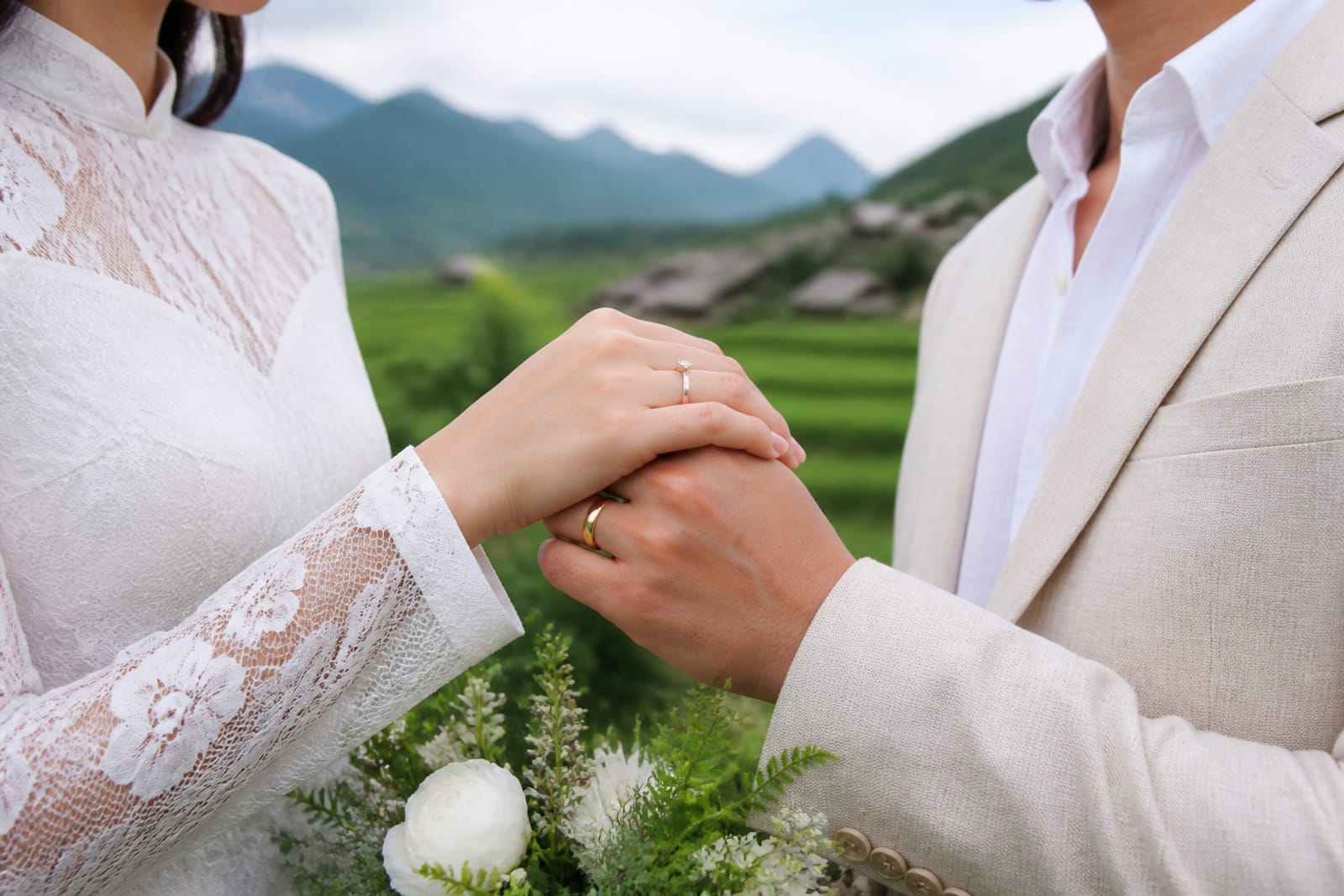
Sunrise in Mai Chau and Pu Luong breaks at 6:10–6:20 am; the sun clears the eastern ridges by 6:45 am, flooding terraces with soft, directional light ideal for wide landscape shots. By 7:30 am, shadows shorten and light hardens—move to sheltered valleys or shaded path walks. Mid-morning (8:30–10:00 am) works for couple close-ups and medium framings; backlighting on mist and dust creates depth. From 10:30 am to 3:00 pm, overhead sun casts harsh shadows on faces—avoid full-sun couple poses; instead, shoot walking sequences, detail work (rings, ao dai embroidery), and landscape-focused frames where faces sit in soft shadow. By 4:00 pm, light swings west and gold, perfect for silhouettes and rim-lit couple frames. Sunset occurs 5:20–5:35 pm; golden hour ends by 5:50 pm. A full session spanning sunrise to late afternoon requires 4–5 hours on location, two outfits, and careful light planning with your photographer.
Conclusion: Schedule couple close-ups for first light and late afternoon; reserve midday for walking, detail and landscape work.
| Timing | Light Quality | Best For | Why It Works |
|---|---|---|---|
| 6:15–7:15 am | Soft, side-lit, low contrast | Wide terraces, couple walking into frame | No harsh shadows; golden warm tone; quiet paths |
| 7:30–10:00 am | Directional, shortening shadows | Medium couple shots, ao dai close-up detail | Still soft; enough light for faces; mist enhances depth |
| 10:30 am–3:00 pm | Overhead, harsh, high contrast | Landscape-only, walking sequences, ring/fabric detail | Couple faces suffer; use for movement, story frames |
| 4:00–5:20 pm | Golden, low angle, rim-lit | Silhouettes, couple backlit, romantic framings | Dramatic backlighting; warm tone; soft on skin |
What should you wear to shoot in October's terrain and climate?
October mornings at 12–18°C demand layers: a silk or cotton undershirt under your ao dai, or a lightweight cardigan over your dress. If shooting in a Western wedding gown, bring a faux-fur shawl or pashmina; the cool air suits them well and photographs warmth. Avoid heavy fabrics that look damp in humidity—October is dry, so linen and silk move beautifully. Footwear matters: rice terraces are muddy after water drains; wear waterproof, flat shoes for walking (not heels, which sink). If hiring a local hair and makeup artist, confirm they know how to fix makeup for outdoor wind and dust—bring oil-blotting papers and a makeup touch-up kit. A second outfit (lighter dress or groom suit) changes the story in late afternoon light; plan outfit changes for post-sunrise and pre-sunset to make full use of day's light shifts. Ao dai is iconic here; pairing it with simple jewelry and a clean white undershirt lets terraces dominate the frame.
Conclusion: Layer for cool mornings, choose breathable fabrics, wear practical footwear, and plan two outfits to match morning and evening light.
How do you find and vet a local photographer for Mai Chau and Pu Luong?
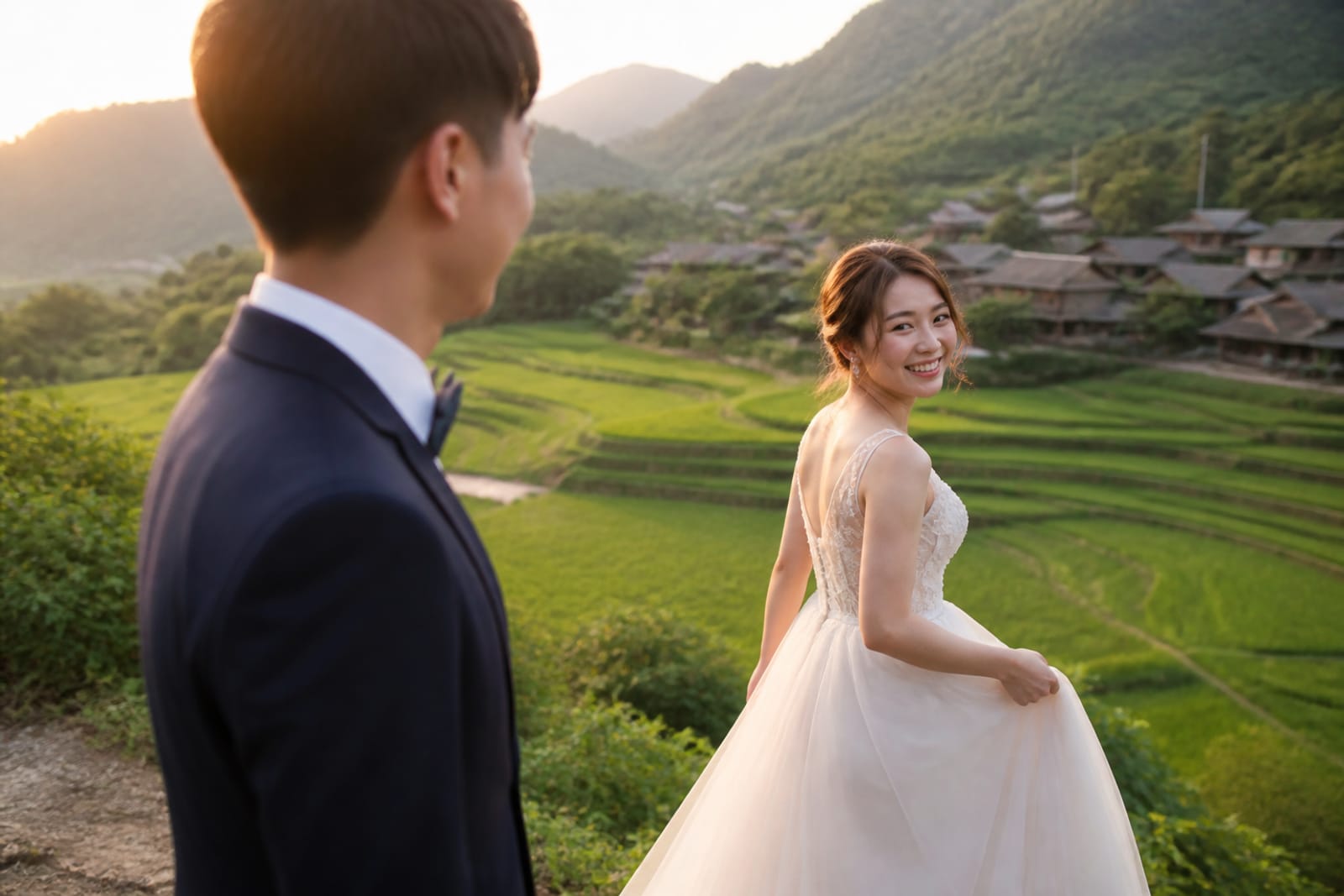
Cáo Studio operates in Hanoi, Ho Chi Minh City and Hoi An; Mai Chau and Pu Luong require a local Hanoi-based photographer who knows the terrain and village protocols. Start by asking your homestay or tour operator for photographer referrals—guesthouses often work with locals who know best light and access. Check portfolios for: sharpness in low morning light, proper exposure on terrace greens (not blown highlights), and natural couple framing (not stiff poses). Ask about their experience with pre-wedding shoots, ao dai handling, and how they scout locations. Confirm they carry backup batteries, memory cards, and rain cover (even in October, sudden afternoon mist happens). A reputable photographer provides a shot list in advance, knows temple hours and village etiquette, and delivers edited photos within one week. Agree on delivery format (digital files, print sizes, video availability) before booking. Budget and timeline are factors—local rates vary; request quotes from at least two photographers and compare turnaround time, not just price. Ask for references from other couples who shot there.
Conclusion: Hire a local Hanoi photographer experienced in pre-wedding work; prioritize portfolios showing real light, not posing, and confirm logistics (scouting, delivery, backup gear) in writing.
What permits, etiquette and logistics do you need to plan beforehand?
Mai Chau and Pu Luong are not protected heritage zones, so you need no formal photo permits for terraces. However, many homestays and village trails cross private land; ask permission before shooting. Temple shoots require permits from local authorities (applied via your photographer or homestay; allow 1–2 weeks). Avoid photographing villagers' faces without consent. Respect seasonal activities: during harvest (late September–early October), farmers work early mornings and late afternoons—your photographer should plan around this. Road access to high-altitude spots depends on weather; October is reliable, but a wet October day can make certain tracks impassable—have backup locations. Transport: hire a driver and vehicle for the full day (usually arranged through your photographer or homestay); budget 4–5 hours of shooting plus travel time. Entry to some homestays or scenic viewpoints requires small donations (check locally; do not expect price quotes online). Lastly, coordinate with your hair and makeup artist if hiring separately: confirm they arrive 1–2 hours before sunrise shoots and have reliable transport. A professional crew (photographer, makeup, assistant) working as one team shoots more cohesively than three separate vendors meeting on location for the first time.
Conclusion: Secure village permission, apply for temple permits early, plan around harvest schedules, and hire one experienced crew rather than stitching vendors together.
---
📸 Book on WhatsApp — pre-wedding photoshoot
What to check before you plan a Mai Chau and Pu Luong pre-wedding shoot
- Photographer portfolio: Does it show real light, not posed couples? Are terraces sharp and properly exposed?
- Timing: Can your photographer commit to 5:45 am arrival for sunrise? Is late-afternoon revisit possible?
- Logistics: Who handles transport, permits, and village permissions? Is a backup location confirmed?
- Makeup and hair: Are they experienced in outdoor touch-ups? Do they have wind-proof, waterproof products?
- Delivery: What format and timeline? Edited files, prints, or video? One week turnaround is standard.
- Backup weather plan: October is dry, but confirm the photographer's contingency if mist rolls in.
If you want a seamless, all-in-one experience for your pre-wedding shoot, Cáo Studio's pre-wedding and elopement service in Hanoi, Ho Chi Minh City, and Hoi An pairs photography with professional makeup and styling. For shoots in Mai Chau and Pu Luong, use this guide to brief your local photographer and secure a crew that prioritizes real light and thoughtful framing over fast turnarounds.
💄 Makeup & hair at your hotel | 🌸 See the lookbook
FAQ
Is October a good month for a pre-wedding shoot in Mai Chau and Pu Luong?
Yes. October offers golden rice terraces, cool mornings (12–18°C), reliable dry weather, and fewer crowds after mid-month. Daylight is stable (sunrise 6:10 am, sunset 5:30 pm), and light quality suits pre-wedding framing. The main challenge is scheduling around harvest activities and scouting locations early.
What time should I start shooting to capture golden light on the rice terraces?
Start at 6:15 am for soft, directional side light on terraces. Sunrise hits 6:45 am; by 7:30 am, shadows shorten and light hardens. A second shoot at 4:00–5:20 pm captures golden backlighting and silhouettes.
Do I need permits to photograph in Mai Chau and Pu Luong?
Terraces do not require formal permits, but temple shoots do (1–2 weeks lead time via your photographer). Always ask permission for homestay and private land access. Respect village etiquette and avoid photographing locals without consent.
What outfit works best for October shoots in these regions?
Layer for cool mornings (12–18°C): wear a silk undershirt under your ao dai, or bring a pashmina over a gown. October is dry, so linen and silk move beautifully. Wear flat, waterproof shoes for muddy terraces. Plan two outfits to use sunrise and evening light fully.
How do I find a reliable photographer for Mai Chau and Pu Luong?
Ask your homestay or tour operator for local referrals. Check portfolios for sharp low-light shots, proper terrace exposure, and natural couple framing. Confirm experience with pre-wedding shoots, knowledge of temple protocols, and delivery timeline (one week is standard). Request at least two quotes and references.
How long does a full pre-wedding session take in Mai Chau and Pu Luong?
A complete session runs 4–5 hours: 6:15 am sunrise walk (1 hour), mid-morning couple framing (2 hours), midday detail and landscape work (1 hour), and 4:00–5:20 pm golden-hour shoot (1 hour). Add transport time to and from locations.
FAQ
Is October a good month for a pre-wedding shoot in Mai Chau and Pu Luong?
Yes. October offers golden rice terraces, cool mornings (12–18°C), reliable dry weather, and fewer crowds after mid-month. Daylight is stable (sunrise 6:10 am, sunset 5:30 pm), and light quality suits pre-wedding framing. The main challenge is scheduling around harvest activities and scouting locations early.
What time should I start shooting to capture golden light on the rice terraces?
Start at 6:15 am for soft, directional side light on terraces. Sunrise hits 6:45 am; by 7:30 am, shadows shorten and light hardens. A second shoot at 4:00–5:20 pm captures golden backlighting and silhouettes.
Do I need permits to photograph in Mai Chau and Pu Luong?
Terraces do not require formal permits, but temple shoots do (1–2 weeks lead time via your photographer). Always ask permission for homestay and private land access. Respect village etiquette and avoid photographing locals without consent.
What outfit works best for October shoots in these regions?
Layer for cool mornings (12–18°C): wear a silk undershirt under your ao dai, or bring a pashmina over a gown. October is dry, so linen and silk move beautifully. Wear flat, waterproof shoes for muddy terraces. Plan two outfits to use sunrise and evening light fully.
How do I find a reliable photographer for Mai Chau and Pu Luong?
Ask your homestay or tour operator for local referrals. Check portfolios for sharp low-light shots, proper terrace exposure, and natural couple framing. Confirm experience with pre-wedding shoots, knowledge of temple protocols, and delivery timeline (one week is standard). Request at least two quotes and references.
How long does a full pre-wedding session take in Mai Chau and Pu Luong?
A complete session runs 4–5 hours: 6:15 am sunrise walk (1 hour), mid-morning couple framing (2 hours), midday detail and landscape work (1 hour), and 4:00–5:20 pm golden-hour shoot (1 hour). Add transport time to and from locations.
Ao dai, makeup, hair and a local photographer in Hanoi or Saigon — one WhatsApp message.