/pre-wedding-photoshoot
Pre-Wedding Photoshoot in Mekong Delta: Rainy Season Guide
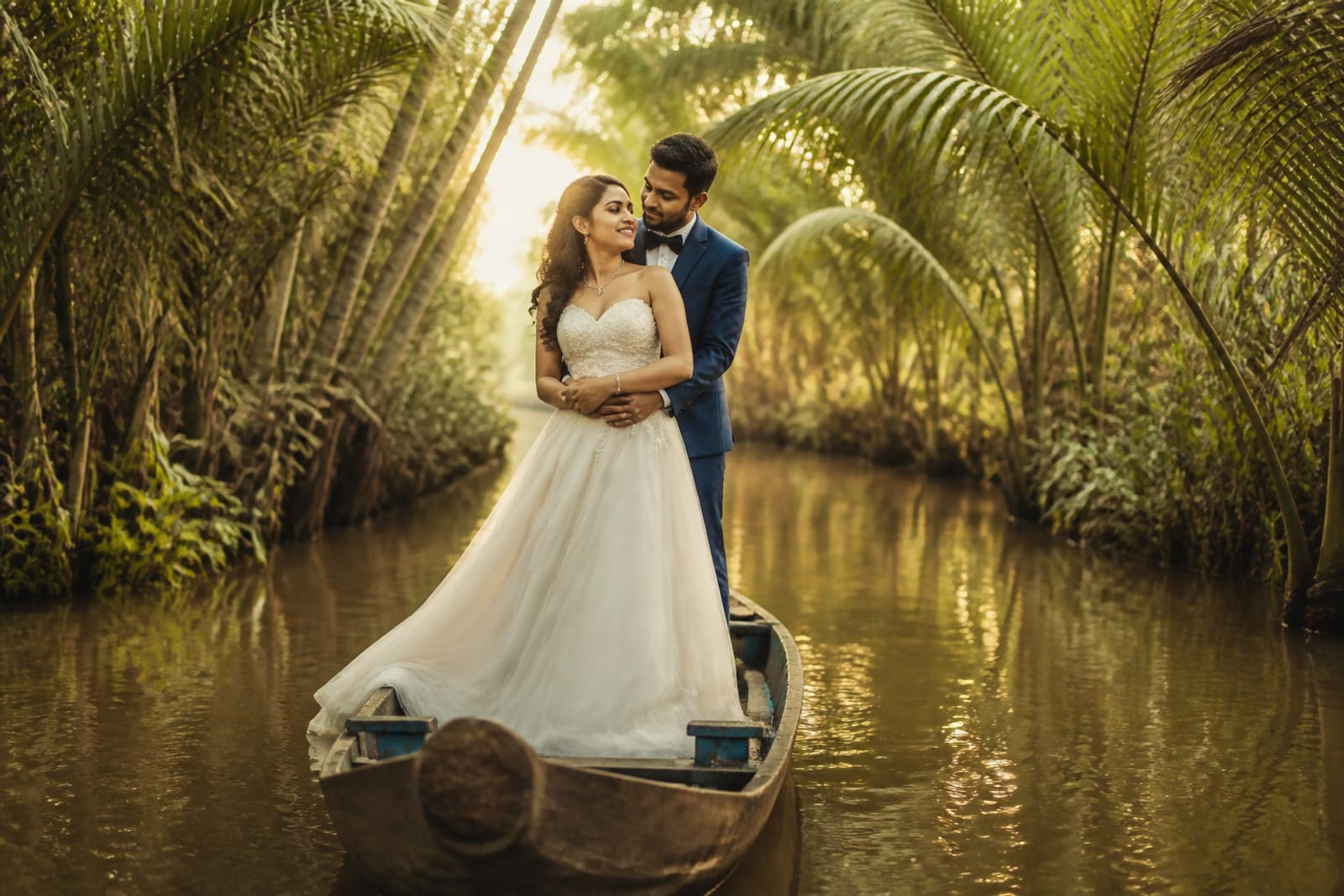
A pre-wedding photoshoot in Mekong Delta during the rainy season (May–November) captures flooded rice paddies and reflective water channels that vanish by December—a landscape most travellers never see. High-water months (June–August especially) offer soft, diffused light and emptier villages; the trade-off is unpredictable afternoon showers and muddy boat access. Cáo Studio can coordinate a Saigon-based shoot here with a local guide and boat operator, but the journey is four to five hours from the city, weather delays are common, and the session requires flexibility on timing. Best light falls early (6–7 am before the heat rises and clouds thicken) on flooded fields near Can Tho or Vinh Long; wear lightweight, water-resistant layers and plan for wet shoes. Ask on WhatsApp whether the team has a Mekong-specific guide and recent flood-season dates before committing.
Why shoot pre-wedding in Mekong during the rainy season?
The Mekong's appeal inverts between seasons. December to April, the delta is dry—rice stubble, dust roads, exposed canals. May to November, water transforms the landscape into a mosaic of reflections, flooded paddies, and floating villages that feel untouched. The rainy season, contrary to its name, does not mean constant rain; it means afternoon downpours (usually 2–4 pm) and high water that stays in fields and channels. Early-morning light—before clouds build—is softer and more diffused than the harsh dry-season sun, which is ideal for skin tones and detail in fabric (ao dai, wedding dress, suit). Fewer tourists and fewer wedding teams mean you shoot in near-solitude. The season demands patience, a local guide, and realistic expectations, but couples who choose it walk away with images no one else in their wedding circle owns.
📸 Book on WhatsApp — pre-wedding photoshoot
Is the rainy season actually safe for a photoshoot?
Cáo Studio does not operate a Mekong base; Mekong shoots are coordinated from Saigon with local boat operators and weather guides. Safety depends on timing, guide choice, and forecast accuracy. Early morning (5:30–7:30 am) is safe; the afternoon is not—afternoon showers arrive suddenly, and boat movement on rising water becomes risky. Flooding is worst in September and October (high-water peak); June–August is more stable. Typhoons (rare inland but possible October–November) close access entirely. A credible local guide checks forecasts daily, communicates via WhatsApp, and reschedules 48 hours before if rain is forecast during your shoot window. Muddy banks are standard; slippery boat steps are real. Wear non-slip footwear, bring a microfiber towel, and accept wet hems. Many couples shoot in rain-gear layers they change out of for close-ups, then change back for walking shots. If heavy rain arrives during the session, the team pivots to covered market areas or village homes nearby—it's not ideal, but it keeps everyone safe. Ask your coordinator what the cancellation and reschedule policy is before you book.
What light and timing actually work in the Mekong rainy season?
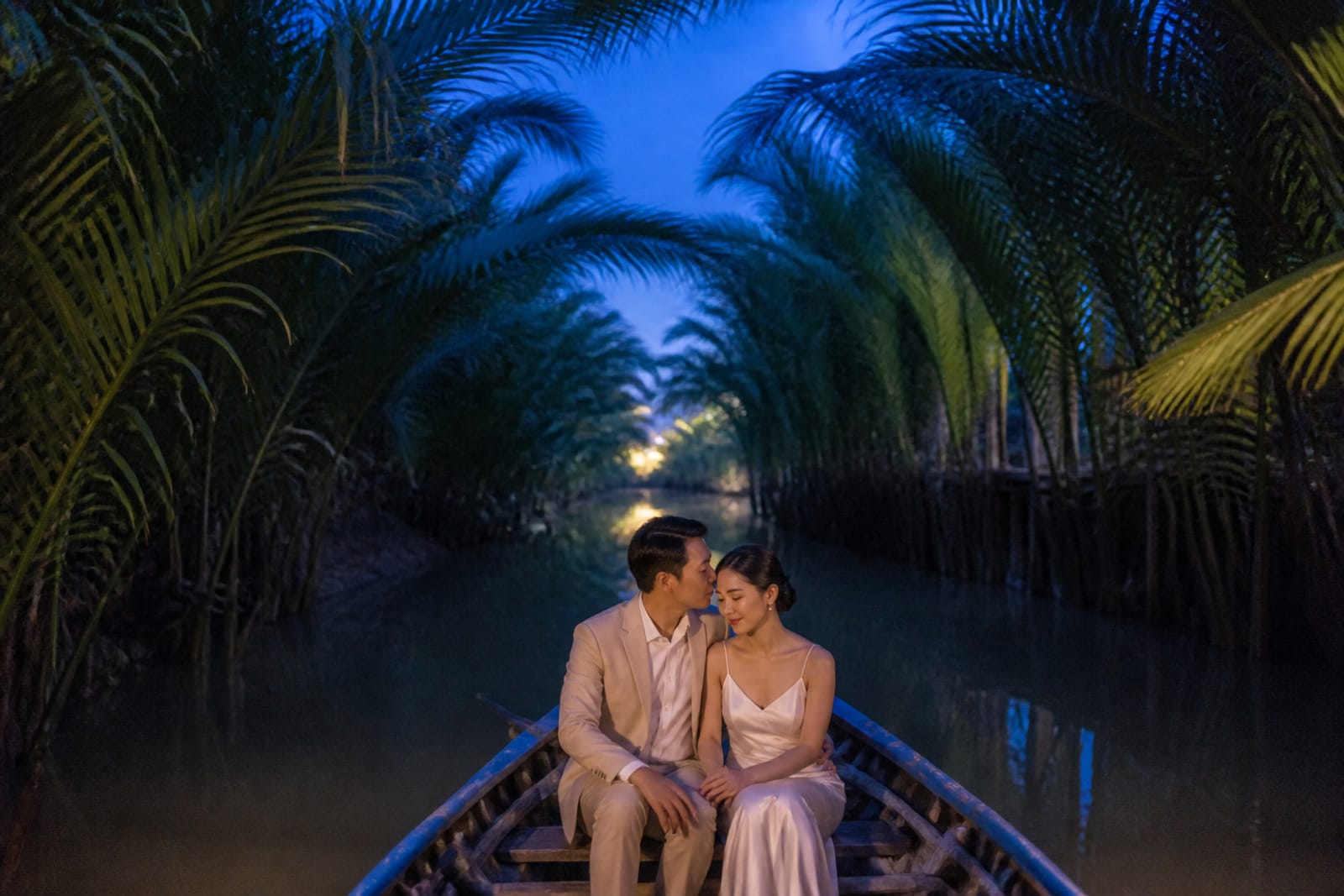
Mekong Delta has no mountains, so light is governed entirely by cloud cover and time of day. Early-season high-water shoots (June–August) have thicker cloud cover—overcast light is forgiving but flat. Mid-to-late season (September–November) has clearer mornings and more directional light, but higher water means fewer safe walking paths. Optimal window: 6:00–7:30 am, on flooded fields facing east-northeast, before the sun climbs high and before heat-haze rises. At 6:10 am on a partly cloudy morning, you get soft side-light on water, warm skin tones, and clean reflections. At 7:45 am, the light hardens and clouds thicken. By 9 am, you're shooting in flat, cool overcast. Boat-based shots (gliding through canals at dawn, couple walking along a submerged paddy bund) work only in the first 90 minutes; after that, heat and crowds increase. Afternoon shoots (2–5 pm) risk rain, harsh light, and fatigue. Time is the primary constraint—not distance.
💄 Makeup & hair at your hotel can be done the evening before or pre-dawn at a local hotel; coordinate with your Saigon coordinator.
Mekong rainy season vs. dry season: which is right for your couple story?
| Aspect | Rainy Season (May–Nov) | Dry Season (Dec–Apr) | Choose rainy if… |
|---|---|---|---|
| Light quality | Soft, diffused, overcast | Sharp, directional, strong shadows | You prefer gentle, forgiving light or shoot skin close-ups |
| Landscape | Flooded paddies, reflections, water channels | Dry fields, exposed canals, dust | You want mirror-like water and lush green (Jun–Aug especially) |
| Crowds | Minimal—villages quiet, boats few | Moderate to high—Tet (late Jan–mid Feb) is busiest | You value privacy and solitude over convenience |
| Weather risk | Afternoon rain, muddy access, reschedules likely | Stable, predictable, fewer delays | You're flexible and can reschedule 48 hours before |
| Outfit practicality | Lightweight, water-resistant layers needed | Standard wedding attire works | You're shooting ao dai and want breathable fabrics |
| Cost factors | Longer travel time, boat fuel, local guide essential | Shorter logistics, fewer backup guides needed | Budget allows for a guide and fuel in high-water season |
| Best for | Adventurous couples, cinema-style framing, patient timelines | Couples wanting guaranteed clear skies and minimal logistics | Your story is "untouched wilderness," not "convenience" |
The rainy season is not inherently "better"—it suits couples who prioritize a unique landscape and soft light over predictability. Dry-season shoots are safer, faster to organize, and better for large groups or complex outfit changes. If you're torn, ask your Cáo Studio coordinator which Mekong-specific dates they've shot recently and what the couple feedback was.
How to choose a photographer or team for Mekong rainy-season shoots.
If Cáo Studio is not available on your dates, find a local Mekong-based photographer or team (Can Tho or Vinh Long has independent studios). Vet them by asking: Have you shot here in June, July, August? (not just dry season). Do you have a local boat operator and village guide on retainer? (not one-off connections). What's your reschedule policy if rain arrives? (flexibility is the answer; inflexibility is a red flag). Show us three examples from high-water shoots. (look for flooded paddies, early morning light, sharp focus despite movement). Do you shoot edited proofs within 48 hours? (turnaround matters when you're traveling). References from couples who've shot there in the same month are gold. Avoid photographers who promise "no rain" or "guaranteed sun"—it's not true in the Mekong rainy season, and it signals they don't know the place.
Cáo Studio's pre-wedding photoshoot page outlines how the team works and what to expect during booking.
What to check before you book a Mekong rainy-season shoot.
Confirm these details on WhatsApp before you commit:
- Coordinator location. Is the team based in Saigon? Do they have a local Mekong guide on file? (Travel time from Saigon to Can Tho is 3–4 hours; a Mekong-based coordinator saves that.)
- Specific shoot month. Ask when the team last shot there during your month (e.g., July, September). Conditions vary wildly month to month.
- Reschedule policy. If rain arrives at 6 am, do you shoot indoors, reschedule to tomorrow, or forfeit the deposit? Get it in writing.
- Travel and logistics included. Does the quote cover the boat, guide, travel from Saigon, and meals? (Transparency here prevents surprises.)
- Outfit and weather planning. Will the team advise on water-resistant fabrics, footwear, and what to wear under an ao dai in humidity? (Cáo Studio's makeup & hair team handles this; independent photographers may not.)
- Edited delivery timeline. Ask for a written delivery date (e.g., within 5 business days of the shoot, accounting for potential delays from weather).
- Communication during the shoot. Confirm WhatsApp or phone contact is live on the day—weather changes fast, and you need to reach them quickly.
🌸 See the lookbook to understand the team's style and framing approach before you decide.
If you're booking with Cáo Studio, your Saigon coordinator will walk you through each of these points. If you're sourcing independently, write these questions in a checklist and ask every candidate.
---
FAQ
Can we shoot pre-wedding in Mekong Delta if we're based in Hanoi?
Yes, but you'll need to travel to Saigon first (flight, train, or bus—2–3 hours depending on transport). Cáo Studio coordinates from Saigon; the shoot itself is 4–5 hours south from the city. Plan 2–3 days for the journey and shoot. Ask on WhatsApp for Hanoi-to-Mekong logistics coordination.
What month in the rainy season has the best light for photos?
June–August offers softer, more consistent overcast light and vibrant green water. September–November has clearer mornings but higher flood risk and fewer safe walking paths. Choose June–August if you prioritize light quality; September–October if you want dramatic water and don't mind rescheduling.
Do we need rain insurance or a backup plan for a rainy-season shoot?
Yes. A credible team reschedules if heavy rain is forecast 48 hours before; cancellation fees or rescheduling terms depend on the contract. Ask your coordinator: can you reschedule to the next day, or do you lose the deposit? Most travel-based couples choose reschedule clauses. Budget for an extra 1–2 days in the region in case weather delays happen.
Can we wear a traditional ao dai during a rainy-season Mekong shoot?
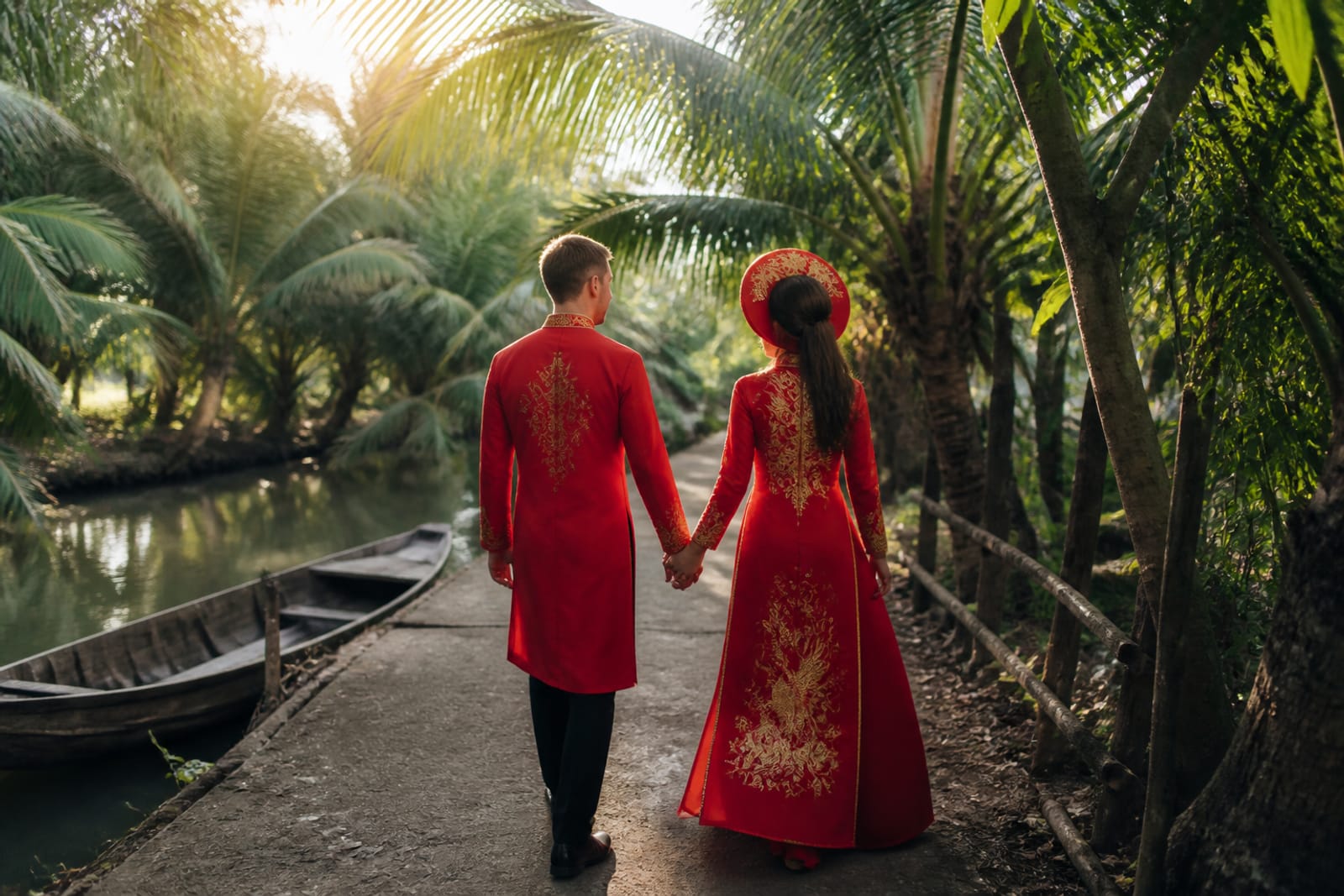
Yes, but choose breathable silk or linen (not heavy brocade). Humidity in June–August reaches 80–90%; wear light layers underneath. The ao dai hem will get wet on muddy paths—that's part of the aesthetic. Ask Cáo Studio's makeup & hair team for fabric and layering advice before you book; they'll guide you on what works and what doesn't.
Is a Mekong rainy-season shoot more expensive than a dry-season or city shoot?
Yes—cost factors include longer travel time from Saigon, a dedicated local guide, boat fuel, and rescheduling contingency. The exact quote depends on your outfits, group size, and shoot duration. Ask for a Mekong-specific quote on WhatsApp; your coordinator will break down the travel and logistics costs and explain what's included.
Do we need to book a local photographer, or can Cáo Studio handle the whole shoot?
Cáo Studio coordinates Mekong shoots from Saigon with a local guide and photographer; the team does not have a Mekong branch. Cáo Studio's strength is one team handling hair, makeup, and photography in one booking. If you book independently, vet the photographer carefully—ask for flooded-season examples and a reschedule policy. Message WhatsApp to confirm whether Cáo Studio has availability and a local partner for your dates.
FAQ
Can we shoot pre-wedding in Mekong Delta if we're based in Hanoi?
Yes, but you'll need to travel to Saigon first (flight, train, or bus—2–3 hours depending on transport). Cáo Studio coordinates from Saigon; the shoot itself is 4–5 hours south from the city. Plan 2–3 days for the journey and shoot. Ask on WhatsApp for Hanoi-to-Mekong logistics coordination.
What month in the rainy season has the best light for photos?
June–August offers softer, more consistent overcast light and vibrant green water. September–November has clearer mornings but higher flood risk and fewer safe walking paths. Choose June–August if you prioritize light quality; September–October if you want dramatic water and don't mind rescheduling.
Do we need rain insurance or a backup plan for a rainy-season shoot?
Yes. A credible team reschedules if heavy rain is forecast 48 hours before; cancellation fees or rescheduling terms depend on the contract. Ask your coordinator: can you reschedule to the next day, or do you lose the deposit? Most travel-based couples choose reschedule clauses. Budget for an extra 1–2 days in the region in case weather delays happen.
Can we wear a traditional ao dai during a rainy-season Mekong shoot?
Yes, but choose breathable silk or linen (not heavy brocade). Humidity in June–August reaches 80–90%; wear light layers underneath. The ao dai hem will get wet on muddy paths—that's part of the aesthetic. Ask Cáo Studio's [makeup & hair](/makeup-and-hair) team for fabric and layering advice before you book; they'll guide you on what works and what doesn't.
Is a Mekong rainy-season shoot more expensive than a dry-season or city shoot?
Yes—cost factors include longer travel time from Saigon, a dedicated local guide, boat fuel, and rescheduling contingency. The exact quote depends on your outfits, group size, and shoot duration. Ask for a Mekong-specific quote on WhatsApp; your coordinator will break down the travel and logistics costs and explain what's included.
Do we need to book a local photographer, or can Cáo Studio handle the whole shoot?
Cáo Studio coordinates Mekong shoots from Saigon with a local guide and photographer; the team does not have a Mekong branch. Cáo Studio's strength is one team handling hair, makeup, and photography in one booking. If you book independently, vet the photographer carefully—ask for flooded-season examples and a reschedule policy. Message WhatsApp to confirm whether Cáo Studio has availability and a local partner for your dates.
Ao dai, makeup, hair and a local photographer in Hanoi or Saigon — one WhatsApp message.