/pre-wedding-photoshoot
Pre-wedding photoshoot in Moc Chau February: light, weather and crowds
February in Moc Chau is cool (8–15°C), misty and prime for pre-wedding shots if you plan around weather windows. The tea hills stay green year-round, but Tet plum and cherry blossoms (late Jan–early Feb) create the iconic candied light and backdrop. Crowds peak 2–3 days before and after Tet; shoot mid-week and early morning (6–7 am) to avoid them. Rain and fog roll in unpredictably — build a half-day buffer into your itinerary. A local Hanoi or Moc Chau photographer with experience in tea plantations and cold-weather logistics is essential; Cáo Studio coordinates shoots in Hanoi and Ho Chi Minh City, so we'll help you vet a local partner and set the shot list before you travel.
Is February the right month to shoot pre-wedding in Moc Chau?
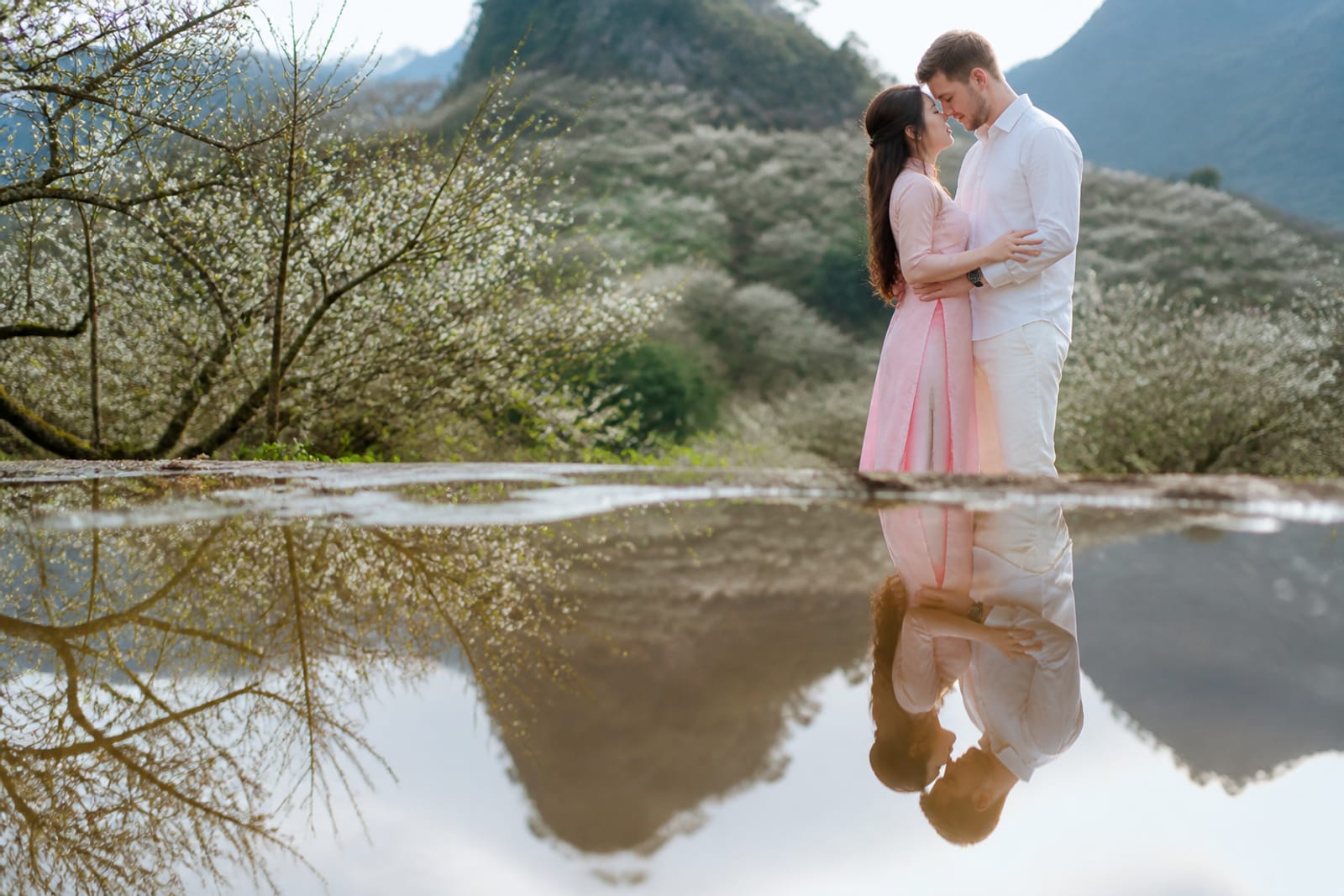
Yes—if you're prepared for mist and unpredictable rain. February is Moc Chau's cool season: temperatures drop to 8–15°C, humidity is high, and fog rolls across the hills, especially early morning. What makes it work: Tet-season blossoms (plum, cherry, peach) bloom late Jan–early Feb, softening light and adding texture without clashing with ao dai or white gowns. The tea hills glow golden in low-angle sun before the fog burns off. That window lasts 4–6 hours—timing is not negotiable. Shoot between 6–8 am or 4–5 pm; midday light is flat and hidden by haze. Unlike dry season (May–Aug), you can't rely on clear skies—plan to move fast between locations and have indoor or covered backups ready.
📸 See how we frame pre-wedding light in our lookbook
What happens to crowds and bookings around Tet in Moc Chau?
Crowds explode 2–3 days before Tet (late Jan–mid Feb) and vanish mid-week. Moc Chau becomes a day-trip destination for Hanoi families during Tet holidays; tea plantations, blossom groves and cafés are packed with visitors and Instagram hunters on weekends. If you book for a Wednesday or Thursday in early February (before peak Tet closure), you'll have tea fields and walking paths nearly to yourself. Hotels and local photographers fill 3–4 weeks ahead; confirm your photographer and itinerary by mid-January. The central marketplace and main village close 1–2 days before and after Tet; ask your photographer which spots stay accessible. Shooting solo (just the couple and the photographer, no assistants) moves faster through crowds than large wedding parties.
What do you actually wear under an ao dai in Moc Chau's cold?
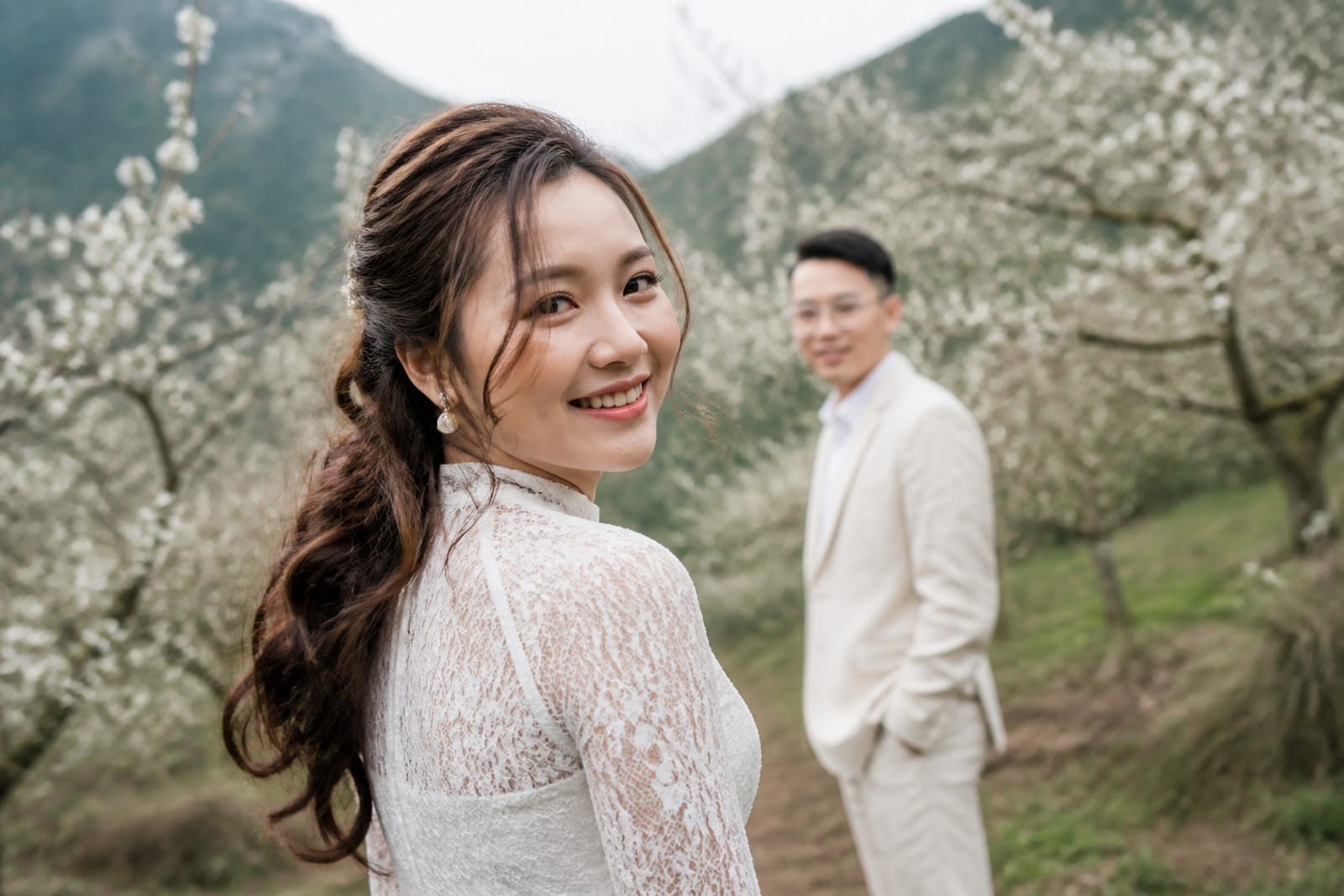
Wear a long-sleeve white or cream fitted shirt under the ao dai, plus warm undergarments (thermal leggings, merino or wool blend). February mornings in Moc Chau hover near freezing at altitude; cotton won't insulate. Ao dài silk is not warm—it's decorative. A lightweight wool or quilted gilet worn over the ao dai between takes keeps you moving without visible lines in photos. Grooms in suits should layer: a long-sleeve shirt, the suit jacket, and a dark overcoat or blazer to remove for close-ups. Avoid bulky scarves (they photograph as visual clutter); instead, wear a thin wool scarf pinned or tucked so it reads as part of the outfit, not added warmth. Shoes matter—the tea fields are wet and muddy; wear ankle boots with grip, not heels or canvas. If your ao dai is rented, confirm the tailor can accommodate layering without puckering the neckline.
💄 Book makeup and hair at your Hanoi hotel before you travel
How does light move across tea hills and blossom groves in February?
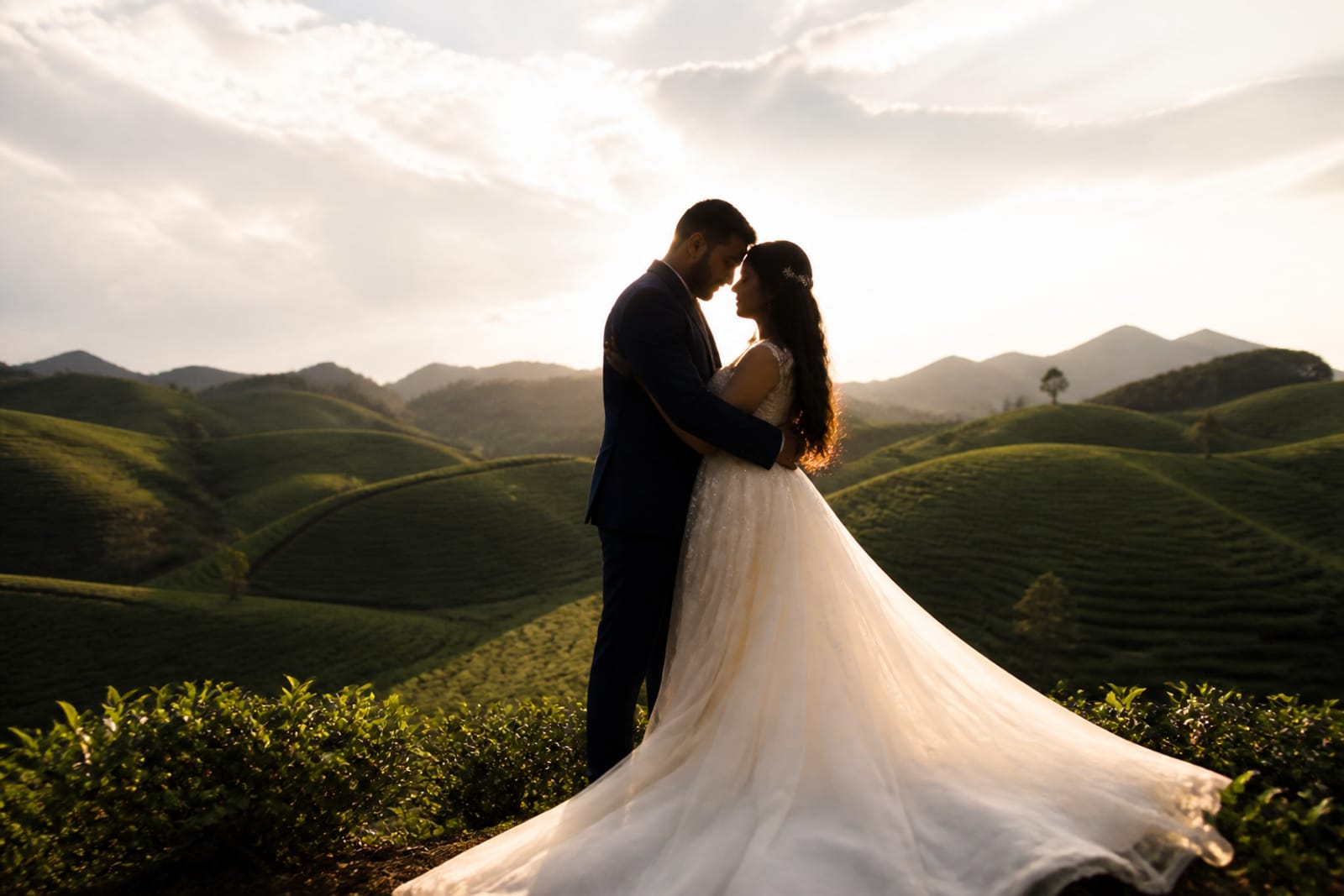
Early morning (6–7 am) is the golden hour: low sun skims across the stepped tea terraces, casting long shadows that reveal the hill texture, while mist diffuses the light into soft backlighting. By 7:30 am, fog usually burns off in patches, creating a patchwork of hard and soft light—use it for layered depth shots (couple in shade, background in sun). Midday (10 am–3 pm) is unusable; the haze flattens everything and blocks the sun. Late afternoon (4–5 pm) restores side and backlighting but fog often rolls back in by 5:30 pm, cutting the window short. Blossoms (plum, cherry, peach trees) photograph best in diffused light; harsh sun washes out the pink and white. Shooting into the light (backlighting) with the blossoms as a halo works; frontal light makes them invisible. A photographer experienced in mountain and misty conditions knows to shoot handheld, expose for the couple (not the sky), and bracket exposures to recover detail in shadow and highlight.
| Timing | Light quality | Mist level | Best for | Why it works |
|---|---|---|---|---|
| 6–7 am | Golden, raking | Heavy | Wide shots of tea hills, silhouettes against mist | Low sun creates texture, fog acts as natural diffuser |
| 7:30–9 am | Patchy (hard + soft) | Clearing | Medium shots, couple in dappled light | Patchwork light adds depth, blossoms glow |
| 10 am–3 pm | Flat, hazy | Dense | Avoid | Haze flattens relief, sun blocked, no drama |
| 4–5 pm | Side-light, golden | Rolling back in | Details, close-ups, profiles | Warm tone, but window narrows as fog returns |
How do you find and vet a local photographer in Moc Chau if Cáo Studio isn't there?
Cáo Studio operates in Hanoi, Ho Chi Minh City and Hoi An; we don't have a Moc Chau base. For a pre-wedding shoot there, ask on WhatsApp (+84 338 762 340) and we'll share our vetting checklist and recommend photographers we've worked with. Look for: (1) portfolio showing pre-wedding or couple work in tea plantations or mountain settings, not just studio shots; (2) experience with ao dài and traditional Vietnamese dress (the photographer should know how fabric moves in wind, where hems catch mud, how to pose you without creasing silk); (3) a shot list (not just "I'll capture moments"—they should describe light timing, locations and fallback plans for rain); (4) backup gear and experience editing in high-humidity, low-light conditions (Moc Chau's mist eats detail; poor editing shows noise and blur). Ask for 3–5 recent February sessions before booking. Confirm they'll deliver edited photos within 7–10 days and that they're comfortable working alone (no second shooter needed for a focused couple session). Interview them on camera—calm, precise direction is what separates a documentary approach from a generic day-in-the-life shoot.
👰 Book a pre-wedding session in Hanoi or Ho Chi Minh City
What else do you need to plan before you arrive?
Book your photographer 4–6 weeks ahead (8 weeks if it's Tet week). Confirm your ao dài rental or design timeline—tailoring takes 2–3 weeks in Vietnam; order by mid-January. If you're flying in from abroad, build a half-day buffer after arrival for jet lag and to walk the shoot location (tea plantations are disorienting if you've only seen them on Instagram). Pack a waterproof bag for gear; Moc Chau is muddy and misty, not dry sand. Check road conditions—mountain roads to Moc Chau can close or flood in heavy rain; confirm with your hotel or photographer if weather turns severe. Arrange transport early (private car or motorbike with a local guide who knows the back roads). Bring a second outfit if you want variety (casual dress for a walking shot, ao dài for formal framing); changing clothes in a car is tight—plan for one location per outfit. Ask your photographer to provide a shot list 1 week before, so you know which groves and fields you're visiting and can visualize the sequence. Finally, set expectations: mist means soft, muted light, not crisp and saturated—that's the authentic Moc Chau aesthetic, not a failure.
===WHAT TO CHECK BEFORE YOU BOOK===
- Photographer experience: Ask for at least 2–3 pre-wedding sessions shot in tea plantations or mountain mist, not studio work.
- Shot list in writing: A detailed itinerary (timing, locations, backup spots for rain) shows professional planning.
- Ao dài knowledge: Can they advise on layering, fabric movement and muddy terrain without creasing silk?
- Turnaround time: Confirm edited photos are delivered within 7–10 days; mountain conditions (humidity, fog, shadows) demand careful post-processing.
- Weather contingency: Do they have an indoor backup (café, homestay) if rain blocks the outdoor locations?
- Communication: WhatsApp or local messaging works—but confirm response time (24 hours is standard).
---
Coordinates in Hanoi and Ho Chi Minh City
If you're building a pre-wedding photoshoot around multiple locations—Hanoi Old Quarter, Red River at sunrise, or Ho Chi Minh City's colonial streets and pagodas—Cáo Studio handles the full session: outfit, makeup, hair and photography in one booking. We know the light windows, the crowd timing and the logistics for ao dài and gown movement. For Moc Chau, partner with a local photographer using this guide; for your Hanoi or city shoot, we're ready.
💍 Book a proposal or anniversary session
FAQ
Can you shoot an ao dài photoshoot and a pre-wedding session in Moc Chau with Cáo Studio?
Cáo Studio operates in Hanoi, Ho Chi Minh City and Hoi An only. For Moc Chau, we guide you to find a local photographer and help vet their work on WhatsApp. You can book an ao dài session in Hanoi before or after your Moc Chau trip.
What's the best week in February to avoid Tet crowds?
Mid-February (after Tet, roughly the second and third full weeks) is quietest; Tet closure is typically late Jan–mid Feb. Book Wednesday–Thursday for fewer tourists. Confirm exact Tet dates on the lunar calendar each year.
How much rain should I expect in February in Moc Chau?
February is cooler and drier than May–September, but mist and occasional drizzle are common, especially mornings. Fog usually lifts by mid-morning. Bring waterproof bags and plan a covered backup location. Heavy downpours are rare, but happen; your photographer should have a contingency plan.
Do I need special insurance or permits to shoot pre-wedding photos in Moc Chau's tea plantations?
Most tea plantations allow photography for personal use. Some popular spots may require a small entry fee or caretaker's permission. Ask your photographer to arrange access; they know which plantations are open to couples and which require advance notice. No national permit is needed for couple photoshoots.
How do I know if a local Moc Chau photographer is good enough for pre-wedding work?
Ask for a portfolio of at least 3–5 pre-wedding or couple sessions (not just portraits). Look for consistent focus, natural posing, light awareness (not all harsh sun or blown-out sky) and ao dài knowledge. Ask about their editing style—Moc Chau's misty conditions need careful shadow recovery. Interview them on WhatsApp or video call; a calm, specific direction is a sign of experience.
Can I combine a Moc Chau shoot with a Hanoi pre-wedding session with Cáo Studio?
Yes. Book your Moc Chau session with a local photographer, and schedule a pre-wedding shoot in Hanoi before you leave for the mountains—Old Quarter at sunrise, Tran Quoc Pagoda, or the Red River offer urban contrast. Contact us on WhatsApp to coordinate timing and outfit changes.
FAQ
Can you shoot an ao dài photoshoot and a pre-wedding session in Moc Chau with Cáo Studio?
Cáo Studio operates in Hanoi, Ho Chi Minh City and Hoi An only. For Moc Chau, we guide you to find a local photographer and help vet their work on WhatsApp. You can book an [ao dài session in Hanoi](/ao-dai-photoshoot) before or after your Moc Chau trip.
What's the best week in February to avoid Tet crowds?
Mid-February (after Tet, roughly the second and third full weeks) is quietest; Tet closure is typically late Jan–mid Feb. Book Wednesday–Thursday for fewer tourists. Confirm exact Tet dates on the lunar calendar each year.
How much rain should I expect in February in Moc Chau?
February is cooler and drier than May–September, but mist and occasional drizzle are common, especially mornings. Fog usually lifts by mid-morning. Bring waterproof bags and plan a covered backup location. Heavy downpours are rare, but happen; your photographer should have a contingency plan.
Do I need special insurance or permits to shoot pre-wedding photos in Moc Chau's tea plantations?
Most tea plantations allow photography for personal use. Some popular spots may require a small entry fee or caretaker's permission. Ask your photographer to arrange access; they know which plantations are open to couples and which require advance notice. No national permit is needed for couple photoshoots.
How do I know if a local Moc Chau photographer is good enough for pre-wedding work?
Ask for a portfolio of at least 3–5 pre-wedding or couple sessions (not just portraits). Look for consistent focus, natural posing, light awareness (not all harsh sun or blown-out sky) and ao dài knowledge. Ask about their editing style—Moc Chau's misty conditions need careful shadow recovery. Interview them on WhatsApp or video call; a calm, specific direction is a sign of experience.
Can I combine a Moc Chau shoot with a Hanoi pre-wedding session with Cáo Studio?
Yes. Book your Moc Chau session with a local photographer, and schedule a [pre-wedding shoot in Hanoi](/pre-wedding-photoshoot) before you leave for the mountains—Old Quarter at sunrise, Tran Quoc Pagoda, or the Red River offer urban contrast. Contact us on WhatsApp to coordinate timing and outfit changes.
Ao dai, makeup, hair and a local photographer in Hanoi or Saigon — one WhatsApp message.