/pre-wedding-photoshoot
Pre-wedding photoshoot in Moc Chau in January: weather, light and crow
January pre-wedding shoots in Moc Chau work best between early morning tea-picking hours (5:30–7 am) when mist clings to the hills and side light is soft, or mid-afternoon (3–5 pm) when sun angles low across the terraces. The town itself is quieter than peak season, but Tet (late January–mid February) brings sudden crowds to popular spots and closes many services for several days; check the lunar calendar before booking. Weather is cool (50–65 °F), with frequent grey overcast and occasional drizzle—bring layers and waterproof layers for crew. Cáo Studio works with Hanoi-based photographers and stylists who know the light windows and can coordinate with local guides; sessions include directed movement across real light, not posed shots at monuments. A two-location morning-and-afternoon schedule (tea hills + village temple or homestay garden) works better than chasing one "perfect" backdrop—mist and low angle light move fast, and a team that handles outfit, hair, makeup and camera together captures the moment as it shifts, not after it's gone. 📸 Book on WhatsApp — pre-wedding photoshoot
January is cold, grey and misty in Moc Chau—nothing like the tourist-board green-and-golden fantasy. But that's precisely why pre-wedding couples choose it: the mist softens hard shadows, the thin crowds mean you can walk without stopping for selfie-takers, and the early tea-pickers create authentic foreground movement. The catch is timing, logistics and weather. Most couples rush in without understanding how light and weather window compress here, then miss the shot or overpay a reactive guide. This guide covers what you'll actually face, how to work with it, and how Cáo Studio coordinates teams for couples who want frames—not just images.
What does January light actually give you in Moc Chau?
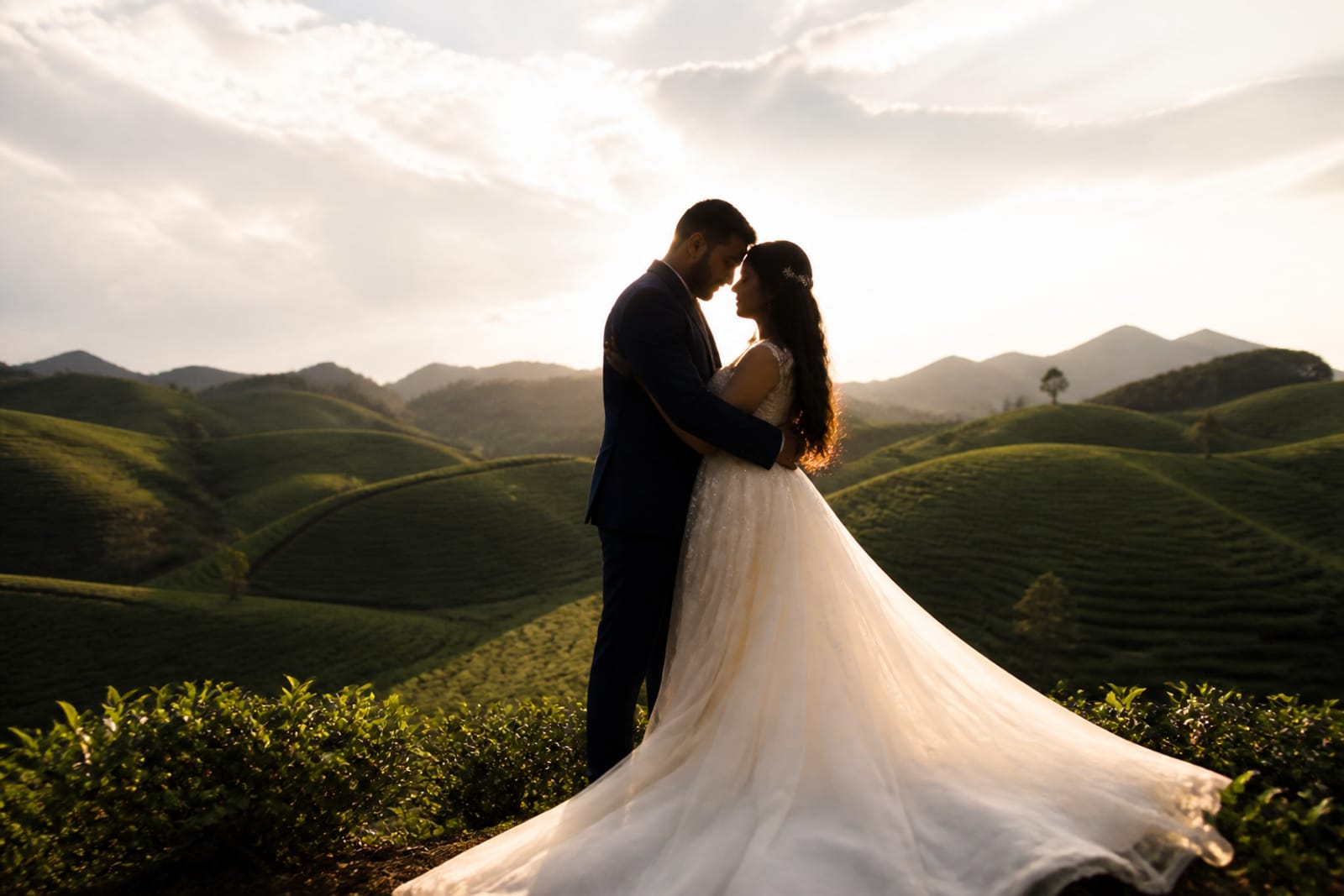
January light in Moc Chau is soft, diffuse and short. Mist settles over the tea hills by dawn, burns off unevenly by 10 am, and re-settles by 4 pm; direct sun is rare and often overcast. The advantage: shadows are gentle, skin tone is even, and the terrace geometry reads clearly in wide shots. The cost: you have roughly three hours of shootable light in the morning (5:30–8:30 am, before mist fully lifts and crowds arrive from town), and two hours in late afternoon (3–5:30 pm, as sun angles low again). Midday is useless—flat, grey, lifeless. Most pre-wedding teams waste the day here; Cáo Studio works backward from light, not from a checklist of landmarks.
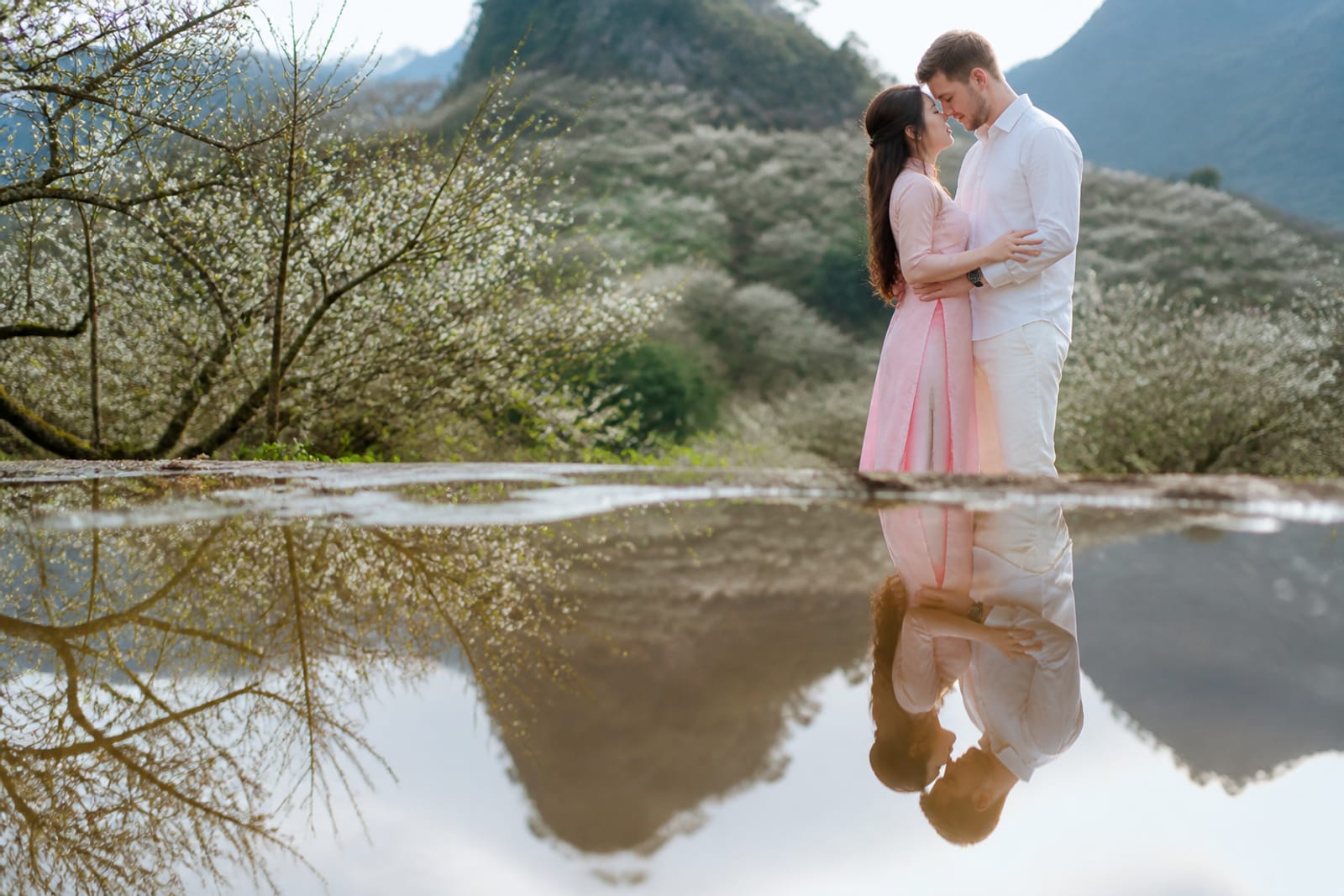
Green tea hills photograph best in the cool season because the plants are darkest and the texture reads in side light; January works because the ground is often damp from overnight, which deepens the colour and kills glare. If you shoot after a rainy morning, the mist stays longer and the light is even softer—but the mud is real, and outfits get soaked. Plan for quick changes and a backup indoor location (temple verandah, homestay garden, local café).
Why does Tet timing destroy most January bookings?
Lunar New Year (Tet) falls between late January and mid-February; the exact dates shift yearly—in 2026, Tet is 29 Jan–12 Feb. The week before and the week after, Moc Chau is either chaotic with last-minute visitor surges or completely closed (shops, restaurants, local guides vanish for family). Many couples miss this detail and book a "January" shoot without checking the lunar calendar; they arrive to find guides unavailable, locals unwilling to be in shots, and roads clogged. The solution: book early January (1–20 Jan) or late January (13–28 Jan only if you confirm with a local coordinator first). Ask on WhatsApp which dates the team is available; Cáo Studio works with Hanoi-based coordinators who know Moc Chau services week by week.
If you do shoot during Tet week, expect higher costs for crew, fewer backup options if weather turns, and much slower logistics—your session becomes reactive, not directed.
How do you dress for cold, wet light?
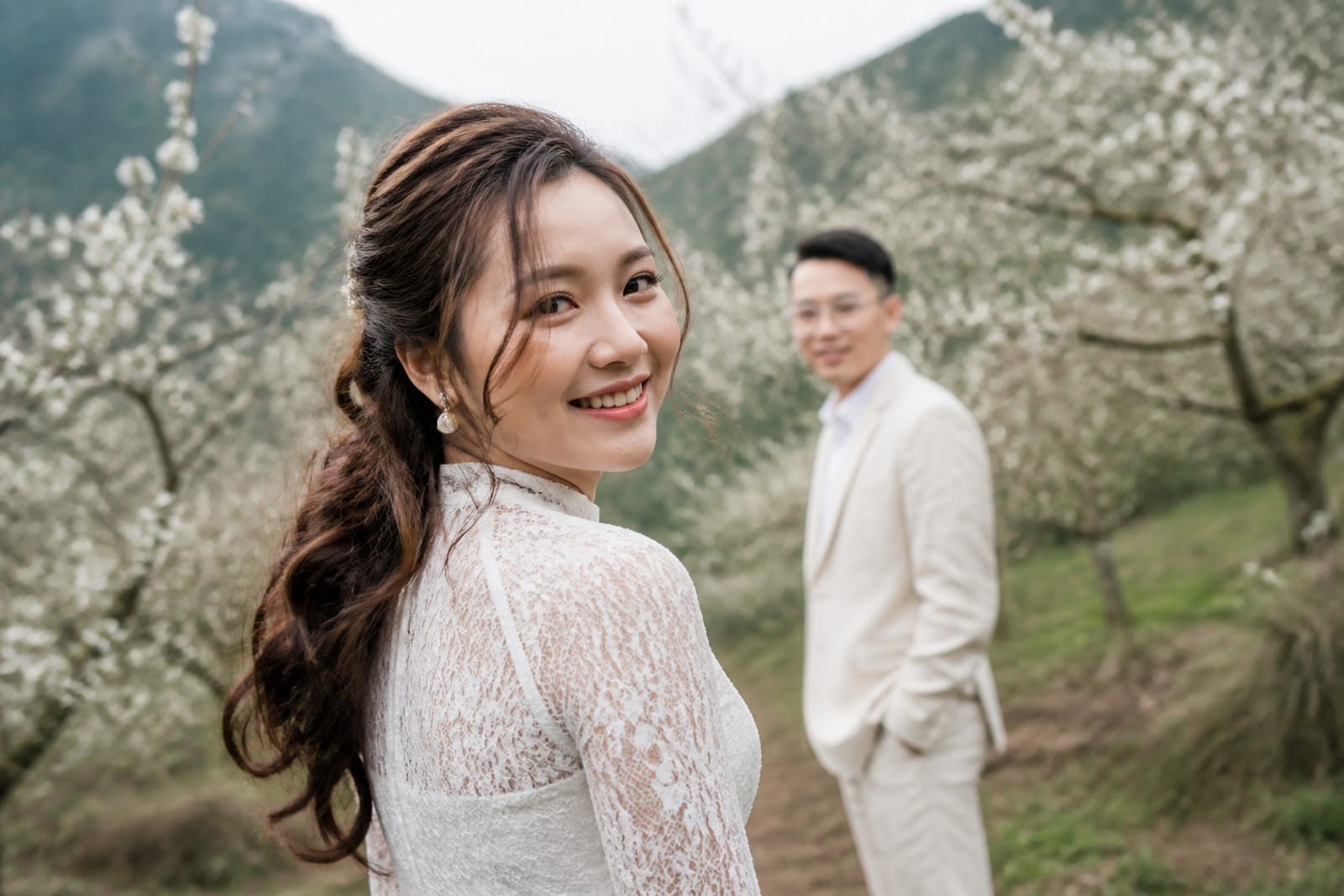
Moc Chau in January averages 50–65 °F, with high humidity (70–80%), frequent drizzle and rare frost. An ao dai (traditional silk dress) feels elegant in frames but is cold to wear and soaks moisture visibly in mist. Most ao dai photoshoot couples here pair a thin silk ao dai with a lightweight cashmere or wool cardigan (removed for close-ups), and wear thermal leggings underneath—invisible on camera, essential for staying warm during long takes. Men in suits should use a fine merino wool blazer and wool trousers, not cotton or linen. Both should wear waterproof outer layers (a long overcoat or hiking shell) for walks between locations, then change into the main outfit for shooting. Footwear matters: the tea hills are steep, muddy and slippery; wear proper hiking boots for movement, then change to heels or dress shoes for final takes. Cáo Studio coordinates outfit layering with the makeup & hair team before the shoot—no improvising on location.
Bring: a small waterproof bag with face powder (mist causes shine and makeup to settle visibly), lip balm, a microfibre cloth, and a lightweight wool throw (for between-location warmth and as a prop for seated shots on wet terrain). The crew also needs rain shells and extra socks; if your photographer and stylist are cold or damp, the shoot slows and the frames show tension, not connection.
When should you position shots—morning mist or afternoon light?
| Timing | Best for | Light character | Why choose it |
|---|---|---|---|
| 5:30–7 am (pre-mist-burn) | Wide tea-hill landscape, couple walking downslope | Soft diffuse, pale grey-blue | Mist softens distance, couple stands out as silhouette or rim-lit profile; locals are active but sparse |
| 8–10 am (mist clearing) | Medium close-ups, couple sitting or dancing, temple close-ups | Increasingly directional, weak shadows appearing | Risk: light becomes flat again fast; must wrap wide and medium by 9:30 am or shift indoors |
| 11 am–3 pm | Indoor shots only (homestay room, café, temple interior) or skip | Harsh, flat, useless for exterior frames | Do not shoot landscape outside these hours; use time for outfit changes, crew rest, location travel |
| 3–5:30 pm (late sun angle) | Silhouette shots, rim-lit medium frames, village walk or temple entrance | Warm golden diffuse (if clear); orange-tinted grey (if overcast) | Sun is low enough to flatter profile; mist re-settles; fewest tourists |
Morning wins for landscape and movement; afternoon wins for close intimacy and warm tone. Most couples try to do both in one session—advisable only if you start 5 am sharp and accept that 10–3 pm is a crew rest / location travel window, not a shoot window. Two half-day sessions (one morning, one afternoon on different days) give better light and less fatigue, but cost more in logistics. Pre-wedding couples working with Cáo Studio plan backward: which frames matter most, what light do they need, how many hours does that require, and which days?
How do you avoid crowds and reactive logistics?
January attracts fewer tourists than November or December, but the last week before Tet (around 20–28 Jan) and the week after Tet (around 13 Feb onward) see local school groups and company team-building visits. The quietest window is 1–15 January, especially weekdays. Early morning (before 7 am) on any day is nearly empty—the advantage of mist-light timing. If your shoot is 5:30–8:30 am, you'll see tea-pickers and possibly a local guide, but no other photographers or tourists. If you start at 9 am, you're competing with café crowds and early-arrival visitors.
Plan location order to avoid backtracking: north-to-south (start at the highest tea fields, move toward the town center, end at a temple or homestay garden) or stick to one zone (e.g., just the central tea hills and one nearby village) rather than jumping between distant spots. Each location move costs 20–40 minutes (travel, crew re-setup, light re-assessment); in January's short light windows, every move is a gamble. Cáo Studio's process is to scout two tight locations beforehand, move between them once (mid-session for outfit change and mental rest), and shoot wide, then medium, then detail at each stop. Reactive shooting—"let's see what we find"—fails here.
The crew also matters. A one-person local photographer will be available, cheaper, but will have no makeup artist, no stylist, no second camera for backup. If weather shifts, makeup runs, or an outfit tears, you're stuck. Cáo Studio brings its own stylists and makeup artist alongside a local photographer who knows the light and the land; that redundancy costs more in coordination but saves the shoot when something fails—and in Moc Chau in January, something always does.
What prep work happens before you arrive?
The week before your shoot, you need to confirm: (1) which exact dates are Tet-safe in 2026, (2) current weather forecast and mist probability, (3) whether your outfits (especially ao dai) require hem adjustments for hiking terrain, (4) which two to three locations you'll prioritize, and (5) whether any locations require local permits or guide fees. Cáo Studio starts this work over WhatsApp as soon as you book; the team gathers forecast data, checks with Hanoi-based local guides, and builds a detailed location / light / outfit timeline for you to review. You're not walking in blind.
Three days before, the team confirms the final schedule—which day and which time slot, where the crew meets you (usually your hotel in Moc Chau town), and what to pack. Two days before, you receive the shot-list and outfit-change plan. The night before, a final WhatsApp check-in on weather and any last-minute questions. On the morning of the shoot, the team arrives early (usually 5 am if your session starts 5:30 am) to scout fresh light and position equipment.
What goes wrong: couples arrive expecting a "tour with photos," not a directed shoot; they arrive late to the meeting point; they bring outfits that don't fit or are too delicate for terrain; they want "all the landmarks" in three hours of grey light; they're unprepared for mud and cold. The prep work prevents these. By the time you're on the tea hills, everything is decided—you walk, look at each other, move downslope, and the camera catches the frames as they happen.
What's the honest timeline for editing and delivery?
Cáo Studio delivers edited photos within 48 hours (per the brand promise), plus a short vertical film within a week. Moc Chau shoots are no exception: the team will edit and colour-grade all frames (wide, medium, detail from both locations) to match the cool, misty mood of January—often slightly lifted in clarity and warm tone to compensate for the grey overhead. A typical two-location, three-hour session yields 200–400 frames; the delivered set is a curated selection (usually 60–100 edited images plus outtakes if requested), not every shot. Vertical film is 30–90 seconds, shot during the session as the team captures you moving, laughing, or turning—not a separate interview or re-shoot.
The timeline assumes you review and approve the selection within 48 hours of delivery (you pick which mood—warm golden or cool misty—for final grading). If you request heavy retouching, custom album layouts, or prints, those ship separately per the product timeline. Check the exact inclusions on WhatsApp when you book.
---
What to check before you book a Moc Chau pre-wedding shoot
- Tet dates (check lunar calendar for your year). Confirm with the team whether your chosen dates fall in a "safe" window or if you should shift by one week.
- Your outfit fit for mud and cold. If wearing an ao dai, measure the hem: it should not drag below your ankles when hiking steep terrain. Bring waterproof outer layers.
- Light windows vs. landmark list. Be honest: would you rather have three hours of directed movement in great light, or six hours chasing ten landmarks in grey noon? Moc Chau in January rewards the first choice.
- Local guide and permit needs. Some tea estates require a guide fee; some temples ask for donation or have photography-etiquette rules (head covered, shoes off). The team handles this, but ask before booking if any sites are off-limits.
- Weather backup plan. If rain is heavy on the shoot day, can you reschedule? Most teams will offer one free re-shoot date within two weeks if weather makes the original session impossible.
- How many edited frames you'll receive. Get the exact number in your quote—and remember: more frames don't mean better frames.
---
For pre-wedding couples planning a January shoot in Moc Chau, the pattern is clear: mist and cold are features, not bugs. They compress the light into a sharp window, they quiet the crowds, and they soften every frame into something intimate and cinematic. The couple who arrives with a detailed light plan, the right outfits, and a team that understands the land walks away with frames they return to years later. The couple who shows up with a landmark checklist and optimism about the weather does not.
Reach out on WhatsApp to discuss your dates, confirm Tet availability, and start the location and outfit planning. Cáo Studio's role is to turn that one cold, grey morning into light that tells your story—not just to document it.
FAQ
Is it too cold to shoot in Moc Chau in January?
Not for short sessions (2–3 hours of active shooting). Temperatures are 50–65 °F, manageable with proper layering (wool underlayers, waterproof outer shell, changed for the outfit during shoots). The real risk is crew fatigue and makeup settling visibly if everyone is shivering—that's why Cáo Studio scouts light and plans fast movement, not stationary poses.
What if it rains on my shoot day?
Light rain is shootable and often improves the mist effect; heavy rain (more than 0.5 inches per hour) makes mud treacherous and makeup unusable. Most Cáo Studio bookings include one free re-shoot date within two weeks if weather is severe. Check your quote for the exact re-shoot policy.
Should I book a January shoot or wait until spring?
January is quieter and has softer light, but shorter light windows and cold. Spring (March–April) is warmer, has more daylight, but brings crowds and occasionally haze. If you prioritize intimate frames and mood over comfort, January wins. If you want warm light and long shooting hours, wait.
Can I fit Moc Chau into a Hanoi pre-wedding session?
Moc Chau is 140 km from Hanoi (2.5–3 hours by car, early departure required). It's best as a separate day-trip shoot, not a morning add-on to a Hanoi session. Cáo Studio can coordinate both—ask on WhatsApp for combined pricing and logistics.
Do I need a Moc Chau local guide, or does Cáo Studio's photographer cover it?
Cáo Studio's Hanoi-based team works with trusted local guides and coordinates permits/fees beforehand. You don't need to hire separately, and the team handles location scouting, tea-estate access, and temple etiquette. The cost is included in the shoot quote.
FAQ
Is it too cold to shoot in Moc Chau in January?
Not for short sessions (2–3 hours of active shooting). Temperatures are 50–65 °F, manageable with proper layering (wool underlayers, waterproof outer shell, changed for the outfit during shoots). The real risk is crew fatigue and makeup settling visibly if everyone is shivering—that's why Cáo Studio scouts light and plans fast movement, not stationary poses.
What if it rains on my shoot day?
Light rain is shootable and often improves the mist effect; heavy rain (more than 0.5 inches per hour) makes mud treacherous and makeup unusable. Most Cáo Studio bookings include one free re-shoot date within two weeks if weather is severe. Check your quote for the exact re-shoot policy.
Should I book a January shoot or wait until spring?
January is quieter and has softer light, but shorter light windows and cold. Spring (March–April) is warmer, has more daylight, but brings crowds and occasionally haze. If you prioritize intimate frames and mood over comfort, January wins. If you want warm light and long shooting hours, wait.
Can I fit Moc Chau into a Hanoi pre-wedding session?
Moc Chau is 140 km from Hanoi (2.5–3 hours by car, early departure required). It's best as a separate day-trip shoot, not a morning add-on to a Hanoi session. Cáo Studio can coordinate both—ask on WhatsApp for combined pricing and logistics.
Do I need a Moc Chau local guide, or does Cáo Studio's photographer cover it?
Cáo Studio's Hanoi-based team works with trusted local guides and coordinates permits/fees beforehand. You don't need to hire separately, and the team handles location scouting, tea-estate access, and temple etiquette. The cost is included in the shoot quote.
Ao dai, makeup, hair and a local photographer in Hanoi or Saigon — one WhatsApp message.