/pre-wedding-photoshoot
Pre-wedding photoshoot in Moc Chau July: weather, light, season guide
July in Moc Chau is the wet monsoon season: expect daily afternoon rain, high humidity (often 80–90%), and heavy mist that blankets the hills until mid-morning. Tea plantations are their greenest; light is soft and shadowless, ideal for skin tones but poor for contrast and wide landscapes. Sessions run 4–5 hours (morning mist clears around 8–9 am, then rain returns mid-afternoon). Wear moisture-wicking layers and waterproof shoes; carry a weatherproof kit for your gear. Cáo Studio operates in Hanoi, Ho Chi Minh City and Hoi An; for Moc Chau, a local photographer familiar with monsoon logistics is essential—ask them about backup indoor spots (farmhouse interiors, covered pavilions) before you book.
Will July rain ruin my pre-wedding shoot in Moc Chau?
Not if you're prepared. July is Moc Chau's monsoon month: rain falls almost every afternoon (often 2–4 pm), and morning mist lingers until 8–9 am. The upside—tea is at peak green, light is naturally soft and kind to skin. The downside—you lose 2–3 hours of shooting time, paths get slick and muddy, and wide landscape shots lose depth in the haze. A local photographer knows which covered pavilions, farm buildings, or indoor venues work on wet days; ask them upfront for a rain-day backup plan. Most couples who shoot in July choose the challenge for the lush, dramatic backdrop—but they commit to starting before 7 am and wrapping by 1 pm.
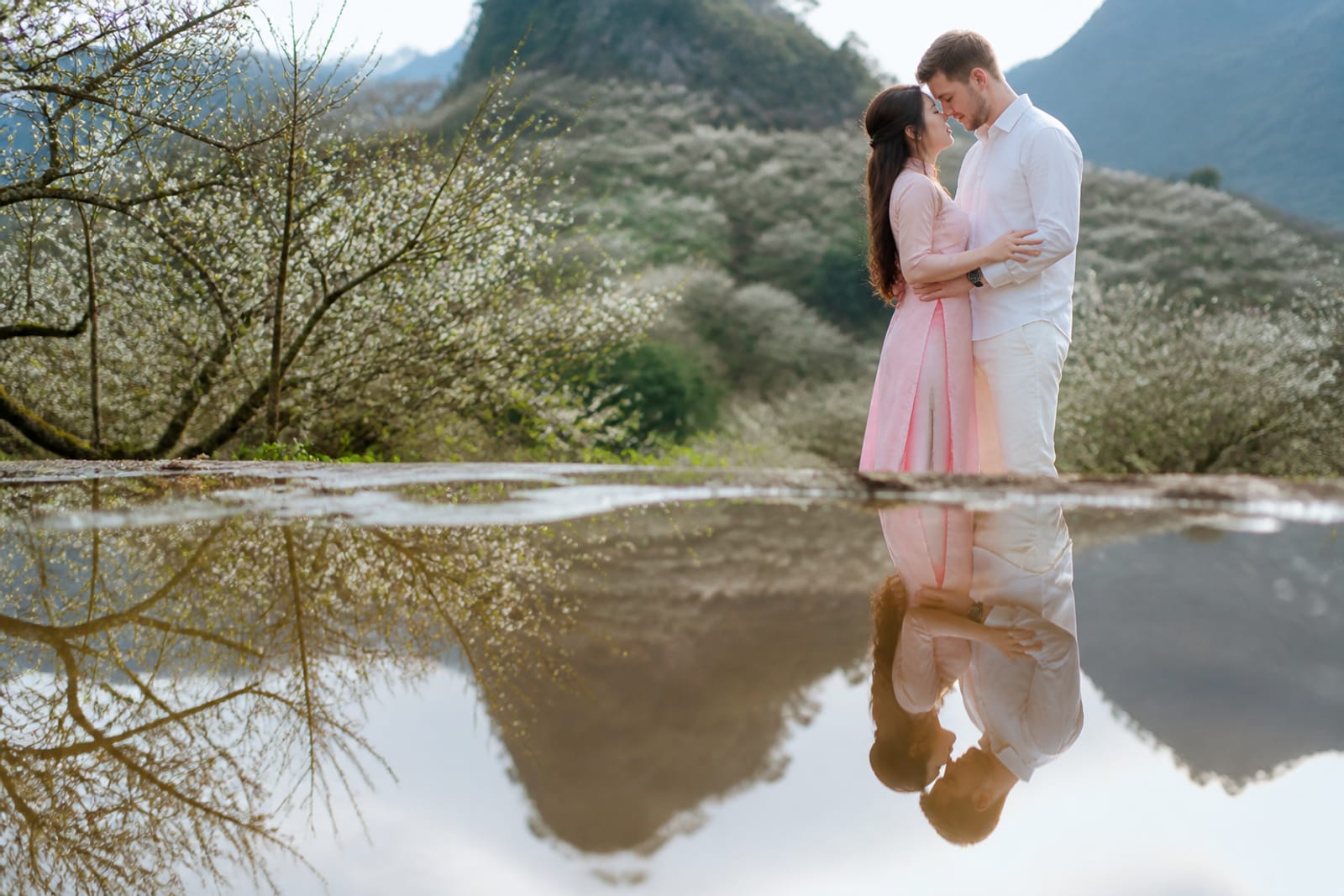
What light does Moc Chau offer in July?
Monsoon mist creates flat, diffused light all morning—excellent for close-ups and couple portraits (no harsh shadows on faces), but weak for wide vistas and silhouettes. Once mist clears (8–9 am), light stays soft and hazy through midday because cloud cover is constant. By afternoon, rain clouds darken the sky further, and shooting becomes difficult without a flash or reflector. Avoid expecting golden-hour drama; July's best frames happen between 6:30–8:30 am when mist is still present but sky starts to lighten. A local team will position you toward open tea fields on the north or west slope to catch any available direction (the mist doesn't block side light completely, just weakens it). This is why couples often pair tea-hill frames with indoor tea-house or farmhouse portraits—it balances the moody outdoor loss.
When should you arrive and leave on a Moc Chau shoot day?
Plan a pre-dawn start. Meet your photographer by 6 am so you're on location by 6:30 am, before mist thickens further and before other visitors arrive. Shoot for 2–3 hours (6:30–9 am), then move to a secondary location—a covered pavilion, a farm interior, or a tea-house—to change outfits and avoid the midday humidity spike. Resume shooting briefly (10–11 am) if light permits, then wrap by noon or 1 pm before afternoon rain. This timing lets you avoid crowds (most day-trippers arrive 10 am–4 pm) and beat the weather window. Bring the photographer, makeup artist and hair stylist in one vehicle; delays in Moc Chau roads (especially wet, unpaved farm tracks) cost 20–30 minutes easily. A single coordinated team avoids three vendors waiting separately in the rain. Cáo Studio's one-team model reflects this reality: all skills in one booking means faster setup, faster pivots, and fewer people standing in wet conditions.
📸 Book on WhatsApp — pre-wedding photoshoot
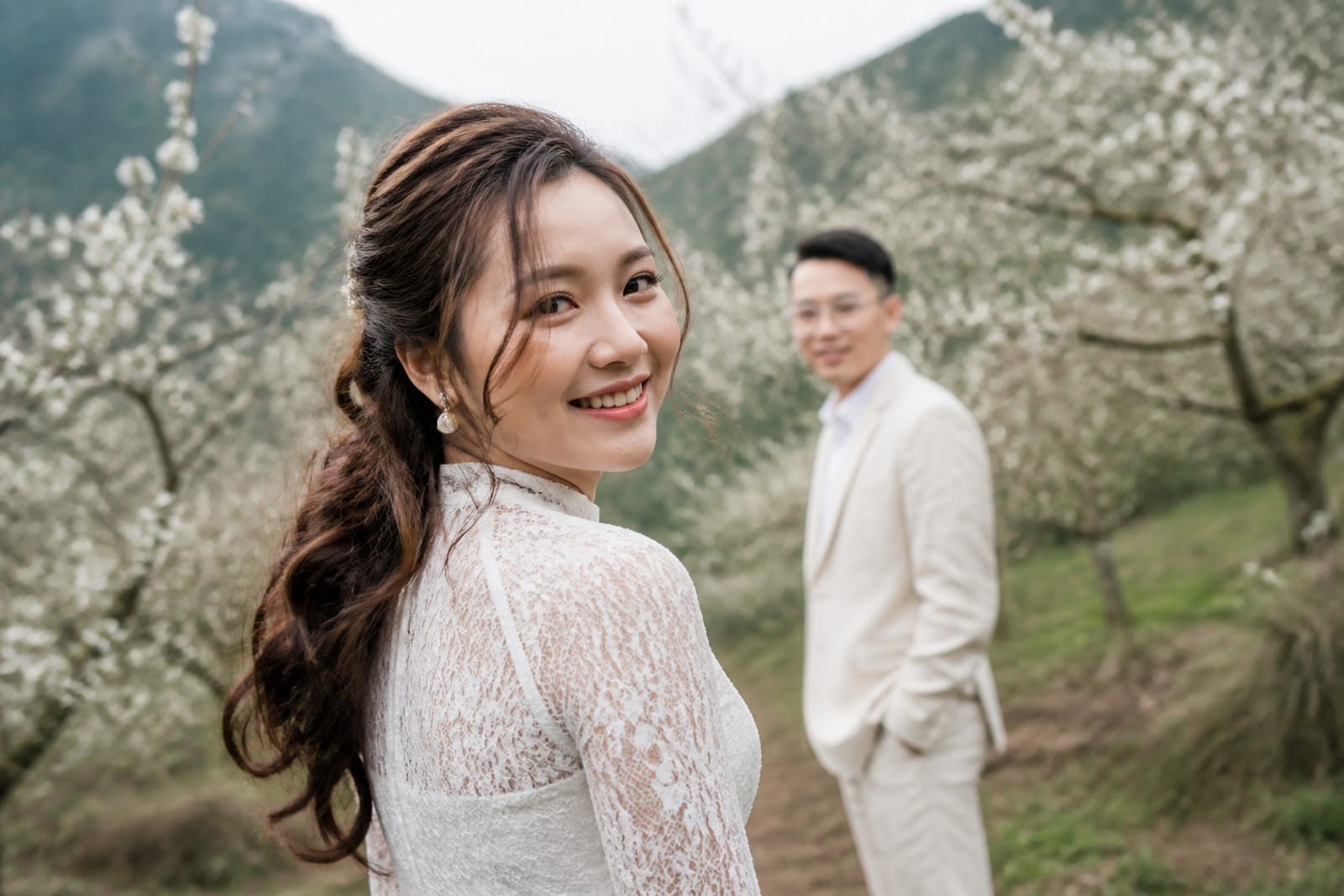
How do outfit and styling choices change in July monsoon?
Heavier fabrics hold their shape in humidity better than silk or chiffon. An ao dai in cotton or a thicker blend (ask your seamstress) will photograph better than a slippery silk version on a wet morning. For a Western dress, avoid long trains that drag in mud; a knee-length or tea-length gown is practical. Bare legs (tights or none) look better than long sleeves in the heat and humidity—the mist will make you sweat. Makeup needs a sweat-resistant base and powder retouch every 45 minutes; ask your artist to bring extra blotting sheets and a setting spray rated for humidity (not water-resistant—you're in monsoon, not a pool). Hair should be pulled back (half-up, braids, buns) so flyaways don't dominate in the diffused light; loose waves photograph poorly in mist because outline contrast disappears. Footwear: waterproof, non-slip soles. Heels sink into wet soil; flat boots or sturdy sneakers (white, matte) are safer. If you rent a traditional ao dai, ask the rental studio whether their July stock includes moisture-wicking linings—many do. Check the ao dai rental options and brief your stylist on monsoon logistics before the shoot day.
| Outfit Type | Best for | July Challenges | Why It Works or Doesn't |
|---|---|---|---|
| Cotton ao dai (tailored fit) | Couple shoot, cultural framing | Humidity cling, wrinkles in mist | Fabric breathes, dries faster if splashed, creases photograph softer than silk |
| Western wedding dress (knee-length) | Pre-wedding, mixed-venue days | Train mud, hemline wet-hem line | Shorter length clears muddy paths, lighter fabric dries quickly, easier to rewear indoors |
| Groom suit (linen or cotton blend) | Formal couple frames | Sweat stains, collar wilting, wrinkles | Natural fibers absorb sweat without shine, blend suits keep shape longer than pure linen |
| Layered separates (jacket + shirt + trousers) | Flexible outfit changes | Jacket wrinkles fast in humidity, adds bulk | Allows quick layer removal if temperature spikes, easier than full-suit changes in a van |
| Statement jewelry & accessories | Detail and close-up shots | Condensation on metal/stone, weight discomfort in heat | Keep to one bold piece; mist photographs jewelry cleaner (no glare); lighter weight means fewer wardrobe adjustments |
How do you find and vet a local Moc Chau photographer for July?
Look for portfolios showing July or rainy-season work (not just dry-season tea-hill classics). Ask:
- Rain-day experience: Have they shot full sessions in monsoon? Do they have backup indoor venues scouted?
- Early-morning logistics: Can they guarantee 6 am arrival? Do they know which roads are passable in wet soil?
- Team setup: Can they bring makeup and hair, or will you coordinate three vendors separately? (This slows everything down on a wet day.)
- Equipment: Do they have weather-sealed cameras, fast lenses (f/1.8 or wider) to handle low mist light, and backup lighting?
- Turnaround time: July humidity and mist make color grading harder; ask how long edited images take—expect longer than dry-season shoots.
Check their Instagram for recent July or August work from Moc Chau; if all samples are from February–April, they may not know monsoon realities. Ask for references from couples who shot in July specifically. If Cáo Studio's one-team model appeals to you—makeup, hair, and photographer in one booking, coordinated direction, edited frames in 48 hours—those services are available in Hanoi and Ho Chi Minh City. For Moc Chau, a trusted local photographer is your best option; ask on WhatsApp if you'd like referral guidance.
What should you pack and prepare before a July Moc Chau session?
- Waterproof gear bag: Camera protection, lens caps, dry cloths, battery packs (mist drains batteries faster).
- Backup outfits: One extra change in case rain is heavier than forecast; store in a sealed bag in the vehicle.
- Footwear: Waterproof flats or boots for the couple and photographer; heels stay in the van for posed frame-building only.
- First-aid & comfort: Blister treatment (muddy paths cause rubs), sunscreen (mist is deceptive—UV penetrates), insect repellent (July humidity brings more mosquitoes).
- Timing buffer: Build in 30 minutes of delay for road conditions; Moc Chau farm roads are narrow and unpaved, especially wet.
- Backup indoor venue: Confirm with your photographer weeks in advance. Tea houses, village homes, or farm structures should be scouted and permission arranged before the shoot day.
- Weather app: Download a local forecast app that updates hourly; afternoon rain often arrives earlier in monsoon.
A pre-wedding photoshoot in wet conditions succeeds because the couple and team are aligned on timing, outfits, and flexibility. The mist and rain aren't obstacles—they're the texture of July in Moc Chau, and honest light planning turns them into dramatic frames.
What to check before you book
- Local photographer's monsoon portfolio: Ask for 3–5 recent July–August images from Moc Chau or similar tea-hill terrain.
- Weather window: Confirm whether they have a formal rain-postponement or rescheduling policy.
- Makeup & hair included: If separate vendors, ask how they protect their work in mist and humidity.
- Edited delivery time: July conditions mean longer color and clarity adjustments; confirm the timeline.
- Backup venue details: Get the address, contact, and permission status for the indoor fallback spot.
- Transport plan: One vehicle for the whole team (photographer, stylist, makeup artist) beats three separate arrivals on muddy roads.
FAQ
Can we shoot in Moc Chau in July if we've booked Cáo Studio?
Cáo Studio operates in Hanoi, Ho Chi Minh City, and Hoi An only. For a Moc Chau July session, you'll need a local photographer familiar with monsoon conditions. Ask Cáo Studio on WhatsApp for referral guidance if you'd like suggestions.
What time of day has the best light in July monsoon?
6:30–8:30 am, before mist fully clears and before clouds darken for afternoon rain. Light is soft and directional. Plan to start at 6 am and shoot intensively in this window.
Should we reschedule our July Moc Chau shoot to a drier month?
Only if you prefer dramatic, contrasty landscapes. July tea is greener and the diffused light flatters skin and couple frames. Rain and mist are predictable logistics, not a reason to cancel—just plan the day shorter and add an indoor backup.
What fabric absorbs sweat best in Moc Chau's July humidity?
Cotton and cotton-blend ao dai or linen suits. Silk and chiffon cling and wrinkle. Ask your seamstress or rental studio about humidity-wicking linings when you order.
How long does a pre-wedding session take in July monsoon conditions?
Typically 4–5 hours on location (6 am–11 am), with outfit changes and movement indoors during the humidity peak (9 am–noon). Full day with post-shoot meal and travel is 10–12 hours. Weather cuts active shooting time by 2–3 hours compared to dry season.
Do we need backup lighting (flash, reflector) for July mist photography?
Yes. Mist diffuses natural light so much that faces lose dimension without fill. A reflector (white, 5-ft) or fast flash (bounced, not direct) lifts shadow detail. Ask your photographer if they include these; most monsoon specialists do.
How soon will we see edited images from a July Moc Chau shoot?
Ask your photographer upfront. Mist and heavy cloud cover make color grading and clarity adjustments more time-intensive than dry-season shoots. Budget for 5–7 business days instead of 2–3.
FAQ
Can we shoot in Moc Chau in July if we've booked Cáo Studio?
Cáo Studio operates in Hanoi, Ho Chi Minh City, and Hoi An only. For a Moc Chau July session, you'll need a local photographer familiar with monsoon conditions. Ask Cáo Studio on WhatsApp for referral guidance if you'd like suggestions.
What time of day has the best light in July monsoon?
6:30–8:30 am, before mist fully clears and before clouds darken for afternoon rain. Light is soft and directional. Plan to start at 6 am and shoot intensively in this window.
Should we reschedule our July Moc Chau shoot to a drier month?
Only if you prefer dramatic, contrasty landscapes. July tea is greener and the diffused light flatters skin and couple frames. Rain and mist are predictable logistics, not a reason to cancel—just plan the day shorter and add an indoor backup.
What fabric absorbs sweat best in Moc Chau's July humidity?
Cotton and cotton-blend ao dai or linen suits. Silk and chiffon cling and wrinkle. Ask your seamstress or rental studio about humidity-wicking linings when you order.
How long does a pre-wedding session take in July monsoon conditions?
Typically 4–5 hours on location (6 am–11 am), with outfit changes and movement indoors during the humidity peak (9 am–noon). Full day with post-shoot meal and travel is 10–12 hours. Weather cuts active shooting time by 2–3 hours compared to dry season.
Do we need backup lighting (flash, reflector) for July mist photography?
Yes. Mist diffuses natural light so much that faces lose dimension without fill. A reflector (white, 5-ft) or fast flash (bounced, not direct) lifts shadow detail. Ask your photographer if they include these; most monsoon specialists do.
How soon will we see edited images from a July Moc Chau shoot?
Ask your photographer upfront. Mist and heavy cloud cover make color grading and clarity adjustments more time-intensive than dry-season shoots. Budget for 5–7 business days instead of 2–3.
Ao dai, makeup, hair and a local photographer in Hanoi or Saigon — one WhatsApp message.