/pre-wedding-photoshoot
Pre-Wedding Photoshoot in Mu Cang Chai April: Light, Weather & Plannin
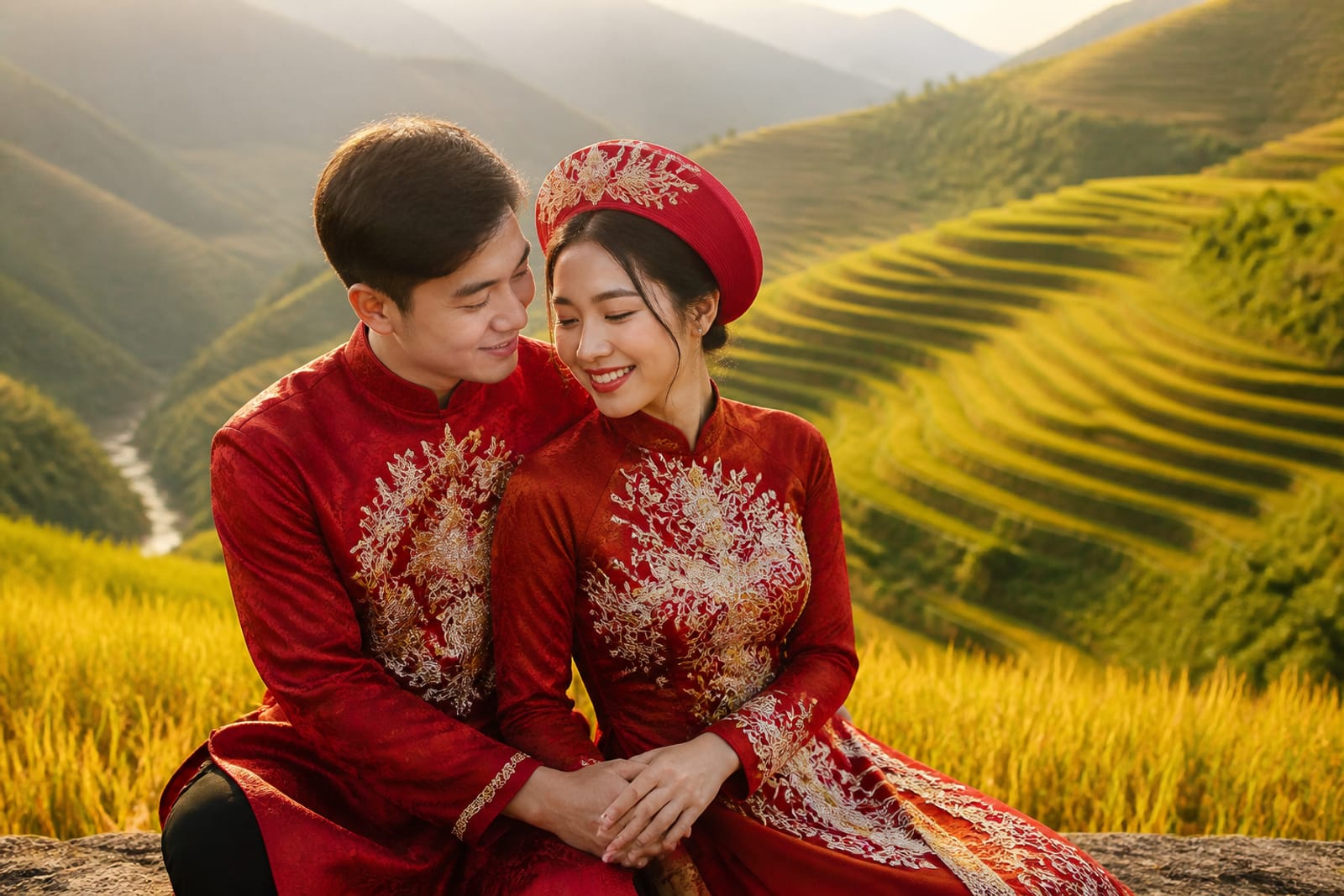
A pre-wedding photoshoot in Mu Cang Chai in April means shooting in cool (15–22°C), mostly dry conditions with soft morning light ideal for couple framing around the rice terraces. The landscape is vivid green after spring irrigation fills the paddies; crowds are minimal compared to September's peak season. Sessions run earliest at sunrise (around 6 am) when side-light catches water and texture; plan 3–4 hours for two locations. Cáo Studio does not operate in Mu Cang Chai—this is a 5+ hour drive from Hanoi—so book a local photographer through referral, portfolio review and a WhatsApp call to confirm their creative direction and logistics (vehicle, makeup artist, outfit changes). Weather risk is low; the main challenge is terrain (uneven footpaths, muddy fields after rain).
Why April Light in Mu Cang Chai Suits Pre-Wedding Frames
April sun in the northwest mountains sits lower and softer than summer months. From 6–7:30 am, side-light sweeps across water and terrace walls, creating depth without the blown-out highlights or dense shadows of midday. By 9 am, light overhead flattens the landscape and raises heat; couples often tire on muddy paths. The cloud cover is light (not the monsoon haze of July), so foreground and background retain colour and detail together—essential for shots where your partner's expression, the terraces and sky need equal richness. Start before 6 am, finish by 9 am, then rest or explore the town.
📸 Book on WhatsApp — ao dai photoshoot | 🌸 See the lookbook
What Weather and Crowds Look Like in April vs. Other Seasons
| Aspect | April | May–Jun (water season) | Jul–Aug (summer) | Sep–Oct (harvest) |
|---|---|---|---|---|
| Temperature | 15–22°C, cool | 18–25°C, mild–warm | 20–28°C, hot & hazy | 16–24°C, cool |
| Rainfall | Minimal, dry mornings | Frequent afternoon rain | Occasional showers | Heavy (worst Oct) |
| Terrace colour | Bright green (new growth) | Deep green (heading) | Dull green (heat stress) | Gold–brown (ready harvest) |
| Crowds | Low; few tours | Low to moderate | Moderate (heat repels) | Very high (golden frames) |
| Light quality | Soft, side-angle | Soft, brief (clouds) | Harsh, hazy noon | Golden but crowded paths |
| Best shooting window | 6–8:30 am | 6–7:30 am (unpredictable) | 5:30–7 am, late afternoon | 6–6:45 am (crowded) |
April wins if you value solitude, soft light, and green contrast. September wins if you prioritize golden colour and harvest mood—but expect 50+ tourists on the same ridge at sunrise.
How to Find and Vet a Local Photographer for Mu Cang Chai
Mu Cang Chai lacks a studio infrastructure like Hanoi or Ho Chi Minh City. Your photographer will be a freelancer or small team based in Yen Bai province or Hanoi who knows the terrain. Vet them in three steps: (1) Ask for a portfolio of pre-wedding or couple shoots shot in mountain/terraces lighting (not studio work); check if their framing is wide and narrative (walking, looking at each other) or stiff and posed. (2) Call them on WhatsApp and describe what you want—your outfit, the mood, whether you want an ao dai photoshoot or Western dress, and confirm they've shot April light there before. Ask who's on the team: photographer, makeup artist, assistant. (3) Confirm logistics: do they provide a vehicle and driver from Hanoi, what's the turnaround for edits, do they offer a short film edit in addition to stills.
Red flags: photographers who quote a price sight-unseen, claim to have "unlimited edits," or won't discuss the shoot plan before booking. Good photographers ask your questions back—about your style, the story you want to tell, and whether you've scouted the location.
Weather, Terrain and What to Wear in April
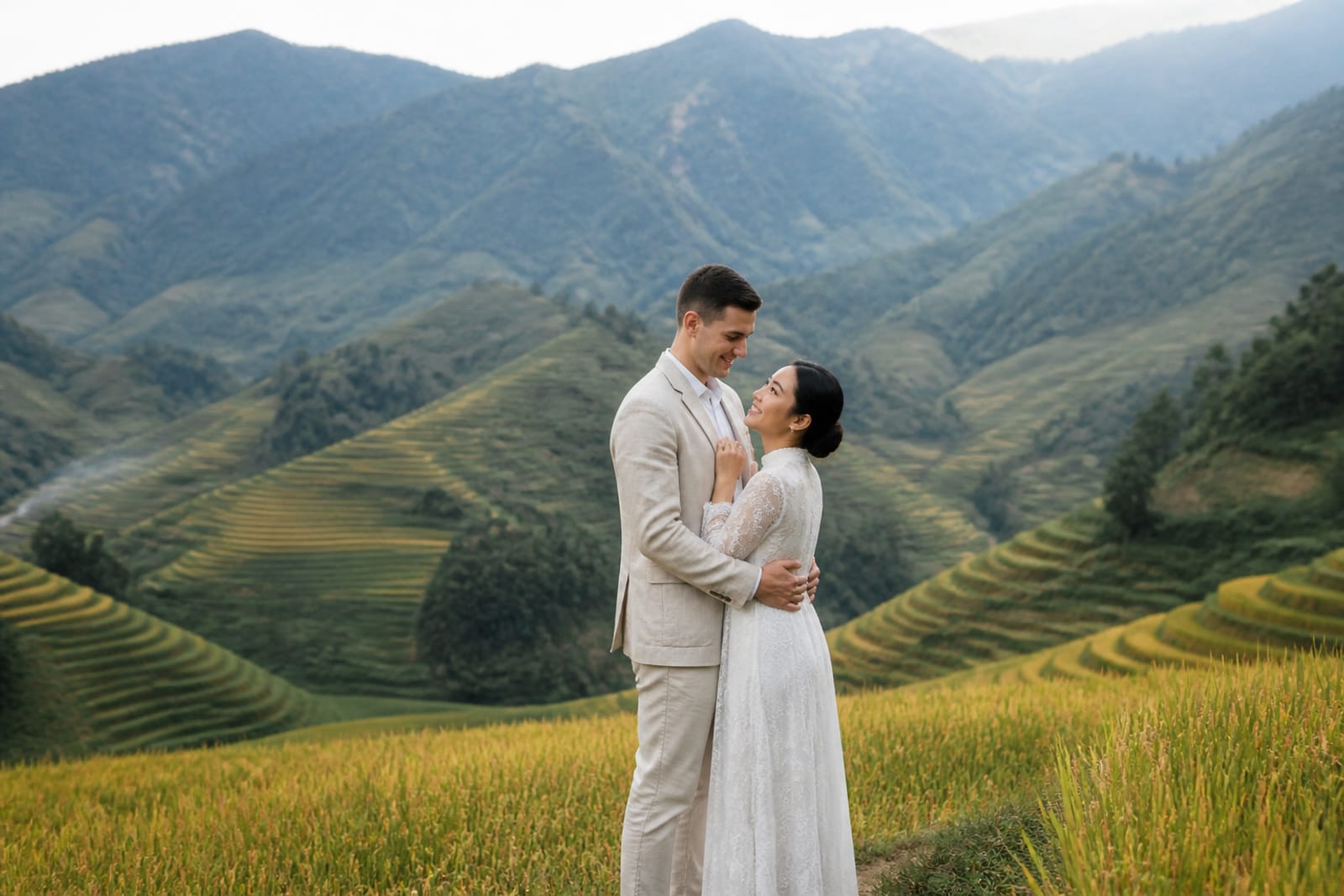
April is the safest month to shoot outdoors in Mu Cang Chai. Temperatures range 15–22°C depending on altitude and time of day; morning light is cool and crisp. Rain is rare but not impossible—one shower can turn paths to mud. Wear sturdy shoes with grip; if you're in an ao dai, have the photographer coordinate with a makeup artist so your hem and sleeves are pinned or tied above ankle height. Western bridal wear (gown, suit) works well; keep shoes off paths until the final frame.
Check the weather forecast 3–5 days before your shoot date. If rain is forecast, confirm with your photographer whether they'll reschedule or proceed with water-logged terraces (some couples love the wet-earth drama; others don't). Bring a light rain shell and ask the photographer if they've packed weather backup (an overhang, a village shelter, or an indoor alter-native frame inside a farmhouse or temple nearby).
April Light Timing: Hour-by-Hour Shooting Plan
| Time | Light angle | Colour & contrast | Best for | Effort level |
|---|---|---|---|---|
| 5:30–6 am | Below horizon, grey-blue | Muted, cool, moody | Silhouettes, intimate close-ups | High (very early) |
| 6–7:30 am | Low side-light, warm amber | Rich greens, deep water, texture | Wide couple shots walking, terraces sharp | Medium (ideal window) |
| 7:30–8:30 am | Shoulder-high, diffused | Bright, even, saturated | Medium framing, outfit detail, smiles | Medium |
| 8:30–10 am | Overhead, harsh | Flat, blown highlights on water | Details only, narrow shade use | Low (sun tires couples) |
Launch your shoot at 6 am from your accommodation (allow 30 min from town). Shoot wide frames and couple motion from 6–7:30 am while light is lowest and colours pop. Move to a second location or shift to detail shots (hands, dress fabric, rings against terrace backdrop) from 7:30–8:30 am. Wrap by 9 am to rest, eat, and explore Mu Cang Chai town or visit a local tea farm.
How a Pre-Wedding Session Unfolds: The Day-of Reality
Your photographer and team (usually a makeup artist and assistant) will meet you at your hotel in Mu Cang Chai town (or Hanoi, if they're driving you) before dawn. Travel to the first terrace location takes 20–40 minutes depending on which ridge you've chosen. The makeup artist will do final touch-ups (often in a vehicle or homestay) while the photographer scouts light and frames. Shooting runs in bursts: wide establishing shots (you two walking, talking, moving), then medium couple frames (looking at each other, hands together), then detail close-ups (rings, dress, texture). Between locations, there's a 15–20 minute break for outfit change or makeup refresh.
Most pre-wedding photoshoots wrap by 9–10 am. The photographer will send you a contact sheet (all frames unedited) within 1–2 days and deliver selects (edited, colour-graded) within 5–7 days. Ask upfront whether your package includes a short vertical film (30–90 seconds) or a full edit—local teams vary widely.
What to Check Before You Book a Local Photographer in Mu Cang Chai
- Portfolio: Insist on 5+ pre-wedding or couple shoots shot in natural mountain light (not studio backdrops). Scroll their work and ask: "Do these frames look like real light and real motion, or posed?" If every image is symmetrical and stiff, keep looking.
- Team composition: Confirm the photographer's name, the makeup artist's experience with outdoors and humidity, and whether a producer or assistant will manage timing and outfit changes. Avoid one-person shoots for pre-wedding work—logistics break down when one person is both framing, managing light, and coordinating you.
- Shoot plan: Ask them to describe how they'll light your first location, what outfit changes they've planned, and whether they scout in advance or arrive on shoot day. Professional teams scout or use reference photos of your chosen spots.
- Deliverables: Get in writing (WhatsApp screenshot is fine) how many edited images, what format (JPG, RAW), whether video is included, and when you'll receive files. Avoid "unlimited" promises—they're impossible to deliver well.
- Backup plan: Ask what happens if weather turns bad or light doesn't cooperate. Do they have an indoor location (farmhouse, temple interior, tea house), or do they reschedule? Know this before shoot day.
- Turnaround: Confirm how long edits take. 5–7 days is standard; anything longer means the photographer is backlogged.
---
Why Cáo Studio Recommends Scouting Local Specialists for Mu Cang Chai
Cáo Studio operates in Hanoi, Ho Chi Minh City, and Hoi An—not Mu Cang Chai. The 5+ hour mountain drive, unpredictable terrain, and need for a local guide make it impractical for a Hanoi-based team to deliver our usual same-day turnaround and one-team coordination. If you're set on Mu Cang Chai, hire a mountain-specialist photographer locally. If you're flexible, consider a pre-wedding shoot in Hanoi—similar light, faster logistics, easier outfit coordination with a makeup & hair artist at your hotel.
FAQ
What time should we arrive at Mu Cang Chai for an April pre-wedding shoot?
Arrive the evening before or by 5 am on shoot day. Your photographer will brief you at your accommodation, then drive to the terrace location. Shooting starts at 6 am to capture the softest light. Plan a 30–40 minute travel time from town.
Will an ao dai work in April mud, or should we wear Western dress?
Both work. An ao dai is stunning in morning light and Vietnamese heritage is a strong frame story. Ask your photographer to coordinate with a makeup artist who'll pin the hem and sleeves above ankle for safety. Western bridal wear is simpler on uneven terrain; keep shoes off paths until the final shot.
How different is April light from September's golden harvest season?
April light is softer, cooler, and lower-angled (better for texture and emotion). September light is warmer and more saturated (gold, bronze tones)—but crowds are 10x higher and paths are packed by sunrise. Choose April for solitude and intimacy; September for colour and drama.
Can we shoot mid-day in April, or should we stick to sunrise only?
Sunrise (6–8:30 am) is essential for the best light. Mid-day (10 am–4 pm) sun is harsh and overhead, washing out terraces and creating unflattering shadows on faces. If you want afternoon frames, shoot around 4–5:30 pm for late-golden light instead.
What happens if it rains on our April shoot date?
April rain is rare but possible. Ask your photographer in advance: do they have an indoor backup location (village shelter, farmhouse, tea house), or will they reschedule? Wet terraces can look dramatic, but muddy paths are risky for formal wear. Confirm the plan before shoot day.
Should we hire a photographer from Hanoi or Yen Bai?
Either works if they have a strong portfolio and local knowledge. A Yen Bai-based photographer knows the terrain and can adjust on shoot day; a Hanoi-based team has more pre-wedding experience. Ask both to walk you through their plan and turnaround. Check references if possible.
FAQ
What time should we arrive at Mu Cang Chai for an April pre-wedding shoot?
Arrive the evening before or by 5 am on shoot day. Your photographer will brief you at your accommodation, then drive to the terrace location. Shooting starts at 6 am to capture the softest light. Plan a 30–40 minute travel time from town.
Will an ao dai work in April mud, or should we wear Western dress?
Both work. An ao dai is stunning in morning light and Vietnamese heritage is a strong frame story. Ask your photographer to coordinate with a makeup artist who'll pin the hem and sleeves above ankle for safety. Western bridal wear is simpler on uneven terrain; keep shoes off paths until the final shot.
How different is April light from September's golden harvest season?
April light is softer, cooler, and lower-angled (better for texture and emotion). September light is warmer and more saturated (gold, bronze tones)—but crowds are 10x higher and paths are packed by sunrise. Choose April for solitude and intimacy; September for colour and drama.
Can we shoot mid-day in April, or should we stick to sunrise only?
Sunrise (6–8:30 am) is essential for the best light. Mid-day (10 am–4 pm) sun is harsh and overhead, washing out terraces and creating unflattering shadows on faces. If you want afternoon frames, shoot around 4–5:30 pm for late-golden light instead.
What happens if it rains on our April shoot date?
April rain is rare but possible. Ask your photographer in advance: do they have an indoor backup location (village shelter, farmhouse, tea house), or will they reschedule? Wet terraces can look dramatic, but muddy paths are risky for formal wear. Confirm the plan before shoot day.
Should we hire a photographer from Hanoi or Yen Bai?
Either works if they have a strong portfolio and local knowledge. A Yen Bai-based photographer knows the terrain and can adjust on shoot day; a Hanoi-based team has more pre-wedding experience. Ask both to walk you through their plan and turnaround. Check references if possible.
Ao dai, makeup, hair and a local photographer in Hanoi or Saigon — one WhatsApp message.