/pre-wedding-photoshoot
Pre-wedding photoshoot in Mu Cang Chai: August light, weather, and cro
August in Mu Cang Chai is the monsoon season: expect rain, mist, and cloud cover that creates soft, directional light without harsh shadows—good for romantic close-ups and wide landscape framing. The terraces are lush and green, but visibility is unpredictable; you'll need a photographer who knows the microclimates (north-facing slopes clear faster than south-facing ones) and has backup indoor or village locations. The 12-hour drive from Hanoi means a two- or three-day trip. Cáo Studio does not operate in Mu Cang Chai; hire a local Yen Bai–based photographer who shoots regularly in the area and understands how morning mist clears and afternoon downpours arrive. Plan for flexibility, waterproof gear, and outfit changes between locations.
Why does August in Mu Cang Chai feel so different from the dry season?
August is peak monsoon in northern Vietnam. Tropical moisture moves inland, clouds sit low over the mountains, and rain falls most afternoons—yet the morning hours often stay grey and soft. Unlike dry-season sun (which creates crisp contrast), August light is diffused: no harsh shadows on faces, no squinting, and the terraces glow a saturated green. This is romantic light, not dramatic light. The trade-off is visibility; misty mornings can erase distant mountains, and sudden downpours force location changes.
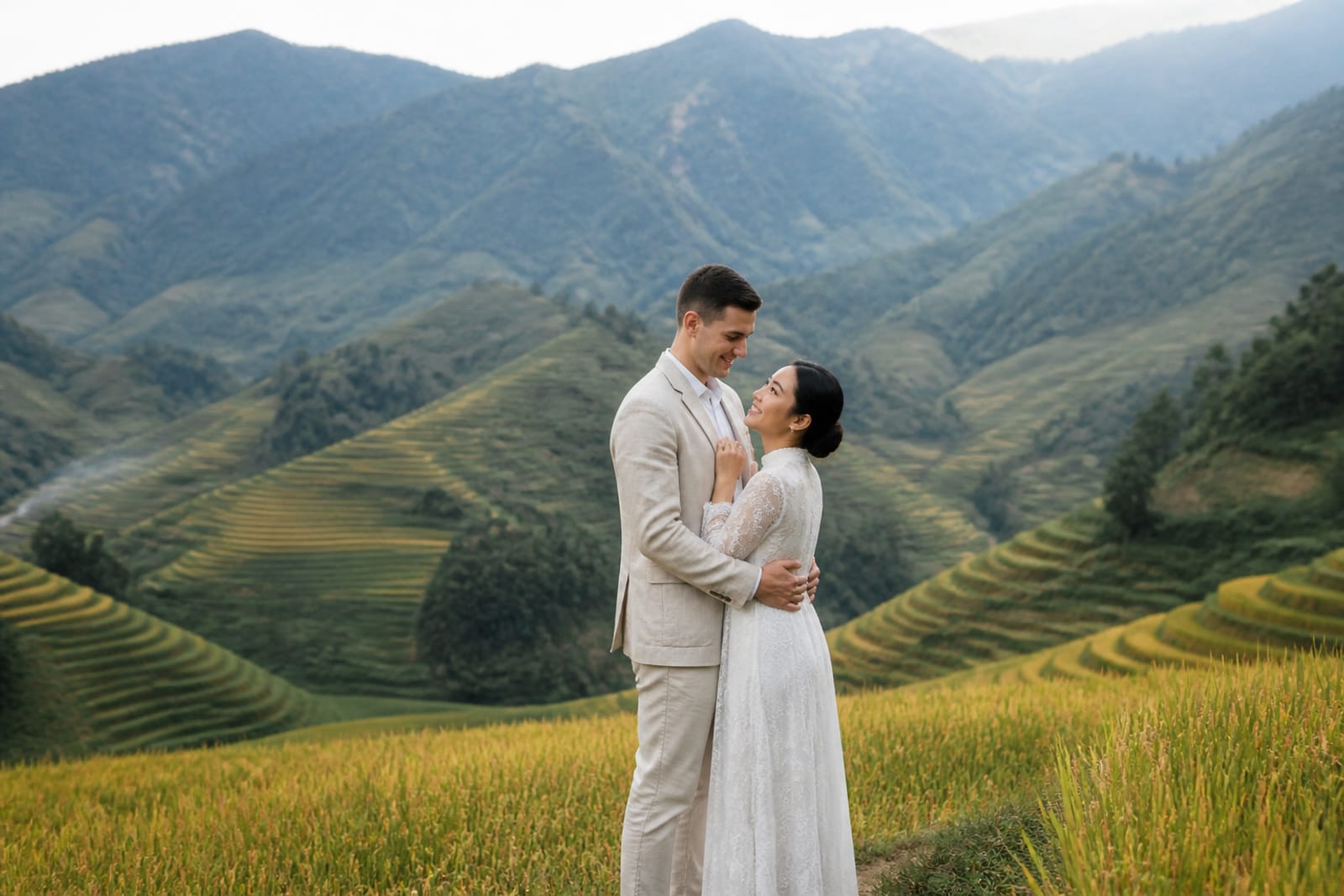
What are the light windows in an August morning, hour by hour?
August mornings in Mu Cang Chai typically clear between 6:30 and 9:00 a.m., depending on valley microclimates. Start shooting on north-facing slopes before the sun angle steepens; by 9:30, mist often returns or clouds thicken again. Afternoon light (2:00–5:00 p.m.) is unreliable—rain clouds build fast. A local photographer will know which ridges and village paths catch early light and which remain shrouded. Plan a two-location shoot: one high-altitude rice terrace at dawn, one sheltered village scene or indoor homestay as a rain backup. You lose the golden hour; use soft overcast instead.
| Timing | Light Quality | Best For | Rain Risk | Visibility |
|---|---|---|---|---|
| 5:30–7:00 a.m. | Grey-white, diffused, low angle | Close-ups, couple walking, hands, faces | Low (pre-rain) | Variable (mist clears slowly) |
| 7:00–9:30 a.m. | Soft directional, some cloud breaks | Wide rice terraces, path shots, outfit changes | Low to moderate | Good on north slopes; south slopes foggy |
| 10:00 a.m.–1:00 p.m. | Flat grey or building clouds | Indoor homestay, village alley, hands-on moments | Moderate to high | Poor; clouds thicken |
| 1:00–5:00 p.m. | Heavy cloud, rain likely | Backup locations only, or post-rain mood shots | High | Very poor; expect downpours |
How does the wet season change what you wear and how you move on location?
August requires outfit versatility. Silk or cotton (not synthetic) absorbs moisture without looking wet; layers let you shed gear as mist clears. An ao dai works beautifully in soft light, but the skirt hem soaks in wet rice paddies—bring a second pair of shoes and a lightweight wrap. Groom wear needs breathability (linen or cotton blends); wool looks heavy in humidity. Movement is slower: trails are muddy, rice-paddy edges are slick, and scrambling to high vantage points risks a fall. A local guide (part of your photographer's network) is essential; they know safe paths and can carry backup outfits or umbrellas. Plan twice as much time between shots because repositioning takes care.
Why does hiring a local Yen Bai photographer matter more than in other seasons?
Cáo Studio operates in Hanoi, Ho Chi Minh City, and Hoi An—not in Mu Cang Chai. A photographer based in Yen Bai province has navigated August's variable conditions dozens of times: they know which homestays have good interiors, which paths stay passable after rain, and how light moves through each valley hour by hour. They carry backup gear (lights, reflectors, rain covers for cameras), maintain relationships with local guides and homestay owners, and can pivot the shot list in real time. A visiting photographer (even one excellent in Hanoi) will lose an hour to scouting, miss the mist-clearing window, and panic if rain hits. Ask a local photographer for references from other couples, a weather contingency plan in writing, and proof they've shot pre-wedding sessions in August.
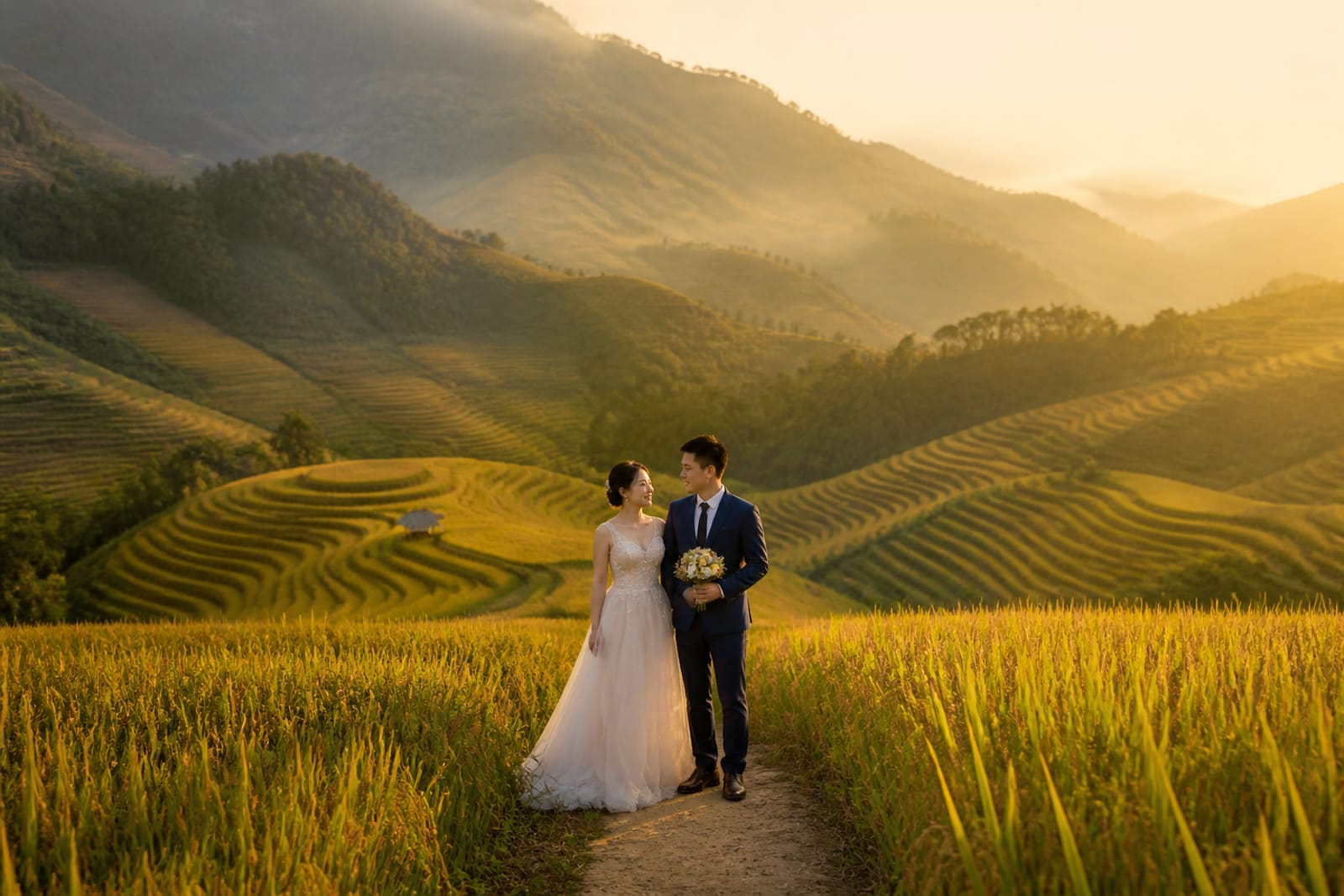
How do you plan a pre-wedding shoot in a remote location that's 12 hours from the nearest studio?
Mu Cang Chai requires a three-day commitment: arrival day (travel, hotel check-in, sunset scouting), shoot day (5:30 a.m. start, 2–3 locations, back by 2:00 p.m. before afternoon rain), and a buffer day (weather delays, reshoot, or explore the region). Budget for a local photographer, a guide, a driver with knowledge of mountain roads, and a backup plan (indoor venue, rain gear, extra outfit). Coordinate with your photographer 4–6 weeks ahead; they need time to reserve homestay locations and brief any local partners. Request an itinerary with specific sunrise spots, outfit change locations, and rain-day alternatives in writing. Bring all outfits and styling gear yourself (or ship ahead to your hotel), since makeup artists and tailors aren't available on-site. After the shoot, expect 5–7 business days for editing—the photographer will work offline in Yen Bai and upload when back in town.
If you're planning a pre-wedding elsewhere in Vietnam—such as a coastal elopement or urban couple session in Hanoi or Ho Chi Minh City—Cáo Studio's pre-wedding and elopement service handles the full coordination: outfit sourcing, on-location hair and makeup, and delivery in 48 hours.
How do you find and vet a local Mu Cang Chai photographer before committing?
Search for "pre-wedding photographer Yen Bai" and "Mu Cang Chai couple photoshoot" on local Vietnamese wedding forums (or ask your hotel concierge). Request Instagram handles and ask to see a minimum of five complete pre-wedding sessions (not just single hero shots). Look for evidence they've shot in August: cloudy skies, rice paddies in monsoon green, and genuine movement between people (not static poses). Ask directly: "How many pre-wedding shoots have you done in Mu Cang Chai in August?" and "What's your rain backup plan?" A credible photographer will describe specific locations, morning light patterns, and named homestay partnerships. Avoid anyone who guarantees "perfect weather" or "mountain views" in August—that's a red flag. Check if they include a local guide, how many outfit changes and locations they cover, and whether they deliver digital files or prints. Confirm editing turnaround in writing.
📸 Book on WhatsApp — ao dai photoshoot
What do you pack and prepare so the shoot runs smoothly?
- Outfits: Bring two complete looks (dress, groom attire, shoes, accessories). One should be traditional (ao dai or áo dài lụa silk) for emotional, close-up frames; one casual or semi-formal for landscape and movement shots. Pack lightweight, breathable fabrics and a water-resistant wrap.
- Makeup and hair: Bring your own artist or request a recommendation from your photographer. Mountain humidity and moisture will affect products; use long-wear formulas and matte bases. Have backup hair pins and powder.
- Shoes: Bring waterproof or fast-drying shoes for outdoor shots and a second pair for indoor homestay moments.
- Accessories: Minimal jewelry (clips, earrings, wedding rings only). Heavy necklaces or bracelets tire in long shoots and catch on fabric.
- Rain gear: Compact umbrella, waterproof phone pouch, microfiber towels (not cotton). Hand the umbrella to your guide—you won't hold it during shots.
- Documents: Passport, travel insurance, and the photographer's contract in a waterproof folder.
- Timeline: Arrive two days before the shoot. Do a location scout on day one; shoot early morning on day two; return to your hotel by early afternoon.
For pre-wedding shoots in Hanoi or Ho Chi Minh City where Cáo Studio operates, we handle styling, makeup, and timing end-to-end. Visit our pre-wedding photoshoot page for how a coordinated session works.
What should you check before you book?
- Contract and cancellation terms: Does the photographer refund if weather is unsafe? What counts as "unsafe"? Get it in writing.
- Deliverables: How many edited photos? Digital files only, or prints? Turnaround time (typically 5–7 days in remote areas, not 48 hours).
- Guide and logistics: Is a local guide included? Does the photographer arrange your hotel or recommend a homestay? Do they have a driver?
- Backup options: Which indoor venues are reserved if it rains all morning? What time is the "call-off" decision made?
- Communication: Will they check in 2 weeks before? Can you message them closer to the date with concerns?
- References: Ask for contact details of two couples who shot there in August or similar season.
- Insurance: Do they carry gear insurance? What happens if equipment fails?
A serious local photographer will answer all these questions without hesitation. If they're vague or dismissive, keep looking.
---
FAQ
Can you shoot a pre-wedding in Mu Cang Chai in August with a photographer from Hanoi?
Technically yes, but it's inefficient. The 12-hour drive, unfamiliar terrain, and no existing local partnerships mean lost time and missed light windows. A Yen Bai-based photographer navigates seasonal microclimates and maintains homestay relationships, maximizing the brief clear-light hours. Worth hiring locally.
Does the rain ruin the shoot, or is it usable for mood?
Light rain can be romantic—it softens faces, beads on fabric, and creates intimate close-ups. Heavy downpours or low visibility do halt shooting. A prepared photographer has covered locations (homestay interiors, village alleys) ready and won't panic. Plan flexibility, not a full reshoot guarantee.
What's the best time of day to start in August?
5:30–6:00 a.m. on a north-facing slope. Mist clears fastest on ridges facing northeast; you'll catch 2–3 hours of soft light before clouds thicken or rain begins. Afternoon is unreliable. Your photographer will have scouted the exact spot weeks ahead.
Should we hire a makeup artist to travel with us, or use someone local?
Hire an artist from Hanoi or Ho Chi Minh City if they have mountain experience (humidity, heat, long outdoor hours). If not, ask your photographer for a trusted local artist—they're cheaper and know how products hold in moisture. Confirm turnaround (makeup takes 45–60 minutes at altitude) in your itinerary.
How much of the trip should we budget for, and what are the main costs?
Plan a 3-day trip (travel, hotel, photographer, guide, meals). Photography is the largest line item; ask for a quote on WhatsApp with specifics (locations, duration, outfit changes, deliverables). Transport, accommodation, and meals vary by choice—budget as you would for any mountain destination in Vietnam. Many couples stay at rural homestays (affordable, photogenic interiors) rather than resorts.
Can we get photos in 48 hours like Cáo Studio offers in Hanoi?
Unlikely. Remote-area photographers typically deliver in 5–7 business days; they work offline and return to town to upload and edit. Agree on a deadline in your contract. If speed is critical, consider scheduling your pre-wedding in Hanoi or Ho Chi Minh City where Cáo Studio delivers in 48 hours.
What's the difference between a pre-wedding and an elopement shoot in Mu Cang Chai?
Pre-wedding is typically a styled, multiple-outfit, full-day affair (usually without ceremony). Elopement includes a small ceremony (vows, rings, witnesses) and documentary coverage. Both work in Mu Cang Chai, but elopement requires even more advance coordination (permits for any gathering, local contact for officiant or witness). Discuss timeline and intention with your photographer.
If weather is bad the whole shoot day, do we reschedule or rebook?
Depends on your contract. Most photographers offer a rain date (same trip, next morning) or a future rescheduling clause. Some offer partial refunds for unsafe conditions. Get this agreed on WhatsApp before you pay—don't assume. August rain is common; a backup date or location is standard practice.
FAQ
Can you shoot a pre-wedding in Mu Cang Chai in August with a photographer from Hanoi?
Technically yes, but it's inefficient. The 12-hour drive, unfamiliar terrain, and no existing local partnerships mean lost time and missed light windows. A Yen Bai-based photographer navigates seasonal microclimates and maintains homestay relationships, maximizing the brief clear-light hours. Worth hiring locally.
Does the rain ruin the shoot, or is it usable for mood?
Light rain can be romantic—it softens faces, beads on fabric, and creates intimate close-ups. Heavy downpours or low visibility do halt shooting. A prepared photographer has covered locations (homestay interiors, village alleys) ready and won't panic. Plan flexibility, not a full reshoot guarantee.
What's the best time of day to start in August?
5:30–6:00 a.m. on a north-facing slope. Mist clears fastest on ridges facing northeast; you'll catch 2–3 hours of soft light before clouds thicken or rain begins. Afternoon is unreliable. Your photographer will have scouted the exact spot weeks ahead.
Should we hire a makeup artist to travel with us, or use someone local?
Hire an artist from Hanoi or Ho Chi Minh City if they have mountain experience (humidity, heat, long outdoor hours). If not, ask your photographer for a trusted local artist—they're cheaper and know how products hold in moisture. Confirm turnaround (makeup takes 45–60 minutes at altitude) in your itinerary.
How much of the trip should we budget for, and what are the main costs?
Plan a 3-day trip (travel, hotel, photographer, guide, meals). Photography is the largest line item; ask for a quote on WhatsApp with specifics (locations, duration, outfit changes, deliverables). Transport, accommodation, and meals vary by choice—budget as you would for any mountain destination in Vietnam. Many couples stay at rural homestays (affordable, photogenic interiors) rather than resorts.
Can we get photos in 48 hours like Cáo Studio offers in Hanoi?
Unlikely. Remote-area photographers typically deliver in 5–7 business days; they work offline and return to town to upload and edit. Agree on a deadline in your contract. If speed is critical, consider scheduling your pre-wedding in [Hanoi](/hanoi) or [Ho Chi Minh City](/saigon) where [Cáo Studio delivers in 48 hours](/pre-wedding-photoshoot).
What's the difference between a pre-wedding and an elopement shoot in Mu Cang Chai?
Pre-wedding is typically a styled, multiple-outfit, full-day affair (usually without ceremony). Elopement includes a small ceremony (vows, rings, witnesses) and documentary coverage. Both work in Mu Cang Chai, but elopement requires even more advance coordination (permits for any gathering, local contact for officiant or witness). Discuss timeline and intention with your photographer.
If weather is bad the whole shoot day, do we reschedule or rebook?
Depends on your contract. Most photographers offer a rain date (same trip, next morning) or a future rescheduling clause. Some offer partial refunds for unsafe conditions. Get this agreed on WhatsApp before you pay—don't assume. August rain is common; a backup date or location is standard practice.
Ao dai, makeup, hair and a local photographer in Hanoi or Saigon — one WhatsApp message.