/pre-wedding-photoshoot
Pre-wedding photoshoot in Mu Cang Chai February: weather, light, crowd
Mu Cang Chai in February sits between two seasons: winter light is sharp and cool, skies are mostly clear, and crowds thin compared to September–October harvest. However, rice terraces are bare and brown—no water, no reflection. The drive from Hanoi is 5–6 hours over mountain roads; plan a two-day trip to justify logistics. Weather is cold (5–15°C at altitude), so layered outfits work best. February suits couples who want crisp, directional light and intimate framing over iconic landscape shots. Book a photographer who understands north Vietnam's winter light and terrain, or ask Cáo Studio about directing a Hanoi-based pre-wedding session that includes styling, makeup and travel coordination.
Why do February terraces look different from autumn?
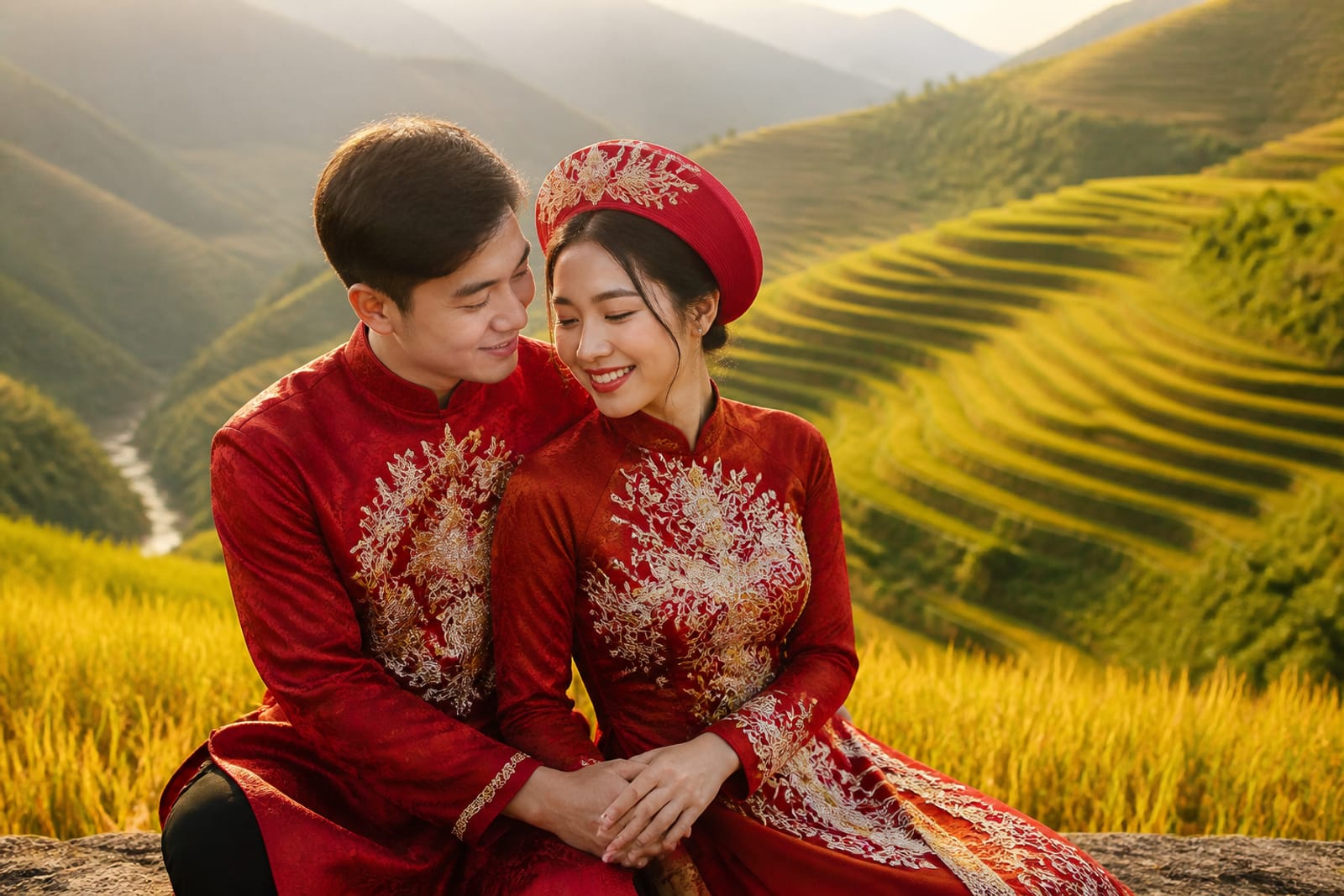
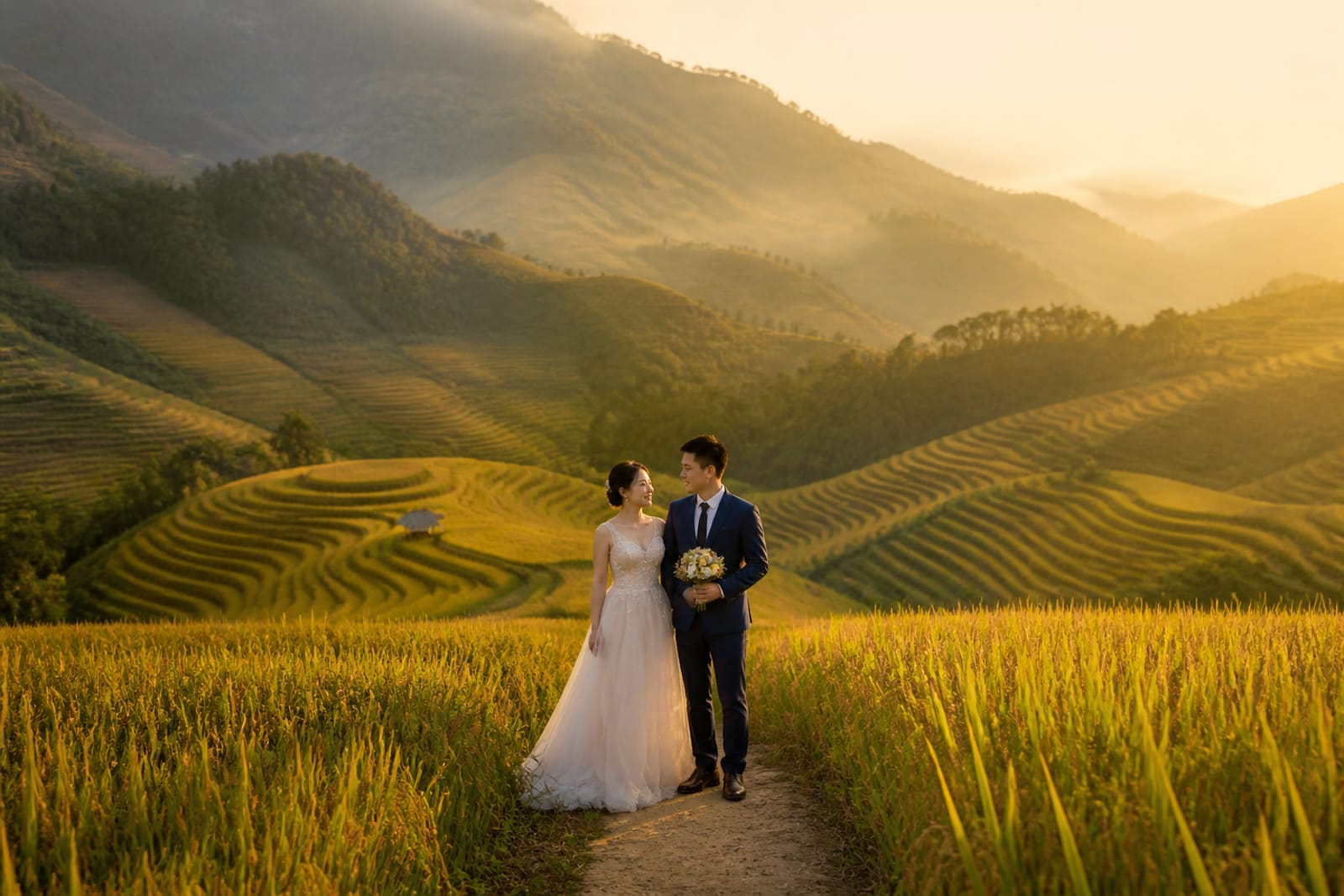
February is post-harvest and pre-planting in Mu Cang Chai. Water drains from terraces in January; fields lie fallow until May when farmers flood them for the spring crop. You'll see brown, textured earth rather than mirror-like water or bright green shoots. This is not a flaw—winter light on dry terraces creates strong shadows and warm earth tones that suit couple portraits. Sunset and sunrise work especially well because low-angle light carves definition into bare slopes. If your shot depends on water reflections or lush green, reschedule for late May (water-filled) or mid-September to early October (golden harvest). Otherwise, February's dry landscape rewards close framing and intimate couple movement over wide scenic sweeps.
Is February weather stable enough for an all-day shoot?
Temperature swings 5–15°C; mornings are coldest, afternoons warmer. Rain is unlikely (Hanoi's dry season extends through February), but cloud cover is common—overcast skies flatten contrast and tire cameras. Pack layers: a lightweight base, a cardigan or fleece, and a windproof shell for high-altitude gusts. Bring a hat and sunscreen; February sun is deceptive. Plan shoots for early morning (7–9 am) when light is soft and directional, or late afternoon (4–6 pm) to avoid midday flatness. Avoid midday entirely; the sun is overhead and creates unflattering shadows under eyes and chins. Morning shoots are safest because afternoon clouds roll in unpredictably. A local crew familiar with mountain weather can read the sky and adapt timing on the day—critical when you've traveled six hours to shoot.
| Time of day | Light quality | Crowd risk | What to wear | Why it matters |
|---|---|---|---|---|
| 6:30–8:30 am | Soft, directional; golden side light | None | Layers; cardigan or fleece | Terraces face east; morning sun hits slopes at 20–30° angle, sculpts skin and fabric |
| 9 am–3 pm | Overhead, harsh; overcast is grey | Low | Lightweight layers removable | Worst for couples; sun flattens features; cloud cover drains warmth from images |
| 4–6 pm | Golden, low; clouds multiply | Very low | Fleece, windproof shell | Second-best window; light is warm but weather shifts fast; plan for clouds |
| After 6:30 pm | Fades fast; cold rises | None | Full layers | Possible only in early February (sunset ~6 pm); temperature drops sharply |
How far is Mu Cang Chai and what does the shoot day feel like?
The drive from Hanoi is 140–160 km (5–6 hours) over winding mountain roads. Most couples stay overnight in town or nearby homestays; a two-day trip (travel + shoot + return) is standard. Day one: arrive late afternoon, rest and scout light with your photographer. Day two: 5:30 am wake-up, breakfast, shoot 7–9 am on terraces, rest and prepare outfits, second session 4–6 pm, drive back to Hanoi or stay another night. Altitude (around 1,000 m) causes shortness of breath for some; acclimatize with slow walking. Mud and gravel paths are uneven; wear shoes with grip, not heels. The crew (photographer, makeup artist, stylist, driver) must coordinate timing and logistics tightly—one delayed makeup session throws off golden light. Cáo Studio bases teams in Hanoi and can coordinate pre-wedding shoots that include hair, makeup and a director familiar with the terrain, but Mu Cang Chai is beyond the regular service area; ask on WhatsApp for custom planning.
📸 Book on WhatsApp — pre-wedding photoshoot | 💄 Makeup & hair at your hotel
What should couples wear in Mu Cang Chai in February?
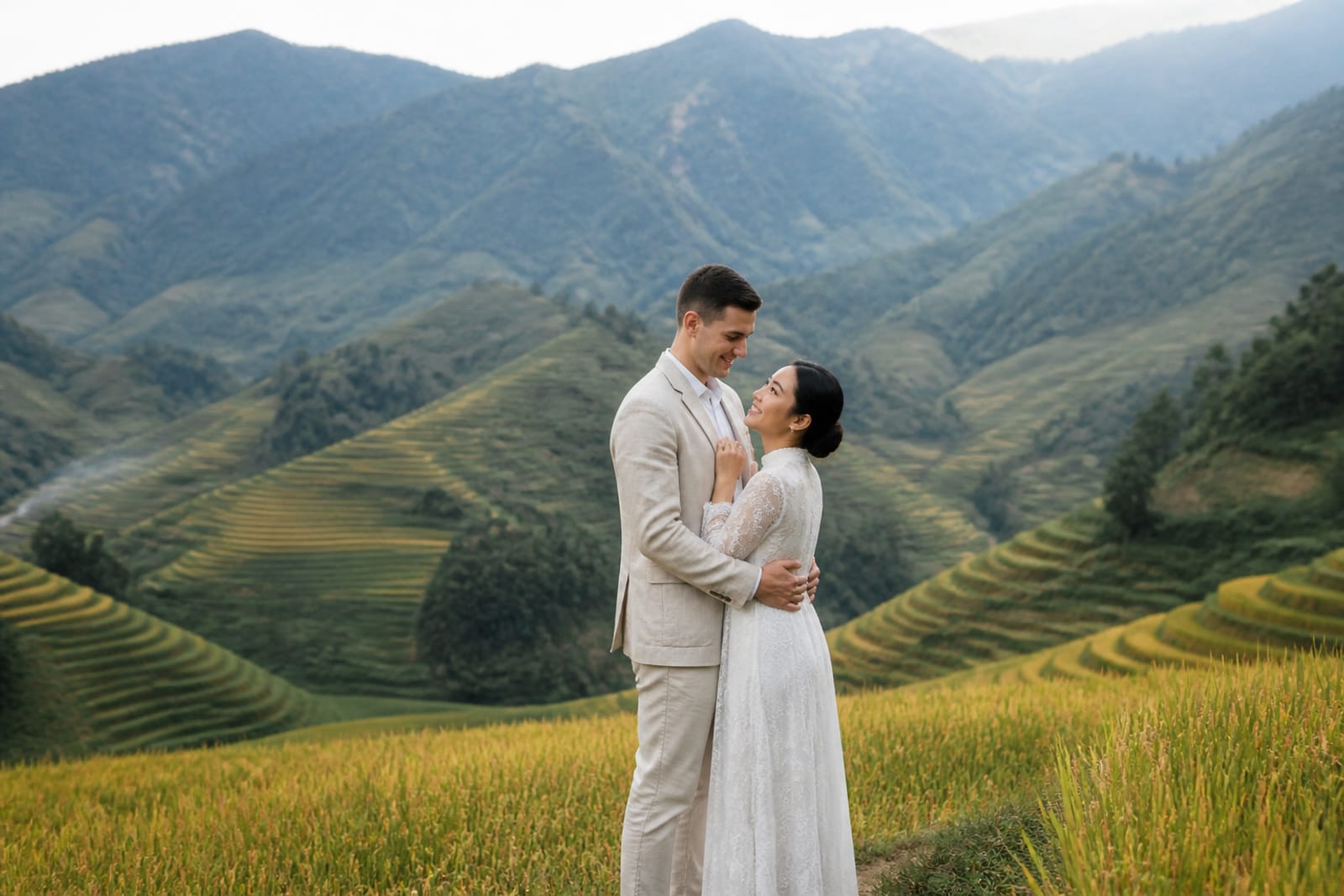
An ao dai (traditional Vietnamese tunic) photographs beautifully against bare terraces, especially in jewel tones (deep red, navy, emerald) that contrast with brown earth. However, February's cold means a lightweight silk ao dai alone is uncomfortable; layer a thin shawl or cardigan underneath without bulk. Avoid white and pale pastels—they wash out in overhead light and show dirt on mountain paths. Grooms suit best in neutral tones (charcoal, navy, cream) to balance the landscape and woman's outfit. Consider a second outfit: tailored trousers and a fitted shirt or sweater for movement shots walking between terraces. Western wedding dresses work but are impractical on uneven terrain; if you choose one, rent locally and bring a second outfit for hiking scenes. Shoes matter: closed-toe with grip (hiking boots cleaned, or leather boots). Heels sink into mud and slow movement. Styling should account for wind—hair pinned or braided stays more controlled than loose waves on exposed slopes. A photographer experienced with layering and outfit changes on location knows how to pace the shoot so you're not overheated or shivering between scenes.
How do you find and vet a photographer for Mu Cang Chai if Cáo Studio doesn't shoot there?
Mu Cang Chai is a multi-hour drive outside Cáo Studio's Hanoi base—the terrain, logistics and weather require a crew embedded in the region. Search for "Mu Cang Chai wedding photographer" or "pre-wedding photographer Hanoi + Mu Cang Chai"; freelancers and small studios in Hanoi often partner with local guides or homestays. Vet candidates on these criteria: ask to see a February or winter portfolio (not just autumn harvest shots—light and landscape are entirely different); confirm they've shot in Mu Cang Chai before and know the terrain; check whether they include a makeup artist and stylist or if you hire separately (one integrated team = better pacing); ask their process for scouting, timing and weather pivots; request references from past couples who shot in winter or on mountain terrain. A good photographer will ask you questions: What time of day, what mood, which terraces, what happens if weather shifts? Red flags: only showing autumn work, no mention of cold or logistics, quoting one flat rate regardless of travel distance or team size. For pre-wedding shoots in Hanoi, Ho Chi Minh City or Hoi An, Cáo Studio, coordinates all styling and creative direction; ask on WhatsApp about coordinating a custom Mu Cang Chai crew if you're set on that location.
What to check before you book a Mu Cang Chai pre-wedding shoot
- Portfolio: winter and mountain shoots, not just autumn harvest scenes.
- Team setup: does the photographer supply makeup and styling, or do you hire separately?
- Scouting process: do they plan timing and location scouting the day before, or improvise on arrival?
- Weather contingency: what happens if morning clouds don't lift or afternoon rain threatens?
- Logistics: how much does the crew charge for travel, and are meals and accommodation included in your budget?
- Editing timeline: when do you receive edited photos (typical is 1–2 weeks for a local team)?
- Outfit changes: how many outfits can they reasonably manage in one day without rushing?
- Reference check: ask for contact details of a past couple who shot in winter or on terrain.
---
What makes Cáo Studio's approach different for other destinations?
Cáo Studio's advantage is one team doing hair, makeup, styling and photography on location—no vendor stitching, no timing gaps. However, Mu Cang Chai sits 140+ km and 5–6 hours from Hanoi—beyond a same-day service area. Rather than overpromise, Cáo Studio, guides couples to vet local photographers who know the region's winter light and terrain. If you're shooting in Hanoi, Ho Chi Minh City or Hoi An, Cáo Studio, handles the entire creative direction and logistics. For Mu Cang Chai or other remote locations, ask on WhatsApp: the team may coordinate or recommend a trusted local partner. The priority is your shot—not every shot suits Cáo Studio's footprint, and honesty serves you better than overreach.
🌸 See the lookbook | 💄 Makeup & hair at your hotel | 📸 Book on WhatsApp — pre-wedding photoshoot
---
FAQ
Is February too cold to shoot in Mu Cang Chai?
No, but plan layers. Mornings are 5–10°C, afternoons 10–15°C. Windproof cardigans, fleece and scarves work under or over ao dai. Avoid heavy coats that hide silhouettes. Golden light at sunrise and sunset makes chilly temperatures worthwhile; bring thermal layers under outfits so you stay warm between takes.
Will bare terraces ruin the photos?
No. Dry February terraces have warm earth tones and strong shadows—ideal for crisp couple portraits. Water reflections suit autumn; lush green suits May–June. If landscape grandeur matters most, reschedule for late September (harvest gold) or May (water-filled). Otherwise, embrace winter's directional light and intimate framing.
How long does the Hanoi-to-Mu Cang Chai drive take?
5–6 hours by car over mountain roads. Plan a two-day trip: arrive evening of day one, shoot morning of day two, return by evening. Some couples stay a second night to explore or recover. Factor in acclimatization time at altitude and uneven terrain; the physical demand is real.
Should I book a photographer in Hanoi or hire someone in Mu Cang Chai?
Either works if they've shot winter mountain terrain before. A Hanoi-based photographer knows your city and travel logistics but needs mountain experience. A local Mu Cang Chai or nearby guide knows the terrain and light intimately. Ideal: a team combining both. Vet portfolios for February/winter work, not just autumn. Always ask for references from past couples.
When should I book, and how much warning do I need?
Book 4–6 weeks ahead during peak season (Nov–Jan) and 2–3 weeks in low season (Feb–Aug). February is low-season but still requires travel coordination. Confirm photographer availability early, especially if combining with makeup/styling services from outside the region. Ask your photographer for their lead time and weather cancellation policy.
Can I wear a Western wedding dress in Mu Cang Chai?
Yes, but it's impractical on uneven terrain. Rent locally or bring a second outfit (tailored trousers, fitted shirt) for movement shots on slopes. Dresses require a second stylist to manage trains and hems while walking. Plan outfit changes carefully; rushing between looks costs precious light time. An ao dai is lighter and suits the landscape; consider it as your primary outfit.
FAQ
Is February too cold to shoot in Mu Cang Chai?
No, but plan layers. Mornings are 5–10°C, afternoons 10–15°C. Windproof cardigans, fleece and scarves work under or over ao dai. Avoid heavy coats that hide silhouettes. Golden light at sunrise and sunset makes chilly temperatures worthwhile; bring thermal layers under outfits so you stay warm between takes.
Will bare terraces ruin the photos?
No. Dry February terraces have warm earth tones and strong shadows—ideal for crisp couple portraits. Water reflections suit autumn; lush green suits May–June. If landscape grandeur matters most, reschedule for late September (harvest gold) or May (water-filled). Otherwise, embrace winter's directional light and intimate framing.
How long does the Hanoi-to-Mu Cang Chai drive take?
5–6 hours by car over mountain roads. Plan a two-day trip: arrive evening of day one, shoot morning of day two, return by evening. Some couples stay a second night to explore or recover. Factor in acclimatization time at altitude and uneven terrain; the physical demand is real.
Should I book a photographer in Hanoi or hire someone in Mu Cang Chai?
Either works if they've shot winter mountain terrain before. A Hanoi-based photographer knows your city and travel logistics but needs mountain experience. A local Mu Cang Chai or nearby guide knows the terrain and light intimately. Ideal: a team combining both. Vet portfolios for February/winter work, not just autumn. Always ask for references from past couples.
When should I book, and how much warning do I need?
Book 4–6 weeks ahead during peak season (Nov–Jan) and 2–3 weeks in low season (Feb–Aug). February is low-season but still requires travel coordination. Confirm photographer availability early, especially if combining with makeup/styling services from outside the region. Ask your photographer for their lead time and weather cancellation policy.
Can I wear a Western wedding dress in Mu Cang Chai?
Yes, but it's impractical on uneven terrain. Rent locally or bring a second outfit (tailored trousers, fitted shirt) for movement shots on slopes. Dresses require a second stylist to manage trains and hems while walking. Plan outfit changes carefully; rushing between looks costs precious light time. An ao dai is lighter and suits the landscape; consider it as your primary outfit.
Ao dai, makeup, hair and a local photographer in Hanoi or Saigon — one WhatsApp message.