/pre-wedding-photoshoot
Pre-wedding photoshoot in Mu Cang Chai in May: weather, light, crowds
Mu Cang Chai in May shows flooded rice paddies (water-filled mid-May onward) under warm, humid skies—ideal for soft, reflected light in early mornings, but heat and brief afternoon showers arrive by late morning. The landscape is lush and fewer tourists arrive before June, so you'll find quiet moments on the mountain roads and terrace trails. Crowds don't peak until September. Cáo Studio does not operate in Mu Cang Chai; the location sits 4+ hours from Hanoi and requires local logistics. However, a successful May shoot depends on starting before 6:30 am, wearing breathable layers under your ao dai (mud is real), confirming weather with your chosen photographer 24 hours ahead, and building in 2–3 outfit changes across different elevations to manage heat and lighting shifts. ---
Why does May light in Mu Cang Chai differ from other months?
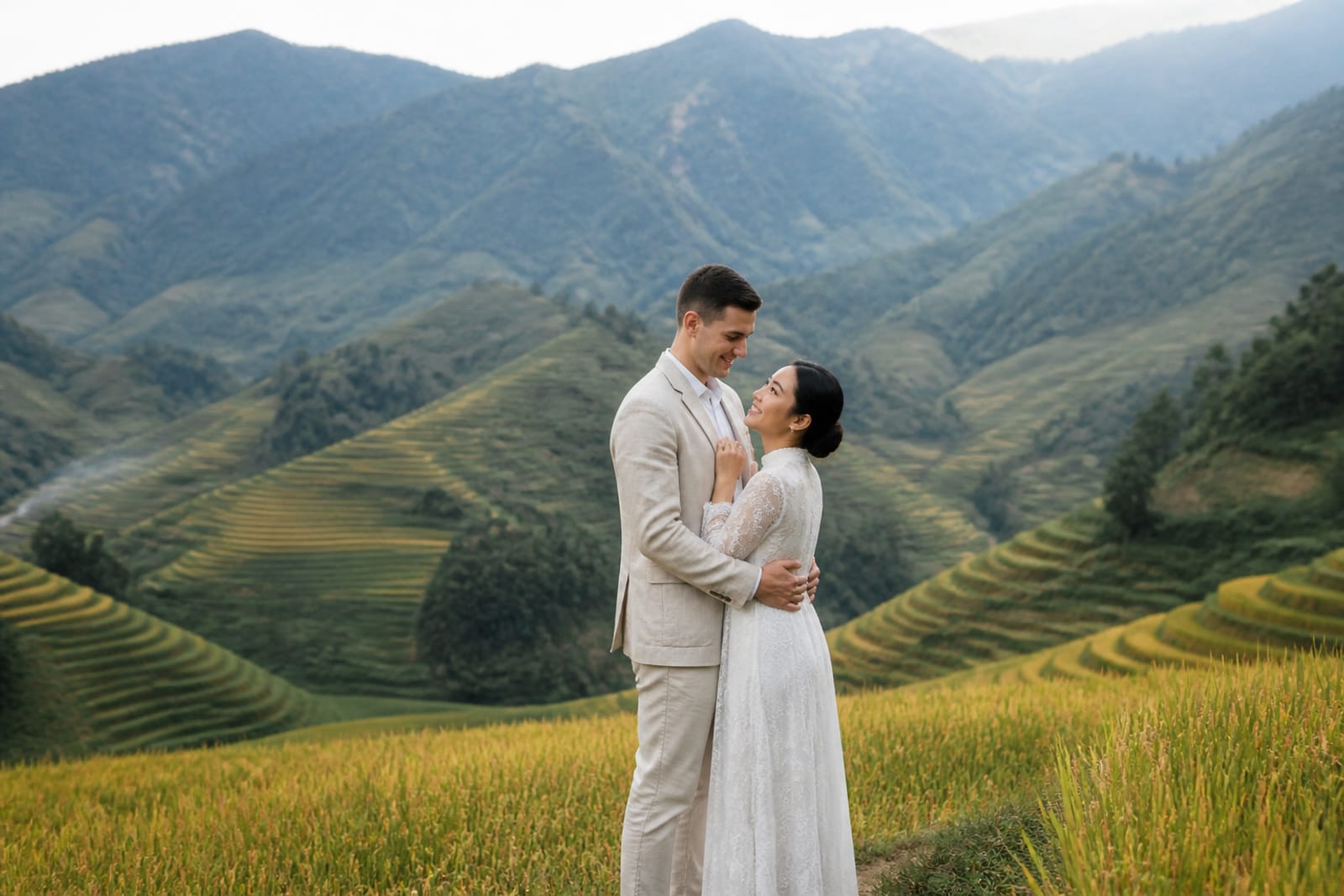
May sits at the edge of Vietnam's summer monsoon—humidity is high, but the sun hasn't yet burned away morning mist like it does in July–August. Terraces flood with irrigation water by mid-May, creating natural mirrors that bounce diffused light upward onto your face and dress. Midday light becomes harsh by 9:30 am; morning shoots between 5:45–7:15 am capture the soft, directional side-light that works best for ao dai folds and couple poses. By contrast, September–October terraces glow golden-brown (water drained), which suits different skin tones but requires longer travel from Hanoi and more tourists clog the main viewpoints. If you choose a different month, confirm water levels and light hours with a local guide before booking.
📸 Book on WhatsApp — ao dai photoshoot | 💄 Makeup & hair at your hotel
What outfit layers work for May heat and mud terrain?
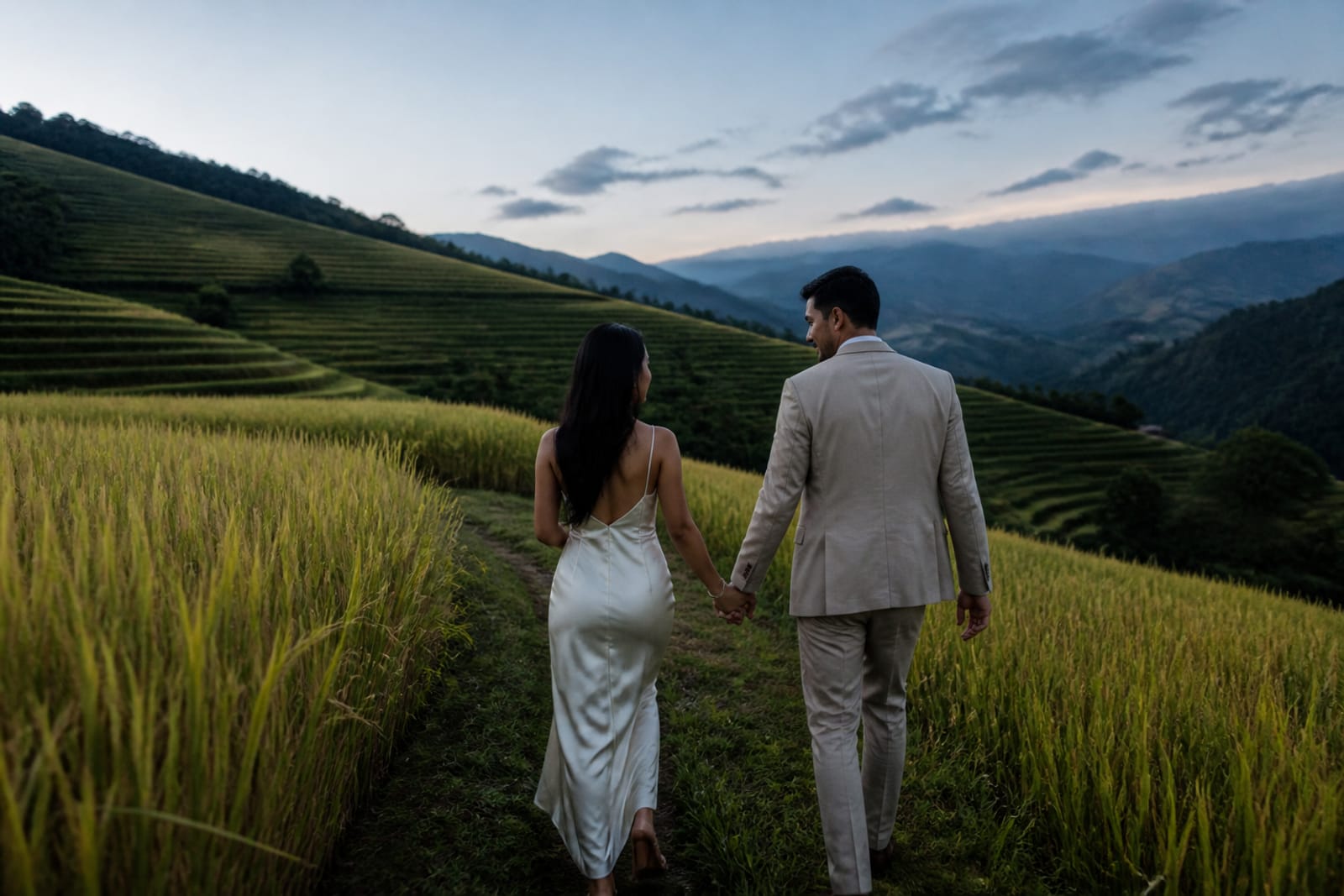
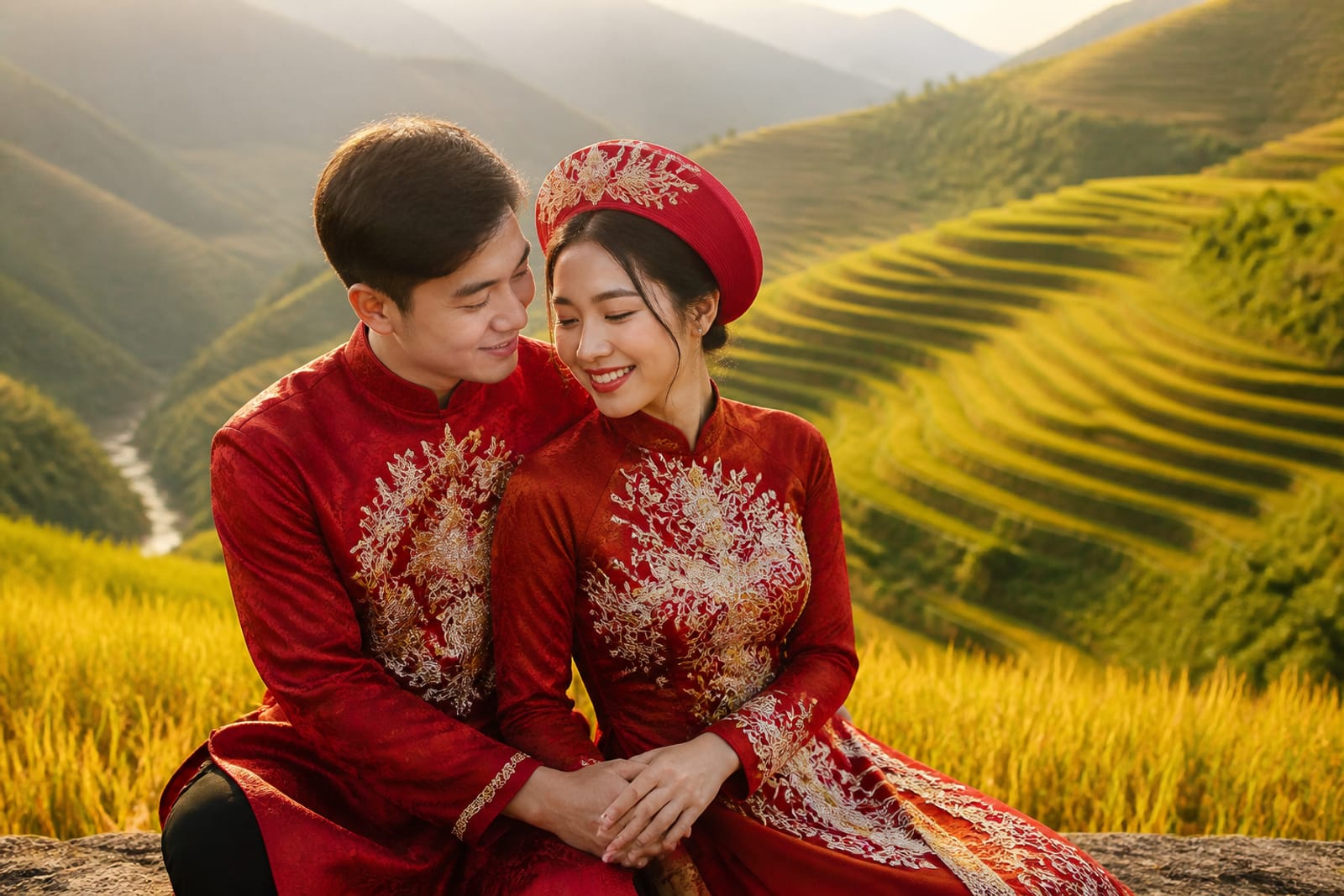
Ao dai fabric in May must breathe—silk or cotton blends handle 28–30°C and humidity without clinging or wrinkling by 8 am. Wear a lightweight base layer (cotton camisole or thin slip) under the ao dai to absorb sweat and reduce visible moisture. Trousers should be fitted but not tight; linen or cotton-linen blends dry faster if you step through wet mud on terrace trails (which you will). Bring a lightweight scarf or shawl—early mornings are cool at 1200+ m elevation, and it doubles as a styling tool for close-up shots. Avoid heavy jewelry or ornaments that catch sweat and leave marks on the ao dai. A second outfit in a lighter color (cream, pale blue, blush) often photographs better under overcast mid-morning light than a dark dress. Ask your photographer to scout outfit changes at different elevations—shade by a water channel or under tree cover between shots.
| Outfit choice | Best for | Why it works in May |
|---|---|---|
| Single ao dai, fitted trousers | Speed, one message | Simplicity suits soft morning light; less time changing in heat |
| Two aos dai (light + jewel tone) | Story arc, light variety | Light fabric photographs differently under sun vs. shade; variety in album |
| Ao dai + casual western (jeans/linen shirt) | Couple contrast | Breaks the formal mood; easier to move on muddy trails |
| Rental ao dai (confirm 1–2 weeks ahead) | First-time, no transport | Reduces luggage; local tailors know May humidity fits |
How do you handle afternoon showers and humidity on shoot day?
May afternoon showers are brief (15–30 min) but intense; they arrive between 2–4 pm. Morning shoots (5:45–7:30 am) avoid rain entirely and capture the light you're after. If your shoot extends past 8 am, position your photographer to catch departing clouds—backlighting through grey skies creates a moody, romantic tone. Humidity peaks by 10 am; your makeup artist must use waterproof foundations and setting spray if she works on location (rare—most artists prep in your Hanoi hotel 1–2 hours before travel). If you're booking a local photographer in Mu Cang Chai without a team, ask whether she carries portable reflectors and diffusers; wind gusts up the mountain can blow a diffuser into a terrace. Confirm the backup plan: if 1+ hour of rain hits mid-shoot, do you reshoot another morning, or wrap early and edit what you have? Cáo Studio coordinates shoots in Hanoi and Saigon where weather logistics are tighter; for Mu Cang Chai, building in a second date or an extra hour after the forecast clears is standard practice among local photographers.
💄 Makeup & hair at your hotel | 🌸 See the lookbook
Why are crowds smaller in May than September, and does it matter for framing?
September–October, when terraces turn golden-brown and the landscape glows, draws domestic tourists and international photographers in groups. Main viewpoints (Lac village, Ta Phìn terraces) fill between 8 am–4 pm. May traffic is lighter because water-filled terraces don't photograph as dramatically on Instagram (water looks grey under cloud cover, not golden), so fewer day-trippers climb the mountain roads. This means fewer distracting figures in wide shots and smaller crowds at rest stops. Your photographer can frame you walking between terraces without strangers entering the medium or background shots. The trade-off: May light is more dependable for soft, diffused frames but requires a director who knows how to meter for water reflections; amateur photographers often underexpose water-filled scenes, turning bright days muddy. Confirm your photographer has shot Mu Cang Chai in May before and can show examples of water-reflected light.
How far in advance should you book, and what logistical checks are non-negotiable?
Booking a photographer for Mu Cang Chai requires 3–4 weeks' notice (local guides fill May weekends quickly despite lower overall crowds). You must confirm: (1) road access—minor landslides or maintenance close mountain routes mid-May; check with a local guide 5 days ahead; (2) water levels—irrigation schedules vary by village; a photographer who contacts the terrace owner knows whether paddies are full or draining; (3) weather forecast—check 48 hours before and again the night before; (4) transportation—the drive from Hanoi is 4+ hours each way; budget time for breaks and a coffee stop in Mu Cang Chai town. If you're traveling from Ho Chi Minh City, the logistics double; some couples book a [pre-wedding session in the Mekong or Sapa instead to cut travel]. For Hanoi-based couples, a couple photoshoot in Mu Cang Chai is feasible if you hire a photographer with a van and assistant—Cáo Studio does not operate there, but we can recommend vetting questions to ask a local option.
---
What to check before you book a local Mu Cang Chai photographer
- Portfolio: ask for 3–5 May shoots with water-filled terraces in the frame; backlit or side-lit morning light, not harsh midday sun.
- Backup plan: clarify in writing whether a rain day automatically reschedules or if you're entitled to a reshoot credit if weather cancels.
- Team: confirm whether the photographer brings a makeup artist or expects you to arrange one separately (hotel prep in Hanoi, 1–2 hours' travel to Mu Cang Chai, is easier than on-location makeup in a car).
- Edited delivery: ask for a timeline—local photographers often edit in 1–2 weeks rather than the 48-hour turnaround larger studios offer.
- Outfit storage: if you're renting an ao dai from Hanoi, confirm the photographer's vehicle has safe, dry storage during the shoot; mud splashes are common.
🌸 See the lookbook | 📸 Book on WhatsApp — ao dai photoshoot
---
If your heart is set on May in Mu Cang Chai but you want the full Cáo Studio experience—creative direction, one unified team, edited frames in 48 hours—consider combining a pre-wedding session in Hanoi or Hoi An with a separate local Mu Cang Chai shoot. Many couples divide their pre-wedding into two micro-sessions: one styled and directed in a city (ao dai, makeup, detailed framing), one candid and location-driven in the mountains. A makeup & hair prep in your Hanoi hotel, then a morning drive to Mu Cang Chai with a local photographer, is a middle path if you want professional preparation without the full-day studio coordination. Check our FAQ for more on splitting sessions, or message us on WhatsApp for honest advice on whether Mu Cang Chai suits your timeline and vision.
---
FAQ
Can a photographer shoot ao dai in muddy terraces without it getting ruined?
Yes—guide the photographer to frame you on drier upper terraces or terrace edges, and plan outfit changes in a shaded, dry spot (a nearby tea shop or homestay is ideal). Spray-protect the ao dai hem before the shoot, and inspect the fabric after each outfit change for splashes.
Is 5:30 am too early to start a pre-wedding shoot in Mu Cang Chai in May?
No, it's ideal. Light is softest and calmest between 5:45–7:15 am. By 8 am, humidity rises and shadows become harder. A local photographer will know the exact sunrise time for your shoot date; plan to arrive at your first location 15 minutes before.
Should I hire a Mu Cang Chai photographer or travel with a Hanoi-based team?
A Hanoi-based photographer with logistics experience handles transportation, weather contingencies, and editing faster. A local Mu Cang Chai photographer knows the terrain, terrace owners, and seasonal quirks but may offer limited backup options. Compare portfolios and ask each about their May shoots specifically.
What if afternoon rain cancels the shoot on the day?
Confirm the rescheduling terms before paying. A professional contract states whether a full rain day is rebooked free or credited toward a future session. Most photographers build a 1-day buffer into May bookings to account for weather.
Can we do both ao dai and casual outfits in one May session?
Yes. Start in ao dai during the softest light (5:45–7:30 am), then change to casual wear by 7:45–8:30 am as light transitions. This maximizes the best window and keeps the edit cohesive. Bring casual outfit in your car or a local homestay nearby.
How do I know if a local photographer is actually experienced with May light?
Ask for a portfolio of 3+ May shoots with water-filled terraces and soft morning light. Look for correct exposure on water surfaces (not blown-out or muddy), sharp focus on your face despite backlighting, and natural poses walking between terraces—not stiff monument shots.
FAQ
Can a photographer shoot ao dai in muddy terraces without it getting ruined?
Yes—guide the photographer to frame you on drier upper terraces or terrace edges, and plan outfit changes in a shaded, dry spot (a nearby tea shop or homestay is ideal). Spray-protect the ao dai hem before the shoot, and inspect the fabric after each outfit change for splashes.
Is 5:30 am too early to start a pre-wedding shoot in Mu Cang Chai in May?
No, it's ideal. Light is softest and calmest between 5:45–7:15 am. By 8 am, humidity rises and shadows become harder. A local photographer will know the exact sunrise time for your shoot date; plan to arrive at your first location 15 minutes before.
Should I hire a Mu Cang Chai photographer or travel with a Hanoi-based team?
A Hanoi-based photographer with logistics experience handles transportation, weather contingencies, and editing faster. A local Mu Cang Chai photographer knows the terrain, terrace owners, and seasonal quirks but may offer limited backup options. Compare portfolios and ask each about their May shoots specifically.
What if afternoon rain cancels the shoot on the day?
Confirm the rescheduling terms before paying. A professional contract states whether a full rain day is rebooked free or credited toward a future session. Most photographers build a 1-day buffer into May bookings to account for weather.
Can we do both ao dai and casual outfits in one May session?
Yes. Start in ao dai during the softest light (5:45–7:30 am), then change to casual wear by 7:45–8:30 am as light transitions. This maximizes the best window and keeps the edit cohesive. Bring casual outfit in your car or a local homestay nearby.
How do I know if a local photographer is actually experienced with May light?
Ask for a portfolio of 3+ May shoots with water-filled terraces and soft morning light. Look for correct exposure on water surfaces (not blown-out or muddy), sharp focus on your face despite backlighting, and natural poses walking between terraces—not stiff monument shots.
Ao dai, makeup, hair and a local photographer in Hanoi or Saigon — one WhatsApp message.