/pre-wedding-photoshoot
Pre-wedding photoshoot in Mu Cang Chai: July light and crowd guide
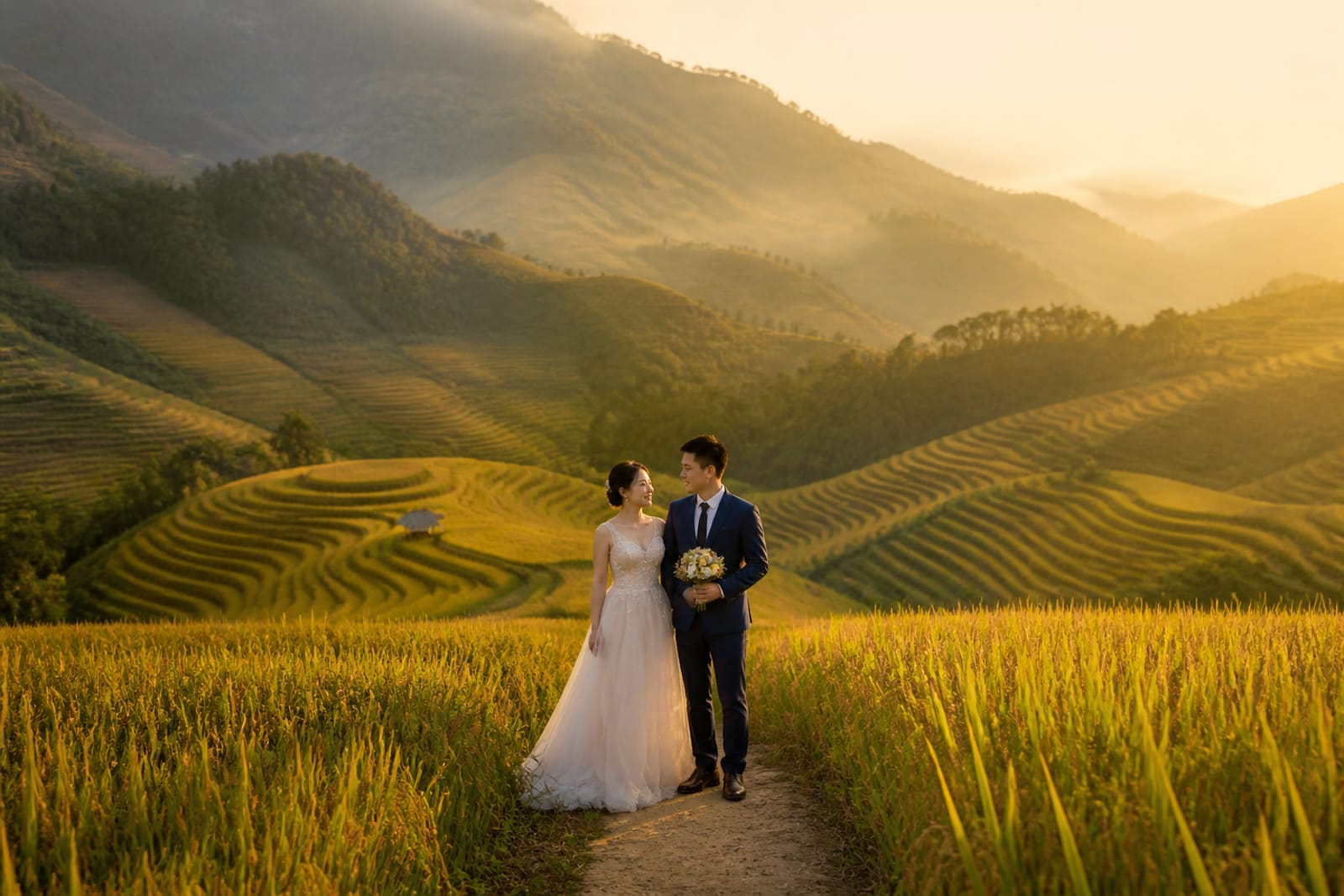
July pre-wedding shoots in Mu Cang Chai work best in the early morning window (5:30–7:00 am) when cloud cover creates even, diffuse light across the terraces—no harsh shadows. The terraces are still flooding or knee-deep in water, giving depth and reflection. Rain is frequent (brief afternoon downpours), so plan two-outfit sessions on separate early-morning trips or accept weather as part of the frame. The eight-hour drive from Hanoi and high altitude (1,200 m) mean you'll need two days on location; most international couples work with local photographers or coordinate through studios like Cáo Studio's Hanoi base to arrange a team. Avoid midday (1–4 pm) when clouds break and light flattens the terraces into backdrop territory. July crowds are lighter than harvest season (Sept–Oct), giving you clear pathways and authentic village atmosphere—a trade-off many couples prefer over picture-perfect weather. 📸 Book on WhatsApp — pre-wedding photoshoot ---
Is July actually a good month for a pre-wedding shoot in Mu Cang Chai?
July requires patience with weather but rewards you with privacy and natural drama. The monsoon clouds create a moody, cinematic quality that works for couples who want editorial frames rather than bright, cheerful ones. Early morning is non-negotiable: the light between 5:30 and 7:00 am is soft and even, terraces are wet and reflective, and the village is still quiet. By 9 am, cloud breaks are common, light hardens, and humidity climbs. The trade-off is rain—brief afternoon showers are typical—and the eight-hour mountain drive from Hanoi tests both bodies and schedules. If you're shooting pre-wedding (not a wedding-day emergency), July's slower pace and authentic village life make it worthwhile for couples who prioritize mood over perfect conditions.
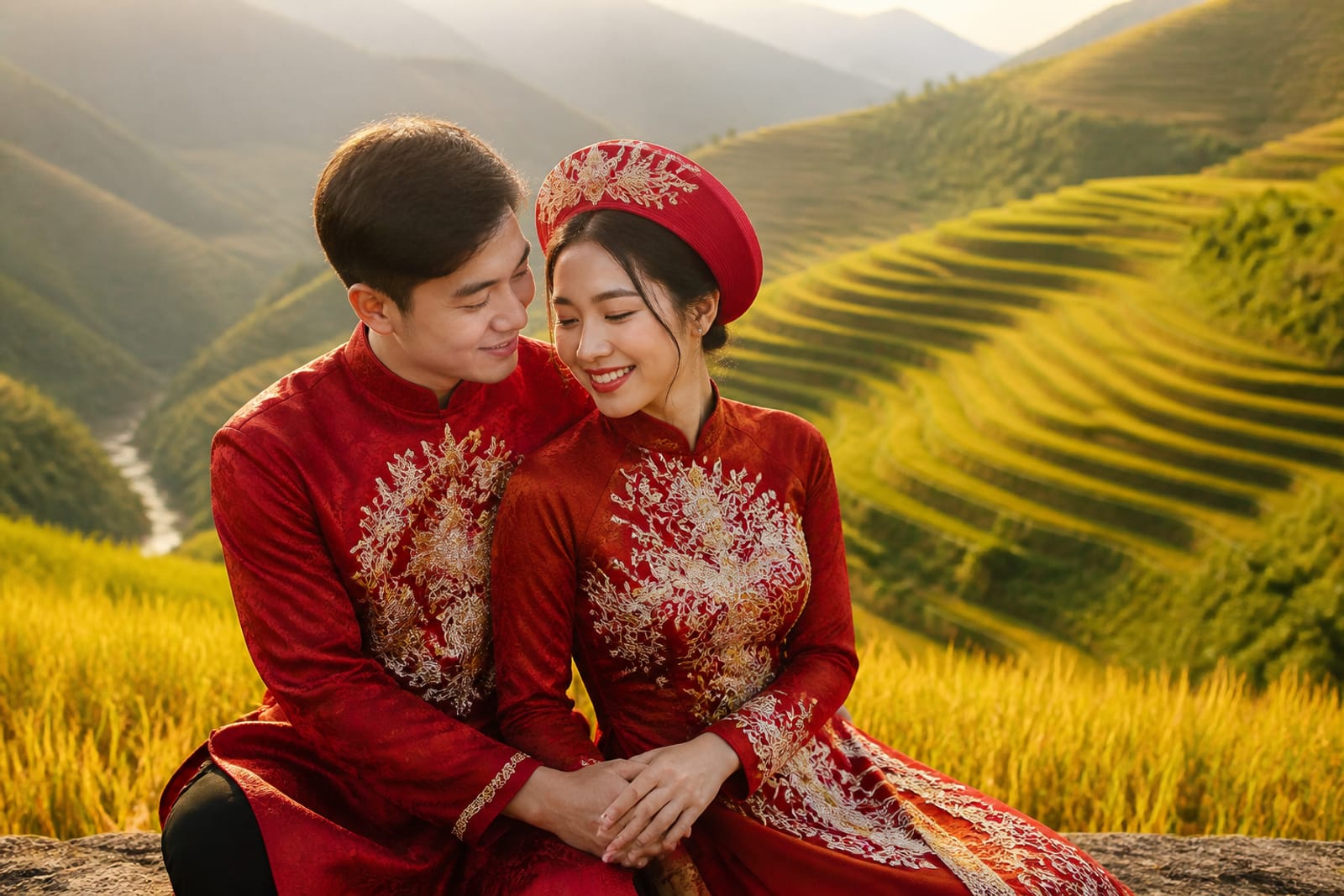
How does the light change from sunrise to midday in the terraces?
Between 5:30 and 7:00 am, light hits the eastern slopes at a low angle, creating soft side-light that sculpts the contours of each terrace ridge without blown-out highlights. Water surfaces catch this angled light and reflect it back, adding dimension and warmth to skin tones. By 8:30 am, the sun climbs higher; cloud cover often thickens around 9–10 am as morning mist settles. Midday (1–4 pm) is unpredictable—either the clouds remain heavy (which flattens contrast and mood) or they break, producing harsh overhead light that drains the landscape of texture. Late afternoon (5:00–6:30 pm) can offer golden side-light again, but by then afternoon rain usually moves in and light becomes dim and grey. Early morning is the only reliable window for the cinematic terraces you came for.
| Timing | Light Quality | Terrace Condition | Best For | Crowd Level |
|---|---|---|---|---|
| 5:30–7:00 am | Soft, low-angle, even | Wet, reflective, mist lifting | Portraits, couple movement, editorial | Quiet |
| 8:00–9:30 am | Medium angle, warming | Water visible, clouds breaking | Wider landscape shots, motion | Few visitors |
| 10:00 am–12:00 pm | Steep, flattening, variable | Mixed cloud/sun, harsh edges | Risky—avoid unless forced | Light |
| 1:00–4:00 pm | Overhead or blocked | Dull if cloudy, harsh if clear | Not recommended | Moderate |
| 5:00–6:30 pm | Golden but dimming | Wet from afternoon rain | Golden-hour backups only | Light |
Each row compares light angle (how it sculpts faces and landscape), terrace appearance (water reflection, mist, visibility), and what each window is actually useful for on a pre-wedding shoot. Early morning wins every metric in July.
What outfits work in a monsoon climate with wet terraces?
Wear flowing, lightweight fabrics that won't cling in 90%+ humidity: cotton voile, linen blends, or silk if you're budget-flexible. Avoid heavy satin or structured wedding dress fabrics—they trap sweat and stick to skin in seconds. For the groom, cotton dress shirts and linen trousers breathe; add a lightweight blazer or unbuttoned overshirt for layers you can shed or restore between shots. Footwear is critical: water-proof loafers, canvas sneakers, or go barefoot if your dress/outfit permits (many couples do on the terraces). Bring a second outfit for dry conditions—a lighter or shorter dress, or a local ao dai rental to shoot in. The ao dai works brilliantly here: its loose fit sheds water, the long tunic skims across wet stone, and the contrast of traditional fabric against wild, wet landscape creates editorial depth. Skip trailing hems and delicate beadwork in July; save those for your dry-season second shoot if you're doing a two-part pre-wedding plan. Hat and parasol are practical (umbrellas block light), and they add visual interest to the frame.
How do you plan a shoot when rain is predictable but timing is random?
Book two mornings on location, not one. Coordinate with a local photographer who reads Mu Cang Chai weather patterns (cloud timing, rain windows, seasonal wind direction). The first morning, you'll learn how the light and clouds move; the second, you'll shoot with confidence. If rain hits during your first session, you have a backup day—not a ruined trip. Ask your photographer (or contact Cáo Studio's Hanoi base to coordinate a team) to have a flexible backup route: if your chosen terrace is flooded too deep or rain is heavy, move to a higher, drier section or a village street nearby. Bring waterproof bags for phones and cameras, a quick-dry towel, and wear moisture-wicking undergarments. Schedule shoots during the first 1–2 weeks of July if possible—later in the month, rain frequency climbs and cloud cover deepens, reducing light hours. Check local weather forecasts the week before and confirm the session dates with your photographer.
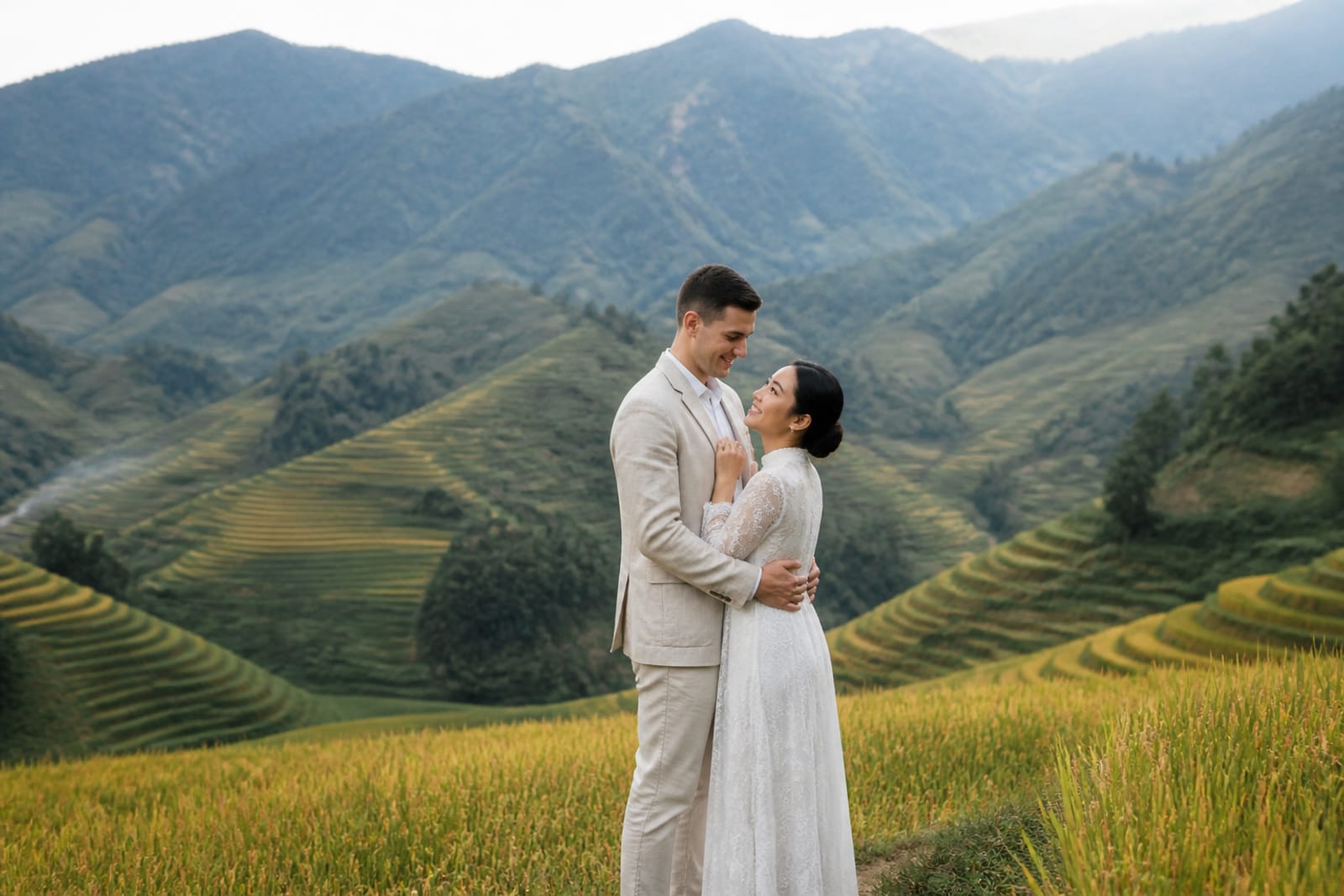
Should you book a pre-wedding shoot in Mu Cang Chai or another Vietnam location?
Mu Cang Chai is best if you want raw, authentic, cinematic frames and you're flexible on weather. It's not a postcard-perfect backdrop like Ha Long Bay at noon or Hoi An's lantern-lit streets. The eight-hour drive, altitude, and monsoon climate reward couples who value mood and effort over ease. If you're pressed for time (fewer than two days on location), or if you want predictable sunshine and fewer logistics, consider couple photoshoots in Hanoi—the Red River at sunrise, French Quarter architecture, or the Old Quarter's hidden courtyards all deliver strong light and proximity in less than two hours from city hotels. Hoi An's ancient town is better for August–September when monsoon eases, and it offers easier logistical access. For pre-wedding photoshoots, Cáo Studio's Hanoi and Saigon bases serve Hanoi city locations, coastal spots near Da Nang (coordinate via WhatsApp), and Hoi An by appointment—each with different light profiles and seasonal windows. Mu Cang Chai demands commitment; it rewards it with uniqueness that couple photoshoots in busier, sunnier locations cannot match.
What do you need to confirm before booking a pre-wedding session in Mu Cang Chai?
Confirm the following with your photographer or Cáo Studio's Hanoi team:
- Transportation. Who drives? What vehicle (car, van, scooter)? How many stops for photos on the way?
- Accommodation. Where will the team stay? (Most photographers work 1–2 days on location and sleep nearby.) Are meals included in your session?
- Outfit changes. How many outfits? Where will you change? (No dressing rooms on the terraces; vehicles or homestays serve as changing areas.)
- Weather backup. If rain is heavy on day one, what's the rescheduling policy? (Most reputable photographers offer a free second date.)
- Editing and delivery. How many photos will be edited? When will you receive them? (Cáo Studio's standard turnaround is 48 hours for edited files and a short vertical film; confirm this with your team.)
- Insurance or permit. Do you need village permission or a local guide? (Not officially required, but some homestays ask for a small donation or guide fee—ask your photographer.)
Contact Cáo Studio on WhatsApp to discuss Mu Cang Chai pre-wedding planning, outfit options including ao dai rental, and coordination with Hanoi-based teams. If you're booking independently with a local photographer, verify their portfolio includes monsoon-season shots—not just harvest-season golden light—so you see how they frame overcast, wet conditions.
---
What to check before you book
- Portfolio in similar conditions. Ask to see pre-wedding or couples' work shot in July or August (rainy season). Don't rely only on September–October golden-light galleries.
- Two-day commitment. Budget for two early-morning sessions (back-to-back days) if you want a solid edit to choose from. One-morning shoots are risky in monsoon season.
- Footwear. Pack waterproof shoes and backups. Wet stone terraces are slippery; blisters from hiking in damp conditions are common.
- Altitude and fitness. Mu Cang Chai sits at 1,200 m elevation; if you're not accustomed to altitude, arrive a day early to acclimate. The terraces require walking on uneven, wet stone for 2–3 hours at a time.
- Humidity and makeup. Monsoon humidity (often 85–95%) will undo makeup applied in Hanoi. Arrange hotel-based makeup and hair on location (a team can travel to Mu Cang Chai), or have the makeup artist apply products water-resistant and designed for high humidity.
- Editing style. Confirm whether your photographer leans moody and desaturated (fitting overcast light) or tries to brighten/warm footage in post. July's grey light looks honest in a moody edit; fake-sunny edits look unconvincing.
---
FAQ
Is July too rainy to shoot pre-wedding in Mu Cang Chai?
Rain is frequent but brief—usually 20–45 minute afternoon showers. Early mornings (5:30–7:00 am) are usually dry. Two days on location let you schedule around showers. Wet terraces and mist create moody, cinematic light many couples prefer over clear skies.
What's the actual difference between July and September light in the terraces?
July has dense, low-lying monsoon clouds that create soft, even light from sunrise to mid-morning. September clouds lift earlier, producing clearer light by 8 am and longer golden-hour windows. July suits editorial, moody frames; September suits brighter, landscape-forward shots. Both require early starts.
Do I need a guide or local photographer in Mu Cang Chai, or can I self-shoot?
Self-shooting is risky—the terrain is steep, paths are unmarked, and you'll miss optimal light while navigating. A local photographer knows which terraces flood, where light hits first, and safe walking routes. Cáo Studio's Hanoi team can coordinate with vetted local photographers; ask on WhatsApp about logistics and costs.
Can I wear a traditional ao dai for a pre-wedding shoot in the terraces?
Yes—it's ideal. The loose tunic skims wet stone and water, the silk catches light beautifully in mist, and the contrast between traditional dress and wild landscape reads as editorial and intentional. Pair it with waterproof shoes or go barefoot for movement shots. Bring a second modern outfit for variety in your final edit.
How far is Mu Cang Chai from Hanoi, and do I need to stay overnight?
Eight hours by car from Hanoi (one way). You need at least two nights on location—one for arrival and acclimatization, one for the shoot day and rest before the drive back. Homestays and small hotels serve the village; ask your photographer for recommendations. Budget travel time and altitude adjustment into your schedule.
Should I book Mu Cang Chai or choose a pre-wedding location closer to Hanoi?
Mu Cang Chai suits couples with two days to spare and a preference for raw, moody frames over convenience. Hanoi locations (Red River at sunrise, French Quarter, Old Quarter courtyards) deliver strong light in under two hours from your hotel. Cáo Studio's Hanoi base offers both—ask on WhatsApp which location matches your timeline and aesthetic.
FAQ
Is July too rainy to shoot pre-wedding in Mu Cang Chai?
Rain is frequent but brief—usually 20–45 minute afternoon showers. Early mornings (5:30–7:00 am) are usually dry. Two days on location let you schedule around showers. Wet terraces and mist create moody, cinematic light many couples prefer over clear skies.
What's the actual difference between July and September light in the terraces?
July has dense, low-lying monsoon clouds that create soft, even light from sunrise to mid-morning. September clouds lift earlier, producing clearer light by 8 am and longer golden-hour windows. July suits editorial, moody frames; September suits brighter, landscape-forward shots. Both require early starts.
Do I need a guide or local photographer in Mu Cang Chai, or can I self-shoot?
Self-shooting is risky—the terrain is steep, paths are unmarked, and you'll miss optimal light while navigating. A local photographer knows which terraces flood, where light hits first, and safe walking routes. Cáo Studio's Hanoi team can coordinate with vetted local photographers; ask on WhatsApp about logistics and costs.
Can I wear a traditional ao dai for a pre-wedding shoot in the terraces?
Yes—it's ideal. The loose tunic skims wet stone and water, the silk catches light beautifully in mist, and the contrast between traditional dress and wild landscape reads as editorial and intentional. Pair it with waterproof shoes or go barefoot for movement shots. Bring a second modern outfit for variety in your final edit.
How far is Mu Cang Chai from Hanoi, and do I need to stay overnight?
Eight hours by car from Hanoi (one way). You need at least two nights on location—one for arrival and acclimatization, one for the shoot day and rest before the drive back. Homestays and small hotels serve the village; ask your photographer for recommendations. Budget travel time and altitude adjustment into your schedule.
Should I book Mu Cang Chai or choose a pre-wedding location closer to Hanoi?
Mu Cang Chai suits couples with two days to spare and a preference for raw, moody frames over convenience. Hanoi locations (Red River at sunrise, French Quarter, Old Quarter courtyards) deliver strong light in under two hours from your hotel. [Cáo Studio's Hanoi base](/hanoi) offers both—ask on WhatsApp which location matches your timeline and aesthetic.
Ao dai, makeup, hair and a local photographer in Hanoi or Saigon — one WhatsApp message.