/pre-wedding-photoshoot
Pre-wedding photoshoot in Mu Cang Chai on a budget
A budget pre-wedding shoot in Mu Cang Chai works best May–June (water-filled terraces) or mid-September to early October (golden rice), not Dec–Feb when terraces are brown. The drive from Hanoi is 5+ hours each way; factor that into your day. You have three real options: hire a local Yen Bai or Hanoi-based photographer to shoot self-organized outfits (lowest outlay, most planning on you), book a small crew (photographer + one assistant, handles logistics), or work with a full team like Cáo Studio's pre-wedding photoshoot service from Hanoi (outfit, makeup, hair, camera all in one booking — more expensive upfront, zero coordination stress). Budget differs by season (peak season = higher rates), outfit swaps (one outfit costs less than three), and whether someone on your team drives or you hire transport. The honest trade: DIY saves money but eats time and risk; a small crew balances cost and quality; a full team removes all logistics burden. Mu Cang Chai light is best early morning or late afternoon — avoid midday harsh sun. 📸 Book on WhatsApp — pre-wedding photoshoot ---
What makes Mu Cang Chai different from other budget pre-wedding spots?
Mu Cang Chai's terraces are iconic but remote. Unlike urban Hanoi or coastal Hoi An, you're committing 10+ hours round-trip driving for one location. That travel time is a hidden cost: it determines whether you shoot one day or split into two, and whether the photographer charges a location fee or travel surcharge. The payoff is isolation—fewer tourists in May–June morning shots, real farming light. Budget couples often choose it for the "only place that looks like this" factor, not because it's cheaper than booking a studio shoot in town. The light window is narrow: golden hour lasts 45 minutes, rain can close roads mid-monsoon (May–July), and the terraces require the right season or they're just muddy fields. A local Mu Cang Chai photographer knows the exact morning angle and which terrace road is passable. A Hanoi-based team needs a local guide or a scouting trip.
---
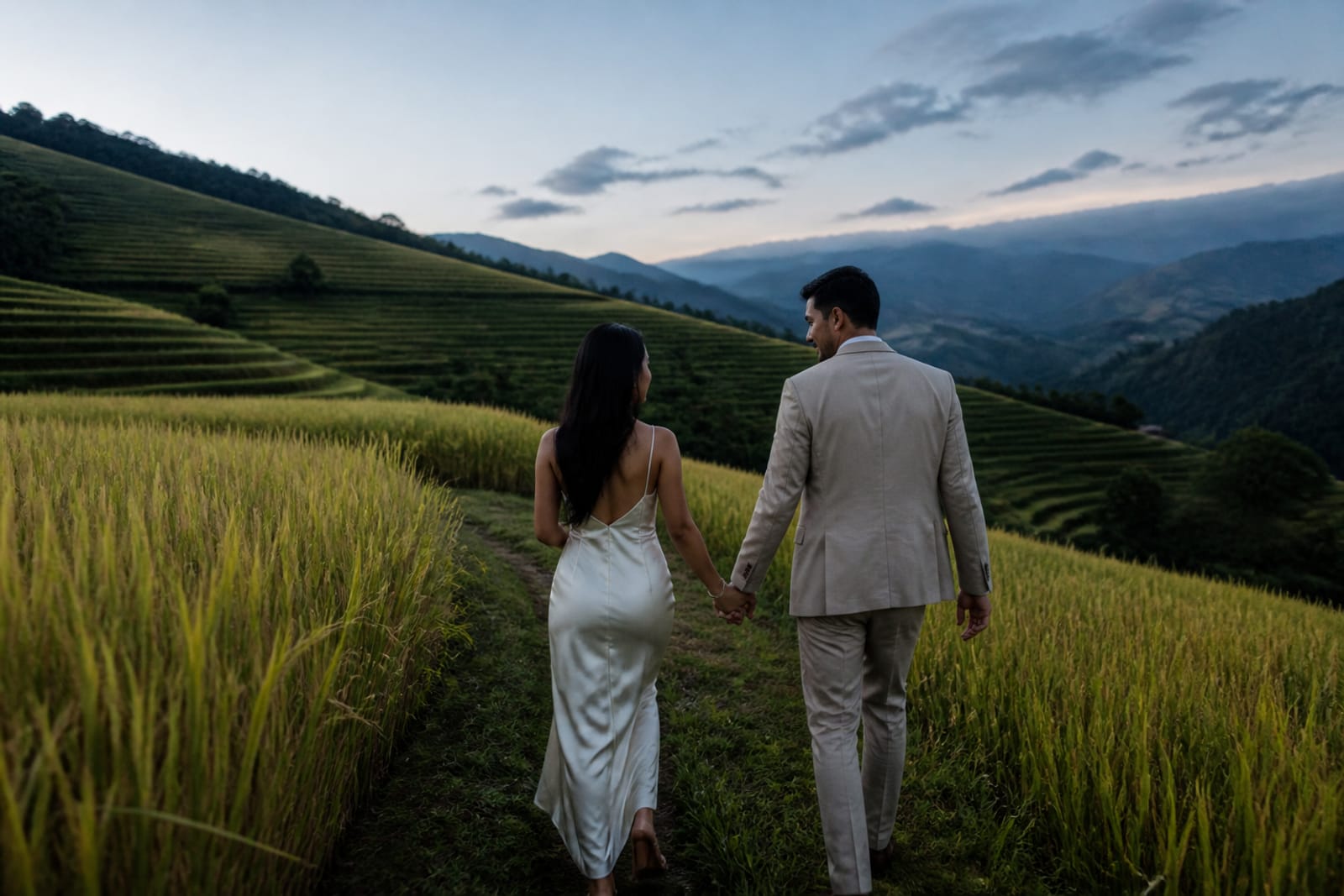
Should you hire a local photographer, travel from Hanoi, or book a full team?
| Option | Best for | Season light | What you handle | Hidden factors |
|---|---|---|---|---|
| Local Yen Bai photographer | Couples who coordinate outfits, hair, location timing themselves | Peak season (May–June, mid-Sep–Oct) = sharper light, more available slots | Outfits, makeup artist if needed, transport, itinerary, posing direction | No outfit/hair coordination; may not speak English; limited editing style; finding them requires local vetting |
| Small crew (photographer + 1 assistant, hired from Hanoi) | Couples who want one person handling camera and location logistics | Same; this crew scouted Mu Cang Chai before | Outfits, makeup artist separate, transport (crew may add surcharge), shot list | Travel cost (gas, time) passed to you; crew unfamiliar with Mu Cang Chai may need prep day; limited wardrobe changes |
| Full team (Cáo Studio pre-wedding from Hanoi) | Couples who want outfit, hair, makeup, photography, and editing all handled by one experienced team | Same; team knows Mu Cang Chai's light and season windows | Only show up and walk the terrace | Highest upfront cost; team travels to you (location surcharge applies); must decide outfit/hair style before the shoot |
The real budget trade: local photographer = lowest direct cost but maximum your-time spent; small crew = mid-cost, mid-effort; full team = highest cost, zero stress. Pick based on whether you want to be a project manager or guest.
---
How does season and weather actually change your budget?
Peak season (May–June, mid-September to early October) = terraces are photogenic AND expensive. Photographers book faster, location guides charge more, and rain is still a risk (Mu Cang Chai averages afternoon downpours May–July). Off-season (Nov–April) = cheaper photographers, better light (no midday humidity blur), but terraces are brown, dry, or muddy—not the image couples imagine. Tet (late January–mid February) closes many local services and crowds landmarks; skip it for shoots.
Weather turns big shoots into one-day marathons or two-day trips. A single downpour loses you 2–3 hours and requires a backup day. Local guides charge a "rainy day" buffer. Mud after rain means outfit changes and laundry (your cost). The light trade: May–June's overcast mornings hide the sun behind clouds (soft, even light, no shadows) but extend your shooting window to 2+ hours. September–October's clear dawn skies give golden side light in a 30-minute window—sharper frames, bigger pressure to be ready. Budget couples often choose May–June because the longer light window forgives late starts; budget-conscious crews prefer Sep–Oct's shorter window (faster shoot = fewer hours billable, lower crew cost).
---
What outfit choices actually reduce the cost?
One outfit costs less than three. A single ao dai or dress means one hair and makeup change, no outfit transport, and faster shooting (3–4 hours instead of 6+). Budget shoots often choose the ao dai because it's a single silhouette (no dress + suit + casual outfit math) and rents cheaply in Hanoi—rent an ao dai for one day from ao dai rental rather than buying three outfits for one shoot. Local Mu Cang Chai photographers often don't charge extra for outfit swaps because the location doesn't change; Hanoi-based teams may add a fee (each change = more setup time). If you're hiring makeup separately, one style (one hair artist visit) saves a second artist visit. Couples on a tight budget pick a single jewel-tone ao dai (photographs sharp against greens and golds) and one location angle (wide terraces, walk-through framing, no "find seven angles" shot list). That discipline cuts time, crew hours, and your stress. The frame trade: wide terraces with two people walking away = one strong image; switching outfits mid-location = multiple weak images trying to force different looks.
---
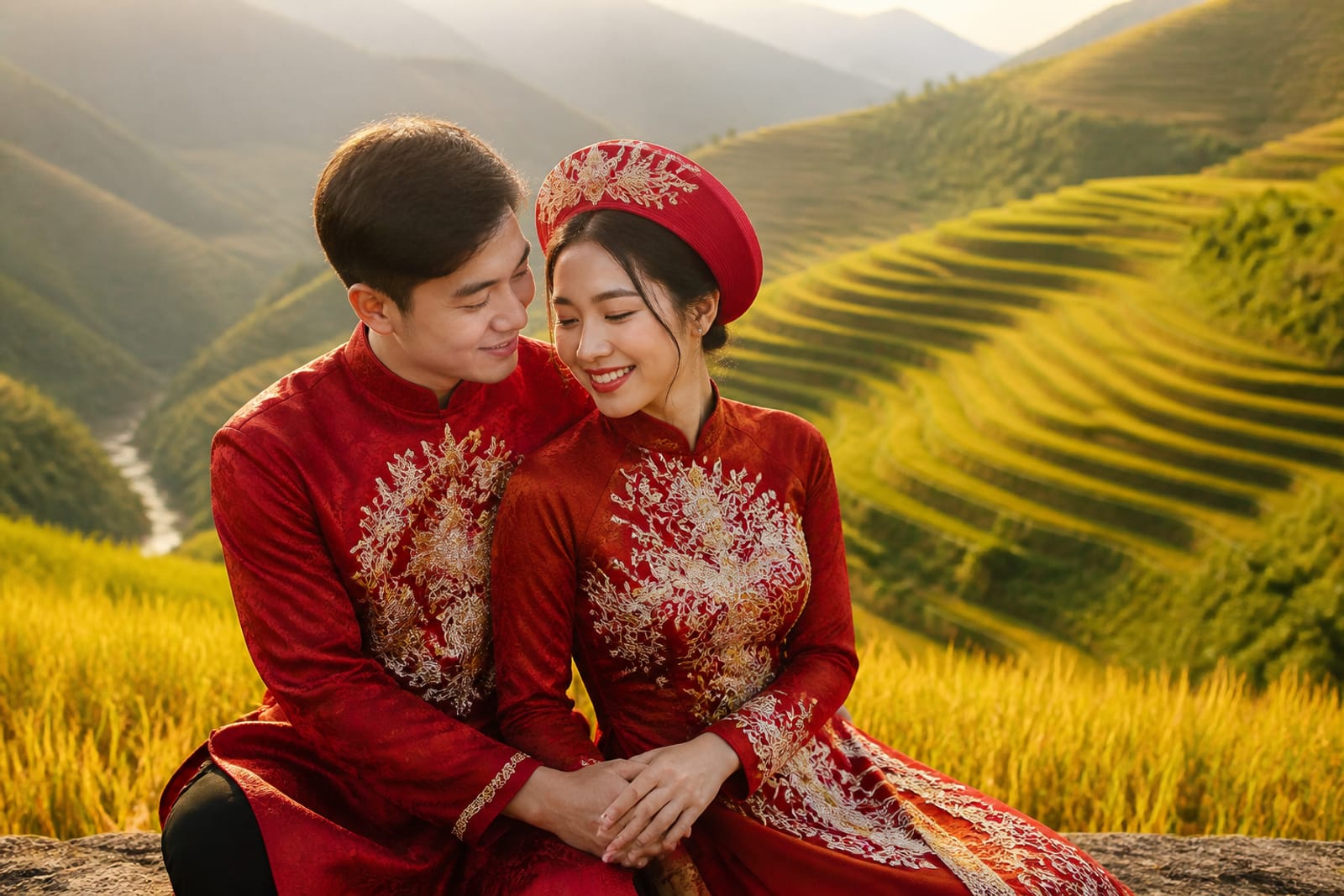
How to vet a local photographer and avoid common pitfalls
Local Yen Bai photographers often work through Hanoi booking platforms or word-of-mouth; ask for a Mu Cang Chai portfolio (not just studio work). Red flags: no samples of terrace light, no mention of season/time of day in captions, images that look overly filtered or poorly exposed (sign of weak editing or phone shooting). Request 5–10 Mu Cang Chai morning shots; if they only have afternoon or midday frames, they haven't mastered the location's golden-hour light. Ask how they handle rain (backup date or refund?), whether they guide posing (walking, looking at each other) or rely on stiff "face camera" poses, and how fast they deliver edited images (budget shoots often want frames in 3–5 days, not 3 months). Language barrier: confirm they speak enough English or hire a translator (roughly 8–10 hours, full day). If you're booking Cáo Studio's pre-wedding photoshoot instead, the team is Hanoi-based, English-speaking, and has shot Mu Cang Chai multiple times—no local vetting needed, but you're paying for that certainty.
Payment terms matter: ask for a 30–50% deposit (not 100% upfront), a clear cancellation policy (illness, extreme weather), and whether edits are included or cost extra. A local photographer may not have a formal contract; use email confirmation or a WhatsApp summary to document agreement.
---
What to check before you book
Timing questions:
- Is your shoot date in the terrace's best season (water-filled May–June or golden Sep–Oct)?
- Do you have a backup date if rain closes the road?
- Are you shooting one day or splitting into two for light and rest?
Crew and outfit clarity:
- How many outfit changes will you actually wear (one ao dai or multiple)?
- Does the photographer or makeup artist come from Hanoi (travel cost) or is local (faster, need vetting)?
- Will you coordinate your own hair/makeup or book it as part of the shoot?
Light and location:
- What's your photographer's Mu Cang Chai portfolio—do they have morning terrace shots (not midday)?
- Are they guiding movement (walking, candid framing) or posing you stiffly?
- Do they know which terrace road is accessible in your season?
Delivery and cost factors:
- How many edited images and in what format (digital, prints)?
- How long after the shoot do you get files (3 days, 1 week, 1 month)?
- Does the cost include a location guide, transport, or other hidden services?
- If you hire crew from Hanoi, what's the travel surcharge and does it apply for one trip or two days?
Backup plan:
- What happens if weather cancels the shoot—refund, reschedule, partial images?
- Is there a rain date built into your calendar?
---
Budget pre-wedding shoots: the honest summary
The cheapest Mu Cang Chai shoot is a local photographer + self-organized outfit, totaling roughly half what a full team costs. The trade is your time (coordinating hair, makeup, timing, location details) and logistics risk (weather delays, communication gaps, editing surprises). A mid-cost small crew cuts risk and your workload but requires finding trustworthy people and managing two or three vendors. A full team like Cáo Studio's pre-wedding photoshoot handles everything—outfit, hair, makeup, camera, editing—in one booking, removing all coordination but requiring the highest upfront investment. For couples who value time over money and want a guaranteed Mu Cang Chai shoot with professional framing, the full team removes the stress. For couples with flexibility and a limited budget, a local photographer works if you vet them carefully and stay involved in planning. The real question: are you saving money or are you spending hours managing the shoot? Know your answer before you book.
📸 Book on WhatsApp — pre-wedding photoshoot
For shoots in Hanoi, Ho Chi Minh City, or Hoi An, Cáo Studio handles pre-wedding sessions with the full team model. For Mu Cang Chai specifically, ask us on WhatsApp +84 338 762 340 about travel logistics and location scouting.
---
FAQ
Is Mu Cang Chai cheaper to shoot than Hanoi or Hoi An?
No. Mu Cang Chai's remote location adds 5+ hours driving each way, which crew photographers charge as a travel surcharge. A Hanoi-based team's daily rate is higher for Mu Cang Chai than for in-city Hanoi shoots. Local photographers are cheaper but require vetting and English communication workarounds.
What season has the best light and lowest costs?
May–June has water-filled terraces and longer golden-hour windows (soft light, forgiving timing), but it's peak season so photographers book faster and may charge more. Mid-September to early October has golden rice and sharp morning light, fewer tourists, and slightly lower photographer availability. December–February is cheapest but terraces are brown and the light is grey.
Can I shoot Mu Cang Chai with just one outfit and keep costs low?
Yes. One ao dai (rented from Hanoi for a single day) plus one hair/makeup visit cuts your shoot time to 3–4 hours and eliminates outfit-change logistics. Budget couples often choose this over multiple outfit swaps, which add crew hours and styling complexity.
Should I hire a local photographer or bring a crew from Hanoi?
Local photographers are cheapest but need careful vetting (portfolio review, language check). Hanoi crews are more predictable but charge travel surcharges. A full team like Cáo Studio handles all coordination but costs more upfront. Choose based on whether you want to manage vendors or have one team handle everything.
What happens if it rains on my Mu Cang Chai shoot day?
Rain is common May–July. Confirm your photographer's rain policy: do they reschedule, refund, or shoot in rain (muddy clothes, poor light)? Build a backup date into your timeline, or budget for a local guide to wait out afternoon showers (common; mornings are usually clear).
FAQ
Is Mu Cang Chai cheaper to shoot than Hanoi or Hoi An?
No. Mu Cang Chai's remote location adds 5+ hours driving each way, which crew photographers charge as a travel surcharge. A Hanoi-based team's daily rate is higher for Mu Cang Chai than for in-city Hanoi shoots. Local photographers are cheaper but require vetting and English communication workarounds.
What season has the best light and lowest costs?
May–June has water-filled terraces and longer golden-hour windows (soft light, forgiving timing), but it's peak season so photographers book faster and may charge more. Mid-September to early October has golden rice and sharp morning light, fewer tourists, and slightly lower photographer availability. December–February is cheapest but terraces are brown and the light is grey.
Can I shoot Mu Cang Chai with just one outfit and keep costs low?
Yes. One ao dai (rented from Hanoi for a single day) plus one hair/makeup visit cuts your shoot time to 3–4 hours and eliminates outfit-change logistics. Budget couples often choose this over multiple outfit swaps, which add crew hours and styling complexity.
Should I hire a local photographer or bring a crew from Hanoi?
Local photographers are cheapest but need careful vetting (portfolio review, language check). Hanoi crews are more predictable but charge travel surcharges. A full team like Cáo Studio handles all coordination but costs more upfront. Choose based on whether you want to manage vendors or have one team handle everything.
What happens if it rains on my Mu Cang Chai shoot day?
Rain is common May–July. Confirm your photographer's rain policy: do they reschedule, refund, or shoot in rain (muddy clothes, poor light)? Build a backup date into your timeline, or budget for a local guide to wait out afternoon showers (common; mornings are usually clear).
Ao dai, makeup, hair and a local photographer in Hanoi or Saigon — one WhatsApp message.