/pre-wedding-photoshoot
Pre-wedding photoshoot in Mu Cang Chai September: light, weather, crow
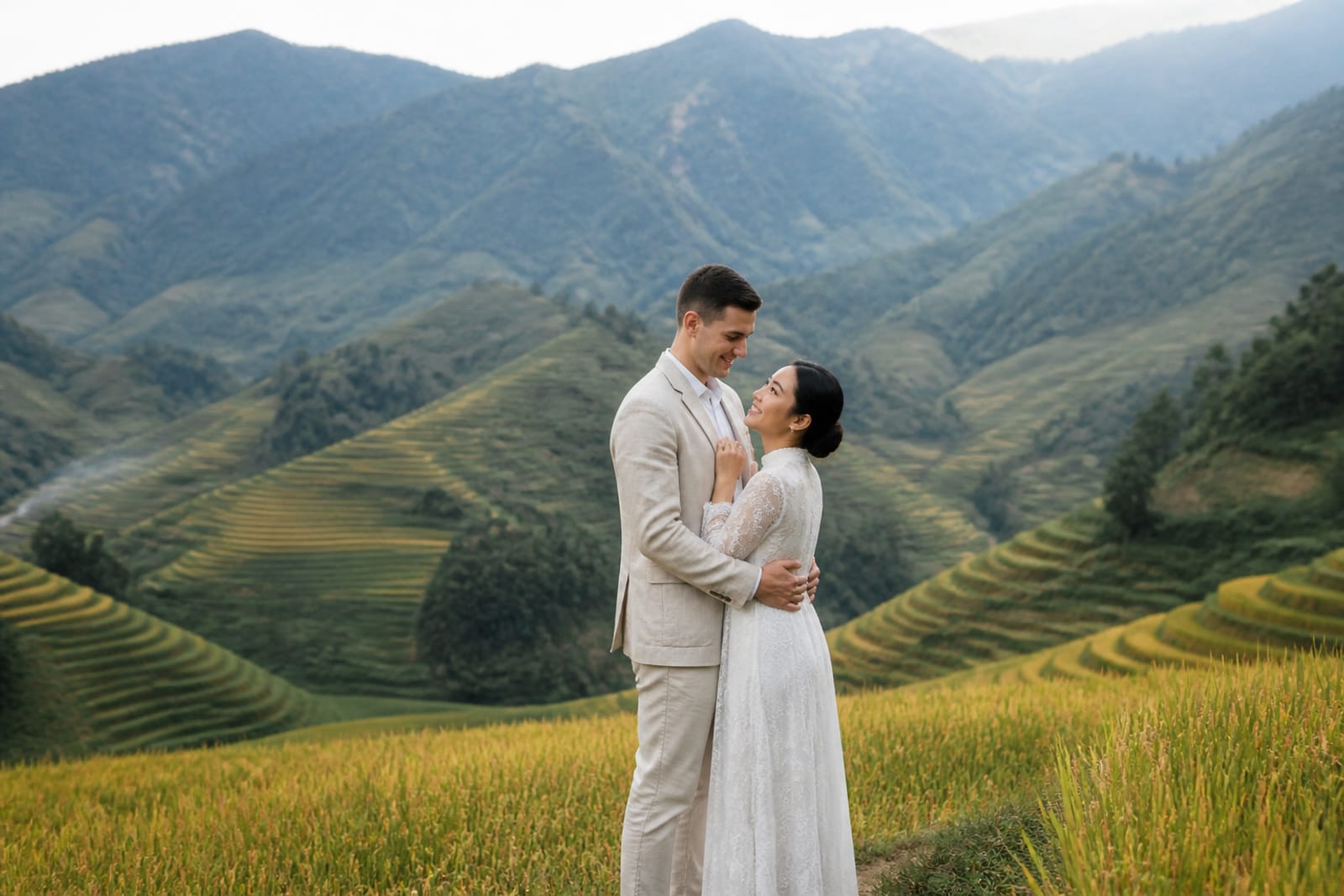
Mu Cang Chai in September offers golden rice terraces, soft directional light (best 5:30–7:30 am and 4:30–6:30 pm), and fewer crowds than peak season (mid-September onward is ideal as water drains). You'll drive 4–5 hours from Hanoi on winding mountain roads; early morning or sunset shoots require overnight stays in the valley. The air is humid and afternoon thunderstorms are common, so start early and plan a weather backup. Cáo Studio does not operate in Mu Cang Chai—the team is based in Hanoi, Ho Chi Minh City and Hoi An—but we guide couples to vet a local photographer in advance and provide our pre-wedding photoshoot framework for direction, outfit planning and storytelling on location. ---
What does the light look like in Mu Cang Chai in September?
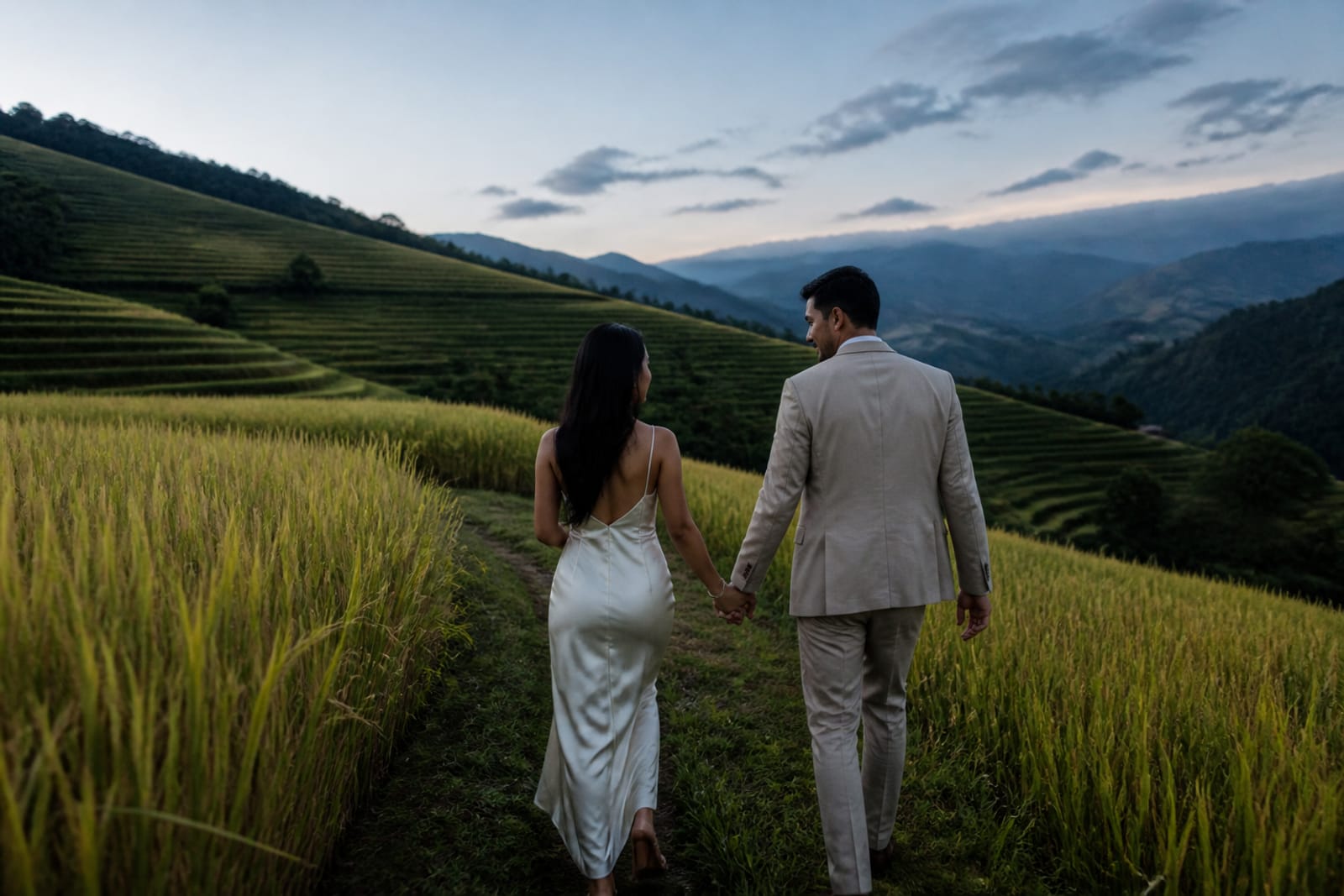
September light in Mu Cang Chai is softer and more directional than summer monsoon months, but less stable than the dry season (Feb–Aug). Dawn light (5:30–7 am) comes from the east, raking across terrace contours and casting long shadows that sculpt the rice landscape. By 8 am, haze and humidity thicken the air, flattening contrast. Midday is flat and harsh. Late afternoon (4:30–6:30 pm) gives warm, diffused light from the west, ideal for walking shots along pathways and silhouettes against distant valleys. Cloud cover is frequent—treat it as free diffusion, not a loss. Real timing: scout your exact shot location the evening before to trace the sun's path and plan your position.
📸 Book on WhatsApp — ao dai photoshoot
How crowded is Mu Cang Chai in September compared to May–June?
May–June draws global trekkers and domestic tourists for the water-filled terraces and lush green; trails and viewpoints are busy by 7 am. September footfall drops sharply because the aesthetic shifts—water drains in late August, and the landscape turns from mirror-like jade to dry earth and ripening gold. By mid-September, terraces are half-empty. Your shoot window (6–7 am) will have local farmers and occasional hikers, not tour groups. Trade-off: the postcard water-reflection look is gone; you gain isolation and warm tones instead. Expect foot traffic to pick up around 8–9 am.
What weather patterns disrupt shoots in September?
September is the tail end of Vietnam's summer monsoon. Morning humidity sits 75–85%; afternoon thunderstorms develop between 2–5 pm and can last 30–90 minutes. Rain is heavy but short, so an afternoon downpour is recoverable—wait 40 minutes and shoot at 5 pm in clearer light. The hazard is morning fog lingering past 8 am during cooler low-pressure systems, which flattens distant views. Bring a lightweight rain jacket for the couple and a waterproof camera bag. Check the local weather forecast 3 days before and lock in your shoot time; shoot dawn first, then reassess afternoon light. Wind is light—outfit movement is clean, not chaotic.
What outfit works for terraces and mountain paths?
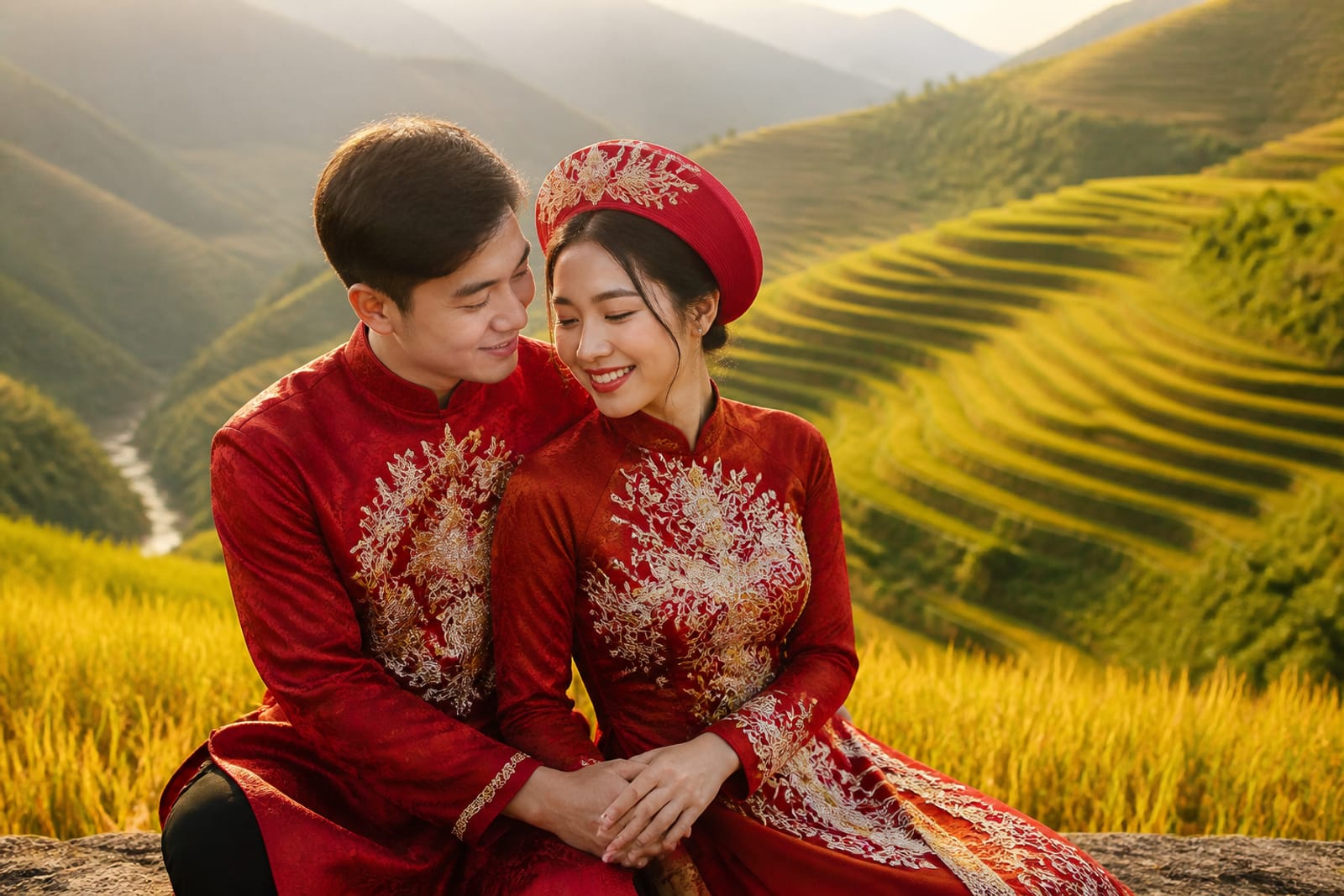
Traditional áo dài in jewel tones (deep emerald, burgundy, sapphire) reads beautifully against golden rice and green hills. Avoid white or pastels—they blow out in morning glare and disappear into haze. For groom, a tailored ao dai or neutral linen shirt + trousers works; avoid heavy black, which absorbs heat on a 5-hour mountain morning. Footwear is critical: waterproof or quick-dry shoes rated for muddy terrace edges and slippery paths. Avoid flip-flops and heeled shoes—injuries on a remote shoot waste time and mood. Hair and makeup must tolerate humidity and sweat; talk to a stylist familiar with mountain conditions (mist, wind, 4–5 hours outdoors). If you're booking a makeup & hair service at your hotel in Hanoi before the drive, confirm they've worked on mountain shoots and use long-wear, sweat-resistant products.
| Outfit choice | Best for | Why it works in September |
|---|---|---|
| Jewel-tone áo dài (both) | Traditional, cultural storytelling | Rich colour pops against gold terraces; flows in mountain breeze |
| Neutral linen + áo dài (bride only) | Mixed aesthetic, lighter for heat | Groom stays cool; colour contrast on camera |
| Quick-dry hiking trousers + tunic (casual couple) | Active, walking-forward frames | Practical for muddy paths; movement reads cinematic, not posed |
| Layered neutral base + coloured scarves | Flexible, changeable look | Easy to adjust for temperature swings; scarves add movement and colour |
How do you plan a shoot day logistically?
Book accommodation in Mu Cang Chai town or a nearby valley homestay 2+ weeks ahead (September is off-peak for tourists but on-peak for domestic holiday breaks mid-month). Arrive the evening before your shoot; this breaks the long drive and lets you scout light and meet your photographer. Start the shoot at 5:30–6 am; the first 90 minutes deliver your strongest frames. If light holds, shoot a second location at 7:30–8:30 am (avoid 9 am onward when haze hardens). Pack water, electrolyte mix and snacks—the couple and crew burn energy fast on slopes. Have a 3–4 hour rest and meal break (10 am–2 pm), then regroup at 4 pm for evening light if the weather allows. Plan a weather backup: a waterfall or forested path that works in soft, diffused light even during cloud cover. Confirm all logistics and shot list with your photographer 1 week prior.
How do you find and vet a local photographer for Mu Cang Chai?
Mu Cang Chai is a trekking hub with local guides and homestay owners who know reliable photographers. Start by asking your accommodation for referrals. Search Instagram for hashtags like #mucangchai or #mucangchaiwedding and check photographers' portfolios for September work (not just May–June), hiking experience, and gear that handles mountain conditions (backup batteries, rain protection, fast glass for low-light mornings). Request a pre-call to discuss your vision, shot list and logistics; a good photographer asks about your outfit, morning fitness level and whether you want cinematic direction (walking, looking at each other, interacting) versus posed portraits. Ask for a rate inclusive of travel time from Hanoi (4–5 hours each way) and whether they deliver edited files and a same-day highlight reel. Cáo Studio's pre-wedding photoshoot page outlines the framework we use—discuss this with your chosen photographer to ensure alignment on direction, light-chasing and storytelling.
---
What to check before you book your Mu Cang Chai September shoot
- Photographer experience: ask for 3+ September shoots (not just May–June); request client references from mountain shoots.
- Gear and backup: confirm they carry weather-sealed camera body, fast lens (f/2.8 or faster), backup batteries rated for cold mountain mornings, and waterproof bag.
- Direction style: review their lookbook for cinematic movement (walking, interaction) rather than stiff poses; ask how they frame wide-to-detail sequences.
- Logistics clarity: written confirmation of pickup time, exact shoot locations, meal breaks, weather backup plan and delivery timeline.
- Editing and files: what formats, number of edited files, turnaround time, and whether a short film or highlight reel is included.
- Insurance and contingency: ask how they reschedule if bad weather forces a cancellation (same-day rebook, refund policy, etc.).
---
Pre-wedding framing beyond just Mu Cang Chai
If you're booking a pre-wedding photoshoot and want multiple locations, Hanoi couples often combine Mu Cang Chai (one long day or overnight) with urban shoots in Hanoi—Red River at dawn, French Quarter architecture, temple grounds. This splits the story: intimate mountain landscape + cultural, architectural context. If you're based in Ho Chi Minh City or prefer coastal light, Saigon-based couples often choose beach pre-weddings (Vung Tau, Mui Ne) in September's cool mornings and add city reflections at dusk. Each location and season shapes the mood—discuss with your photographer which story feels truest to you both.
---
FAQ
Is September better than May–June for a Mu Cang Chai pre-wedding shoot?
No—May–June has the iconic water-filled terraces and lush green. September offers golden tones, fewer crowds and isolation. Choose based on aesthetic: mirror reflections and busy energy (May–June) or warm colour and solitude (September).
What time should we wake up for a 5:30 am shoot?
Aim to be at your first location by 5:15 am. Wake at 4–4:15 am, eat light (fruit, toast, water), and leave your accommodation by 4:45 am. Rushing causes stress and sweating before the camera starts.
Will afternoon rain cancel our shoot?
Not necessarily. A 30–60 minute thunderstorm is normal; wait it out or shoot in the rain if the couple is game. Plan your main frames in early morning light (non-negotiable), then treat afternoon as bonus time.
How much should we budget for local logistics (transport, meals, guide)?
Ask your photographer and accommodation owner for current costs—prices vary seasonally. Confirm inclusions (vehicle, driver, meals, weather contingency) in your booking agreement rather than assuming.
Can we do an áo dài shoot in Mu Cang Chai if we're not getting married there?
Yes. An ao dai photoshoot is standalone; many couples book it as cultural engagement and pre-wedding memory. Discuss with your photographer whether to combine it with couple frames or keep them separate sessions.
FAQ
Is September better than May–June for a Mu Cang Chai pre-wedding shoot?
No—May–June has the iconic water-filled terraces and lush green. September offers golden tones, fewer crowds and isolation. Choose based on aesthetic: mirror reflections and busy energy (May–June) or warm colour and solitude (September).
What time should we wake up for a 5:30 am shoot?
Aim to be at your first location by 5:15 am. Wake at 4–4:15 am, eat light (fruit, toast, water), and leave your accommodation by 4:45 am. Rushing causes stress and sweating before the camera starts.
Will afternoon rain cancel our shoot?
Not necessarily. A 30–60 minute thunderstorm is normal; wait it out or shoot in the rain if the couple is game. Plan your main frames in early morning light (non-negotiable), then treat afternoon as bonus time.
How much should we budget for local logistics (transport, meals, guide)?
Ask your photographer and accommodation owner for current costs—prices vary seasonally. Confirm inclusions (vehicle, driver, meals, weather contingency) in your booking agreement rather than assuming.
Can we do an áo dài shoot in Mu Cang Chai if we're not getting married there?
Yes. An [ao dai photoshoot](/ao-dai-photoshoot) is standalone; many couples book it as cultural engagement and pre-wedding memory. Discuss with your photographer whether to combine it with couple frames or keep them separate sessions.
Ao dai, makeup, hair and a local photographer in Hanoi or Saigon — one WhatsApp message.