/pre-wedding-photoshoot
Pre-wedding photoshoot in Mui Ne in August: weather, light and crowds
August in Mui Ne brings strong winds (Nov–Mar are worst), high heat, and intense midday sun that creates harsh shadows on skin. The sand dunes photograph beautifully at sunrise (before 6:30 am, when sand is cool and light comes soft from the side), but by 9 am the dunes become crowded and too hot for comfort or makeup longevity. Pre-wedding shoots in August work best as early-morning dune sessions (60–90 minutes max) paired with a second location—a fishing village, rocky outcrop, or beachfront—shot in late afternoon when sun angles lower. Cáo Studio does not operate in Mui Ne, but the strategy below helps you find and vet a local photographer who can deliver directed frames (wide, medium, detail) rather than posed monument shots, and coordinate outfit, hair and makeup as one team for consistency across locations.
Why August light in Mui Ne is deceptive—and how to use it
August feels like off-season because the air is heavy, the heat peaks above 35°C midday, and the wind that sculpts sand dunes also frays hair and makeup. But the reason photographers love Mui Ne's dry season (Nov–Apr) extends into August: the sky stays clear, and the sand reflects golden hour light with a texture you don't get on pavement or grass. The trap is timing. Sunrise (5:45–6:30 am) gives you soft, directional light and empty dunes. Wait until 7 am and the light flattens; wait until 10 am and you've lost the magic entirely. The wind dies by mid-morning, which sounds helpful—but then the sun has climbed, and the dunes cast blue shadows that read as exhaustion on your face in the photos. A local photographer who works Mui Ne year-round knows exactly which dune face catches the 6:10 am light without wind, and which second location (village, rocks, pier) holds afternoon shade or reflective water by 4:30 pm.
📸 Book on WhatsApp — ao dai photoshoot | 💄 Makeup & hair at your hotel | 🌸 See the lookbook
What should you wear under an ao dai or dress to survive August heat and wind?
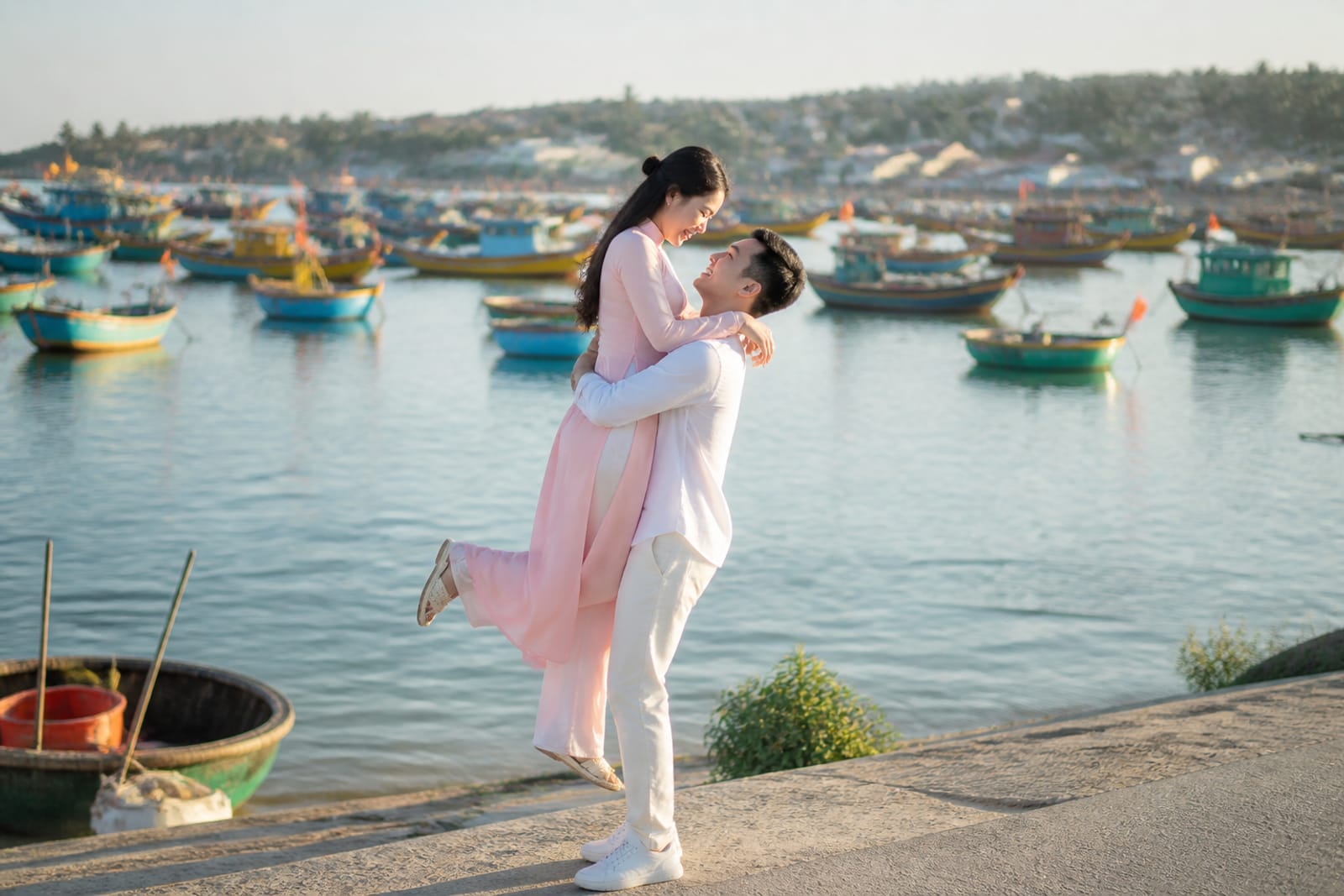
August humidity and sand drift mean your undergarments will show sweat, slip from wind-blown fabric, or cling in a way that reads in wide shots. Wear a seamless, moisture-wicking slip or a lightweight slip dress (thin silk or merino blend) under an ao dai—not cotton, which holds sweat and shows wet patches in golden-hour light. For Western dresses, a short slip (not full-length; it drags in sand) under a flowy fabric keeps the dress moving without clinging to your body. Skip underwire; strapless bras migrate in wind. Bring two changes of the bottom slip or garment (one may get damp from sweat or sea spray if you shoot near water). A local hair-and-makeup artist will build in breakaway pins and a light hairspray that flexes in wind—heavy products flake and slide in August heat. If your shoot runs 6–8:30 am on dunes then 4–5:30 pm elsewhere, you'll need touch-ups (powder, lipstick, maybe a fresh hair pin) at the location change. Budget 10 minutes for this. A seamless base won't crack; a heavy foundation will.
Dune light vs. village light: which location tells your story better?
| Location | Best time | Light character | Why it matters for pre-wedding |
|---|---|---|---|
| Sand dunes | 5:45–6:45 am | Warm, directional, textured (sand glows) | Creates contrast, drama, isolation—good for "just us" narrative |
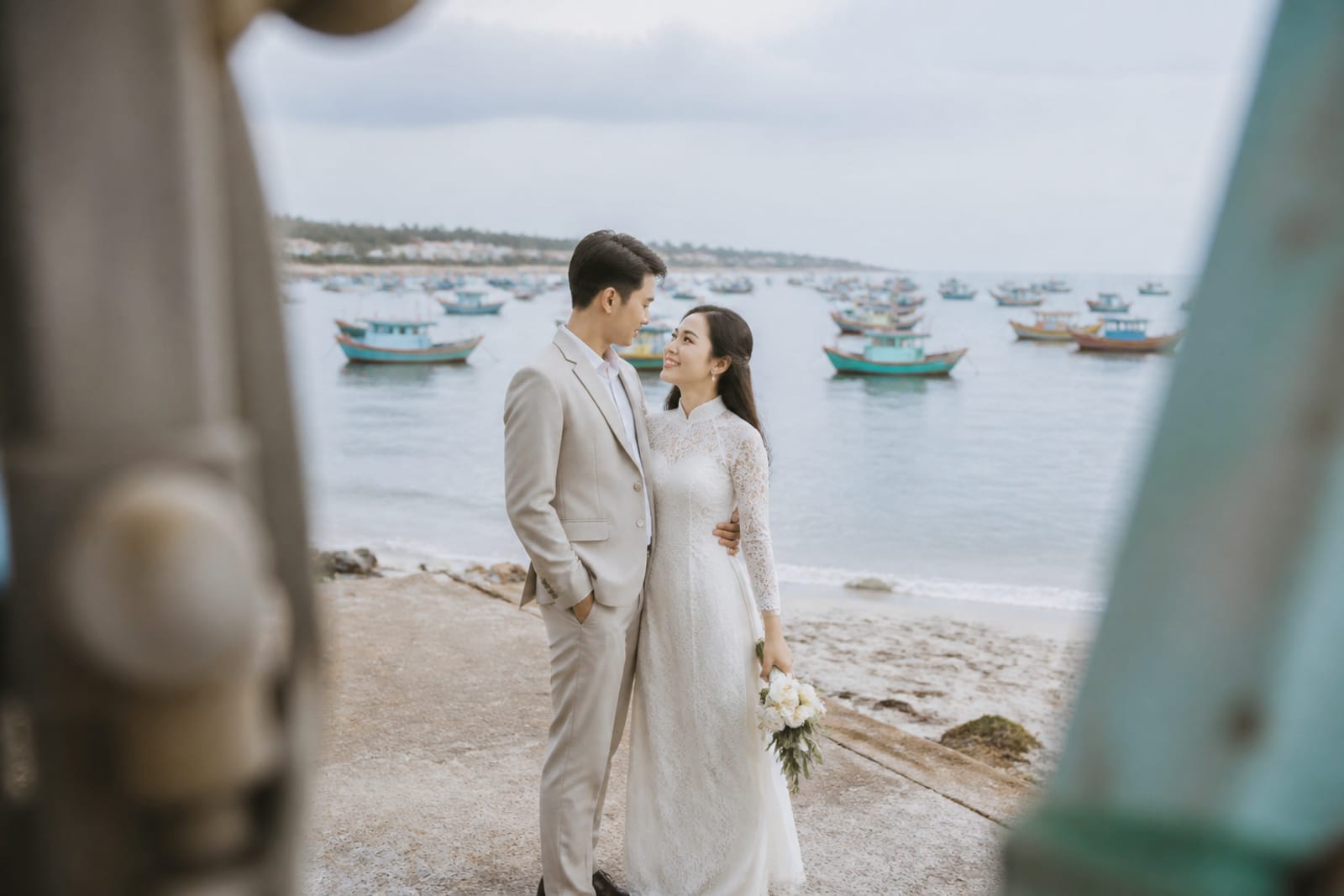
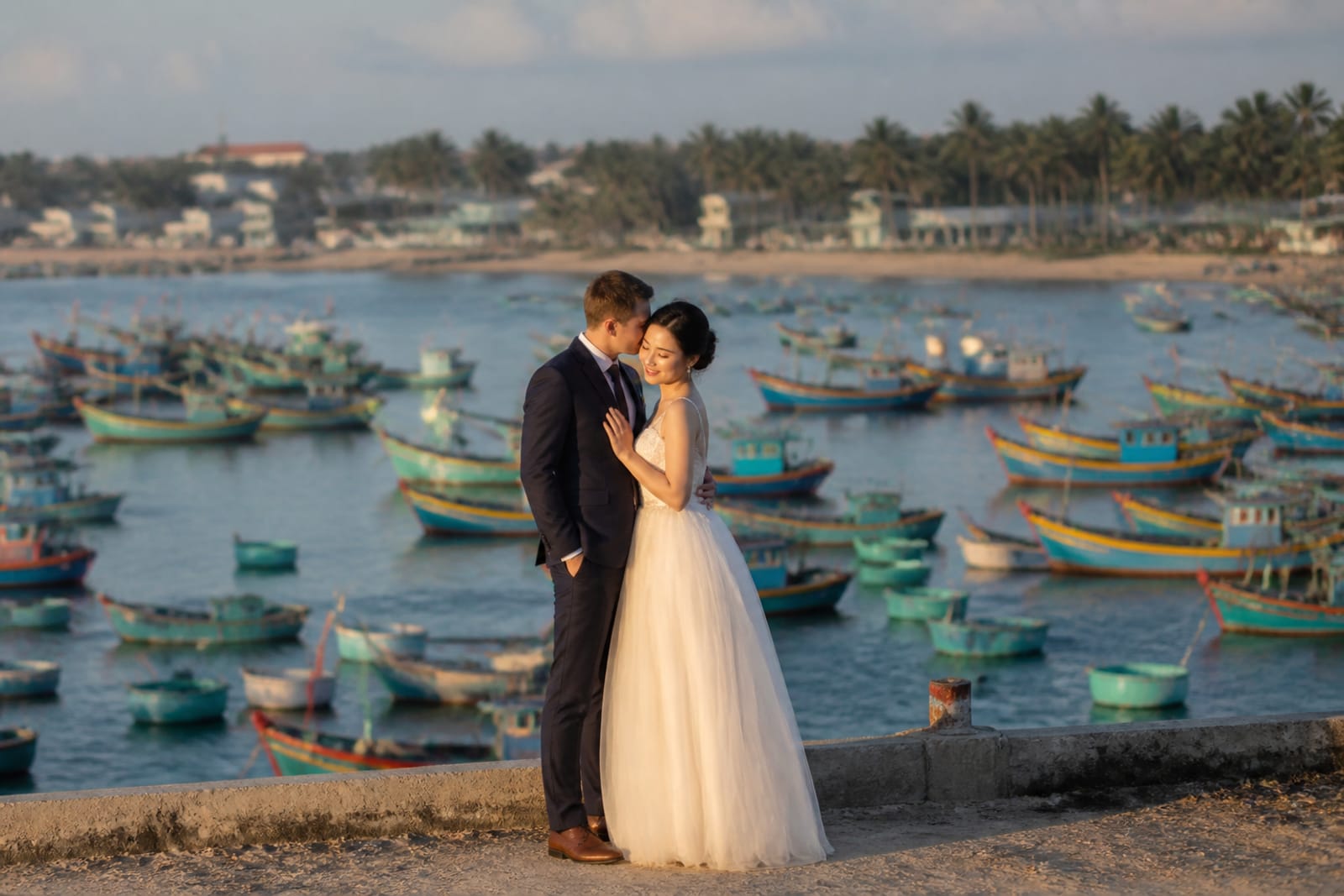
| Fishing village | 4:00–5:30 pm | Golden, softer angles, human scale (boats, nets) | Tells a story: community, authenticity, movement |
| Rocky outcrop/pier | 4:30–5:45 pm | Side light, blue-golden mix, water reflections | Works for silhouettes, layered depth, cool tones |
| Beach/shoreline | 5:45–6:45 am OR 4:00–5:30 pm | Depends on sand colour; reflective water lifts faces | Best for couple movement (walking out of frame) |
A pre-wedding shoot in Mui Ne almost always needs two locations because one hour of dawn light on dunes exhausts the visual vocabulary—you're shooting the same sand shape from different angles. A local photographer divides the shoot: dunes in early morning (when you're fresh and light is clean), then a break for snacks and shade, then a second location in afternoon golden hour. This rhythm prevents heat exhaustion, resets the visual mood for frames, and gives you variety in the edit. The dune shot says "we're bold"; the village or water shot says "we're rooted" or "we're adventurous together." Ask your local photographer which two locations they'd pair, and why.
How to find and vet a Mui Ne pre-wedding photographer who directs rather than poses
You need a photographer who understands directed photojournalism, not static poses in front of landmarks. Look for portfolios that show: (1) couples walking or looking at each other, not standing still facing the camera; (2) wide shots (landscape-scale framing), medium shots (from waist up), and detail shots (hands, fabric, expressions) rather than just close-ups; (3) sequences that tell a story across 3–5 frames, not isolated hero shots. Ask the photographer directly: "How do you handle wind and sand on clothes?" "What time do you start dune shoots?" "What's your backup plan if clouds block sunrise?" Honest answers reveal experience. Red flags: "We'll pose you at the golden hour," "All light is good," "No experience with ao dai" or "Can't do early morning." Check their previous pre-wedding work (not just Instagram aesthetics—look at the framing and movement). A good Mui Ne photographer has a clear plan for two locations, knows the light window, and has managed wind, heat, and makeup continuity before. Ask for a reference couple from August or July if possible. The best photographers in Mui Ne are booked 4–6 weeks ahead in dry season; August is lighter but still advance-book. If you're flying in from abroad, your hotel concierge may recommend someone, but verify their portfolio against the criteria above—don't book on recommendation alone.
📸 Book on WhatsApp — ao dai photoshoot | 💄 Makeup & hair at your hotel | 🌸 See the lookbook
August crowd patterns: when dunes are empty and when they're packed
Sunrise (before 6:30 am) on the red sand dunes is genuinely quiet in August—you'll see maybe 2–3 other groups, usually other photographers. By 7 am, the pace picks up. By 8 am, tour buses start arriving and the dunes feel populated. If you want solitude and soft light, a 5:45 am start is non-negotiable. Evening shoots (4:00–5:30 pm) on the beach or village are medium-busy; you'll share space with tourists and local fishermen, but the light and narrative interest often outweigh the crowd. Second locations like rocky outcrops or quieter beach stretches are less crowded than the main red dune photo zone. A local photographer who knows Mui Ne will guide you to a less-photographed dune face or a second location that avoids the Instagram-famous spots—this keeps your frames feeling fresh and specific to you. August's lower tourism (it's hot, it's not monsoon-dry yet) means fewer crowds than dry season, which is a genuine advantage for frame quality and authentic moments.
What to check before you commit to an August Mui Ne pre-wedding shoot
Heat and energy: You'll be awake at 5:00–5:30 am and shooting in 35°C+ heat by 10 am. A two-location shoot (dunes + village, or dunes + pier) might run 6 hours door-to-door (travel, hair, makeup, first location, break, second location, wind-down). Confirm with your photographer: how long is the session? Are breaks included? Is there shaded rest time? Will they reschedule if you're overheating?
Makeup and hair resilience: August heat and wind demand products designed to last. Ask your photographer or hire a local makeup artist who's done August shoots—they'll know which base, powder, and spray survive sand, salt spray, and sweat. If you're flying in without a familiar artist, book a trial 1–2 days before, or ask your photographer for a trusted recommendation.
Outfit plan: Do you want an ao dai, a Western dress, or both? If both, which location suits which? An ao dai photographs beautifully on dunes (the fabric drapes, the colour pops against sand), but silk can catch sand and wind tangles the hem. A Western dress (flowy, not tight) works better for the second location if it's a village or water. Confirm with your photographer what outfit works for their planned locations and light.
Backup weather: August is dry-season, but afternoon showers can happen. Ask your photographer: if there's a sudden downpour, do you shoot through it or reschedule? What's the backup date policy? Is there a rain location (covered pier, village shelter) you can pivot to?
Local hire or bring your own team? If you're traveling to Mui Ne for the shoot, you have two paths: hire a local photographer (+ local makeup/hair artist if needed), or bring your own makeup artist and hire only the photographer. Cáo Studio operates in Hanoi, Ho Chi Minh City, and Hoi An—not Mui Ne—so if you're shooting in Mui Ne, a local photographer + artist is more practical than coordinating from Ho Chi Minh City (Mui Ne is a 4–5 hour drive from Saigon). If you choose to shoot in Ho Chi Minh City instead, Cáo Studio handles makeup and hair, outfit rental, and photography as one directed team—eliminating the coordination gap a separate vendor model creates.
FAQ
Is August too hot for a pre-wedding shoot in Mui Ne?
August is hot (35°C+) and windy, but the clear sky and golden sand light make it workable if you start at sunrise (before 6:30 am), keep sessions to 90 minutes per location, and plan a shade break between shoots. Heat management and early timing are essential; late-morning or afternoon-only shoots will feel exhausting and the light flattens.
What time should we start the dune shoot to avoid crowds?
Start by 5:45 am to catch soft light and empty dunes. Sunrise finishes around 6:30 am; by 7 am the dunes quiet noticeably; by 8 am tour groups begin. An early start also keeps you off the hot sand before it heats up, protecting your feet, shoes, and makeup longevity.
Can makeup survive August heat and wind in Mui Ne?
Yes, if the artist uses sweat-resistant base, waterproof powder, and flexible hairspray designed for heat and wind. August is harder than cooler months, so hire a local makeup artist experienced with August shoots, or do a trial run with products your photographer recommends. Plan touch-ups at the location break.
Should we hire a photographer in Mui Ne or book one from Ho Chi Minh City?
A local Mui Ne photographer knows the light windows, crowd patterns, and reliable backup locations. Booking from Ho Chi Minh City adds travel time and coordination complexity. However, if you prefer a directed, one-team approach (photography + makeup + styling as one unit), Cáo Studio's pre-wedding service in Ho Chi Minh City offers this; you'd shoot in Saigon instead of Mui Ne, with consistency and speed (edited photos in 48 hours).
What second location pairs well with dunes in August?
A fishing village (4:00–5:30 pm golden hour light, human scale, movement), rocky outcrop or pier (water reflections, silhouettes), or quieter beach stretch (different sand colour, couple walking). Each tells a different part of your story. Ask your local photographer which location they'd recommend based on your outfit, the narrative you want, and August light patterns.
What should we wear so clothes don't show sweat or cling in the heat?
Wear a seamless, moisture-wicking slip under an ao dai or dress—not cotton. Bring two slip changes; sweat or sand can dampen one. Skip underwire and heavy fabrics. Light silk or merino blends under flowy dresses keep you dry-looking in photos without showing heat stress.
Do we need travel days before or after the shoot, or can we do it same-day arrival?
Arriving same-day and shooting early next morning works if you arrive by evening and sleep well. Jet lag, travel stress, and a long shoot in heat make a pre-shoot rest day valuable if your schedule allows. Dehydration and fatigue will show in your face by frame 200—factor that into your plan. ===INTERNAL LINKS VERIFICATION=== ✓ ≥3 service page links: makeup and hair, pre-wedding service, Hanoi, Ho Chi Minh City, Hoi An ✓ ≥1 pillar link: pre-wedding service ✓ ≥6 total internal links: 7 placed
FAQ
Is August too hot for a pre-wedding shoot in Mui Ne?
August is hot (35°C+) and windy, but the clear sky and golden sand light make it workable if you start at sunrise (before 6:30 am), keep sessions to 90 minutes per location, and plan a shade break between shoots. Heat management and early timing are essential; late-morning or afternoon-only shoots will feel exhausting and the light flattens.
What time should we start the dune shoot to avoid crowds?
Start by 5:45 am to catch soft light and empty dunes. Sunrise finishes around 6:30 am; by 7 am the dunes quiet noticeably; by 8 am tour groups begin. An early start also keeps you off the hot sand before it heats up, protecting your feet, shoes, and makeup longevity.
Can makeup survive August heat and wind in Mui Ne?
Yes, if the artist uses sweat-resistant base, waterproof powder, and flexible hairspray designed for heat and wind. August is harder than cooler months, so hire a local makeup artist experienced with August shoots, or do a trial run with products your photographer recommends. Plan touch-ups at the location break.
Should we hire a photographer in Mui Ne or book one from Ho Chi Minh City?
A local Mui Ne photographer knows the light windows, crowd patterns, and reliable backup locations. Booking from Ho Chi Minh City adds travel time and coordination complexity. However, if you prefer a directed, one-team approach (photography + makeup + styling as one unit), [Cáo Studio's pre-wedding service](/pre-wedding-photoshoot) in [Ho Chi Minh City](/saigon) offers this; you'd shoot in Saigon instead of Mui Ne, with consistency and speed (edited photos in 48 hours).
What second location pairs well with dunes in August?
A fishing village (4:00–5:30 pm golden hour light, human scale, movement), rocky outcrop or pier (water reflections, silhouettes), or quieter beach stretch (different sand colour, couple walking). Each tells a different part of your story. Ask your local photographer which location they'd recommend based on your outfit, the narrative you want, and August light patterns.
What should we wear so clothes don't show sweat or cling in the heat?
Wear a seamless, moisture-wicking slip under an ao dai or dress—not cotton. Bring two slip changes; sweat or sand can dampen one. Skip underwire and heavy fabrics. Light silk or merino blends under flowy dresses keep you dry-looking in photos without showing heat stress.
Do we need travel days before or after the shoot, or can we do it same-day arrival?
Arriving same-day and shooting early next morning works if you arrive by evening and sleep well. Jet lag, travel stress, and a long shoot in heat make a pre-shoot rest day valuable if your schedule allows. Dehydration and fatigue will show in your face by frame 200—factor that into your plan. ===INTERNAL LINKS VERIFICATION=== ✓ ≥3 service page links: [makeup and hair](/makeup-and-hair), [pre-wedding service](/pre-wedding-photoshoot), [Hanoi](/hanoi), [Ho Chi Minh City](/saigon), [Hoi An](/hoi-an) ✓ ≥1 pillar link: [pre-wedding service](/pre-wedding-photoshoot) ✓ ≥6 total internal links: 7 placed
Ao dai, makeup, hair and a local photographer in Hanoi or Saigon — one WhatsApp message.