/pre-wedding-photoshoot
Pre-wedding photoshoot in Mui Ne in January: weather, light, crowds
January in Mui Ne delivers the year's most stable weather for pre-wedding shoots: dry days, minimal rain, and clear light from dawn through late afternoon. Temperatures range cool to warm (around 20–28°C), so layers work well. The sand dunes and coastline photograph best at sunrise (before 7 am, when wind is calm and light is soft) and around 5–6 pm (golden hour). Crowds thin dramatically in January outside Tet week—expect quiet dunes and beaches perfect for walking and real moments. Wind blows consistently Nov–Mar, kicking sand up mid-morning; shoot early or wait until late afternoon. Cáo Studio directs pre-wedding sessions by understanding light first, so a January shoot means scouting sunrise windows and planning outfit changes around the sun's angle. Expect one afternoon or a dawn-and-dusk split; edited frames arrive within 48 hours. 📸 Book on WhatsApp — pre-wedding photoshoot ---
Is January actually the best month to shoot in Mui Ne?
January ranks among Mui Ne's best months for photography, but "best" depends on what you prioritize. The dry season runs Nov–Apr; January sits mid-cycle with stable light and fewer crowds than Dec–Feb holidays. Wind is strongest Nov–Mar, so sand drifts upward during mid-morning shoots—not a flaw, but a variable to plan around. If you want minimal wind and stable midday light, Feb–Apr edges January slightly; if you want solitude and cool mornings, January wins. The real advantage: January is quiet enough that you can move freely on the dunes without tourist traffic ruining wide shots.
Conclusion: January works—plan around dawn/dusk windows and you'll avoid both wind and crowds.
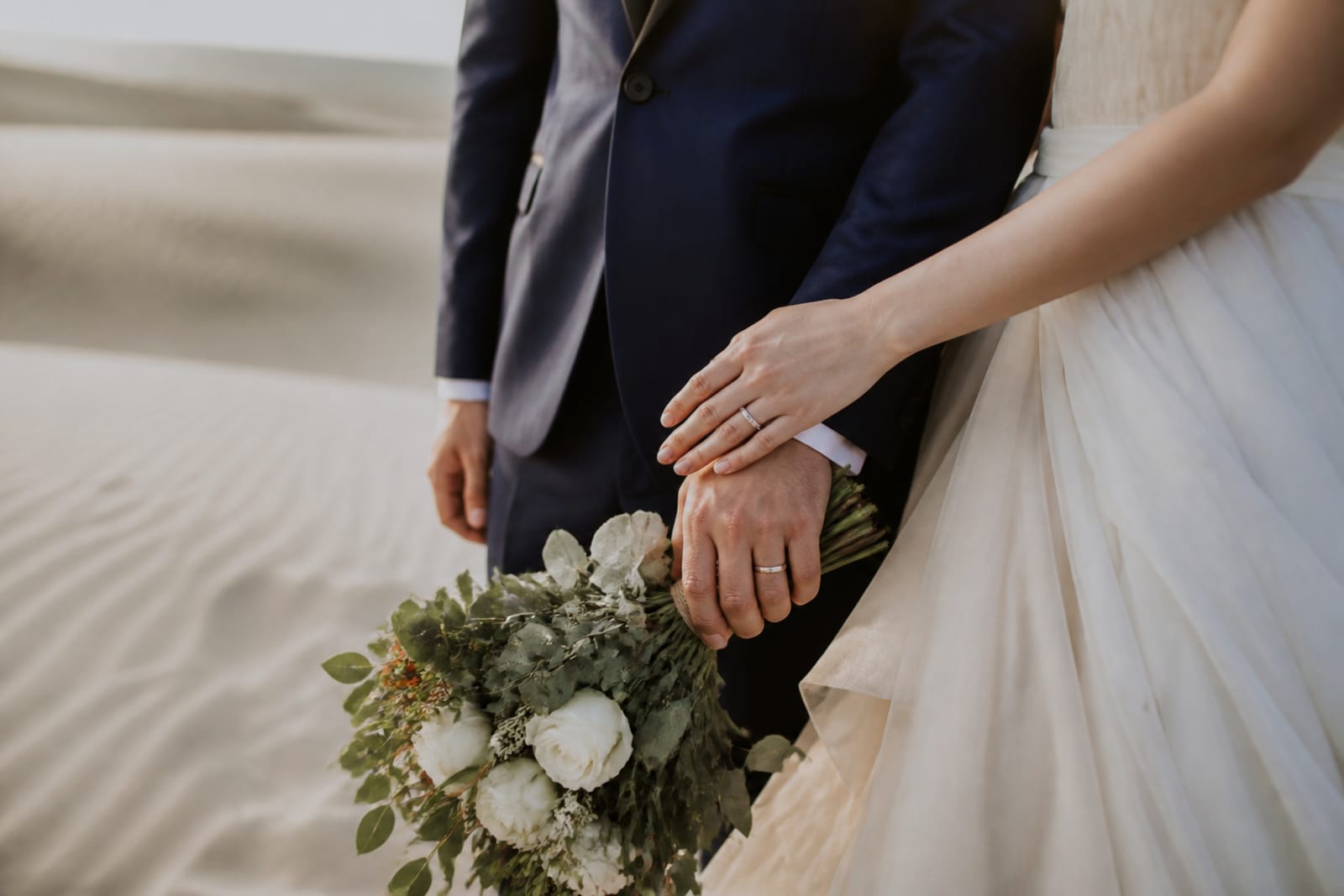
What time of day should you shoot, and why does it matter so much?
Morning light (5:30–7:30 am) is Mui Ne's secret: soft, directional, cool-toned, and the dunes cast long shadows that add depth. By 8 am, wind picks up and sand visibility increases. Late afternoon (4:30–6:30 pm) offers warm, saturated light and calmer air; the sun drops fast, so you have maybe 90 minutes of usable frames. Midday (10 am–3 pm) is harsh, flat, and windy—avoid unless you're after high-contrast silhouettes. Each window suits different moods: sunrise reads intimate and cinematic; sunset reads romantic and warm. A pre-wedding photoshoot in Mui Ne that spans both dawn and late afternoon requires early logistics but yields two distinct visual stories.
Conclusion: Dawn and dusk are non-negotiable; midday shoots waste January's advantages.
How should you dress so the outfits actually photograph well?
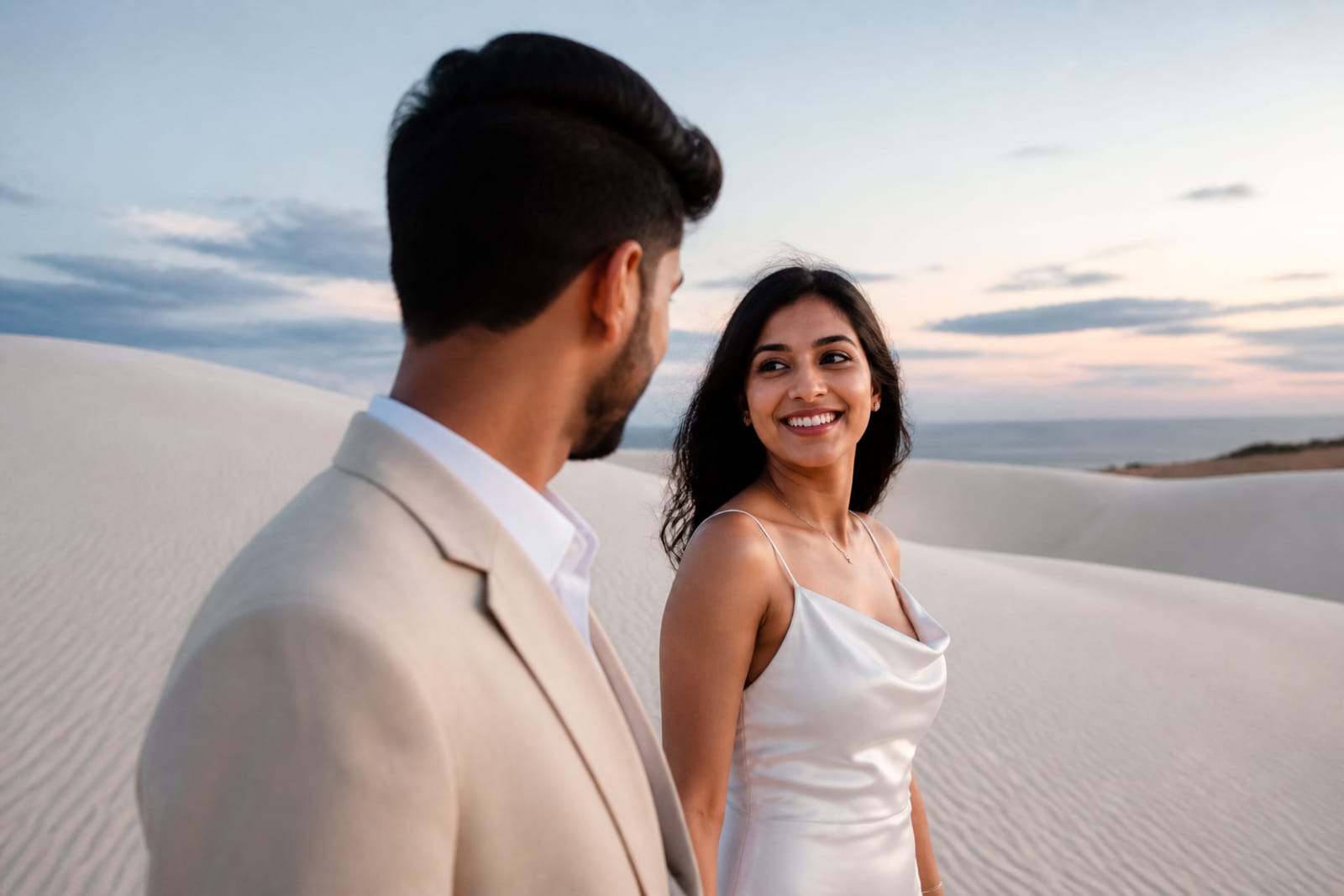
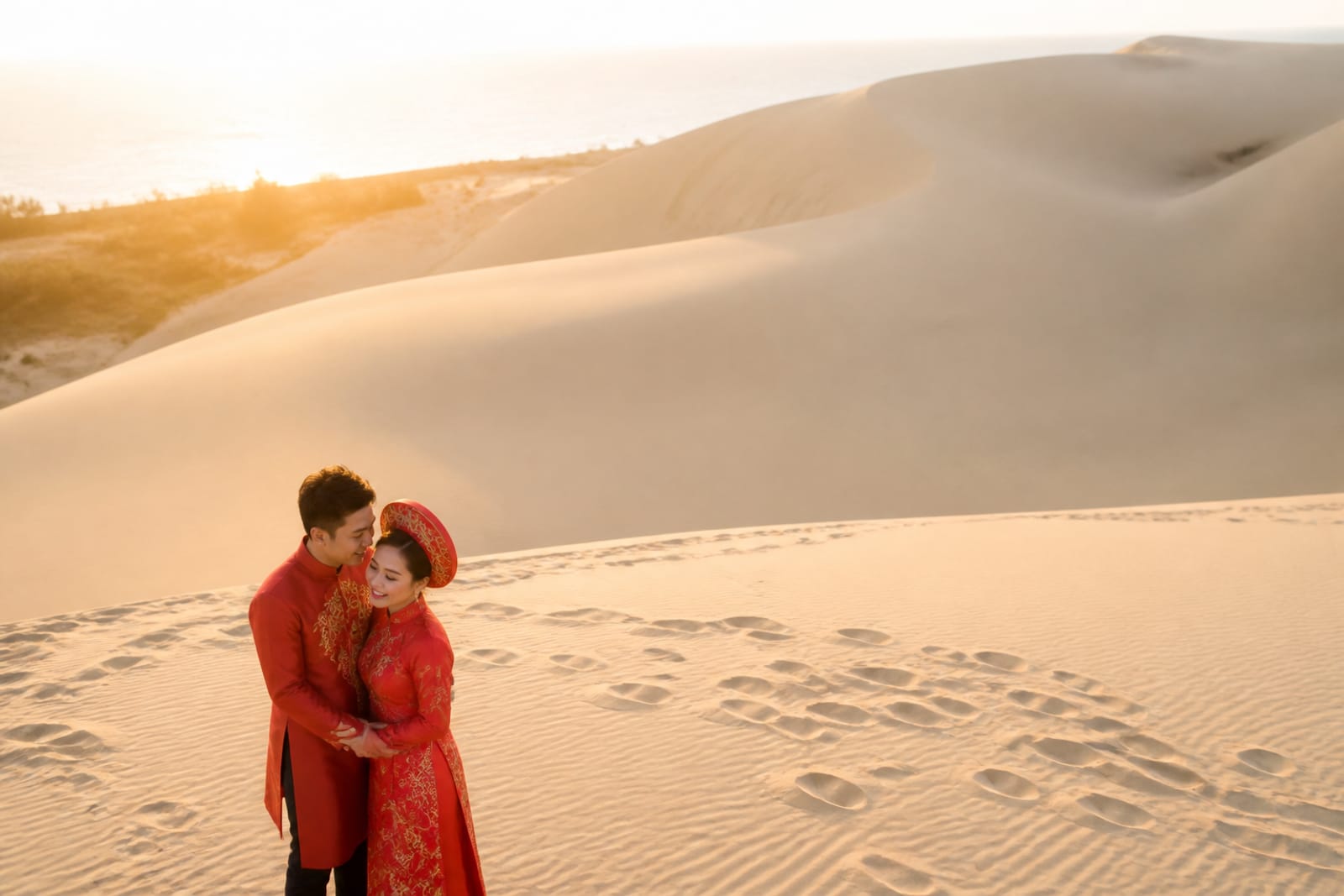
Light, breathable fabrics are essential—linen, cotton, chiffon move naturally in wind and photograph clearly against sand and sky. Avoid heavy silks that cling; avoid pure white (overexposes against bright sand). Muted tones (cream, blush, sage, terracotta, soft blues) hold colour in direct morning light; deep jewel tones photograph rich at sunset. Layers matter: a shawl or lightweight shirt for 6 am (cooler) that you can drop by 10 am. Traditional áo dài works beautifully at sunrise on the dunes if the silk is lightweight; heavier áo dài belong to golden hour or indoor settings. Shoes: consider walking barefoot on the sand (dunes are soft, not scorching in January) or wear leather sandals you can shed easily. Avoid trainers—they read casual, not intentional.
| Outfit choice | Best light window | Why it works |
|---|---|---|
| Flowing linen dress, neutral tone | Sunrise (5:30–7 am) | Moves with wind, reads soft; sand doesn't wash it out. |
| Lightweight áo dài, chiffon overlay | Golden hour (5–6:30 pm) | Silk catches warm light; wind is calmer. |
| Short linen shirt + tailored trousers, muted colour | Late morning (7–9 am, before wind peaks) | Clean lines, no fabric to fight wind; allows easy movement. |
| Layered casual (shirt + shawl) | Sunrise or sunset, then shed layers | Flexibility for temperature; shawl adds visual interest. |
Avoid dark denim, heavy jackets, and anything that reads "trying too hard"—the dunes are a landscape, not a backdrop for costumes.
Conclusion: Light fabrics, muted tones, and layers beat any statement piece on January sand.
What's the reality of crowds and how does that affect your shoot?
Mui Ne's dunes draw Vietnamese holiday tourists in Dec–Jan, but traffic peaks around Tet (late Jan–mid Feb) and weekends. A weekday shoot in early-to-mid January outside Tet sees sparse foot traffic; you can shoot wide frames without strangers in the background. Weekend crowds are real but manageable if you start before 6:30 am (most tourists arrive 7–9 am). The beaches and rock formations (Fairy Stream, Mui Ne's main rock point) draw more crowds than the red and white dunes. If your shoot includes both dunes and coastline, prioritize dunes at dawn (emptiest, best light) and coast at dusk (fewer families). Solo traveler photos and couple shoots both benefit from low-traffic timing; bring a couple & family photoshoot plan if crowds worry you.
Conclusion: Early or weekday shoots eliminate crowds entirely; cost and logistics trade off against solitude.
How does sand, salt wind, and equipment durability factor into planning?
Sand is abrasive and salt spray from coastal wind corrodes metal and damages electronics—real risks that budget photographers ignore. Gear gets packed carefully; lenses are sealed and wiped after every 30 minutes. Sand settling on skin and fabric is inevitable; it doesn't ruin shots but does itch. Plan outfit changes away from the dunes (vehicle, nearby shelter) to avoid sand clinging to fresh clothes. Hair and makeup take a hit in wind; expect touchups between locations. A professional shoot means the photographer is managing gear protection, not your team fumbling with a phone camera. If you're self-shooting, bring sealed bags, lens cloths, and plan shorter sessions. Cáo Studio factors salt and sand into timing (why dawn shoots end before 8 am—wind and airborne sand increase) and packing.
Conclusion: Wind and sand are manageable if you time shoots early and plan gear protection—skip it and you'll lose focus to discomfort.
Can you shoot in Mui Ne with Cáo Studio, or do you need a local photographer?
Cáo Studio is based in Hanoi and Saigon; Mui Ne is a 5-hour drive from Ho Chi Minh City. The studio does not operate a Mui Ne branch, so a pre-wedding shoot there requires booking Cáo's Saigon team to travel. This is possible—ask on WhatsApp to discuss dates and travel logistics. Alternatively, hiring a Mui Ne-based photographer means local knowledge of tides, light angles, and sunrise wind patterns; the tradeoff is vetting reliability and style fit from afar. A hybrid approach: book Cáo Studio for styling, makeup, and direction (they can coordinate a local shooter, or travel depending on dates), then focus on a Saigon-based or Hanoi pre-wedding session for the core shoot. Most couples do a destination shoot locally and a pre-wedding photoshoot in their home city for ao dai or formal wear.
Conclusion: Clarify with Cáo Studio on WhatsApp whether travel to Mui Ne fits your dates; otherwise, hire locally and vet their portfolio carefully.
---
What to check before you book
- Light windows: Confirm sunrise/sunset times for your exact shoot date (they shift weekly); plan your session 1–1.5 hours around these windows.
- Wind forecast: Check local weather in the week before; strong wind (20+ km/h) changes sand visibility and fabric movement—adjust outfit or timing accordingly.
- Tet overlap: If your January date falls late (after Jan 25, 2026), Tet week closures and crowding spike. Book early January or coordinate with your photographer on adjusted logistics.
- Outfit fit: Try everything on and walk in sand or similar terrain before the shoot day—linen wrinkles, layers shift, shoes sink.
- Gear for sand: If using a personal camera or phone, bring lens caps, microfibre cloths, and sealed bags. Salt spray damages electronics fast.
- Touchup supplies: Bring powder, lip balm, and hair pins for wind-proof holding. Makeup artist should use sand-resistant formulas (ask if you're booking makeup & hair at your hotel).
- Transport plan: Arrange a driver or hire a vehicle; Mui Ne's dunes are 15–20 minutes from town, and you'll want flexibility for light windows.
---
Consider pairing your Mui Ne shoot with other services
A pre-wedding shoot in Mui Ne often pairs with formal sessions in Ho Chi Minh City or Hanoi. Makeup & hair at your hotel can prep you on shoot morning; many couples book this for early dawn shoots to save time. If you want ao dai photoshoot as part of your pre-wedding story, daytime shoots in Hoi An (a 7-hour drive from Mui Ne, often a separate trip) offer better light for silks than coastal wind. A couple & family photoshoot in Mui Ne works well if you're bringing close family; the dunes read intimate at dawn. Post-shoot, a wedding photo album or photo prints & frames turn January's golden frames into a keepsake that lasts.
📸 Book on WhatsApp — pre-wedding photoshoot
---
Cáo Studio's approach to destination pre-wedding shoots
Cáo Studio directs shoots by light, not poses. A January Mui Ne pre-wedding shoot means scouting sunrise windows, understanding how sand reflects directional light, and planning outfit changes so fabric and tone shift with the sun's angle. The team brings makeup and styling; if based in Saigon, travel is possible on request. Edited frames arrive within 48 hours—vertical films and full edited galleries. The philosophy: one afternoon or split dawn/dusk session yields more honest frames than a full-day shoot with fatigue and flat midday light. First-hand: Mui Ne's wind and salt are real variables; the shoot is shorter than inland sessions but the light is richer.
Learn more on the pre-wedding photoshoot page or Cáo Studio Saigon. Check the lookbook for examples of destination shoots and light direction. Questions? Message on WhatsApp—Cáo can discuss January dates, travel feasibility, and outfit ideas.
FAQ
Does January rain affect pre-wedding shoots in Mui Ne?
January is Mui Ne's dry season; rain is rare. Afternoon showers are brief. Check the forecast a week before; if rain is predicted, confirm timing with your photographer. Wet sand photographs differently but isn't a dealbreaker.
What should I wear under a lightweight áo dài on the dunes?
A thin slip or fitted undergarment in the same tone as the áo dài. Avoid bright bras or white slips visible through the fabric. Nude or matching silk slips stay invisible and move without friction against wind-blown fabric.
Is a sunrise shoot worth waking up at 4:30 am?
Yes—sunrise gives soft directional light, calm wind, and solitude on the dunes. By 8 am, sand haze and crowds rise. If early mornings stress you, book a sunset-only shoot (4:30–6:30 pm) instead.
Can Cáo Studio shoot in Mui Ne, or do I need a local photographer?
Cáo Studio is based in Hanoi and Saigon; Mui Ne shoots require checking feasibility on WhatsApp. Many couples book Cáo for Saigon sessions and hire locally for Mui Ne, or vice versa.
How much wind is too much wind for a pre-wedding shoot?
Winds over 20 km/h kick sand visibility high and make fabric hard to manage. Check the forecast; if wind peaks mid-morning, plan shoots before 7 am or after 4 pm. Light layers help—they won't fight the breeze.
What happens to makeup and hair in salt wind?
Makeup sets with primer and powder; hair needs pins or clips, not loose waves. Ask makeup & hair at your hotel if you're booking that service—they'll use sand-resistant formulas and hold techniques suited to wind.
FAQ
Does January rain affect pre-wedding shoots in Mui Ne?
January is Mui Ne's dry season; rain is rare. Afternoon showers are brief. Check the forecast a week before; if rain is predicted, confirm timing with your photographer. Wet sand photographs differently but isn't a dealbreaker.
What should I wear under a lightweight áo dài on the dunes?
A thin slip or fitted undergarment in the same tone as the áo dài. Avoid bright bras or white slips visible through the fabric. Nude or matching silk slips stay invisible and move without friction against wind-blown fabric.
Is a sunrise shoot worth waking up at 4:30 am?
Yes—sunrise gives soft directional light, calm wind, and solitude on the dunes. By 8 am, sand haze and crowds rise. If early mornings stress you, book a sunset-only shoot (4:30–6:30 pm) instead.
Can Cáo Studio shoot in Mui Ne, or do I need a local photographer?
Cáo Studio is based in Hanoi and Saigon; Mui Ne shoots require checking feasibility on WhatsApp. Many couples book Cáo for Saigon sessions and hire locally for Mui Ne, or vice versa.
How much wind is too much wind for a pre-wedding shoot?
Winds over 20 km/h kick sand visibility high and make fabric hard to manage. Check the forecast; if wind peaks mid-morning, plan shoots before 7 am or after 4 pm. Light layers help—they won't fight the breeze.
What happens to makeup and hair in salt wind?
Makeup sets with primer and powder; hair needs pins or clips, not loose waves. Ask [makeup & hair at your hotel](/makeup-and-hair) if you're booking that service—they'll use sand-resistant formulas and hold techniques suited to wind.
Ao dai, makeup, hair and a local photographer in Hanoi or Saigon — one WhatsApp message.