/pre-wedding-photoshoot
Pre-wedding photoshoot in Mui Ne in March: weather, light and crowds
March is Mui Ne's sweet spot for pre-wedding shoots: the dry season delivers consistent, clear skies and soft early light ideal for romance and landscape framing. Temperatures sit around 25–28°C, with minimal rainfall and manageable humidity—perfect for makeup and outdoor comfort. Crowds are lighter than peak season but steady with domestic tourists and a few international visitors. The landscape shifts daily: dunes glow at sunrise (best 6–6:45 am before sand heats and wind picks up), the Fairy Stream offers lush contrasts in cooler morning hours, and coastal light softens after 4 pm. Cáo Studio does not operate in Mui Ne, but the destination suits couples shooting an ao dai or Western wedding dress with a local photographer who knows the dunes, light windows and tidal schedules. Book 4–6 weeks ahead; confirm weather and tide times on arrival, and plan an early-morning shoot to capture the best light and avoid afternoon wind. 📸 Book on WhatsApp — ao dai photoshoot | 💄 Makeup & hair at your hotel | 🌸 See the lookbook --- #
Why is March the ideal month for a Mui Ne pre-wedding shoot?
March is Mui Ne's peak dry season: virtually no rain, stable 25–28°C temperatures and low humidity make it comfortable for hours outdoors in wedding attire. Unlike the cooler northern highlands or the wet season's unpredictable storms, March delivers consistent, clear skies—the light is sharp but not harsh in early morning and soft again after 4 pm. The dry season (Nov–Apr) is shortest on the dunes (wind-sculpted sand requires early-morning timing), but March's moderate winds and manageable crowds create the ideal balance. If you're comparing pre-wedding destinations across Vietnam, the central coast's Hoi An or Da Nang also excel in March, but Mui Ne's unique dune landscape and fewer crowds reward couples willing to shoot early and work with tides.
Conclusion: March offers stable dry weather, manageable crowds and the best light windows for romantic, cinematic framing on the dunes.
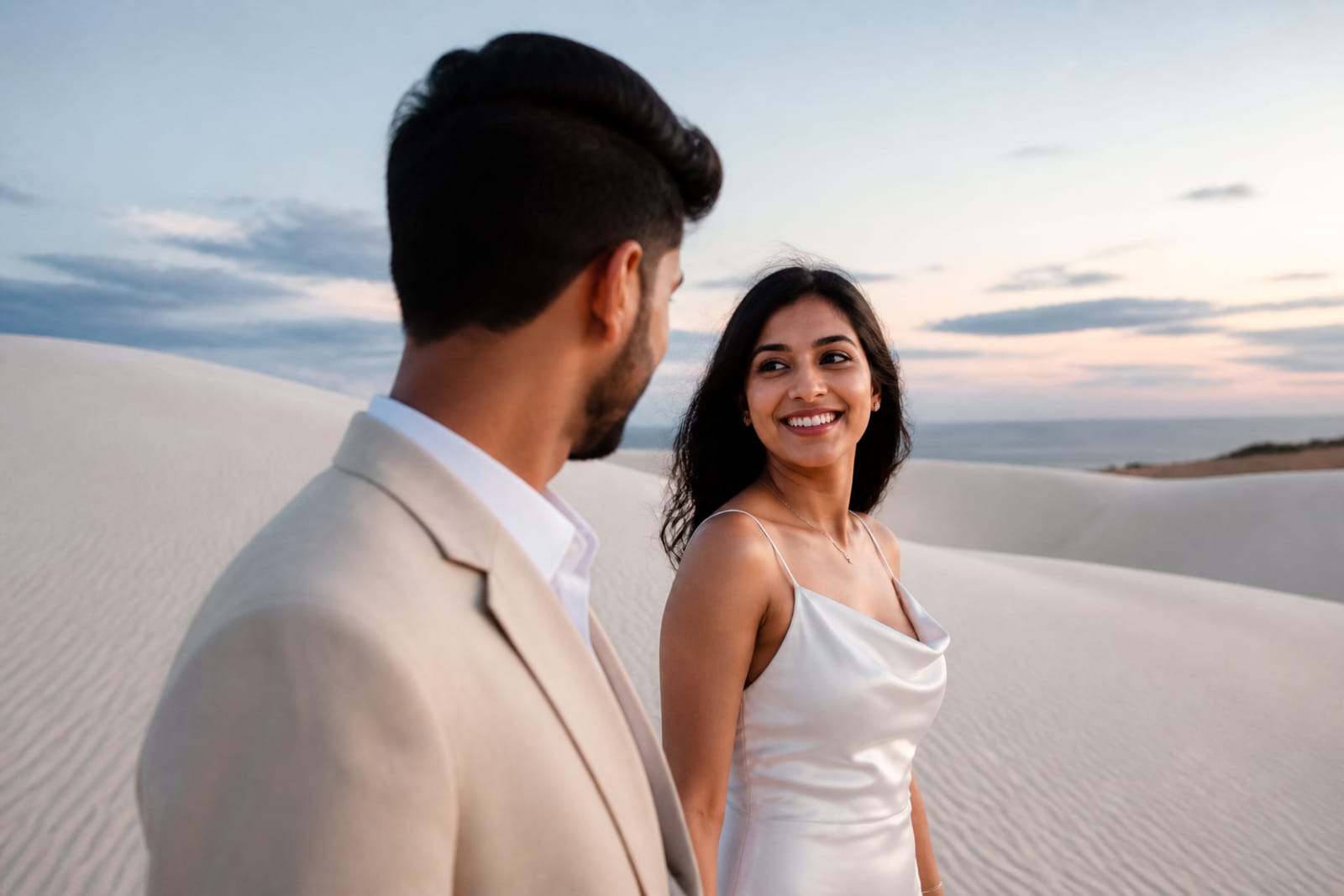
What light conditions and timing should you expect in March?
Sunrise (6–6:45 am) is non-negotiable: the dunes glow in soft, directional side light that sculpts sand and flatters skin. By 8 am, the light hardens and the wind often strengthens, making sand difficult to manage and makeup vulnerable to drift. The Fairy Stream and red canyons hold cooler shade longer, working well 6:30–10 am. Mid-day (10 am–3 pm) is harsh; avoid it unless you're seeking deep shadow contrast or shooting near water for reflection. After 4 pm, coastal light softens and becomes diffuse, ideal for gentle couple frames near beaches or salt fields—but only if the sky is clear (check forecast daily). Wind is moderate in March but unpredictable; locals scout the previous evening to predict the next day's conditions. Plan your shoot timeline backward from sunrise, allowing 90–120 minutes on location to capture multiple looks without rushing.
Conclusion: Early morning delivers the soft, sculptural light that makes Mui Ne iconic; afternoon works only on calm, clear days near the coast.
How do crowds and logistics differ from peak season?
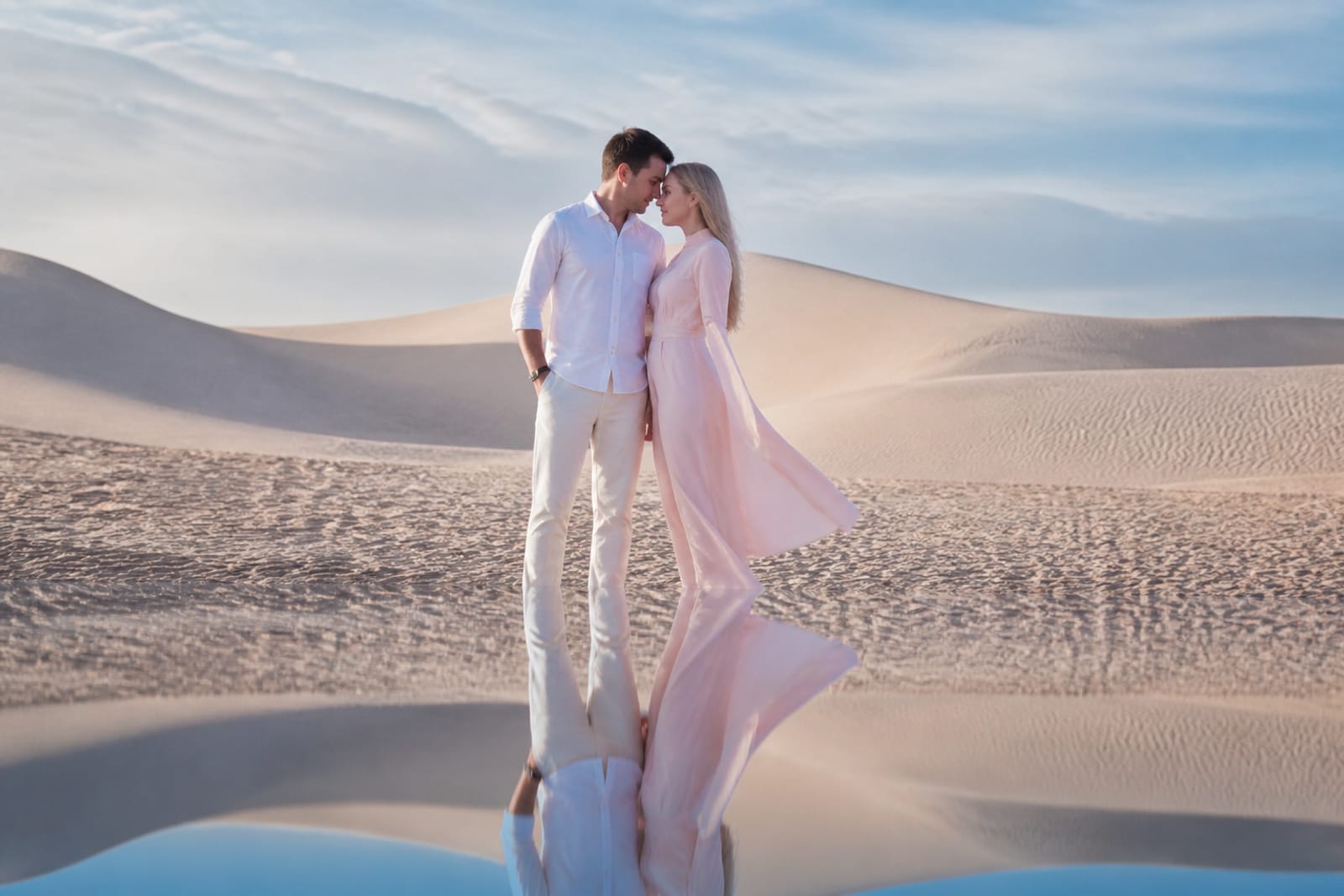
March sits between the busy dry months (Dec–Feb with holiday travellers) and the quiet shoulder (Apr–May, before monsoon humidity rises). Domestic tourists peak on weekends; expect moderate crowds at the main dune areas by 8 am. The Fairy Stream and red canyons are less crowded than the dunes proper. Accommodation and food services operate normally—unlike January, when Tet closures affect some vendors. Transportation: hire a private car with driver (arranged through your hotel) rather than motorbikes; you'll need hands free for makeup and outfit changes, and a vehicle keeps gear safe and cool. Parking fees are minimal; ask locally on arrival. The tide matters: low tide widens beaches and creates cleaner, firmer sand for walking; high tide limits beach shooting but creates mirror reflections. Check tidal charts for your shoot dates and coordinate timing with your photographer.
Conclusion: March balances accessibility with fewer crowds; book private transport and confirm tides 1–2 days before your shoot.
| Scenario | Best for | Light/Season | Why it works |
|---|---|---|---|
| Sunrise dune shoot, single look | Cinematic, minimal crowd risk | 6–6:45 am, clear sky | Soft side light, minimal wind, few tourists |
| Fairy Stream + dune combo | Diverse landscape, romantic | 7–10 am, mixed shade & open | Contrasts texture; shade protects makeup longer |
| Beach + salt fields afternoon | Soft, diffuse mood | 4–5 pm, no wind forecast | Golden hour reflections, gentle light |
| Red canyon at sunrise | Rich color, dramatic framing | 6:30–8 am, side light | Natural red earth intensifies in warm light |
How do you find and vet a local Mui Ne photographer?
Cáo Studio does not operate in Mui Ne; you'll need a local photographer familiar with the dunes, light windows and wind patterns. Search Instagram hashtags #muinenewedding, #muinecouples and #muinephotographer to review portfolios; look for sharp early-morning dune work and consistent color grading. Ask your hotel concierge or tour operator for referrals—many recommend trusted names. Interview the photographer 2–3 weeks ahead: confirm they shoot in your style (cinematic, romantic, journalistic), they're available March dates without conflicts and they know March light and crowds. Request a detailed shot list (wide dune landscape, medium couple frames, detail—dress/ring/hands) and clarify how many outfits and locations fit your timeline. Discuss backup weather plans—most photographers have indoor or sheltered alternatives if storms hit (rare in March, but possible). Confirm delivery (edited photos, any video or album) and payment terms (typically 50% deposit, balance on delivery). A half-day session (4–5 hours, two locations) is standard; full-day shoots cover more ground and light changes.
Conclusion: Vet portfolio, chemistry and March-specific experience; confirm shot list and backup plans before committing.
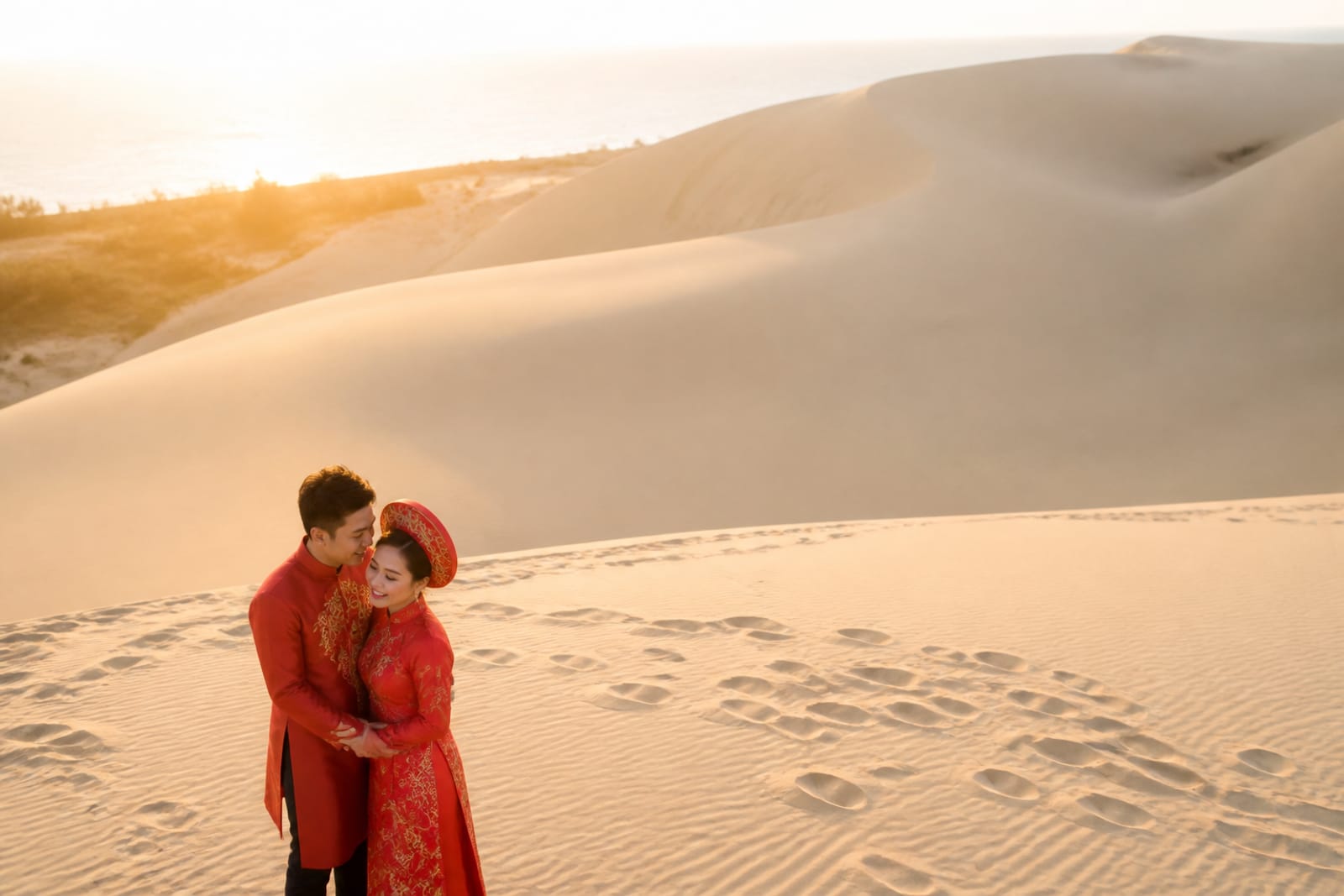
What should you wear and prepare for March conditions?
Wedding ao dai is ideal: the traditional dress photographs beautifully against dunes and won't trap heat like Western gowns. If wearing Western dress, consider a lighter fabric (silk, chiffon, cotton blends) and avoid heavy trains that drag in sand and wind. Bring a cover-up or light robe for transitions between outfits—March is warm but wind cools quickly at sunrise. Undergarments matter: go minimal (adhesive bra, seamless briefs) to avoid visible lines and allow movement. Shoes: plan to remove them for dune shots (sand is firm in early morning, warming and softening later); bring sandals or slip-ons for quick changes. Hair and makeup: book touch-ups during the shoot if possible (many photographers coordinate with local artists). Bring a makeup bag with powder, lipstick and blotting sheets; wind and early-morning shade mean makeup lasts longer, but touch-ups help by hour three. Pack SPF 30+ (reapply often if you're barefoot on reflective sand), a small mirror and water. For the groom: lightweight suits or ao dai over linen trousers work well; avoid heavy fabrics that wrinkle and absorb heat.
Conclusion: Light fabrics, minimal undergarments and early-morning timing keep you comfortable and camera-ready for four-plus hours.
📸 Book on WhatsApp — ao dai photoshoot | 💄 Makeup & hair at your hotel | 🌸 See the lookbook
How does a Mui Ne pre-wedding shoot compare to shooting elsewhere in Vietnam?
If you're choosing between Mui Ne and other pre-wedding destinations, consider your aesthetic and timeline. Hanoi and Ho Chi Minh City (where Cáo Studio operates and Saigon) offer urban, cultural frames with temples, old quarters and reliable services year-round; they suit couples who want both location variety and professional crew in one team. Hoi An (central coast, where Cáo Studio travels by appointment) delivers ancient town charm, lanterns and riverside light similar to Mui Ne's romantic mood, with drier weather Feb–Aug. Mui Ne excels if you prioritize dramatic landscape and solitude—dunes are photogenic but require early rising, a patient local photographer and flexibility around wind. Mui Ne lacks the infrastructure of larger cities: fewer backup vendors, fewer makeup artists, no studio backup on bad-weather days. If you want one unified team (photographer, makeup, hair, styling) coordinating every detail, Cáo Studio's pre-wedding service in Hanoi or Saigon removes logistics friction. If Mui Ne's landscape is non-negotiable, budget extra lead time (6–8 weeks) to vet and confirm a local photographer, and build in contingency—bad wind or unexpected weather can shift timing significantly.
Conclusion: Mui Ne suits couples prioritizing landscape drama; larger cities offer convenience and one-team coordination.
📸 Book on WhatsApp — ao dai photoshoot | 💄 Makeup & hair at your hotel | 🌸 See the lookbook
---
What to check before you book a pre-wedding shoot in Mui Ne
- Photographer portfolio: Review at least 10 March or dry-season images; prioritize sharp early-morning dune work and consistent editing.
- Availability & backup plan: Confirm your exact dates are free; ask about weather contingencies and rescheduling terms.
- Shot list alignment: Request a detailed breakdown (landscapes, couple frames, details, changes); ensure it matches your vision and timeline.
- Delivery & timeline: Clarify how many edited photos you receive, any video/album, and when they'll be ready (typically 2–4 weeks).
- Weather & tide coordination: Ask the photographer to send a detailed timing plan 1–2 days before, based on sunrise, wind forecast and tide.
- Payment terms: Agree on deposit, balance due and cancellation policy in writing before signing.
- Local logistics: Confirm who arranges transport, parking, makeup touch-ups and any permits (rarely needed, but ask).
---
#
FAQ
Is March really the best month to shoot pre-wedding photos in Mui Ne?
Yes. The dry season (Nov–Apr) guarantees low rainfall and stable light; March specifically balances dry weather with moderate crowds and manageable wind. Earlier months (Dec–Feb) attract more tourists; later (Apr+) temperatures and humidity rise sharply, making long shoots uncomfortable.
What time should we plan to start the shoot?
Sunrise is essential—aim for 6–6:45 am on location. Sand is firmer, light is soft and directional, and crowds are minimal. By 8 am, wind often strengthens and light hardens. If afternoon shooting, wait until after 4 pm for soft coastal light, and only if the forecast shows calm conditions.
Do we need to hire a local photographer, or can we travel with our own?
Hiring a local photographer is wise: they know the dunes' light windows, tidal schedules, wind patterns and backup locations. If you travel with a photographer unfamiliar to Mui Ne, allow extra time for location scouting. Cáo Studio operates in Hanoi, Saigon and Hoi An; for Mui Ne, book a local photographer with a strong dry-season portfolio.
What should we wear to stay comfortable and look good on camera?
An ao dai is ideal and photographs beautifully. If wearing a Western gown, choose lightweight fabrics (silk, chiffon). Avoid heavy trains that drag in sand; go minimal with undergarments to avoid visible lines. Remove shoes for dune shots; bring sandals for transitions. Pack SPF, a makeup touch-up kit and water.
How do we handle wind and sand on our wedding outfit and makeup?
March wind is moderate but unpredictable. Bring a makeup kit with powder, lipstick and blotting sheets for mid-shoot touch-ups. For dresses, light fabrics and minimal layers help. Coordinate with your photographer: they'll scout conditions the evening before and adjust timing if needed. Tie long hair back or in braids; sand tangles easily in loose waves.
What if the weather turns bad on our shoot day?
Rain is rare in March (under 10 mm typical), but storms happen. Confirm your photographer's backup plan: many have indoor locations (cafés, hotels) or rescheduling clauses. Discuss contingencies in advance, including rescheduling dates and refund terms, so you're not caught off-guard.
Do we need permits to shoot at the dunes or Fairy Stream?
No formal permits are required for most dune locations or the Fairy Stream. Confirm locally with your hotel or photographer on arrival—rules can change. Some private resorts may ask permission; your photographer should handle this as part of their local knowledge.
How long should we book for, and how many locations can we cover?
A half-day session (4–5 hours, two locations—e.g., dunes and Fairy Stream) is standard. This allows sunrise dune shooting (1.5–2 hours) and a second location later morning when light is still soft. Full-day shoots cover more ground and light changes but require extra energy for outdoor time in March heat.
FAQ
Is March really the best month to shoot pre-wedding photos in Mui Ne?
Yes. The dry season (Nov–Apr) guarantees low rainfall and stable light; March specifically balances dry weather with moderate crowds and manageable wind. Earlier months (Dec–Feb) attract more tourists; later (Apr+) temperatures and humidity rise sharply, making long shoots uncomfortable.
What time should we plan to start the shoot?
Sunrise is essential—aim for 6–6:45 am on location. Sand is firmer, light is soft and directional, and crowds are minimal. By 8 am, wind often strengthens and light hardens. If afternoon shooting, wait until after 4 pm for soft coastal light, and only if the forecast shows calm conditions.
Do we need to hire a local photographer, or can we travel with our own?
Hiring a local photographer is wise: they know the dunes' light windows, tidal schedules, wind patterns and backup locations. If you travel with a photographer unfamiliar to Mui Ne, allow extra time for location scouting. Cáo Studio operates in Hanoi, Saigon and Hoi An; for Mui Ne, book a local photographer with a strong dry-season portfolio.
What should we wear to stay comfortable and look good on camera?
An ao dai is ideal and photographs beautifully. If wearing a Western gown, choose lightweight fabrics (silk, chiffon). Avoid heavy trains that drag in sand; go minimal with undergarments to avoid visible lines. Remove shoes for dune shots; bring sandals for transitions. Pack SPF, a makeup touch-up kit and water.
How do we handle wind and sand on our wedding outfit and makeup?
March wind is moderate but unpredictable. Bring a makeup kit with powder, lipstick and blotting sheets for mid-shoot touch-ups. For dresses, light fabrics and minimal layers help. Coordinate with your photographer: they'll scout conditions the evening before and adjust timing if needed. Tie long hair back or in braids; sand tangles easily in loose waves.
What if the weather turns bad on our shoot day?
Rain is rare in March (under 10 mm typical), but storms happen. Confirm your photographer's backup plan: many have indoor locations (cafés, hotels) or rescheduling clauses. Discuss contingencies in advance, including rescheduling dates and refund terms, so you're not caught off-guard.
Do we need permits to shoot at the dunes or Fairy Stream?
No formal permits are required for most dune locations or the Fairy Stream. Confirm locally with your hotel or photographer on arrival—rules can change. Some private resorts may ask permission; your photographer should handle this as part of their local knowledge.
How long should we book for, and how many locations can we cover?
A half-day session (4–5 hours, two locations—e.g., dunes and Fairy Stream) is standard. This allows sunrise dune shooting (1.5–2 hours) and a second location later morning when light is still soft. Full-day shoots cover more ground and light changes but require extra energy for outdoor time in March heat.
Ao dai, makeup, hair and a local photographer in Hanoi or Saigon — one WhatsApp message.