/pre-wedding-photoshoot
Pre-wedding photoshoot in Nha Trang in February: weather, light and cr
February in Nha Trang is the driest, sunniest month of the year—no afternoon downpours, calm seas and soft light from sunrise to late afternoon. The weather is warm (around 25–28°C) and stable, making it ideal for a pre-wedding photoshoot where you're outdoors for 4–6 hours. Crowds are light because it's between peak winter tourism and Tet (Lunar New Year, which falls late January to mid-February). A typical session runs from early morning—catching the bay at sunrise—through the golden hour before sunset, shooting at temples, beaches, markets and bridges. You'll need one fast, local team: a photographer, makeup artist and stylist who know Nha Trang's light and logistics. Cáo Studio does not operate in Nha Trang; book a local photographer (ask for portfolios showing real light, not posed stiffness) and coordinate hair and makeup separately, or choose to shoot in Hanoi, Hoi An or Ho Chi Minh City, where Cáo Studio handles everything in one booking. 📸 Book on WhatsApp — pre-wedding photoshoot
Why is February the best month for pre-wedding shoots in Nha Trang?
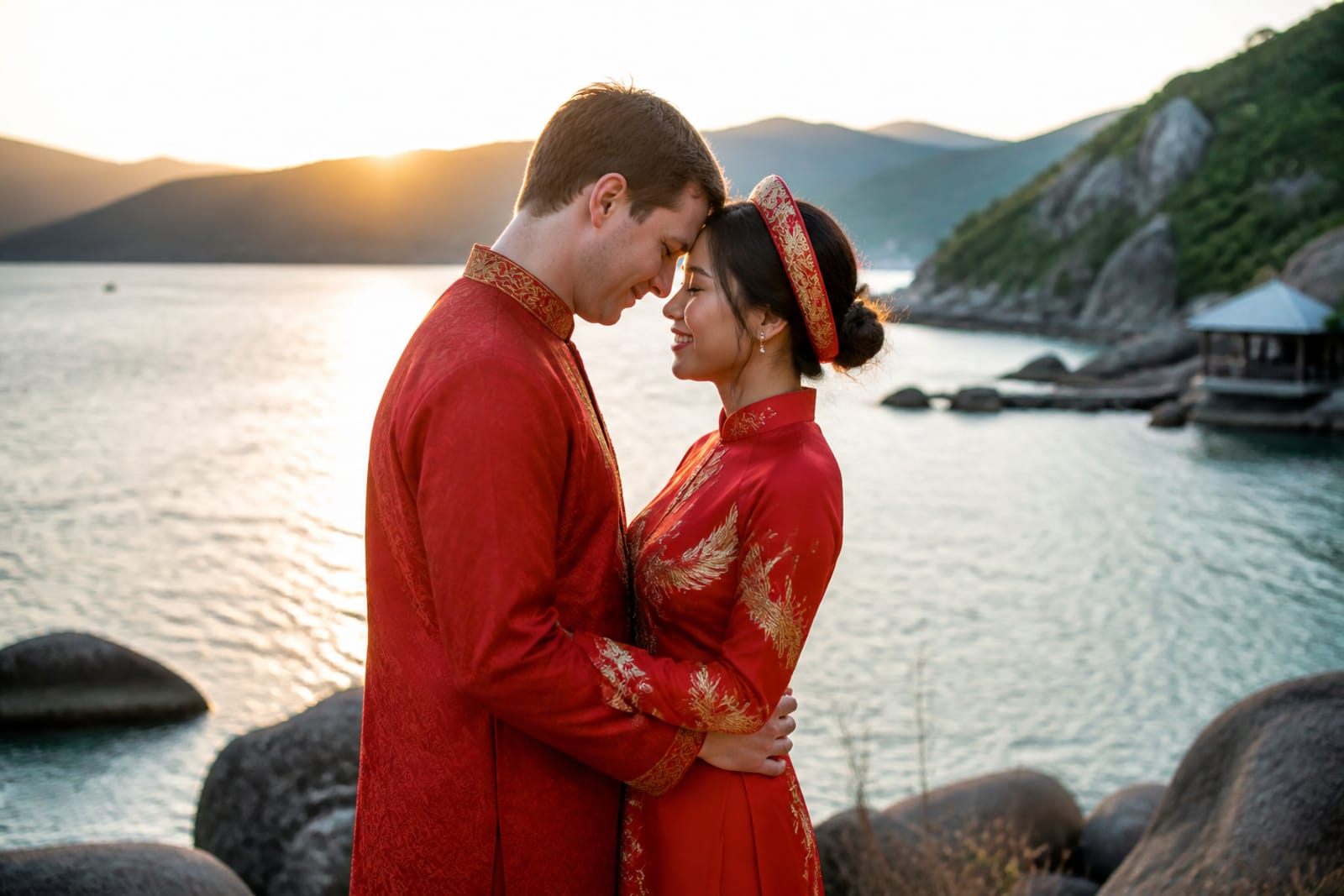
February sits in Nha Trang's dry season (Jan–Aug), when the sky is clear, the sea is calm and rain is rare. Water temperature hovers around 24–26°C—cold for swimming but perfect for wading shots without visible shivering. Winds are minimal, so your hair and dress stay in frame. Most importantly, the light is direct and golden from 6–10 am and again from 3 pm onwards, giving you eight hours of usable natural light per day. This differs sharply from October–November, when typhoons arrive and afternoon skies darken by 2 pm. For a pre-wedding session, February means fewer retakes, faster editing and frames that feel genuinely lit, not salvaged. Plan a February shoot and you control the weather; plan November and you're gambling.
What are the best photo locations and their light windows?
Nha Trang Bay offers distinct zones. Sunrise (6:10–7:00 am): the waterfront promenade facing the bay to the east; soft side light hits the water, your silhouette reads clean. Best for walking shots, couple's profiles. Late morning (9:30–11:30 am): Nha Trang Cathedral (bright limestone, hard shadow beneath arches—shoot the shaded side, meter the highlights), Ponagar Cham Towers (stone textures, lichen details, hard side light). Midday (12–2 pm): overhead sun is harsh; retreat to shaded market alleyways (Con Market, covered fish market—warm tungsten-toned light, intimate framing) or temple interiors. Golden hour (4–5:30 pm): Hon Chong Promontory (granite rocks, wave spray, low angle light, backlit edges). Sunset (5:30–6:30 pm): the pier at Cau Da or fishing village walks—silhouette frames if you want them, or expose for the sky and let faces fall soft. Each zone requires a different outfit and mental shift; plan three locations (morning, midday, evening) into one session so you're not racing the light.
How do crowds and Tet affect your February booking?
Early February (before Lunar New Year, typically Jan 29–Feb 12 in 2026) is nearly empty: locals are preparing, not holidaying, and Western tourists haven't arrived. Mid-to-late February (after Tet holidays end) sees a gentle rise in backpackers and honeymooners, but nothing like March–April. Popular spots (the bay promenade, the cathedral) host morning joggers and selfie-takers from 7–8:30 am, then quiet again by 9 am. Booking a session before 8 am or after 4 pm keeps you ahead of foot traffic. If you book during Tet week (typically late Jan–early Feb), expect many services—hair salons, restaurants, transport—to be closed or understaffed for 2–5 days. Avoid the Tet week itself; aim for early February (Feb 1–10) or late February (Feb 16–28) for smooth logistics and empty frames.
What should you wear and how does the climate affect outfit choice?
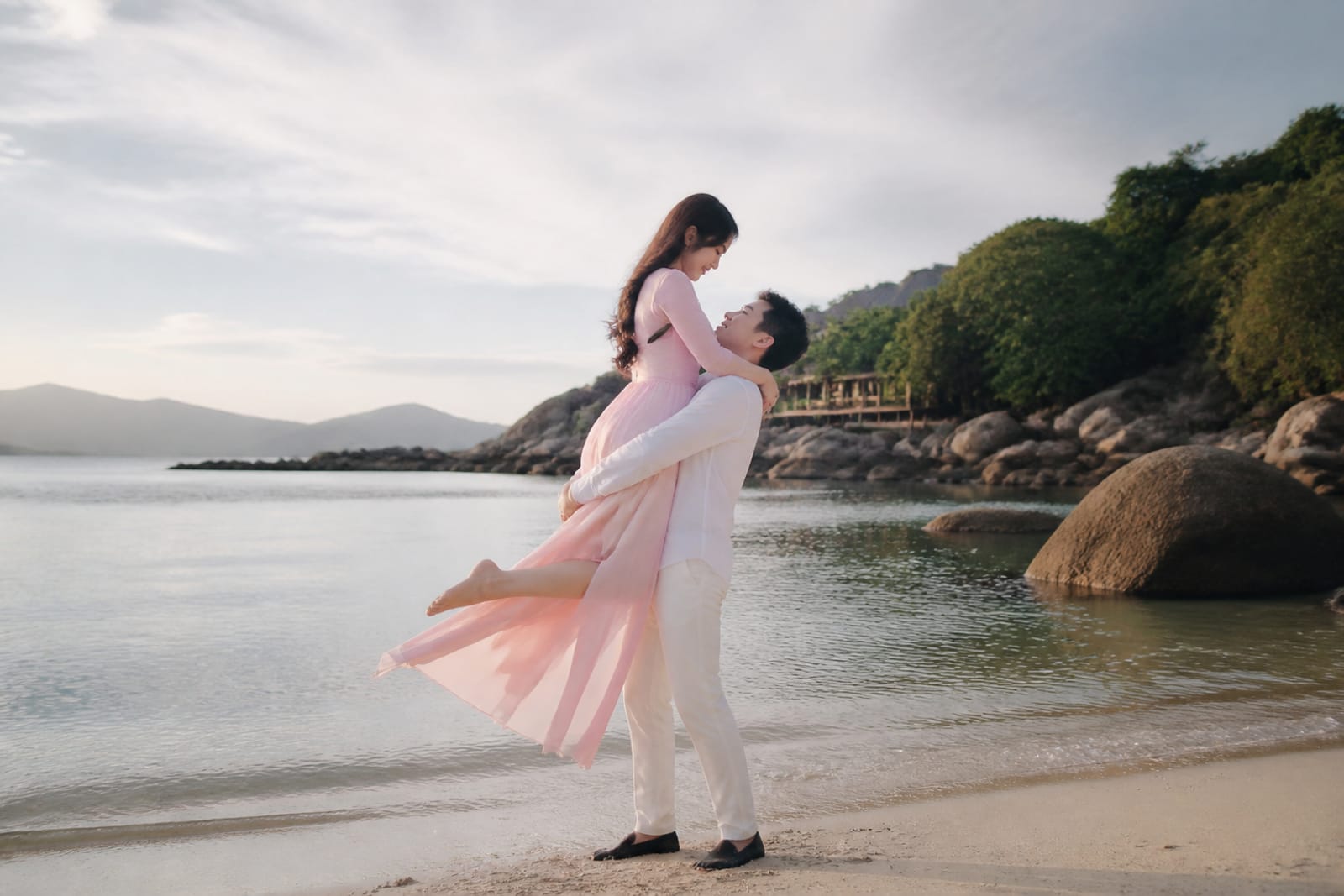
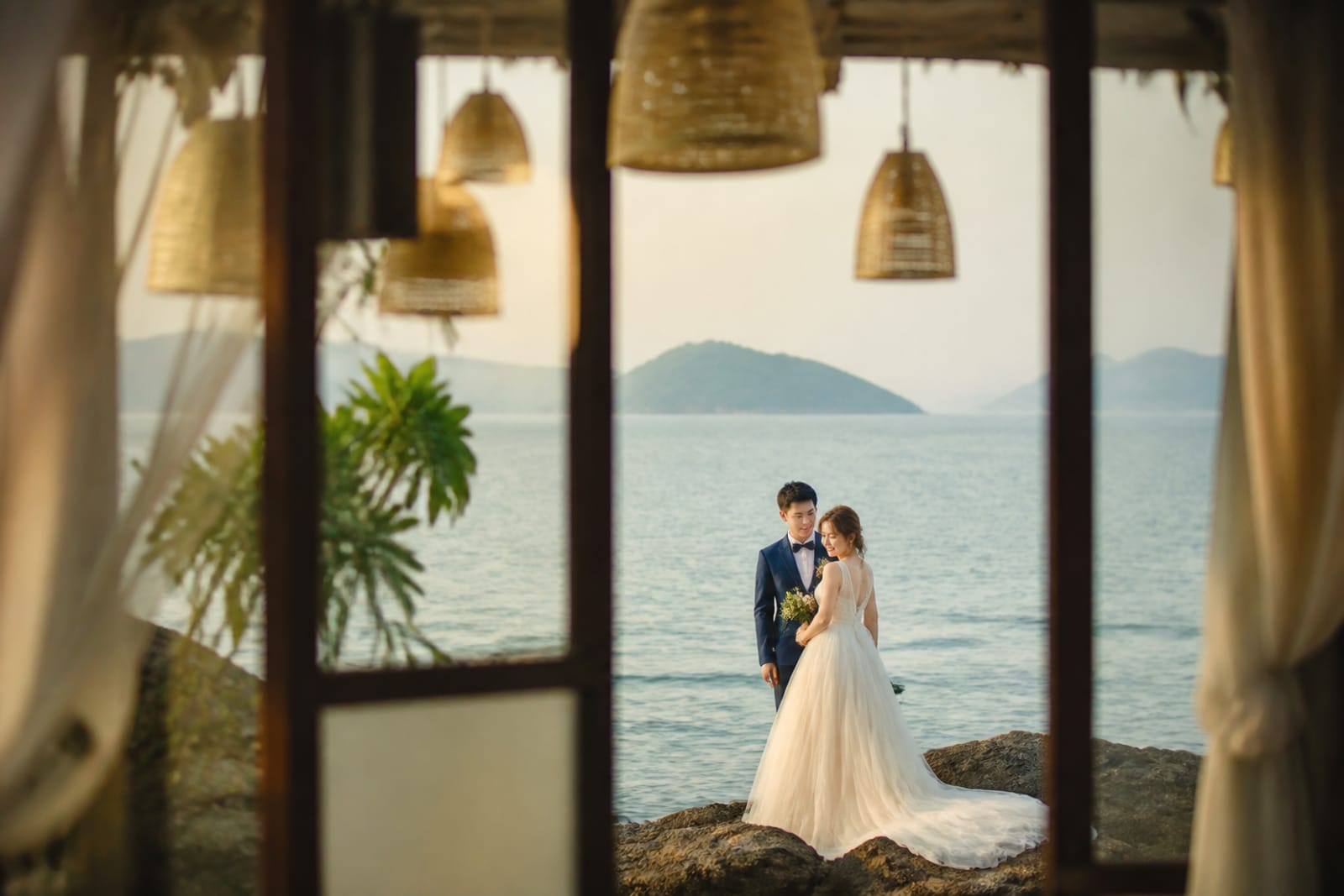
An ao dai (traditional Vietnamese dress) photographs beautifully in February's stable light and pairs perfectly with Nha Trang's colonial architecture and fishing heritage—the silk catches the dawn glow and the silhouette reads clean against water and stone. However, February's sea breeze can be strong near the bay, pulling the fabric sideways; choose a fitted, structured ao dai over a loose, flowy cut, or hire a local seamstress to take in the seams for this shoot. For Western wedding dress, February's humidity (around 70%) is manageable—fabric won't cling as it does in May–September. Bare shoulders and sleeveless silhouettes work well in sunrise (6–7 am) and evening (5–6:30 pm) without visible sweat; long sleeves or heavy layering will feel uncomfortable by 11 am. Pack a thin shawl or silk scarf for temple visits (required for respectful coverage). Leather shoes risk getting wet in waterfront shoots; bring sandals or go barefoot. Consider renting an ao dai locally (ask the photographer for a trusted tailor) rather than transporting one internationally—Nha Trang seamstresses know how to fit the silhouette for water and wind on the same day.
| Outfit choice | Best season | February light | Why it works |
|---|---|---|---|
| Ao dai (silk) | Nov–Mar | 6–10 am, 3–5 pm (golden, side light) | Fabric glows; silhouette reads against water |
| Western wedding dress (sleeveless) | Nov–Mar | Sunrise, golden hour (cooler hours) | No visible sweat; clear fabric texture |
| Casual linen/cotton (couple session) | Nov–Mar | All day (soft overcast possible) | Breathable; forgiving in humidity |
| Heavy fabrics (velvet, satin) | Dec–Jan only | Morning only (too warm by 11 am) | Risk of wrinkles, visible perspiration by midday |
How do you find and vet a local photographer for a Nha Trang pre-wedding shoot?
Cáo Studio does not operate in Nha Trang, so you'll book a local photographer directly. Start by requesting portfolios specifically labeled "pre-wedding" or "couple"—not just weddings. Look for images shot in natural light outdoors; if 80% of their work is studio or indoor, they may not know how to read Nha Trang's waterfront light. Ask to see February or March shoots (warm season light)—avoid portfolios dominated by sunset silhouettes or over-processed colors, which hide poor exposure technique. Request a site visit: a real pre-wedding team will scout the location with you, noting light angles at your chosen hour, identifying backup spots if weather shifts, and discussing outfit and hair in relation to the actual backdrop. Ask directly: "How will you frame the shot if the sun is in the western sky at 5 pm?" If they say "we'll use a reflector" or "edit it later," they're not thinking like a director. Interview at least two photographers; the best one will ask you questions about the mood, the outfit and why February matters to you, not just quote a price. Check that they deliver edited photos within 48 hours and can produce a short vertical film (useful for announcements) if you need it. Get references from couples who shot in the same month and location.
What to check before you book a pre-wedding session in Nha Trang.
- Photographer's February portfolio: at least three full pre-wedding shoots shot in February or similar dry-season month, outdoors, in natural light.
- Makeup and hair logistics: Are they included in one booking, or do you hire separately? If separate, confirm both are available on your shoot date (many close mid-week).
- Outfit rental or transport: Does the photographer know local ao dai rental? If you're bringing a dress, ask about steaming and storage at their studio the day before.
- Backup weather plan: Confirm what happens if seas are too rough (alternative locations?) or if early-morning clouds delay sunrise shooting.
- Delivery timeline: Insist on edited photos within 48–72 hours; longer delays mean your vacation ends before you see the frames.
- Payment and copyright: Clarify: do you own the digital files? Can you print and share freely? Are reshoots included if you're unhappy?
- Permit or access issues: Some temples and monuments require photography permits (rare but possible); ask the photographer if they'll handle this.
---
If you're open to shooting in a destination where Cáo Studio operates, consider Hanoi, Hoi An or Ho Chi Minh City instead. One team handles everything—photography, makeup, hair and styling—so the session flows smoothly, your vision stays consistent and you receive edited photos plus a film in 48 hours. No juggling three vendors. See our lookbook for examples of how a unified team approaches light and framing. For pricing and package details, book a WhatsApp consultation.
FAQ
Is February warm enough for a sleeveless dress in Nha Trang?
Yes. February averages 25–28°C daytime, with 70% humidity. Sleeveless dresses work well during sunrise (6–8 am) and golden hour (4–6 pm); avoid midday exposure if the wearer is uncomfortable in heat. Fabric type matters—silk dries faster than cotton if you wade.
Will my ao dai get damaged if I walk in the sea in February?
Traditional ao dai silk is delicate and salt water fades the dye. Rent a fitted ao dai locally (Nha Trang has skilled seamstresses) for water shots, or hire a backup. Always rinse silk immediately in fresh water. If you're bringing your own dress, keep it for land shots only.
How early should I book a pre-wedding session for February in Nha Trang?
Book 4–6 weeks ahead. February is the peak dry season; experienced photographers fill up by mid-January. Early booking also gives the photographer time to scout locations and coordinate hair/makeup with you.
What if there's a cloud cover on my shoot day in February?
February cloud cover is rare but possible—ask the photographer what alternative spots they'll use and whether you can reschedule one time for free. Overcast skies actually diffuse light beautifully for close portraits; don't assume clouds ruin the session.
Should I hire a videographer separately or ask the photographer?
Ask if your photographer can also produce a short vertical film (60–90 seconds). Many do this as part of the package. If you need a dedicated videographer, hire them as a second camera operator—one team works better than two separate vendors, even in Nha Trang.
Can I shoot in both ao dai and a Western dress in one session?
Yes, but plan outfit changes carefully. Each outfit needs 20–30 minutes (hair touch-up, makeup refresh, travel between locations). A 6-hour session can comfortably cover two outfits if you change during the midday lull (12–2 pm, when light is harshest anyway).
FAQ
Is February warm enough for a sleeveless dress in Nha Trang?
Yes. February averages 25–28°C daytime, with 70% humidity. Sleeveless dresses work well during sunrise (6–8 am) and golden hour (4–6 pm); avoid midday exposure if the wearer is uncomfortable in heat. Fabric type matters—silk dries faster than cotton if you wade.
Will my ao dai get damaged if I walk in the sea in February?
Traditional ao dai silk is delicate and salt water fades the dye. Rent a fitted ao dai locally (Nha Trang has skilled seamstresses) for water shots, or hire a backup. Always rinse silk immediately in fresh water. If you're bringing your own dress, keep it for land shots only.
How early should I book a pre-wedding session for February in Nha Trang?
Book 4–6 weeks ahead. February is the peak dry season; experienced photographers fill up by mid-January. Early booking also gives the photographer time to scout locations and coordinate hair/makeup with you.
What if there's a cloud cover on my shoot day in February?
February cloud cover is rare but possible—ask the photographer what alternative spots they'll use and whether you can reschedule one time for free. Overcast skies actually diffuse light beautifully for close portraits; don't assume clouds ruin the session.
Should I hire a videographer separately or ask the photographer?
Ask if your photographer can also produce a short vertical film (60–90 seconds). Many do this as part of the package. If you need a dedicated videographer, hire them as a second camera operator—one team works better than two separate vendors, even in Nha Trang.
Can I shoot in both ao dai and a Western dress in one session?
Yes, but plan outfit changes carefully. Each outfit needs 20–30 minutes (hair touch-up, makeup refresh, travel between locations). A 6-hour session can comfortably cover two outfits if you change during the midday lull (12–2 pm, when light is harshest anyway).
Ao dai, makeup, hair and a local photographer in Hanoi or Saigon — one WhatsApp message.