/pre-wedding-photoshoot
Pre-wedding photoshoot in Ninh Binh for Japanese couples
Ninh Binh's pre-wedding shoots combine ao dai rentals with iconic karst and rice-field light. The landscape spans three zones—Hang Mua (500 stone steps, misty mornings, best Mar–May and Sep–Nov), Trang An boat trips (rowed by local operators, softer light), and working rice paddies (golden late May–early June and Sep–Oct). Sessions run 2–4 hours on foot or via boat; Japanese couples value the quieter temples and layered backgrounds. Cáo Studio – Makeup & Photoshoot operates from Hanoi; coordination for Ninh Binh travel can be arranged on WhatsApp. Local photographers are available year-round, but avoid the Dec–Feb grey season and Jun–Aug heat unless you want that mood. Plan outfits for climbing (trainers under long skirts), moisture-wicking layers, and temple etiquette (shoulders covered, no shoes inside). Check the photographer's contract for copyright, edit timelines, and bad-weather refund policy before committing. ---
Why Japanese couples choose Ninh Binh over Ha Long or Hoi An
Japanese aesthetic favors layered depth and restraint—Ninh Binh delivers both. The karst peaks create natural framing without the crowded cruise-ship feel of Ha Long; temple grounds offer intimate spiritual symbolism absent from beach destinations. Hoi An's ancient town works for ao dai, but Ninh Binh's scale—open fields, mist, silence at dawn—aligns with Japanese compositional tradition (ma, negative space, seasonal specificity). The landscape changes dramatically month to month, letting couples time a shoot to their emotional narrative rather than a fixed venue. Local boat operators and guides speak minimal English, which some Japanese couples see as authentically Vietnamese rather than tourist-friendly—a deliberate aesthetic choice.
🌸 See the lookbook | 💄 Makeup & hair at your hotel
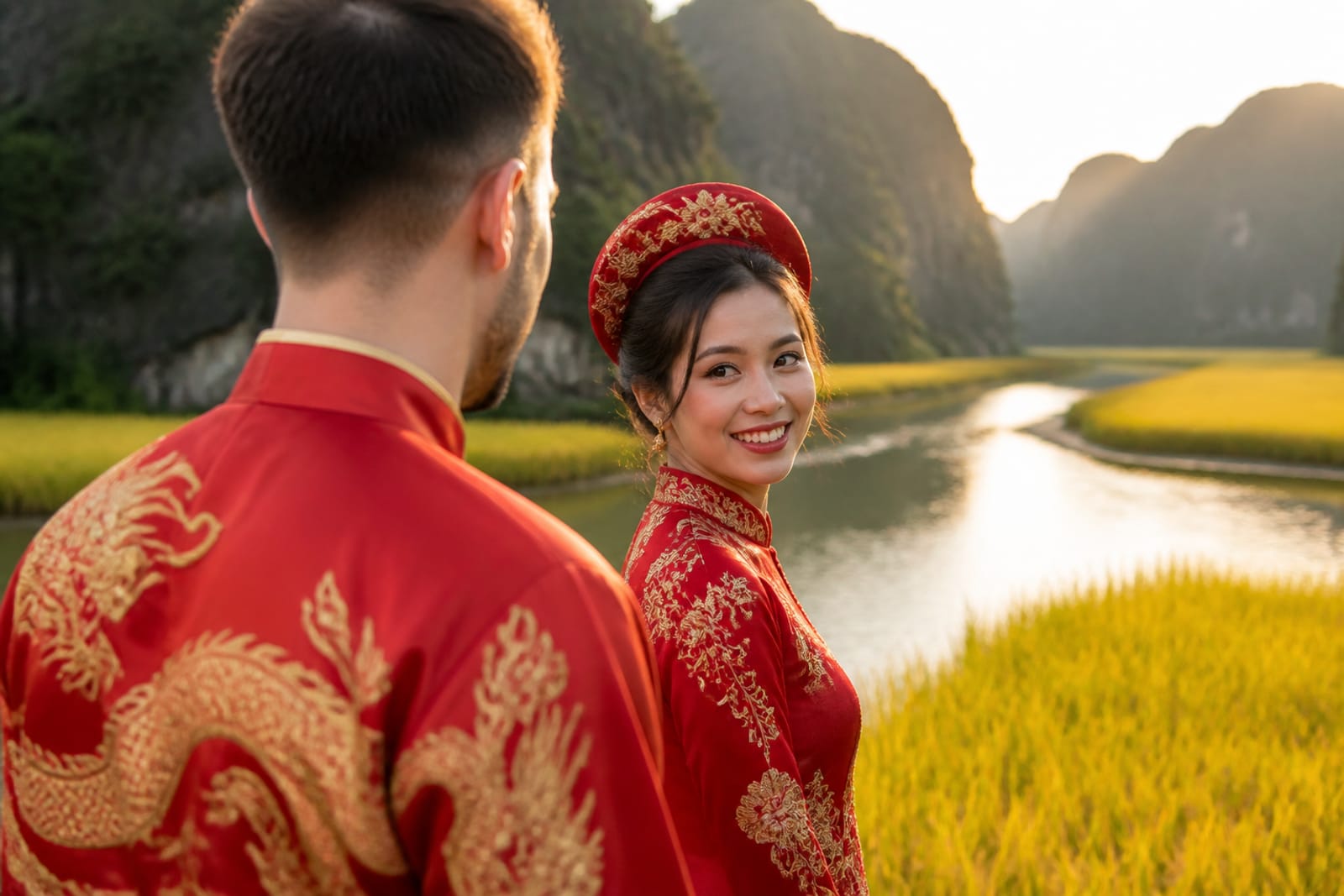
What does the season mean for light, rice color, and crowds?
| Season | Rice state | Light quality | Crowds | Best for | Walking & heat |
|---|---|---|---|---|---|
| Dec–Feb | Harvested, stubble/brown | Soft, grey, low contrast | Lightest | Moody, minimal crowds | Cool, windy; grey skies suit somber tones |
| Mar–May | Planting, young green | Clear, golden morning (5–7 am), harsh noon | Moderate | Color saturation, green depth, sharp silhouettes | Warm; 6–8 am optimal; trainers essential |
| Jun–Aug | Mature; mid-summer rice | Hot, humid; afternoon storms; flat, saturated light | Lightest (locals avoid heat) | Lush textures if you embrace overcast; moody storms | Exhausting heat; afternoon downpours; avoid 11 am–4 pm |
| Sep–Oct | Second crop; pre-harvest golden | Clear mornings, typhoon/flood risk late Oct–Nov | Moderate to high (post-monsoon beauty draws visitors) | Golden ao dai against golden rice; sharp shadows; risk of wet grounds | Warm but drier; 5–7 am essential; check weather daily |
Mar–May and Sep–Nov are genuinely most comfortable for shooting. Avoid Oct–Nov rain and Jun–Aug heat unless you want storm texture or moody light.
📸 Book on WhatsApp — ao dai photoshoot
How do you choose between climbing Hang Mua, boat trips at Trang An, or field-only sessions?
Hang Mua demands 500 stone steps; plan for 90 minutes up (photo at top, 30 min), 60 down. Best for couples who want dramatic solo-couple isolation and don't mind exertion. Wear flat trainers, test them before—wet stone is slick. Early morning (5–6 am start) beats crowds and catches mist. Ao dai must fit loosely over trainers; skirt hems drag and catch on steps, so consider a modern split-front rental or a shorter length. Photography becomes harder during climb; a guide or second shooter helps. Risk: unpredictable crowds arrive by 8 am.
Trang An boat trips are rowed by local operators through limestone tunnels and calm water. Takes 2–3 hours total; light is soft, reflective, and flatters skin tone. No climbing; gentler on formal footwear. Ao dai sits better on a boat (fabric pools naturally), and the motion creates candid moments. Risk: boat schedules are fixed; you don't control shooting windows. Weather affects rowing difficulty; river levels rise in Jun–Aug.
Rice fields + temples (Mua Caves area, Hang Mua base, or Bich Dong pagoda) combine walking (45–90 min total) with intimate spiritual settings. Light is directional and changeable. Flexible timing. Risk: no shade; heat reflects off water during irrigation. Temple etiquette is non-negotiable (see below).
Choose based on: couple fitness (Hang Mua is steep), comfort with water (boat), and mood (moody/dramatic vs. soft/reflective). Many couples combine two (e.g., field at sunrise, Trang An by late morning).
What's the truth about ao dai fit, layers, and temple etiquette?
An ao dai is a two-piece silk tunic (top) and high-waisted pants. Worn over a long underslip (provided by rental shops), it's modest but also formal—not intimate-wear styling. Japanese brides often layer a thin turtleneck or long-sleeve mesh under the tunic for warmth (Ninh Binh mornings are cool Mar–May) and to avoid visible undergarments in close-up shots. Some grooms pair ao dai with trainers (tucked under the tunic hem) for climbing; confirm this with the rental shop—not all shops allow it.
Temple etiquette:
- Remove shoes at thresholds; a staff member will stop you.
- Shoulders, midriff, and thighs must be covered. Ao dai meets this; but remove any strappy accessories.
- Don't point at altars or touch statues.
- Bowing is respectful; photography is usually allowed in outer areas, ask staff in inner sanctums.
- Early morning (6–7 am) or late afternoon (4–5 pm) sees fewer worshippers and softer light—also fewer crowds.
Rental shops in Ninh Binh town (near Hang Mua entrance, Trang An office) offer same-day ao dai pickup and return. Prices vary by fabric (cotton vs. silk) and embroidery—ask on WhatsApp for current rates. Most rentals include alterations (hems, waistband). Bring exact shoes you'll wear to the fitting; hidden hems and trainers shift the silhouette. For Japanese couples, many opt for a personal ao dai rental (shipped from Hanoi) to ensure fit and color match their wedding palette.
📸 Book on WhatsApp — ao dai photoshoot
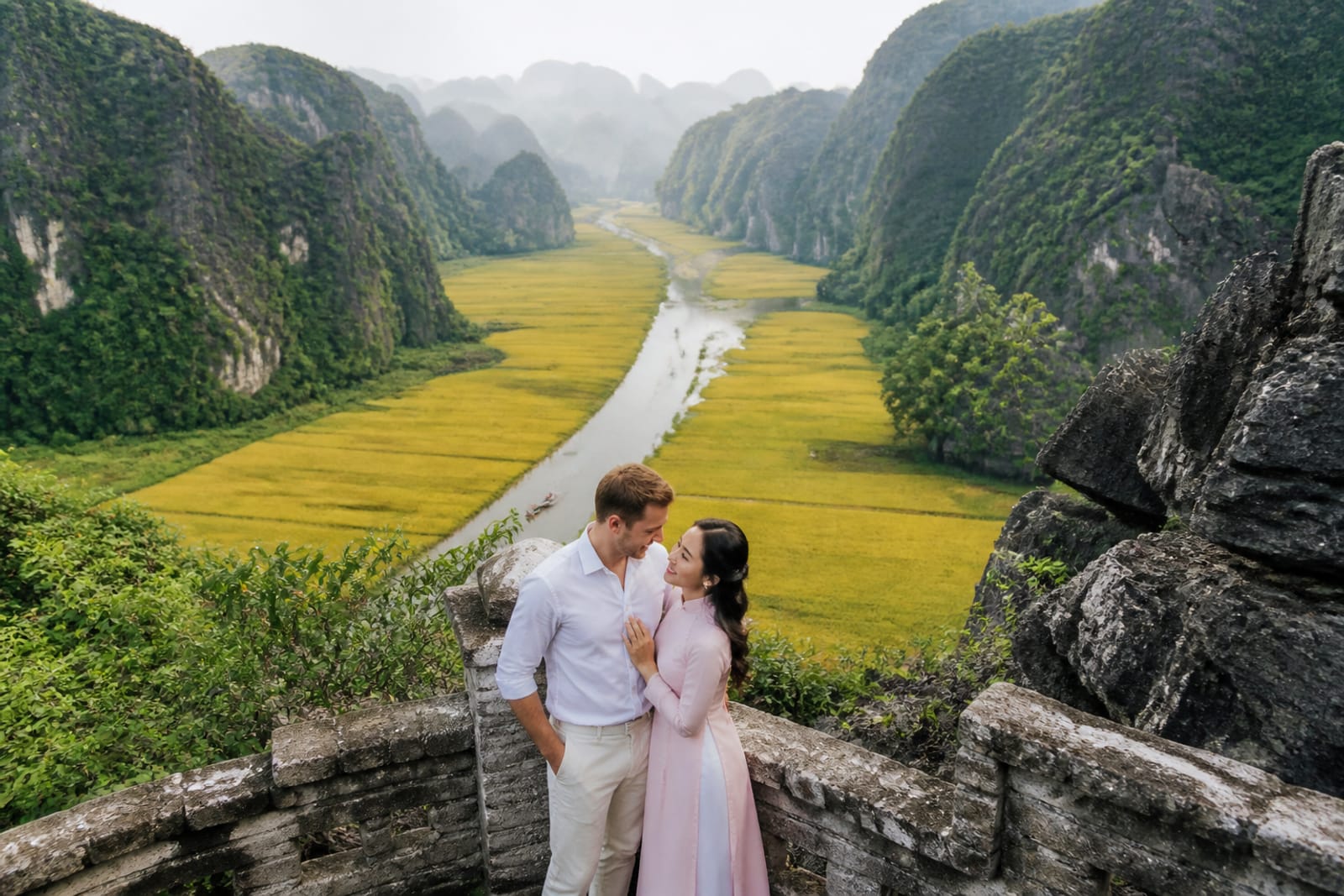
Should you hire a local Ninh Binh photographer or coordinate through Cáo Studio?
Cáo Studio – Makeup & Photoshoot is based in Hanoi (3 branches) and Saigon; coordination for Ninh Binh is possible via WhatsApp. The studio's team travels for pre-wedding shoots but doesn't have a permanent Ninh Binh base. Advantage: consistent editing style, English-fluent coordinators, pre-agreed packages. Disadvantage: travel time (2.5 hours from Hanoi), added logistics. Ask on WhatsApp for exact inclusions, timeline, and how travel logistics are handled.
Local Ninh Binh photographers (found via travel forums, Instagram tags #ninhbinhwedding, or your hotel concierge) know the light windows intimately and can navigate boat schedules and temple permits. Advantage: lower overall cost (no travel), same-day flexibility. Disadvantage: language barriers (most speak Vietnamese and Mandarin, not English), variable editing, no written contract guarantees. Vet thoroughly: ask for a full past-couple gallery (not just highlights), wedding day experience, backup weather plan, and copyright terms in writing. Confirm they've shot with Japanese clients—cultural preferences (color grading, pose direction) differ.
Best practice: if hiring locally, book a pre-shoot call or video walkthrough (e.g., WhatsApp video from Hang Mua at your intended time) to confirm light quality and communication style. Agree on shot lists in writing.
What goes wrong on Ninh Binh shoots, and how to avoid it?
Weather: Afternoon thunderstorms (Jun–Aug, Oct–Nov) halt shooting. Reschedule within your travel window; book 2–3 free dates if possible. Ask the photographer about their rain contingency (indoor temple shots, lower light comfort, refund vs. reschedule policy) before signing.
Crowds and timing: Hang Mua fills by 8–9 am. A 5 am start is non-negotiable for isolation. Trang An boat queues lengthen by 9:30 am. Confirm your photographer's willingness to work pre-dawn and their vehicle/transport logistics.
Ao dai movement: Climbing or walking in a heavy silk ao dai causes underslip slipping, tunic bunching, and hem catching on stone. Rent a modern, lighter cotton version for active locations; save silk for stationary temple shots or boat scenes. Test movement in the rental before leaving the shop.
Light and skin tone: Harsh midday sun washes out fair skin and creates unflattering shadows on noses. Avoid 11 am–2 pm altogether. The golden hour (5–7 am, 4–6 pm) is short in limestone terrain—clouds and peaks block side light quickly.
Permit and guide costs: Hang Mua and Trang An charge entry fees; some photographers require a local guide (not included in the photography fee). Confirm who pays and whether it's bundled in the quote.
Boat motion: Rowing creates subtle camera shake; a stabilized lens or gimbal helps, but some photographers lack this gear. Ask specifically about their equipment for boat work.
Honest truth: Ninh Binh pre-wedding shoots are dramatic but logistically tighter than studio or beach sessions. Build in buffer time, communicate a shot list, and choose a photographer (local or via Cáo Studio) with proven experience in this landscape.
---
What to check before you book
- Photographer's experience with Japanese aesthetic: ask for a portfolio of couples with your preference (color grading, pose softness, composition style).
- Bad-weather policy: Is rescheduling free? What's the refund if you cancel?
- Copyright and usage rights: Can you print photos? Post on social media? Use for gifts? Get it in writing.
- Travel coordination: If using Cáo Studio, confirm who arranges transport, when the team arrives, and what's included.
- Ao dai rental: Is it bundled? If booking a photographer locally, confirm they work with a trusted rental shop or if you arrange it separately.
- Edit timeline: How many photos, when will you receive edited files, and in what format (JPEG, RAW)?
- Language and communication: If hiring locally, use Google Translate or a bilingual friend to confirm logistics in writing.
- Backup location: If weather delays Hang Mua, is there a temple or field alternative shot on the same day?
🌸 See the lookbook | 📸 Book on WhatsApp — ao dai photoshoot | 💄 Makeup & hair at your hotel
---
More pre-wedding options
For other destinations or styles, explore Cáo Studio's full pre-wedding service, including couple shoots in urban and natural settings, hotel makeup & hair coordination, Hoi An photoshoots, and proposal or anniversary packages. If Ninh Binh feels too remote, Hanoi and Saigon offer faster logistics and more English-speaking teams.
---
FAQ
Is December to February a bad time to shoot in Ninh Binh?
Not bad—just different. The landscape is grey, the light is soft and even, and crowds are minimal. Some couples love the moody, intimate mood. Rice fields are brown or harvested. Best for black-and-white, somber tones, or minimalist ao dai. Temperatures are cool (10–15°C mornings); plan warm layers.
Can we climb Hang Mua in formal ao dai without it tearing?
Yes, but rent a modern, lightweight cotton or cotton-silk blend and confirm the rental shop allows trainers underneath (most do). Avoid vintage or heavily embroidered silk for climbing. Test the fit and movement in-store before leaving. Bring the exact trainers you'll wear during the photoshoot.
What if the weather forecast shows rain on our Ninh Binh shoot date?
Ask your photographer about their rain contingency and rescheduling policy before booking. Afternoon storms in Oct–Nov and Jun–Aug are common; book a second free date if possible. Some photographers embrace overcast conditions for moody light; confirm if this suits you.
Do we need a guide or translator for Ninh Binh if we don't speak Vietnamese?
If hiring a local photographer, a bilingual guide (found through your hotel or a travel service) helps negotiate temple access, boat timing, and unexpected logistical changes. If booking via Cáo Studio, the team will coordinate on your behalf—ask on WhatsApp about guide inclusion.
How much time should we budget for a full Ninh Binh pre-wedding shoot, including ao dai changes?
A typical session spans 4–6 hours: early morning at Hang Mua or fields (2–3 hours, including walking), travel and ao dai change (1–1.5 hours), and a second location like Trang An or a temple (1.5–2 hours). Plan for early starts (5–6 am) to catch light and avoid crowds. Confirm exact timeline with your photographer when booking.
Should we book through Cáo Studio or a local photographer in Ninh Binh?
Both work. Cáo Studio offers consistent editing, English coordination, and brand reliability; travel logistics are coordinated via WhatsApp. Local Ninh Binh photographers offer lower cost, intimate landscape knowledge, and same-day flexibility—but require more vetting (portfolio review, contract clarity, language confirmation). Choose based on your comfort with logistics and budget priorities. Ask Cáo Studio on WhatsApp for details on their Ninh Binh coordination.
FAQ
Is December to February a bad time to shoot in Ninh Binh?
Not bad—just different. The landscape is grey, the light is soft and even, and crowds are minimal. Some couples love the moody, intimate mood. Rice fields are brown or harvested. Best for black-and-white, somber tones, or minimalist ao dai. Temperatures are cool (10–15°C mornings); plan warm layers.
Can we climb Hang Mua in formal ao dai without it tearing?
Yes, but rent a modern, lightweight cotton or cotton-silk blend and confirm the rental shop allows trainers underneath (most do). Avoid vintage or heavily embroidered silk for climbing. Test the fit and movement in-store before leaving. Bring the exact trainers you'll wear during the photoshoot.
What if the weather forecast shows rain on our Ninh Binh shoot date?
Ask your photographer about their rain contingency and rescheduling policy before booking. Afternoon storms in Oct–Nov and Jun–Aug are common; book a second free date if possible. Some photographers embrace overcast conditions for moody light; confirm if this suits you.
Do we need a guide or translator for Ninh Binh if we don't speak Vietnamese?
If hiring a local photographer, a bilingual guide (found through your hotel or a travel service) helps negotiate temple access, boat timing, and unexpected logistical changes. If booking via Cáo Studio, the team will coordinate on your behalf—ask on WhatsApp about guide inclusion.
How much time should we budget for a full Ninh Binh pre-wedding shoot, including ao dai changes?
A typical session spans 4–6 hours: early morning at Hang Mua or fields (2–3 hours, including walking), travel and ao dai change (1–1.5 hours), and a second location like Trang An or a temple (1.5–2 hours). Plan for early starts (5–6 am) to catch light and avoid crowds. Confirm exact timeline with your photographer when booking.
Should we book through Cáo Studio or a local photographer in Ninh Binh?
Both work. Cáo Studio offers consistent editing, English coordination, and brand reliability; travel logistics are coordinated via WhatsApp. Local Ninh Binh photographers offer lower cost, intimate landscape knowledge, and same-day flexibility—but require more vetting (portfolio review, contract clarity, language confirmation). Choose based on your comfort with logistics and budget priorities. Ask Cáo Studio on WhatsApp for details on their Ninh Binh coordination.
Ao dai, makeup, hair and a local photographer in Hanoi or Saigon — one WhatsApp message.