/pre-wedding-photoshoot
Pre-wedding photoshoot in Ninh Binh in August: weather, light and crow
Pre-wedding shoots in Ninh Binh during August face intense heat, humidity, and unpredictable afternoon storms—but reward patient couples with golden-hour light, fewer tourists than peak season, and moody skies that frame the limestone karsts beautifully. Sessions work best booked for early morning (before 9 am) or late afternoon (5 pm onward), when the air clears after rain and the light turns warm and directional. Wear lightweight, breathable fabrics under your ao dai or wedding dress, and bring a second outfit that dries quickly (silk wrinkles; cotton breathes). Cáo Studio operates in Hanoi, Ho Chi Minh City and Hoi An by appointment—for Ninh Binh, we recommend hiring a local Hanoi-based photographer who travels to the site, understands the monsoon timing, and has backup plans for sudden downpours. August shoots cost more logistically (travel time, storm contingencies) but cost nothing extra if you plan tight light windows and stay flexible with scheduling.
August in Ninh Binh is hot and wet—but offers golden late-afternoon light before storms. Learn how to shoot, what to wear, and where to find a local team.
Why do couples choose August despite the monsoon risk?
August looks like a gamble: daytime temperatures climb to 32–35°C, humidity is thick, and afternoon storms are common. But the trade-off is real. Tourist crowds thin out compared to March–May and September–November. Boat operators still row visitors through Trang An and Tam Coc, but you'll share viewpoints and limestone reflections with far fewer phone cameras. The light after a storm passes—around 5 to 6:30 pm—turns golden and directional, casting long shadows across water and rice paddies. If your wedding date is locked to August for family or visa reasons, the season is shootable; it just requires honest timing and contingency outfits.

What time of day gives you the best light in August?
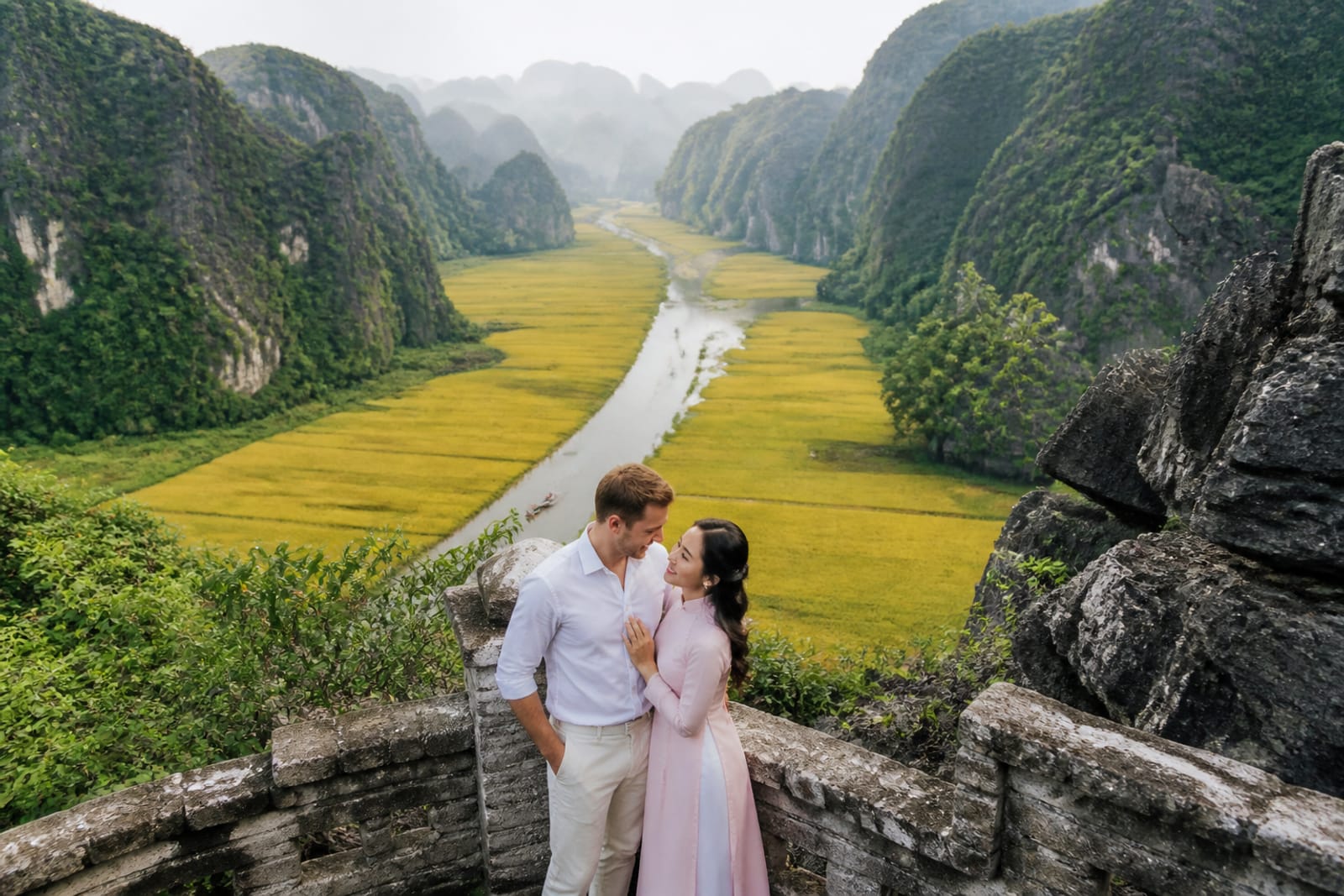
Early morning (5:30–8:30 am) is your strongest window. The air is still relatively cool, the sun angles low over the karst ridges, and the chance of rain is lowest. By 9 am, heat and haze thicken the air. Midday (10 am–4 pm) is nearly unusable: flat overhead light, heat stress on bride and groom, and high storm risk. Late afternoon (5–7 pm) is your second-best window. Rain often breaks around 4 or 5 pm, and the light turns warm and cinematic. Boat operators work until dusk; Hang Mua viewpoint stays accessible. Plan two shorter sessions (one dawn, one dusk) rather than one long mid-day shoot. This spreads outfit changes, lets the team rest, and maximizes usable light.
How do you dress for heat, humidity and sudden wet?
Lightweight, quick-dry fabrics are non-negotiable. Cotton absorbs sweat and takes hours to dry; linen wrinkles visibly; silk is cool but photographs poorly when wet. Synthetic blends and performance fabrics wick moisture and dry within 20–30 minutes if rain hits. Wear minimal undergarments—a supportive but breathable bra, no heavy petticoat under your ao dai—so moisture doesn't trap. If you're renting an ao dai, ask the rental shop for August-friendly colors (deep reds, blues, blacks photograph well even when slightly damp; pale silks show water stains). Bring a second outfit: a lightweight non-wedding dress (linen shorts and a simple tee, or a casual cotton dress) for the late-afternoon session after an early-morning shoot. Shoes matter: waterproof sandals or rubber soles grip wet stone steps and boat decks. Never wear suede or fabric heels; they soak and stain. A wide-brimmed hat or scarf shields your face during setup, but remove it for frames.
Should you use Hang Mua, Trang An boat, or rice fields—and when?
| Location | Best for | August conditions | Why it works |
|---|---|---|---|
| Hang Mua viewpoint | Dramatic karst backdrop, framing height | Early dawn (5:30–7 am); ~500 steps in heat, best before sun peaks | Golden side light, empty stairs, mist still clings to peaks |
| Trang An boat trip | Reflection light, movement, intimate frames | Late afternoon (4:30–6:30 pm) after rain clears; boat operators work until dusk | Wet limestone glows, dark water mirrors sky, fewer day-trippers |
| Tam Coc rice paddies | Golden grain (late May–early June, or Sep–Oct); summer green (Aug) | Early dawn or dusk; muddy paths if rain heavy; less dramatic in monsoon | Green paddies soften frame, water channels reflect light, fewer crowds |
| Mua Village or rural lanes | Authentic everyday scenery, fewer tourists | Anytime, but midday heat intolerable; best 6–8 am or 5–7 pm | Local life, natural poses, no entry fees, flexible timing |
Early morning favors Hang Mua (climb before heat peaks, descend by 8 am). Late afternoon favors Trang An boat trips (the water is calmest at dusk, boat operators are experienced in monsoon, and wet stone and wooden railings photograph dramatically). Rice paddies in August are green, not golden, so they're less visually distinctive than during harvest season—choose them only if intimacy and everyday authenticity matter more to your story. Each site requires a local guide or boat operator; ask your photographer to arrange and brief them beforehand so poses and light don't clash with navigation.
How do you find and vet a local Ninh Binh photographer?
Cáo Studio operates in Hanoi, Ho Chi Minh City and Hoi An; we do not have a Ninh Binh base. For an August Ninh Binh pre-wedding, hire a Hanoi-based photographer who travels to the site (it's 90 km south, ~2 hours drive). Here's how to vet them:
Portfolio check: look for 5–10 Ninh Binh frames shot in monsoon season (Jun–Sep). If their portfolio is only spring/autumn, they lack August experience. Ask for boat and Hang Mua samples specifically.
Monsoon backup plan: ask directly: "What happens if heavy rain hits? Do you move to a covered spot, reschedule, or shoot in the rain?" A good answer is specific (e.g., "We move to Mua Village lanes, which have overhangs; we keep shooting"). A vague answer is a red flag.
Local logistics: ask if they arrange guides, boat operators, or permits, or if you book those separately. Coordinating three vendors (photographer + guide + boat operator) adds friction; one team that handles everything shoots better. This is why Cáo Studio's ethos is one team—but for Ninh Binh, find a Hanoi photographer who works solo or with a dedicated outfit/hair/makeup partner.
Delivery timeline: confirm how many edited photos you receive, in how long. August heat and humidity can slow editing (files are large, color grading is tedious). Ask for a specific delivery date, not "within 2 weeks."
Rate: August costs more than spring because travel time is longer, storm contingencies are real, and rescheduling is harder (monsoon season is unpredictable). Ask for a quote that factors in travel, logistics and weather insurance.
How do you prepare emotionally and logistically for monsoon timing?
Monsoon means flexibility. Book your shoot date, but accept that the exact time or location may shift 1–2 hours based on weather. Tell your photographer: "Golden light after the rain is our priority; exact location matters less." This mindset frees you from rigid pose-driven shoots into a narrative approach: walking together through damp lanes, pausing as mist rises off water, catching real reactions to the landscape.
On shoot day, wear easily removable layers. Start in light scarves or shawls; peel them as heat climbs. If rain hits, most couples panic; your photographer should guide you into it (rain on faces, running shoes off, genuine movement) or under shelter (overhangs, market stalls, locals' porches) where light softens but frames remain alive. Bring a waterproof phone case for behind-the-scenes content. Eat a proper breakfast; August heat exhaustion is real.
If your shoot falls on a day with all-day downpour (rare but possible), reschedule to the next clear afternoon, not a future month. August offers enough light windows that one bad day doesn't wreck your timeline.
---
📸 Book on WhatsApp — pre-wedding photoshoot | 💄 Makeup & hair at your hotel | 🌸 See the lookbook
Before you commit to an August Ninh Binh shoot
- Ask your photographer: do they have monsoon season samples and a rain contingency plan (written)?
- Check weather forecasts starting 1 week before; August is unpredictable, but patterns emerge.
- Rent or buy quick-dry wedding clothes; ask the rental shop for monsoon-friendly fabrics and colors.
- Hire a team, not separate vendors: photographer, guide, and makeup artist should coordinate timing and movement together.
- Plan two sessions (dawn and dusk) instead of one long midday shoot; it maximizes light and spreads physical stress.
- Confirm delivery: get a signed agreement on the number of edited photos and delivery deadline.
---
For inspiration on how direction, light and one coordinated team create frames that tell a story, browse the Cáo Studio lookbook. If your wedding includes Hanoi, Ho Chi Minh City or Hoi An, we offer pre-wedding and elopement shoots, ao dai photoshoots, and couples and family sessions with makeup and hair included. For Ninh Binh, find a local photographer who shoots monsoon season and is willing to chase light, not poses—that's the difference between a polished album and frames you actually keep.
FAQ
Is August really too risky for a Ninh Binh pre-wedding shoot?
Not if you plan tight light windows (dawn or dusk) and accept that exact timing or location may shift. August heat and afternoon storms are facts, but they create soft, dramatic light that spring or autumn can't match. Fewer tourists is a real bonus. Book a photographer with monsoon experience and a contingency plan.
What should I wear under my ao dai in August heat?
Minimal, breathable undergarments—avoid heavy petticoats or synthetic shapewear that traps sweat. Ask your ao dai rental shop for quick-dry fabrics in deep colors (reds, blues, blacks hide water marks). Bring a second lightweight outfit for a late-afternoon session after an early-morning shoot.
Can we shoot at Hang Mua in the rain?
Yes, but only if you're prepared. Wet stone steps (~500) are slippery; wear waterproof sandals or rubber-soled shoes. The mist and dramatic sky create moody frames, but your photographer must prioritize your safety and ensure you descend before visibility drops. Wet fabric clings and wrinkles; move deliberately, don't rush poses.
How do I know if a Ninh Binh photographer is worth hiring?
Ask for monsoon-season samples (June–September), a specific rain contingency plan, and confirmation they arrange guides and boat operators (not three separate vendors). Check their delivery timeline and rate; August costs more because of travel and logistics. One coordinated team shoots better than multiple vendors.
Should we reschedule to a drier month instead?
Only if your wedding date is flexible and you don't mind peak-season crowds and higher costs. March–May and September–November are drier and busier. August offers fewer tourists, lower accommodation rates, and golden light after storms—the trade-off is heat, humidity and unpredictability. If your date is set to August, work with a photographer who embraces monsoon, not someone apologizing for it.
How do we prepare for sudden rain on shoot day?
Eat a full breakfast (heat exhaustion is real). Wear easily removable layers. Tell your photographer your priority is light and movement, not rigid poses in a specific location. If rain hits, guide you into it (genuine, unposed frames) or to shelter where light softens but frames stay alive. Bring waterproof phone case. Plan to reschedule same-week if all-day downpour hits, not months later.
FAQ
Is August really too risky for a Ninh Binh pre-wedding shoot?
Not if you plan tight light windows (dawn or dusk) and accept that exact timing or location may shift. August heat and afternoon storms are facts, but they create soft, dramatic light that spring or autumn can't match. Fewer tourists is a real bonus. Book a photographer with monsoon experience and a contingency plan.
What should I wear under my ao dai in August heat?
Minimal, breathable undergarments—avoid heavy petticoats or synthetic shapewear that traps sweat. Ask your ao dai rental shop for quick-dry fabrics in deep colors (reds, blues, blacks hide water marks). Bring a second lightweight outfit for a late-afternoon session after an early-morning shoot.
Can we shoot at Hang Mua in the rain?
Yes, but only if you're prepared. Wet stone steps (~500) are slippery; wear waterproof sandals or rubber-soled shoes. The mist and dramatic sky create moody frames, but your photographer must prioritize your safety and ensure you descend before visibility drops. Wet fabric clings and wrinkles; move deliberately, don't rush poses.
How do I know if a Ninh Binh photographer is worth hiring?
Ask for monsoon-season samples (June–September), a specific rain contingency plan, and confirmation they arrange guides and boat operators (not three separate vendors). Check their delivery timeline and rate; August costs more because of travel and logistics. One coordinated team shoots better than multiple vendors.
Should we reschedule to a drier month instead?
Only if your wedding date is flexible and you don't mind peak-season crowds and higher costs. March–May and September–November are drier and busier. August offers fewer tourists, lower accommodation rates, and golden light after storms—the trade-off is heat, humidity and unpredictability. If your date is set to August, work with a photographer who embraces monsoon, not someone apologizing for it.
How do we prepare for sudden rain on shoot day?
Eat a full breakfast (heat exhaustion is real). Wear easily removable layers. Tell your photographer your priority is light and movement, not rigid poses in a specific location. If rain hits, guide you into it (genuine, unposed frames) or to shelter where light softens but frames stay alive. Bring waterproof phone case. Plan to reschedule same-week if all-day downpour hits, not months later.
Ao dai, makeup, hair and a local photographer in Hanoi or Saigon — one WhatsApp message.