/pre-wedding-photoshoot
Pre-Wedding Photoshoot in Ninh Binh: Planning Guide for Taiwanese Coup
Ninh Binh pre-wedding photoshoots work best during the dry season (March–May and September–November) when rice fields are golden and skies are clearer. Golden-hour shooting happens during early morning (before 8:00 AM) and late afternoon (after 4:00 PM) — the karst peaks frame light beautifully then. Shoots typically run 4–6 hours across multiple locations (rice fields, Hang Mua viewpoint, village paths, and boat trips at Trang An). You'll need a local Ninh Binh photographer who knows landscape timing, terrain access, and permits; Cáo Studio – Makeup & Photoshoot operates in Hanoi, Ho Chi Minh City, and Hoi An only, so we recommend scouting photographers on platforms like Iwed Vietnam or checking recent lookbooks from local studios. Wear comfortable walking shoes (Hang Mua has ~500 steps), plan lightweight layers for temperature swings, and book 2–3 weeks ahead during high season. ---
Why season and light timing matter more than location alone
Light quality in Ninh Binh shifts dramatically between monsoon and dry periods. The dry season (March–May, September–November) delivers golden hour light that flatters skin and landscape equally — clouds part predictably, and fields glow. The rainy summer (June–August) brings grey skies, scattered storms, and flooded paddies that wreck compositions. Winter (December–February) is cooler and grey; mist hangs over peaks at dawn, reducing contrast. Late May marks the rice harvest, then a second planting; by early June, emerald fields dominate. Late September into October, the second crop turns golden again — this window is narrower than the first harvest but equally photogenic.
Book your shoot during the 10-day window either side of peak golden color. Avoid Tet (late January–mid February) when rural roads fill with holiday traffic and locals are unavailable. Ask your photographer to scout the exact field locations 1–2 days before the shoot — rice maturity varies by farmer and microclimate, so no two years look identical.
---
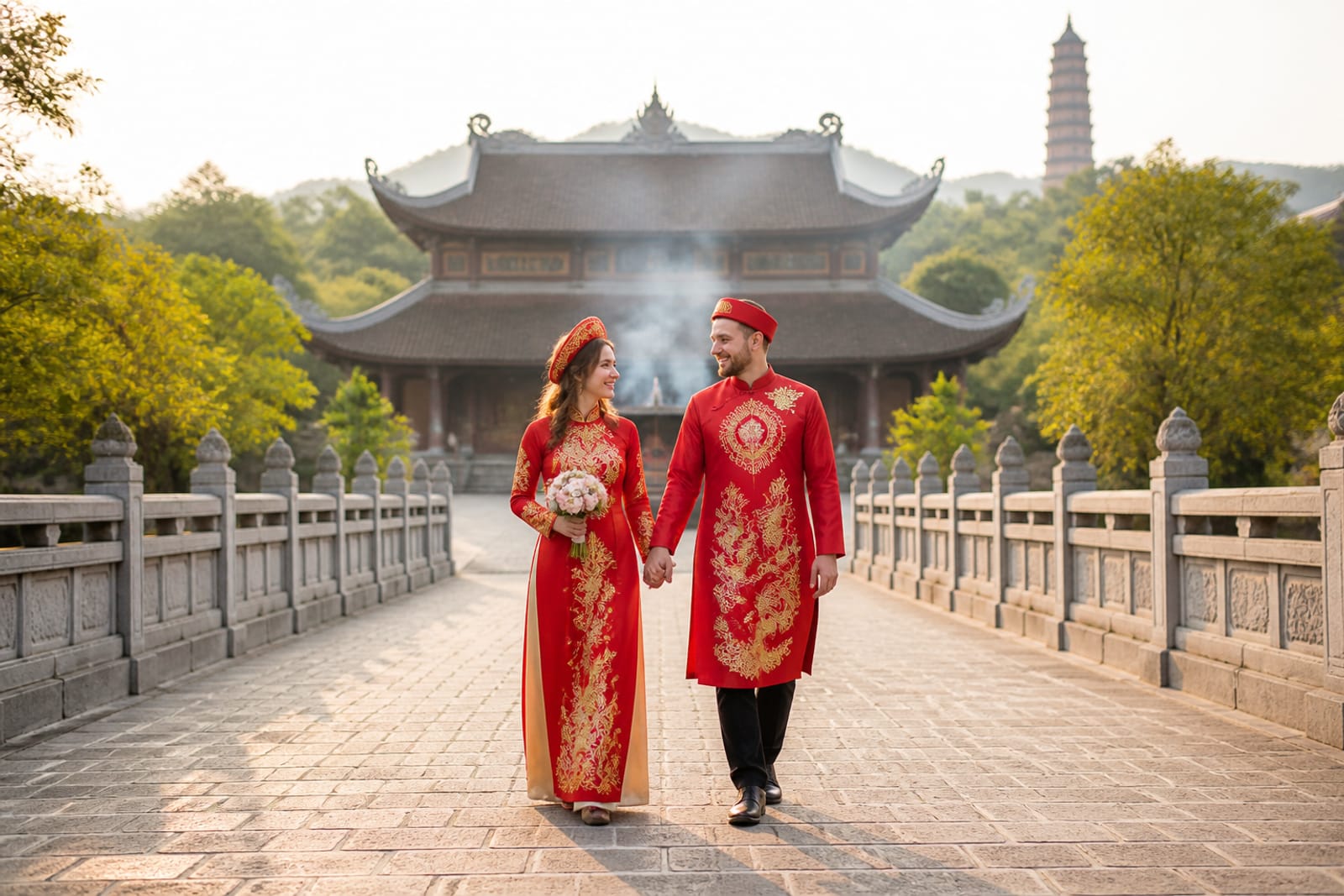
How to choose between Hang Mua viewpoint, rice-field paths, and boat locations
| Location | Best for | Light window | Why it works |
|---|---|---|---|
| Hang Mua viewpoint | dramatic peak backdrops, elevation drama | sunrise (5:30–7:30 AM), sunset (5:00–6:30 PM) | ~500 steps; wear flat shoes; cool early morning light avoids harsh shadows on faces |
| Golden rice fields (Tam Coc area) | sweeping landscape intimacy, movement shots | early morning (6:30–8:30 AM), late afternoon (4:00–6:00 PM) | photographer accesses via farmer paths; low-angle shooting shows texture; afternoon side-light sculpts contours |
| Trang An boat trip | reflections, water intimacy, village rhythm | mid-morning (8:00–10:00 AM), late afternoon (3:30–5:30 PM) | local rowers steer wooden boats; water mirrors sky; narrow passages frame subjects intimately |
| Village paths & bamboo | organic, candid moments, cultural context | anytime 6:00 AM–5:00 PM (diffuse light preferred) | less crowded; permits easier; photographer documents daily life authentically; neutral backgrounds |
Each location demands different footwear and energy. Hang Mua requires athletic shoes and 45–60 minutes of climbing — factor this into shot sequencing so you're not exhausted for closeups at the peak. Rice fields need waterproof footwear (mud after rain) and insect repellent. Boat trips run 60–90 minutes and involve balance; bring quick-dry fabrics if you're comfortable with minor splashes.
---
What to wear: fabrics, layers, and ao dai fit for the terrain
Pre-wedding outfits in Ninh Binh must survive 4–6 hours of hiking, climbing, and boat time. Plan 2–3 outfit changes so the mood shifts across your gallery.
Outfit 1: Ao dai + undergarments. An ao dai is iconic for Ninh Binh's rice fields — the silk catches morning light like liquid gold. Wear a slip dress underneath (ask your seamstress to include a built-in bodice lining to avoid transparency). Choose lightweight silk or silk-cotton blends that breathe; have your photographer shoot from behind you on stairs or slopes so the fabric flows. Avoid heavy embroidery on the front if you'll sit in boats. Consider a cropped ao dai (mid-calf instead of ankle) if Hang Mua is on the itinerary — it shows off footwear and prevents tripping on steps.
Outfit 2: Western formal wear (groom in suit, bride in an elegant dress or jumpsuit). A tailored suit and a flowing chiffon or silk dress suit afternoon light over water. Bring a pastel shawl to soften harsh shadows on shoulders. Shoes matter — loafers or ballet flats work on boat decks; avoid heels on muddy paths.
Outfit 3: Casual modern (jeans, linen shirt, linen dress). This works brilliantly in village settings where locals don't expect formality. The contrast between formal and casual shots tells a narrative. Linen breathes better than cotton in humidity; neutral tones (cream, soft grey, khaki) won't fight golden-hour color casts.
Wear layers always. Sunrise temperature at rice fields can be 15°C (59°F); by noon, it climbs to 28–30°C (82–86°F). A lightweight cardigan or overshirt gives you options without weighing down the shot.
---
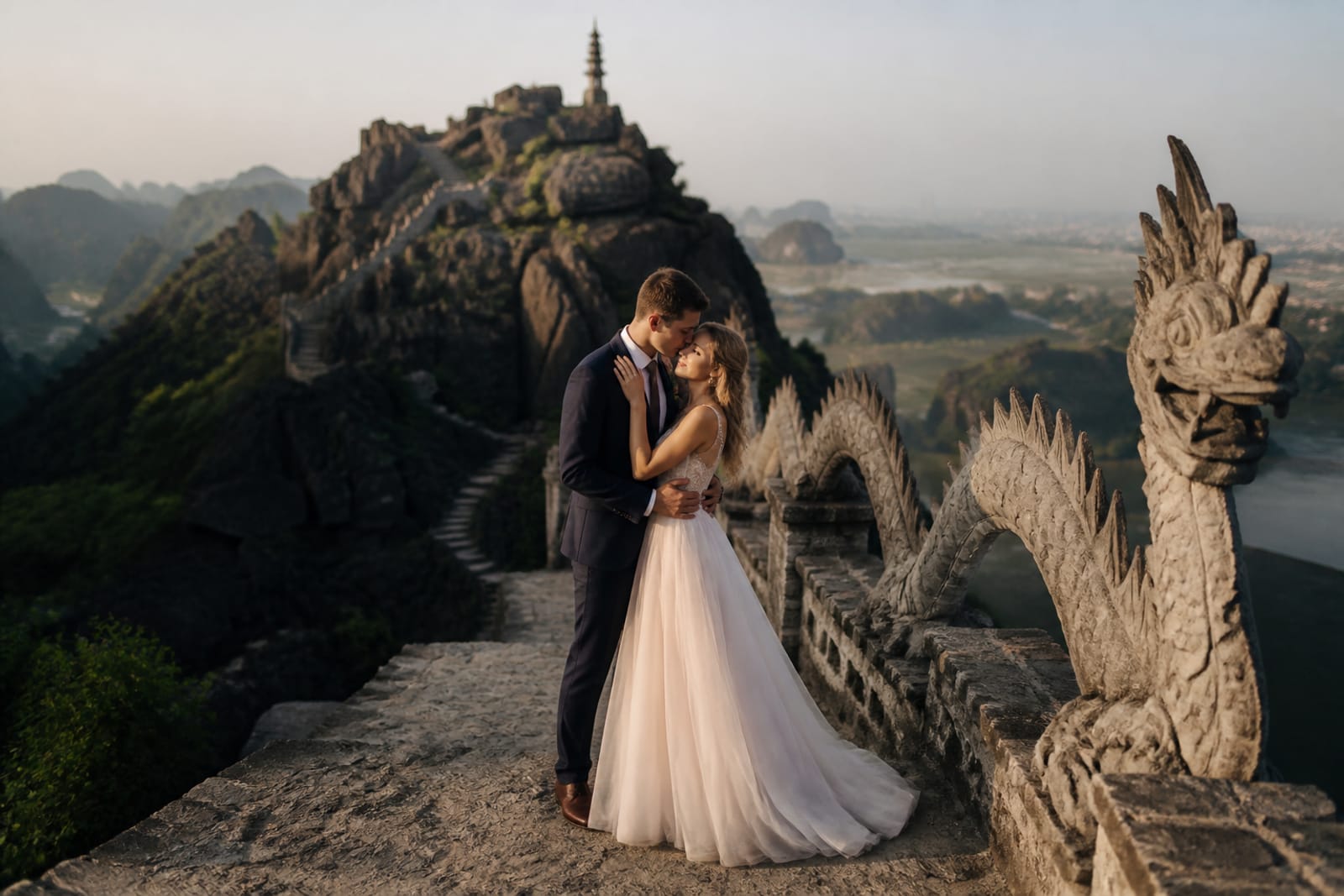
Finding and vetting a local Ninh Binh photographer: what to ask
Cáo Studio – Makeup & Photoshoot operates in Hanoi, Ho Chi Minh City, and Hoi An only. For Ninh Binh, you'll source a local photographer independently. Here's how to vet them:
1. Check their recent lookbooks. Ask to see 2–3 full pre-wedding shoots from the past 6 months in Ninh Binh. Look for consistent golden-hour light, sharp focus on faces even in motion, and accurate color balance in field shots. If their portfolio is mostly studio or urban work, they may not know how to handle landscape-scale compositions.
2. Confirm location and permit knowledge. Ask: "Have you shot at [specific rice field / Hang Mua / Trang An] in the past 12 months?" Farmers change fields annually; some areas now charge access fees or restrict traffic. A seasoned local knows which fields are accessible, which boats are reliable, and which routes avoid peak tourist crowds (9:00 AM–3:00 PM).
3. Discuss the shot timeline. Request a written itinerary: which 3–4 locations, arrival/departure times, and who arranges transport and permits. Vague photographers often waste 1–2 hours on logistics. Ask if they'll scout the field 1–2 days before the shoot to confirm rice color and ground conditions.
4. Review editing style. Ask for a raw and edited sample from the same shoot. Some Ninh Binh photographers oversaturate greens and golds; others underexpose to crush shadows. Pick a style that matches your wedding album aesthetic.
5. Request a backup plan for rain. Ninh Binh's September–November season can bring scattered showers. A good photographer has 2–3 covered or indoor backup locations (village shrines, bamboo groves, canal-side pavilions) and a clear rain-date or partial-refund policy. Never book a photographer who ignores weather risk.
6. Confirm equipment redundancy. Ask: "What happens if your main camera fails?" Expect two full camera bodies, lenses, backup batteries, and data cards. Ninh Binh shoots are remote; there's no 15-minute tech-store fix.
---
Logistics checklist: transportation, permits, and timing details
Pre-shoot (2 weeks before):
- [ ] Confirm photographer's location knowledge — ask for recent Ninh Binh shoots.
- [ ] Scout a backup date in case of rain (don't rely on a single date 8 months out).
- [ ] Book a driver or rent a motorbike; plan 45-minute transfer time from Ninh Binh town to rice fields.
- [ ] Buy insect repellent (dengue is rare but mosquitoes are active dawn/dusk).
- [ ] Have ao dai tailored and fitted 1 week before (allow time for emergency adjustments).
1–2 days before:
- [ ] Photographer scouts primary and backup field locations, confirms rice maturity and ground conditions.
- [ ] Confirm weather forecast; agree on a rain-out clause with the photographer.
- [ ] Arrange wake-up time (5:30 AM for sunrise shoots); book an early taxi or driver pickup.
Shoot day:
- [ ] Start no later than 6:00 AM for golden-hour light at rice fields.
- [ ] Bring sunscreen (reapply every 90 minutes), lip balm with SPF, and a 1-liter water bottle per person.
- [ ] Carry a small towel for sweat; wet makeup runs in Ninh Binh humidity (consider a makeup & hair touch-up kit before you go, or hire a local makeup artist to tag along for 30-minute refresh at midday).
- [ ] Wear waterproof phone case if you're boating; phones dropped in Trang An are unrecoverable.
- [ ] Finish shoots by 6:00 PM; roads get congested and light quality collapses after 6:30 PM.
Post-shoot:
- [ ] Ask photographer when you'll see a preview gallery (expect 2–4 weeks for full edit).
- [ ] Confirm final image count and delivery method (cloud link, USB, or print).
- [ ] Ask about photo albums or prints & frames — some local studios offer heirloom album design.
---
What to check before you book a pre-wedding session in Ninh Binh
- Photographer's recent work in Ninh Binh. Portfolio glamour shots don't prove location competence. Request 2–3 full shoots from the past 6 months with timestamps or location tags visible.
- Written itinerary and timeline. A vague "we'll shoot the rice fields" won't cut it. You need specific locations, estimated times at each spot, and who handles permits/transport.
- Rain and weather policy. Ninh Binh's September–November season includes scattered storms. Confirm a backup date, partial refund, or rescheduling terms before you book.
- Equipment redundancy. Two camera bodies, backup lenses, and battery packs are non-negotiable for a full-day remote session.
- Editing timeline and delivery. Clarify when you'll see previews, the total image count, and whether final files come as high-resolution JPEGs or RAW files. Ask about photo album production if you want a printed keepsake.
- Local permits and access. Some rice fields now restrict photography or charge access fees. Confirm the photographer handles this — you shouldn't discover a fee at the location.
---
📸 Book a pre-wedding session in Hanoi, Ho Chi Minh City, or Hoi An | 💄 Makeup & hair styling at your hotel | 🌸 See our lookbook
For Ninh Binh shoots, scout local photographers on Iwed Vietnam or Instagram (search #NinhBinhWedding #NinhBinhPhotographer). Once you've booked a session elsewhere or decided to add a second location to your itinerary, contact Cáo Studio via WhatsApp — we cover Hanoi, Ho Chi Minh City, and Hoi An for pre-wedding & elopement, ao dai photoshoots, and couple sessions.
---
FAQ
What month has the best light for pre-wedding shoots in Ninh Binh?
March–May and September–November (dry seasons) offer golden fields and predictable dawn/sunset light. Late May and early October are peak harvest colors. Avoid June–August (rainy, grey) and December–February (cool, misty). Book during the dry season's first half (March–April) for certainty, or late September–early October if you prefer a second-crop aesthetic.
Do I need a permit to photograph in Ninh Binh's rice fields?
Most private rice fields don't require formal permits, but some farmers now charge access fees (ask your photographer). Trang An Scenic Area and Hang Mua are managed sites — your photographer should confirm entry routes and any required documentation. Always check 1–2 days before your shoot; policies change seasonally.
Can I wear an ao dai on Hang Mua if there are 500 steps?
Yes, but choose a cropped ao dai (mid-calf length) to avoid tripping. Wear flat, grippy shoes (not heels). Plan 45–60 minutes for the climb, and schedule this segment early in the day when you're fresh. Have a shorter alternative outfit for stairs and a longer ao dai for level field shots.
How much time should I budget for a full pre-wedding shoot in Ninh Binh?
Plan 5–7 hours (6:00 AM–1:00 PM or 2:00 PM–sunset). This covers 3–4 locations, outfit changes, breaks, and setup time. Sunrise shoots (6:00–8:30 AM) are shorter and more intense; sunset shoots (4:00–6:30 PM) are leisurely. A hybrid dawn–afternoon approach gives you variety but requires a very early wake-up and midday break.
What happens if it rains during my Ninh Binh pre-wedding shoot?
Scattered showers are common September–November; a skilled photographer has backup indoor or covered spots (village shrine, bamboo pavilion, canal-side structure). Confirm a rain policy before booking — some offer rescheduling within 30 days, others provide partial refunds. Never shoot in heavy rain; lightning is a real risk in karst areas.
Should I hire a local makeup artist in Ninh Binh for the shoot day?
Yes, if you're concerned about sweat or humidity damage (very common in morning heat). A local makeup artist familiar with the area can do a 30-minute refresh at midday (around 10:00–11:00 AM). Ask your photographer if they have a recommendation. If you're based in Hanoi beforehand, consider a hotel makeup & hair service the evening before and a lightweight touch-up kit on shoot day instead.
FAQ
What month has the best light for pre-wedding shoots in Ninh Binh?
March–May and September–November (dry seasons) offer golden fields and predictable dawn/sunset light. Late May and early October are peak harvest colors. Avoid June–August (rainy, grey) and December–February (cool, misty). Book during the dry season's first half (March–April) for certainty, or late September–early October if you prefer a second-crop aesthetic.
Do I need a permit to photograph in Ninh Binh's rice fields?
Most private rice fields don't require formal permits, but some farmers now charge access fees (ask your photographer). Trang An Scenic Area and Hang Mua are managed sites — your photographer should confirm entry routes and any required documentation. Always check 1–2 days before your shoot; policies change seasonally.
Can I wear an ao dai on Hang Mua if there are 500 steps?
Yes, but choose a cropped ao dai (mid-calf length) to avoid tripping. Wear flat, grippy shoes (not heels). Plan 45–60 minutes for the climb, and schedule this segment early in the day when you're fresh. Have a shorter alternative outfit for stairs and a longer ao dai for level field shots.
How much time should I budget for a full pre-wedding shoot in Ninh Binh?
Plan 5–7 hours (6:00 AM–1:00 PM or 2:00 PM–sunset). This covers 3–4 locations, outfit changes, breaks, and setup time. Sunrise shoots (6:00–8:30 AM) are shorter and more intense; sunset shoots (4:00–6:30 PM) are leisurely. A hybrid dawn–afternoon approach gives you variety but requires a very early wake-up and midday break.
What happens if it rains during my Ninh Binh pre-wedding shoot?
Scattered showers are common September–November; a skilled photographer has backup indoor or covered spots (village shrine, bamboo pavilion, canal-side structure). Confirm a rain policy before booking — some offer rescheduling within 30 days, others provide partial refunds. Never shoot in heavy rain; lightning is a real risk in karst areas.
Should I hire a local makeup artist in Ninh Binh for the shoot day?
Yes, if you're concerned about sweat or humidity damage (very common in morning heat). A local makeup artist familiar with the area can do a 30-minute refresh at midday (around 10:00–11:00 AM). Ask your photographer if they have a recommendation. If you're based in Hanoi beforehand, consider a [hotel makeup & hair service](/makeup-and-hair) the evening before and a lightweight touch-up kit on shoot day instead.
Ao dai, makeup, hair and a local photographer in Hanoi or Saigon — one WhatsApp message.