/pre-wedding-photoshoot
Pre-wedding photoshoot in Ninh Binh: rainy season guide
A pre-wedding photoshoot in Ninh Binh during the rainy season means working with overcast skies, sudden downpours, and muddy rice paddies to capture intimate, atmospheric frames that summer sun cannot deliver. The region's limestone cliffs, boat routes through flooded fields, and rural temples become moodier, with soft sidelighting and moody clouds as your backdrop. Sessions typically run 3–4 hours across dawn and late-afternoon windows (before storms hit or after they pass), and you'll need outfits designed for wet conditions—lightweight ao dai over quick-dry underlayers, waterproof footwear, or a change of shoes. Cáo Studio does not operate in Ninh Binh; shoot with a Hanoi-based photographer who travels, or book a local Ninh Binh team experienced in monsoon work. Plan for flexibility: weather windows shift daily, backup dates help, and the payoff is frames no summer shoot delivers—mist-wrapped cliffs, rain-soaked greenery, and light that feels earned.
Why do photographers choose rainy-season Ninh Binh over the dry months?
Dry season (March–May, September–November early) brings crowds, harsh overhead light, and bleached skies that flatten storytelling. Rainy season (May–November, peaks June–September) delivers what dry light cannot: soft, directional sidelighting through cloud breaks, dramatic storm formations, and empty landscapes. Rice paddies flooded for the second crop (around September–October) reflect grey skies like mirrors, multiplying the moody palette. Crowds thin significantly—temples and viewpoints that pack dry-season tour groups become intimate.
The trade-off is weather risk and outfit complexity. Wind gusts, sudden afternoon showers, and mud require a photographer who shoots around weather, not against it. This season rewards couples who embrace the landscape's drama rather than fight it.
📸 Book on WhatsApp — ao dai photoshoot
What does light look like at different times on a rainy-season day in Ninh Binh?
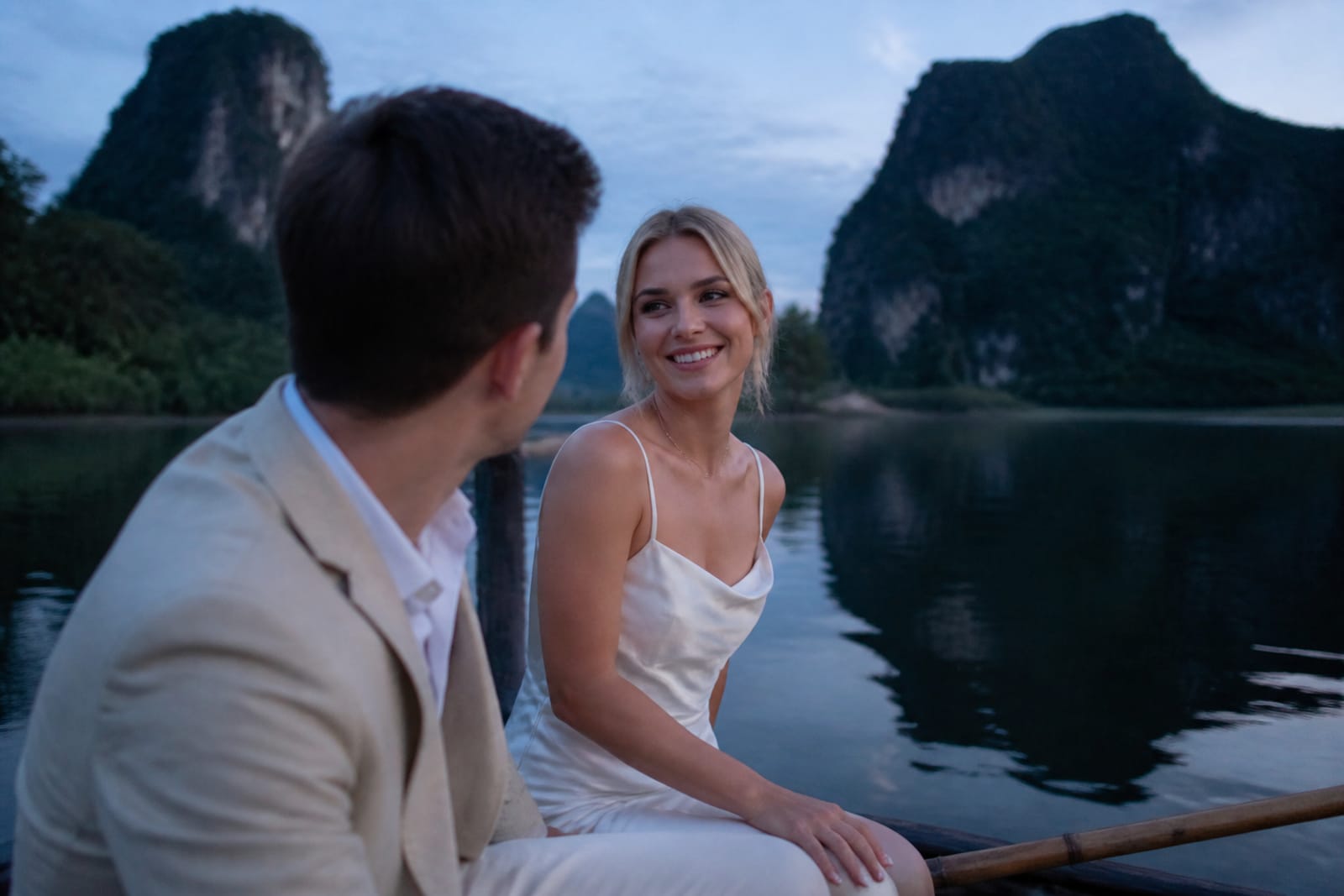
Dawn (5:30–6:30 am) breaks soft and grey; mist hangs over the karsts and rice fields. Light is diffused, shadowless, and warm-toned—ideal for wide landscape shots and intimate close-ups. Clouds shift fast, so a photographer works in 20–30-minute windows before overhead cloud cover flattens the frame again. Mid-morning (7–9 am) sees cloud breaks that send directional sidelighting across the valleys—sharp, warm, ideal for backlighting or silhouettes.
Midday (10 am–3 pm) is often unusable: overhead clouds create flat, blue-grey light, or sudden storms arrive. Late afternoon (4–6 pm, if storms pass) restarts the cycle—sidelighting returns, sometimes dramatic if rain clouds break open behind you. By 6:30 pm, light fades fast into grey dusk.
A smart schedule shoots dawn and late-afternoon only, with flexible backup windows. A photographer who knows Ninh Binh's microclimate (which valleys clear first, where mist holds longest) gains hours of shootable light; one who treats the day as fixed loses half of it to waiting.
How do you dress for a pre-wedding shoot in the rainy season?
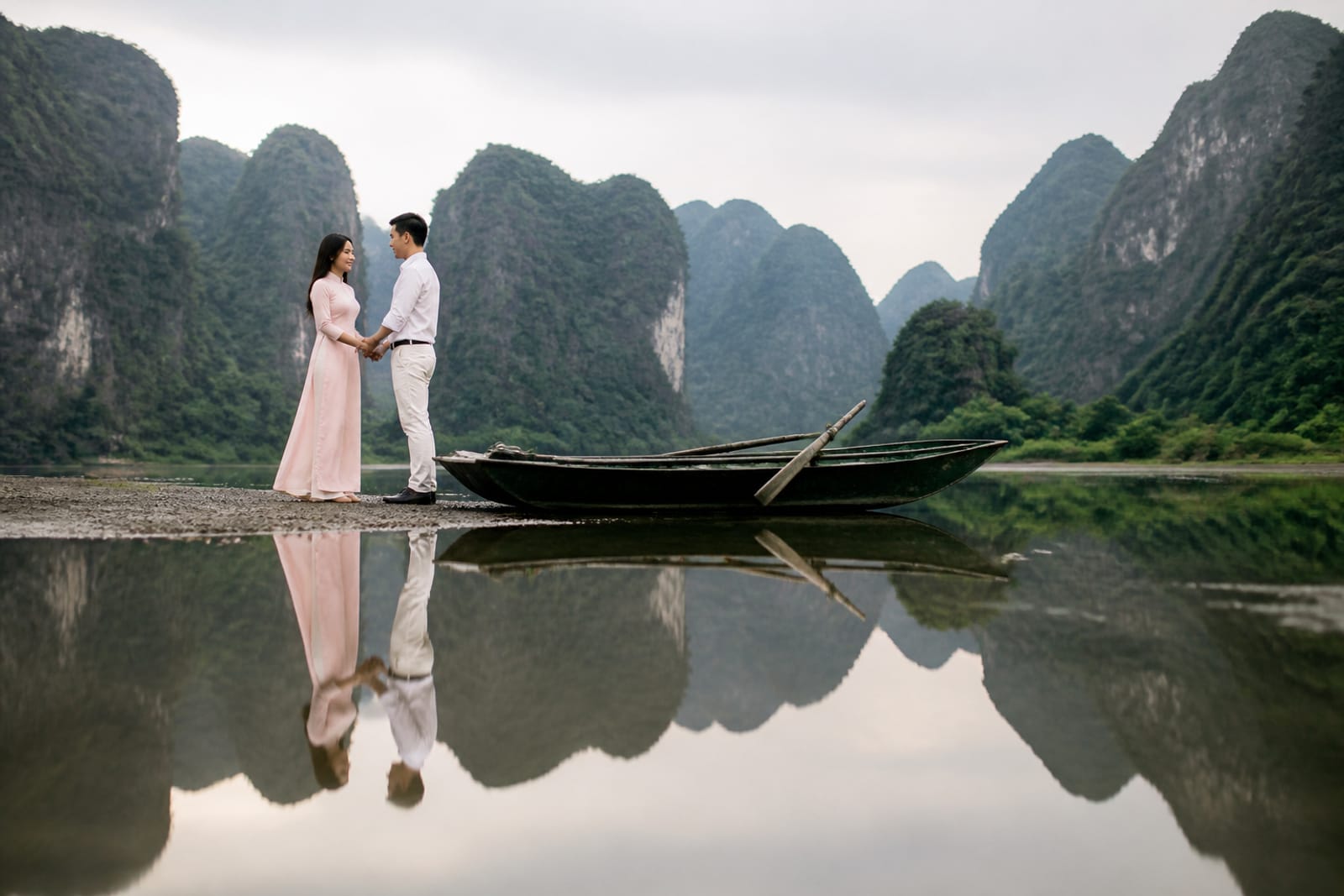
Ao dai (traditional silk tunic) over quick-dry leggings or cycling shorts prevents the fabric clinging to wet skin. Choose lightweight ao dai in pale, rain-resistant colors—white, cream, soft pastels—that photograph luminous against grey skies and don't darken noticeably when damp. Avoid heavy brocade; opt for silk or silk-cotton blends that dry quickly and move with wind and mist.
Footwear is critical. Hang Mua's 500 stone steps and muddy field paths demand waterproof hiking shoes or quick-dry sandals. Many couples bring a second pair of shoes for close-ups (embroidered slippers, barefoot, minimal heels) and change mid-shoot. Socks or thin liners prevent blisters and cold.
Groom's outfit: lightweight suit or tailored casual shirt and trousers in neutral tones (charcoal, navy, cream). Waterproof leather shoes or quick-dry dress shoes. Avoid cotton—it clings and darkens when wet. A light rain jacket (pack it, don't wear it during the shoot) protects between locations.
Accessories: a silk scarf, umbrella held decoratively (not functionally—let rain sit on the frame), or a rain-worn straw hat add narrative. Hair products must be water-resistant; makeup requires a waterproof base and a photographer or makeup artist who travels with you for touch-ups between rain exposures.
A Ninh Binh local photographer can often source rental ao dai suited to monsoon work; ask when you book.
Which Ninh Binh locations work best in the rainy season?
| Location | Best for | Light/season | Why it works |
|---|---|---|---|
| Trang An boat route | intimate couples, reflective frames | Early dawn, overcast | Flooded limestone valleys, mirror-like water, mist-wrapped cliffs |
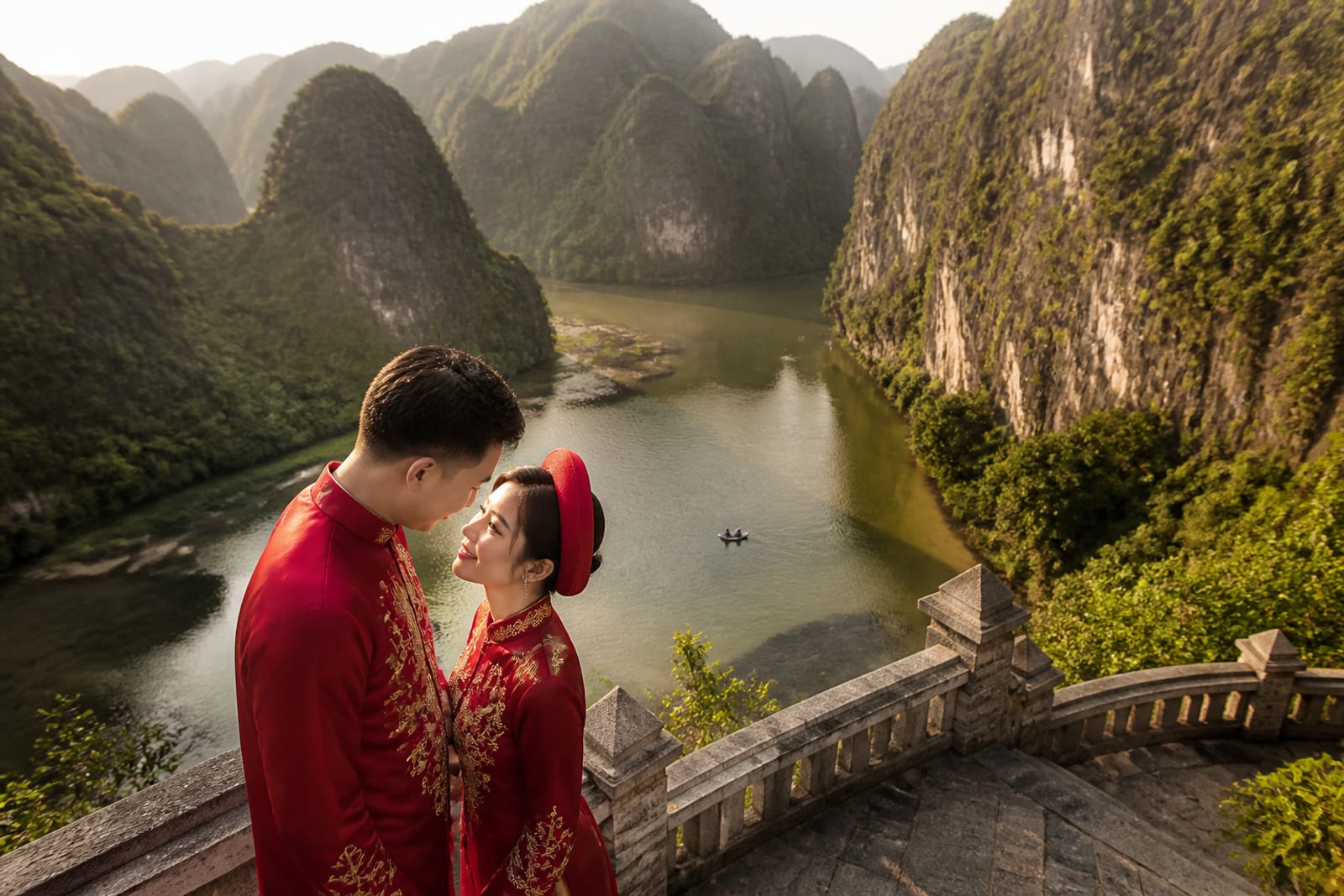
| Hang Mua viewpoint | landscape, silhouettes, challenge | Late afternoon post-rain | Storm clouds frame the vista; paths muddy but less crowded; sidelighting tops the valley |
| Tam Coc rice fields | second-crop context, wide frames | Dawn or late afternoon | Golden or green paddies flooded, sky dramatic; fewer boats, more isolation |
| Mua Cave temple | intimate, moody interior | Mid-morning (cloud break) | Stone interior, soft diffused light, few pilgrims; flooded exterior reflects grey sky |
| Village paths (Van Lam, Pu Luong approach) | narrative detail, daily life | Golden hour windows | Rain-washed stone, sodden vegetation, local energy; avoid midday (light flat, heat oppressive) |
Each location demands different footwear and outfit prep. Boat routes require secure, water-shedding shoes; Hang Mua needs grip and waterproof trousers. A photographer who books a multi-location day (dawn + late afternoon) with a realistic 90-minute buffer between shoots accounts for weather shifts and outfit changes.
How do you plan and book a pre-wedding shoot in Ninh Binh if you're based elsewhere?
Ninh Binh is 100 km south of Hanoi (2–2.5 hours by car). Most couples travel from Hanoi or Ho Chi Minh City. If you're booking a photoshoot, your options are:
Option 1: Hire a Hanoi-based photographer who travels to Ninh Binh. Cáo Studio (based in Hanoi) shoots primarily in Hanoi, Ho Chi Minh City, and Hoi An; for Ninh Binh, ask on WhatsApp whether the team travels for your dates. Many Hanoi-based photographers offer multi-day packages that include Ninh Binh shoots paired with Hanoi sessions.
Option 2: Book a local Ninh Binh photographer. Search for "Ninh Binh pre-wedding photographer" or ask your Ninh Binh hotel for recommendations. Before booking, ask:
- Do they shoot in monsoon? (Rain-specific experience matters.)
- Can they scout locations 1–2 days before to plan light windows?
- Do they travel with a makeup artist and hair stylist, or do you hire separately?
- What's the backup plan if weather closes your first choice location?
- How many edited images and delivery timeline?
Option 3: Combine with a Hanoi shoot. Book a pre-wedding photoshoot in Hanoi (where Cáo Studio operates fully) for 1–2 days, then hire a local team for a Ninh Binh day-trip shoot. This spreads risk: you have guaranteed Hanoi frames regardless of Ninh Binh weather.
When you contact a photographer, provide:
- Preferred dates and flexibility window (rainy season offers better light if you can move dates 1–2 weeks).
- Outfit preferences (ao dai, Western dress, mix).
- Must-have locations.
- Rain tolerance (some couples want moody drama; others want clear skies).
Booking directly with a Ninh Binh team typically moves faster and includes local knowledge. Booking a Hanoi team requires them to confirm availability and travel dates. Either way, book 6–8 weeks ahead for monsoon season (June–September) when weather unpredictability increases scheduling load.
What costs change in the rainy season, and how do you evaluate value?
Rainy-season shoots don't cost less—they cost differently. A Ninh Binh photographer may charge extra for:
- Travel (fuel, driver time from Hanoi base).
- Weather contingency (longer booking window, multiple backup dates).
- Makeup/hair artist if sourced separately.
- Rental ao dai suited to wet conditions.
- Additional location scouting if weather forces pivot.
A local Ninh Binh team may charge less than a Hanoi-based operation (no travel premium) but offer less portfolio depth or fewer language options (relevant if you don't speak Vietnamese). Ask what's included: edited image count, turnaround time, printed samples, a short film, outfit rentals, makeup/hair services. Compare three photographers (1 Hanoi-based, 1 local, 1 hybrid) side-by-side: not by price (which varies by season and availability), but by what's included and whether their portfolio shows confident rainy-season work.
---
What to check before you book a pre-wedding shoot in Ninh Binh
- Weather-specific experience: Ask the photographer to show frames shot in rain or overcast conditions. Dry-season portfolio alone doesn't guarantee monsoon skill.
- Logistics: Confirm travel time from your hotel, start/end times, and whether you need your own transportation or it's included.
- Outfit sourcing: If you want to rent an ao dai, clarify who provides it, whether it fits your sizing, and if it's pre-fitted or assembled day-of.
- Backup dates: Rainy-season weather shifts fast. Confirm you can reschedule if morning storms cancel. Ask the photographer's rescheduling policy explicitly.
- Makeup and hair: Confirm whether it's included, where it happens (your hotel, their studio, on-location), and whether the artist has waterproof-product experience.
- Editing timeline: Monsoon weather and additional backup shoot days can extend turnaround. Clarify when you'll see proofs and final edited images.
- Photo delivery: Ask for specific numbers or formats (digital files, printed album, video highlight reel). This prevents disappointment after the shoot.
---
Cáo Studio's role: what we offer if you're based in Hanoi or booking multi-city
If you're flying into Hanoi and want to pair a Ninh Binh day-trip with a guaranteed Hanoi shoot, Cáo Studio operates a full pre-wedding photoshoot service in Hanoi. We direct the shoot (one team—photographer, makeup artist, hair stylist, and outfit)—no vendor stitching. Ask on WhatsApp (+84 338 762 340) whether the team travels to Ninh Binh for your dates; if not, we'll recommend vetted local photographers who do. Alternatively, shoot with us in Hanoi for 1–2 days (guaranteed frames regardless of weather), then book a local Ninh Binh team for a second day. This approach hedges weather risk and gives you two distinct visual narratives.
For Hanoi + Hoi An multi-city pre-weddings, book Cáo Studio directly. For Saigon-based couples, we offer pre-wedding shoots in Ho Chi Minh City as well.
FAQ
Is the rainy season actually better for pre-wedding photos, or is it just easier to say so?
Rainy season delivers softer, more directional light and far fewer crowds—genuinely better for storytelling frames. The trade-off is weather risk and outfit complexity. If you tolerate rescheduling and embrace mist and clouds as aesthetic, rainy season outshines dry season. If you need guaranteed clear sky and minimal wardrobe thought, dry season is safer.
How much longer does a rainy-season shoot take compared to dry season?
A rainy-season session typically books a full day (8–10 hours available) but only shoots 3–4 active hours (dawn + late afternoon, with weather buffer between). Dry-season shoots pack more active shooting into the same day. Ask your photographer to specify shoot hours, not clock hours, when you book.
What if it rains during our scheduled shoot time?
Light rain often improves frames (softer light, wet surfaces add texture). Heavy downpour with poor visibility stops shooting safely. A photographer experienced in monsoon work calls a 30–60-minute pause, shelters you under cover, and resumes when the storm passes. This is why rainy-season bookings need flexible backup dates—weather pivots happen.
Can I wear a Western wedding dress in Ninh Binh in the rainy season?
Yes, but it requires care. Heavy satin or lace absorbs water and mud; lightweight silk or a minimal design works better. Muddy rice-field shots will mark a white dress noticeably. Many couples choose ao dai for the first half, then change to a Western dress for later shots on cleaner terrain. Discuss outfit sequence with your photographer to plan wardrobe changes around location transitions.
Should I book a Hanoi photographer who travels to Ninh Binh, or a local Ninh Binh photographer?
Hanoi-based photographers bring portfolio depth and consistent English communication; local teams know microclimate and logistics intimately. Neither is universally better—compare portfolios for rainy-season work, ask direct questions about backup plans, and pick whoever shows more monsoon confidence and matches your communication style.
How far in advance should I book for a rainy-season Ninh Binh shoot?
Aim for 6–8 weeks if shooting June–September (peak rain, most weather unpredictability). March–May and September–November (shoulder season) allow 4–6 weeks. Ask your photographer about their typical lead time and how rainy-season demand affects availability.
FAQ
Is the rainy season actually better for pre-wedding photos, or is it just easier to say so?
Rainy season delivers softer, more directional light and far fewer crowds—genuinely better for storytelling frames. The trade-off is weather risk and outfit complexity. If you tolerate rescheduling and embrace mist and clouds as aesthetic, rainy season outshines dry season. If you need guaranteed clear sky and minimal wardrobe thought, dry season is safer.
How much longer does a rainy-season shoot take compared to dry season?
A rainy-season session typically books a full day (8–10 hours available) but only shoots 3–4 active hours (dawn + late afternoon, with weather buffer between). Dry-season shoots pack more active shooting into the same day. Ask your photographer to specify shoot hours, not clock hours, when you book.
What if it rains during our scheduled shoot time?
Light rain often improves frames (softer light, wet surfaces add texture). Heavy downpour with poor visibility stops shooting safely. A photographer experienced in monsoon work calls a 30–60-minute pause, shelters you under cover, and resumes when the storm passes. This is why rainy-season bookings need flexible backup dates—weather pivots happen.
Can I wear a Western wedding dress in Ninh Binh in the rainy season?
Yes, but it requires care. Heavy satin or lace absorbs water and mud; lightweight silk or a minimal design works better. Muddy rice-field shots will mark a white dress noticeably. Many couples choose ao dai for the first half, then change to a Western dress for later shots on cleaner terrain. Discuss outfit sequence with your photographer to plan wardrobe changes around location transitions.
Should I book a Hanoi photographer who travels to Ninh Binh, or a local Ninh Binh photographer?
Hanoi-based photographers bring portfolio depth and consistent English communication; local teams know microclimate and logistics intimately. Neither is universally better—compare portfolios for rainy-season work, ask direct questions about backup plans, and pick whoever shows more monsoon confidence and matches your communication style.
How far in advance should I book for a rainy-season Ninh Binh shoot?
Aim for 6–8 weeks if shooting June–September (peak rain, most weather unpredictability). March–May and September–November (shoulder season) allow 4–6 weeks. Ask your photographer about their typical lead time and how rainy-season demand affects availability.
Ao dai, makeup, hair and a local photographer in Hanoi or Saigon — one WhatsApp message.