/pre-wedding-photoshoot
Pre-wedding photoshoot in Quy Nhon April: weather, light and crowds
April in Quy Nhon sits in the dry season (Feb–Aug), offering consistent morning light, calm turquoise coves and fewer tourists than peak months. Expect warm daytime heat (25–30°C), negligible rain and stable light from sunrise until mid-afternoon. Sessions run 2–4 hours, shooting at specific hours—dawn at Bai Xep for side light on cliff edges, mid-morning at Kho Tao island for reflection shots, golden hour at Saigon-Quy Nhon Port for silhouettes. Outfit choices matter: linen, cotton or lightweight ao dai work; heavy fabrics absorb heat. Cáo Studio shoots pre-wedding photoshoots in Hanoi, Ho Chi Minh City and Hoi An—for Quy Nhon, we provide a practical planning guide and recommend connecting with a vetted local photographer via WhatsApp. Crowds are low to moderate; book 2–3 weeks ahead to secure light-hour slots. 📸 Book on WhatsApp — pre-wedding photoshoot ---
Why is April the best month for pre-wedding shoots in Quy Nhon?
April falls entirely within Quy Nhon's dry season (Feb–Aug), when rainfall is negligible and skies stay mostly clear. The sun angle is ideal: mornings offer soft side light from 6–8 am, and afternoons build to warm backlight by 4–5 pm. Humidity is rising compared to March, but still manageable for outdoor sessions. By late May, afternoon thunderstorms become frequent; by June, heat peaks above 30°C. April avoids both the cool-season greyness (Dec–Feb) and the typhoon risk (Sep–Dec). A full day of shooting in April means you'll capture two distinct light windows without heat exhaustion breaking the session.
Conclusion: April delivers predictable light and weather without the intensity of May–August or the tourist crush of summer holidays.
---
What light do you actually get at different times of day?
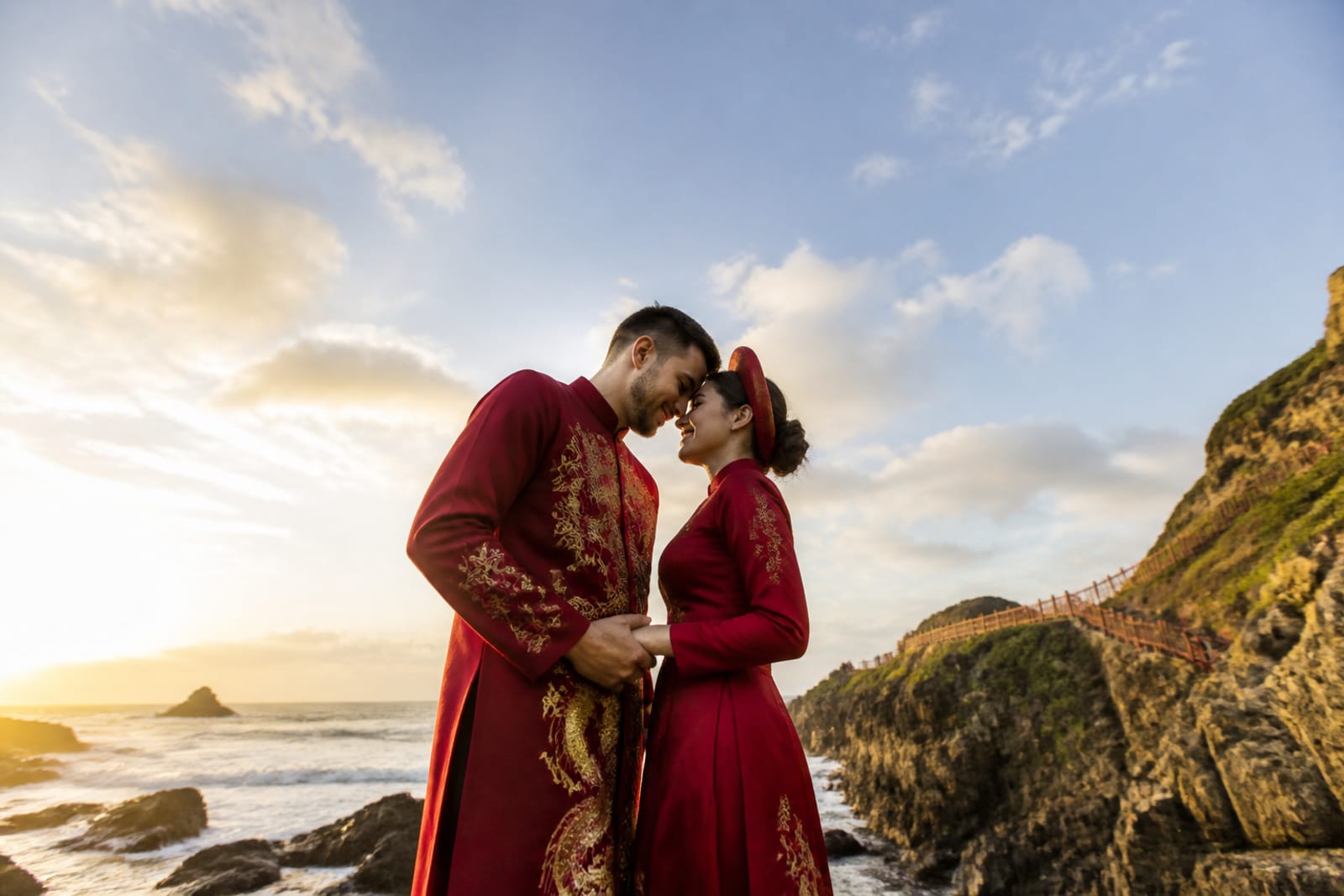
Sunrise (5:50–6:20 am): Side light skims the rocky headlands at Bai Xep and Nhon Ly, throwing long shadows and texture into the foreground. Best for silhouettes, walking shots and detail frames of waves and stone. Crowds are zero.
Mid-morning (8:30–11:00 am): Overhead light flattens features but skies remain clear blue. This window is useful for wide landscape frames and ao dai dress detail—the fabric colour stays true. Direct sun can feel harsh on faces; shoot under rocky overhangs or frame subjects against the water.
Golden hour (4:00–5:30 pm): Backlight from the western horizon turns the sea golden and silhouettes figures. This is the emotional peak—where pre-wedding frames feel cinematic. The downside: crowds return around 4:30 pm as locals and late tourists arrive.
Dusk (5:30–6:10 pm): Light drops fast. By 5:50 pm, foregrounds are already dim. Useful only if you're shooting silhouettes or want muted, romantic tones.
A three-hour session (e.g., 6:00–9:00 am) captures one full light arc; four hours split across two peaks (e.g., 6:00–8:00 am + 4:30–6:00 pm) demand travel between locations and a tight schedule.
Conclusion: Plan your shoot to anchor one sequence in sunrise or golden hour, where light does the storytelling.
---
How do season, crowds and outfit choice shape the logistics?
| Factor | April advantage | What it means for your session |
|---|---|---|
| Temperature | 25–30°C; humidity 65–75% | Lightweight cotton ao dai breathes; heavy fabrics wilt. Bring water. |
| Rain risk | <5% | No backup rain day needed. Shoot the planned date. |
| Crowds | Low to moderate (school holidays haven't started) | Bai Xep and Kho Tao stay quiet before 9 am; Saigon-Quy Nhon Port fills after 4 pm. |
| Light consistency | High (stable pressure, no fronts) | Light timing is predictable; sunrise is 5:50–6:00 am every day. |
| Local access | Fishing villages active morning; calm afternoons | Early shoots catch authentic activity; afternoon is for posed, intimate frames. |
What this means for your booking: Start early to chase a specific light hour, then choose a second location for contrast (e.g., Bai Xep at 6:30 am for dramatic cliffs, then Kho Tao lagoon at 10 am for calm reflection shots). Outfit changes work best between light windows, not mid-session, to avoid resetting makeup. Bring an ao dai or linen pieces that won't cling in the heat. If your session includes makeup & hair, plan it at your hotel 30 minutes before departure—heat and humidity will soften makeup if applied too early.
Conclusion: April's stable weather and moderate crowds reward early starts and loose scheduling; don't overpack the itinerary.
---
Which Quy Nhon locations work best for pre-wedding frames?
Bai Xep (Xep Beach, rocky coves): 6:00–8:00 am captures side light raking the stone formations. Subjects walk between rocks, sit on edges (safely) or stand framed by overhangs. Rope access drops to rock pools; wear secure footwear. Best for intimate, cinematic frames. Parking 10 minutes' walk up the hill; no crowds before 8 am.
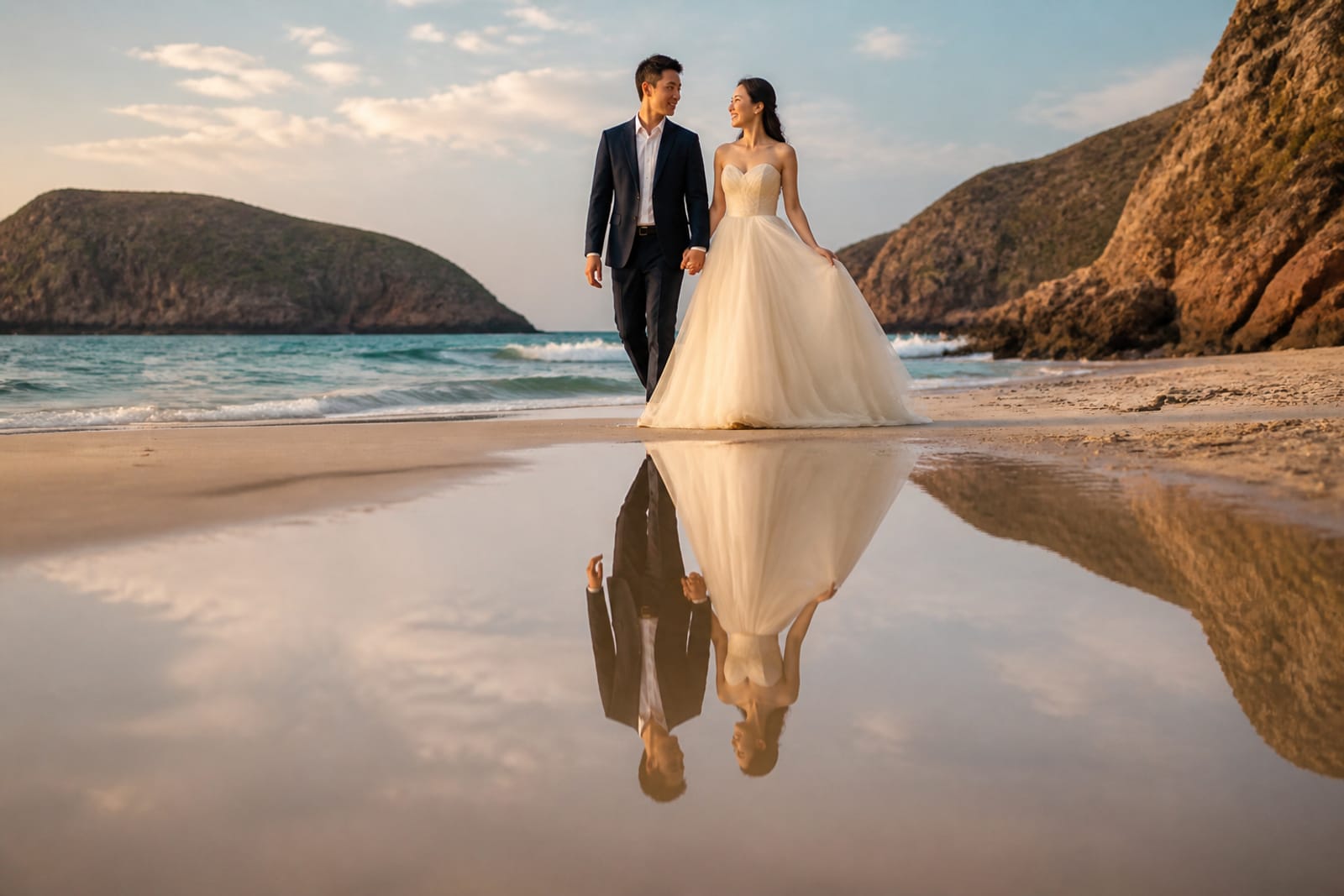
Kho Tao Lagoon (turquoise sheltered bay): 9:00–11:00 am when the water is glassy and reflects sky. Subjects walk along the beach or wade into the lagoon. Soft overhead light keeps the turquoise true. Suitable for flowing ao dai. Tides vary; check locals for access. Small boat hire is available locally (not via Cáo Studio).
Saigon-Quy Nhon Port (industrial-romantic): 4:30–5:45 pm as backlight fills the water. Subjects silhouetted against container vessels or framed in the port's rust and rope. Low foot traffic until 4:30 pm; avoid after 5:45 pm. Best for dramatic, moody frames—not traditional romance shots.
Ghenh Rang Cave and coastline (north of town): 7:00–9:00 am for side light across the sand and water. Subjects walk toward the cave mouth or sit on sand with water framing them. Fewer tourists than Bai Xep. Dust and sand; bring a damp cloth for ao dai hems.
Quy Nhon city streets (Tran Hung Dao, old town): 6:30–7:30 am when fish markets are open and light falls along the colonial shophouses. Subjects walk past vendors, sit on stoops or pose against pastel facades. Extremely humid; makeup may require touch-up by 7:15 am. Best for authentic, candid frames—not idealized romance shots.
Start with one cove location for calm light, then move to a second for contrast. Three locations in one four-hour session creates decision fatigue; two locations (one sunrise, one mid-morning or golden hour) yield deeper, more coherent frames.
Conclusion: Choose locations for distinct light hours, not Instagram checklist—Bai Xep at sunrise and Kho Tao mid-morning tell a story; rushing Saigon Port, Ghenh Rang and the city in one session scatters your narrative.
---
How do you prepare an ao dai and other outfits for coastal heat and salt spray?
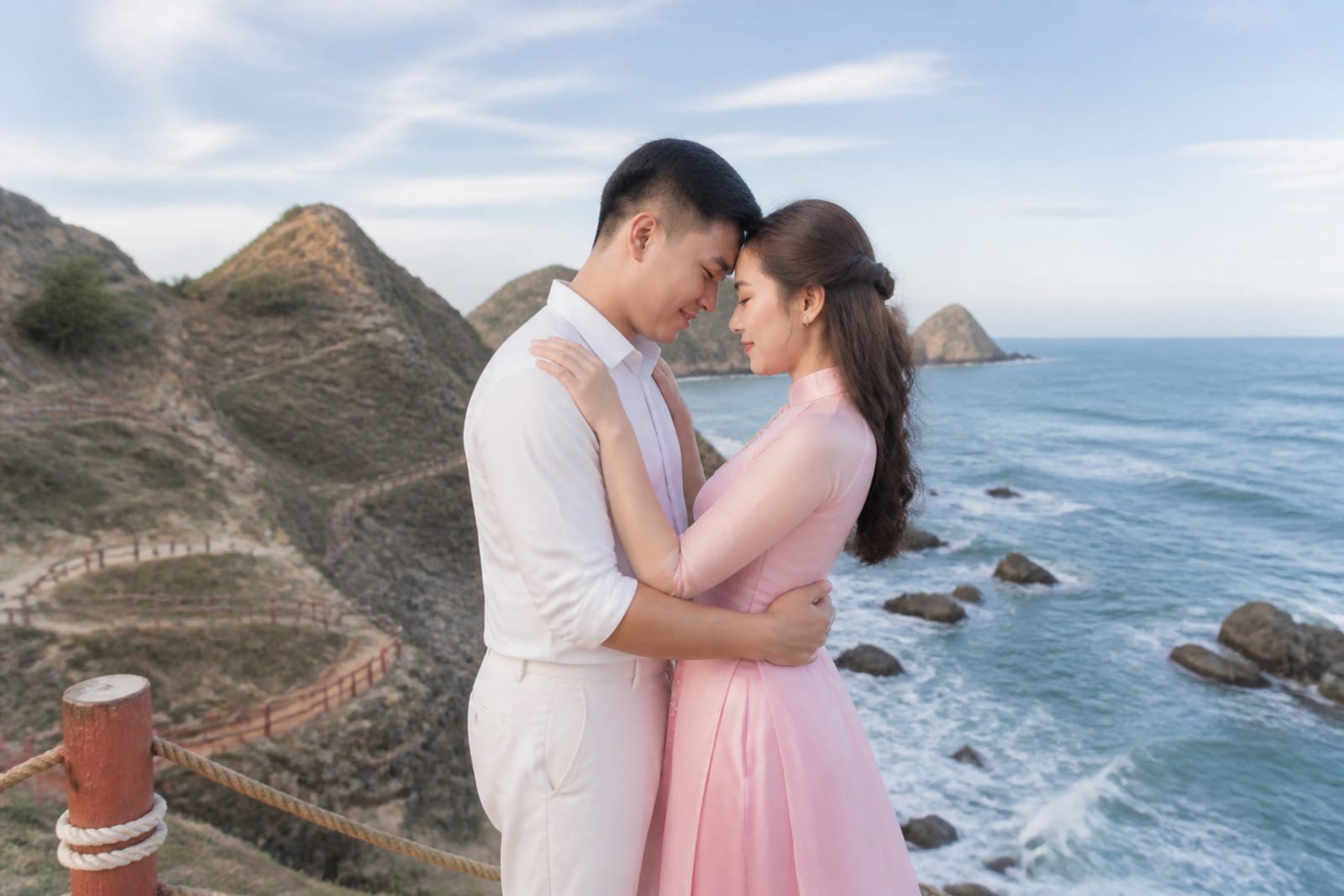
Ao dai fabric choice: Linen and cotton breathe; silk and heavy damask absorb sweat and cling. In April's humidity, test your ao dai indoors first—if it feels stiff or heavy in an air-conditioned room, it will be limp by 7:30 am on the beach. A custom or rental ao dai in lightweight linen is ideal; ao dai rental services in Quy Nhon can be sourced locally or via your hotel concierge (ask for recommendations on WhatsApp).
Underpinnings matter: Wear a fitted slip or cycling shorts under the ao dai to avoid transparency in bright light and salt spray. Moisture-wicking fabric prevents chafing during walking shots. A lightweight cotton undershirt under the long-sleeved áo top keeps sweat from showing through the fabric. Bring a small towel for quick drying between locations.
Secondary outfits: If your session includes a change, bring one lightweight, breathable piece—a cream linen shirt, a simple tunic or a contrast áo top. Avoid dark colours (absorb heat) and busy patterns (merge with foliage and rock). Test every outfit in humid conditions before the shoot day.
Salt spray and sand protection: Ask your makeup artist to apply a long-wear base and a setting spray rated for sweat and water—this keeps the frame sharp during walking shots and reflections. Bring sunscreen and reapply every 90 minutes, especially if your session includes makeup & hair at your hotel beforehand. Sand sticks to damp fabric; let the ao dai dry fully between locations or rinse gently with bottled water and air-dry in shade.
Footwear: Wear secure sandals or water shoes for rocky coves; bring a small pouch to store them between outfit changes. Bare feet on hot sand are authentic but risky (sharp shells, burns); test the sand temperature with your hand first.
Conclusion: Coastal shoots demand lightweight, moisture-wicking fabrics and a dust cloth—not just aesthetics, but comfort that keeps you present through three hours on rocks and sand.
---
What to check before you book a pre-wedding session in Quy Nhon.
Before committing, confirm:
- Light-hour timing: Ask your photographer which two locations they'll anchor to, and what time they arrive. Sunrise means 5:50 am departure from your hotel; golden hour means 4:00 pm finish. Build travel time into the plan.
- Outfit logistics: Confirm how many outfits fit into your session length and where you'll change (hotel, car, local shop). Makeup touch-up locations matter if the session spans multiple light hours.
- Local access and permits: Beaches in Quy Nhon don't require permits, but ask about tidal access, fishing activities and security (e.g., Bai Xep is safe; some remote coves are not). A local photographer knows these details.
- Heat and hydration: Your session includes how much water? Confirm the photographer brings ice and electrolyte drinks for a half-day coastal shoot in April.
- Weather backup: If rain (rare in April) arrives, is the session rescheduled or cancelled? Confirm the policy before the shoot day.
- Edited timeline: How long until you receive edited photos and any video? Confirm the exact turnaround on your booking confirmation.
---
Is Cáo Studio available for pre-wedding shoots in Quy Nhon?
Cáo Studio operates full pre-wedding shoots in Hanoi, Ho Chi Minh City and Hoi An. Quy Nhon is outside our current service area, but we support pre-wedding couples with honest planning guides and WhatsApp introductions to vetted local photographers. If you're drawn to pre-wedding photoshoots in a location we do serve—or want to pair a Quy Nhon getaway with a formal session in Hanoi or Hoi An—we can coordinate makeup & hair at your hotel and arrange outfits via ao dai rental and suit rental.
💄 Makeup & hair at your hotel | 🌸 See the lookbook
---
How to find and vet a local photographer in Quy Nhon.
- Ask your hotel concierge for photographer recommendations. They work with vendors year-round and know who delivers on timing and quality.
- Check Instagram for tags like #quynhonwedding, #quynhonphotography. Watch for portfolios that show consistent light (not blurry golden-hour shots) and authentic poses (people walking, interacting, not stiff).
- Ask for a light-hour consultation. Text the photographer your preferred locations and ask: "What time is best for Bai Xep in April?" If they answer vaguely, move on. A real photographer has shot there and knows the sun angle.
- Confirm logistics on WhatsApp. Do they bring assistants? What's included in the editing? Do they deliver RAW files or just JPEGs? How long is the turnaround?
- Book 2–3 weeks ahead. April is busy; you want to secure the sunrise slot you want, not settle for mid-morning because the 6 am slot is gone.
---
What to expect during a full pre-wedding session in Quy Nhon.
A typical four-hour pre-wedding shoot in April runs like this:
- 5:45–6:00 am: Hotel pickup; travel to first location (Bai Xep or Ghenh Rang).
- 6:00–8:00 am: First light window. Wide frames of the landscape, then medium and close frames of you two walking, sitting, holding hands. The photographer shoots 100–150 frames, catching light changes every 5–10 minutes.
- 8:00–8:30 am: Travel to second location; quick outfit change if planned.
- 8:30–10:00 am: Mid-morning light. Closer, more intimate frames. The mood shifts from cinematic landscape to emotional connection.
- 10:00–10:30 am: Travel to third location or wrap. Light is harsh by 10:30 am; most photographers stop.
If you've booked a four-hour session split across two light windows (sunrise + golden hour), it looks like:
- 5:45–8:00 am: First location, sunrise sequence.
- 8:00–12:00 pm: Break, lunch, rest at hotel (heat is intense; use this time to hydrate and prepare for evening).
- 4:00–5:30 pm: Second location, golden hour sequence.
This split schedule avoids the harsh mid-day heat and gives you two distinct moods in your frames.
📸 Book on WhatsApp — pre-wedding photoshoot
---
FAQ
Is April too hot for an outdoor pre-wedding shoot in Quy Nhon?
April peaks at 25–30°C—warm but not extreme. Sunrise (5:50–8:00 am) and golden hour (4:30–5:30 pm) are cool enough for ao dai and makeup to hold. Midday (11 am–3 pm) is punishing; most sessions avoid it or rest indoors.
What if it rains in April in Quy Nhon?
Rain is rare in April (<5% risk), but if it arrives unexpectedly, confirm your photographer's backup plan beforehand. Reschedule for the next clear day or shoot in the rain for moody, cinematic frames (requires a waterproof camera).
Can I wear a white or cream ao dai in coastal salt spray?
Yes, but confirm with your photographer and makeup artist. White shows salt stains; rinse the áo with fresh water immediately after the session and air-dry in shade. Have a damp cloth on hand during the shoot.
How many outfit changes fit into a four-hour session?
Realistically, one outfit change. Each change takes 15–20 minutes (location travel, touch-up makeup, light adjustment). A three-outfit session fragments the narrative and tires you out in April heat. Stick to one statement ao dai and one lightweight secondary outfit.
Should I book sunrise or golden hour, or both?
Both is ideal if you have the stamina. Sunrise (6–8 am) and golden hour (4:30–5:30 pm) each last 2–2.5 hours and tell different visual stories. A single light-hour session is shorter and less tiring; a split session across two peaks gives you two complete narratives in one day.
Does Cáo Studio shoot pre-wedding sessions in Quy Nhon?
No, we operate in Hanoi, Ho Chi Minh City and Hoi An. For Quy Nhon, we provide guides and WhatsApp introductions to vetted local photographers. If you'd like a formal pre-wedding shoot, consider booking in Hoi An (30 km south) and pairing it with a Quy Nhon getaway.
FAQ
Is April too hot for an outdoor pre-wedding shoot in Quy Nhon?
April peaks at 25–30°C—warm but not extreme. Sunrise (5:50–8:00 am) and golden hour (4:30–5:30 pm) are cool enough for ao dai and makeup to hold. Midday (11 am–3 pm) is punishing; most sessions avoid it or rest indoors.
What if it rains in April in Quy Nhon?
Rain is rare in April (<5% risk), but if it arrives unexpectedly, confirm your photographer's backup plan beforehand. Reschedule for the next clear day or shoot in the rain for moody, cinematic frames (requires a waterproof camera).
Can I wear a white or cream ao dai in coastal salt spray?
Yes, but confirm with your photographer and makeup artist. White shows salt stains; rinse the áo with fresh water immediately after the session and air-dry in shade. Have a damp cloth on hand during the shoot.
How many outfit changes fit into a four-hour session?
Realistically, one outfit change. Each change takes 15–20 minutes (location travel, touch-up makeup, light adjustment). A three-outfit session fragments the narrative and tires you out in April heat. Stick to one statement ao dai and one lightweight secondary outfit.
Should I book sunrise or golden hour, or both?
Both is ideal if you have the stamina. Sunrise (6–8 am) and golden hour (4:30–5:30 pm) each last 2–2.5 hours and tell different visual stories. A single light-hour session is shorter and less tiring; a split session across two peaks gives you two complete narratives in one day.
Does Cáo Studio shoot pre-wedding sessions in Quy Nhon?
No, we operate in Hanoi, Ho Chi Minh City and Hoi An. For Quy Nhon, we provide guides and WhatsApp introductions to vetted local photographers. If you'd like a formal pre-wedding shoot, consider booking in Hoi An (30 km south) and pairing it with a Quy Nhon getaway.
Ao dai, makeup, hair and a local photographer in Hanoi or Saigon — one WhatsApp message.