/pre-wedding-photoshoot
Pre-Wedding Photoshoot in Quy Nhon June: Light, Weather & Local Timing
June is Quy Nhon's best season for photoshoots: daytime temperatures around 28–32°C, minimal rain, and long golden-hour light over rocky coves. Tide shifts 2–3 hours daily, so scout your chosen beach the afternoon before to confirm rock formations and water level at your planned shoot time. Storms arrive in the late afternoon (4–5 pm onward), so schedule early—sunrise (5:30–6:30 am) gives soft side light and empty beaches; late morning (9–10 am) is safer than midday glare. Bring layers: lightweight cover-ups, a thin scarf or shirt over your ao dai or dress to block sun before the shoot starts, and reef shoes for rocky access. Cáo Studio does not operate in Quy Nhon; this guide helps you plan with a local photographer and avoid common mistakes (overheating during setup, wrong tide time, afternoon flash storms). 📸 Book on WhatsApp — pre-wedding shoots in Hanoi & Saigon | 🌸 See the lookbook ---
Why June is Your Best Window for Quy Nhon Pre-Wedding Light
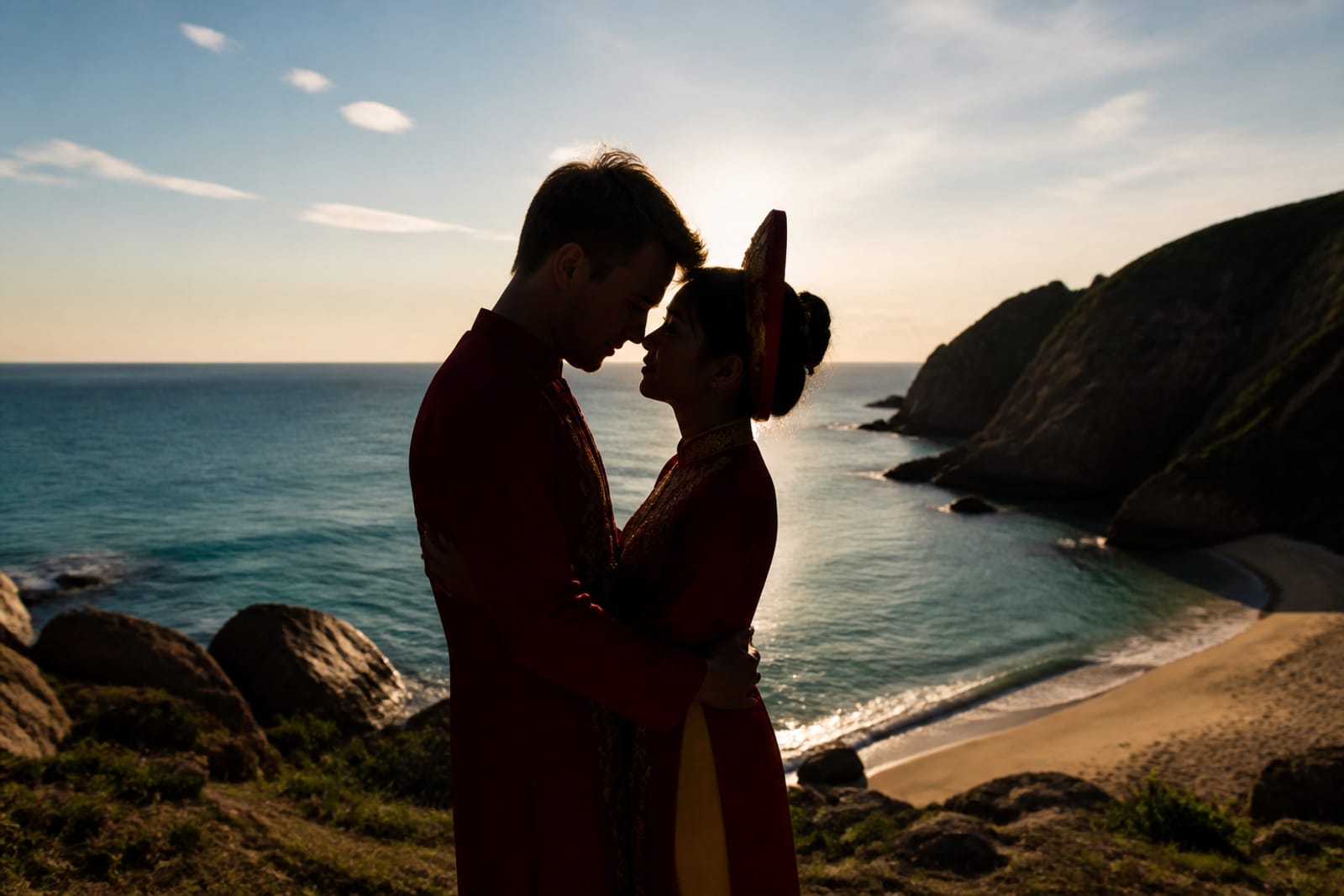
June sits in Quy Nhon's dry season (Feb–Aug), when the sky is clearest and humidity lower than July–August. Rainfall is rare—most days see blue sky by 7 am, with clouds building only after 3 pm. The central coast's coastal light is direct and warm, creating strong shadows on rock formations and turquoise water reflections; this suits wide landscape frames and couple silhouettes against the horizon. Later months (July–August) are hotter and more humid, making long sessions uncomfortable; September onward brings typhoon risk and afternoon downpours. June's dry, bright stability makes it the sweet spot for pre-wedding shoots without weather replanning.
---
What Time of Day Should You Shoot, and Why Tide Matters
Golden hours (sunrise 5:30–6:30 am, sunset 5:45–6:30 pm) offer soft, directional light. However, Quy Nhon's rocky coastline and tidal pools mean the same beach looks different every 2–3 hours. Scout your location the afternoon before: walk to the rock formation or cove at your planned shoot time to see water level, safe access points and walking routes. Early morning (5:45–7 am) is colder, less crowded, and catches side light that sculpts faces without harsh shadows; the beach is empty, so your photographer can reposition freely. Late morning (9–10 am) works if you prefer warmer skin tone and slightly higher sun, but midday (11 am–3 pm) creates flat, harsh light and intense heat that exhausts the couple and wilts makeup. Afternoon storms (4–5 pm onward) arrive often in June, so finish by 3:30 pm. Scout once, shoot with confidence; timing the tide avoids wasted frames and unsafe rock scrambling.
💄 Makeup & hair at your hotel — have your artist meet you at dawn to apply makeup in the cooler half-hour before shoot start.
---
Heat, Humidity and What to Wear Under Your Ao Dai
June heat in Quy Nhon peaks around 10 am–2 pm. If you're wearing an ao dai, layer it carefully: wear a lightweight slip or seamless leggings beneath (breathable cotton, not synthetic) to reduce sweat marks and chafing during the 1–2 hour shoot. Bring a thin long-sleeve shirt or gauze scarf to drape over your shoulders before you step into full sun; remove it just before the director calls "roll" on each frame. Reef shoes or water sandals with grip are essential—rocky beaches demand secure footing, and wet rocks are slippery. Sunscreen (SPF 50+) is non-negotiable; reapply every 60 minutes if you're in water or sweating. Pack a small towel to blot foreheads between frames. If your dress or ao dai is silk or delicate, ask your photographer if they can shoot in the shade of a rock formation or arrange a beach umbrella for setup time (not during shooting). Preparation prevents overheating, sweat-soaked fabrics and mid-shoot outfit changes.
---
Choosing a Local Photographer in Quy Nhon: What to Vet
Cáo Studio's model is one team handling photo, makeup, hair and styling in Hanoi, Ho Chi Minh City and Hoi An—all in one booking, one message. Quy Nhon lacks that integrated setup, so you'll hire a local photographer separately. Ask for these specifics: (1) Do they shoot in RAW + work with a specific editing style (warm tones, contrast, colour-graded)? (2) Do they have a second shooter or backup camera for weather delays? (3) Will they arrive early to scout light and tide? (4) Can they deliver edited files in 5–7 days, or do they take weeks? Ask to see their recent summer beach work (not studio shots or winter overcast beaches). Review their understanding of ao dai movement—poor photographers pose couples stiffly; good ones guide walking, looking, hand placement. If makeup and hair aren't included, book locally or arrive pre-styled; June heat means touch-ups are essential every 45 minutes. Vetting saves you from flat editing, missed golden light, and a second photographer who disappears when clouds arrive.
---
Season & Weather Comparison: June vs. Other Months in Quy Nhon
| Month | Light Quality | Rain Risk | Heat / Comfort | Crowds | Best For |
|---|---|---|---|---|---|
| Feb–Apr | Clear, strong shadows | Very low | Warm, pleasant; 24–28°C | Few tourists | Bright, sharp frames; cool setup time |
| May | Building humidity, haze | Low | Hot; 28–31°C | Increasing | Long golden hours; afternoon storms start |
| June | Bright, stable; minimal haze | Very low | Warm; 28–32°C; manageable | Moderate | Clearest dry-season light; reef and water visible |
| July–Aug | Bright but muggy; heat shimmer | Low–moderate | Hottest; 30–33°C; uncomfortable for long sessions | More tourists | Strong colour, but couple fatigue and sweat |
| Sep–Dec | Hazy, erratic | High; typhoons Oct–Nov | Cooling; 26–30°C | Few tourists | Risk of flash storms; reschedules common |
June balances light clarity, low rain and manageable heat; avoid July–Aug heat and Sep–Dec weather uncertainty.
---
Outfit, Hair and Makeup Strategy for June's Heat and Salt Water
Ao dai is the classic choice for a Vietnamese pre-wedding shoot. In June's warmth, choose a lighter fabric (silk, linen blend) rather than heavy satin; the flow catches wind better and cools faster when wet. Avoid dark colours that absorb heat—white, cream, pastel blue or blush reflect sunlight. If you plan water shots (wading, sitting on rocks), accept that the hem will get wet; style your hair in a low bun or waves secured with pins, not elastic bands that slip when damp.
Western dress (gown, rehearsal dress, maxi) works equally well; bring a lightweight shawl or kimono to layer during setup and travel. Strapless or sleeveless dresses mean sunburn risk—reapply sunscreen every 30 minutes, or shoot in early morning shade.
Hair: June humidity is moderate for the coast. Waves and loose styles hold better than tight curls or updos (which frizz and flatten). Ask your stylist for salt-spray-resistant products; if you're shooting near water, expect waves to relax by the final frame—this is normal and often looks softer. Avoid heavy gel or spray that hardens in heat.
Makeup: Waterproof mascara, long-wear foundation and lip stain are essential. The combination of sun, humidity and water means cream blush and powder eyeshadow won't survive a 2-hour session. Use a primer to lock everything down. Bring blotting papers for T-zone touch-ups. If your photographer is directing you to move, walk and look at each other (not posing), you'll sweat—your artist should plan for one 10-minute touch-up halfway through. Heat-proof styling keeps you camera-ready for 90+ minutes without mid-session changes.
🌸 See the lookbook — inspiration for coastal ao dai and dress styles.
---
Transportation, Access and Safety: Getting to Quy Nhon's Best Beaches
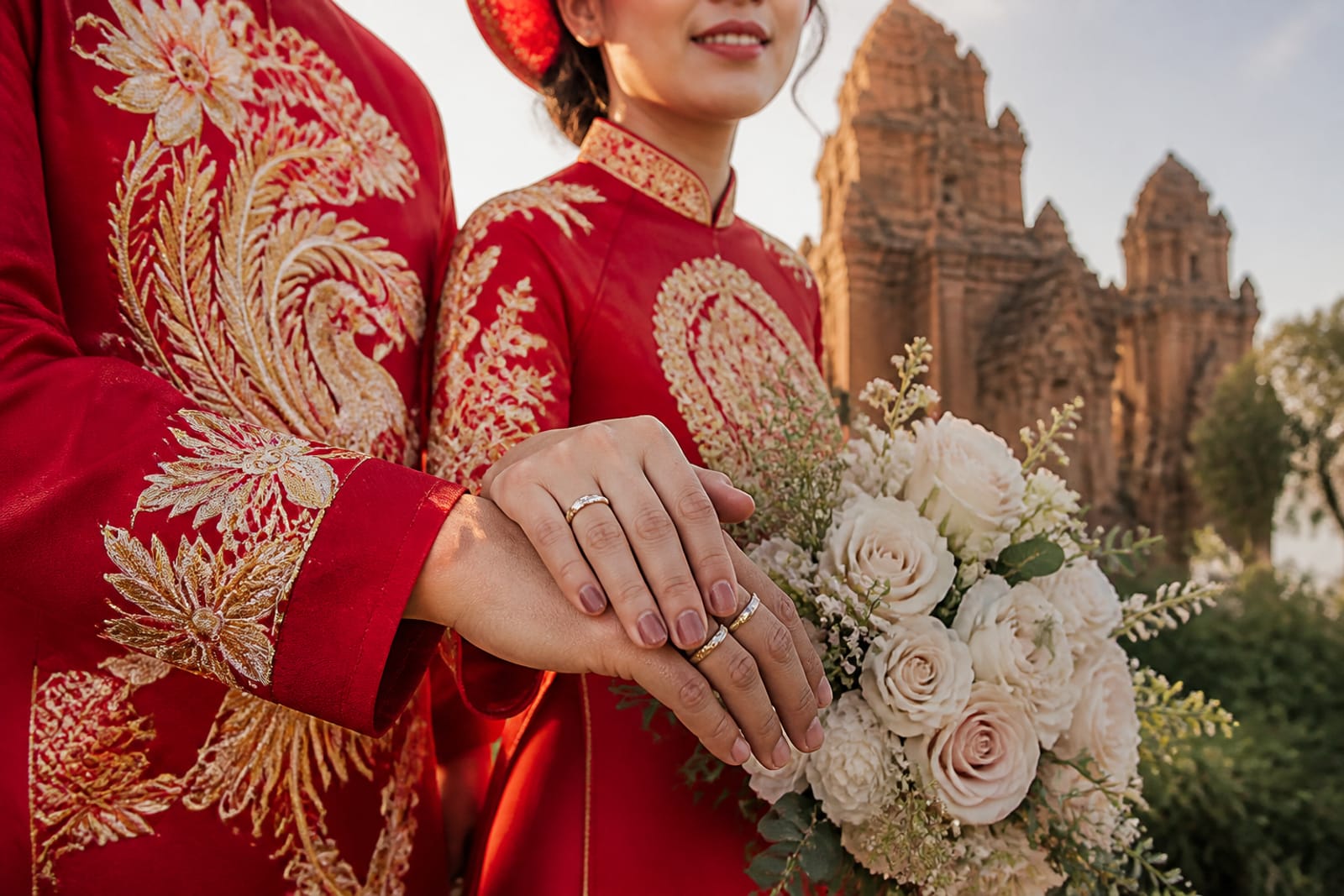
Quy Nhon is a coastal city in Binh Dinh Province, roughly 6 hours by bus or car from Da Nang (to the north) and 4 hours from Nha Trang (to the south). Most travellers fly into Da Nang or Ho Chi Minh City and arrange a 2–3 hour transfer. Popular photo beaches near Quy Nhon include Bai Xep (rocky coves, turquoise water, 20 minutes south of city), Bai Dai (long sandy stretch, early morning light), and the city seafront near the old lighthouse. Each requires a local guide or local knowledge for safe rock access and tide timing.
Book transport the day before to ensure your photographer and styling team can arrive early. Mobile phone signal is reliable in the city and coastal areas, but confirm with your photographer. Sunburn is real—even cloudy-looking skies deliver UV; aim to finish by 3 pm to avoid afternoon heat exhaustion and the typical 4–5 pm storm window. If weather forces a delay, reschedule to the next morning rather than extending into afternoon. Early arrival, known tide times and a clear finish line prevent accidents and washed-out sessions.
---
Real Talk: What Goes Wrong in June, and How to Avoid It
- Underestimating tide shifts. Arriving 30 minutes before shoot time means you didn't scout. Do it the day before; note the water level and safe path to rocks. Tide can cut off access or flood your chosen spot if you're off by 2 hours.
- Overheating during setup. Makeup, hair and outfit changes happen in full sun while you're waiting. Bring a pop-up umbrella for the prep area, and keep water (1.5–2 liters per person) on hand. If the couple looks flushed or dizzy, pause for 15 minutes in shade.
- Forgetting reef shoes. Rocky beaches are slippery when wet and sharp underfoot. Bare feet mean cuts and pain during the shoot; flip-flops slip off. Reef shoes cost little and stay on.
- Expecting a 4-hour session. Coastal heat means 60–90 minutes of good frames, not 3 hours. Plan one outfit per location (ao dai for sunrise rocks, dress for late-morning sand). More locations = more travel time and heat fatigue.
- Wrong photographer editing style. If you like warm, skin-friendly tones and they deliver cool, high-contrast beach frames, you won't love the files. Ask to see their recent work and discuss the mood you want before booking.
- Ignoring afternoon storms. June is dry, but 4–5 pm thunderstorms arrive fast on the coast. Finish by 3:30 pm, or you risk lightning over open beaches and ruined hair/makeup from sudden downpours.
Scout, hydrate, book early sessions, and confirm your photographer's editing style before the shoot.
---
How to Brief Your Photographer for Quy Nhon's Coastal Light
Send your photographer a clear brief 1–2 weeks before the shoot:
- Sunrise cove session (5:45–7:30 am): soft side light, wide frames of couple walking out from rocks, close detail of rings against turquoise water, silhouettes if sky is clear.
- Outfit changes: ao dai for dawn, dress or second outfit for late morning if energy permits.
- Must-haves: walking frames (not posed), connection between couple, location context (don't crop out the water or rock formations).
- Editing tone: warm skin, vibrant water, natural colour (not oversaturated or faded).
- Delivery: edited files by day 5 post-shoot.
A photographer who understands your vision and the light available will spend less time directing and more time capturing genuine moments. Pre-wedding shoots thrive on clear direction and the couple's natural movement—not stiff posing in front of the view. A good brief prevents wasted frames and ensures the final gallery matches your dream.
---
What to Check Before You Book a Quy Nhon Pre-Wedding Session
- Local photographer portfolio: Do their summer beach work match the light, colour and mood you want?
- Makeup & hair: Are they included, or do you hire separately? June heat means skill matters—ask if they've styled outdoor shoots.
- Tide table: Request the photographer confirm tide times for your chosen beach 2–3 days before the shoot.
- Weather backup: If storms arrive, does the photographer offer a free reshoot date within the next week?
- Transport: Who arranges the driver? Does the photographer travel to the beach, or do you meet them there?
- Editing turnaround: 5–7 days is standard; anything longer means they're backlogged.
- File format & rights: Will you receive RAW files, JPEGs or both? Can you print and share freely?
- Payment terms: Confirm the deposit, final payment deadline and cancellation policy.
---
Bringing It Together: Your Pre-Wedding Shoot Timeline for June in Quy Nhon
4 weeks before: Book photographer, scout beaches online (reviews, Instagram tags), confirm ao dai or dress rental.
2 weeks before: Brief photographer on mood and locations; book any separate makeup/hair team; confirm tide table access.
1 week before: Scout your chosen beach at the planned shoot time; test access, water level and light angle; walk the route in the exact outfit you'll wear.
2 days before: Final weather check; confirm photographer and transport; lay out clothes, shoes and sunscreen.
Day of: Arrive 30 minutes early; makeup/hair in shade with umbrella; shoot 5:45–7:30 am for golden light; finish by 3:30 pm before afternoon storms.
5–7 days after: Receive edited files; upload to shared folder or cloud; share the story with family and friends.
If you're based in Hanoi or Ho Chi Minh City and planning a pre-wedding session closer to home, Cáo Studio handles photo, makeup, hair and styling in one booking—no vendor juggling, one consistent message. For Quy Nhon, use this guide to vet a local photographer and avoid common mistakes. Coastal light is unforgiving but generous; respect the tide, hydrate, and you'll capture frames you keep for life.
📸 Book on WhatsApp — pre-wedding shoots in Hanoi & Saigon | 💄 Makeup & hair at your hotel | 🌸 See the lookbook
---
FAQ
Is June really the best month to shoot in Quy Nhon, or can I come July or August?
June has the clearest light and lowest rain risk in the dry season. July–August are hotter (30–33°C) and more humid; heat exhaustion and makeup melt become problems. Sep–Dec brings typhoon risk and frequent afternoon storms, so reshoots are common. June is objectively best.
Do I need to hire a makeup artist separately in Quy Nhon, or can my photographer handle it?
Most photographers in Quy Nhon are photo-only; makeup is separate. Book a local artist ahead—ask your photographer for a referral, or search Instagram tags "#makeup artist Quy Nhon". June heat means skill matters; confirm they've styled outdoor shoots and use waterproof products.
What if a storm hits during my shoot on the day?
Afternoon storms (4–5 pm) are normal in June, but rare before 3 pm. Finish by 3:30 pm and you'll avoid most risk. If lightning appears, leave the beach immediately. Ask your photographer if they offer a free reshoot date within one week if weather forces an early stop.
Can I wear a Western wedding dress on a rocky beach in Quy Nhon in June, or will it get ruined?
Western dresses work fine; expect the hem to get wet on rocky beaches. Choose a style you don't mind salt water touching (silk and lace absorb and dry slowly; simpler fabrics are safer). Bring a dry change for travel after the shoot. June water temperature is around 27–28°C, so drying time is faster than cooler months.
How long should I book for a pre-wedding shoot in Quy Nhon, and can I do two locations in one day?
60–90 minutes of quality shooting is realistic in June heat. One location per session is safest; moving between beaches wastes 30+ minutes in traffic and sun. If you want two locations (dawn rocks + late-morning sand), book as two separate sessions on different days, or plan for one outfit per location and finish by early afternoon before heat and storms arrive.
Do I need reef shoes if I'm wearing an ao dai, or can I go barefoot?
Reef shoes are strongly recommended. Rocky beaches are sharp and slippery when wet; barefoot means cuts and pain. Reef shoes cost little, stay on during movement, and let you walk confidently for walking frames. A bleeding foot will end your shoot early.
FAQ
Is June really the best month to shoot in Quy Nhon, or can I come July or August?
June has the clearest light and lowest rain risk in the dry season. July–August are hotter (30–33°C) and more humid; heat exhaustion and makeup melt become problems. Sep–Dec brings typhoon risk and frequent afternoon storms, so reshoots are common. June is objectively best.
Do I need to hire a makeup artist separately in Quy Nhon, or can my photographer handle it?
Most photographers in Quy Nhon are photo-only; makeup is separate. Book a local artist ahead—ask your photographer for a referral, or search Instagram tags "#makeup artist Quy Nhon". June heat means skill matters; confirm they've styled outdoor shoots and use waterproof products.
What if a storm hits during my shoot on the day?
Afternoon storms (4–5 pm) are normal in June, but rare before 3 pm. Finish by 3:30 pm and you'll avoid most risk. If lightning appears, leave the beach immediately. Ask your photographer if they offer a free reshoot date within one week if weather forces an early stop.
Can I wear a Western wedding dress on a rocky beach in Quy Nhon in June, or will it get ruined?
Western dresses work fine; expect the hem to get wet on rocky beaches. Choose a style you don't mind salt water touching (silk and lace absorb and dry slowly; simpler fabrics are safer). Bring a dry change for travel after the shoot. June water temperature is around 27–28°C, so drying time is faster than cooler months.
How long should I book for a pre-wedding shoot in Quy Nhon, and can I do two locations in one day?
60–90 minutes of quality shooting is realistic in June heat. One location per session is safest; moving between beaches wastes 30+ minutes in traffic and sun. If you want two locations (dawn rocks + late-morning sand), book as two separate sessions on different days, or plan for one outfit per location and finish by early afternoon before heat and storms arrive.
Do I need reef shoes if I'm wearing an ao dai, or can I go barefoot?
Reef shoes are strongly recommended. Rocky beaches are sharp and slippery when wet; barefoot means cuts and pain. Reef shoes cost little, stay on during movement, and let you walk confidently for walking frames. A bleeding foot will end your shoot early.
Ao dai, makeup, hair and a local photographer in Hanoi or Saigon — one WhatsApp message.