/pre-wedding-photoshoot
Pre-wedding photoshoot in Quy Nhon: rainy season guide
Quy Nhon during the rainy season (September–December, worst October–November) offers soft, diffused light and near-empty beaches—qualities that suit pre-wedding storytelling if you shoot between downpours and choose a photographer who understands working with overcast skies and wet sand. Most rain falls in afternoons; morning shoots (6–9 am) catch clearer windows. You'll need waterproof bags, quick-dry outfits (silk wraps, lightweight áo dài or rehearsal dresses), and a local photographer versed in monsoon light and permit navigation—Cáo Studio's Hanoi and Saigon teams can advise on vetting, though they do not shoot in Quy Nhon. Plan 2–3 hours on location, scout spots the day before, and confirm your photographer's backup plan if rainfall intensifies.
Is Quy Nhon's rainy season actually good for pre-wedding photos?
Yes—if you reframe "rainy season" as soft-light season. October–November bring the heaviest rain; September and December are lighter. The trade-off: fewer tourists, muted colour palettes (grey sky, wet stone, dark sand), and intimate framing that reads as reflective rather than celebratory. Couples who want moody, narrative-driven frames (walking into mist, sitting on wet rocks, reflected in tide pools) find monsoon Quy Nhon superior to dry-season crowds. Expect 40–60% of your planned shoot time to be usable; the rest becomes tea breaks or location pivots. This is not a flaw—it's the reality you're hiring a skilled photographer to navigate.
What time of day shoots around rainy weather?
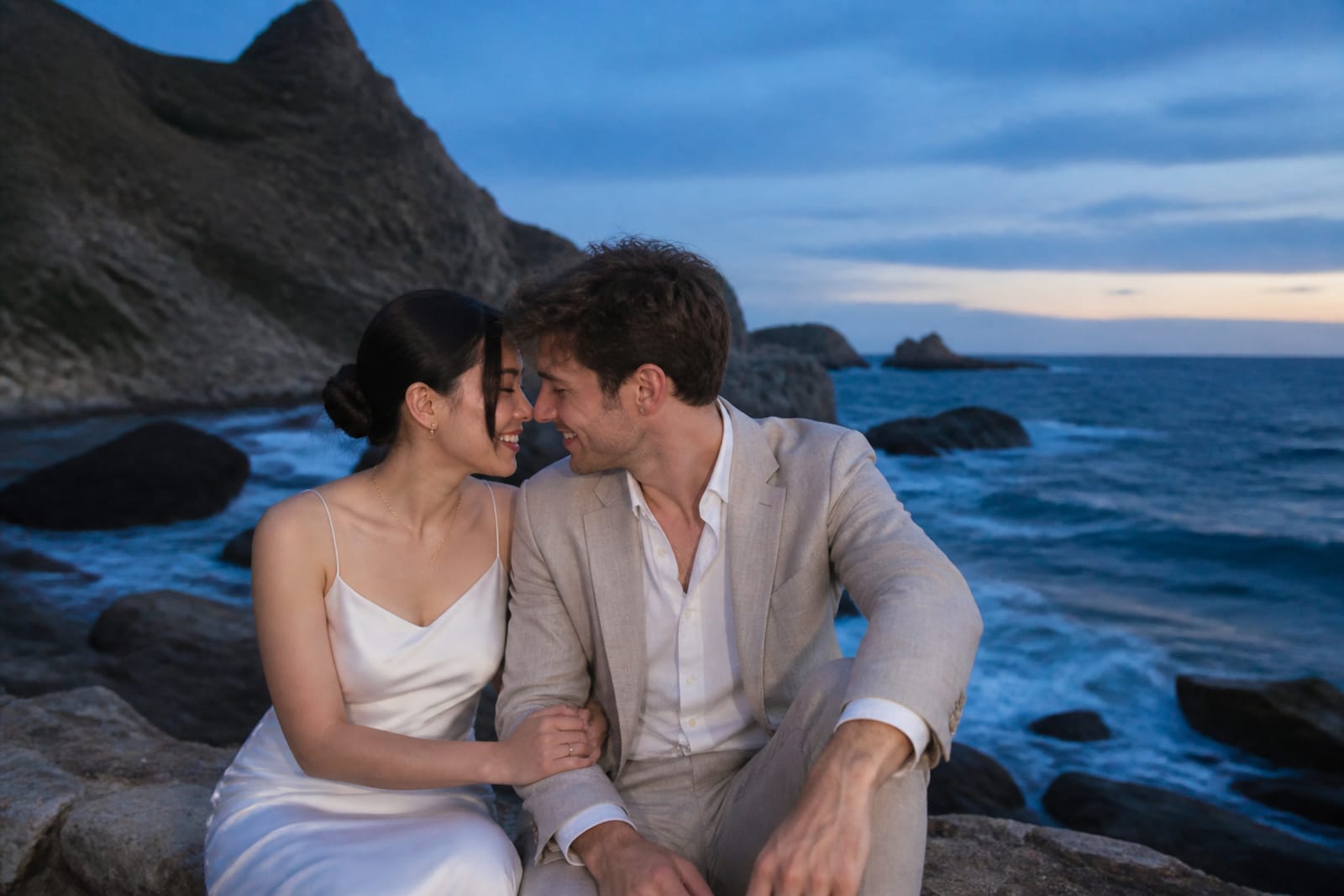
Morning windows (5:30–9 am) are your safest bet for Quy Nhon September–December. Rain typically builds in the afternoon; the brief pre-dawn to mid-morning period often clears slightly as the sun rises inland. Evening shoots (after 4 pm) are unpredictable—thunderstorms, low light, and wind-blown spray make framing difficult. Arrive at your location 20 minutes early; if rain is steady, move to a covered or semi-sheltered spot (pier underside, boathouse, rock overhang) and shoot there. Your photographer should have scouted these backup frames beforehand. Spring tides and tide times also matter—consult a local tide table to position yourselves on exposed sand or shallow pools when water is low.
How do you choose outfits for a rainy pre-wedding shoot?
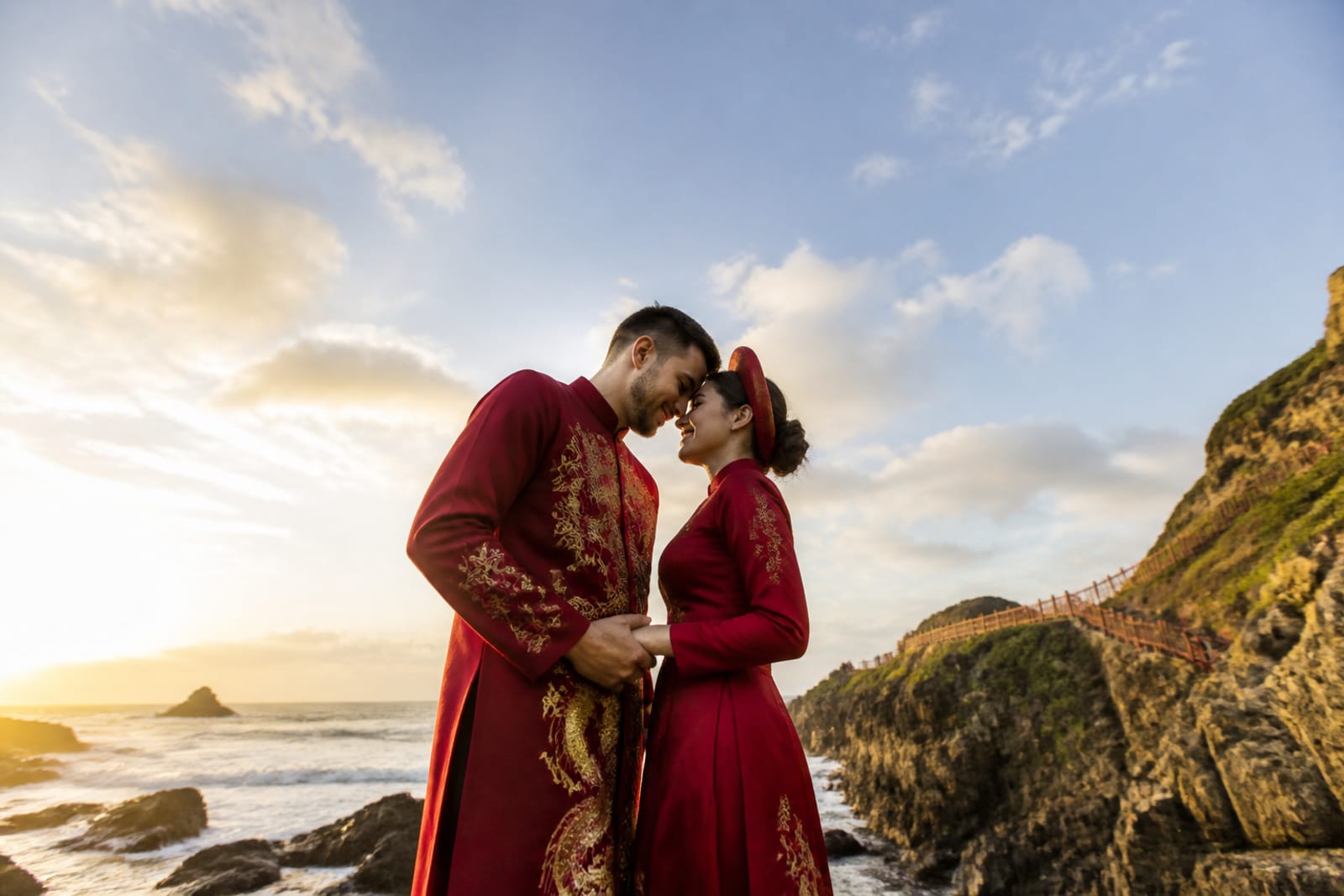
Forget heavy satin, long trains, or layered tulle—monsoon Quy Nhon demands lightweight, packable, quick-dry fabrics. Consider a silk áo dài (traditional, photogenic, wraps quickly), a linen rehearsal dress, or a tailored wrap dress in muted tones (cream, grey, blue). Grooms: lightweight linen suits or tailored shirts without jackets; avoid cotton that clings when wet. Footwear: consider going barefoot on sand (romantic, practical), or wear minimal sandals you can ditch quickly. Bring a silk scarf or shawl—it doubles as a windbreak and a styling prop when draped. Pack a dry change of clothes for after the shoot; salt water and sand are abrasive. Ask your photographer if they've styled couples in monsoon conditions before—experience shows in how they frame wet fabric and suggest movement that works with, not against, the weather.
| Outfit Type | Best For | Why It Works in Rain | What to Avoid |
|---|---|---|---|
| Silk áo dài (traditional) | Couple shoots, cultural frame | Drapes elegantly when wet; quick-dry; photogenic texture | Heavy embroidery that absorbs water |
| Linen/cotton-blend rehearsal dress | Casual, intimate shots | Breathable; wrinkles add character; easy to move in | Pure cotton (stays damp, heavy) |
| Tailored wrap dress (knee-length) | Versatile, easy pivot | Can be unwrapped for movement; layers create depth | Anything with elastic cuffs (traps water) |
| Linen suits / shirt + trousers | Groom, casual formal | Lightweight; visible texture in grey light | Jackets (bulk, absorption) |
| Minimal footwear / barefoot | Beach, rock, pier frames | Authentic movement; less risk of slipping | Heavy boots, heels (unsafe on wet stone) |
What should you check before booking a Quy Nhon photographer?
First, ask if they've shot pre-wedding sessions in monsoon conditions specifically—not just "experience in Quy Nhon" but rainy-season experience. Request to see a monsoon portfolio (overcast skies, wet sand, mist). Second, confirm their backup plan: if rain exceeds a certain level, do they pivot to covered locations, reschedule, or offer partial refunds? Third, ask about permit knowledge—some Quy Nhon beaches or rock formations have local access restrictions; a local photographer knows them. Fourth, check their turnaround time for edits (how soon will you see proofs and final files?). Finally, discuss how they handle water damage to gear and whether their equipment is weather-sealed. A photographer comfortable in monsoon conditions will answer these questions directly and offer specific examples.
How does booking a local Quy Nhon photographer differ from using Cáo Studio remotely?
Cáo Studio operates in Hanoi, Ho Chi Minh City, and Hoi An only; the team does not travel to Quy Nhon. A local Quy Nhon photographer offers real-time weather pivots, permits already filed, and day-of logistics (parking, lunch, safety on wet rocks). You gain speed and local knowledge. You lose the unified team that Cáo Studio brings to its core markets—hair, makeup, styling, and photography all coordinated by one director. For a Quy Nhon pre-wedding shoot, contact a local studio directly, or ask Cáo Studio's team on WhatsApp for referrals and vetting tips. If you're open to a pre-wedding photoshoot in Hanoi, Ho Chi Minh City, or Hoi An instead, Cáo Studio can deliver the full directed experience—one team, one message—with the dry season (Feb–Aug for Hoi An) or a carefully timed monsoon session if you're in the north or south.
---
📸 Book on WhatsApp — pre-wedding photoshoot
What to check before you book
- Portfolio in monsoon light: ask for 10–15 frames shot in rainy conditions, not just sunny highlights.
- Turnaround time: confirm when proofs arrive and final edits are delivered.
- Outfit guidance: does the photographer suggest fabrics, colours, and layers suited to wet weather?
- Backup plan: what happens if rainfall is heavy? Do they reschedule, refund, or move locations?
- Permit and access: can they confirm access to your desired beach or rock formations on the day?
- Team size: who shows up? Is there a second shooter for safety on slippery surfaces?
- Communication: respond time to messages, willingness to discuss specifics over video call before booking.
---
Real timings and logistics
Book your shoot for early morning (6–8 am start) to maximize the weather window. Plan 2–3 hours on location, leaving an hour buffer for travel and unexpected rain. Have your photographer arrive 15 minutes early to scout; you arrive 10 minutes before the planned start, already in outfit and hair (or with a makeup artist on-site). Bring: water bottles, a dry towel, a sealed bag for phones/wallets, and a change of shoes for after. If rain becomes torrential (visibility under 20 metres), stop—wet lenses and dangerous footing are not worth a frame. Reschedule rather than rush.
---
How Quy Nhon compares to other rainy-season destinations
Hoi An (central coast, Sep–Dec rainy): similar monsoon light, but Hoi An Ancient Town offers covered shoots and iconic yellow-wall backdrops; busier in September–early October, quieter late October–December. Cáo Studio travels to Hoi An by appointment—ask on WhatsApp for rainy-season dates.
Hanoi (north, Dec–Feb cool and grey): dry season is Feb–May, but winter grey (Dec–Feb) creates similar overcast frames; far fewer crowds than dry season, easier logistics, and Cáo Studio operates here year-round.
Ho Chi Minh City (south, Dec–Apr dry; May–Nov wet): rainy-season shoots (Jun–Aug, brief afternoon showers) are possible but less reliable than Quy Nhon because humidity and heat make styling harder. Cáo Studio's Saigon team works in both seasons; ask for monsoon experience.
Quy Nhon's advantage: coastal mist, dramatic rock formations, and lower foot traffic than Hanoi or the ancient towns. Its challenge: you need a photographer comfortable with technical adjustments in flat, grey light.
---
Building your pre-wedding timeline around Quy Nhon's season
If you're planning a pre-wedding photoshoot in Quy Nhon for September–December, book your photographer 4–6 weeks ahead to secure a date and confirm their monsoon experience. Use September or early December for slightly lighter rain; avoid late October and November if you want higher odds of clearer windows. Coordinate with your venue (rehearsal dinner location, hotel) so the shoot doesn't clash with other pre-wedding events. Plan a second "safety date" 1–2 days later in case the first session is rained out completely. Discuss whether reschedules are free or attract an extra fee.
If Quy Nhon's rainy season feels risky, consider an ao dai photoshoot or couple photoshoot in Hanoi, Ho Chi Minh City, or Hoi An instead, where Cáo Studio operates year-round and can coordinate outfit, hair, makeup, and photography as one directed team.
---
FAQ
Can you shoot pre-wedding photos in Quy Nhon in October or November?
Yes, but expect steady rain and shorter usable shooting windows. Morning shoots (5:30–9 am) are safest. October–November are the wettest months; September and December offer slightly better odds. Book a photographer experienced in monsoon conditions and have a location pivot plan.
What's the best outfit for a rainy pre-wedding shoot in Quy Nhon?
Lightweight, quick-dry fabrics: silk áo dài, linen rehearsal dresses, or tailored wrap dresses. Avoid heavy satin, long trains, or pure cotton. Go barefoot on sand or wear minimal sandals. Bring a silk scarf for styling and wind protection.
Does Cáo Studio shoot pre-wedding photos in Quy Nhon?
No. Cáo Studio operates in Hanoi, Ho Chi Minh City, and Hoi An only. For a Quy Nhon shoot, hire a local photographer and ask Cáo Studio's team on WhatsApp for referral tips and vetting advice.
What should I ask a Quy Nhon photographer before booking?
Ask for a monsoon portfolio, confirm their backup plan if rain is heavy, check permit knowledge, verify turnaround time for edits, and ask if their equipment is weather-sealed. Request specific examples of rainy-season pre-wedding shoots they've completed.
How long does a pre-wedding photoshoot in Quy Nhon take?
Plan 2–3 hours on location, including travel and setup. Morning shoots (6–8 am start) maximize the weather window. Afternoon shoots are riskier due to rain buildup and lower light.
What's included in a pre-wedding photoshoot package?
Inclusions vary by photographer. Before booking, confirm the number of edited photos, delivery timeline, outfit changes, location scouting, and whether reschedules are free. Ask on WhatsApp if you're considering Cáo Studio's pre-wedding service in another city.
FAQ
Can you shoot pre-wedding photos in Quy Nhon in October or November?
Yes, but expect steady rain and shorter usable shooting windows. Morning shoots (5:30–9 am) are safest. October–November are the wettest months; September and December offer slightly better odds. Book a photographer experienced in monsoon conditions and have a location pivot plan.
What's the best outfit for a rainy pre-wedding shoot in Quy Nhon?
Lightweight, quick-dry fabrics: silk áo dài, linen rehearsal dresses, or tailored wrap dresses. Avoid heavy satin, long trains, or pure cotton. Go barefoot on sand or wear minimal sandals. Bring a silk scarf for styling and wind protection.
Does Cáo Studio shoot pre-wedding photos in Quy Nhon?
No. Cáo Studio operates in [Hanoi](/hanoi), [Ho Chi Minh City](/saigon), and [Hoi An](/hoi-an) only. For a Quy Nhon shoot, hire a local photographer and ask Cáo Studio's team on WhatsApp for referral tips and vetting advice.
What should I ask a Quy Nhon photographer before booking?
Ask for a monsoon portfolio, confirm their backup plan if rain is heavy, check permit knowledge, verify turnaround time for edits, and ask if their equipment is weather-sealed. Request specific examples of rainy-season pre-wedding shoots they've completed.
How long does a pre-wedding photoshoot in Quy Nhon take?
Plan 2–3 hours on location, including travel and setup. Morning shoots (6–8 am start) maximize the weather window. Afternoon shoots are riskier due to rain buildup and lower light.
What's included in a pre-wedding photoshoot package?
Inclusions vary by photographer. Before booking, confirm the number of edited photos, delivery timeline, outfit changes, location scouting, and whether reschedules are free. Ask on WhatsApp if you're considering [Cáo Studio's pre-wedding service](/pre-wedding-photoshoot) in another city.
Ao dai, makeup, hair and a local photographer in Hanoi or Saigon — one WhatsApp message.