/pre-wedding-photoshoot
Pre-wedding photoshoot in Sapa in August: weather, light, crowds
August in Sapa is monsoon season: expect afternoon rain, thick mist that lifts by dawn, and lush rice terraces. Pre-wedding shoots work best at first light (before 7 am) on the eastern slopes of Muong Hoa Valley, where soft side light cuts through mist naturally. Plan for 1–2 clear mornings in a 3–4 day window; one outfit change suits the weather better than heavy rotations. Rain means muddy trails—wear grip-soled shoes under your ao dai or outfit, and bring a second pair. Cáo Studio works with local guides and backup indoor spots (village homestays, colonial buildings) if weather closes mountain access. Couples who arrive a week early and stay flexible catch the best light; those locked into single dates often miss it. --- 📸 Book on WhatsApp — ao dai photoshoot ---
Why does August rain make pre-wedding shoots in Sapa work?
August brings the southwest monsoon: morning mist clings to the valley until 6–7 am, then burns off in patches as the sun climbs. This creates natural soft light that bounces off wet stone and rice paddies. Harsh midday sun is blocked by cloud cover, so noon shooting isn't a waste like in July. Terraces are at peak green (harvest is still 4–6 weeks away), and every spray of water reflects sky. The trade-off is rain—afternoon downpours are common—but they pass fast. Shoot early, retreat by 11 am, and you avoid crowds and heat. This light pattern only works in monsoon; dry season (Dec–Feb) has sharp shadows and dust haze. August's rain is a feature, not a bug, for moody, layered frames.
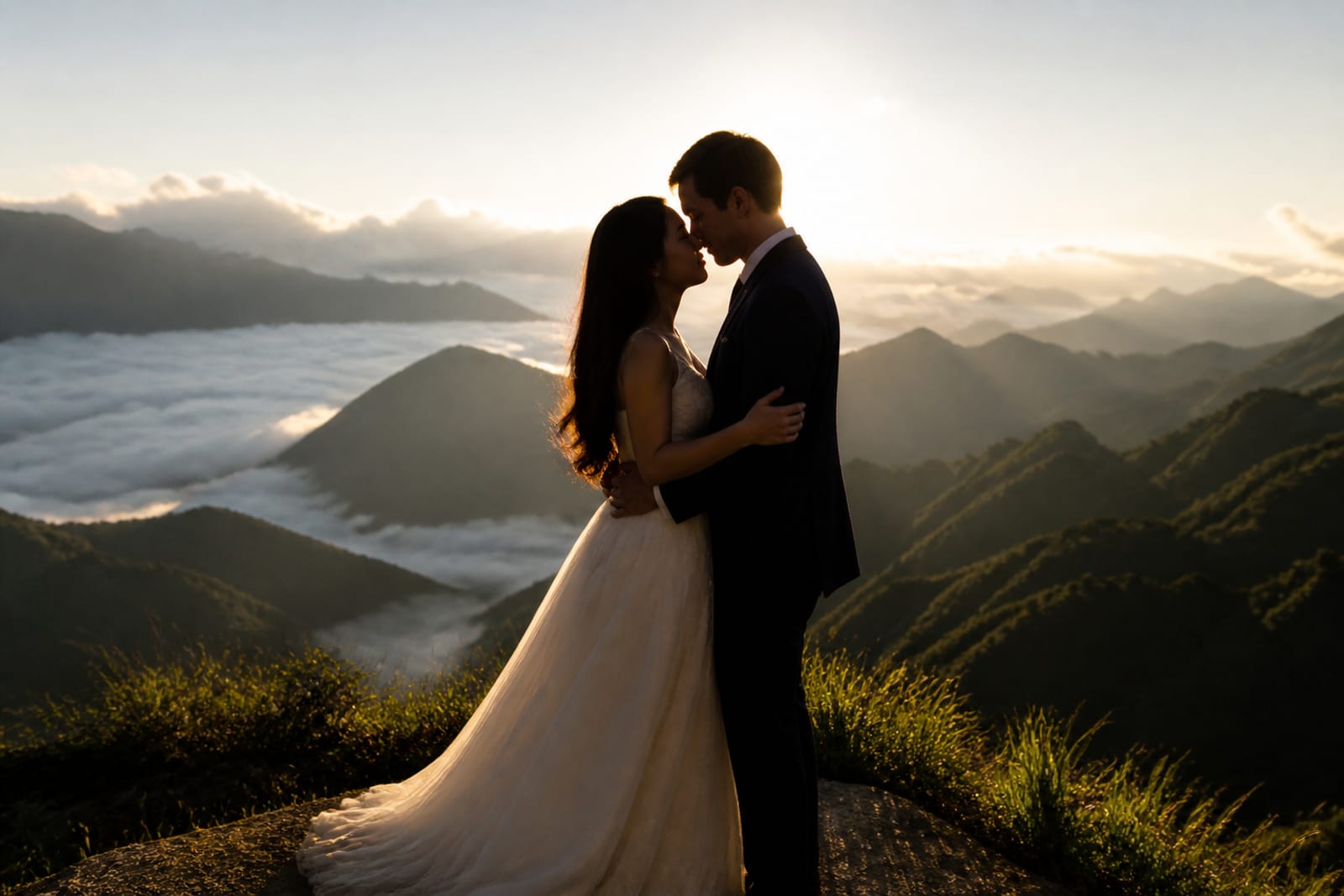
What time of day and which valleys photograph best in August?
Muong Hoa Valley (east-facing, accessed from Sapa town center heading toward Fansipan base) catches side light from 6–7 am onward; the village of Lao Chai sits at the valley lip and offers terraces plus a homestay shelter if rain hits. Ta Van Valley (west of town, longer walk, steeper descent) works if you start at 5:30 am—the sun rises over the valley wall behind you, creating backlighting on mist. Both require guides; loose paths turn to mud in rain. Fansipan summit is ruled out in August (cable car closes in high wind, visibility is zero). Shoot between 6 am and 10 am; after 11 am, clouds thicken and rain risk climbs. Walk downhill (easier on formal wear) and pause every 200 m to frame: wide shots of you walking toward the terraces, medium of you sitting on a stone, detail of hands or outfit against green. Never pose still for long—guide your partner to look at the view, walk slowly, adjust a flower in your hair.
How should outfit choices change for August's wet conditions?
An ao dai works in August if you layer a second set: first outfit for the dawn shoot (when mist is thick and ground is damp), second after you retreat indoors. Avoid silk that water-marks; cotton or silk-blend holds dye better when wet. Underskirts matter—a slip in a contrasting or matching tone keeps the ao dai from clinging and adds depth in shots. For Western couples, a linen or cotton suit (not wool) breathes and dries faster if caught in rain. Bring a lightweight shawl or scarf (neutral tone) to drape if the morning is cold (12–14°C at altitude). Shoes are critical: slip-on heels or formal flat boots with rubber soles grip wet stone; avoid leather soles. Keep a dry outfit in a waterproof bag at base camp. Hair holds curl longer in humid air, so a tighter set the night before resists frizz. Makeup should use setting spray (humidity fights powder eyeshadow). A makeup artist who knows mountain conditions applies less blush (humidity and side light already warm your face) and uses a lip stain over lipstick to survive mist and movement.
| Outfit choice | Best for August | Light & season notes | Why it works |
|---|---|---|---|
| Ao dai + slip | Tradition, formal frames | Mist backlighting, damp ground | Layers catch reflected light; slip prevents cling |
| Linen suit + scarf | Modern, Western couples | Early light + cool altitude | Breathes, dries fast; scarf adds drape and depth |
| Cotton dress + shawl | Casual, bohemian style | Soft cloud light, muted tones | Less formal, easier to move in mud; shawl frames shoulders |
| Both (outfit change) | Variety, longer story | Sunrise + indoor shelter | Transition from mountain to homestay tells a richer narrative |
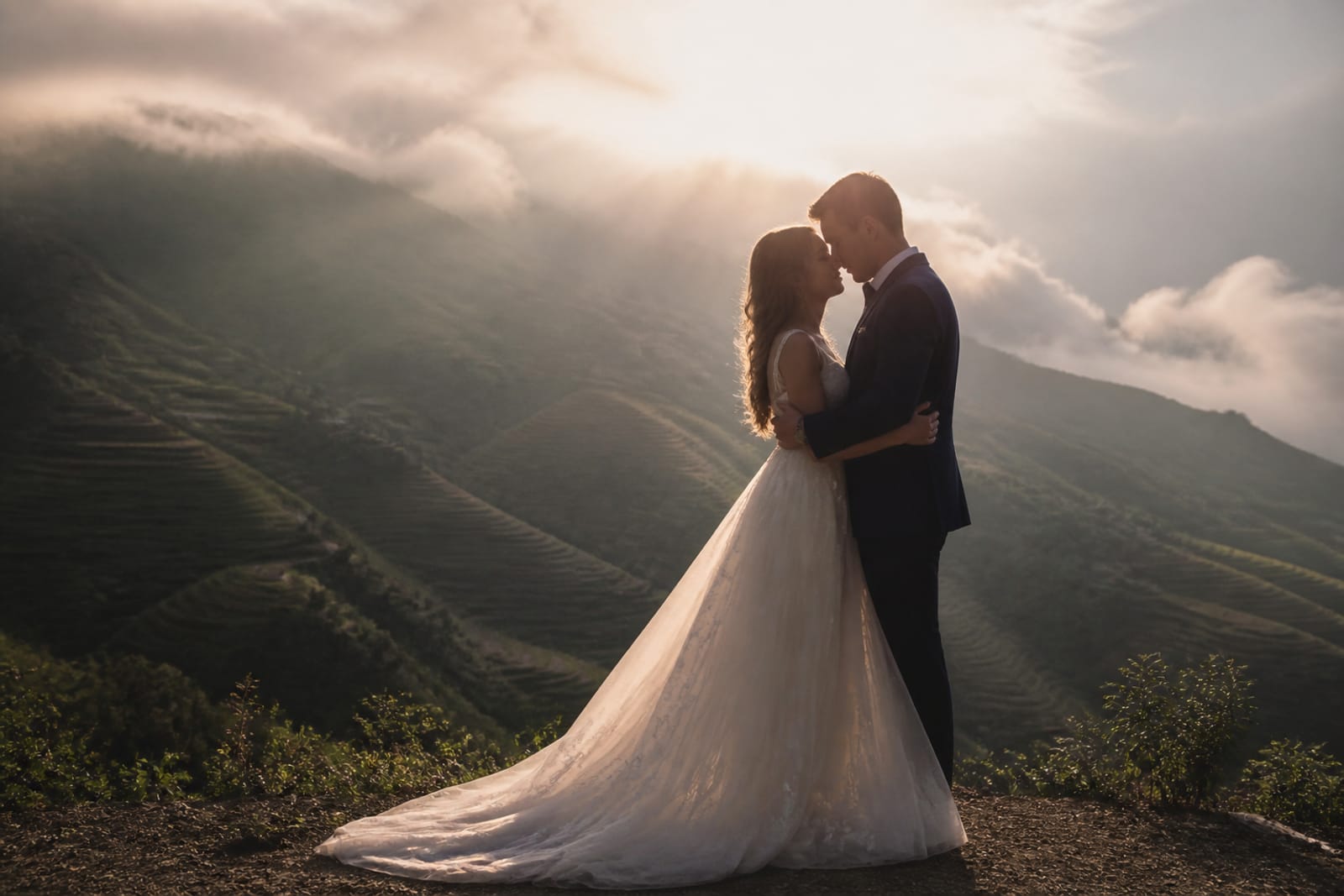
What about crowds, permits and logistics in Sapa during August?
August is low season in Sapa—fewer tourists than July or September—because the weather is unpredictable and many international travelers chase dry months. This works for you: fewer hikers on trails at dawn, no crowds at scenic overlooks, easier homestay bookings. Local guides and village homestays are less stressed and more attentive. The downside: fewer backup services if things go wrong (some homestays close for maintenance). Permits are not required for hiking Muong Hoa or Ta Van valleys as a visitor, but hiring a guide is customary (local guides earn income and know safe paths after rain). Sapa town is 350 km from Hanoi (5–6 hours by car or minibus); plan to arrive 2–3 days early to acclimatize and scout locations. Arrange a reliable driver or book through your accommodation—standard minibuses are cheap but not on-call for dawn starts. Mobile signal is patchy below the town rim; confirm timing with guides the evening before. Cáo Studio does not operate a Sapa branch, but we coordinate with local photographers and guides via WhatsApp and can advise on timing, outfit prep and backup sites if you're shooting with a local team.
How do you prepare for one clear morning in a three-day window?
Flexibility is the real strategy in August: book your Sapa accommodation and guide for 3–4 days, not a fixed single date. Check the forecast the night before and commit to a 5 am start if the dawn looks clear. Pack two complete outfits and two pairs of shoes so a wet session doesn't cancel a second morning. Scout the site at midday the day you arrive—walk the path, note where light falls at different hours, spot shelters if rain comes. Brief your guide and photographer (or hire one locally) on your exact vision: "We want to walk slowly, look at the terraces, not pose in a line." If rain hammers the first morning, shoot indoors at a homestay or village temple; these frames are moodier than mountain shots and take pressure off weather. If the second morning is clear, return to the valley. Couples who arrive rigid and expecting sunshine almost always regret it; those who treat August like a creative puzzle come home with frames no other couple in their social circle has.
---
---
What to check before you book
- Arrive early, stay flexible. Book 4 days in Sapa, not 1. The best morning usually comes on day 2 or 3.
- Hire a local guide. They know which paths drain after rain, where light hits at dawn, and which homestays have tea and shelter.
- Confirm outfit and shoe grip with the guide. Show them photos of what you plan to wear; they'll flag anything that won't work in mud.
- Pack a weatherproof bag. Phone, wallet, makeup touch-ups, a dry scarf or shawl, and a change of shoes stay dry while you shoot.
- Set realistic timing. Plan 6–10 am for mountain light. Anything after 10 am in August is gambling on rain and cloud.
- Work with a director, not a poser. Book someone (local or traveling with Cáo Studio) who frames movement, not stiff poses. See our approach to pre-wedding shoots.
For couples in Hanoi planning a Sapa pre-wedding shoot, Cáo Studio offers makeup and hair at your hotel before you travel, ensuring your look is dialed in. We also coordinate with trusted local photographers and guides; ask us on WhatsApp for recommendations if you're shooting independently. If you prefer a full team travel to Sapa, contact us to discuss what's feasible for your dates.
Alternatively, couples often shoot in Sapa for a post-engagement or elopement frame, then book a formal pre-wedding photoshoot session in Hanoi or Hoi An during the dry season—this spreads your story across two landscapes and two light conditions. Cáo Studio Hanoi or Cáo Studio Saigon can handle the formal shoot; we'll guide you on timing and outfit choices if you're combining locations.
---
📸 Book on WhatsApp — ao dai photoshoot
---
FAQ
Is August actually a good month for pre-wedding shoots in Sapa, or should I reschedule?
August works if you expect rain and build flexibility into your dates. The mist and green create moody, intimate frames; afternoon downpours are common but pass fast. Shoot at dawn (6–10 am), prepare indoor backup shots, and arrive 3–4 days early so you can pick the clearest morning. Dry season (Dec–Feb) has sharper light but colder temperatures and haze; neither is objectively "better"—it depends on the mood you want.
What's the actual risk of a complete washout in August?
Sapa gets significant rain in August, but all-day storms are rare; downpours are typically 30–90 minutes in the afternoon. Dawn is usually clearer. If you're there 3–4 days, at least one morning will have 2–4 hours of shootable light. Couples locked into a single date face real risk; those who stay 3+ days almost always find a window.
Do I need special insurance or permits to shoot in the Muong Hoa Valley?
No special permit for visitors or pre-wedding shoots. Hiring a local guide is customary and required for safety after rain (paths are muddy and unmarked). Guides cost a small daily fee; ask your hotel or Cáo Studio for referrals. Travel insurance that covers outdoor activities is wise.
Can I wear a traditional ao dai in August without it being ruined?
Yes, if you plan for it. Wear a slip underneath, choose cotton or silk-blend over pure silk, and keep a dry backup outfit at base camp. Muddy hems are part of the story—frames showing wet fabric and weathered conditions are often the most memorable. Bring a second pair of shoes with rubber soles.
Should I hire a local photographer or travel with Cáo Studio to Sapa?
Cáo Studio does not operate a Sapa base; we coordinate with trusted local photographers and guides via WhatsApp. If you're in Hanoi, book our makeup and hair service before you travel to Sapa, ensuring your look is ready. For the full shoot, a local guide-photographer team is often more practical and cost-effective than traveling a Hanoi team. We can advise on vetting and timing; ask us on WhatsApp for recommendations.
FAQ
Is August actually a good month for pre-wedding shoots in Sapa, or should I reschedule?
August works if you expect rain and build flexibility into your dates. The mist and green create moody, intimate frames; afternoon downpours are common but pass fast. Shoot at dawn (6–10 am), prepare indoor backup shots, and arrive 3–4 days early so you can pick the clearest morning. Dry season (Dec–Feb) has sharper light but colder temperatures and haze; neither is objectively "better"—it depends on the mood you want.
What's the actual risk of a complete washout in August?
Sapa gets significant rain in August, but all-day storms are rare; downpours are typically 30–90 minutes in the afternoon. Dawn is usually clearer. If you're there 3–4 days, at least one morning will have 2–4 hours of shootable light. Couples locked into a single date face real risk; those who stay 3+ days almost always find a window.
Do I need special insurance or permits to shoot in the Muong Hoa Valley?
No special permit for visitors or pre-wedding shoots. Hiring a local guide is customary and required for safety after rain (paths are muddy and unmarked). Guides cost a small daily fee; ask your hotel or Cáo Studio for referrals. Travel insurance that covers outdoor activities is wise.
Can I wear a traditional ao dai in August without it being ruined?
Yes, if you plan for it. Wear a slip underneath, choose cotton or silk-blend over pure silk, and keep a dry backup outfit at base camp. Muddy hems are part of the story—frames showing wet fabric and weathered conditions are often the most memorable. Bring a second pair of shoes with rubber soles.
Should I hire a local photographer or travel with Cáo Studio to Sapa?
Cáo Studio does not operate a Sapa base; we coordinate with trusted local photographers and guides via WhatsApp. If you're in Hanoi, book our [makeup and hair service](/makeup-and-hair) before you travel to Sapa, ensuring your look is ready. For the full shoot, a local guide-photographer team is often more practical and cost-effective than traveling a Hanoi team. We can advise on vetting and timing; ask us on WhatsApp for recommendations.
Ao dai, makeup, hair and a local photographer in Hanoi or Saigon — one WhatsApp message.