/pre-wedding-photoshoot
Pre-wedding photoshoot in Sapa in July: weather, light and crowds
A pre-wedding photoshoot in Sapa in July faces wet, overcast conditions: daily downpours arrive 2–4 pm, and morning mist hangs until 9–10 am. The rice terraces are lush green (peak growth before harvest), but direct light is rare. Success depends on shooting the 90-minute window after mist clears and before rain returns — wide frames of you walking through green fields, close-ups in soft, diffused light, and layered outfits that work wet. Hanoi-based Cáo Studio can coordinate styling and makeup for this season, but the shoot requires a director who knows Sapa's microclimates and can pivot to indoor temple or village-house backdrops when weather turns. July demands flexibility: book a guide who knows the trails, wear a rain layer under your outer dress, and confirm the photographer has backup locations indoors. 📸 Book on WhatsApp — pre-wedding photoshoot ---
Can you actually shoot outdoors in Sapa in July, or is it always raining?
Sapa is not rainless in July — expect 8–12 rainy days. The texture is not hours of downpour, but brief, heavy afternoon bursts. Early morning (5–6 am onwards) is your shooting window: mist breaks between 9–10 am, and rain typically starts around 2 pm. This means you have roughly 5 hours of usable outdoor light, split into two sessions (dawn, and late morning–early afternoon). Indoors (village homestays, temple courtyards with shelter, stone pathways under eaves) work equally well when clouds thicken. Rain itself is not an obstacle if your outfit is planned for it — layers, rain-friendly fabrics, and a second set of shoes matter. A photographer who knows Sapa's patterns can shoot in mist as a design choice, not a mistake.
What should you wear for pre-wedding photos in Sapa in July?
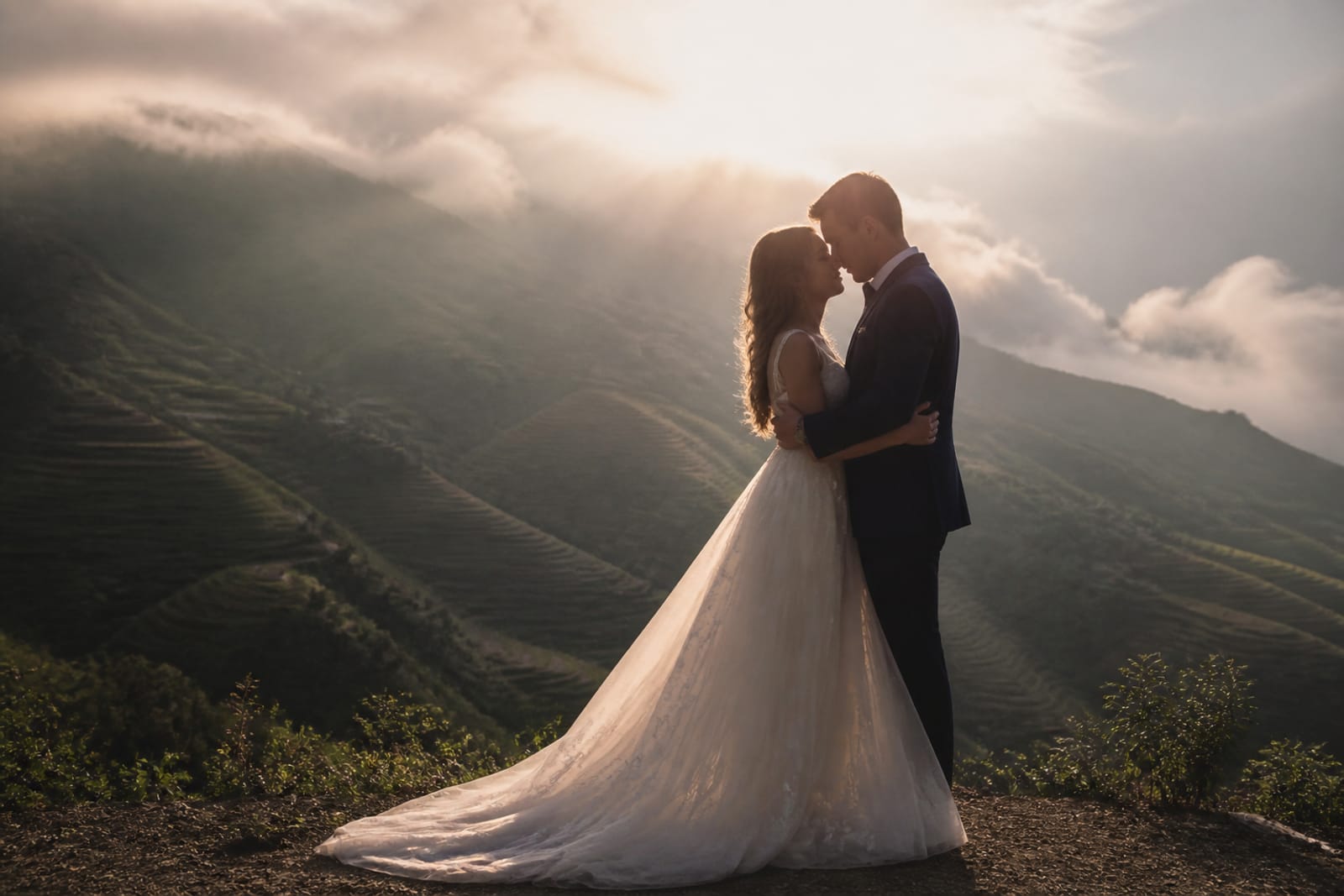
July calls for outfit planning that survives wet conditions and reads well in soft, overcast light. Muted tones (ivory, sage, warm grey, rust, deep teal) photograph cleaner than pastels under cloud cover. Consider:
- Layered dresses or separates: a slip dress + linen overshirt you can remove for detail shots, or a structured áo dài in cotton (not silk, which sticks when damp).
- Footwear: waterproof flats or boots for trails; carry a second pair for close-ups on dry ground.
- Fabric weight: linen and cotton hold their shape in humidity; silk and chiffon cling and wrinkle.
- Accessories: a rain layer (a fine shawl or unstructured overshirt) doubles as a styling prop and weather shield.
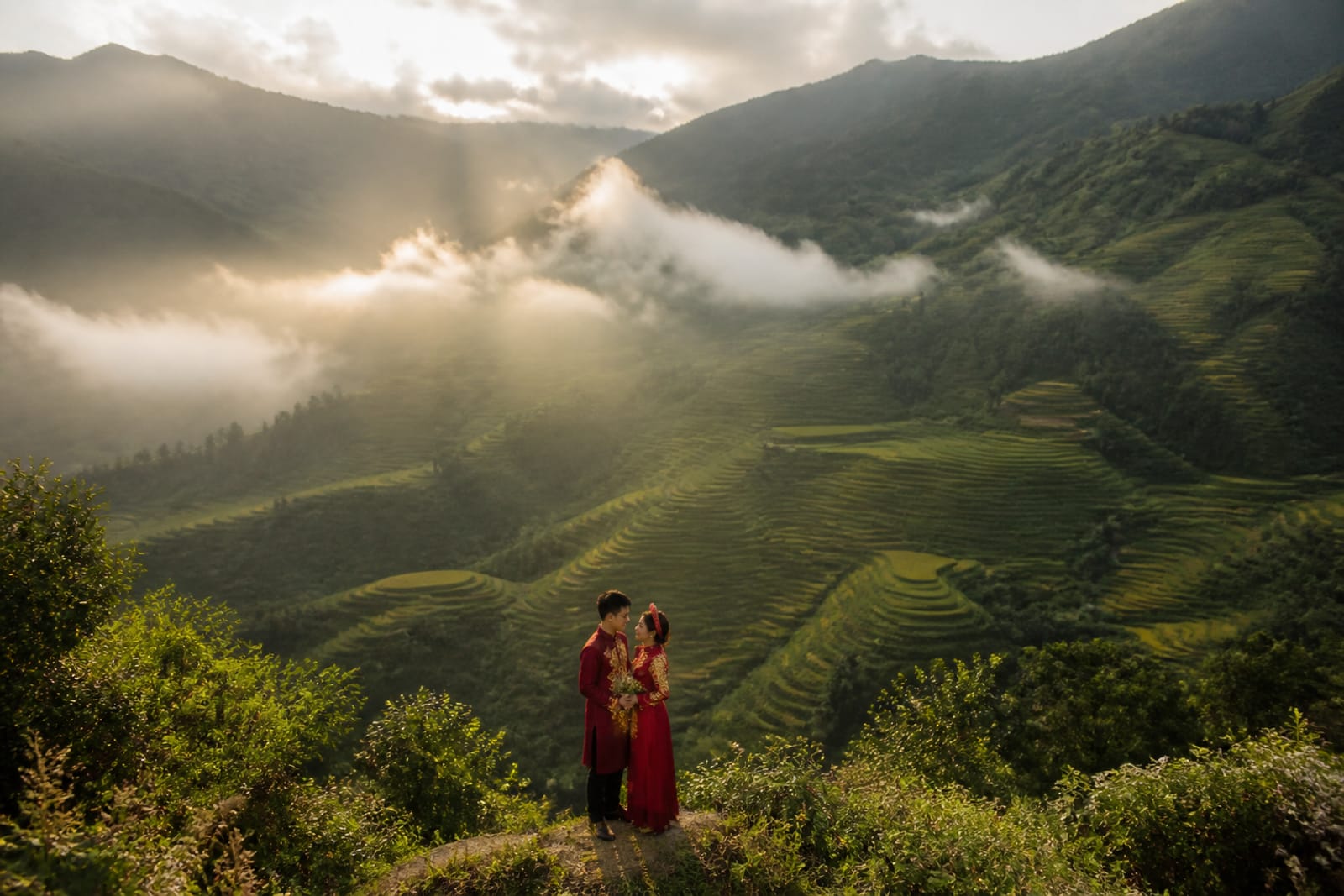
If you're doing an áo dài photoshoot, summer cotton is breathable; silk is beautiful in frames but absorbs moisture. Many couples choose a Western dress for the pre-wedding session and an áo dài for a second shoot in a drier season — this spreads investment and lets each outfit shine in its season's light.
How does July's light change throughout the day in Sapa?
| Time | Mist / Cloud cover | Light quality | Best for |
|---|---|---|---|
| 5–7 am | Dense mist, low visibility | Moody, diffused, near-black sky | Silhouettes, intimate close-ups, atmospheric walking shots |
| 7–9 am | Mist thinning, golden undertone emerging | Soft side light, warm tones | Wide frames of landscape + you walking, detail shots of faces |
| 9–10:30 am | Clear to partly cloudy, 30–40 min window | Bright, even (no harsh shadows), full face visibility | Group shots, full-length frames, monument or village backdrop work |
| 10:30 am–2 pm | Increasing cloud, humidity rises | Even, cool-toned, slightly flat | Outfit changes, close-ups, structured poses, shadow-free frames |
| 2–4 pm | Rain arrives, sky darkens | Moody grey, colour saturation drops | Shelter shooting (homestays, temples), candid indoor moments, rain-jacket detail shots |
The 9–10:30 am window is the "golden 90 minutes" in July. After that, humidity and cloud density increase, and colours flatten. A director's skill is reading the sky 30 minutes ahead — if clouds thicken, pivot from a ridge shoot to a village-path or homestay frame before the downpour hits.
Should you change your outfit or location when weather turns?
Yes. A pre-wedding photoshoot in July that sticks rigidly to one outfit and one spot risks 60% of frames in poor light. Flexibility is the strategy:
- Outfit 1 (dawn to 10 am): dress for the open landscape (mist break, soft green fields, wide angles).
- Outfit 2 (if rain delays, 10:30 am–1 pm): layered look or a rain-aware ensemble for village streets, tea terraces, or homestay interiors.
- Contingency location: pre-scout a temple, a covered market, or a stone-walled homestay courtyard where indoor or semi-sheltered frames work.
Couples who plan two locations and two outfits walk away with 80+ usable frames in July; those who don't often end up with 40–50 frames where 20 are compromised by rain glare or mist washout. A photographer from Cáo Studio can advise on outfit transitions and timing, but the real work is scouting the backup locations the day before and briefing your guide on trigger points ("if rain starts at 1:15 pm, we move indoors by 1 pm").
Why does Sapa's July weather matter for your couple's story?
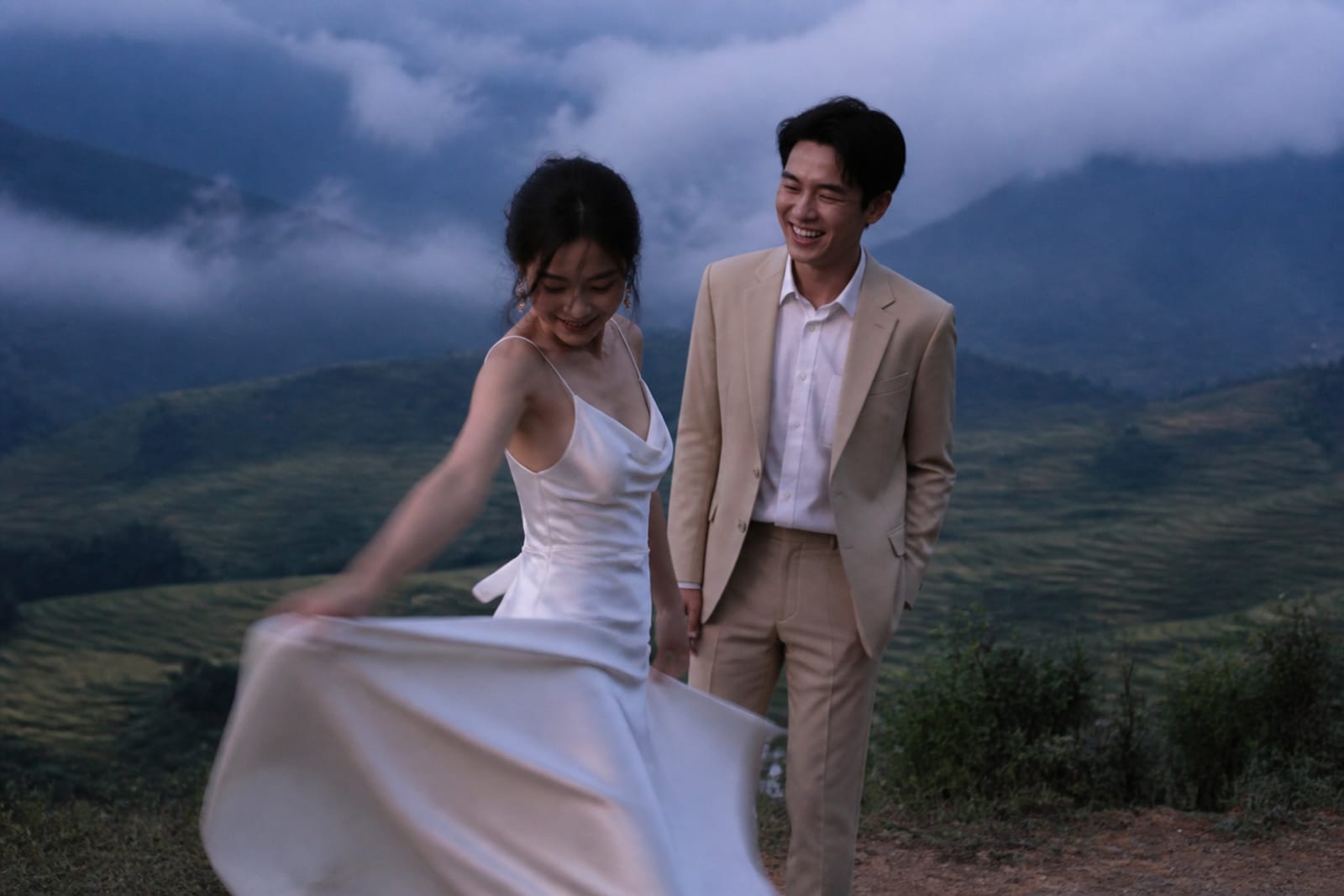
The season shapes the frames' mood and colour palette. July's green fields, mist, and soft light are romantic and introspective — they suit stories of quietness, contemplation, or adventure through difficult conditions. If your couple narrative is "we walk together through anything," July rain and mist become part of the story, not a flaw. Conversely, if you want clarity, vibrant light, and expansive views, September–November (dry, cooler) or March–May (clear, mild) are technically easier months. July demands that the couple and photographer collaborate on a different story: intimate, textured, and moody rather than open and bright. This is not worse — it's specific. Some couples book July intentionally for this aesthetic; others choose couple photoshoots in a drier season and save a Sapa trip for another purpose.
How to plan a pre-wedding shoot in Sapa in July: a step-by-step checklist
- Book a photographer 6–8 weeks ahead: Sapa guides and photographers are busiest June–September. Confirm they know July patterns and have two indoor backup locations scouted.
- Decide on outfit count and transitions: Plan Outfit 1 (open-air, mist-and-field ready) and Outfit 2 (layered or rain-resilient, suited to village or indoor frames). Confirm makeup and hair can be refreshed mid-shoot if weather changes.
- Scout the day before: Walk the main field spots at the planned shoot times (e.g., 7–8 am and 10 am) to see actual light and mist; identify the backup indoor locations and confirm lighting there.
- Brief your guide and photographer on pivot rules: "If rain starts at X time, we are at location Y by then." Share mobile numbers; agree on a 15-minute weather check-in.
- Pack a rain layer and second shoes: Rain layers are styling tools, not just weather protection. Second shoes prevent mud stains on fabric during close-ups.
- Plan hair and makeup for humidity: Discuss frizz control and sweat-resistant makeup with your artist. July in Sapa is 80–90% humidity.
- Build in a 48-hour turnaround expectation: Confirm editing timelines with your photographer. Edited frames in hand within two days lets you relive the shoot quickly and decide on prints or albums while the mood is fresh.
If you're based outside Vietnam, Cáo Studio can coordinate styling, makeup, and hair for a Hanoi team member who travels to Sapa for a multi-day session. WhatsApp inquiries with your dates and outfit ideas will get a realistic scope and timeline.
---
What to check before you book
- Photographer's Sapa portfolio: look for frames in overcast, misty, or rainy conditions — not just clear-sky shots. Mist and rain are part of July; a portfolio with only blue-sky images suggests the photographer avoids this season.
- Backup locations: ask what the photographer does if afternoon rain arrives. Names and photos of indoor or sheltered venues matter.
- Outfit transitions: confirm the photographer or stylist can advise on what works in July light (colours, layering, fabric weight).
- Guide experience: a guide who knows exact trail conditions in July (mud depth, stream levels) prevents wasted time and injury risk.
- Editing & delivery timeline: confirm how many days until edited frames arrive and in what format (digital files, prints, video).
---
FAQ
Is July ever a good month for outdoor pre-wedding shoots in Sapa?
Yes, if you shoot the early-morning window (5–10:30 am) before mist fully clears and afternoon rain arrives, and if your photographer knows Sapa's microclimates. July's green terraces and soft light are romantically moody — not ideal for traditional bright-and-clear aesthetics, but powerful for intimate, textured frames. Two outfit changes and backup indoor locations are non-negotiable.
What's the realistic number of usable frames from a July Sapa shoot?
A full-day session (dawn to early afternoon, with flexibility and outfit changes) typically yields 80–150 edited frames across both outfits and locations. If the photographer is rigid about timing or location, expect 40–60 frames, half of which may show weather compromises (mist washout, rain-glare reflection). Plan for two locations and two outfits to maximize the yield.
Should we rent an áo dài for a pre-wedding shoot in July, or bring our own dress?
Both work. Cotton or linen áo dài are breathable and practical for July humidity; you can rent locally in Hanoi or Sapa, or bring your own. Western pre-wedding dresses should be linen or structured cotton, not silk or heavy chiffon, which absorb moisture and cling. If you want an áo dài, consider renting from Cáo Studio's áo dài collection and coordinating a second shoot in a drier season to let both outfits shine.
Do we need to hire a local Sapa guide, or can the photographer navigate alone?
Always hire a local guide separate from the photographer. Guides know trail conditions, weather microclimates, and can arrange homestay access or temple permissions in minutes. Photographers shoot best when they are focused on framing and light, not navigation. A guide also serves as a cultural liaison and can suggest authentic village moments that enrich the story.
How far in advance should we book for a July Sapa pre-wedding shoot?
Book 6–8 weeks ahead, especially if you want a photographer who knows July patterns and can reserve backup indoor locations. July is Sapa's busiest season (summer holidays, green terraces); guides and homestays fill quickly. If you're using Cáo Studio for makeup, hair, and styling coordination, they will advise on availability and timing via WhatsApp.
FAQ
Is July ever a good month for outdoor pre-wedding shoots in Sapa?
Yes, if you shoot the early-morning window (5–10:30 am) before mist fully clears and afternoon rain arrives, and if your photographer knows Sapa's microclimates. July's green terraces and soft light are romantically moody — not ideal for traditional bright-and-clear aesthetics, but powerful for intimate, textured frames. Two outfit changes and backup indoor locations are non-negotiable.
What's the realistic number of usable frames from a July Sapa shoot?
A full-day session (dawn to early afternoon, with flexibility and outfit changes) typically yields 80–150 edited frames across both outfits and locations. If the photographer is rigid about timing or location, expect 40–60 frames, half of which may show weather compromises (mist washout, rain-glare reflection). Plan for two locations and two outfits to maximize the yield.
Should we rent an áo dài for a pre-wedding shoot in July, or bring our own dress?
Both work. Cotton or linen áo dài are breathable and practical for July humidity; you can rent locally in Hanoi or Sapa, or bring your own. Western pre-wedding dresses should be linen or structured cotton, not silk or heavy chiffon, which absorb moisture and cling. If you want an áo dài, consider renting from [Cáo Studio's áo dài collection](/ao-dai-rental) and coordinating a second shoot in a drier season to let both outfits shine.
Do we need to hire a local Sapa guide, or can the photographer navigate alone?
Always hire a local guide separate from the photographer. Guides know trail conditions, weather microclimates, and can arrange homestay access or temple permissions in minutes. Photographers shoot best when they are focused on framing and light, not navigation. A guide also serves as a cultural liaison and can suggest authentic village moments that enrich the story.
How far in advance should we book for a July Sapa pre-wedding shoot?
Book 6–8 weeks ahead, especially if you want a photographer who knows July patterns and can reserve backup indoor locations. July is Sapa's busiest season (summer holidays, green terraces); guides and homestays fill quickly. If you're using [Cáo Studio](/hanoi) for makeup, hair, and styling coordination, they will advise on availability and timing via WhatsApp.
Ao dai, makeup, hair and a local photographer in Hanoi or Saigon — one WhatsApp message.