/pre-wedding-photoshoot
Pre-wedding photoshoot in Sapa in June: weather, light and crowds
Pre-wedding photoshoots in Sapa in June are possible but demand a shift in expectations. June is the wet season—rain arrives most afternoons, cloud cover is heavy, and visibility around Fansipan drops fast. The terraces are vivid green (best of the year for colour), but direct sunlight is rare; soft, diffused light becomes your ally. Cáo Studio shoots these sessions by building the narrative around mist, wet stone paths and intimate moments between you two—not waiting for blue sky. Bring waterproof outfits, plan for shorter shooting windows (early morning before cloud buildup, or gaps between showers), and book a team (photographer, makeup, outfit stylist) who understands mountain light and wet-weather logistics. Sessions run 4–6 hours depending on weather pauses; edited frames are ready within 48 hours. 📸 Book on WhatsApp — pre-wedding photoshoot | 🌸 See the lookbook ---
Is June too rainy for a pre-wedding shoot in Sapa?
Rain is not a deal-breaker—it's a creative tool. June averages afternoon showers, but mornings often clear enough for 2–3 hours of shooting before 11 am. Mist and wet textures (stone, fabric, skin) read beautifully in photographs when the director knows how to meter for low light and avoid flat, grey midday. Many couples who shoot June actually prefer the moody, intimate feel over summer's harsh heat. The real constraint is being outdoors in a downpour; plan indoor backup locations (village doorways, temple eaves, covered markets) and accept that some frames will be shot in light drizzle—that's the aesthetic Sapa offers in the wet season.
Why are the terraces so green in June?
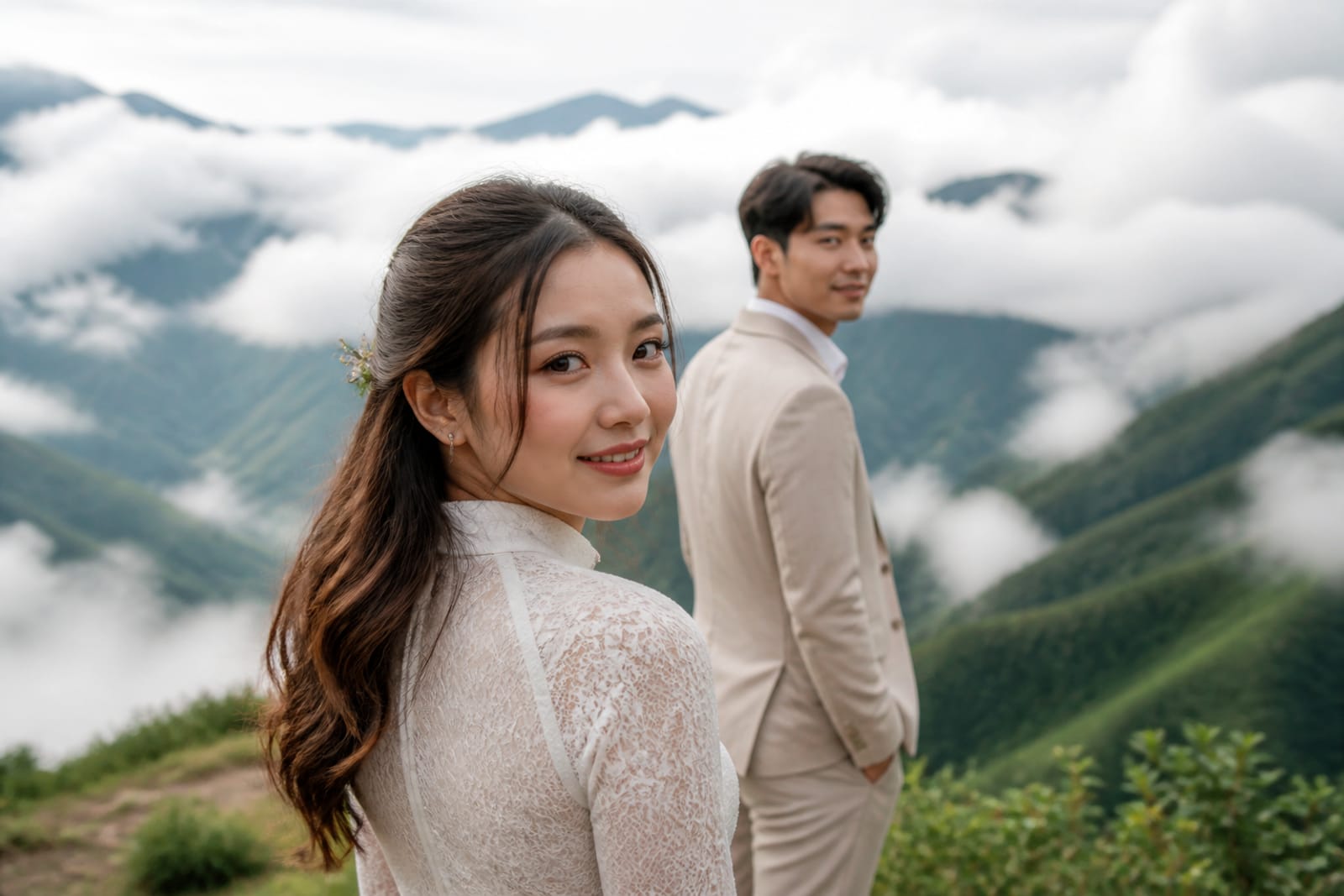
June falls in Sapa's growing season (May–August): rice is planted in May, and by June the paddies are flooded and shooting up. Terraces are at their brightest green, and the water reflects sky (even overcast sky) beautifully. Compare this to September–October when rice is being harvested (golden, but lower contrast) or December–February when terraces are drained and brown. The trade-off is that green-on-green can flatten in flat light, so a director must meter carefully and use negative space (your figures against the terraces, walking through frames) rather than trying to make the whole landscape pop. The colour is there; the skill is in composition, not waiting for sun.
What light times work best for shooting in June?
| Time | Light quality | Best for | Why it works |
|---|---|---|---|
| 5:30–7:00 am | Soft, directional | Wide landscape shots, silhouettes | Low angle light before clouds thicken |
| 7:00–11:00 am | Diffused, bright | Medium & detail frames, intimate moments | Cloud cover evens exposure, no harsh shadows |
| 11:00 am–3:00 pm | Flat, grey | Indoor locations, close-ups | Avoid shooting outdoors if rain hasn't started |
| 4:00–6:00 pm | Amber through breaks | Rare golden-hour frames (if rain pauses) | Chase breaks in cloud cover for warmth |
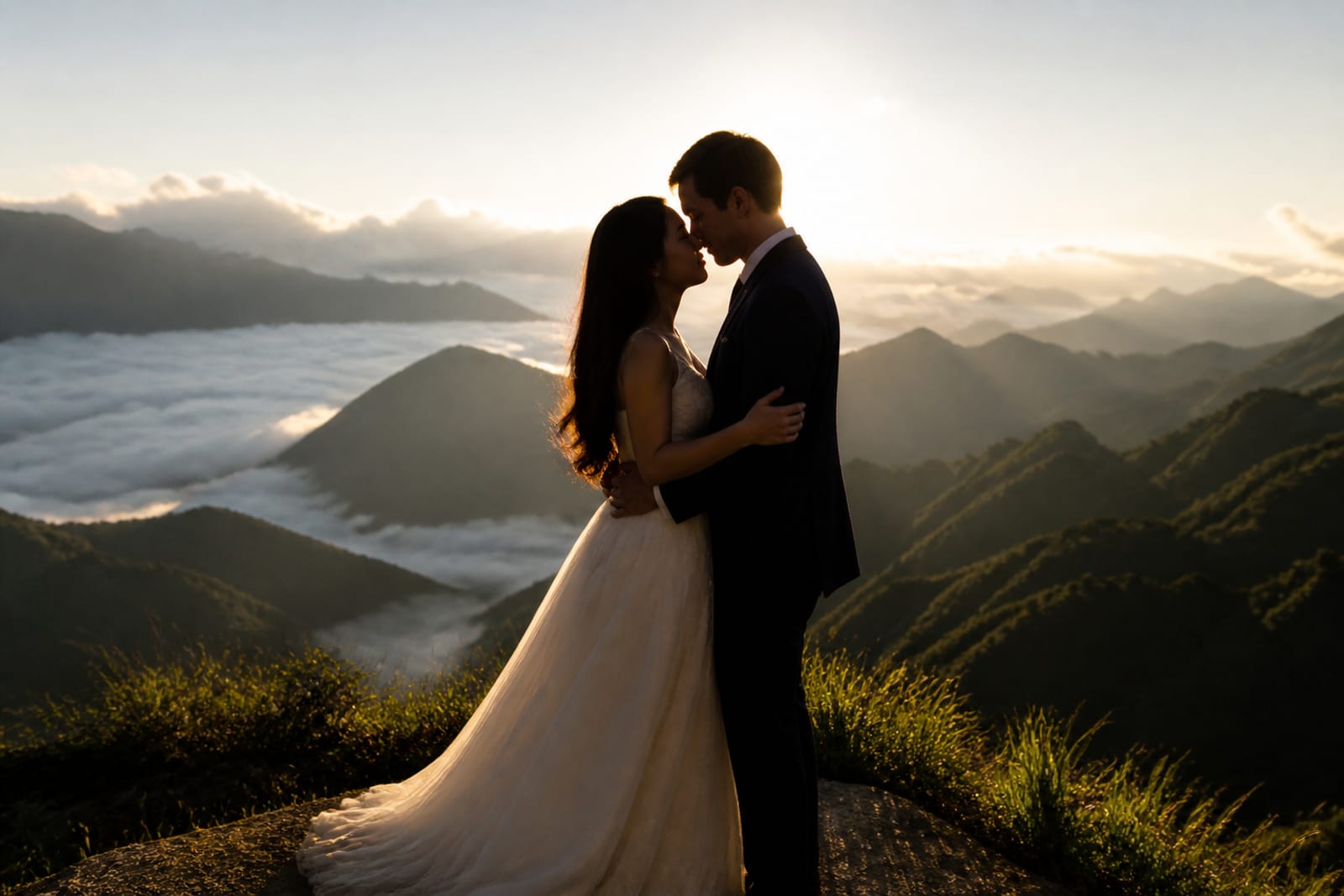
Early morning (5:30–7 am) is non-negotiable in June. The team arrives in darkness and shoots as light rises and before the cloud layer settles. This window often gives 30–45 minutes of side light and genuine colour. By 10 am, cloud cover is usually complete, and you're shooting in beautiful but flat, overcast light—perfect for intimate portraits and movement, but not for hero landscape frames. Late afternoon rarely works unless there's a weather break. Plan your session to start before sunrise and wrap by noon; if rain holds off, you gain bonus evening frames.
What should you wear for a June photoshoot in Sapa?
Choose fabrics that look good wet or damp and move well on muddy paths. Silk áo dài works beautifully in mist but requires careful footwork on slippery terrain; cotton blends are forgiving. Groom suits in lightweight fabric prevent sweat stains in humidity. Avoid heavy, dark fabrics that photograph grey in low light—cream, soft pastels, and jewel tones read better on film. Bring a waterproof shawl or light jacket for genuine rain; styling it into frames (wind, movement) often beats rushing for shelter. Footwear must grip wet stone: avoid smooth leather soles. Many couples rent outfits through Cáo Studio's ao dai rental or work with the team's makeup & hair service to plan colours and fabrics that suit June's light before the shoot day.
How do Cáo Studio sessions handle Sapa's logistics?
Cáo Studio does not operate in Sapa. The studio is based in Hanoi and Ho Chi Minh City, with shoots available in Hoi An by appointment. However, for couples set on a Sapa pre-wedding shoot, we offer planning guidance below and can connect you with local photographers we vet. If you'd prefer a guaranteed team experience (one photographer, makeup artist, outfit stylist and director working together), consider booking a pre-wedding session in Hanoi or Saigon instead, where the full Cáo Studio team and logistics are based. Hanoi is a 4–5 hour drive or 1-hour flight from Sapa, making a two-day shoot feasible (one day in the city, one day in Sapa with a local partner).
💄 Makeup & hair at your hotel | 👰 See pre-wedding options
How to plan a Sapa pre-wedding shoot with a local team
If you're committed to Sapa, here's a practical framework:
Find a local photographer:
- Search Hanoi-based photographers who regularly shoot in Sapa (Instagram tags: "Sapa pre-wedding", "Sapa photoshoot"). Look for portfolios with mist, overcast light and couple movement—not bright, clear-sky work.
- Vet their portfolio for June/monsoon-season frames specifically. Ask how many Sapa shoots they've done in the wet season.
- Confirm they provide hair & makeup or can coordinate with a local artist; lone photographers often leave styling to couples.
Plan logistics:
- Book accommodation in Sapa town 2–3 nights before the shoot. Early arrival lets you scout locations and adjust to altitude.
- Arrange transport to trailheads (guide, motorbike or group tour). Photographers usually scout before dawn; confirm whether they'll meet you at your hotel or at a landmark.
- Check weather forecasts 5 days before; plan indoor backup (Sa Pa market, homestay interiors, village temple). Have at least two location options.
Confirm shoot flow:
- Ask the photographer for a detailed schedule: what time pickup is, how many locations, outfit changes, and when you'll be finished.
- Confirm edited deliverables (number of files, turnaround time, print options). Cáo Studio delivers edited frames within 48 hours; local teams may take longer.
- Agree on weather contingencies: if rain is heavy, do you reschedule or move indoors?
What to check before you book:
- Does the photographer work with a single makeup/hair artist or coordinate with your own? One-team shoots (photographer + stylist + makeup) are more cohesive than cobbling together vendors.
- Ask for references from other couples who shot in June or other rainy months—not just their best work.
- Confirm the price quoted includes any location entry fees, guide fees or travel time (mountain access sometimes requires local guides).
- Check their cancellation and weather-delay policy in writing.
---
Sapa photoshoot checklist
- [ ] Book photographer & team 6–8 weeks before travel
- [ ] Confirm they've shot Sapa in June or other monsoon months
- [ ] Verify makeup & hair coordination (in-house or external?)
- [ ] Plan outfit colours & fabrics with the team (test in overcast light if possible)
- [ ] Scout locations or get recommendations from your photographer
- [ ] Arrive in Sapa 2–3 days early; acclimatise to altitude
- [ ] Set a start time before 6 am; plan to wrap by noon unless rain is light
- [ ] Bring backup waterproof layers, sturdy shoes, a small towel
- [ ] Confirm edited-file delivery time and format before the shoot
- [ ] Have a weather delay or reschedule plan in writing
---
For couples seeking a fully managed pre-wedding experience with guaranteed team continuity, Cáo Studio's pre-wedding photoshoot in Hanoi, Saigon or Hoi An may be simpler than coordinating multiple vendors in Sapa. A two-day north journey (city + mountain) is also feasible; contact us on WhatsApp to explore options.
📸 Book a pre-wedding shoot with Cáo Studio | 🌸 Explore the lookbook | ❓ See FAQ
---
FAQ
Is June the worst month to shoot in Sapa?
Not the worst—different. June trades sun for vivid green terraces, mist and intimate mood. Low light demands a skilled director, but the aesthetic is romantic. September–October (harvest, clear skies) are easier for flat-light beginners; December–February are coldest and foggiest. June suits couples who want moody, not bright.
Can we reschedule if it rains heavily on shoot day?
Yes, if you've confirmed a weather delay policy with your photographer beforehand. Ask: does the team offer a free reschedule within a certain window, or is weather considered "act of God"? Cáo Studio allows flexibility on rain; confirm exact terms on WhatsApp when booking.
Will our photos look grey because of the clouds?
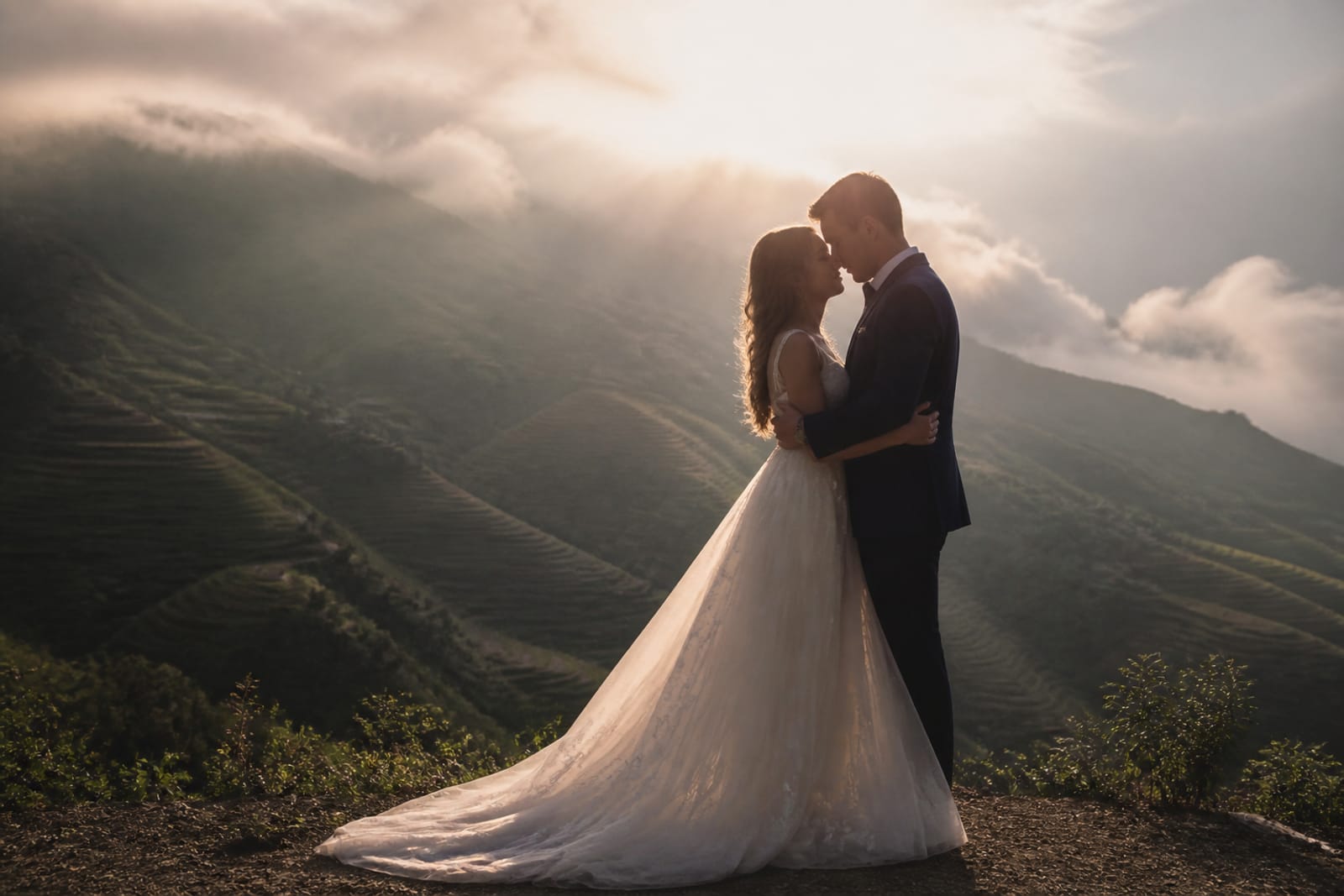
Not if the photographer meters for low light and uses overcast light to your advantage. Grey skies flatten harsh shadows and even out skin tones—a strength, not a weakness. Frames shot in mist and soft cloud light read as intimate and cinematic, not washed-out, when composed with movement and negative space. Test your photographer's portfolio for overcast-light work.
Should we hire a makeup artist in Sapa or bring one from Hanoi?
Hire locally if you find a portfolio you trust; flying a makeup artist from Hanoi adds cost and coordination. If you choose Cáo Studio's makeup & hair service, the team is based in city locations (Hanoi or Saigon), so they travel to Sapa separately. Confirm logistics on WhatsApp before booking—mountain travel adds time and coordination overhead.
How many hours should we block for a Sapa shoot?
4–6 hours is typical, starting before sunrise (5–6 am) and finishing by noon or early afternoon. Morning light deteriorates fast in June; afternoon shoots rarely yield hero frames. Longer bookings (full day) may seem appealing but often mean waiting indoors during midday flat light or afternoon rain. Ask your photographer for a schedule that prioritizes light windows over clock time.
Can we do an ao dai photoshoot in Sapa?
Yes. Silk áo dài reads beautifully in mist and soft light, and Sapa's stone paths and terraces frame the drape well. June's damp air can wilt silk if not styled carefully; work with a makeup artist who understands humidity management. Cáo Studio offers ao dai rental and photoshoots in Hanoi; if you're shooting in Sapa with a local team, coordinate fabric and colour choices with them before the day.
FAQ
Is June the worst month to shoot in Sapa?
Not the worst—different. June trades sun for vivid green terraces, mist and intimate mood. Low light demands a skilled director, but the aesthetic is romantic. September–October (harvest, clear skies) are easier for flat-light beginners; December–February are coldest and foggiest. June suits couples who want moody, not bright.
Can we reschedule if it rains heavily on shoot day?
Yes, if you've confirmed a weather delay policy with your photographer beforehand. Ask: does the team offer a free reschedule within a certain window, or is weather considered "act of God"? Cáo Studio allows flexibility on rain; confirm exact terms on WhatsApp when booking.
Will our photos look grey because of the clouds?
Not if the photographer meters for low light and uses overcast light to your advantage. Grey skies flatten harsh shadows and even out skin tones—a strength, not a weakness. Frames shot in mist and soft cloud light read as intimate and cinematic, not washed-out, when composed with movement and negative space. Test your photographer's portfolio for overcast-light work.
Should we hire a makeup artist in Sapa or bring one from Hanoi?
Hire locally if you find a portfolio you trust; flying a makeup artist from Hanoi adds cost and coordination. If you choose Cáo Studio's [makeup & hair service](/makeup-and-hair), the team is based in city locations (Hanoi or Saigon), so they travel to Sapa separately. Confirm logistics on WhatsApp before booking—mountain travel adds time and coordination overhead.
How many hours should we block for a Sapa shoot?
4–6 hours is typical, starting before sunrise (5–6 am) and finishing by noon or early afternoon. Morning light deteriorates fast in June; afternoon shoots rarely yield hero frames. Longer bookings (full day) may seem appealing but often mean waiting indoors during midday flat light or afternoon rain. Ask your photographer for a schedule that prioritizes light windows over clock time.
Can we do an ao dai photoshoot in Sapa?
Yes. Silk áo dài reads beautifully in mist and soft light, and Sapa's stone paths and terraces frame the drape well. June's damp air can wilt silk if not styled carefully; work with a makeup artist who understands humidity management. Cáo Studio offers [ao dai rental and photoshoots](/ao-dai-rental) in Hanoi; if you're shooting in Sapa with a local team, coordinate fabric and colour choices with them before the day.
Ao dai, makeup, hair and a local photographer in Hanoi or Saigon — one WhatsApp message.