/pre-wedding-photoshoot
Pre-wedding photoshoot in Sapa in March: weather, light and crowds
March in Sapa offers stable weather: cool mornings (around 15–17°C), clear skies, and soft side-light ideal for portraits between 6–7 am or 4–5 pm. The terraces are still dormant (mostly brown earth), so foreground impact is low; crowds are light compared to May–September. Cáo Studio does not operate in Sapa—the team is based in Hanoi, Ho Chi Minh City and Hoi An—but this guide walks you through booking a local photographer, timing your shoot, and what to wear. Plan 2–3 outfit changes, scout locations the day before, and book a photographer familiar with Sapa's micro-climates and permit requirements for sunrise shoots. ---
What makes March light different from other months in Sapa?
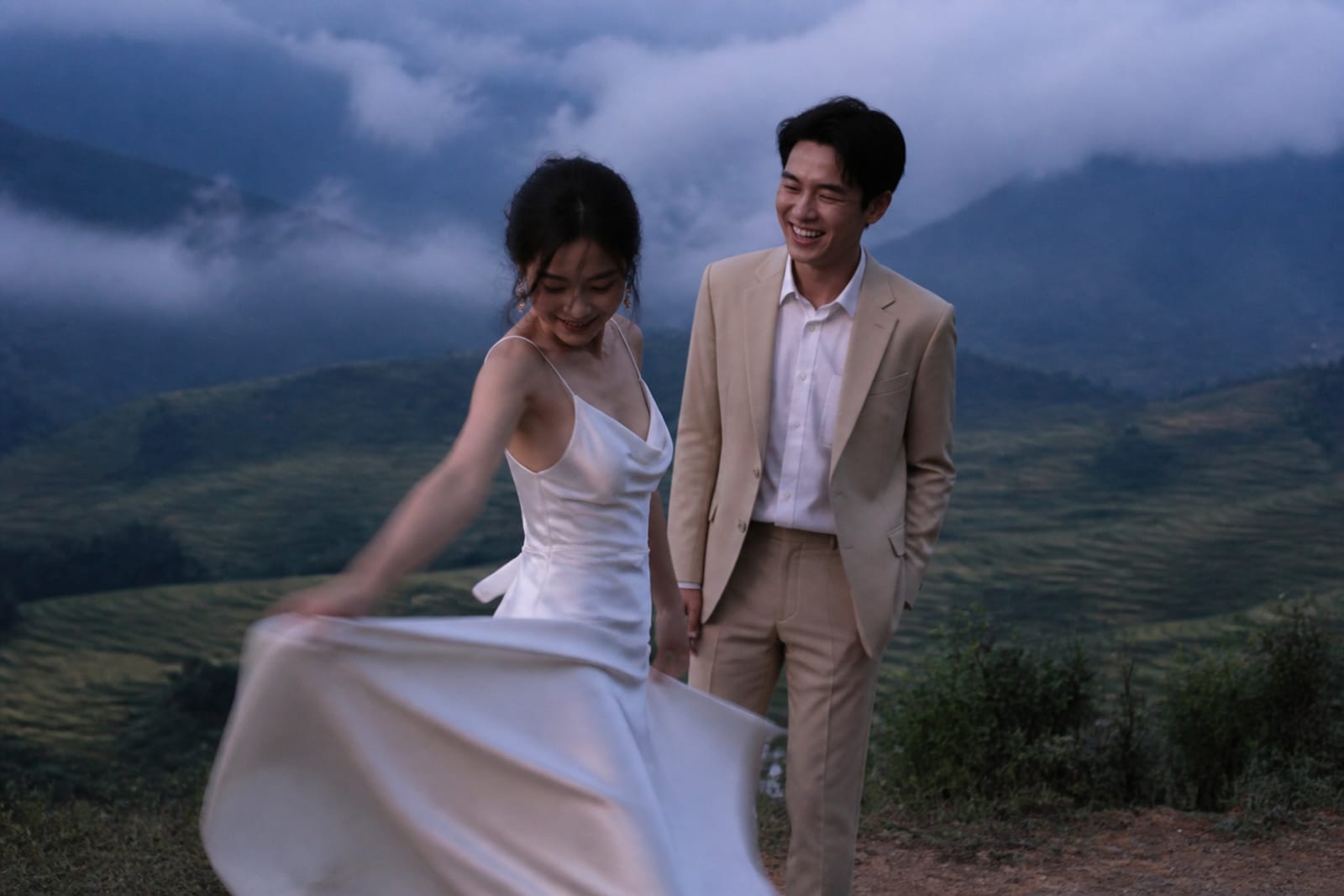
March sits between winter fog and summer rain. By mid-morning the sun is high and bright; the magic window is 6–7 am (soft, golden, low-angle side light on faces) and 4–5 pm (similar warmth, longer shadows on terraces). Winter (Dec–Feb) is foggier and colder; summer (May–Sep) brings afternoon downpours and hazy midday light. March's clear skies mean you can actually see the horizon and distant mountains—crucial for wide landscape frames with the couple small against the valley. The trade-off: it's too bright at noon (harsh shadows under eyes, overexposed skin). Plan your shoot around sunrise or late afternoon only.
Should you shoot in the rice paddies or the town streets?
The decision depends on what story you want and how much walking your bride will do in heels or formal dress.
| Location | Best for | Light window | Why it works |
|---|---|---|---|
| Rice terraces (Cat Cat, Ta Phin) | Landscape scale, isolation | 6–7 am or 4–5 pm | Wide frames, minimal crowds, soft side-light on faces; terraces are mostly brown in March, so the couple stands out |
| Town centre (Silver Waterfall Road, French colonial villas) | Intimate, cultural, less walking | 7–8 am or 3–4:30 pm | Softer light reflects off pale buildings; easy outfit changes; fewer permits required |
| Cloud Gate (approach road) | Dramatic elevation, mist risk | 5:30–6:30 am only | Rare clear mornings show distant valleys; mist burns off by 7 am; scrambling required |
Rice-terrace shoots demand a 5 am start, a guide familiar with paths, and sturdy footwear for the bride (carry formal shoes, change on arrival). Town shoots are logistically easier and allow your photographer to scout backlight against colonial architecture. March skies are stable enough that terraces are accessible most days—check the forecast 48 hours ahead and have a backup town route.
📸 Book on WhatsApp — ao dai photoshoot
Why do crowds matter less in March than May–August?
Tourist season in Sapa peaks May–September (green terraces, school holidays, warm weather). March is still cool enough that most visitors stay in towns or hike shorter routes. If you shoot rice paddies at 6–7 am, you'll see almost no one; by 9 am a few trekkers appear. This means your photographer has freedom to compose without strangers in frames, and your bride isn't rushed through outfit changes. The downside: village guides and homestay staff may still be working—always get permission and offer a small thank-you; it's expected and builds goodwill for future shots in other areas.
What should the bride wear under an áo dài for a mountain shoot?
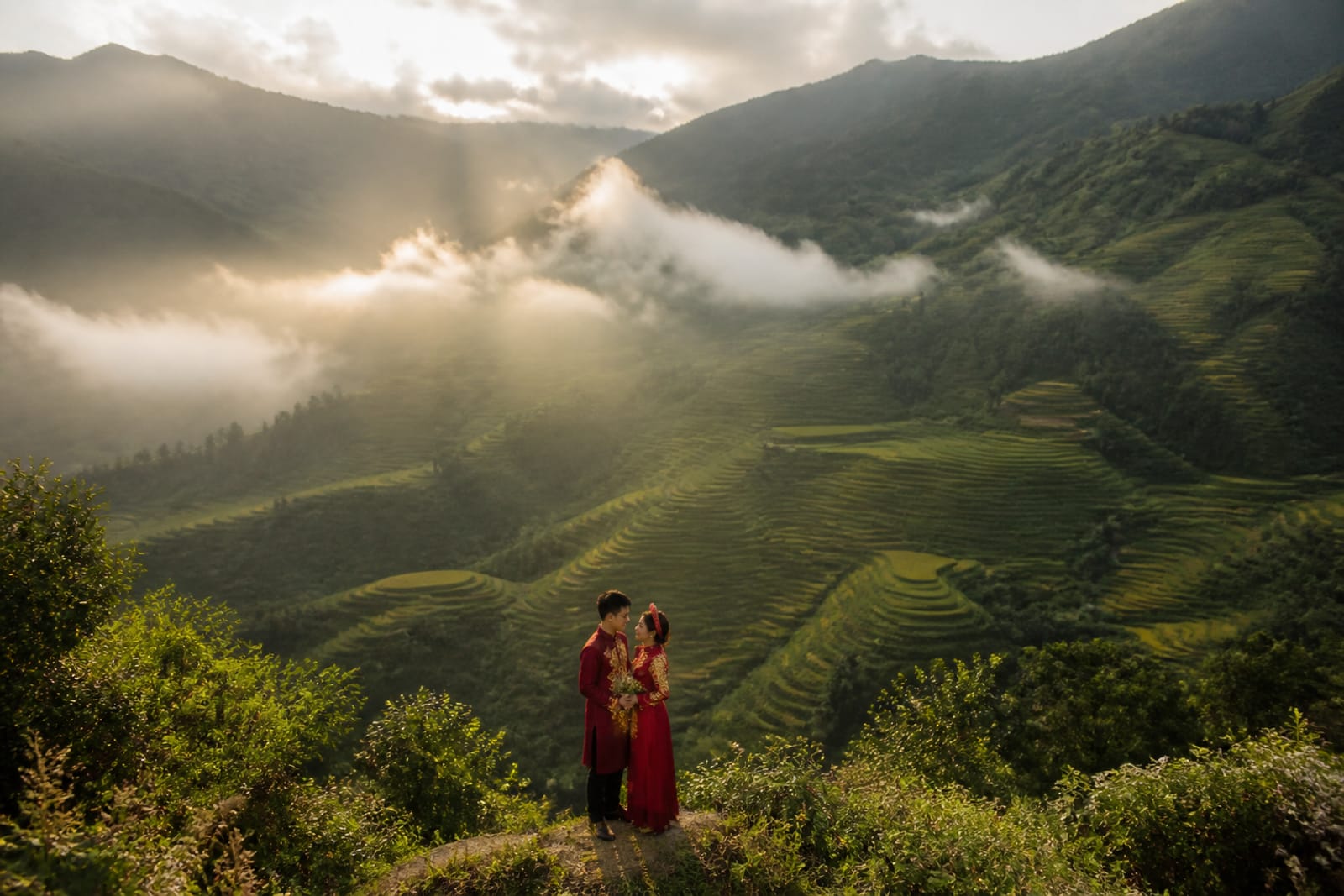
Sapa in March averages 15–17°C in the morning, warming to 18–20°C by afternoon—cool enough that you need layers. Under a traditional áo dài: wear a long-sleeve thermal or cotton shirt (keeps you warm, flatters the silhouette under silk, and protects from sun). For a Western wedding dress, a lightweight wrap or shawl is essential for warmth and wind (terraces are exposed). Footwear must be grip-soled: the bride changes out of heels for the hike, then changes back for final frames on flat ground. Bring two pairs of shoes, spare socks (mornings are damp from dew), and a light rain jacket in the bag (March is mostly dry, but 10–20% risk of a brief shower). A tight bun or braids withstand mountain wind better than loose waves; ask your hair artist (if you hire one locally) to use strong-hold spray.
How do you find and vet a local Sapa photographer for March?
Cáo Studio operates in Hanoi, Ho Chi Minh City, and Hoi An—not Sapa—so you'll need to hire locally. Use these steps: (1) Ask your hotel for photographer referrals; they know who's reliable and insured for mountain work. (2) Check their portfolio for March light (soft, golden, clear skies)—avoid pages full of overprocessed or underexposed terrace shots. (3) Confirm they own their equipment and have backup cameras (internet and phones fail at altitude). (4) Ask if they've shot proposals or pre-wedding sessions (different mindset than casual tourism photography). (5) Verify they understand terrace access: some areas require guides, some require permits for sunrise shoots—your photographer should handle this, not leave it to you. (6) Negotiate a backup day (March weather is stable, but reserve a date in case of rare frost or early rain). (7) Request a test walk the afternoon before to scout light and confirm paths (this costs extra but saves chaos on shoot day).
What's the realistic timeline for edited photos after a March Sapa shoot?
Local Sapa photographers typically deliver edited images in 7–14 days (internet bandwidth is lower at altitude; many transfer files via laptop on their next trip to Hanoi or a town with fibre). This is slower than Cáo Studio's 48-hour delivery in Hanoi and Ho Chi Minh City. Ask upfront: how many edited images, what format (RAW, JPEG, high-res or web-size), and how they'll transfer (cloud link, USB, email). If you need prints or a photo album, order through a Hanoi lab; Sapa has limited print infrastructure. For a pre-wedding story, request both portraits and wide landscape frames; a March shoot should yield 60–80 usable shots (clear light, no retakes needed for blown highlights).
---
What to check before you book a Sapa photographer
- Weather forecast: Check 5–7 days ahead; March is stable, but rare pre-spring storms happen. Have a backup date in mind.
- Sunrise permit: Confirm your photographer handles any park or village permits (some terrace areas charge a small access fee at dawn).
- Outfit logistics: Discuss how many outfit changes fit the timeline. One áo dài shoot + one Western dress = 2–3 hours minimum with transport between locations.
- Backup cameraman: Ask if they have a second shooter (useful for simultaneous wide + detail frames, standard for pre-wedding work).
- Communication language: Confirm they speak enough English or hire a translator. Pre-wedding shoots require clear direction; misunderstandings waste time and light.
- Delivery format: Specify how you want files (cloud, drive, USB) and what editing style you prefer (natural, film-like, bright, contrasty). Show examples from their past work.
- Contingency: If the photographer cancels, do you have a backup number or alternative recommendation? Ask upfront.
---
Consider a shoot in Hanoi or Hoi An for easier logistics
If Sapa's altitude, permits and slower delivery feel risky, Cáo Studio in Hanoi offers pre-wedding sessions with guaranteed 48-hour turnaround, in-house makeup and hair, and a full team (photographer, stylist, director). March weather in Hanoi is also clear and cool—ideal for soft morning light near the Old Quarter or Tay Ho waterfront. Hoi An offers lantern-lit evening shoots year-round, with stable dry-season light in March. If you're already traveling Vietnam for your pre-wedding story, reach out on WhatsApp to discuss whether Sapa is the best fit or if a multi-location shoot (Hanoi + Sapa, or Hoi An + a day trip) makes sense.
📸 Book on WhatsApp — ao dai photoshoot
---
FAQ
Is March too cold for a wedding dress in Sapa?
No—15–20°C is cool but not uncomfortable for a few hours if the bride wears layers underneath and brings a wrap. Morning dew and wind chill are the main discomforts; plan for 6–7 am shoots before it gets windy. Áo dài is warmer because of the long sleeves and layered fabric.
Do rice terraces look good in March if they're not green?
Yes. Brown earth creates contrast with white áo dài or pale wedding dresses, and the landscape shows ridge lines and geometry clearly. The scale of the valley is still dramatic. If green terraces matter most, visit May–August instead—but expect larger crowds, afternoon rain, and hotter temperatures.
Can we shoot a proposal in Sapa in March?
Yes, if the photographer understands proposal shoots—this is different from casual hiking photography. The moment requires anticipation and discrete framing (the bride shouldn't know it's coming). Hire a photographer with proposal experience, and brief them on timing and location beforehand. Early morning light in a quiet terrace spot is ideal for intimacy.
How much does a local Sapa photographer cost in March?
Prices vary by photographer and package scope. Ask for quotes from 3–5 local photographers (hotel recommendations are your best source) and compare what's included: number of edited images, outfit changes, how many hours, backup date, delivery format. Negotiate based on what you need.
Should we hire a Sapa photographer or book Cáo Studio remotely?
If you want guaranteed quality, 48-hour delivery, and an experienced pre-wedding team, Cáo Studio's Hanoi base is more reliable—but you'd shoot in Hanoi, not Sapa. If Sapa's landscape is non-negotiable, hire a vetted local photographer (use hotel referrals and portfolio review). You trade speed and consistency for location authenticity. Many couples do both: a Hanoi pre-wedding session with Cáo Studio + a casual Sapa shoot with a local photographer.
What's the best backup plan if March weather turns bad?
Have a second shoot date booked 2–3 days later (March is stable, so rescheduling is usually unnecessary). Scout an indoor location: a French colonial hotel lobby, a café, or a homestay interior (ask permission). If you need to cancel entirely, ensure your contract allows refunds or rescheduling without penalty—confirm this upfront with your photographer.
FAQ
Is March too cold for a wedding dress in Sapa?
No—15–20°C is cool but not uncomfortable for a few hours if the bride wears layers underneath and brings a wrap. Morning dew and wind chill are the main discomforts; plan for 6–7 am shoots before it gets windy. Áo dài is warmer because of the long sleeves and layered fabric.
Do rice terraces look good in March if they're not green?
Yes. Brown earth creates contrast with white áo dài or pale wedding dresses, and the landscape shows ridge lines and geometry clearly. The scale of the valley is still dramatic. If green terraces matter most, visit May–August instead—but expect larger crowds, afternoon rain, and hotter temperatures.
Can we shoot a proposal in Sapa in March?
Yes, if the photographer understands [proposal shoots](/proposal-and-anniversary)—this is different from casual hiking photography. The moment requires anticipation and discrete framing (the bride shouldn't know it's coming). Hire a photographer with proposal experience, and brief them on timing and location beforehand. Early morning light in a quiet terrace spot is ideal for intimacy.
How much does a local Sapa photographer cost in March?
Prices vary by photographer and package scope. Ask for quotes from 3–5 local photographers (hotel recommendations are your best source) and compare what's included: number of edited images, outfit changes, how many hours, backup date, delivery format. Negotiate based on what you need.
Should we hire a Sapa photographer or book Cáo Studio remotely?
If you want guaranteed quality, 48-hour delivery, and an experienced pre-wedding team, [Cáo Studio's Hanoi base](/hanoi) is more reliable—but you'd shoot in Hanoi, not Sapa. If Sapa's landscape is non-negotiable, hire a vetted local photographer (use hotel referrals and portfolio review). You trade speed and consistency for location authenticity. Many couples do both: a Hanoi [pre-wedding session](/pre-wedding-photoshoot) with Cáo Studio + a casual Sapa shoot with a local photographer.
What's the best backup plan if March weather turns bad?
Have a second shoot date booked 2–3 days later (March is stable, so rescheduling is usually unnecessary). Scout an indoor location: a French colonial hotel lobby, a café, or a homestay interior (ask permission). If you need to cancel entirely, ensure your contract allows refunds or rescheduling without penalty—confirm this upfront with your photographer.
Ao dai, makeup, hair and a local photographer in Hanoi or Saigon — one WhatsApp message.