/pre-wedding-photoshoot
Pre-wedding photoshoot in Sapa in the rainy season
Pre-wedding shoots in Sapa during the rainy season (May–Sep) work best in early mornings before afternoon downpours, when mist clings to mountains and light diffuses soft and even. Cáo Studio does not operate in Sapa itself, but we coach couples traveling north on outfit choice (lightweight layers, no white silk that shows water stains), timing (shoot 6–8 am, pack into vans by 10 am), and vetting a local Sapa photographer who knows how to frame terraces in fog without losing depth. The season demands patience: weather changes in minutes, but that drama—cloud shadow, rain-slicked paths, sudden sunlight breaking through—becomes the shot. Budget for a local guide-photographer team familiar with monsoon light and safe hiking routes; avoid solo outdoor shoots on unmarked trails in low visibility. Cáo Studio's pre-wedding philosophy applies wherever you shoot: one director, one message, real light over posed moments.
Pre-wedding photography in Sapa's rainy season is a choice, not a compromise. The lush terraces, thick mist, and moody skies create a different aesthetic than the golden-light, clear-horizon shoots you see on Instagram—but one that photographs remarkably well if you understand how to work with it.
The rain season runs May through September; October–November is transition (still wet, but clearing). If you're set on Sapa and can't shift dates, you're not locked out. You need a different plan.
What makes Sapa's rainy season hard—and worth it?
Sapa's monsoon transforms the landscape. Rice paddies fill with water, terraces become vivid greens, and clouds sit low enough to touch. The problem: visibility drops, light is flat midday, and you can't predict when 30 minutes of rain will hit.
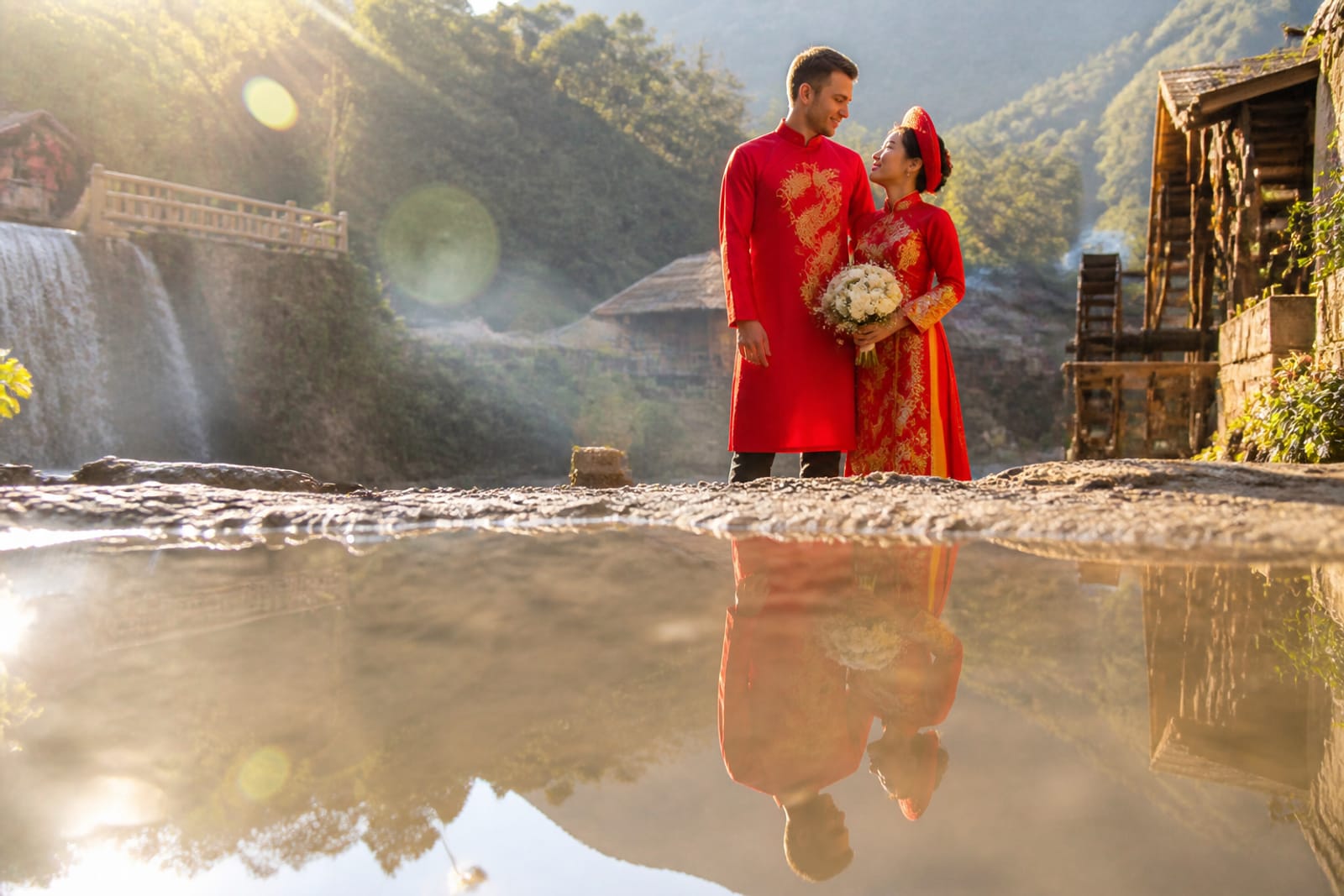
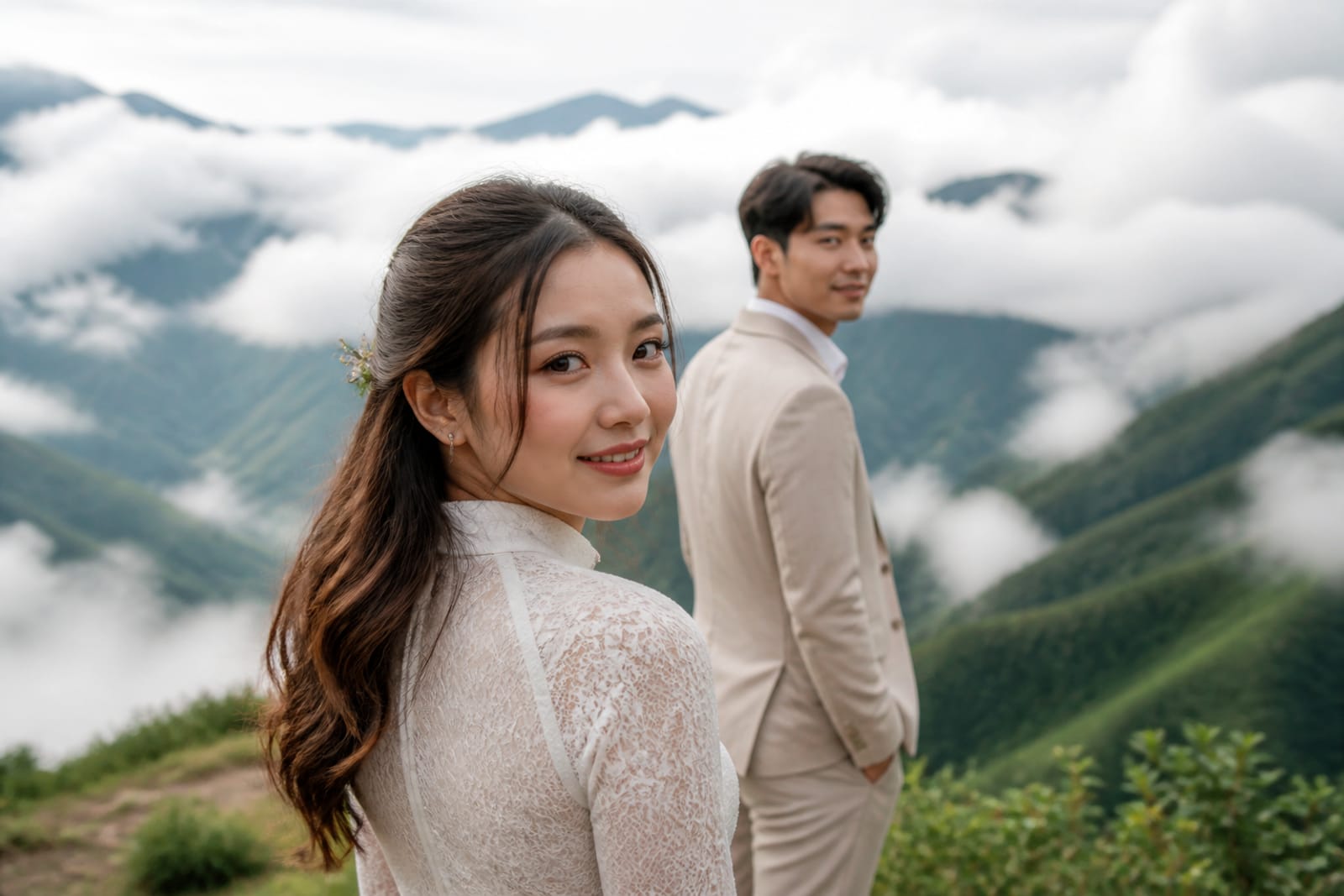
The upside: soft, diffused light means no harsh shadows on faces; the landscape feels intimate and alive; morning mist burns off just enough by 7–8 am to give you a working window. Couples who commit to 5 am starts and embrace the wet soil, the fog rolling across the valley, the quiet before tourists arrive—those couples get frames nobody else has. The season doesn't ruin the shoot; poor timing and poor outfit choice do.
When should you actually shoot in rainy Sapa?
Early May and late September are the sweet spot for weather and green.
May arrives with water-filled paddies (spectacular), but the heat builds and afternoon storms intensify. Late September has drying trends and slightly clearer mornings, though the landscape is still lush from the summer rains.
June–August is the true monsoon: heaviest rain, thickest fog, lowest visibility. Don't book a shoot then unless you want to gamble on a single 90-minute window and have a plan B (studio portraits in town, indoor ceremony rehearsal).
Book your shoot for 5:00–8:30 am. After 10 am, clouds thicken and the afternoon downpour risk rises. Mist typically burns fastest on days with some wind; stagnant fog can stick all day.
What do you actually wear to a Sapa pre-wedding shoot in the rain?
White silk and flowing tulle are warnings. Water stains show, fabric clings when wet, and the train gets muddy. Terraced hillsides aren't manicured lawns.
Best outfit strategy:
- Ao dai in mid-tone silk (cream, blush, pale gold, lavender) hides water spots better than white. Traditional cut in breathable fabric handles humidity and movement on uneven ground.
- Lightweight layers underneath. The paddies are cool in early morning; humidity rises fast. A fitted slip under the ao dai lets you move freely without the outer layer dragging soil.
- Sturdy, neutral shoes. Not heels. Wet terraces are slippery. Flat sandals or soft boots that grip. Change into formal shots after the terrain work if you need to.
- Groom in linen or cotton. Avoid silk and velvet—they pick up water and wrinkle. Neutral tones (cream, soft grey, khaki) photograph better in mist than dark suits.
If you're renting locally, check the rental shop's inventory for rainy-season fabrics, not just silk. Ask whether they've shot in Sapa in monsoon before.
| Outfit choice | Best for | Rainy season fit | Why it works |
|---|---|---|---|
| Ao dai in cream or blush silk | Traditional, romantic frames | Shows water spots; needs careful drying | Elegant but requires post-shoot care |
| Lightweight ao dai in cotton or linen blend | Terrain movement, practical | Dries faster; stains less visible | Moves well on hillsides; forgiving |
| Casual Western dress or jumpsuit | Modern couple aesthetic | Denim/linen grips better; easier to move | No traditional prep; faster changes |
| Groom in linen suit or shirt + trousers | Clean, breathable look | Breathes in humidity; wrinkles are acceptable | Complements mist and greenery naturally |
Cáo Studio's ao dai rental and suit rental services are based in Hanoi and Saigon; for a Sapa shoot, ask on WhatsApp whether we can coordinate outfit prep before you travel north, or work with a local rental shop we trust.
Should you book a Sapa local photographer or travel with your own team?
Cáo Studio does not shoot in Sapa. We operate from Hanoi, Ho Chi Minh City, and Hoi An (by appointment). If Sapa is your chosen location, you have three real options:
Option 1: Hire a Sapa-based photographer. Pros: Knows the terrain, weather patterns, safe routes, and how morning mist behaves on specific hillsides. Can navigate access (some of the best terraces are private farmland—a local guide knows where you can legally shoot). Cons: Quality varies widely; portfolio might show only clear-sky shoots. You need a vetting conversation first-hand, not just Instagram.
Option 2: Travel with a Hanoi-based photography team. Cáo Studio's Hanoi base (/hanoi) sits 4–5 hours south of Sapa. We can coach you on outfit prep, timing, and creative direction via WhatsApp before your Sapa trip, but we don't travel to Sapa ourselves. A Hanoi photographer who does travel north for shoots will charge for the trip and know northern light better than Saigon-based teams—but confirm their rainy-season portfolio first.
Option 3: Send a skilled local guide-photographer who also knows you. Some couples hire a guide through a Sapa tourism operator and bring a photographer from Hanoi for the 4–5 hour drive, sharing logistics. This splits the cost and the risk: the guide handles access and timing; the photographer handles framing and editing.
| Option | Best for | Cost factors | What to confirm |
|---|---|---|---|
| Sapa local | Terrain confidence, cultural knowledge | Guide fee, photographer rate, permits | Weather backup plan, rainy-season portfolio |
| Hanoi team traveling | Aesthetic consistency, one-team ethos | Travel time, overnight stay, all-in fee | Their northern light experience, editing turnaround |
| Guide + photographer combo | Budget flexibility, insider access | Split fees, communication coordination | Both parties' experience in monsoon, edit ownership |
Before you book anyone, ask these questions:
- Do you have a portfolio from a rainy-season Sapa shoot? (Not just clear days.)
- What happens if visibility drops to 50 meters? Do we shoot anyway or reschedule?
- Are edited photos back within 48 hours, or longer? (Monsoon weather sometimes delays travel out of Sapa.)
- Do you include a local guide or charge extra?
How do you handle the technical reality of fog, mist, and sudden light changes?
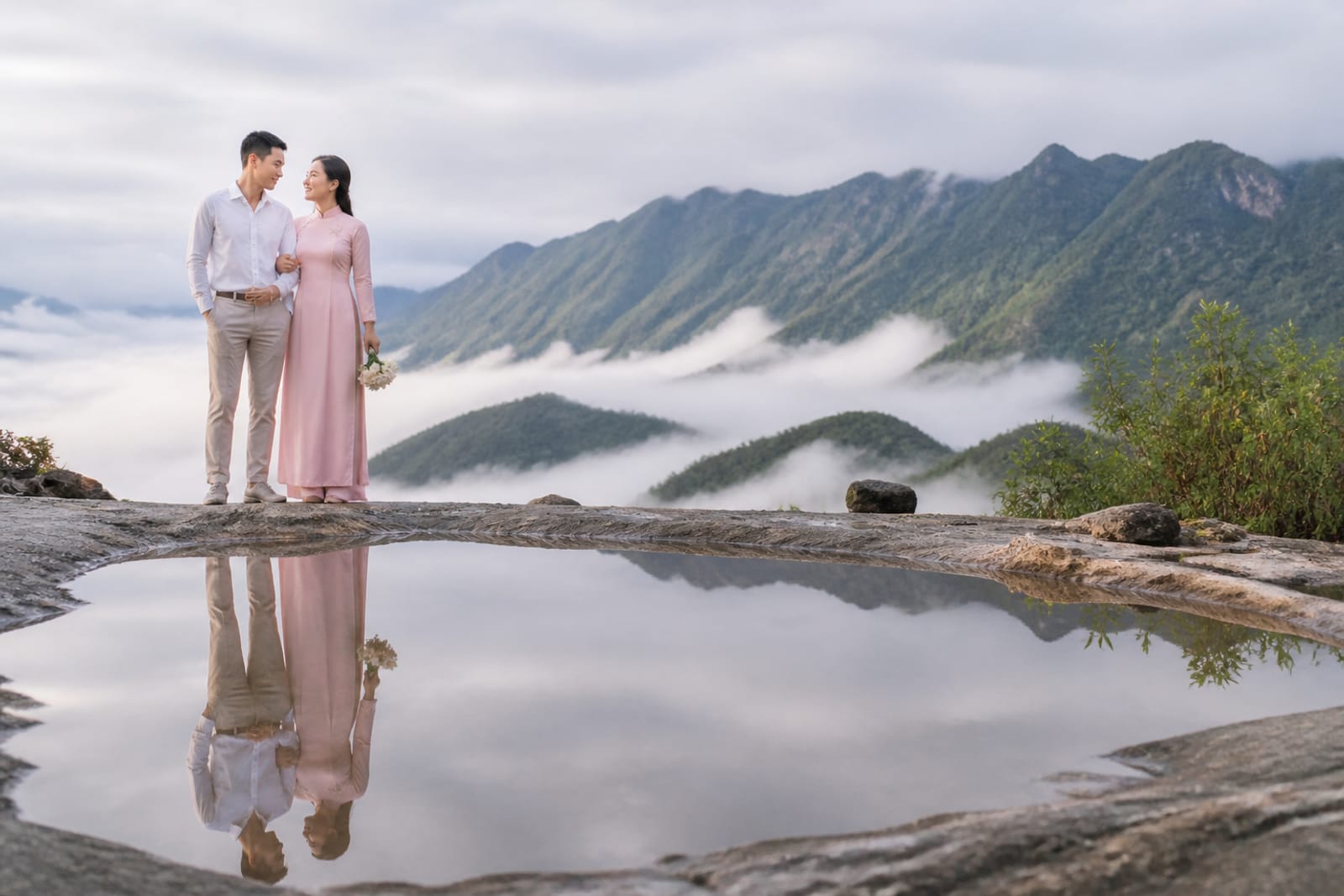
Mist flattens contrast. Faces can disappear into the background. The fix is posture and framing: shoot wider first, then tighter; guide the couple to walk toward camera or toward each other rather than stare at the lens; let them move, touch, laugh—real moments read through haze better than static poses.
Early light matters. A 6:30 am shoot on a clear morning (rare in June–July, more common in May and late September) gives you 45 minutes of soft, low side light before mist burns or clouds thicken. By 9 am, light is flat and overhead again.
Backup indoor location. Book a small room in town (local guesthouse, small temple hall, community center) for a backup shoot if weather is truly unsafe (lightning, near-zero visibility, mudslides risk). This lets you complete the session without canceling.
Outfits for both settings. If you're bringing two outfits—one for terraces, one for town or indoors—you reduce the stress of a single weather-dependent shoot. The indoor frames also break up the monsoon aesthetic and give the album variety.
What's the real timeline for a rainy-season Sapa pre-wedding shoot?
Day before: Travel to Sapa, scout the location with your photographer or guide, check the weather forecast for morning cloud cover and rain timing, and rest.
Shoot day: Wake at 4:30 am, do minimal makeup (moisture and humidity will blur heavy products), reach the terraces by 5:45 am with your team, photographer, and guide.
5:45–8:30 am: Shoot. Mist is thickest at dawn; light improves by 7 am. By 8:30 am, clouds thicken again or rain arrives. Three hours is realistic; expect 90–150 minutes of shootable light.
8:30 am–10 am: Return to town, change, dry outfits, eat.
Editing: Monsoon frames need careful color grading—raising highlights, managing shadow detail in fog, keeping skin tones warm in cool light. Budget 3–5 days for editing, not 48 hours, unless the photographer prioritizes speed over quality.
Cáo Studio's pre-wedding photoshoot philosophy emphasizes one director handling the full creative arc—outfit choice, makeup, light reading, framing, and editing. In Sapa, that means vetting your chosen photographer on all those points, not just their ability to hike.
📸 Book on WhatsApp — pre-wedding photoshoot | 💄 Makeup & hair before your Sapa trip | 🌸 See the lookbook
What to check before you book a rainy-season Sapa shoot
- Monsoon portfolio. Ask to see 10–15 frames from a shoot in Jun–Sep, not May or Oct. Edited files, not just JPEGs. Do the faces read? Is the landscape clearly framed?
- Outfit advice. Does the photographer give you written guidance on fabric, color, and fit for rainy-season terrain? Or do they assume you know?
- Weather contingency. Is there a backup indoor location? Do you reschedule or shoot both? What's the fee if weather cancels?
- Turnaround time. When are edited photos delivered? Wet equipment and travel delays sometimes slow Sapa teams; confirm realistic timelines.
- Communication channel. Can you reach them on WhatsApp for pre-shoot questions? Sapa doesn't always have fast email or phone service.
- Experience with couples. Have they shot pre-wedding or engagement sessions before, or mostly solo travelers? Pre-wedding light and emotion are different from vacation shots.
---
FAQ
Is Sapa too risky for a pre-wedding shoot if it's raining every afternoon?
Afternoon rains are predictable; morning shoots at 5:30–8:30 am work consistently. The risk is low visibility (fog below 100 meters), not rain itself. Confirm your photographer has a backup indoor location and honest weather-call judgment—not a "we'll shoot anyway" attitude.
Can we wear white ao dai in Sapa's rainy season without it looking stained?
White silk stains visibly when wet and dries slowly. Cream, blush, or pale gold ao dai hide water marks and dry faster. If white is essential, plan an indoor or studio change mid-shoot and keep the white for controlled light.
How far in advance should we book a Sapa photographer for June or July?
Book 4–6 weeks ahead. June–July is peak monsoon and also peak travel season; local guides and photographers fill up. May and late September book 2–3 weeks ahead with better availability.
Do we need a travel permit to shoot on Sapa's rice terraces?
No national permit exists, but many terraces are private farmland. A local guide handles access and often pays small courtesy fees to farmers. Confirm this with your photographer or guide before booking; it's their responsibility, not yours.
Can we do a pre-wedding shoot in Sapa if we're staying in Hanoi and traveling for one day?
No. Hanoi to Sapa is 4–5 hours each way; a single-day trip wastes 8–10 hours in transit. Budget two nights: arrive in Sapa evening before, shoot early morning, leave afternoon of the shoot or stay another night to recover. The shoot itself is quick (3–4 hours), but the journey is not.
If we hire a Hanoi-based photographer to travel to Sapa, what should we budget beyond their base fee?
Their fee covers time and editing. Travel costs (their van, fuel, overnight accommodation) are separate. Confirm whether these are baked into their quote or added. Most Hanoi photographers include travel in a bundled pre-wedding rate; ask explicitly.
How do we compare a Sapa local photographer to a team we could book in Hanoi and fly there with?
Ask both for a rainy-season portfolio and a written shooting plan (time, location, outfit guidance, backup). Local photographers offer terrain confidence and cost efficiency; Hanoi teams offer consistency if you've seen their work before. Neither is universally better—fit depends on your priorities (budget, aesthetic, communication style).
What if the monsoon clears and we get a full blue-sky day in Sapa—is that better than mist?
Harder light, harsher shadows on faces, more glare. Mist is kinder to skin; blue sky is more dramatic landscape. Both work. Mist is underrated because it's not Instagrammable, but it photographs beautifully in frames where light is soft and faces are clear.
Can we reschedule if we arrive in Sapa and the weather is truly dangerous (lightning, landslide warnings)?
Yes. A responsible photographer calls the shoot if conditions are unsafe. Confirm the rescheduling policy (same team, new date within X weeks) before you book. Travel insurance that covers weather delays is wise for international couples.
Is makeup different for a mist-heavy shoot than a sunny one?
Yes. Humid air and soft light are forgiving; heavy contouring reads as flat. Focus on skin prep (waterproof primer, long-wear foundation), warm eyeshadow, and soft blush. Ask your makeup artist whether they've worked in Sapa's monsoon before, or have Cáo Studio's makeup & hair team prepare you in Hanoi before you travel north.
FAQ
Is Sapa too risky for a pre-wedding shoot if it's raining every afternoon?
Afternoon rains are predictable; morning shoots at 5:30–8:30 am work consistently. The risk is low visibility (fog below 100 meters), not rain itself. Confirm your photographer has a backup indoor location and honest weather-call judgment—not a "we'll shoot anyway" attitude.
Can we wear white ao dai in Sapa's rainy season without it looking stained?
White silk stains visibly when wet and dries slowly. Cream, blush, or pale gold ao dai hide water marks and dry faster. If white is essential, plan an indoor or studio change mid-shoot and keep the white for controlled light.
How far in advance should we book a Sapa photographer for June or July?
Book 4–6 weeks ahead. June–July is peak monsoon and also peak travel season; local guides and photographers fill up. May and late September book 2–3 weeks ahead with better availability.
Do we need a travel permit to shoot on Sapa's rice terraces?
No national permit exists, but many terraces are private farmland. A local guide handles access and often pays small courtesy fees to farmers. Confirm this with your photographer or guide before booking; it's their responsibility, not yours.
Can we do a pre-wedding shoot in Sapa if we're staying in Hanoi and traveling for one day?
No. Hanoi to Sapa is 4–5 hours each way; a single-day trip wastes 8–10 hours in transit. Budget two nights: arrive in Sapa evening before, shoot early morning, leave afternoon of the shoot or stay another night to recover. The shoot itself is quick (3–4 hours), but the journey is not.
If we hire a Hanoi-based photographer to travel to Sapa, what should we budget beyond their base fee?
Their fee covers time and editing. Travel costs (their van, fuel, overnight accommodation) are separate. Confirm whether these are baked into their quote or added. Most Hanoi photographers include travel in a bundled pre-wedding rate; ask explicitly.
How do we compare a Sapa local photographer to a team we could book in Hanoi and fly there with?
Ask both for a rainy-season portfolio and a written shooting plan (time, location, outfit guidance, backup). Local photographers offer terrain confidence and cost efficiency; Hanoi teams offer consistency if you've seen their work before. Neither is universally better—fit depends on your priorities (budget, aesthetic, communication style).
What if the monsoon clears and we get a full blue-sky day in Sapa—is that better than mist?
Harder light, harsher shadows on faces, more glare. Mist is kinder to skin; blue sky is more dramatic landscape. Both work. Mist is underrated because it's not Instagrammable, but it photographs beautifully in frames where light is soft and faces are clear.
Can we reschedule if we arrive in Sapa and the weather is truly dangerous (lightning, landslide warnings)?
Yes. A responsible photographer calls the shoot if conditions are unsafe. Confirm the rescheduling policy (same team, new date within X weeks) before you book. Travel insurance that covers weather delays is wise for international couples.
Is makeup different for a mist-heavy shoot than a sunny one?
Yes. Humid air and soft light are forgiving; heavy contouring reads as flat. Focus on skin prep (waterproof primer, long-wear foundation), warm eyeshadow, and soft blush. Ask your makeup artist whether they've worked in Sapa's monsoon before, or have Cáo Studio's [makeup & hair](/makeup-and-hair) team prepare you in Hanoi before you travel north.
Ao dai, makeup, hair and a local photographer in Hanoi or Saigon — one WhatsApp message.