/pre-wedding-photoshoot
Pre-wedding photoshoot in Sapa November: weather, light, crowds
November in Sapa offers ideal pre-wedding shooting conditions: daytime temperatures range 10–15°C, skies clear after September's rain, and rice terraces turn golden as harvest begins (timing varies by field and elevation). You'll face minimal crowds compared to October, though early mornings below 5°C require thermal layers under your ao dai or gown. Light peaks 7–9 am and 4–6 pm; midday is harsh and washed. A professional local photographer familiar with Sapa's microclimates, steep terrain and temple etiquette is essential — Cáo Studio does not operate in Sapa, but we can guide you on what to look for in a local team and what works in that landscape.
Why is November Sapa's sweet spot for pre-wedding light?
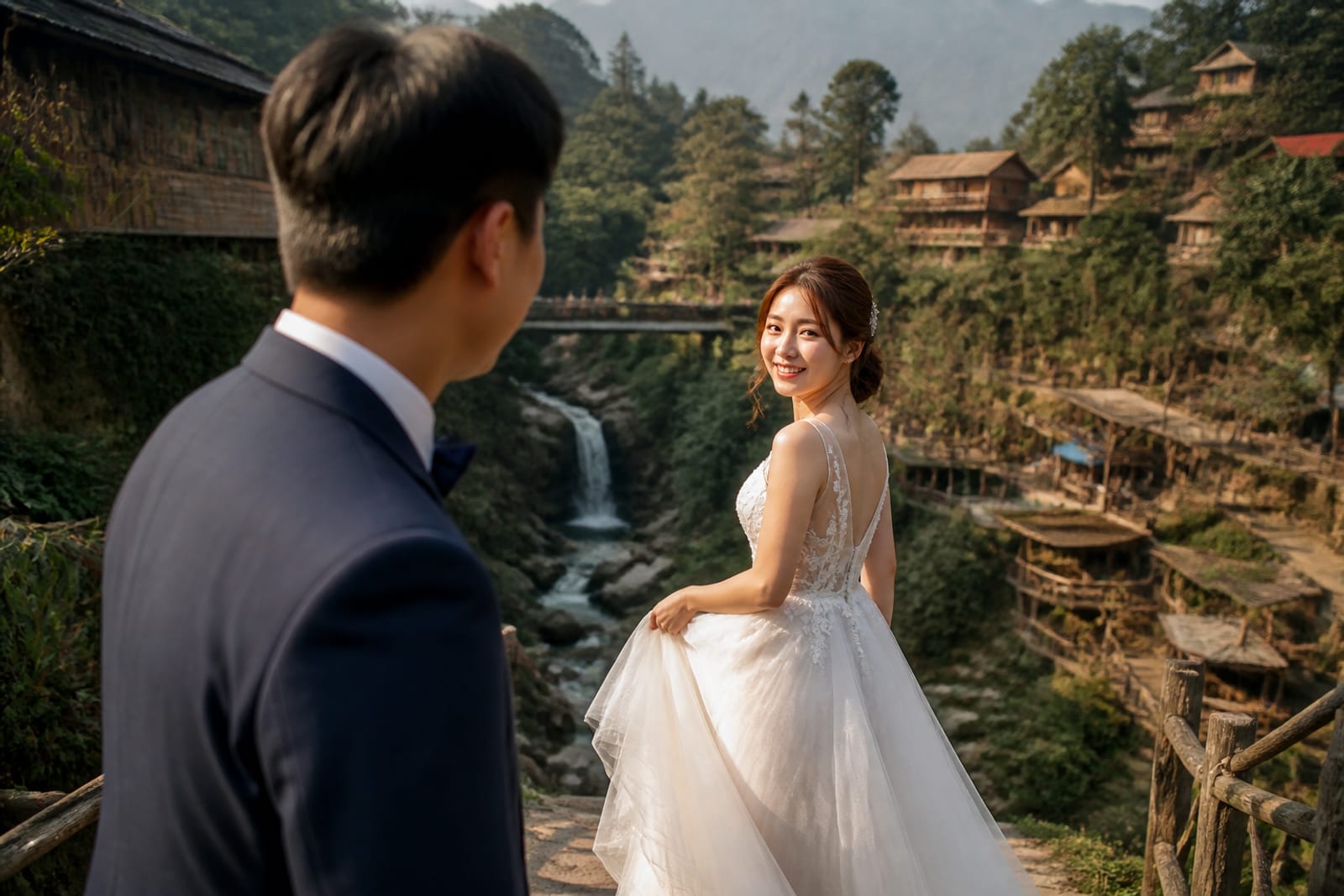
Rice terraces shift into harvest phase in November — colour moves from bright green to warm gold and amber depending on altitude and microclimate. The rainy season (May–September) has passed, so skies clear and humidity drops sharply. Early mornings produce soft, directional side light; you'll see the mist sit in valleys without obscuring faces. Evenings glow warm across the steps. Mid-day sun is still hard and washes out contrast, so most shoots happen in a 2–3 hour window at dawn or dusk.
The trade-off: November mornings drop to 5–10°C. Your partner will feel cold in a sleeveless ao dai or light wedding dress without thermal layers underneath. Plan outfit changes indoors at your hotel, not on the terraces.
What crowds and booking pressure should you expect?
October draws peak autumn crowds to Sapa's main trekking routes and viewpoints. By early November, most tourist groups have moved to Ha Long or Hoi An. You'll still see trekking groups on popular trails (Muong Hoa valley, Sin Chai village), but they pass in waves — your photographer can time shots between groups. Late November (after the 15th) is quietest.
Booking pressure is low — hotels and guides have availability. This means your photographer has flexibility to scout locations and timing. Crowded spots (Fansipan viewpoint if you cable-car up, O Quy Ho pass) are still worth shooting early before tour buses arrive. Local photographers book weeks ahead, not months, so you have room to plan.
When should you actually press the shutter for the best light?
| Timing | Best for | Light quality | Why it works |
|---|---|---|---|
| 6:30–8:30 am | Terraces, mist, couples walking | Soft, directional, low-angle side light | Sun skims the steps; mist pools in valleys create depth. Cold but clear. |
| 9:00 am–3:00 pm | Formal poses, architectural detail (temples, stone steps) | Bright but harsh; high angle flattens texture | Avoid skin; use shade or backlight. Terraces lose dimension. |
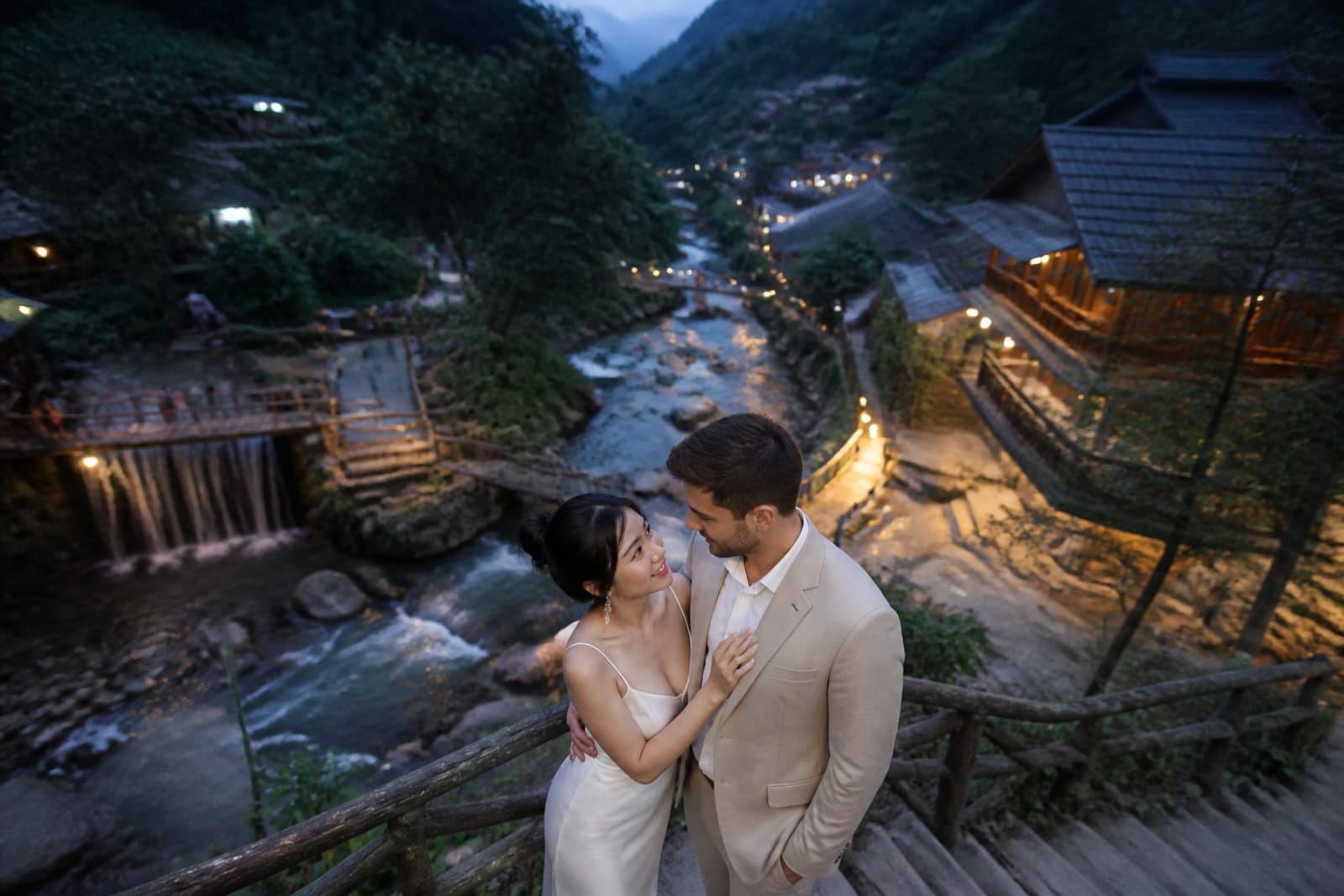
| 4:30–6:30 pm | Silhouettes, golden-hour walks, village returns | Warm, low, long shadows; colour peaks | Best for movement — walking out of frame, holding hands. Couples glow. |
| 7:00+ pm | Late evening mood shots | Fast-fading light, risk of blur without tripod or fast glass | Only if your photographer has low-light skill and backup lighting. |
Start your day before sunrise. Most quality pre-wedding shoots in Sapa are 4–5 hours, spanning 2 light windows. Spend 1.5–2 hours on dawn terraces, return for hotel breakfast and outfit change, then shoot again 4–6 pm. Skipping mid-day avoids harsh light and lets your partner warm up.
How do you find and vet a local Sapa photographer?
Cáo Studio operates in Hanoi, Ho Chi Minh City and Hoi An — we do not shoot pre-wedding sessions in Sapa. For a Sapa-based team, here's what matters:
Ask about experience with:
- Rice terrace microclimates (different fields, different light angles and mist patterns).
- Cold-weather shooting (how they work around thermal wear and client comfort).
- Temple etiquette (dress codes, permission to photograph inside Cát Cát or Dam village temples; many ban full wedding attire indoors).
- Local coordination (transport, timing around trekking groups, backup indoor locations if weather shifts).
Red flags:
- No local Sapa residency or portfolio from that location. Tourism photographers can shoot in Sapa without knowing Sapa's light.
- Promises of "perfect Instagram shots" or studio-level editing for outdoor terraces. November Sapa is moody and natural — expect texture, mist and earth tones, not airbrushed perfection.
- Single photographer, no assistant. Steep terrain and fast-changing light need a second eye for backup angles.
Vetting steps: Visit their Instagram filtered to Sapa shots from October–November over the last 2 years. Look for consistency in light direction, terrace-step framing and couple posing (walking and looking at each other, not stiff faces at monuments). Email or message with your dates, preferred outfit style (ao dai, wedding dress, casual) and ask for a custom proposal — not a generic package.
Contact local Sapa tourism boards or hotel concierges; they often have referrals to photographers they trust. If you book with a local wedding planner in Sapa, ask if their preferred photographer has a second shooter and back-up indoor setup.
📸 Book on WhatsApp — pre-wedding photoshoot
What should you wear, and how do you stay warm?
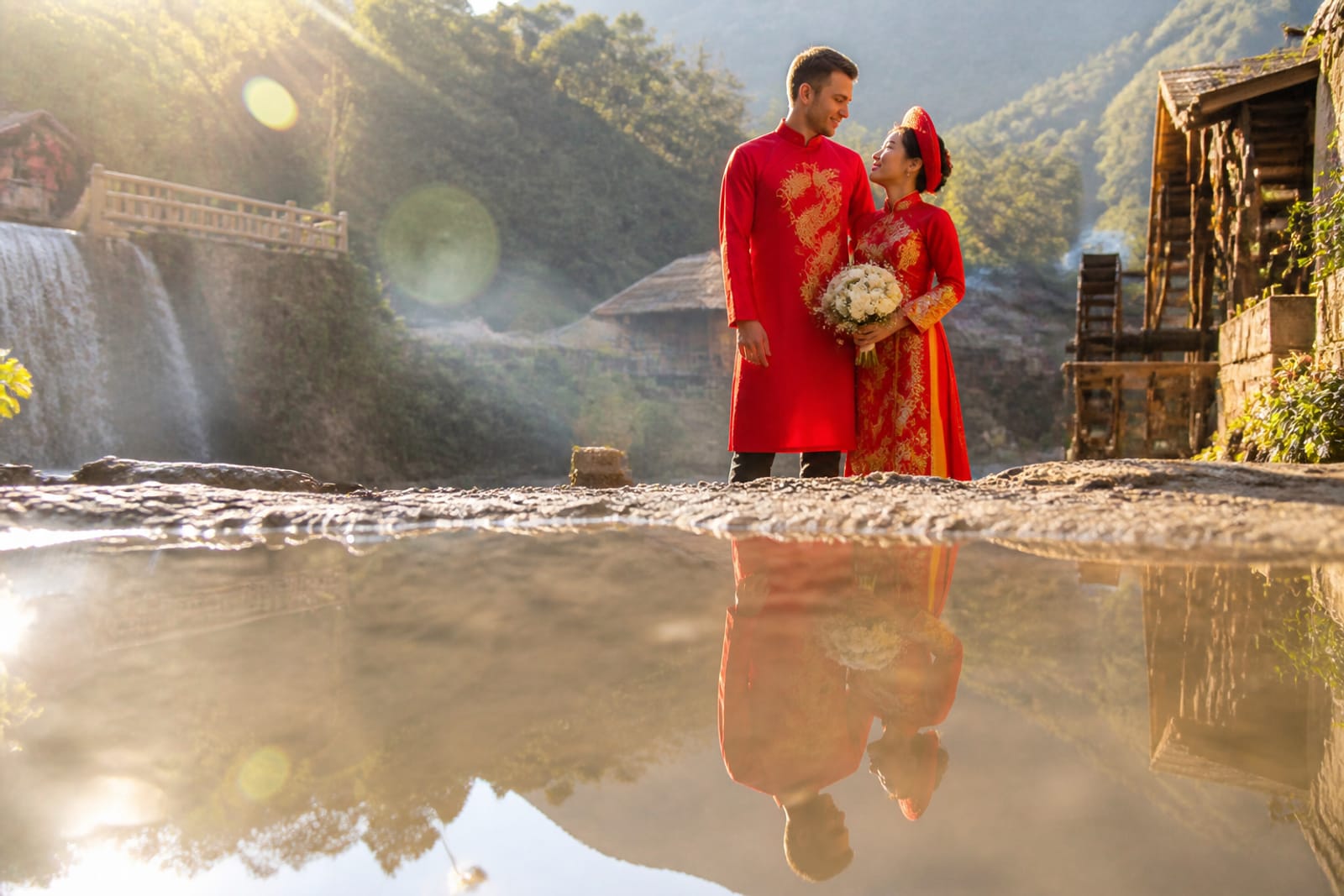
An ao dai is iconic for Sapa — the fabric drapes elegantly on the terraces, contrasts against earth tones, and reads well from distance. Silk ao dai in jewel tones (deep burgundy, emerald, navy) photograph better than pastels in November's cool, directional light. Avoid pure white (glare and cold reflection). If you prefer a wedding dress, opt for a gown with sleeves or a shrug; sleeveless gowns will look uncomfortable and cold in edited photos.
Thermal layers are not optional:
- Thick thermal leggings under your ao dai or under your gown (groom wears thermal long-sleeves under his shirt).
- A warm jacket or fleece for between shots — remove it just before the camera rolls.
- Closed-toe hiking boots or wedding flats with traction (rice-terrace steps are slippery when wet or misty).
Pack 2–3 outfit changes if your budget allows. A formal ao dai or gown for sunrise, casual layers (sweater, trousers) for mid-day break, then a second formal outfit for golden hour. Your photographer can frame outfit changes as part of the narrative.
Color palette: align outfit tones with November terraces. Gold, rust, terracotta, cream, deep jewel tones and black read beautifully. Avoid neon or bright pastels — they jar against the landscape. If your partner wears Western formal wear (suit, groom's attire), a charcoal or navy suit works; ask about suit rental options in Hanoi or Saigon if you're flying into Vietnam without formal wear.
How do you build a pre-wedding plan that works in Sapa's constraints?
Step 1: Lock dates and local photographer. November has good availability, but book your photographer 4–6 weeks ahead. Confirm their backup indoor location (a hotel room, temple courtyard, or local homestay) in case of unexpected rain or extreme cold.
Step 2: Plan two light windows. Confirm 6:00 am arrival time with your team and transport. (Early wake-up is non-negotiable for Sapa light.) Book a hotel within walking distance of the main terrace viewpoints or with an on-site shuttle.
Step 3: Coordinate outfits, hair and makeup. If hiring a local makeup artist, brief them on November light (cooler tones, matte finishes work better than shiny products under soft side light). Bring a backup lipstick; morning mist can fade makeup. If your partner is flying in, ask if the local photographer's network includes a hair and makeup artist — or book makeup and hair service in Hanoi before you travel to Sapa.
Step 4: Scout locations one day before. Walk the main terrace viewpoints with your photographer at the same time of day you'll shoot. Test camera angles, check for power lines and tourist infrastructure creeping into frames, and identify backup spots if crowds appear.
Step 5: Shoot with a clear narrative. Don't default to stiff poses. Guide your partner to walk along terraces, sit on steps and talk, watch the sunrise together. Ask the photographer to shoot wide first (landscape context), then medium (you together), then detail (hands, expressions). This sequence tells a story.
Step 6: Confirm delivery timeline and edits. Most Sapa photographers deliver final files in 2–4 weeks, not 48 hours. Clarify the number of edited photos, style (vibrant, muted, black-and-white) and whether you get RAW files. Discuss how you'll display the work — a photo album is ideal for pre-wedding images with this much landscape context.
What to check before you book a Sapa pre-wedding shoot
- Local photographer portfolio: at least 3 full pre-wedding shoots in Sapa rice terraces, October–November, from the last 2 years.
- Weather contingency: does the photographer have an indoor backup location and how will they reschedule if conditions are unsafe?
- Outfit fit and thermal comfort: confirm the photographer has styled cold-weather shoots and won't ask your partner to remove thermal layers for "purity" of the shot.
- Transport and timing: who arranges early morning transport to terrace viewpoints? How long is travel time from your hotel? Will the photographer scout locations beforehand?
- Delivery: how many edited images, in what format, and when? Is a photo album or printed product included, or available separately?
- Temple permissions: if shooting near religious sites, has the photographer confirmed permission and dress-code etiquette with local caretakers?
- Backup communication: what's the photographer's WhatsApp or local messaging contact if timing or weather changes on shoot day?
If you're looking to combine a Sapa trip with shoots in other regions, Cáo Studio shoots pre-wedding sessions in Hanoi, Ho Chi Minh City and Hoi An. We can coordinate a multi-location pre-wedding story (e.g., ao dai in Hanoi, then elopement style in Hoi An) that links visually — ask on WhatsApp for a custom proposal.
---
FAQ
Is November the absolute best month for a Sapa pre-wedding shoot, or can we shoot in other seasons?
November is ideal — clear skies, harvest-gold terraces, minimal crowds. September–October are greener but rainier; December–February are cold and foggy (mist obscures faces). March–May are warm but busy; June–August are hot and very rainy. November avoids extremes. If you're locked into other months, work closely with a local photographer who knows that season's light patterns.
Do we need to hire a makeup artist, or can we do our own makeup in cold November weather?
November cold won't ruin makeup, but mist and wind are issues. Matte products last longer than shimmer under soft, directional light. If you're self-doing makeup, bring a powder compact and blotting tissues. A professional makeup artist familiar with outdoor cold-weather shoots will use long-wear formulas and know how to set makeup for mist. Most Sapa photographers can connect you with a local artist, or hire hotel-based makeup and hair before you travel.
How much should we budget for renting an ao dai or gown in Sapa if we don't own one?
Sapa has limited formal rental shops compared to Hanoi or Hoi An. Check with your hotel concierge or ask your photographer for local rental contacts. For better selection and guaranteed fit, consider renting ao dai or a gown in Hanoi before traveling, then transport it to Sapa. Allow 1 week for shipping or 2–3 days for local alterations if you rent on arrival.
What happens if it rains on our Sapa pre-wedding shoot day?
Confirm your photographer's rain contingency plan before booking. Most have backup indoor locations (hotel interiors, covered temple courtyards, village homestays). Light will be flat and grey, but moody — some photographers embrace this for atmospheric shots. The bigger issue is safety on slippery terrace steps; if weather is unsafe, reschedule. Confirm your photographer offers a reschedule date without penalty if visibility drops below shooting threshold.
Can we extend our pre-wedding shoot to include sunset and golden hour twice in one day?
Yes, if you book a 6–8 hour session. You'd shoot at sunrise (6:30–8:30 am), rest indoors during mid-day, then return for golden hour (4:30–6:30 pm). This requires high endurance, multiple outfit changes and a full day with your team. Confirm your photographer's stamina and whether they include an assistant to manage gear and outfit logistics. Budget extra for longer coverage and higher output (more edited photos).
FAQ
Is November the absolute best month for a Sapa pre-wedding shoot, or can we shoot in other seasons?
November is ideal — clear skies, harvest-gold terraces, minimal crowds. September–October are greener but rainier; December–February are cold and foggy (mist obscures faces). March–May are warm but busy; June–August are hot and very rainy. November avoids extremes. If you're locked into other months, work closely with a local photographer who knows that season's light patterns.
Do we need to hire a makeup artist, or can we do our own makeup in cold November weather?
November cold won't ruin makeup, but mist and wind are issues. Matte products last longer than shimmer under soft, directional light. If you're self-doing makeup, bring a powder compact and blotting tissues. A professional makeup artist familiar with outdoor cold-weather shoots will use long-wear formulas and know how to set makeup for mist. Most Sapa photographers can connect you with a local artist, or hire [hotel-based makeup and hair](/makeup-and-hair) before you travel.
How much should we budget for renting an ao dai or gown in Sapa if we don't own one?
Sapa has limited formal rental shops compared to Hanoi or Hoi An. Check with your hotel concierge or ask your photographer for local rental contacts. For better selection and guaranteed fit, consider renting [ao dai](/ao-dai-rental) or a [gown](/wedding-dress-rental) in Hanoi before traveling, then transport it to Sapa. Allow 1 week for shipping or 2–3 days for local alterations if you rent on arrival.
What happens if it rains on our Sapa pre-wedding shoot day?
Confirm your photographer's rain contingency plan before booking. Most have backup indoor locations (hotel interiors, covered temple courtyards, village homestays). Light will be flat and grey, but moody — some photographers embrace this for atmospheric shots. The bigger issue is safety on slippery terrace steps; if weather is unsafe, reschedule. Confirm your photographer offers a reschedule date without penalty if visibility drops below shooting threshold.
Can we extend our pre-wedding shoot to include sunset and golden hour twice in one day?
Yes, if you book a 6–8 hour session. You'd shoot at sunrise (6:30–8:30 am), rest indoors during mid-day, then return for golden hour (4:30–6:30 pm). This requires high endurance, multiple outfit changes and a full day with your team. Confirm your photographer's stamina and whether they include an assistant to manage gear and outfit logistics. Budget extra for longer coverage and higher output (more edited photos).
Ao dai, makeup, hair and a local photographer in Hanoi or Saigon — one WhatsApp message.