/pre-wedding-photoshoot
Pre-wedding photoshoot in Vung Tau in April: weather, light and crowds
April in Vung Tau sits in the dry season (Dec–Apr), meaning mostly clear skies, low humidity and calm seas—ideal for pre-wedding frames. Weekday mornings (6–7 am) offer the best golden light on the beaches facing east; afternoons favour the rocky headlands and coastal paths where side light sculpts silhouettes. Weekends draw day-trippers from Ho Chi Minh City (120 km away, 2–3 hours), crowding Back Beach and the lighthouse area after 9 am. A local or visiting director familiar with Vung Tau's tidal patterns and light angles (the coast runs north–south, not east–west) makes the difference: you avoid shooting into glare, timing the shoot for the hour when shadow and sun split a frame. Cáo Studio does not operate a Vung Tau branch, but the team can guide you on location scouting, seasonal light and how to vet a local photographer before you book. 📸 Book on WhatsApp — ao dai photoshoot | 🌸 See the lookbook ---
Why April is Vung Tau's best pre-wedding month
April is part of Vung Tau's dry season (Dec–Apr), which means stable weather, low chance of rain and clear visibility for wide landscape frames. Humidity is moderate—unlike May onwards, when afternoon downpours arrive and the monsoon prep makes skies hazy. The water is calm; morning swells are gentle. Direct sun is intense at midday, but before 8 am and after 4 pm, the light turns cinematic: long shadows, warm colour, no blown highlights on skin. Compare this to November–January, when occasional drizzle and overcast days reduce contrast, and May–September, when humidity and rain make schedules unpredictable. April's catch: it's the tail end of dry season, so book early (late Jan–Feb) before weekend slots fill with Saigon couples taking day trips.
What time of day gives you the frames you'll keep
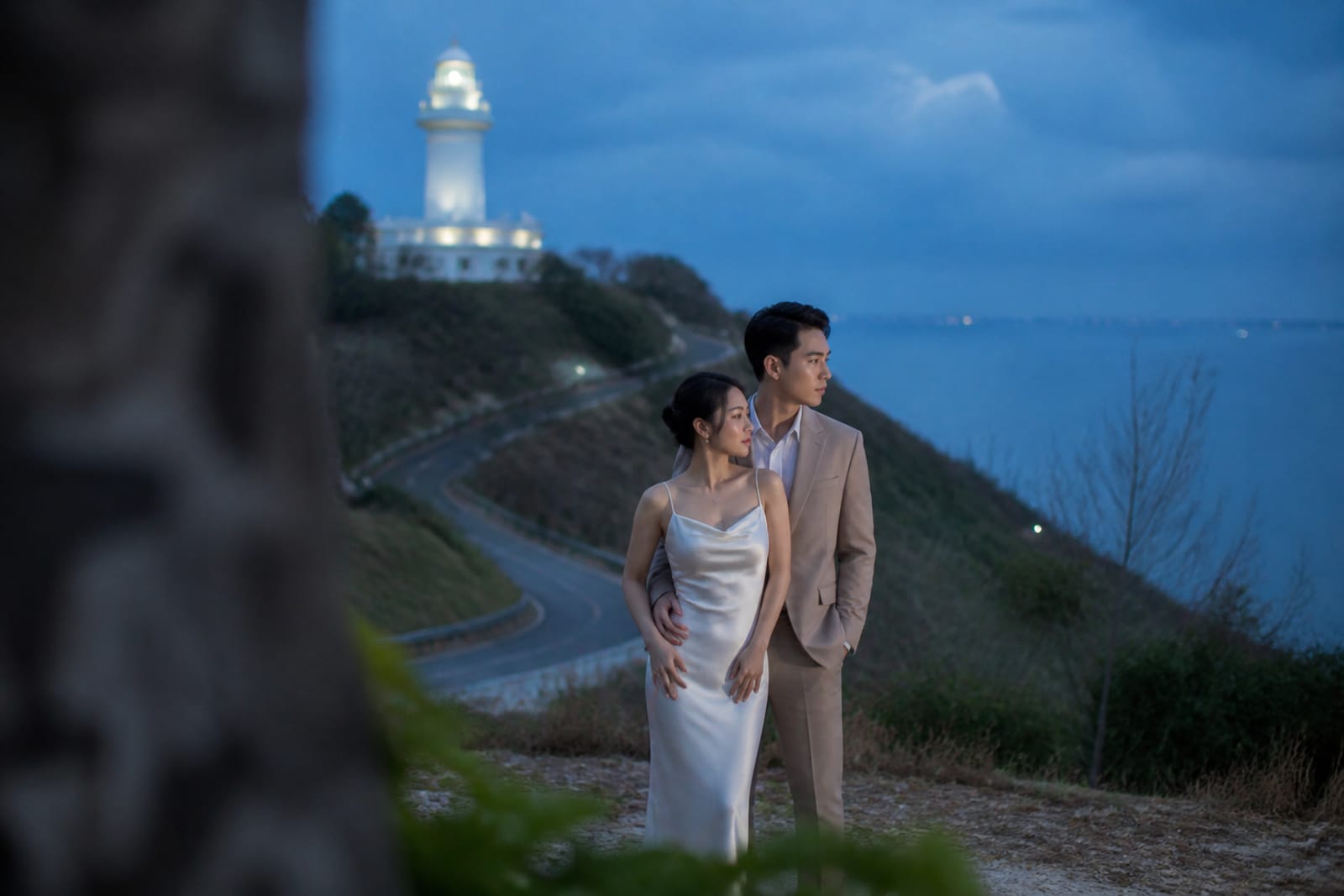
Pre-wedding couples at Vung Tau fall into two camps: those who want a walk-and-talk frame as sun rises over the east-facing beach (5:45–7:30 am), and those who prefer the rocky cliffs and lighthouse silhouettes with the sun low on the horizon at dusk (5–6 pm). Early morning light is softer and less fought for—crowds don't arrive until 9 am on weekdays. The trade: you're waking at 4:30 am, and light lasts only 90 minutes before it hardens overhead. Late afternoon gives you more time to work (3 hours of usable light), but you share the location with casual tourists, and timing the golden hour peak means shooting right at 5–5:30 pm, when the sun sits lowest. The hybrid approach—arrive at 6 am for 60 minutes of walk shots on an empty beach, then move to elevated spots (Nho Beach lookout, Nho Mountain path) for the 4:30–5:30 pm cross-light—requires a director who knows the tidal rhythm and can move the session without losing narrative flow.
| Timing | Best for | Light quality | Why it works |
|---|---|---|---|
| 5:45–7:30 am (weekday) | Couple walking, intimate frames | Soft golden, no glare, long shadows | Empty beach, low footfall, cool air, cinematic silhouettes |
| 9 am–12 pm | Outfit changes, lifestyle shots | Bright overhead, harsh shadows | Fewer options; good only with reflectors or shaded spots (cave, grove) |
| 1–3 pm | Avoid | Blown highlights, flat colour | Intense midday sun, heat, tourist crowds peak |
| 4:30–5:30 pm (sunset golden hour) | Silhouettes, cliff walks, backlighting | Warm, directional, long shadows | Best drama; shared with tourists; timing critical |
The decision: if you want a calm, directed session and can wake early, book dawn; if you prefer an evening frame and accept shared space, sunset suits you.
How to choose between beach, rocky coastline and elevated paths
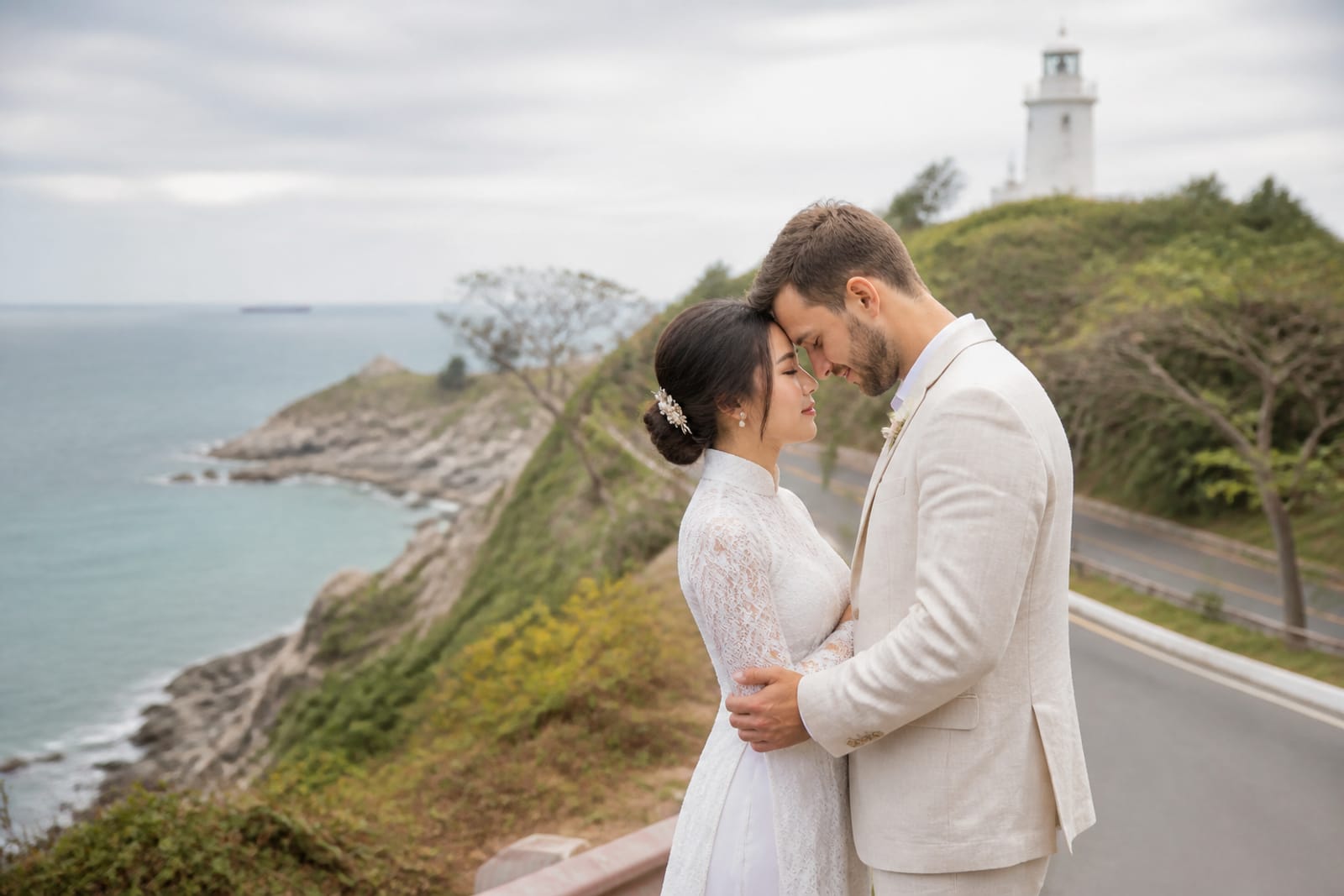
Vung Tau's geography splits into three shooting zones, each requiring different outfit and pose strategy. Beach (Back Beach, front of Saigon Phu): flat sand, easy access, open light. Best for ao dai (fabric floats, no climbing), but light bounces off wet sand after tide recedes—you'll overexpose skin unless your director uses a polarizing filter or positions you with the sun at your side. Rocky cliffs and Nho Beach lookout: dramatic elevation, natural framing, shaded pockets. Suits both ao dai and Western dress (less fabric risk on stone); walking shots and pauses against rock texture read cinematic. Requires comfortable footwear underneath your dress—uneven ground, loose stones. Lighthouse and Nho Mountain path: elevated approach, silhouette potential, fewer tourists on the climb. Ideal for sunset timing and couple frames (walking toward the light source); ao dai drags on dirt paths, so rehearse footfall with your photographer. A director experienced in Vung Tau knows which zone suits your outfit and mood, and how to time transitions so you're not sweating in direct sun between shots. Across all three, April's calm seas mean no heavy wave splash to wet your hem—a real risk in rougher months.
What to wear under an ao dai for a pre-wedding shoot
An ao dai's silhouette depends on what's underneath: slip dress, bodysuit or traditional white trousers. For a Vung Tau shoot, the choice affects how you move and what happens in the wind. A slip dress (silk or cotton) sits cleanest under the ao dai's fitted front panel; when you walk or sit, it drapes and flows without bunching. Bodysuit (mesh or stretch) keeps everything smooth but can feel restrictive if you're walking 2+ km over uneven terrain; your director might ask you to peel off the outer ao dai for certain frames, so ensure the bodysuit looks finished. Traditional white trousers (linen or cotton) create a classic line and allow the ao dai's front panel to open and billow—powerful for wide shots. For April's warmth and humidity, avoid heavy silk ao dai; lightweight cotton or linen blend breathes and moves better, and dries faster if you step into tidal pools for texture shots. Wear neutral, flat-soled shoes (ballet flats, slip-ons, or go barefoot on sand and carry shoes for the cliff sections). A experienced local or visiting director will ask what outfit you've chosen before the shoot and plan the light and framing to let the fabric move.
How to find and vet a local photographer if you're booking outside Cáo Studio's service area
Vung Tau has freelance and studio photographers, but quality varies. Start by searching Instagram for "Vung Tau pre-wedding" or "Vung Tau couples shoot" and look for the shooting style: are the couple frames posed stiffly or do they feel like they're moving, talking, in real light? Check the photographer's own post about timing and light—do they mention the time of day, tidal schedule or directional sun? That's the sign they understand location logic, not just showing up with a camera. Ask for a specific Vung Tau portfolio, not generic beach shots; ask how many sessions they've shot there, which timing they recommend, and whether they'll scout the location with you beforehand. Interview at least two photographers, asking the same questions—their answers reveal whether they know April's weather pattern and Vung Tau's geography or are guessing. Red flags: vague promises ("amazing sunset light guaranteed"), no mention of backup plan if crowds hit, no discussion of outfit fit or your ao dai's movement. Ask to see a full day's worth of images from one session, not a highlight reel—that shows their editing consistency and ability to tell a narrative over time.
For couples planning a pre-wedding session elsewhere in Vietnam—Hanoi, Ho Chi Minh City or Hoi An—Cáo Studio operates in all three locations, managing photography, makeup and hair as one team, so there's no coordination friction between vendors. The studio's approach to pre-wedding photoshoots is to shoot for directed light and narrative flow, not posed stiffness.
💄 Makeup & hair at your hotel | 🌸 See the lookbook
What to check before you book a Vung Tau pre-wedding shoot
Before you commit, verify these three things with your photographer:
- Location scouting. Ask if they'll walk the beach or cliff section with you 1–2 days before the shoot to show you the light angles at your chosen time, and point out any hazards (loose rocks, tide windows). This alone saves hours of wasted shooting and second-guessing.
- Weather backup. April is generally dry, but occasional showers happen. Ask what the rescheduling policy is if weather forces a cancellation, and whether they have a covered backup spot (cafe, covered pier, cliff shelter).
- Outfit and movement rehearsal. Send your ao dai photos and footwear to your photographer in advance. Ask them to confirm it works for the terrain and light you're planning. If you're wearing a Western dress, ask whether they've shot similar garments on beach paths and how they managed wind and sand spray.
A director who answers these questions in detail, with specific reference to Vung Tau's geography and April's light, is the one to hire.
---
Will I look uncomfortable or blown out in April's midday sun?
No, if you avoid shooting between 12–3 pm. Midday sun in April at Vung Tau is intense and overhead, which flattens skin tone, creates harsh shadows under eyes and chin, and blows out highlights on water or sand. Most professional couples shoots happen at dawn or dusk specifically to avoid this. If your schedule forces a midday slot, ask your photographer to find shade (jungle path, covered pavilion, beach cave) or use a reflector and polarizing filter to manage contrast. The trade is that midday light also reveals the full landscape—it's sharp and detailed, not moody—so some couples like a few lifestyle frames at 2 pm, changing back to the beach for golden hour. A skilled director will use the harsh light strategically for detail shots (hands, rings, texture on fabric) and move the couple shots to gentler light.
📸 Book on WhatsApp — ao dai photoshoot
What happens if you're crowded with tourists or weekend traffic
Weekday mornings before 8 am in April, Vung Tau is yours. Weekends and after 9 am, you'll share the beach with family groups, swimmers and day-trippers. A photographer experienced in Vung Tau will shoot wide and tight: start with a wide frame when the beach is empty (5:45–7 am), capturing the couple alone in the landscape. By 7:30 am, tourists start arriving; switch to medium and tight framing (waist-up, hands, faces) so strangers blur into bokeh in the background. Move to the rocky cliffs or elevated paths by 8:30 am—tourists cluster on the sand, not on the rocks. If you prefer weekend shooting (you both work weekday), book your photographer as early as possible (5:30 am start), do the open beach frames, then migrate inland to the lighthouse or Nho Mountain trails by 8 am, when day-trippers are still arriving by coach. Crowd management isn't a flaw of Vung Tau—it's the rhythm. Your director should have a plan for it.
For other destinations across Vietnam or if you prefer a one-team experience where photography, makeup and hair are coordinated together, explore Cáo Studio's locations in Ho Chi Minh City, Hanoi and Hoi An. The studio handles the logistics so you focus on the moment.
FAQ
Is April too windy for ao dai at Vung Tau?
April is calm (dry season); winds are gentler than Sep–Nov monsoon months. Ao dai fabric will move, which reads beautifully in frames. Wear a lightweight linen ao dai, not heavy silk, and rehearse walking with your photographer so the movement feels natural, not chaotic.
Should I hire a makeup and hair artist for a Vung Tau shoot?
Yes. Vung Tau's salt air and humidity can shift makeup and hair throughout a 2–3 hour session. A makeup artist who travels with you ensures you look consistent across all frames and knows how to touch up without heavy reapplication. Ask your photographer if they work with a regular artist or if you need to hire separately. Cáo Studio's makeup and hair team travels to locations and can advise on sea-air formulas.
What if I have a Western wedding dress, not an ao dai?
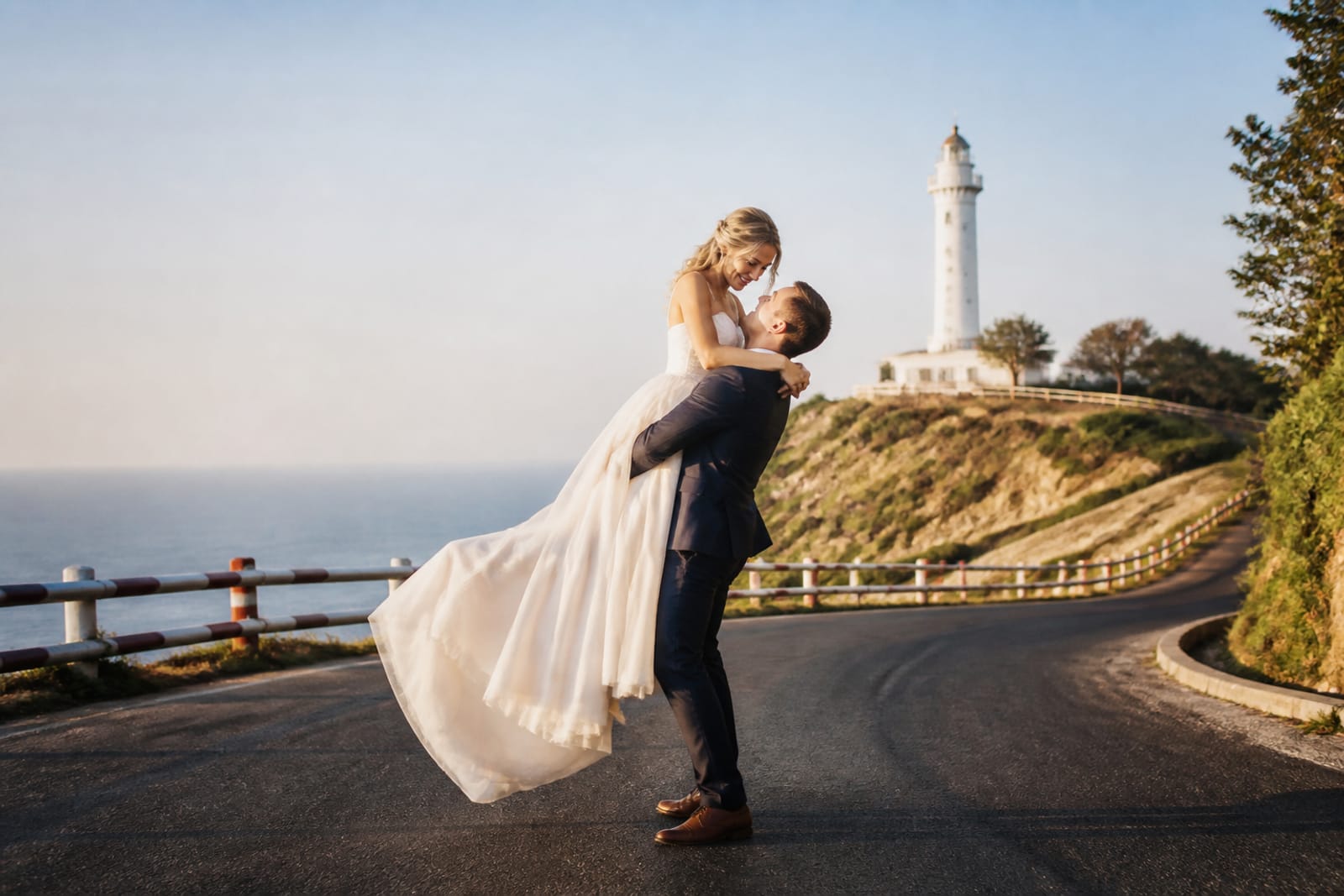
Western dresses work beautifully in April's light. The catch: sand and salt water stain and dry fabric. Wear a strapless slip dress under your gown for easy removal if you want frames without the dress. Avoid long trains on the cliff paths (tripping risk). A local photographer familiar with dress care and movement on uneven terrain is essential—ask to see their pre-wedding portfolio with Western gowns.
How early should I book a Vung Tau pre-wedding photographer for April?
Book 6–8 weeks in advance (late Jan–Feb) if you want weekday early morning slots. April is the dry season's finale; experienced couples book for dawn shoots, and the best photographers fill up. Weekday bookings also give you quieter locations and better negotiating power.
Can I do an ao dai photoshoot and a pre-wedding shoot in one day?
Yes, if you hire a director who understands the outfit transitions and light windows. Morning ao dai session (6–8 am, one or two ao dai changes), break for hair/makeup refresh, afternoon pre-wedding session (3–5 pm, Western dress or second ao dai). This requires stamina and a photographer comfortable with quick outfit changes. Cáo Studio's couple and family photoshoots often combine multiple outfits in one session; ask on WhatsApp if a two-phase Vung Tau day is possible with a visiting photographer.
What's the backup plan if it rains in April?
April rain is rare but possible (end of dry season). A prepared photographer will suggest covered locations (wooden pavilion near Nho Beach, cliff shelters, local cafe) or reschedule to the next clear day within your available window. Confirm the rescheduling policy and insurance before you book. Some photographers offer a "rain rate" (shooting in drizzle with reflectors and careful framing); others refuse. Find out their stance upfront.
FAQ
Is April too windy for ao dai at Vung Tau?
April is calm (dry season); winds are gentler than Sep–Nov monsoon months. Ao dai fabric will move, which reads beautifully in frames. Wear a lightweight linen ao dai, not heavy silk, and rehearse walking with your photographer so the movement feels natural, not chaotic.
Should I hire a makeup and hair artist for a Vung Tau shoot?
Yes. Vung Tau's salt air and humidity can shift makeup and hair throughout a 2–3 hour session. A makeup artist who travels with you ensures you look consistent across all frames and knows how to touch up without heavy reapplication. Ask your photographer if they work with a regular artist or if you need to hire separately. [Cáo Studio's makeup and hair team](/makeup-and-hair) travels to locations and can advise on sea-air formulas.
What if I have a Western wedding dress, not an ao dai?
Western dresses work beautifully in April's light. The catch: sand and salt water stain and dry fabric. Wear a strapless slip dress under your gown for easy removal if you want frames without the dress. Avoid long trains on the cliff paths (tripping risk). A local photographer familiar with dress care and movement on uneven terrain is essential—ask to see their pre-wedding portfolio with Western gowns.
How early should I book a Vung Tau pre-wedding photographer for April?
Book 6–8 weeks in advance (late Jan–Feb) if you want weekday early morning slots. April is the dry season's finale; experienced couples book for dawn shoots, and the best photographers fill up. Weekday bookings also give you quieter locations and better negotiating power.
Can I do an ao dai photoshoot and a pre-wedding shoot in one day?
Yes, if you hire a director who understands the outfit transitions and light windows. Morning ao dai session (6–8 am, one or two ao dai changes), break for hair/makeup refresh, afternoon pre-wedding session (3–5 pm, Western dress or second ao dai). This requires stamina and a photographer comfortable with quick outfit changes. Cáo Studio's [couple and family photoshoots](/couple-photoshoot) often combine multiple outfits in one session; ask on WhatsApp if a two-phase Vung Tau day is possible with a visiting photographer.
What's the backup plan if it rains in April?
April rain is rare but possible (end of dry season). A prepared photographer will suggest covered locations (wooden pavilion near Nho Beach, cliff shelters, local cafe) or reschedule to the next clear day within your available window. Confirm the rescheduling policy and insurance before you book. Some photographers offer a "rain rate" (shooting in drizzle with reflectors and careful framing); others refuse. Find out their stance upfront.
Ao dai, makeup, hair and a local photographer in Hanoi or Saigon — one WhatsApp message.