/pre-wedding-photoshoot
Pre-wedding photoshoot in Vung Tau in September: weather, light and cr
September is Vung Tau's wet season: daily afternoon showers (typically 2–4 pm), high humidity and occasional typhoon risk. Morning light is diffuse and warm; crowds are minimal compared to December–April. Pre-wedding shoots work best early (5:30–8 am) before heat and rain. Cáo Studio does not operate in Vung Tau, but we guide couples to hire a local photographer who knows the tidal patterns, monsoon light and temple etiquette. You'll need 2–3 outfit changes, waterproof contingencies and a shot list focused on texture (wet sand, rain-lit streets) over clear-sky drama. Start planning by scouting locations with a local photographer 1–2 weeks before, testing light at your chosen times. 📸 Book on WhatsApp — pre-wedding & elopement | 💄 Makeup & hair at your hotel | 🌸 See the lookbook
September in Vung Tau is Vung Tau's wet season: daily afternoon showers (typically 2–4 pm), high humidity and occasional typhoon risk. Morning light is diffuse and warm; crowds are minimal compared to December–April. Pre-wedding shoots work best early (5:30–8 am) before heat and rain. Cáo Studio does not operate in Vung Tau, but we guide couples to hire a local photographer who knows the tidal patterns, monsoon light and temple etiquette. You'll need 2–3 outfit changes, waterproof contingencies and a shot list focused on texture (wet sand, rain-lit streets) over clear-sky drama. Start planning by scouting locations with a local photographer 1–2 weeks before, testing light at your chosen times.
Why does September rain change how you shoot in Vung Tau?
The southwest monsoon peaks May–September. Vung Tau sits on the coast, so rain is frequent but usually brief (30 minutes to 2 hours). Morning shoots—before 8 am—dodge most downpours; afternoons are unpredictable. Wet streets and beach sand reflect diffuse light beautifully, but you lose the sharp, golden-hour contrast of dry-season shoots. Pack a silicone rain cover for lenses and a second assistant to hold umbrellas over your hair and makeup artist. Communicate with your photographer: "We're shooting in the wet season intentionally—soft light is the win." A local photographer has umbrella spots, indoor backups and tide knowledge you won't find online.
What time of day gives you the best light in September?
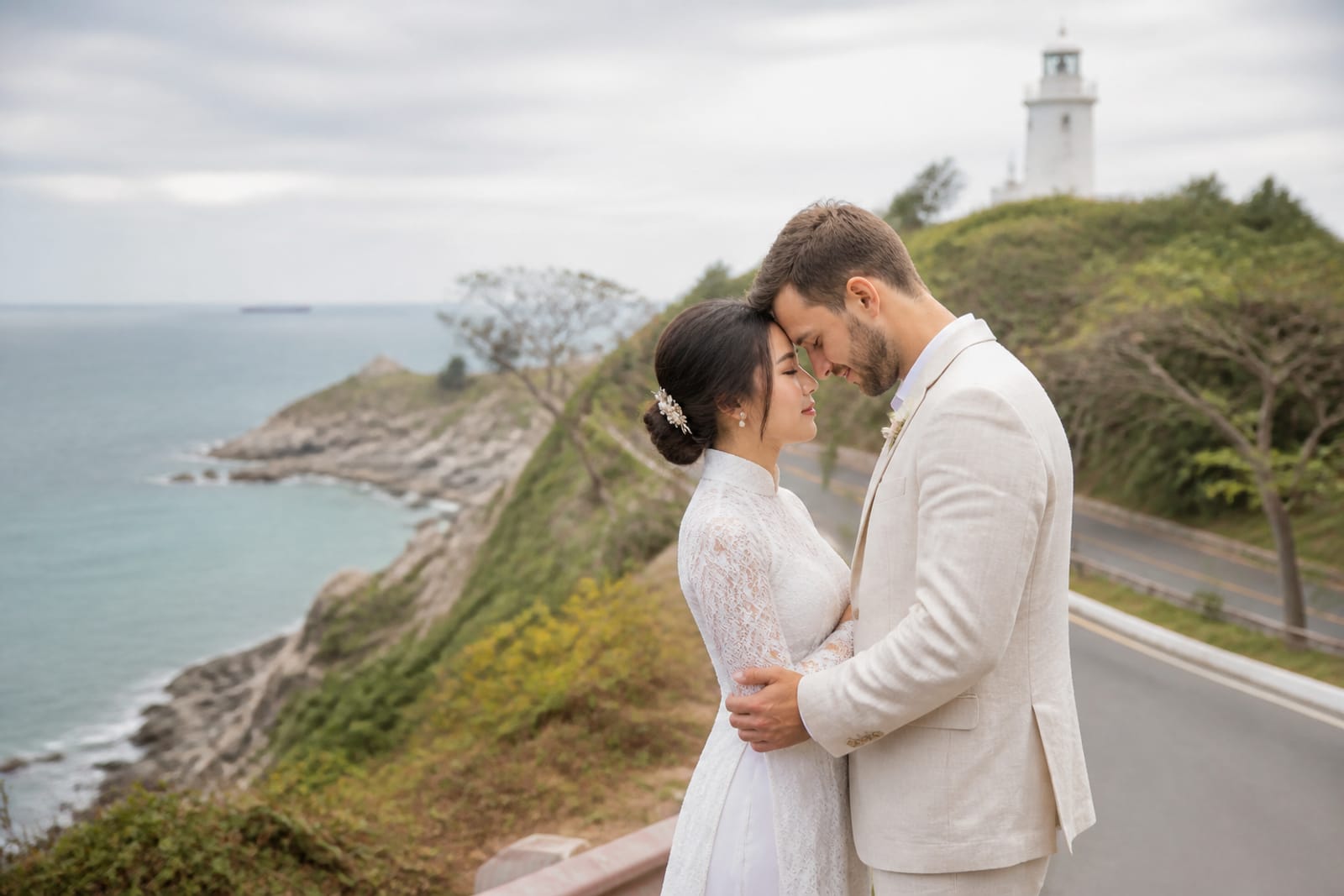
Sunrise (5:30–7 am) is your window: air is coolest, rain is rare and light is soft and even. By 8 am, humidity rises and crowds (workers, fishermen) pick up. Noon–2 pm is too bright and too hot. 3 pm onward, showers often arrive. One morning session captures 60–80% of your best frames; a second evening slot (if rain clears by 5:30 pm) adds texture but risks weather. Plan your shot list by time: wide locales (beaches, streets) early; intimate detail shots (hands, dress fabric) mid-morning near your hotel when light is still soft but you're ready to move indoors if rain hits. Ask your photographer if they have indoor backup spots—old colonial buildings, covered markets—where morning light still filters through high windows.
Where should you scout locations, and what makes September different?
| Location | Best for | September light | Why it works |
|---|---|---|---|
| Back Beach (Thuy Van St) | Couple walking, sand texture | Soft, diffuse until 8 am | Fewer vendors; wet sand reflects light; tidal flats at dawn |
| Christ the King statue | Wide framing, elevation | Early side light (east-facing); misty mornings add drama | Small crowds; rain adds mystique; monument silhouettes well |
| Mulberry Harbour (old French docks) | Detail, rust and decay | Dappled through corrugated metal | Atmospheric in humidity; water reflections after rain |
| Front Beach promenade | Couple strolling, town life | Side light 6–7 am; harsh by 8 am | Early-morning fishermen, soft chaos; locals know you're there |
| Vung Tau Temple (Linh Son) | Ao dai elegance, reverence | Indirect, filtered through courtyard trees | Respectful worship hours 5–6:30 am; rain quiets crowds; stone glows when wet |
Vung Tau's low profile (no high mountains, flat coast) means diffuse monsoon light, not dramatic shadows. Wet stone and sand become your texture; shoot detail-heavy sequences (fabric folds, footprints, water droplets on skin). Avoid midday entirely. A local photographer knows which streets flood, which temples allow photography and 48-hour rain forecasts—book them 3–4 weeks ahead, not last-minute.
How do outfit, makeup and hair survive September humidity and rain?
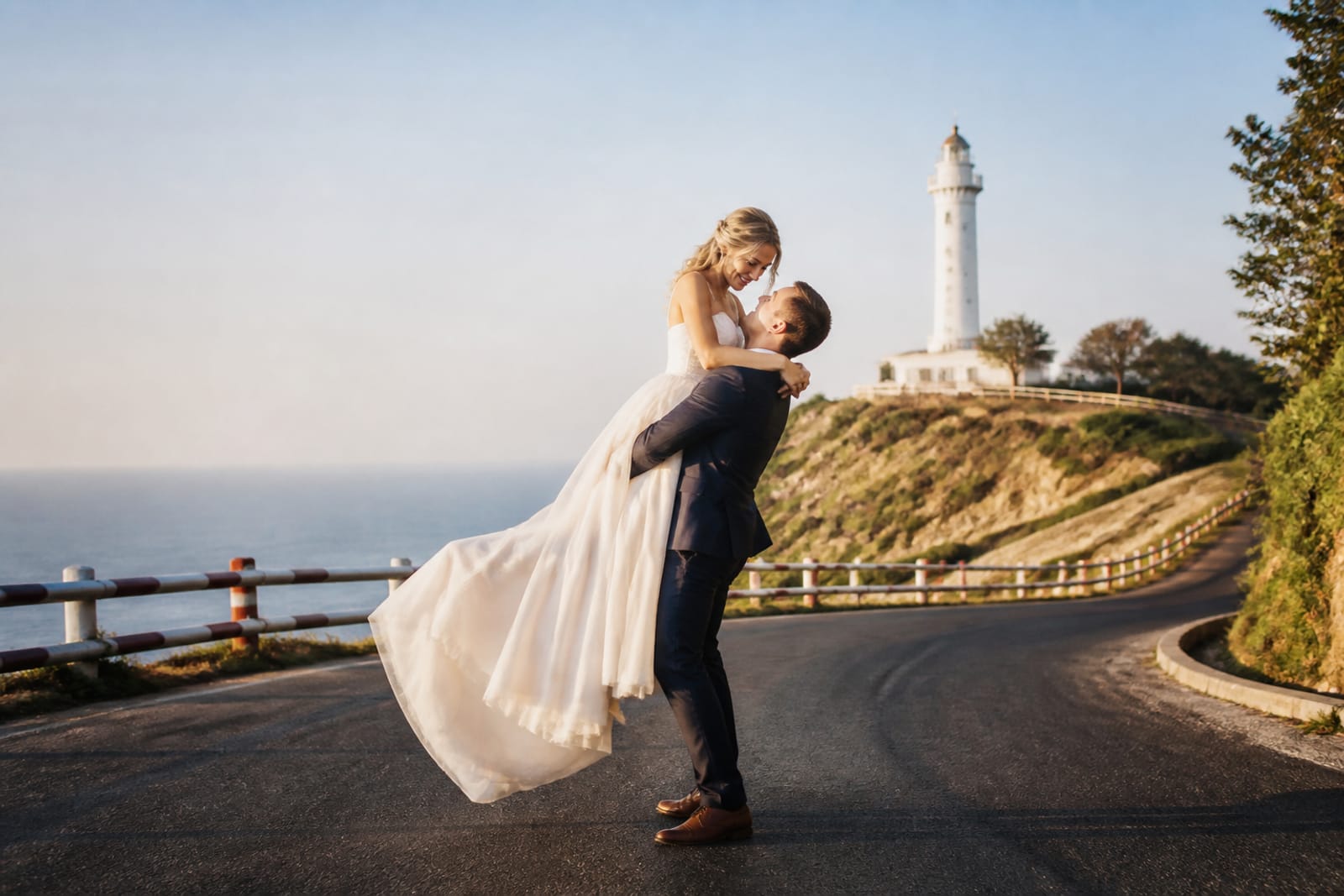
September humidity (80–90%) weakens foundation and frizzes hair within 20 minutes outdoors. Plan three outfit rotations—not to show variety, but to manage sweat and damage. Waterproof makeup (matte base, brow gel, eyeliner pen) lasts longer; powder touch-ups every 20 minutes are essential. For ao dai: breathable silk or silk-blend is mandatory; polyester wilts. Wet fabric clings and tears easily—avoid trailing hemlines near wet stairs. Shoes dry quickly but grip is poor on wet stone; choose rubber soles (not leather). Hair: low bun or half-up styles survive humidity better than loose waves. Ask your makeup artist to work 30 minutes before the shoot (not the night before); they can bring supplies to your hotel room, apply makeup fresh, and touch you up on location. Cáo Studio's makeup & hair at your hotel service works the same principle: apply as close to the shoot as possible, indoors, in climate control.
How do you plan a backup if rain intensifies?
Typhoons are rare but possible September–October; heavy rain (>10 mm in 1 hour) should trigger a postponement. Before booking, agree with your photographer: "We reschedule free of charge if a weather alert is issued 24 hours before." Have a secondary date in mind (next calm morning, even 2–3 days later). For rain that's light or intermittent, indoor locations win: hotel lobbies with morning light from street-facing windows, covered market alleyways, colonial-era buildings with high ceilings (Ba Ria Citadel's interior passages, for instance). Shoot detail sequences indoors—hands, dress, rings, face close-ups—where humidity doesn't ruin makeup. Then return outdoors after rain clears for wide, environmental shots. This split-location flow is common in monsoon shoots; your photographer should plan it as a feature, not a disaster. Discuss it during scouting.
How do you find and vet a local Vung Tau photographer?
Cáo Studio does not shoot in Vung Tau; we operate in Hanoi, Ho Chi Minh City and Hoi An. For Vung Tau, hire locally. Search Instagram hashtags #vungtauphotographer and #vungtauwedding; filter by recent uploads (last 3 months) showing September light (soft, wet, humid). Message 3–4 photographers and ask: "Show me September pre-wedding shoots. What's your backup plan for rain? Do you have a makeup artist on-call?" Red flags: no monsoon-season samples, vague rain policy, portfolio heavy on midday harsh light. Green flags: clear before-and-after samples, specific gear (rain covers, reflectors for diffuse light), willingness to scout 1–2 weeks ahead, local temple relationships and rates quoted in Vietnamese Dong with no hidden "rush fees." Meet them in person; discuss light, tides and weather. Expect to pay local rates (ask for a quote via WhatsApp or local messaging); negotiate rate for a morning session (4–5 hours) plus one outfit change as your baseline.
A strong vetting checklist:
- Portfolio: at least 5 September or rainy-season couple shoots.
- Rain plan: specific indoor backups (named venues, scouted light).
- Crew: makeup artist and assistant included or coordinated?
- Communication: responds to messages within 4 hours; asks questions about your vision.
- Scouting: willing to visit locations 10–14 days before the shoot?
- Edits: turnaround time (48 hours? 1 week?) and revision rounds included.
For a pre-wedding photoshoot in a region where Cáo Studio operates—Hanoi, Saigon or Hoi An—we handle all logistics, makeup, outfits and photography as one team. For Vung Tau, treat the local photographer as your single point of trust and communicate often.
What should your shot list prioritize in September?
Clear, golden-hour silhouettes are unlikely. Instead, build your shot list around texture, emotion and detail. Shoot close: intertwined hands in soft morning light, her dress hem catching on wet stone, rain droplets on eyelashes, his jacket collar framing her face. Wide shots work 5:30–6:30 am before crowds and heat; use them to show the location (beach, temple courtyard) as a frame, not a backdrop. Medium shots—waist-up, walking toward the camera—capture movement and are forgiving of dappled/diffuse light. Reserve detail shots for peak-soft-light windows or indoors. Avoid static posing; guide her to walk, look at him, touch his arm. Real movement in soft light reads as intimate, not stiff. A direction example: "Walk toward the water; don't look at the camera, look at the horizon. He follows two steps behind." This works in Vung Tau's humid, crowded-morning reality because you're not asking for perfection—you're asking for a moment.
For outfits, one outfit (ao dai or white dress) is often enough in September because you're indoors partway through. If you do two outfits, schedule the change indoors (hotel or covered market) to avoid sweat damage and makeup touch-up chaos. Three outfits pushes your crew's endurance and makeup's durability in 80%+ humidity; save variety for dry-season shoots.
What to check before you book
- Weather forecast: Check the 14-day outlook 2 weeks before. If a typhoon alert exists, delay.
- Photographer's gear: Do they have weather-sealed lenses, rain covers and backup batteries? (High humidity kills batteries fast.)
- Your timeline: Can you wake at 5:15 am and be ready by 5:45? Soft morning light lasts only 2 hours.
- Makeup durability: Ask your artist if they've worked in 85%+ humidity; waterproof products are non-negotiable.
- Outfit fit: Breathable fabrics only; have the ao dai fitted 1–2 weeks before, not the morning-of.
- Backup date: Agree on a free reschedule policy in writing (WhatsApp or email).
- Edits delivery: When will you see the gallery? A 48-hour turnaround is standard for professional work.
If you're booking a pre-wedding shoot outside Vung Tau—in Hanoi, Saigon or Hoi An—contact Cáo Studio on WhatsApp. We manage weather, makeup, outfit selection and light direction so you focus on each other.
📸 Book on WhatsApp — pre-wedding & elopement | 💄 Makeup & hair at your hotel | 🌸 See the lookbook
FAQ
Is September a bad time for a pre-wedding shoot in Vung Tau?
Not inherently. Soft light, fewer tourists and intimate atmosphere are positives. Rain and humidity require early mornings and a local photographer who knows the season. If you prefer guaranteed clear skies and golden hour, book December–March instead. September works if you embrace the weather as part of the story.
What's the difference between morning rain and typhoon risk in September?
Morning rain (brief, localized showers) clears by 8–9 am and is shootable with backup plans. Typhoon alerts (rare but issued 48 hours ahead) should trigger a postponement. Check the national weather agency 2 weeks before; if no alert, proceed with morning-rain contingencies.
Can I wear a white dress in September, or must I wear an ao dai?
Both work. Ao dai is culturally appropriate for temples and photographs well in diffuse light. White dresses read softer in monsoon light than in harsh sun. Avoid materials that cling when wet (polyester, silk-polyester blends). Pure silk or linen breathe and dry faster. Discuss fabric with your photographer; they may suggest layering or a shawl.
How long should a pre-wedding session run in September?
4–5 hours, starting before sunrise (5:30 am). Early light lasts until ~7:30 am (indoors/shaded locations until 8:30 am). One location or two nearby. Add 1 outfit change indoors to manage humidity. If rain arrives, transition indoors by mid-morning rather than pushing into the afternoon heat.
Should I reschedule my Vung Tau shoot if rain is forecast, or proceed?
Light rain is fine; plan around it. Heavy rain (yellow or red alerts) should trigger postponement. Confirm your photographer's reschedule policy in advance—free postponement for weather alerts 24 hours before is standard. If no official alert exists, light rain is part of September's character; trust your photographer's judgment on the morning-of.
How do I find a photographer in Vung Tau if Cáo Studio doesn't shoot there?
Search #vungtauphotographer on Instagram. Vet portfolios for September/monsoon work, clear rain backup plans and local knowledge. Message 3–4 candidates, ask for references and meet them to discuss light, locations and edits. Expect a quote in Vietnamese Dong; negotiate based on session length (4–5 hours) and outfit count (1–2 is typical for September).
FAQ
Is September a bad time for a pre-wedding shoot in Vung Tau?
Not inherently. Soft light, fewer tourists and intimate atmosphere are positives. Rain and humidity require early mornings and a local photographer who knows the season. If you prefer guaranteed clear skies and golden hour, book December–March instead. September works if you embrace the weather as part of the story.
What's the difference between morning rain and typhoon risk in September?
Morning rain (brief, localized showers) clears by 8–9 am and is shootable with backup plans. Typhoon alerts (rare but issued 48 hours ahead) should trigger a postponement. Check the national weather agency 2 weeks before; if no alert, proceed with morning-rain contingencies.
Can I wear a white dress in September, or must I wear an ao dai?
Both work. Ao dai is culturally appropriate for temples and photographs well in diffuse light. White dresses read softer in monsoon light than in harsh sun. Avoid materials that cling when wet (polyester, silk-polyester blends). Pure silk or linen breathe and dry faster. Discuss fabric with your photographer; they may suggest layering or a shawl.
How long should a pre-wedding session run in September?
4–5 hours, starting before sunrise (5:30 am). Early light lasts until ~7:30 am (indoors/shaded locations until 8:30 am). One location or two nearby. Add 1 outfit change indoors to manage humidity. If rain arrives, transition indoors by mid-morning rather than pushing into the afternoon heat.
Should I reschedule my Vung Tau shoot if rain is forecast, or proceed?
Light rain is fine; plan around it. Heavy rain (yellow or red alerts) should trigger postponement. Confirm your photographer's reschedule policy in advance—free postponement for weather alerts 24 hours before is standard. If no official alert exists, light rain is part of September's character; trust your photographer's judgment on the morning-of.
How do I find a photographer in Vung Tau if Cáo Studio doesn't shoot there?
Search #vungtauphotographer on Instagram. Vet portfolios for September/monsoon work, clear rain backup plans and local knowledge. Message 3–4 candidates, ask for references and meet them to discuss light, locations and edits. Expect a quote in Vietnamese Dong; negotiate based on session length (4–5 hours) and outfit count (1–2 is typical for September).
Ao dai, makeup, hair and a local photographer in Hanoi or Saigon — one WhatsApp message.