/pre-wedding-photoshoot
Pre-wedding photoshoot Mekong Delta April: light, weather and crowds
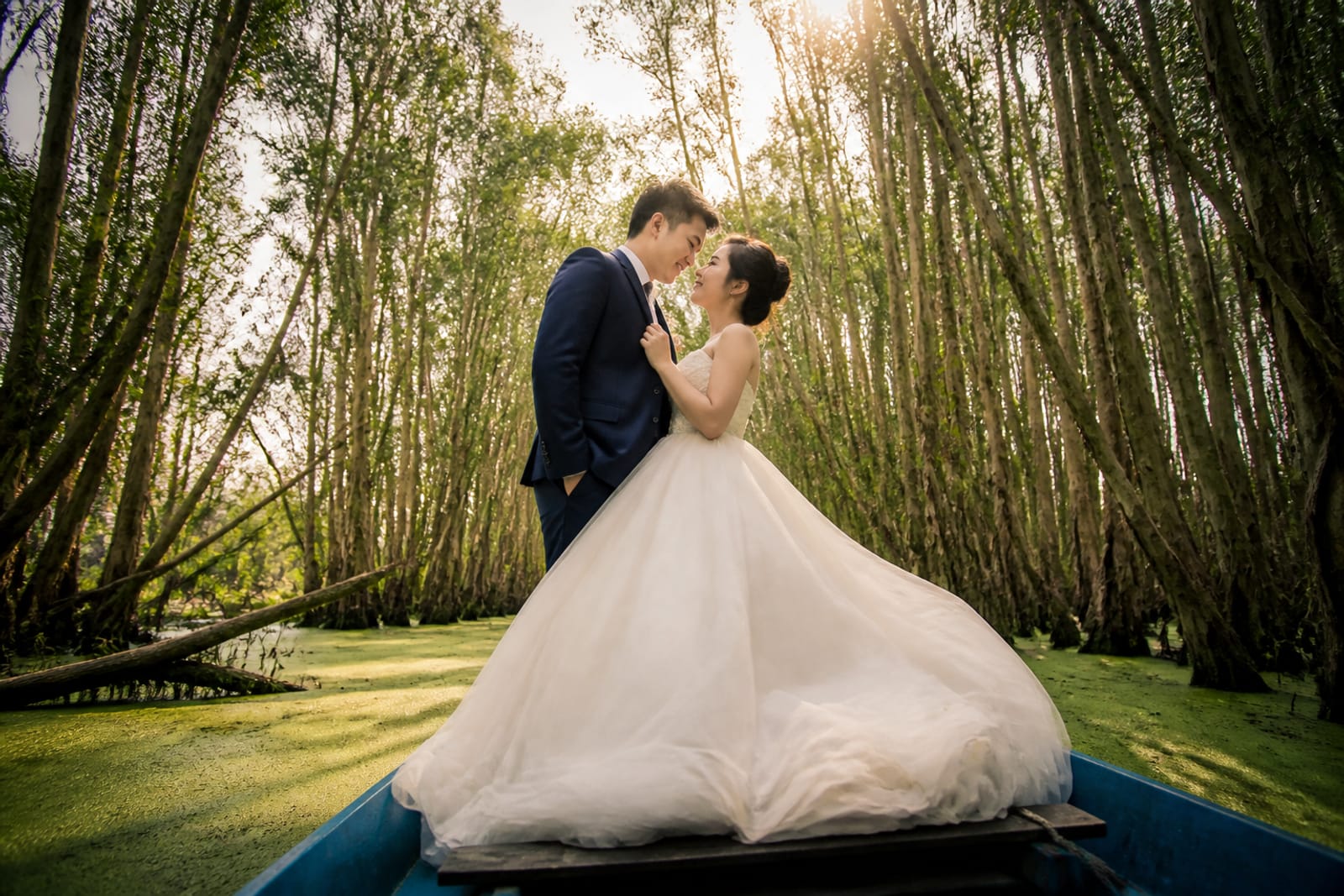
April in the Mekong Delta is the dry season: water levels are low, sky clarity improves after morning mist, and floating markets are quiet compared to November–January. Light is softest 5:30–7:00 am (side-light on water, vendors still setting up) and again 4:30–6:00 pm (golden hour, no clouds typical this month). Temperature ranges 28–32°C, so book early mornings and select lightweight, breathable fabrics—silk ao dai, linen suits, cotton wraps. Crowds thin out in mid-to-late April as tourists move north for cooler regions. You'll need a local photographer who knows tide times, boat access and which villages shoot best in low-water conditions; Cáo Studio can advise on Saigon-based options and prep you with a pre-shoot planning call. Water-based shoots (boats, reflections, canal walks) work best before 9:00 am; land-based frames (market stalls, temple grounds, rice paddies) suit late afternoon when vendors rest and light softens.
Is April actually good for pre-wedding shoots in the Mekong Delta?
Yes—April is the ideal month for the Mekong Delta. The dry season (December–April) means water levels are at their lowest, canals are navigable without deep-water delays, and the sky clears by mid-morning after early fog. Floating markets operate normally, vendors aren't rushing (tourist season is winding down), and you get uncluttered frames. The trade-off: heat and humidity are building, so early starts (before 8:00 am) are non-negotiable. Late April brings occasional afternoon thunderstorms—check a five-day forecast before finalizing your shoot date.
What time of day captures the best light for pre-wedding frames?
| Time window | Best for | Light character | Why it works |
|---|---|---|---|
| 5:30–7:00 am | Water, boats, markets | Soft side-light, low angle, mist dispersing | Vendors still setting up; reflections on still water; no harsh shadows |
| 9:30 am–12:00 pm | Land-based (temples, paths, fields) | High, even, blue-sky light | Good for movement, walking frames, wide landscapes |
| 4:30–6:00 pm | Markets, architecture, couples walking | Golden hour, warm tone, long shadows | Low sun softens heat-hazed sky; vendors packing (clear backgrounds) |
| 6:00+ pm | Silhouette, boat returns, lantern frames | Dusk glow, dark water contrast | Requires fast film or flash; frames tell a narrative (day ending) |
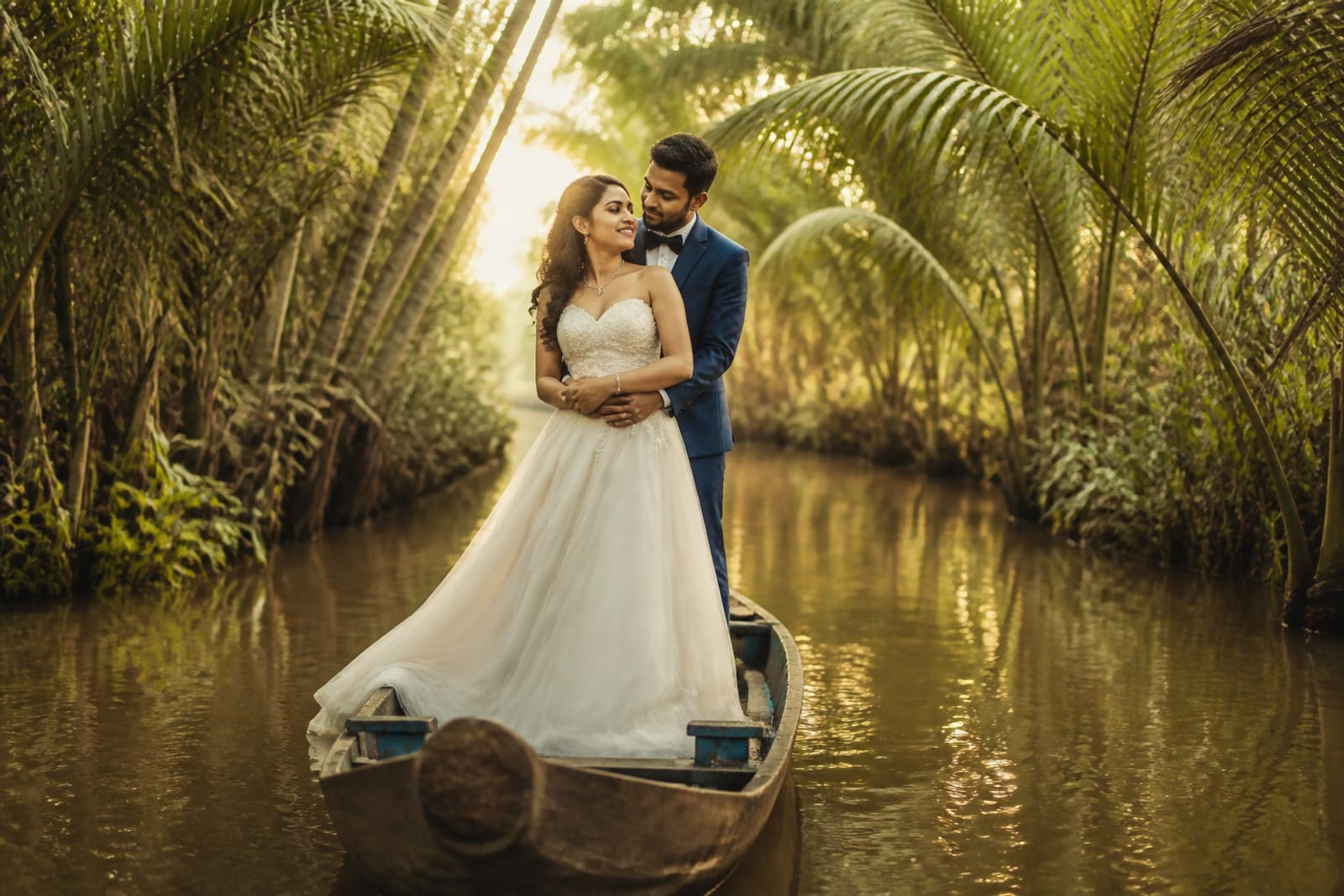
Early morning is non-negotiable for water-based shots: light is directional, water is smooth (no afternoon boat traffic), and you shoot when the delta is most itself. A local photographer who knows tide times can position you so the light hits water reflection—that's the frame that feels like the Mekong.
What should a couple wear for Mekong Delta pre-wedding shots in April?
Fabric breathability is everything. Consider:
- Silk ao dai (loose cut, not tailored tight): breathes in heat, photographs with movement and drape; pair with lightweight linen trousers or a simple slip for practicality on boats
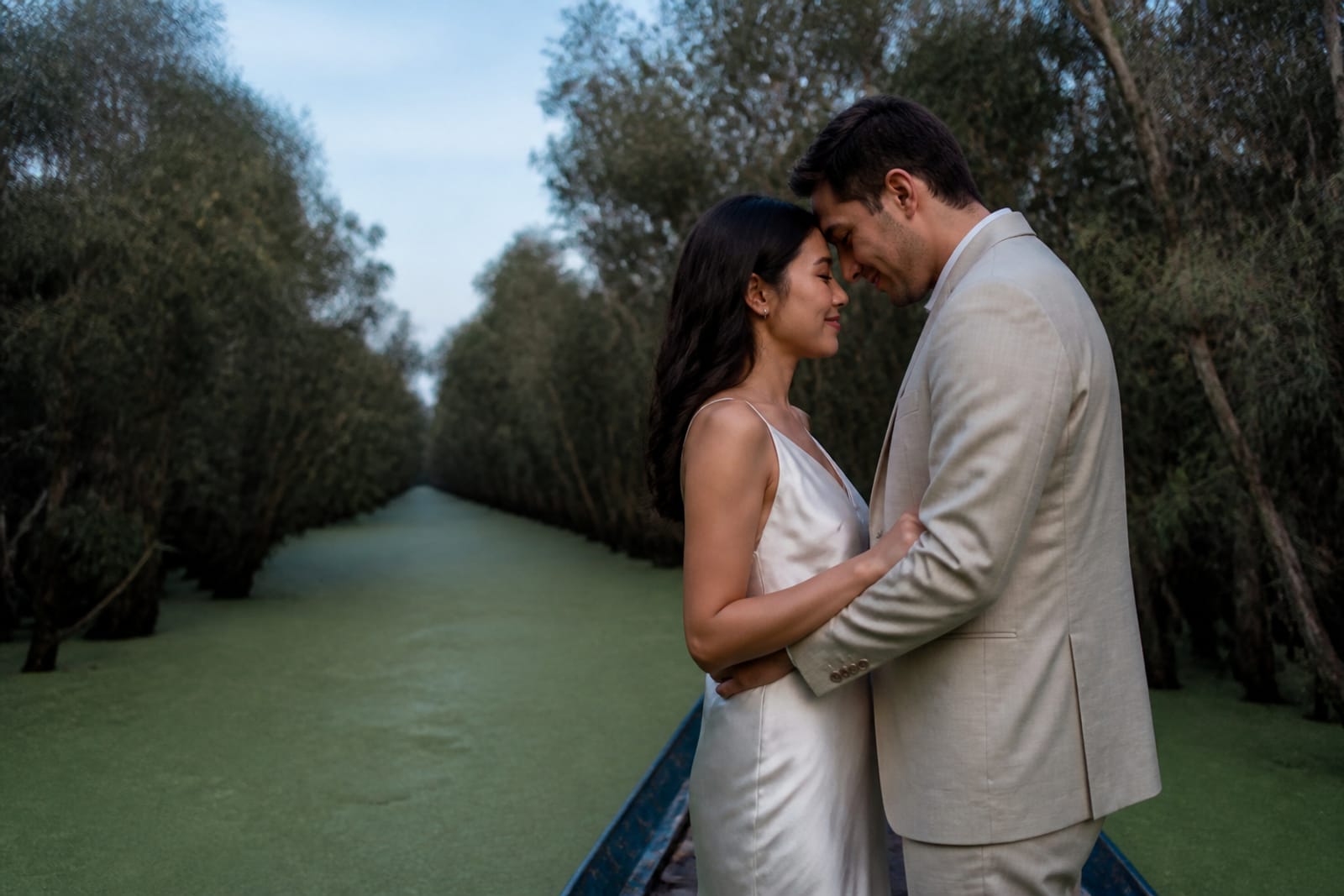
- Linen or cotton suit for the groom: skip wool; light neutral tones (cream, soft grey, pale blue) reflect heat and don't clash with water light
- Layers for early morning: bring a thin wrap or shawl for 5:30–6:30 am when water is cool and mist rises—creates romantic framing, plus you stay warm during the shoot
- Footwear: boat-safe sandals or go barefoot on wooden decks; avoid rigid dress shoes that won't dry after water spray
- Accessories: lightweight scarves, simple jewelry (metals reflect light; keep it minimal)
Avoid heavy makeup or elaborate updos—April heat means sweat and wind scatter styled hair within an hour. Ask your makeup artist for heat-resistant, water-safe formulations; many Saigon-based artists expect this for delta shoots. Plan to refresh makeup and hair between the morning shoot (5:30–7:30 am) and an afternoon session if your package includes one.
How do you scout locations and timing without wasting shoot hours?
Reconnaissance saves frames. Visit or research the delta 2–3 weeks before your shoot:
- Floating markets: Which ones are still operating (not seasonal closures)? Morning routine repeats: boats arrive 5:00–6:30 am, peak activity 6:30–8:00 am, dispersal 9:00 am onward. Shoot before vendors haggle—simpler backgrounds, better access
- Water levels: April low-water means some narrow canals are passable; others are too shallow for boats. Ask your photographer which villages and routes are open this specific week
- Temple or shrine access: Many are open dawn; ask locals about best-light angles (morning sun often hits facades from a single direction)
- Crowds: Tourist boats usually depart 7:00–9:00 am; if you're in the water by 5:45 am, you'll be alone
- Tide or water-flow timing: Rivers and major canals have subtle flow changes; a delta guide knows which hour has the calmest surface for reflections
A local Saigon-based photographer should provide this intel in a pre-shoot call. Ask them to share a map or message thread with times, entry points, and any permit or boat-rental details. This saves you 3–4 hours of on-the-day problem-solving.
How does weather in April affect a pre-wedding shoot?
April is the driest month overall, but it's a transition into the hot season. Plan for:
| Factor | Risk | Mitigation |
|---|---|---|
| Heat (28–32°C) | Sweat, makeup breakdown, subject fatigue | Start before 7:00 am; schedule breaks in shade; bring cold water and towels |
| Humidity | Frizz, makeup smudging, lens fogging (boats → cool water → warm air) | Waterproof makeup; hair oil to tame frizz; photographer cleans lens often |
| Afternoon thunderstorms (late April, 1 in 5 days risk) | Flash floods, equipment damage, shoot cancellation | Check 5-day forecast; have a reschedule date locked in; avoid flood-prone areas midday |
| Sun intensity | Harsh shadows, squinting, skin glare (especially on water) | Shoot within ±90 minutes of sunrise/sunset; use reflectors or assistant to fill shadows |
| Water hazards (boats, currents) | Safety risk if you're unfamiliar with delta navigation | Use a licensed guide and boat operator; stay in marked boat routes; wear a life vest on open water |
Heat and humidity are the real challenge—they accelerate makeup fading and tire subjects within 60 minutes of continuous shooting. A smart photographer works in 20–30 minute blocks, then moves to shade or a café for 10 minutes while reviewing frames and resetting makeup. This rhythm feels slower but yields better frames (subjects aren't overheated and grimacing).
What's the step-by-step workflow for booking a pre-wedding shoot in the Mekong Delta?
- Confirm your date (2–3 months before): Check that it's not a local holiday (Tet is late Jan–mid Feb, not April; but minor holidays may close some boat services)
- Brief a photographer (6–8 weeks out): Discuss locations, tide times, permits (if needed for certain markets), and whether makeup & hair are included or booked separately
- Scout locations (4 weeks before): Visit or ask your photographer for detailed video or stills of light, crowd patterns, and access points at your chosen hour
- Plan outfits and grooming (3 weeks before): Confirm fabrics, have them tailored/fitted, and do a trial with your makeup artist specifically for heat-resistant application
- Arrange transport and a guide (2 weeks before): Confirm boat rental, driver, and whether your photographer handles this or you do
- Final weather check and contingency (3 days before): Review forecast; lock in a reschedule date if storms are predicted
- Shoot day (arrive 30 min early): Meet your team on land, transfer equipment to boat, start shooting by 5:45 am latest for water-based frames
- Turnaround (48–72 hours after): Receive edited photos and a short film if that's part of your package
Many couples book via a travel agent or hotel concierge in Ho Chi Minh City, but a photographer based in Saigon will have tighter local knowledge and faster logistical control.
---
Honest checklist: what to verify before you commit to a Mekong Delta pre-wedding shoot
- [ ] Photographer has shot here before April: Ask for recent (2024–2026) samples. The delta changes seasonally; old advice can mislead.
- [ ] Boat and water-safety insurance: Does the photographer arrange this, or do you? Who covers equipment if water damage occurs?
- [ ] Makeup artist knows heat-resistant techniques: Ask for a trial run or at least a heat-test (spray water on their work; does it hold?).
- [ ] Permits or market access confirmed: Some floating markets require permits or guide presence. Your photographer should have this sorted 2 weeks ahead.
- [ ] Contingency reschedule locked in: April storms can hit fast. Know in advance: can you reshoot the next day or a week later? At what cost?
- [ ] Edited delivery timeline: Is it 48 hours, 1 week, or longer? Will you get a short film or just photos?
- [ ] Include a second location or outfit change: One setting can feel flat. Water-based (early) + land-based (late afternoon) or two different ao dai colours adds dimension.
---
📸 Book on WhatsApp — pre-wedding & elopement
If you're shooting outside the Mekong Delta (Ha Long Bay, Hanoi, Hoi An, or Saigon urban), the timing and light rules shift. Learn how pre-wedding shoots work in each region, or explore Cáo Studio's Saigon base if you want a team that combines photography, makeup, and styling in one booking. For a guided walk-through of how a pre-wedding session runs, check the FAQ or browse the lookbook to see delta-inspired frames alongside other Vietnamese backdrops.
FAQ
Is April too hot for pre-wedding photos in the Mekong Delta?
April heat (28–32°C) is manageable if you shoot before 8:00 am and plan shade breaks every 30 minutes. Lightweight fabrics, waterproof makeup, and early-morning timing make it work. Afternoon is less ideal but possible for non-water frames.
Do I need a permit to shoot in floating markets?
Some markets operate on private concessions and may require a guide or informal fee. Ask your photographer or hotel concierge 2 weeks before; regulations vary by village and season.
What if a thunderstorm hits on shoot day?
April storms are brief afternoon downpours, not all-day events. Lock in a reschedule date before you book. Many photographers offer a free reshoot within 7 days if weather cancels the original date—confirm this in your contract.
Should I hire a makeup artist, or will the photographer's team handle it?
If you book via Cáo Studio's Saigon base, makeup & hair are included in many packages. If you hire an independent delta photographer, confirm whether they work with a makeup artist or if you source one separately. Trial heat-resistant application 2 weeks before.
What's the ideal start time for a water-based shoot in the Mekong Delta?
5:30–6:00 am is optimal: soft side-light, mist dispersing, water calm, vendors still arriving, and zero tourist boats yet. Shooting before 7:30 am guarantees the clearest frames and the fewest crowds.
Can we do an outfit change mid-shoot without losing the light window?
Yes, if you plan it. Early water-based frame (ao dai, 5:30–7:00 am), then move to land-based location (second outfit, 4:30–6:00 pm golden hour). This requires two locations and a 9-hour gap, but maximizes two distinct light windows.
How long does a typical pre-wedding shoot in the Mekong Delta take?
Morning water-based session is 2–2.5 hours (5:30–7:30 or 8:00 am). If you add an afternoon land-based session, add another 1.5–2 hours (4:30–6:00 pm). Full-day packages with two locations and outfit changes are common.
What should my fiancé wear if they're uncomfortable in traditional ao dai?
Linen or cotton suit works well on boats and in markets. Pair lightweight trousers with a simple linen shirt or unstructured jacket. Keep it neutral (cream, pale grey, soft blue) so water reflection and market colors stay the focus, not the outfit.
FAQ
Is April too hot for pre-wedding photos in the Mekong Delta?
April heat (28–32°C) is manageable if you shoot before 8:00 am and plan shade breaks every 30 minutes. Lightweight fabrics, waterproof makeup, and early-morning timing make it work. Afternoon is less ideal but possible for non-water frames.
Do I need a permit to shoot in floating markets?
Some markets operate on private concessions and may require a guide or informal fee. Ask your photographer or hotel concierge 2 weeks before; regulations vary by village and season.
What if a thunderstorm hits on shoot day?
April storms are brief afternoon downpours, not all-day events. Lock in a reschedule date before you book. Many photographers offer a free reshoot within 7 days if weather cancels the original date—confirm this in your contract.
Should I hire a makeup artist, or will the photographer's team handle it?
If you book via Cáo Studio's Saigon base, [makeup & hair are included in many packages](/makeup-and-hair). If you hire an independent delta photographer, confirm whether they work with a makeup artist or if you source one separately. Trial heat-resistant application 2 weeks before.
What's the ideal start time for a water-based shoot in the Mekong Delta?
5:30–6:00 am is optimal: soft side-light, mist dispersing, water calm, vendors still arriving, and zero tourist boats yet. Shooting before 7:30 am guarantees the clearest frames and the fewest crowds.
Can we do an outfit change mid-shoot without losing the light window?
Yes, if you plan it. Early water-based frame (ao dai, 5:30–7:00 am), then move to land-based location (second outfit, 4:30–6:00 pm golden hour). This requires two locations and a 9-hour gap, but maximizes two distinct light windows.
How long does a typical pre-wedding shoot in the Mekong Delta take?
Morning water-based session is 2–2.5 hours (5:30–7:30 or 8:00 am). If you add an afternoon land-based session, add another 1.5–2 hours (4:30–6:00 pm). Full-day packages with two locations and outfit changes are common.
What should my fiancé wear if they're uncomfortable in traditional ao dai?
Linen or cotton suit works well on boats and in markets. Pair lightweight trousers with a simple linen shirt or unstructured jacket. Keep it neutral (cream, pale grey, soft blue) so water reflection and market colors stay the focus, not the outfit.
Ao dai, makeup, hair and a local photographer in Hanoi or Saigon — one WhatsApp message.