/pre-wedding-photoshoot
Pre-wedding photoshoot Mui Ne white sand dunes: complete guide
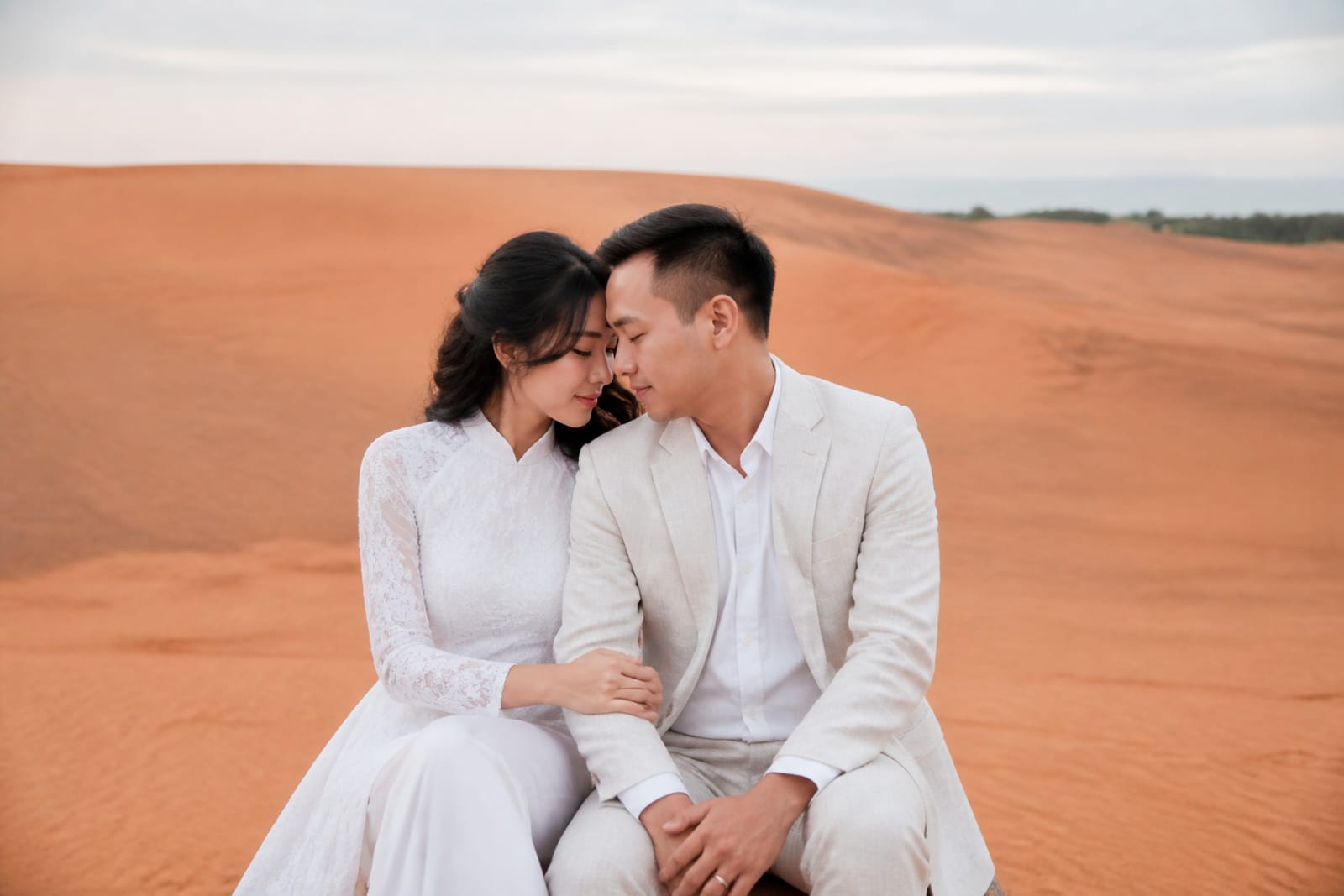
A pre-wedding photoshoot at Mui Ne's white sand dunes captures the contrast of soft desert light against textured landscapes in one of Vietnam's driest regions. Sessions run 2–4 hours in the early morning (5–7 am, before heat and wind pick up) or late afternoon (4–6 pm for golden hour). Mui Ne sits in the south's dry season (November–April); November–March brings cooler temps and strong winds that blow sand and complicate styling, while April offers warmth with less wind. You'll wear a wedding dress or formal áo dài, and the studio arranges a local guide to scout safe dune access and manage sand in camera gear. Cáo Studio – Makeup & Photoshoot does not shoot in Mui Ne; you'll hire a Phan Thiết-based photographer directly. The real cost factors are transport time from Ho Chi Minh City (3–4 hours), a guide or local fixer, professional makeup and hair (often hired separately), and dress care (sand damages fabric). Start by confirming the photographer's experience with sand and salt-air gear protection, and scout locations during your chosen season before the shoot day. ---
What time of day gives the best light for Mui Ne dune photos?
The most flattering light for dune photography comes in two windows: sunrise (5–7 am) and golden hour (4–6 pm). Sunrise produces soft, low-angle light that rakes across sand texture and minimises the glare that makes midday dunes look washed out. Golden hour wraps the dunes in warm amber tones and creates long shadows that sculpt the landscape. Midday (10 am–3 pm) is harsh—direct overhead sun bleaches color, creates sharp shadows under the eyes, and reflects off sand into your face. Wind also builds through the day, which means early morning offers calmer conditions for hair and makeup. A late-afternoon shoot works better if you're already on-site or unwilling to wake at 4 am; plan to finish before 7 pm when light dims fast. Sunrise demands logistical discipline—transport, makeup and hair must be done before 5 am—but delivers the most dramatic, editorial results.
Which Mui Ne season is safest and most photogenic for pre-wedding shoots?
Mui Ne's dry season (November–April) is the only realistic window; the wet season (May–October) brings afternoon downpours and humidity that ruin makeup and styling. Within the dry season, your choice depends on wind tolerance and heat comfort. November–March is peak season: temperatures are cool (20–25°C), and the northeast wind is strong (which stirs sand and complicates hair, but creates dramatic dune texture). April offers warm, gentler conditions—less wind, more stable styling, but rising heat that demands early-morning starts and frequent touch-ups. If you're uncomfortable with wind or want minimal makeup reapplication, choose April; if you prefer cooler temps and dramatic sand patterns, pick December–February. Avoid late January to mid-February (Tet holiday) when services close and crowds peak at tourist sites. The driest months are January–March (very low rain risk), so they're safest for gear and timing predictability.
What outfit and styling works best on sand dunes?
Wedding dresses and áo dài both photograph beautifully on dunes, but each has practical trade-offs.
| Outfit type | Best for | Light & season | Why it works |
|---|---|---|---|
| Wedding dress (A-line or mermaid) | Dramatic contrast, classic couple shots | Golden hour (4–6 pm), Dec–Apr | Trains and skirts flow, light fabric moves in wind, white pops against sand; risk: hem and hem-line drag sand and salt |
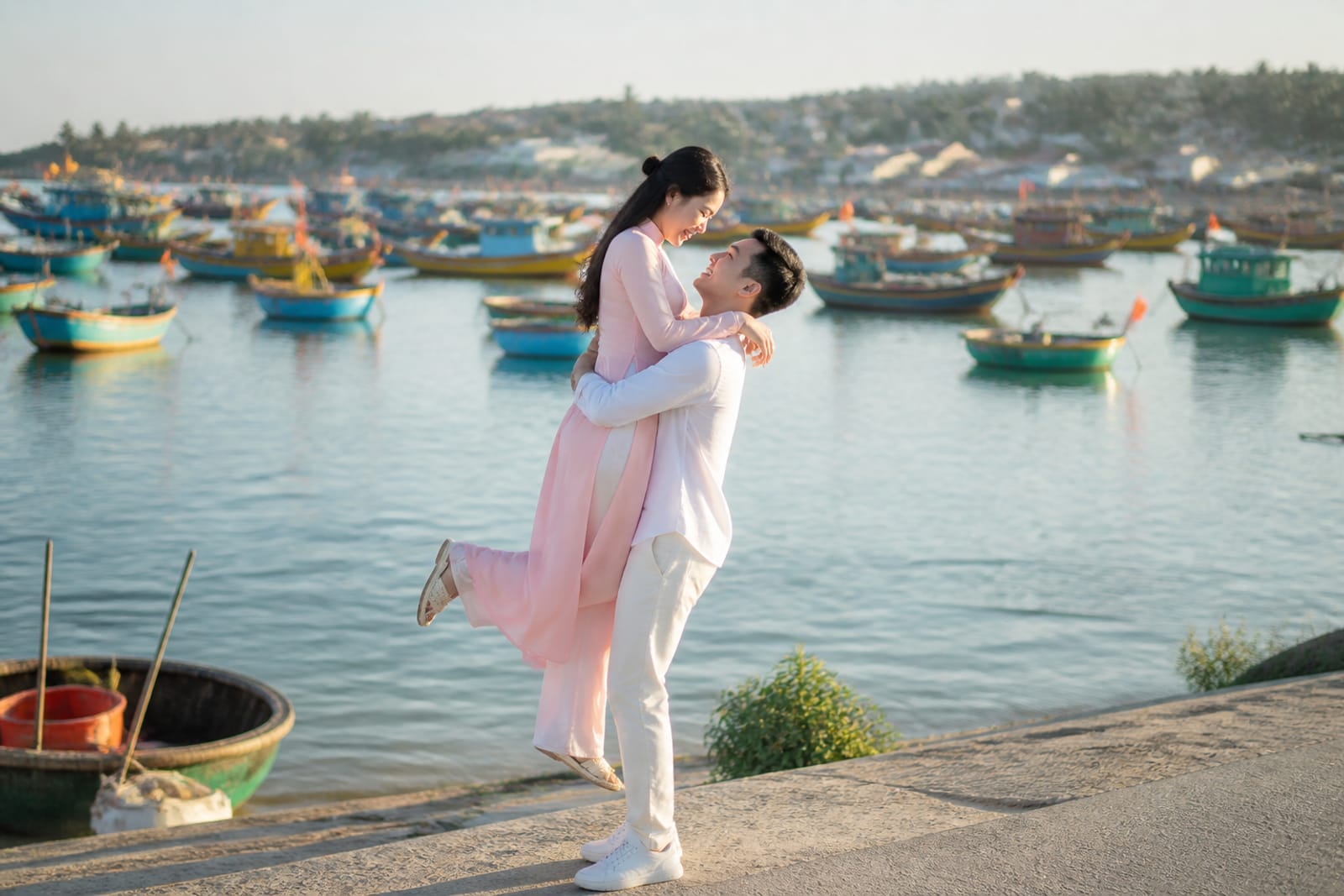
| Áo dài (traditional silk) | Cultural narrative, elegant mobility | Sunrise (5–7 am), Jan–Mar cooler temps | Fitted silhouette suits dune slopes, fewer fabric folds trap sand, easier to clean; color (red, gold) contrasts sand better than white |
| Silk shirt + wide trousers | Minimal fuss, quick movement | Golden hour, any season | Lighter weight (cooler), simpler styling, easier to rewash; less editorial impact than formal wear |
| Jumpsuit or romper | Modern aesthetic, active poses | Sunrise or golden hour, Apr (warmer) | Contemporary feel, short hemline avoids sand drag, styled for movement; smaller photo archive than traditional wedding dress |
Key styling choices: Wear a slip or leggings under your áo dài to prevent sand chafing and reduce direct fabric contact with skin. If wearing a wedding dress, bring a second shorter skirt or wrap for movement between formal poses and walking shots; hem contact with sand accelerates wear. Choose neutral undergarments and footwear you can remove (sand in shoes ruins comfort). Hair: updos and braids hold better than loose waves in wind; use a strong-hold spray but avoid glycerin-heavy products that attract sand. Makeup: full-coverage foundation is essential—sun reflection and sand airborne demand extra base; waterproof mascara and brow product prevent sweat smudging. Shoes: go barefoot for authenticity (sand-walking shots are iconic), but bring flip-flops or sandals for comfort between takes.
How do I book and vet a Mui Ne pre-wedding photographer?
Cáo Studio – Makeup & Photoshoot operates in Hanoi, Ho Chi Minh City and Hoi An, but does not shoot in Mui Ne. You'll need to hire a photographer based in Phan Thiết directly. Start with these steps:
- Search locally: Use Instagram hashtags (#MuiNe #PhanThiet #pre-weddingMuiNe) and Google "Phan Thiết wedding photographer" to find portfolios. Look for 10+ dune-specific shoots showing variety in light, outfit and couple dynamics.
- Check gear expertise: Message the photographer and ask: "Do you shoot dunes in November–March with sandstorms?" and "How do you protect lenses from salt air?" A seasoned shooter will explain filter use, lens caps and sensor cleaning. Avoid vague answers.
- Verify local logistics: Ask if they arrange a fixer/guide to secure private dune access, manage timing, and scout locations on shoot day. This is non-negotiable—wandering dunes without a guide wastes time and risks trespassing.
- Review contracts: Confirm shooting hours (e.g., 3 hours from 5 am), number of edited images, delivery timeline and cancellation terms for weather. Get it in writing via WhatsApp or email.
- Ask for references: Request contact details of 2–3 couples who shot in the same season; call or message them about timing, wind surprises and turnaround time.
Red flags: Photographers who can't name specific dune locations or offer the same sunrise rate as golden hour (sunrise is harder work and rarer). Those without backup weather contingency plans. Anyone unsure about sand-proof gear—it's non-negotiable in Mui Ne.
What logistics and costs do I need to budget for?
A Mui Ne pre-wedding shoot involves hidden logistical layers beyond the photographer's fee. Cáo Studio – Makeup & Photoshoot can provide makeup and hair at your hotel in Ho Chi Minh City before your drive to Mui Ne, which ensures professional styling without rushing in a cramped Phan Thiết hotel room.
Transport & logistics: – Hire a driver or join a group transfer from Ho Chi Minh City (3–4 hours each way). Solo driving is possible but demanding early-morning and late-evening routes. – Book accommodation in Phan Thiết 1–2 nights before the shoot to allow rest and makeup trials. – Arrange a dune guide or local fixer (usually coordinated by the photographer or your hotel) to ensure safe, legal access.
Professional services: – Makeup and hair styling (book in advance; many stylists require a trial beforehand). – Dress rental or seamstress touch-ups if your wedding dress is not yet final. – Post-shoot laundry: sand and salt water require specialized cleaning for delicate fabrics.
Gear & extras: – Bring a beach bag with water, sunscreen, lip balm and touch-up makeup for 4–6-hour sessions. – Rent or buy a protective mesh bag for dress storage and sand-free changing. – Plan to tip the guide, makeup artist and any assistants (customary in Vietnam).
No exact prices can be quoted here—rates vary by season, distance and service level. The photographer will quote transport and session fees separately on first contact. For makeup and hair in Ho Chi Minh City, reach out on 📸 WhatsApp +84 338 762 340 to get a tailored quote for your date and look.
---
What to check before you book a Mui Ne photoshoot
| Checkpoint | Why it matters | What to confirm |
|---|---|---|
| Photographer's dune portfolio | Not all Mui Ne shooters specialize in white sand dunes; some focus only on cliffs. | Ask for 5+ images from dunes shot in your target month showing different times of day. |
| Gear protection plan | Salt air and sand destroy unprotected camera lenses and sensors fast. | Photographer should name specific lens filters, protective bags and post-shoot cleaning steps. |
| Guide & location access | Dunes are often managed by local families or tourism agencies; unguided entry risks trespassing or time waste. | Confirm if the photographer includes a guide or requires you to hire one separately. |
| Weather contingency | Typhoons (rare Nov–Apr but possible) and sandstorms (frequent Nov–Mar) disrupt shoots. | Ask for a reschedule or refund policy if wind exceeds 30 km/h or visibility drops. |
| Makeup & hair timing | Professional styling in a dusty dune environment requires resilience products and quick workflows. | Hire makeup/hair the day before or in Ho Chi Minh City; minimize in-Phan-Thiết appointments. |
| Delivery timeline | Sand and salt damage gear; Mui Ne photographers often take longer to edit dune photos than studio work. | Confirm edited image count, delivery date (often 4–6 weeks) and file formats (RAW, JPEG, print-ready). |
---
💄 Pre-wedding packages & inquiry | 📸 See couple & family shoots | 🌸 View the lookbook
---
Mui Ne dune shoots demand patience, early starts and realistic expectations about wind and sand management. The payoff is a genuine desert backdrop that feels far from Vietnam's urban bustle. If you're planning a multi-location pre-wedding story, consider combining a Mui Ne dune session with a Ho Chi Minh City studio or Hanoi shoot to broaden your narrative. For makeup and hair in Ho Chi Minh City, Cáo Studio – Makeup & Photoshoot can prepare you before your drive south.
📸 Book makeup & hair in HCMC | 🌸 Explore pre-wedding options at Cáo Studio
---
FAQ
Is it really necessary to shoot at sunrise, or can golden hour work just as well?
Golden hour (4–6 pm) is easier logistically and offers warm, flattering light. Sunrise is harder (4 am transport, pre-dawn makeup), but delivers softer, raked light that sculpts dune texture more dramatically. Choose based on your comfort and shot priorities—romance and intimacy suit golden hour; editorial, landscape-focused couples work best at sunrise.
Can I wear a white wedding dress on white sand without losing definition?
Yes, if the dress has structured fabric (tulle, mikado, lace detail) or contrast layering. Flat, matte white satin can merge into sand in photos—ask your photographer to shoot with a polarising filter or adjust exposure to separate the dress. A slip of gold, blush or champagne underlay adds definition. Consider an áo dài in jewel tones instead for bolder contrast.
What happens to my gear if a sandstorm hits mid-shoot?
Sandstorms are rare but possible November–March. A seasoned photographer will suggest a reschedule or pivot to sheltered locations (red cliffs, beachfront). Confirm beforehand if your contract allows a free reschedule within 7 days if visibility drops below safe shooting conditions. Never force a shoot in heavy wind—it damages gear and ruined styling.
Do I need to hire a guide separately, or does the photographer arrange it?
Most Mui Ne photographers include a guide or fixer as part of their service, but confirm before booking. Some require you to arrange it independently. A guide ensures legal dune access, scouts locations, manages timing and handles logistics so the photographer focuses only on images. Always confirm this in writing.
How long does it take to get photos back after a Mui Ne shoot?
Expect 4–8 weeks. Sand and salt can damage files and require extra post-processing cleanup; Mui Ne shoots demand slower turnaround than studio work. Ask your photographer to commit to a specific delivery date in the contract. Rush delivery (2–3 weeks) may incur an extra fee.
FAQ
Is it really necessary to shoot at sunrise, or can golden hour work just as well?
Golden hour (4–6 pm) is easier logistically and offers warm, flattering light. Sunrise is harder (4 am transport, pre-dawn makeup), but delivers softer, raked light that sculpts dune texture more dramatically. Choose based on your comfort and shot priorities—romance and intimacy suit golden hour; editorial, landscape-focused couples work best at sunrise.
Can I wear a white wedding dress on white sand without losing definition?
Yes, if the dress has structured fabric (tulle, mikado, lace detail) or contrast layering. Flat, matte white satin can merge into sand in photos—ask your photographer to shoot with a polarising filter or adjust exposure to separate the dress. A slip of gold, blush or champagne underlay adds definition. Consider an áo dài in jewel tones instead for bolder contrast.
What happens to my gear if a sandstorm hits mid-shoot?
Sandstorms are rare but possible November–March. A seasoned photographer will suggest a reschedule or pivot to sheltered locations (red cliffs, beachfront). Confirm beforehand if your contract allows a free reschedule within 7 days if visibility drops below safe shooting conditions. Never force a shoot in heavy wind—it damages gear and ruined styling.
Do I need to hire a guide separately, or does the photographer arrange it?
Most Mui Ne photographers include a guide or fixer as part of their service, but confirm before booking. Some require you to arrange it independently. A guide ensures legal dune access, scouts locations, manages timing and handles logistics so the photographer focuses only on images. Always confirm this in writing.
How long does it take to get photos back after a Mui Ne shoot?
Expect 4–8 weeks. Sand and salt can damage files and require extra post-processing cleanup; Mui Ne shoots demand slower turnaround than studio work. Ask your photographer to commit to a specific delivery date in the contract. Rush delivery (2–3 weeks) may incur an extra fee.
Ao dai, makeup, hair and a local photographer in Hanoi or Saigon — one WhatsApp message.