/pre-wedding-photoshoot
Pre-wedding photoshoot Muong Hoa valley rice terraces Sapa guide
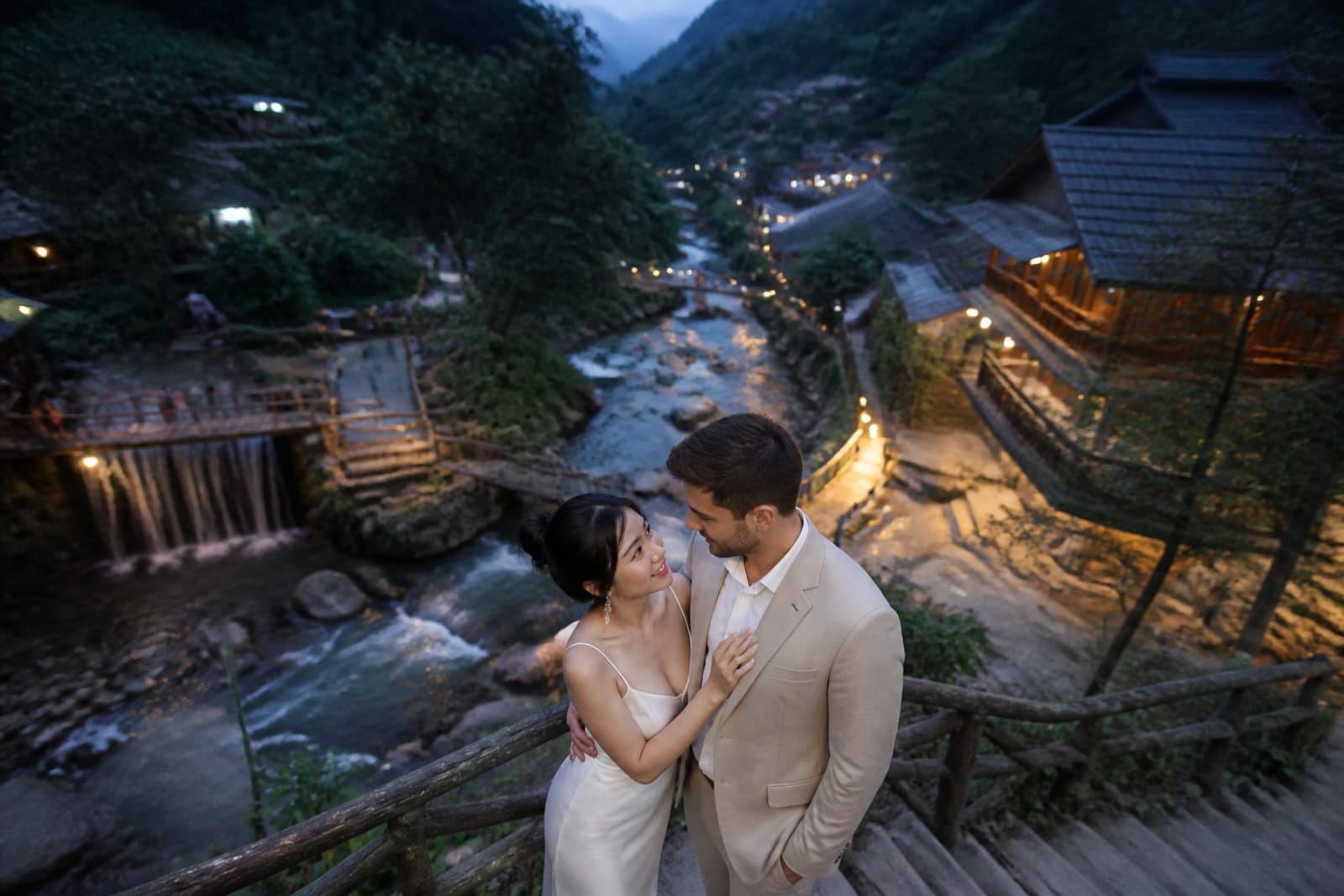
Muong Hoa Valley sits 1,000 metres above sea level near Sapa town in Vietnam's far north—an eight-hour drive from Hanoi. Pre-wedding shoots there run 3–6 hours depending on outfit changes and location variety; most couples shoot in March–May or September–early October when terraces are either green and water-filled (May) or golden at harvest (mid-September to early October). The valley has no road infrastructure; you trek 45 minutes downhill to reach the best photo spots, which means your photographer must be fit, experienced with mountain logistics, and equipped for rapidly changing weather—Sapa is notoriously foggy and wet. Cáo Studio – Makeup & Photoshoot does not operate in Sapa; you'll need to hire a local guide-photographer or use an agency based in Sapa town. Before booking, confirm your photographer has shot there before, can handle altitude, includes a porter or local guide (both you and gear are heavy on a downhill climb), and has a weather contingency for rescheduling. ---
Which season gives the best light and terraces for pre-wedding photos in Muong Hoa?
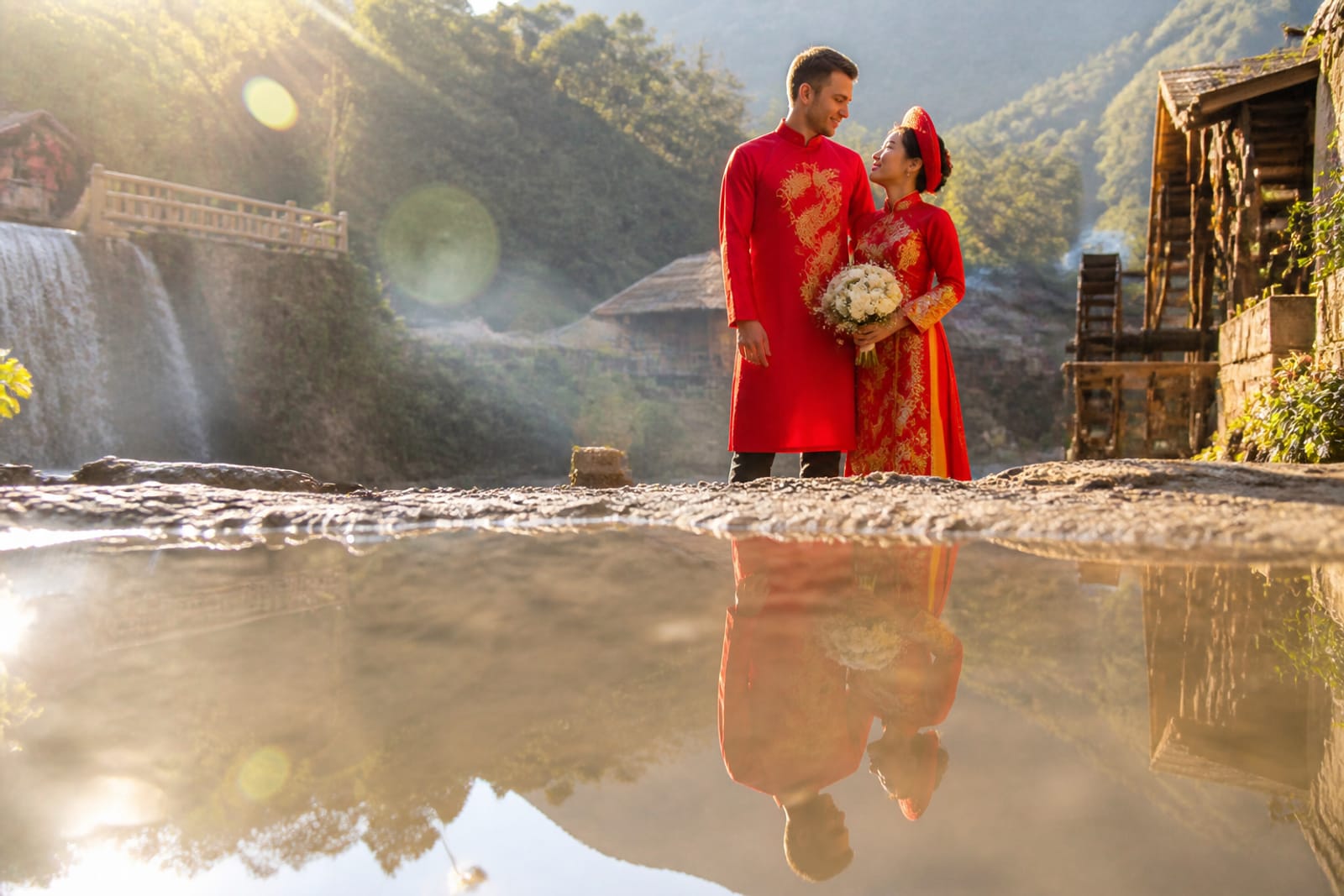
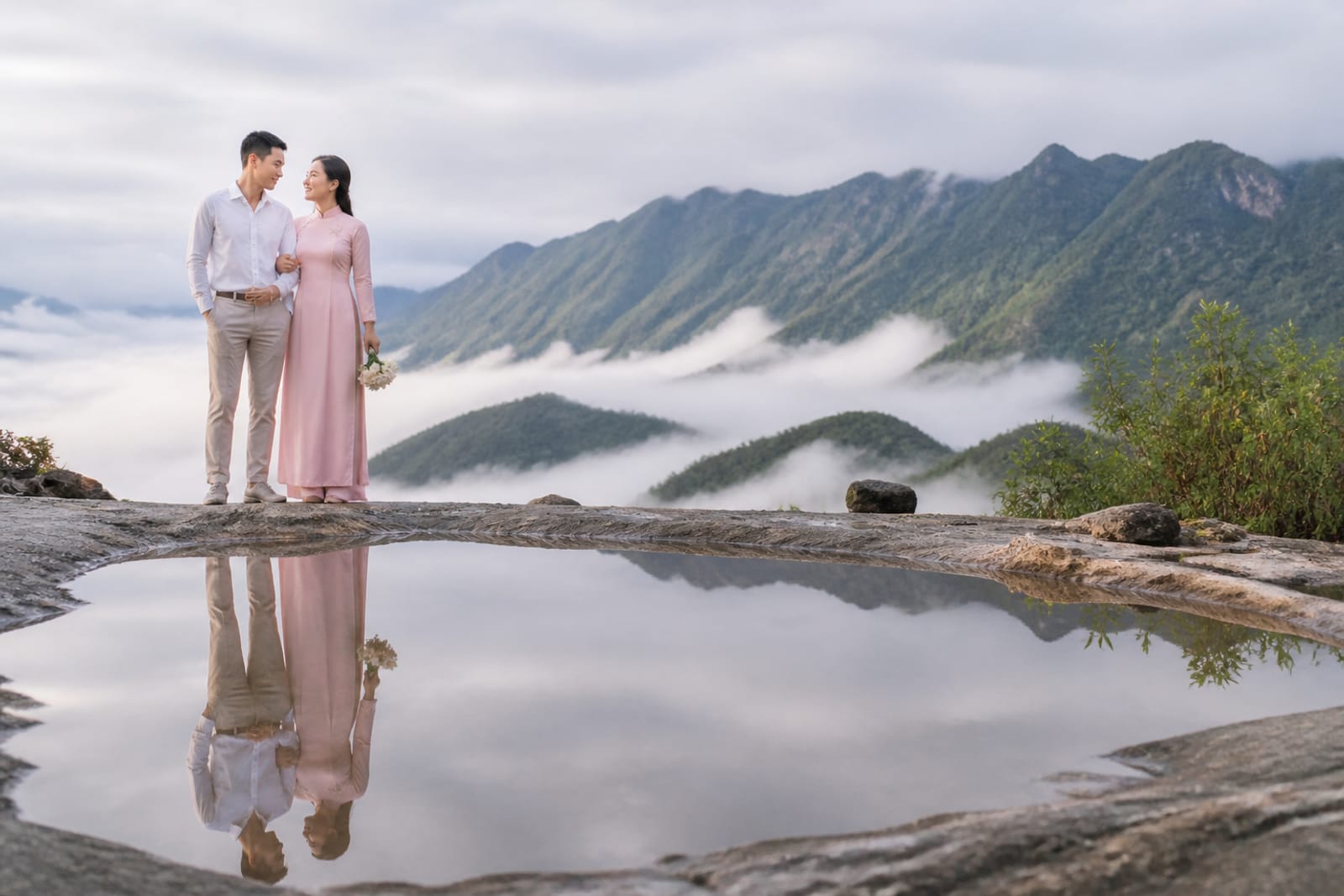
Muong Hoa's look changes dramatically by month. Golden terraces (ready to harvest, striking at golden hour) occur roughly mid-September through early October; green, water-filled terraces (fresh and lush) peak in May after planting. Both are photogenic, but require opposite conditions. Golden-hour light is warm and directional but brief—you need an early start. Green season is forgiving for light but more crowded with trekkers and agricultural work. March–April and October–November avoid rain and crowds but show partial harvests or pre-planting stages. December–February is cold (near freezing at night), foggy, and misty—the valley often disappears into cloud cover, and the terraces are dry brown. Early summer (June–August) is rainy and unsafe for trekking due to slippery terrain and occasional flash floods. Choose a season based on your aesthetic (golden vs. green) and tolerance for cold; plan to arrive mid-morning and shoot through early afternoon golden hour.
📸 Book on WhatsApp — ao dai photoshoot
What permits and logistics do you need before a Sapa pre-wedding shoot?
Sapa itself requires no photography permit, but the valley trekking does need a local guide—it's both required by local regulation and essential for safety. Your photographer should arrange this (or you can hire a guide through your guesthouse in Sapa town). Guides cost money; ask your photographer if it's included in their fee or a separate cost. The nearest road is a 45-minute downhill trek—steep, rocky, muddy when wet—so pack proper footwear, bring water, and allow double the time if either of you struggles with altitude or fitness. Makeup will sweat and smudge; if on-location touch-ups matter, ask if your photographer can source a makeup artist in Sapa (difficult and rare—most couples accept a more natural, weathered look by midday). Ao dai rental is possible in Sapa town, but weight and moisture absorption make light fabrics or shorter skirts more practical than full traditional dress. Confirm with your photographer that permits, a local guide, and backup weather options are all arranged before your shoot date.
How do trekking difficulty and outfit choices interact on a pre-wedding shoot?
Muong Hoa is not a casual walk. The trail is steep (800 metres of descent), rocky, and slippery after rain. If you wear a long ao dai, train skirt, or heavy western gown, you'll struggle—climbing back uphill in 2+ kg of fabric, muddy terrain, and no handholds is unsafe. Most couples either wear light ao dai (crop or knee-length), practical trousers and a blouse, or change outfits partway through at a base camp. High heels are impossible; bring sturdy hiking shoes and change into flats for photos (or go barefoot on terraces—romantic but cuts image diversity). Makeup artist presence is rare, so bring blotting papers and a simple touch-up kit; expect to look "real" by afternoon, not airbrushed. A porter (hired through your guide) carries backup outfits, props and a shelter if weather turns. Budget extra time and cost for a porter. Choose light, practical outfits over visual drama; a fit person reaches the valley refreshed; an unfit person arrives exhausted and it shows in photos.
---
| Factor | Green season (May) | Golden season (Sep–Oct) | Winter (Dec–Feb) |
|---|---|---|---|
| Terrace look | Lush, water-filled, vivid | Ripe crops, warm tones | Dry, brown, fallow |
| Light quality | Soft, even, damp | Sharp, warm golden hour | Flat, often foggy |
| Crowd & trekking safety | Moderate trekkers, muddy; ok | Harvest time, ideal | Rare trekkers, cold, mist |
| Weather risk | Afternoon rain common | Stable, occasional showers | Frost, fog, poor visibility |
| Outfit comfort | Hot, humid; light fabrics needed | Mild; more outfit variety | Cold; layers needed |
| Best time to shoot | Mid-morning to early afternoon | Early dawn for golden hour | Avoid; fog obscures valley |
---
What happens on the day—and what often goes wrong?
A typical Muong Hoa shoot starts at 7–8 a.m. in Sapa town. You hike to the valley (45–60 minutes), take photos for 2–3 hours at different vantage points and terrace levels, rest and rehydrate, change outfits if planned, and shoot another 1–2 hours. You're back in town by early afternoon. Common issues: (1) fog rolls in before 10 a.m., erasing the valley—this happens often and is unpredictable; (2) one or both of you underestimate fitness, arrive tired, and energy crashes by hour two; (3) unexpected rain makes terrain slippery and shoots unsafe; (4) a gust of wind or insect ruins a dress, or a shoe fills with mud; (5) the photographer loses light faster than expected and rushes the final set. Mitigation: (a) hire a photographer who has shot Muong Hoa ≥5 times and knows the micro-seasons; (b) do a fitness test hike the day before; (c) plan outfit changes at mid-trek, not at the start; (d) build in a full 30-minute weather buffer before sunset; (e) agree a reschedule date if fog or rain forces an abort. A pre-wedding shoot in Sapa is stunning but demands contingency planning—choose your photographer for experience, not just portfolio.
How do you find and vet a local photographer in Sapa?
Cáo Studio – Makeup & Photoshoot operates in Hanoi, Ho Chi Minh City and Hoi An, not in Sapa. For a Muong Hoa shoot, you'll hire a local Sapa-based photographer or guide-photographer team. Ask your guesthouse or hotel in Sapa for referrals—they know who's reliable and who's faked a portfolio. Search Instagram for "#sapaphotographer" or "#muonghoaphotoshoot" and check if the photographer's grid shows actual terraces, not just studio work or studio backdrops; consistency and detail in past shoots matter more than follower count. Message three photographers with: (a) your shoot date and preferred season; (b) how many outfit changes and locations you want; (c) whether makeup, a guide and a porter are included; (d) delivery timeline for edited images; (e) rescheduling policy if weather forces a cancel. Compare their responses—if they're vague on logistics or won't mention permit/guide cost, keep looking. Request a WhatsApp call to hear their plan; unprepared photographers hesitate or give generic answers. Ask to see a recent full shoot gallery (not just Instagram highlights) and a client reference if possible. Vet local photographers as hard as you'd vet a Hanoi studio: experience, communication and transparency on cost factors (guide, porter, weather contingency) matter most.
What to check before you book a Muong Hoa pre-wedding shoot
- Photographer's Muong Hoa experience: ask for exact shoot count and a link to a past client's full gallery (not just portfolio picks).
- What's included in the fee: guide, porter, transportation to trailhead, makeup, number of outfit changes, location options.
- What costs extra: each outfit beyond the first, make-up artist if on-site, porter fee, any entrance or permit payments.
- Weather policy: will they reschedule rain/fog for free? What notice is required? What if you can't rearrange?
- Fitness expectations: do they require a pre-shoot hike or fitness check? What happens if you can't finish the trek?
- Photo delivery: how many edited images, how long after the shoot, format (digital files, prints, album)?
- Communication: respond to you on WhatsApp or email? Do they have a backup if they're sick?
- Backup plan: if Muong Hoa is fogged out, will they shoot a second location (e.g. Sapa town views or a local garden) without extra cost?
---
See our pre-wedding photoshoot guide for timing and outfit planning for other destinations.
If you're planning a pre-wedding session in a more accessible location, Cáo Studio – Makeup & Photoshoot offers ao dai photoshoots, couple sessions and makeup & hair services in Hanoi, Ho Chi Minh City, and Hoi An. Check our pricing, FAQ and lookbook for ideas.
FAQ
Can we wear a traditional ao dai on a Muong Hoa trek?
Full-length ao dai are heavy, soak up moisture and make steep descent dangerous. Wear a crop or knee-length ao dai, or switch outfits midway at a rest point using a porter. Light fabrics (silk, linen) and flat shoes are safer than long, weighted gowns.
What's the best time of day to shoot at Muong Hoa?
Sunrise (5–6 a.m.) offers clear light before fog rolls in, but requires an early hike. Mid-morning (8–11 a.m.) is more realistic and still offers warm light. Afternoon (2–4 p.m.) risks clouds and flatness. Avoid late afternoon; sunset is too brief and the climb-out takes 45 minutes in twilight.
How much does a Muong Hoa pre-wedding shoot cost?
Costs vary by photographer, number of hours, outfit changes, guide fees and porter costs. Ask your photographer to quote all factors separately on WhatsApp so you can compare options fairly.
Do we need a local guide, or can we trek solo?
A guide is required for safety and local regulation. Guides hire through photographers or guesthouses. They know the safest paths, manage weather changes and help with logistics. Budget for this cost.
What if weather ruins our shoot date?
Fog and rain are common in Sapa. Confirm your photographer's reschedule policy before booking—most offer a free date change, but you pay if you cancel or can't shift dates. Pick a photographer with a clear weather contingency.
Is Muong Hoa shoot better than Hanoi or Hoi An pre-wedding options?
Muong Hoa is visually unique but logistically hard—altitude, long trek, weather unpredictability, no on-site services. Hanoi and Hoi An offer urban and cultural backdrops with easier access, makeup/hair support and experienced studios. Choose Sapa if dramatic terraces matter most; choose Hanoi/Hoi An if you want convenience, backup weather options and an established team.
FAQ
Can we wear a traditional ao dai on a Muong Hoa trek?
Full-length ao dai are heavy, soak up moisture and make steep descent dangerous. Wear a crop or knee-length ao dai, or switch outfits midway at a rest point using a porter. Light fabrics (silk, linen) and flat shoes are safer than long, weighted gowns.
What's the best time of day to shoot at Muong Hoa?
Sunrise (5–6 a.m.) offers clear light before fog rolls in, but requires an early hike. Mid-morning (8–11 a.m.) is more realistic and still offers warm light. Afternoon (2–4 p.m.) risks clouds and flatness. Avoid late afternoon; sunset is too brief and the climb-out takes 45 minutes in twilight.
How much does a Muong Hoa pre-wedding shoot cost?
Costs vary by photographer, number of hours, outfit changes, guide fees and porter costs. Ask your photographer to quote all factors separately on WhatsApp so you can compare options fairly.
Do we need a local guide, or can we trek solo?
A guide is required for safety and local regulation. Guides hire through photographers or guesthouses. They know the safest paths, manage weather changes and help with logistics. Budget for this cost.
What if weather ruins our shoot date?
Fog and rain are common in Sapa. Confirm your photographer's reschedule policy before booking—most offer a free date change, but you pay if you cancel or can't shift dates. Pick a photographer with a clear weather contingency.
Is Muong Hoa shoot better than Hanoi or Hoi An pre-wedding options?
Muong Hoa is visually unique but logistically hard—altitude, long trek, weather unpredictability, no on-site services. Hanoi and Hoi An offer urban and cultural backdrops with easier access, makeup/hair support and experienced studios. Choose Sapa if dramatic terraces matter most; choose Hanoi/Hoi An if you want convenience, backup weather options and an established team.
Ao dai, makeup, hair and a local photographer in Hanoi or Saigon — one WhatsApp message.