/pre-wedding-photoshoot
Pre-wedding Photoshoot Poses for Camera-Shy Couples
Camera-shy couples do best with poses built from movement: walking toward the camera, holding hands while you talk, adjusting each other's collar or hair. Avoid staring directly at the lens or standing motionless facing the camera. Instead, position yourselves at angles—one partner slightly behind or beside the other—so the camera catches your profile or three-quarter view. Wear comfortable, well-fitting clothes (not baggy) so motion looks natural. At Cáo Studio – Makeup & Photoshoot in Hanoi and Ho Chi Minh City, the photographer directs you step by step, shooting between posed moments so the camera captures genuine expressions, not forced smiles. Most camera-shy couples relax within 10–15 minutes once they understand the session is about connection, not perfection. ---
What poses actually work when you're nervous?
The best poses for nervous couples aren't poses at all—they're prompts. Instead of "stand here and smile," a photographer says "walk toward me holding hands" or "tell each other something funny." Motion hides self-consciousness: your mind focuses on the action, not the camera. Walking side by side, sitting close on a bench, or adjusting each other's outfit all feel purposeful, not staged. Three-quarter angles (not straight-on) and layered positioning (one partner slightly in front or behind) flatter most body types and ease the intensity of full-frontal framing. Avoid stillness; it amplifies nervousness. Movement softens facial expressions and creates natural spacing. Shoot over-the-shoulder moments—looking at your partner, not the lens—so the camera catches genuine connection, not camera awareness.
📸 Book on WhatsApp — pre-wedding photoshoot
How does the photographer keep you comfortable?
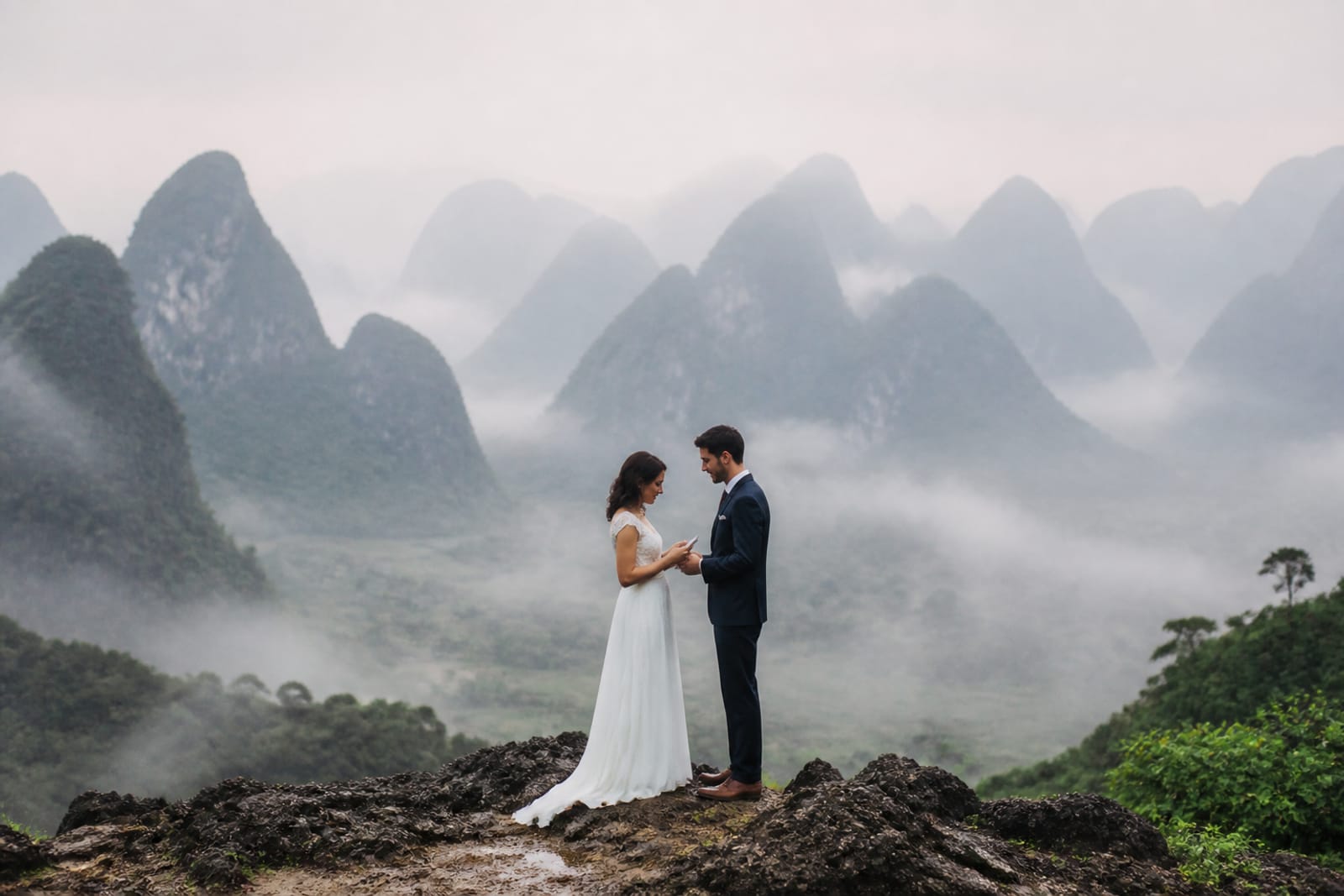
Professional direction is half the work. A skilled photographer narrates: "Now walk back three steps, slowly, and look at each other when I say go." Clear instructions replace guesswork. They shoot in bursts—not one-off poses—so you relax across many frames; the best expressions often come frames 3–5, after the initial awkwardness passes. They also build time into the session: the first 15 minutes are looser, "getting to know you" shooting (documentary-style, minimal posing). By the time formal poses start, you've already been in front of the camera and know the rhythm. Good photographers also offer real-time feedback—"That laugh was perfect, do it again"—so you see your own comfort level improving. At Cáo Studio – Makeup & Photoshoot, the team works in both Hanoi and Ho Chi Minh City studios and on location; familiarity with the space or outdoor spot also reduces anxiety. Ask on WhatsApp how the photographer structures the opening minutes of your session.
Which locations feel less intimidating than others?
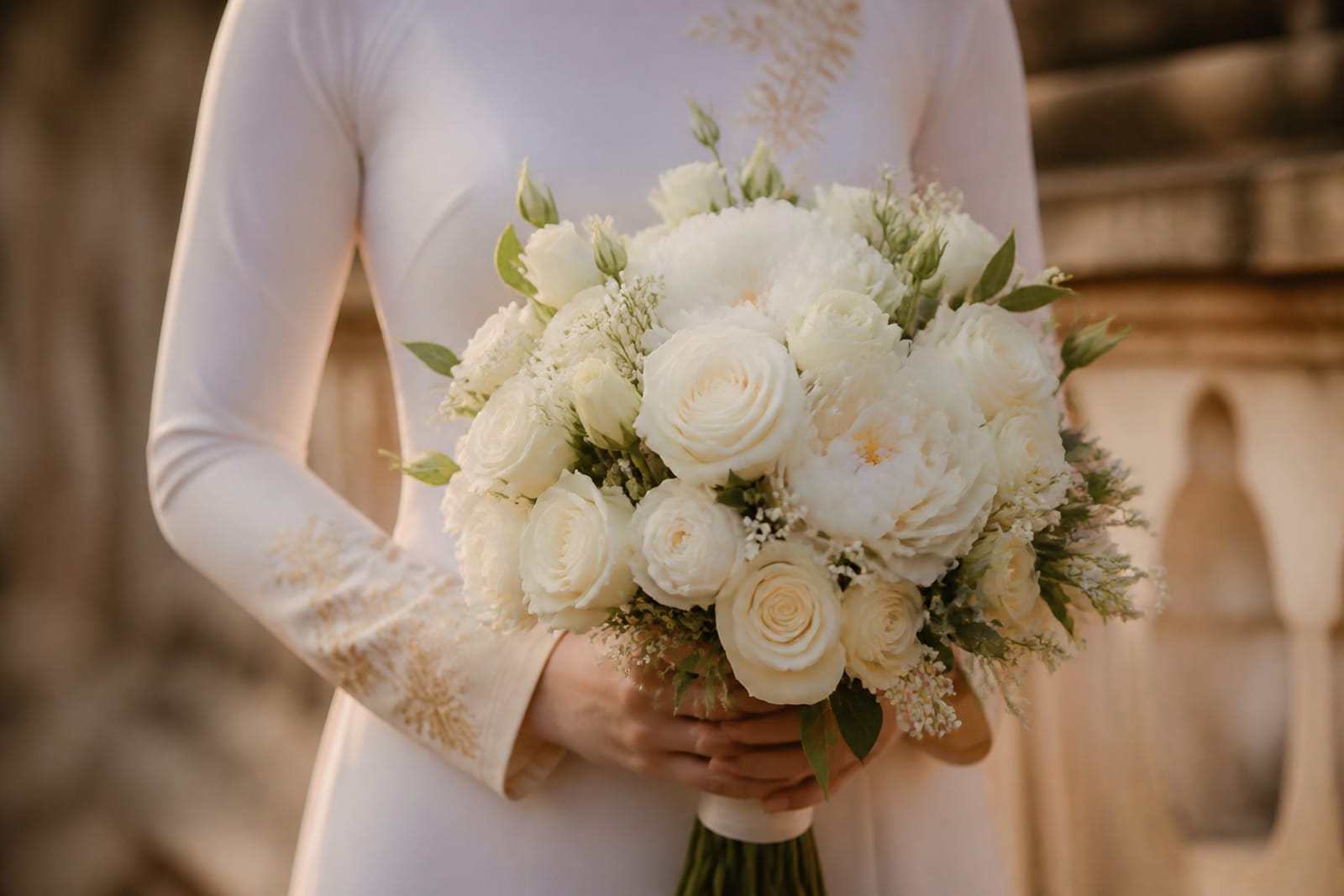
Studio settings with soft, controlled lighting feel safer because you're focused on the photographer, not passersby. Indoors, you control the environment—no crowds, no unpredictable shadows, no strangers. Outdoor shooting in quieter spots (early morning, gardens, temples with off-peak hours) minimizes audience pressure. Avoid busy tourist sites where crowds gather; camera-shy couples lose confidence around spectators. Soft, diffused light (overcast mornings, shaded walkways, sunset hour) is forgiving—it erases harsh shadows, softens skin, and requires less "perfect" posing because the light does flattering work already. Ao dai photoshoots often use scenic Hanoi or Ho Chi Minh City backdrops, but the outfit itself (formal, beautiful, culturally significant) can ease nerves—the focus shifts partly from "posing perfectly" to "wearing something meaningful." Choose a location that matches your comfort level, not Instagram trends. Quieter, intimate spaces almost always yield more genuine expressions from camera-shy couples.
| Setting Type | Best For | Light Conditions | Why It Works |
|---|---|---|---|
| Studio | Control, privacy, repeatable angles | Softbox/LED (consistent, flattering) | No distractions; you focus on connection. |
| Quiet garden or park | Intimate, natural backdrop | Soft morning or late afternoon | Low foot traffic; soft light is forgiving. |
| Hotel room or indoor venue | Privacy, personal meaning | Window light or soft ambient | Minimal setup; feels less "photoshoot," more personal. |
| Busy landmarks | Adventure, bold couples | Whatever daylight is present | Works only if you're not camera-shy; crowds add pressure. |
What should you wear to feel confident on camera?
Fit matters more than style for nervous couples. Wear clothes that sit close to your body (not baggy or oversized), in colors you've worn and felt good in—not new, untested outfits. Dark colors (navy, black, charcoal) are slimming and feel formal; jewel tones (emerald, sapphire) are flattering and photograph warmly. Avoid all-white (can blow out in bright light), busy patterns (distract from your face), or anything itchy or restrictive (tension shows). Coordinate, don't match—wear the same color family or one neutral + one accent color. Shoes matter: wear something you can walk in comfortably (not new heels or stiff dress shoes that make you grimace). For couple sessions, layers work: a blazer over a simple top, or a cardigan you can remove halfway through, so you have options without changing clothes completely. Comfort breeds confidence. If makeup is part of your session, choose a light, natural look if you're uncomfortable with bold makeup; hotel makeup & hair services can be tailored to your preference—ask the team what feels authentic to you.
What's the difference between "just get the shot" and real guidance?
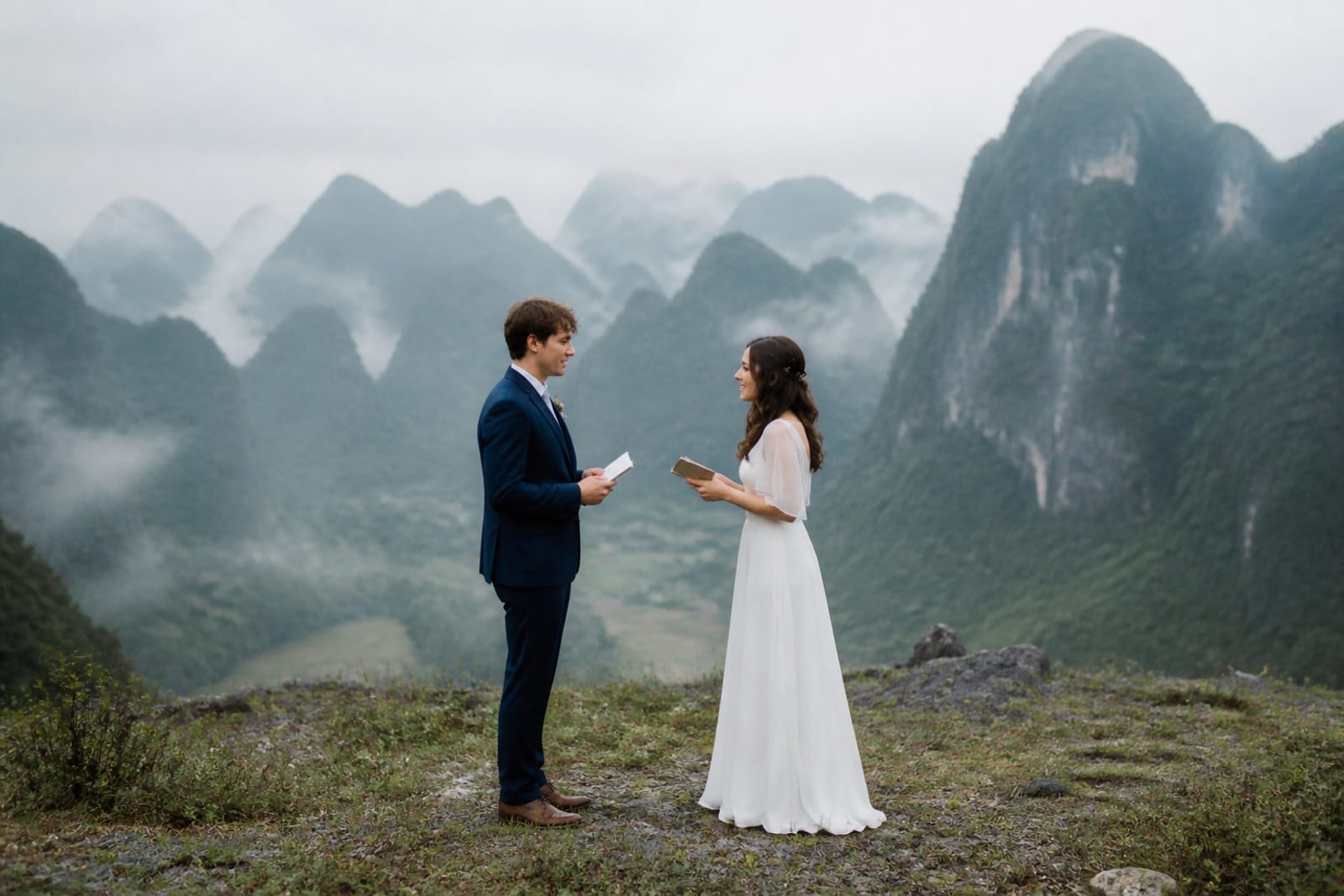
A photographer who says "just be natural" often leaves you frozen, second-guessing. Real guidance sounds like: "Hold her hand. Now squeeze it gently—yes, like that. Look down at your hands. Now up at her face. Perfect, stay there." Step-by-step direction removes ambiguity. It also acknowledges hesitation: "I know this feels weird; everyone feels this in the first five minutes. Let's do three walking shots to warm up." Honest communication—not false reassurance—builds trust. Before you book, ask the photographer (or team, via WhatsApp) how they handle nervous couples and whether they adjust the session flow if nerves persist. Some professionals extend the relaxation phase; others use video feedback so you see how good you actually look in real time. At Cáo Studio – Makeup & Photoshoot, you can ask the team on WhatsApp about their approach to camera-shy couples and what they've learned works best. See the lookbook to watch expressions in real couples' shots—genuine smiles, not strained grins, signal a photographer who knows how to direct without pressure.
When is the best time of year for your session?
Timing affects both light and your mindset. In Hanoi and the north, December to February is cool and dry with soft, grey light—ideal for couple shoots because harsh shadows are rare and you won't sweat into makeup. In Ho Chi Minh City and the south, December to April is dry, with clear light early morning or late afternoon. May to September is hot and humid everywhere; sweat + makeup concerns + discomfort can amplify camera shyness. Avoid midday (11 a.m.–2 p.m.) when light is harsh; shoot early morning or late afternoon for soft, golden hour light that forgives imperfect posing. Book 2–3 months ahead so you have time to prepare mentally and outfit choices aren't rushed. Pre-wedding photoshoots often benefit from a longer lead time anyway—you can do a trial session, see results, and feel less anxious at the main shoot.
---
How to prepare yourself the week before
Prepare is half the battle for camera-shy couples. Wear comfortable clothes the few days before your session so your body feels natural in them, not self-conscious. Get enough sleep the night before—rested faces look more confident. Eat a light meal 1–2 hours before the shoot so you're not hangry or too full (both trigger tension). Do a quick 10-minute walk or stretch to loosen shoulders—tension is visible on camera. Review the location or studio on Google Maps (or ask Cáo Studio to describe it) so the setting isn't a surprise. Most importantly, talk with your partner about what you're nervous about: "I hate my smile on camera" or "I don't know where to put my hands." A good photographer can address these directly. Look at the lookbook the evening before so you see real couples in real poses—not Instagram perfection, just genuine moments. That usually reduces anxiety: "Oh, it's just people being together, not models in a catalog."
---
What to check before you book
Before you commit, confirm these details with the photographer (ask on WhatsApp for Cáo Studio – Makeup & Photoshoot):
- How long is the session? Longer sessions (2+ hours) give nervous couples time to relax; rushed sessions can leave you stiff.
- Is the location fixed or flexible? If you're worried about crowds or light, ask if the photographer can scout alternatives or start elsewhere.
- Do they shoot while you're moving, or only after posing? Movement-focused shooting suits camera-shy couples best.
- What's included in the package? (Edited images, albums, prints, digital files—exact inclusions are confirmed on WhatsApp for Cáo Studio.)
- Can you see a preview or try a trial? Some photographers offer a short preview shoot so you know what to expect.
- How do they handle retakes or dissatisfaction? Know the policy before the shoot day.
Ask the team at Cáo Studio on WhatsApp about their specific workflow for nervous couples.
---
FAQ
Is it better to do a "trial" session before the real shoot?
Yes, if nerves are strong. A short trial (30 minutes) in the same location or studio helps you see how you look on camera, understand the photographer's direction, and build confidence. Ask Cáo Studio on WhatsApp if trial sessions are available in Hanoi or Saigon.
What if I cry or get emotional during the shoot?
Emotion is authentic. Good photographers pause, give you water and time, then continue. Tears often produce the most genuine, moving images. Tell the photographer beforehand if you're prone to emotion so they're prepared and ready to shoot the real moment.
Should we practice poses together at home?
Light practice helps—walking together, finding comfortable hand positions, adjusting how you sit close. But over-rehearsal looks stiff on camera. Aim for familiarity, not perfection. Movement-based poses (walking, laughing together) are easier to practice than static "facing the camera" poses.
How many outfit changes should we plan?
For camera-shy couples, one outfit per hour of shooting is plenty. Changing clothes resets nervousness. Stick to 1–2 outfits in a 2-hour session so you stay in flow. Ask Cáo Studio on WhatsApp what's included in your package.
What if the photographer is also making me nervous?
You have the right to speak up. Tell them, "Your pace is too fast" or "Can we take a break?" A professional photographer adjusts. If they don't, you can reschedule with someone else. Cáo Studio works in Hanoi, Ho Chi Minh City, and Hoi An—ask their team about photographer personality matches when you book.
Can we do a couple shoot without formal poses?
Yes. Documentary-style shooting (photographer captures you talking, walking, sitting naturally) feels less formal. You're not "posing"; the photographer just shoots your real moments. Many camera-shy couples prefer this approach. --- 📸 Book on WhatsApp — couple & family photoshoot Ready to try it? Contact Cáo Studio – Makeup & Photoshoot via WhatsApp to discuss your comfort level, location, and session flow. The team in Hanoi and Ho Chi Minh City has worked with nervous couples and adjusts direction based on what works for you.
FAQ
Is it better to do a "trial" session before the real shoot?
Yes, if nerves are strong. A short trial (30 minutes) in the same location or studio helps you see how you look on camera, understand the photographer's direction, and build confidence. Ask Cáo Studio on WhatsApp if trial sessions are available in [Hanoi](/hanoi) or [Saigon](/saigon).
What if I cry or get emotional during the shoot?
Emotion is authentic. Good photographers pause, give you water and time, then continue. Tears often produce the most genuine, moving images. Tell the photographer beforehand if you're prone to emotion so they're prepared and ready to shoot the real moment.
Should we practice poses together at home?
Light practice helps—walking together, finding comfortable hand positions, adjusting how you sit close. But over-rehearsal looks stiff on camera. Aim for familiarity, not perfection. Movement-based poses (walking, laughing together) are easier to practice than static "facing the camera" poses.
How many outfit changes should we plan?
For camera-shy couples, one outfit per hour of shooting is plenty. Changing clothes resets nervousness. Stick to 1–2 outfits in a 2-hour session so you stay in flow. Ask Cáo Studio on WhatsApp what's included in your package.
What if the photographer is also making me nervous?
You have the right to speak up. Tell them, "Your pace is too fast" or "Can we take a break?" A professional photographer adjusts. If they don't, you can reschedule with someone else. Cáo Studio works in [Hanoi](/hanoi), [Ho Chi Minh City](/saigon), and [Hoi An](/hoi-an)—ask their team about photographer personality matches when you book.
Can we do a couple shoot without formal poses?
Yes. Documentary-style shooting (photographer captures you talking, walking, sitting naturally) feels less formal. You're not "posing"; the photographer just shoots your real moments. Many camera-shy couples prefer this approach. --- [📸 Book on WhatsApp — couple & family photoshoot](/couple-photoshoot) Ready to try it? [Contact Cáo Studio – Makeup & Photoshoot via WhatsApp](tel:+84338762340) to discuss your comfort level, location, and session flow. The team in Hanoi and Ho Chi Minh City has worked with nervous couples and adjusts direction based on what works for you.
Ao dai, makeup, hair and a local photographer in Hanoi or Saigon — one WhatsApp message.