/pre-wedding-photoshoot
Pre-wedding photoshoot Sapa: hot season guide
Pre-wedding shoots in Sapa during the hot season (May–September) work best at dawn or dusk when light is soft and temperature is lower—typically 6:00–7:30 am or 5:30–6:30 pm. Heat, humidity, and afternoon downpours are the constraints; the reward is emerald rice paddies and quiet backroads free of peak-season crowds. At Cáo Studio, we recommend this season only for couples willing to start very early, bring moisture-wicking under-layers, and stay flexible if rain forces a location shift. The core risk is makeup melt and sweat-soaked fabrics; the core win is moody, saturated light and intimate framing without tourists. Summer here means you move fast, hydrate constantly, and trust your photographer to work in real conditions—not staged.
Why is Sapa in the hot season so appealing for pre-wedding couples?
Sapa's May–September window floods the rice paddies with standing water and lush green; by contrast, winter (December–February) sees dry, brown terraces and frequent fog that erases the landscape entirely. The hot season also means far fewer trekking groups and tour buses clogging the main paths—you'll shoot quieter backroads and village edges where light feels intimate and uninterrupted. The trade-off is straightforward: rain and humidity, not scenery or solitude. If your aesthetic leans toward moody, saturated colour and you're comfortable moving fast and changing plans, summer Sapa rewards couples with frames other seasons cannot deliver.
📸 Book on WhatsApp — pre-wedding photoshoot
What time of day actually works for portraits in Sapa's heat?
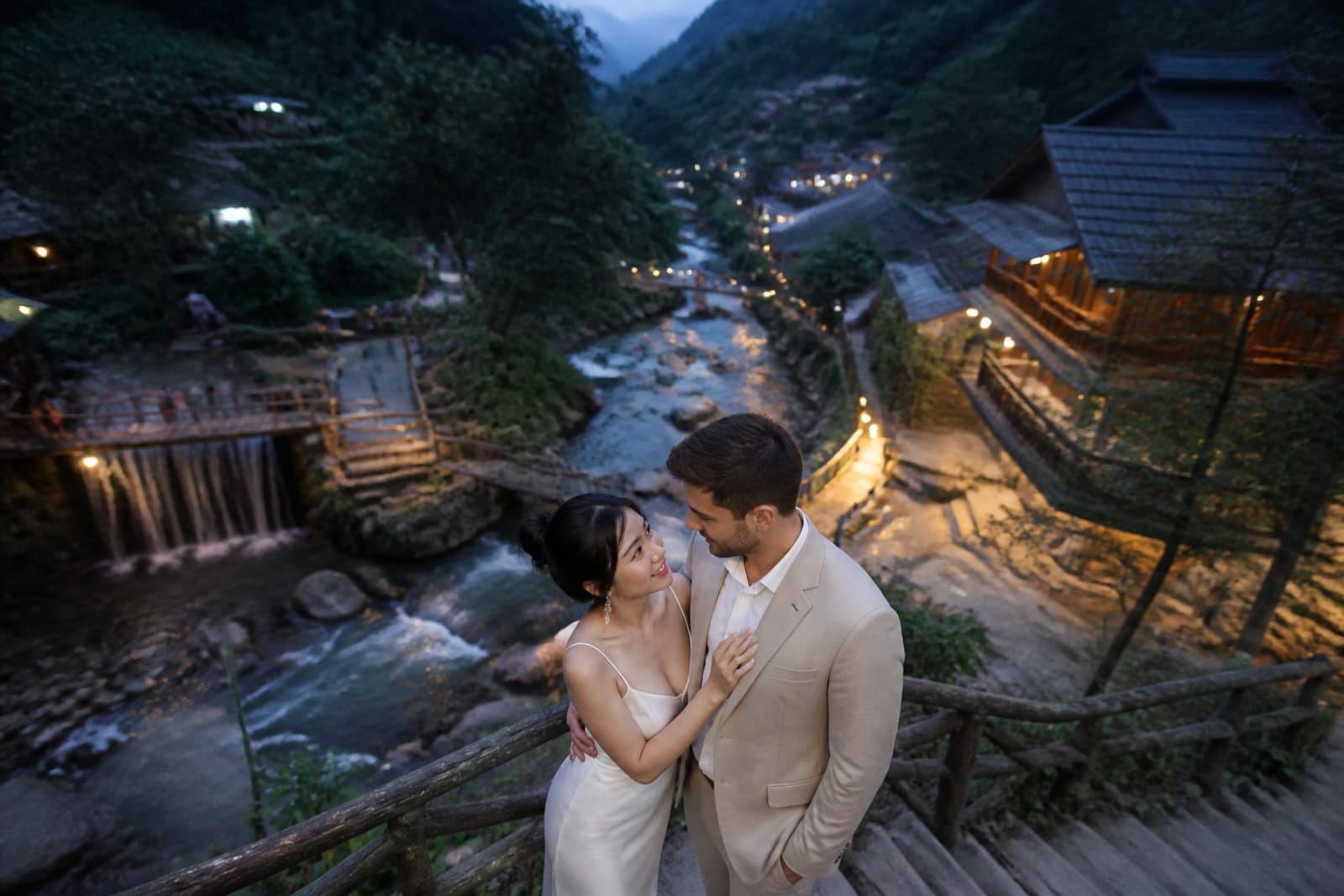
The golden window in Sapa during May–September is narrow: roughly 6:00–7:30 am and again 5:30–6:30 pm. Midday light (10 am–4 pm) is harsh, direct, and drains colour from both the landscape and skin tone. Morning shoots mean an early pickup from your hotel (usually 5:00–5:15 am), a 30–40 minute drive uphill, and shooting as the sun breaks the ridge line—which lights terraces from the side and softens your faces. Evening shoots run the same risk of cloud cover as afternoon (monsoon weather is unpredictable), but if the sky clears, the light wraps warmly and the valleys cool enough that you won't be drenched in sweat by frame 60. Most couples here choose the dawn slot; it's less romantic than dusk, but the light is more reliable and you're done by breakfast.
How does the ao dai fit and move in 28–32°C humidity?
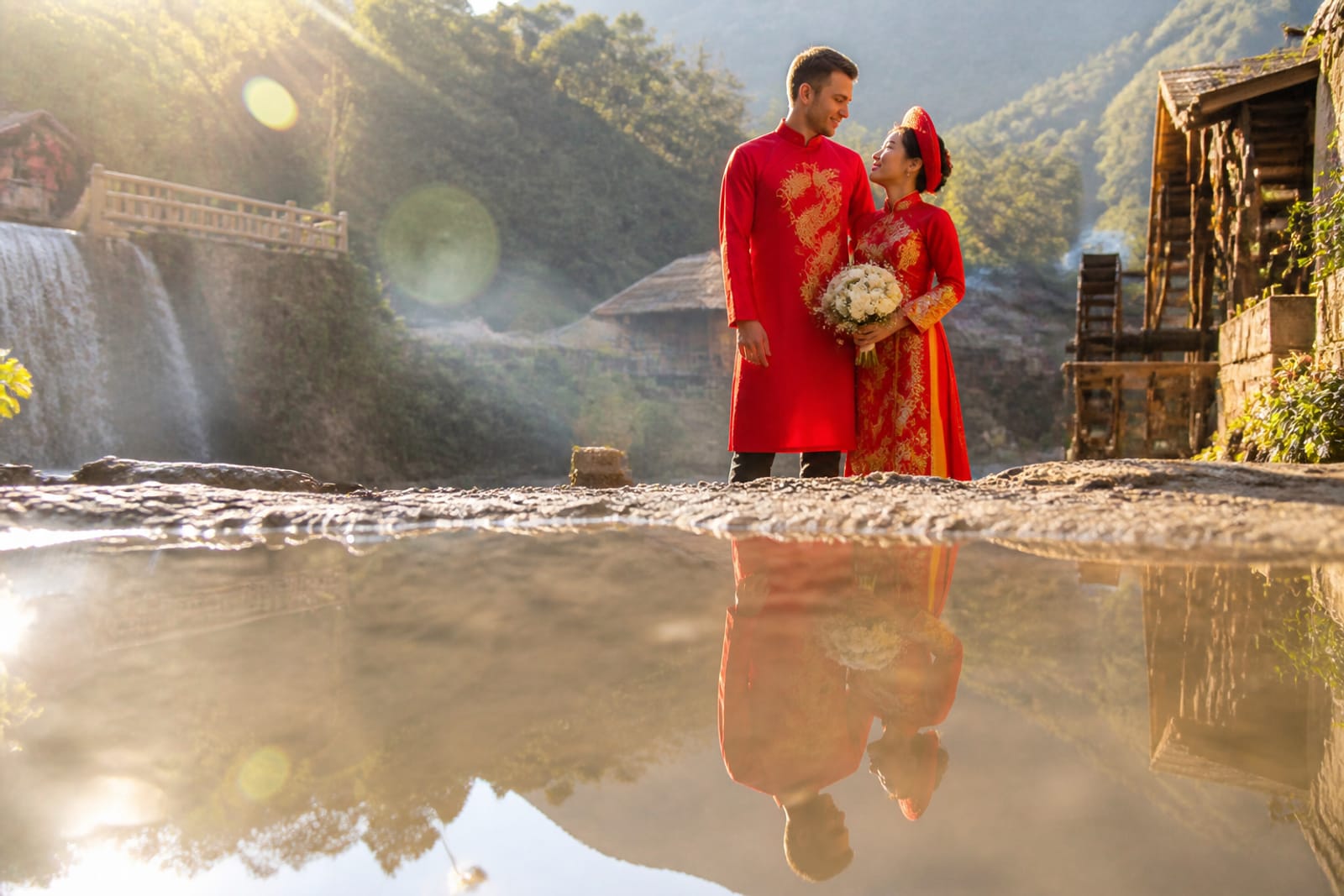
An ao dai is tailored silk or cotton, not designed to wick sweat or stretch; in Sapa's heat, it clings, creases fast, and makeup heat-sets into your skin rather than staying put. The tunic drapes best when you're standing still or walking slowly on flat ground—hiking uphill in a traditional gown works against the fabric's geometry and your own breathing. Couples here typically wear the ao dai for a few key frames on or near the terrace rim (where you walk, not climb), then change into breathable travel clothes—linen, cotton, lightweight layers that move and dry faster. Undergarments matter enormously: moisture-wicking briefs and a lightweight slip prevent the outer fabric from clinging to damp skin; skip heavy bras (they leave marks and trap heat). If you insist on full ao dai for a 90-minute session, bring talc powder or body spray to dust damp skin and fabric before each shot; it's not glamorous, but it works. Cáo Studio's makeup & hair at your hotel team preps undergarments and touch-up products into every Sapa session for exactly this reason.
How often does afternoon rain stop a Sapa shoot in May–September?
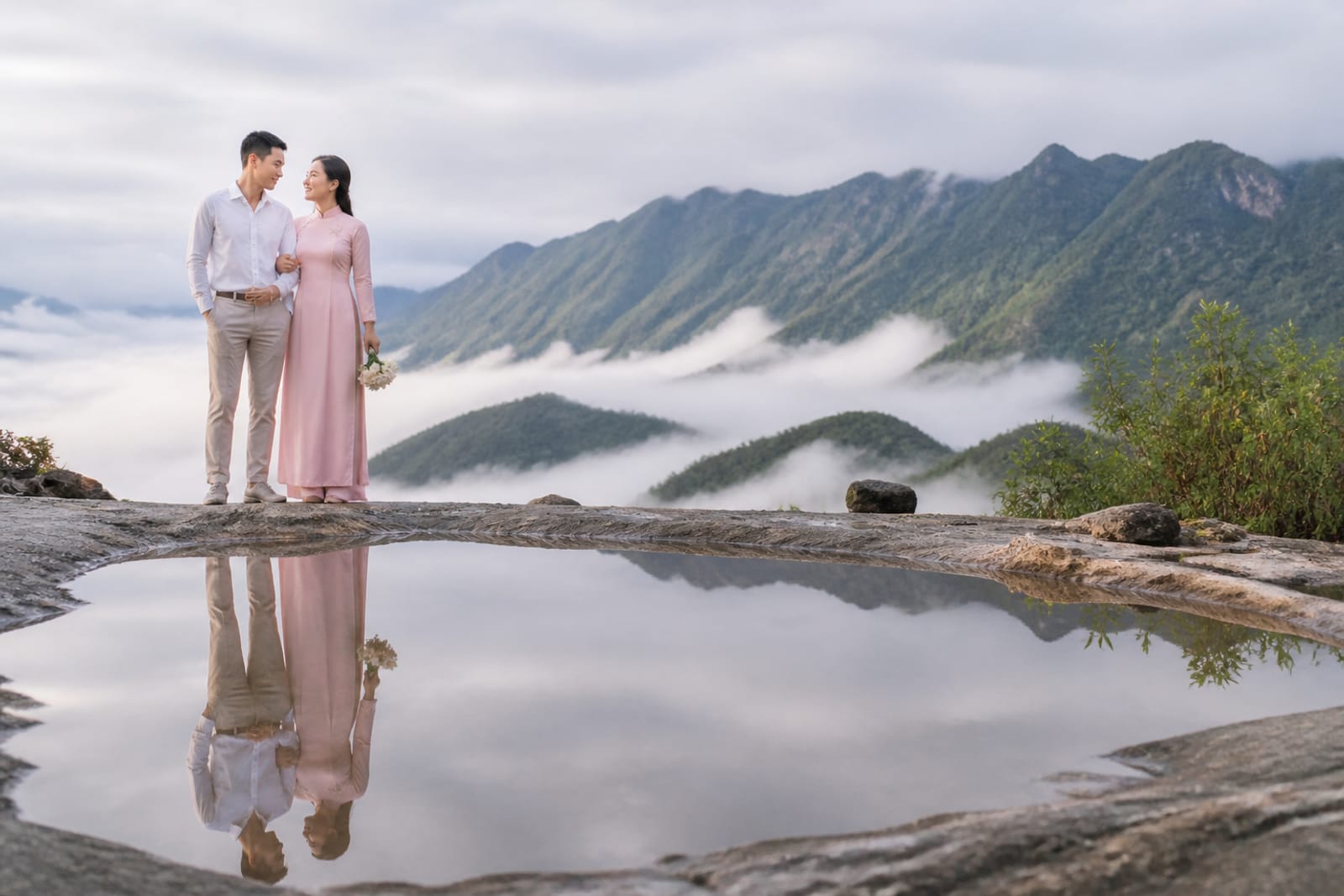
Rain in Sapa during the hot season is not rare—it's expected. Showers often hit 2:00–4:00 pm, sometimes earlier, and can last 20 minutes to two hours. A pre-wedding session that runs 5:00–7:00 pm risks a downpour mid-shoot; dawn sessions (6:00–7:45 am) usually stay dry, though cloud cover can dim the light. The decision framework: if you book a morning slot, you're paying for certainty of light and low risk of weather disruption. If you book an afternoon or evening slot, you're gambling that the sky clears—which it often does—but accepting that a backup indoor shot or a reschedule might happen. At Cáo Studio, we scout the weather the night before and often move the time earlier or later by 30 minutes if forecasts look uncertain. Couples uncomfortable with a rain-day pivot should book in March–May or September–November instead, when showers are fewer and lighter. If you're committed to summer Sapa, choose dawn and treat an afternoon rain-delay as part of the story, not a failure.
| Sapa Season | Best Light Window | Rain Risk | Rice Colour | Crowd Level | Reshoot Flexibility |
|---|---|---|---|---|---|
| May–Aug (peak hot) | 6:00–7:30 am; 5:30–6:30 pm | High (afternoon showers common) | Lush green, water-filled | Very low | Limited (rebook separate trip) |
| Sep–Nov (late summer to dry start) | 6:30–7:45 am; 5:00–6:00 pm | Medium (rain tapering) | Green transitioning to gold | Low | Moderate (same-season flexibility) |
| Dec–Feb (winter, cold/fog) | 7:00–8:00 am; 4:30–5:30 pm | Low (dry season) | Dry, brown, terraced | Very high (peak tourists) | Good (clear rebooks) |
The table shows why couples often skip May–August for Sapa specifically: light and privacy are excellent, but weather disruption is the real gamble. September–November splits the difference—still green, still fewer crowds than winter, but rain drops sharply.
What's the practical step-by-step for a Sapa pre-wedding shoot in hot season?
Before booking: Check the weather forecast 5–7 days prior; if the monsoon is particularly active (check local news), consider postponing or moving to Hanoi for indoor studio options. Confirm with the studio whether your session includes hotel pickup and whether a rain-delay reschedule is included or costs extra.
Three days before: Bring moisture-wicking undergarments, talc powder, a small fan (battery-powered), and extra blotting papers; ask the makeup artist to use a matte base and waterproof products. Hydrate heavily (not just the day-of).
Dawn of shoot: Eat a light breakfast before pickup to stabilize energy and prevent bloating. Wear loose, cool layers under your ao dai or first outfit; avoid caffeine (it increases sweating). Bring a zip-lock bag for your phone and valuables if you'll be near water.
On location (6:00–7:30 am example): The team shoots wide frames first—you walking, looking at terraces—while light is low and soft. Then medium frames of you together, and details (hands, rings, fabric). By 7:15–7:30 am, the sun rises higher and light hardens; the session wraps. No posing in front of monuments; you move, the camera catches it.
Midday heat window: Rest, rehydrate, and allow makeup to reset if needed. A 30–45 minute break prevents dehydration and heat exhaustion. If an evening slot is planned, take it easy.
What should you check before booking a pre-wedding shoot in Sapa's hot season?
Weather guarantees: Does the studio offer a free or discounted reschedule if heavy rain makes shooting impossible? This is non-negotiable in May–September.
Makeup & hair resilience: Ask whether the makeup artist uses heat-set, waterproof products; whether they bring touch-up kits; and whether they're experienced with humidity (not all artists are).
Outfit changes & undergarments: Confirm what outfits are included—ao dai, modern wedding dress, travel clothes, accessories. Ask whether the studio provides moisture-wicking slips or whether you're expected to bring your own. At Cáo Studio, we include tailored slips and powder in every hot-season session.
Location scouting & logistics: Has the photographer shot Sapa before, or are they booking a local guide for the first time? A first-time photographer in Sapa heat can miss light windows and overestimate hiking stamina. Ask for photos from previous Sapa shoots.
Delivery & editing timeline: Do edited photos arrive within 48 hours, or weeks later? In hot season, couples often want to reshoot or view samples quickly to confirm light and fit worked.
Rescheduling flexibility: If weather forces a postponement, can you rebooking in the same season, or does a reschedule mean paying full price again? Clarify before signing.
For couples set on a Sapa pre-wedding shoot, Cáo Studio runs sessions out of Hanoi, scouting light and weather the night before and starting shoots by 6:00 am to beat the heat and afternoon rain. We've done dozens of mountain pre-wedding shoots; heat and humidity are the variable, not the obstacle. The frames that come out of dawn light on a green terrace—with rain clouds brewing behind and your faces half-shadow, half-glow—are the ones couples keep framed forever.
FAQ
Is Sapa pre-wedding worth shooting in May–September, or should we wait for winter?
If moody, saturated light and privacy matter more than weather certainty, book summer. If you want blue skies and zero rain risk, winter (Dec–Feb) is safer—but expect dense fog, brown terraces, and crowds. September–November is the compromise: still green, fewer tourists, lower rain risk than peak summer.
Will an ao dai survive 90 minutes in Sapa heat without looking crumpled?
No. After 30–40 minutes of movement and humidity, silk or cotton ao dai creases and clings. Plan for the ao dai in 2–3 key frames on flat ground; change into breathable layers for the rest. Talc powder and moisture-wicking slips help, but they're not miracles.
How early do we have to wake up for a Sapa shoot in the hot season?
Expect hotel pickup between 4:45–5:15 am to reach the terrace by 6:00–6:20 am as light breaks. Dawn shoots end by 7:45–8:00 am, leaving the rest of the day free. Evening shoots start 4:30–5:00 pm and run until sunset (around 6:15–6:45 pm depending on cloud cover and month).
What happens if it rains during our Sapa pre-wedding shoot?
Light rain (drizzle) doesn't stop shooting; it softens light further and makes the landscape even more saturated. Heavy rain pauses the shoot; the team waits 15–30 minutes or relocates to a covered spot (village eaves, a homestay porch). If rain is severe, a reschedule is offered—confirm whether that's free or paid when booking.
Can we do a full pre-wedding shoot in Sapa in one morning (6:00–8:00 am)?
Yes. Tight scheduling means one outfit (ao dai or dress), wide-to-detail framing without breaks, and no position changes. If you want multiple outfits or relaxed pacing, book a 2-slot session (morning + evening on the same day or separate days). Ask Cáo Studio on WhatsApp what fits your vision and timeline.
Is it cheaper to shoot Sapa in the hot season versus winter?
Cost factors include travel time (Hanoi–Sapa is 5–6 hours), team logistics, weather disruption risk, and rescheduling likelihood—not calendar season. Confirm pricing with Cáo Studio on WhatsApp; no fixed "summer discount" exists, but early-morning slots and weather-driven rescheduling can affect total spend.
FAQ
Is Sapa pre-wedding worth shooting in May–September, or should we wait for winter?
If moody, saturated light and privacy matter more than weather certainty, book summer. If you want blue skies and zero rain risk, winter (Dec–Feb) is safer—but expect dense fog, brown terraces, and crowds. September–November is the compromise: still green, fewer tourists, lower rain risk than peak summer.
Will an ao dai survive 90 minutes in Sapa heat without looking crumpled?
No. After 30–40 minutes of movement and humidity, silk or cotton ao dai creases and clings. Plan for the ao dai in 2–3 key frames on flat ground; change into breathable layers for the rest. Talc powder and moisture-wicking slips help, but they're not miracles.
How early do we have to wake up for a Sapa shoot in the hot season?
Expect hotel pickup between 4:45–5:15 am to reach the terrace by 6:00–6:20 am as light breaks. Dawn shoots end by 7:45–8:00 am, leaving the rest of the day free. Evening shoots start 4:30–5:00 pm and run until sunset (around 6:15–6:45 pm depending on cloud cover and month).
What happens if it rains during our Sapa pre-wedding shoot?
Light rain (drizzle) doesn't stop shooting; it softens light further and makes the landscape even more saturated. Heavy rain pauses the shoot; the team waits 15–30 minutes or relocates to a covered spot (village eaves, a homestay porch). If rain is severe, a reschedule is offered—confirm whether that's free or paid when booking.
Can we do a full pre-wedding shoot in Sapa in one morning (6:00–8:00 am)?
Yes. Tight scheduling means one outfit (ao dai or dress), wide-to-detail framing without breaks, and no position changes. If you want multiple outfits or relaxed pacing, book a 2-slot session (morning + evening on the same day or separate days). Ask Cáo Studio on WhatsApp what fits your vision and timeline.
Is it cheaper to shoot Sapa in the hot season versus winter?
Cost factors include travel time (Hanoi–Sapa is 5–6 hours), team logistics, weather disruption risk, and rescheduling likelihood—not calendar season. Confirm pricing with Cáo Studio on WhatsApp; no fixed "summer discount" exists, but early-morning slots and weather-driven rescheduling can affect total spend.
Ao dai, makeup, hair and a local photographer in Hanoi or Saigon — one WhatsApp message.