/pre-wedding-photoshoot
Pre-Wedding Photoshoot Timeline: Mai Chau and Pu Luong
A pre-wedding photoshoot day in Mai Chau or Pu Luong spans two full days, starting before dawn for mist and valley light, then returning at late afternoon for golden-hour frames near rice or stone terraces. The first day captures wide landscape shots and movement across fields; the second day focuses on close portraits and outfit changes in soft, directional light. Cáo Studio does not operate in Mai Chau or Pu Luong — you'll need a local photographer, but this guide walks you through the real timeline, logistics, outfit choices and season factors that change everything. Travel time from Hanoi adds 2–3 hours each way; accommodation overnight is essential. The best windows are late May to June and September to October, when rice is golden and the mist lifts by mid-morning. ---
Why is the shoot scheduled across two separate days?
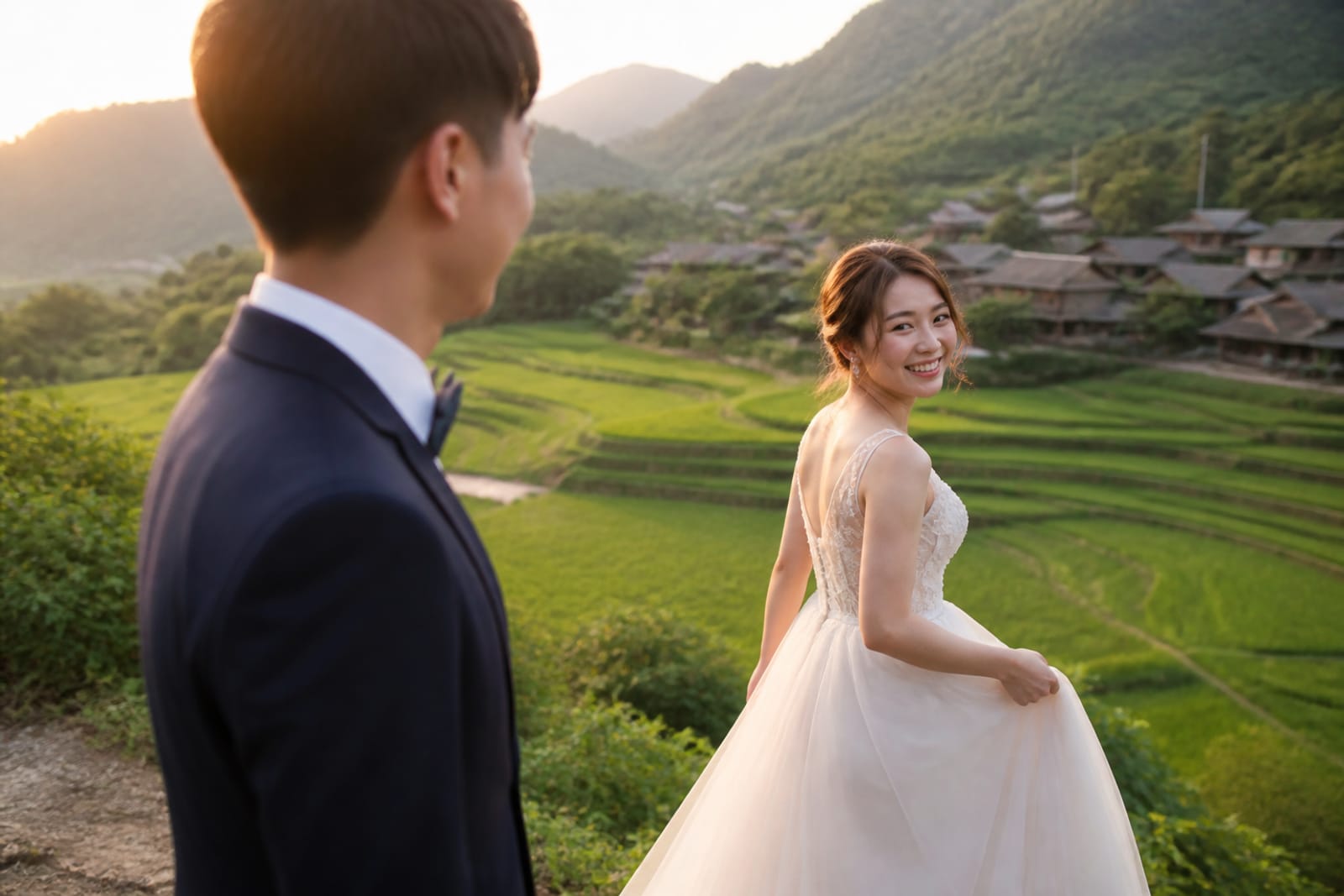
A single long day in the valley means either chasing mist at dawn with tired faces or waiting for golden hour with flat midday light. Two separate days let you rest, change outfits, and hit each light window fresh. Day one captures the landscape narrative (you walking, dancing, the fields around you); day two focuses on intimacy and detail—close frames, outfit changes, the connection between you. This rhythm also respects the valley's real rhythms: mist clears by 8–9 am, golden hour returns around 4:30 pm. You arrive the afternoon before, shoot early the next morning, recover and explore the village, then shoot again late afternoon. That's a full pre-wedding experience, not a rushed sprint.
How does the light change hour by hour on a valley shoot day?
| Time | Light quality | Best for | Season note |
|---|---|---|---|
| 5:30–6:30 am | Thick mist, very soft, low contrast | Silhouettes, figures in fog, wide landscape | Year-round; clearest May–Jun |
| 6:30–8:00 am | Mist lifting, side light entering, color builds | Movement in fields, outfit detail, connection shots | Season shifts this window 30 min earlier/later |
| 8:00–11:00 am | Flat, overhead, harsh shadows (avoid) | Break time; scout locations, outfit check | Unavoidable; embrace it |
| 4:00–5:30 pm | Golden angle returns, long shadows, warm cast | Close portraits, faces, final outfit, silhouettes | Best light; aim for this window |
| 5:30–6:30 pm | Light fades fast, blue-hour intensity | Final frames, detail, rings, pacing slows | Season shifts this 30 min earlier/later |
Mist timing swings by month: in late May, it's thick until 8:30 am and golden hour peaks earlier (4:15 pm). In October, mist burns off by 7:45 am and golden hour holds until 6:00 pm. Temperature also shifts—May is humid and warm; October is cool and crisp. A local photographer knows these month-by-month shifts; confirm what light they expect when you brief them.
📸 Book on WhatsApp — pre-wedding shoot
What happens between the two shoot days—how do you spend that middle time?
After the dawn shoot (usually wrapping by 9 am), you have 6–7 hours before the evening shoot. Most couples use this time to rest in the guesthouse, shower, eat, and recover. Some explore the village on foot—walk to a neighbor's house, visit a local market, sit by the river. A few change one outfit early and have the photographer capture a midday "off-duty" moment in diffuse shade (under a tree, near a stone wall). This break is not downtime; it's where the story shifts from landscape to portrait. When you return for the golden-hour shoot, you're calmer, the light is directional again, and the frames feel more intimate. This is why two days works: the valley gets your energy at its best twice, not once when you're fading.
How do season and rice cycle affect the timeline and what you can shoot?
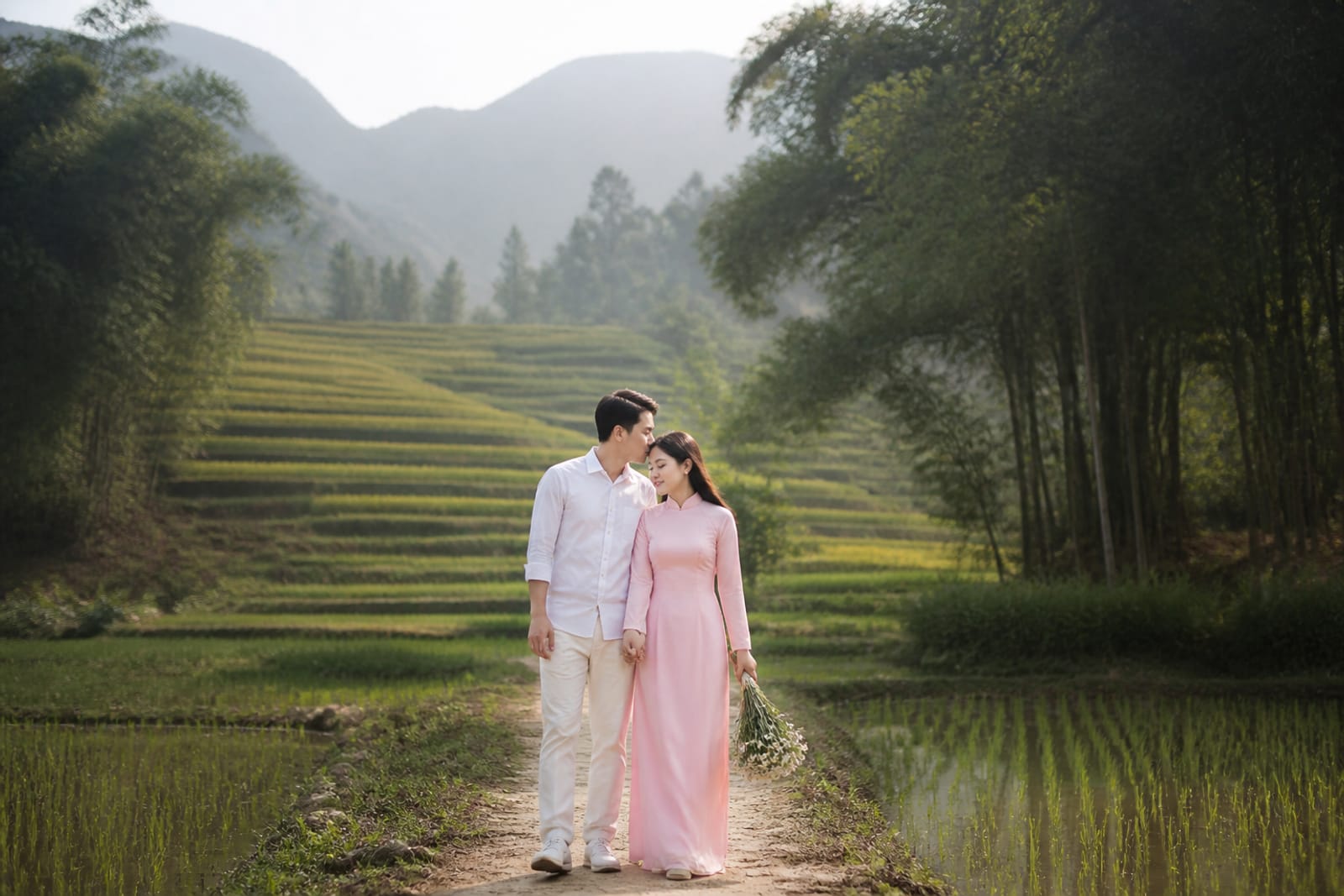
Late May through June offers golden fields (harvest or late-season growth) and warm, humid mornings—mist is thick and holds longer. The trade-off: afternoon thunderstorms can roll in by 4 pm, cutting your golden-hour window short. September through October gives you cooler, clearer dawn mist and longer golden-hour light (until past 6 pm), but fields may be freshly planted (bright green, less dramatic) or already harvested (brown terraces). Pu Luong's stone terraces photograph well year-round; Mai Chau's rice fields peak visually in late May and again in mid-October. If you want golden grain, book late May or early October. If you want mist and cooler comfort, October is safer. Confirm with your photographer what the fields will actually look like on your dates—not all years align the same way.
How much time should you spend in each location—one valley or both?
| Option | Duration | Best for | Logistics |
|---|---|---|---|
| One valley (Mai Chau OR Pu Luong), two-day shoot | 3–4 days total (travel + shoot + rest) | Couples focused on rice and landscape; first pre-wedding | Shorter trip; 2–3 hours from Hanoi; same base both nights |
| Both valleys, three-day shoot | 5–7 days total | Couples who want variety (stone + rice, mist + cleared fields) | Requires midway hotel move; adds 1 hour of travel time between |
| One valley, one-day concentrated shoot | 2–3 days total | Tight schedules; elopers adding a quick shoot to a bigger trip | Misses morning mist or golden hour, not both; higher risk of flat light |
A single-valley two-day shoot is the standard pre-wedding timeline—it lets you slow down, trust the light, and emerge with a coherent narrative. Moving between valleys adds depth but also logistical overhead: another hotel checkout, a car ride, a new local photographer or briefing a multi-location team. Most couples choose one valley and linger. Cáo Studio covers pre-wedding shoots in Hanoi, Ho Chi Minh City and Hoi An; for Mai Chau or Pu Luong, you'll source a local photographer who knows the specific rice cycles and mist patterns—ask around in Hanoi's photography community or check Instagram tags for recent shoots in your target season.
What should you wear, pack and avoid for a valley shoot?
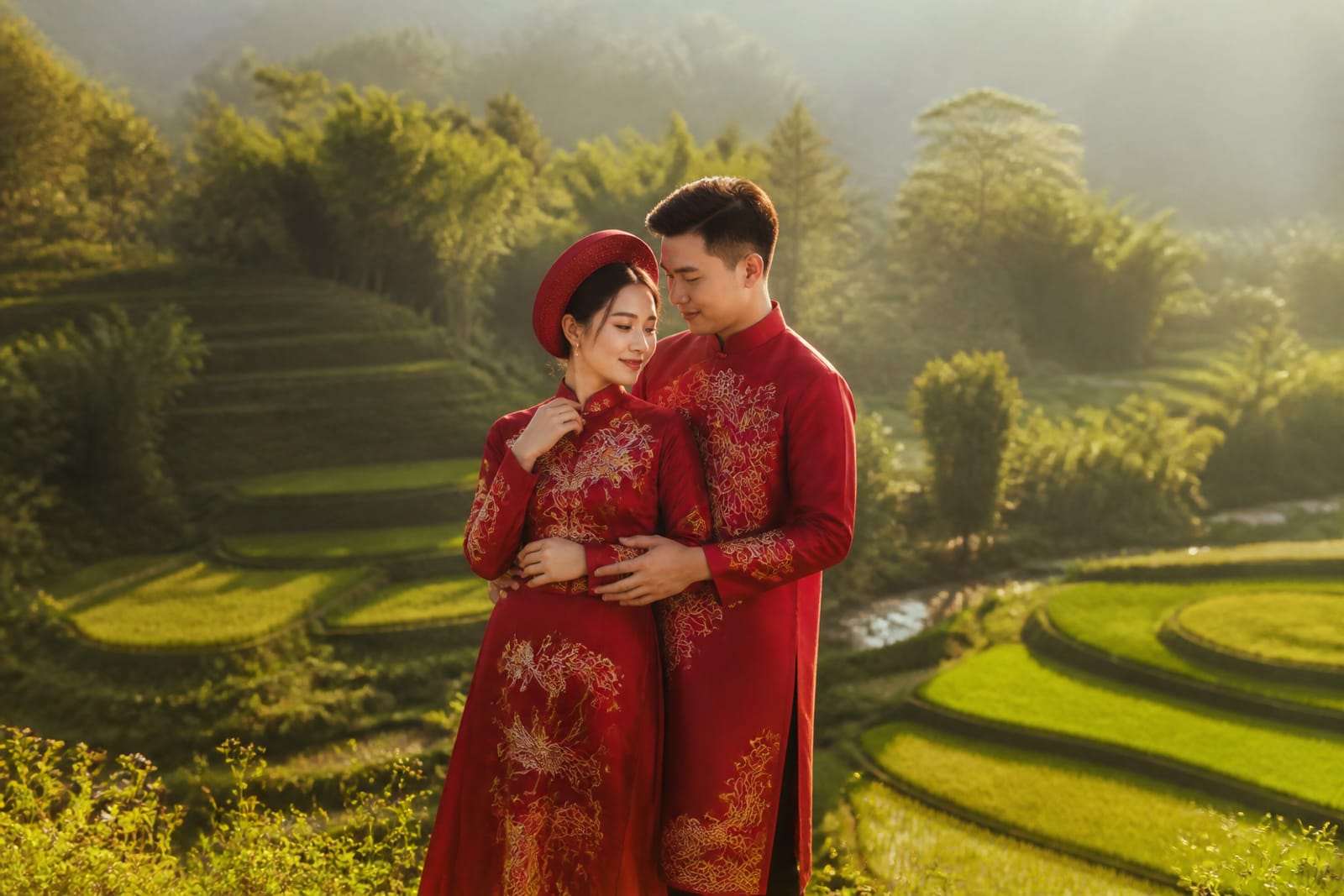
Outfits: Bring 2–3 changes: an áo dài (or traditional dress) for day one, a modern or linen outfit for day two, and a casual backup. The áo dài photographs beautifully in mist and rice, but can tangle in mud—wear leggings or slip shorts underneath and bring waterproof flats (not heels). Linen or cotton breathes in the May humidity; in October, layer light sweaters. Avoid black (mist swallows it) and heavy fabrics (they don't move in wind or lift in light).
Logistics: Wake up, eat a real breakfast, wear deodorant and lip balm (you'll be moving for hours). Bring a small bag with water, snacks, a phone charger, and a light rain jacket—afternoon showers are common May–June. Guesthouse checkout is usually 11 am; ask if you can shower and leave luggage after the morning shoot. The taxi ride back from fields to guesthouse takes 20–30 minutes depending on location.
Avoid: Sunscreen with heavy silicone (it sweats off and looks greasy on camera). Jewelry that clanks (noise carries and distracts). Rigid hairstyles—pins and tight braids unravel in wind and humidity; loose waves or a soft braid hold better. Avoid scheduling during the worst of monsoon season (October–November for the central coast near the valleys can mean flash floods—confirm with your photographer).
---
What to check before you book a pre-wedding shoot in Mai Chau or Pu Luong
- Photographer's portfolio: Look for shoots in your target season, not just any valley shot. Golden-hour light and mist look different in May vs. October. Ask to see 2–3 recent shoots from the same season you're booking.
- Rice or terrace cycle: Confirm with the photographer what the fields will look like on your exact dates. Don't assume golden grain—it depends on planting and harvest windows that shift yearly.
- Local weather backup: Ask what happens if mist doesn't clear (you'll get silhouettes, not detail shots) or if rain forces an early stop. A good photographer has a contingency—a covered pavilion, a nearby village house, a rescheduled hour.
- Travel and accommodation included? Some photographers include the guesthouse and car; others don't. Clarify upfront who books lodging, who coordinates the taxi, and whether the photographer travels to you or meets you in the valley.
- Editing timeline: Valley shoots often take 5–7 days to edit (you're further from a studio, files are large, the landscape requires careful color grading). Confirm when you'll see selects and finals.
- Number of edited photos and video: Ask how many final edited images you'll receive and whether a short film (2–3 minutes of movement and sound) is included. This varies widely by photographer.
---
Want to explore other pre-wedding options?
Cáo Studio offers pre-wedding and elopement shoots in Hanoi, Ho Chi Minh City, and Hoi An—with in-house makeup, hair, and one director handling light and framing. If you're drawn to Mai Chau or Pu Luong's valleys but prefer a studio-coordinated experience (single point of contact, faster turnaround, guaranteed editing quality), consider a couple's photoshoot in Hanoi or Hoi An as a complement or alternative. Hoi An's ancient town and river also offer mist at dawn and golden-hour light—without the travel fatigue.
FAQ
Can a pre-wedding shoot in a valley like Mai Chau happen in one day?
Yes, but you'll miss either morning mist or golden-hour light. A single-day shoot works for couples on a tight schedule or adding a quick session to a bigger trip—just confirm the photographer will prioritize the best light window (usually late afternoon) and set realistic expectations for frames.
How much does a valley pre-wedding shoot cost?
Cost depends on the photographer's rate, travel time from Hanoi (2–3 hours each way), accommodation, vehicle, and team size (solo vs. photographer + assistant + makeup artist). Ask a local Hanoi photographer for a quote based on your dates and outfit count. Cáo Studio can provide a quote for shoots in Hanoi or Hoi An if you'd prefer studio coordination—contact us on WhatsApp.
Will my áo dài stay clean in rice fields and mud?
Not entirely. Wear it over lightweight leggings or slip shorts and bring waterproof flats (no heels). Mud stains can be cleaned, but wet áo dài fabric wrinkles fast—bring a small iron or steamer in the guesthouse. Some couples reserve the áo dài for the second (drier) day or save it for close-up portraits in cleared areas.
When is the best time to book a valley shoot—what season gives the best light and rice?
Late May to early June offers golden grain and thick mist but higher humidity and afternoon rain risk. September to mid-October gives cooler weather, clearer mist, and longer golden-hour light—the safer choice. Avoid October–November if you're near the central coast (typhoon and flood risk). Confirm the rice cycle with your photographer; it shifts year to year.
Do I need a visa to shoot in Mai Chau or Pu Luong, and how far are they from Hanoi?
Visa depends on your nationality, not the destination—check Vietnam's official requirements. Mai Chau is roughly 140 km southwest of Hanoi (2–3 hours by car); Pu Luong is further south near Thanh Hoa Province (2.5–3.5 hours). Both are day-trip distance if you're staying in Hanoi, but overnight in the valley is strongly recommended for a relaxed, full two-day shoot.
Can Cáo Studio shoot my pre-wedding in Mai Chau or Pu Luong?
Cáo Studio operates in Hanoi, Ho Chi Minh City, and Hoi An. For Mai Chau or Pu Luong, you'll need to source a local photographer who knows the valleys' seasonal light and rice cycles. If you'd prefer a studio-coordinated pre-wedding shoot with guaranteed turnaround, ask us on WhatsApp about dates in Hanoi or Hoi An instead.
FAQ
Can a pre-wedding shoot in a valley like Mai Chau happen in one day?
Yes, but you'll miss either morning mist or golden-hour light. A single-day shoot works for couples on a tight schedule or adding a quick session to a bigger trip—just confirm the photographer will prioritize the best light window (usually late afternoon) and set realistic expectations for frames.
How much does a valley pre-wedding shoot cost?
Cost depends on the photographer's rate, travel time from Hanoi (2–3 hours each way), accommodation, vehicle, and team size (solo vs. photographer + assistant + makeup artist). Ask a local Hanoi photographer for a quote based on your dates and outfit count. Cáo Studio can provide a quote for shoots in Hanoi or Hoi An if you'd prefer studio coordination—contact us on WhatsApp.
Will my áo dài stay clean in rice fields and mud?
Not entirely. Wear it over lightweight leggings or slip shorts and bring waterproof flats (no heels). Mud stains can be cleaned, but wet áo dài fabric wrinkles fast—bring a small iron or steamer in the guesthouse. Some couples reserve the áo dài for the second (drier) day or save it for close-up portraits in cleared areas.
When is the best time to book a valley shoot—what season gives the best light and rice?
Late May to early June offers golden grain and thick mist but higher humidity and afternoon rain risk. September to mid-October gives cooler weather, clearer mist, and longer golden-hour light—the safer choice. Avoid October–November if you're near the central coast (typhoon and flood risk). Confirm the rice cycle with your photographer; it shifts year to year.
Do I need a visa to shoot in Mai Chau or Pu Luong, and how far are they from Hanoi?
Visa depends on your nationality, not the destination—check Vietnam's official requirements. Mai Chau is roughly 140 km southwest of Hanoi (2–3 hours by car); Pu Luong is further south near Thanh Hoa Province (2.5–3.5 hours). Both are day-trip distance if you're staying in Hanoi, but overnight in the valley is strongly recommended for a relaxed, full two-day shoot.
Can Cáo Studio shoot my pre-wedding in Mai Chau or Pu Luong?
Cáo Studio operates in Hanoi, Ho Chi Minh City, and Hoi An. For Mai Chau or Pu Luong, you'll need to source a local photographer who knows the valleys' seasonal light and rice cycles. If you'd prefer a studio-coordinated pre-wedding shoot with guaranteed turnaround, ask us on WhatsApp about dates in Hanoi or Hoi An instead.
Ao dai, makeup, hair and a local photographer in Hanoi or Saigon — one WhatsApp message.