/pre-wedding-photoshoot
Pre-wedding poses at Son Tra and Linh Ung Pagoda, Da Nang
Son Tra Peninsula and Linh Ung Pagoda dominate Da Nang pre-wedding shoots because of their scale, isolation and symbolic weight. Son Tra's rocky coastline, lighthouse and jungle trails offer wild, windswept frames; Linh Ung's whitewashed pagoda, marble courtyard and valley view work for intimate, spiritual storytelling. Both are best shot February–August (dry, clear, cooler mornings). Sessions run 3–4 hours; you walk, pause for light, change outfits in a car. Cáo Studio does not operate in Da Nang—book a vetted local photographer familiar with permit requirements, sunrise timing and how the tide affects beach access. Plan for travel fatigue: these sites are 30–45 minutes from the city centre, crowds peak mid-morning, and afternoon heat makes outfit changes uncomfortable. The decision is light (sunrise + jungle shade at Son Tra, early morning at Linh Ung) versus intimacy (Linh Ung feels quieter, Son Tra feels more cinematic).
Why do couples choose Son Tra over Linh Ung Pagoda?
Son Tra Peninsula is the cinematic choice. Its rocky, tide-carved coastline, dense jungle and white lighthouse create drama on every frame—wide shots feel epic, details (your hand holding his, a close-up of the fabric against dark stone) feel intimate against wild backdrop. You're outdoors for 3–4 hours; the landscape does half the work. Linh Ung Pagoda is the spiritual, composed choice: marble, white walls, symmetry, silence and a view down the valley that lets your figures breathe in the frame. The pagoda suits formal ao dai, slow walking shots and moments where the story is you two, not the place. Son Tra suits adventure, movement, multiple outfits; Linh Ung suits one or two outfits and contemplative pacing. The trade-off: Son Tra requires hiking boots, water and energy; Linh Ung requires early-morning permit coordination and fewer outfit changes because stairs and heat limit wardrobe.
📸 Book on WhatsApp — pre-wedding photoshoot
What time of day gives you the best light at each location?
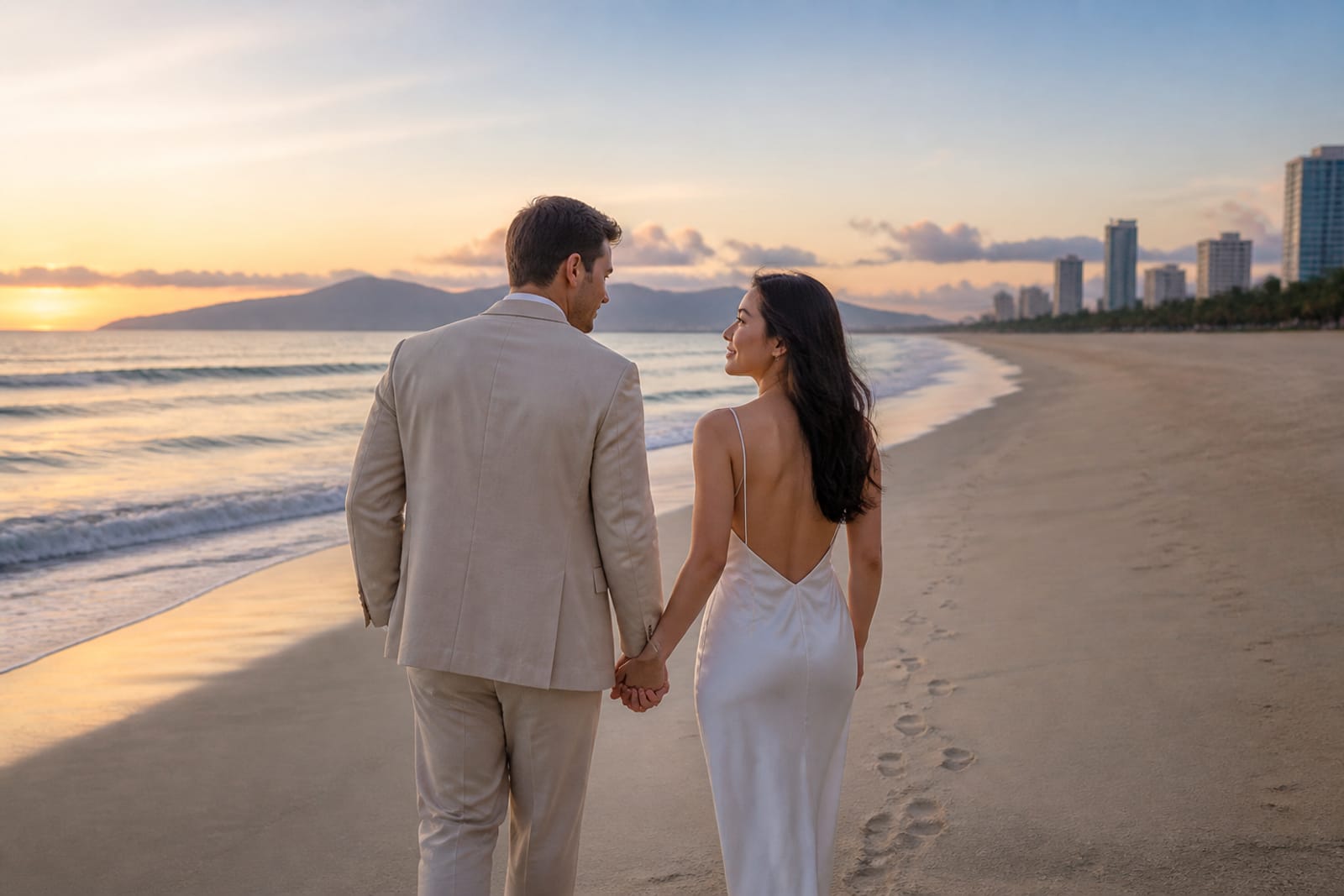
At Son Tra, shoot 5:30–8:00 am for soft side light on the rocks and skin; jungle backlight from 6:15 am onwards creates rim light on hair and fabric. By 9:30 am, sun hardens, shadows deepen and heat builds. At Linh Ung Pagoda, 6:00–7:30 am catches the pagoda's white surfaces without glare; the marble courtyard acts as a natural reflector, so skin reads soft even in direct sun. Afternoon (3:30–5:30 pm) works if clouds roll in—the pagoda glows against grey sky. Midday (11 am–2 pm) is too harsh at both sites; skin looks tired, whites blow out.
Da Nang's dry season (February–August) means clear skies and reliable early light; May–August is hottest (35°C+), so dawn becomes essential. September–December is the rainy, typhoon season; October–November has the worst downpours, floods and landslide risk on mountain roads. Many photographers pause bookings then; Linh Ung may close for safety. Plan February–August; confirm weather 2 weeks before your shoot date.
Which outfits work best at each location?
| Outfit type | Son Tra coastline | Linh Ung Pagoda | Why |
|---|---|---|---|
| Formal ao dai (silk, long train) | Works for final 30 min (after rocky walk); color (red, gold, pastels) pops against stone and sea | Works for entire session; marble and white pagoda suit rich colors and bold patterns | Ao dai at Son Tra gets dusty; save it for lighthouse or final stretch |
| Western wedding dress | Risky; fabric catches rocks, gets wet in sea spray; saves for lighthouse-only shot | Excellent; white dress mirrors pagoda; marble stairs photograph well | Dress at Linh Ung is stationary; dress at Son Tra requires carrying/support person |
| Casual couple outfit (linen shirt, denim) | Perfect for movement and rock climbing; fabric ages well in salt spray | Good for walk-in shots; feels lighter than formal ao dai in heat | Casual lets you move freely; formal slows you down |
| Groom suit (western or áo dài) | Heavy in heat; save for monument shots or final 20 min | Works if session is short (2 hours); suit feels formal against sacred space | Suit absorbs heat; morning-only shooting required |
At Son Tra, plan 2–3 outfit changes: casual/adventurous first (for movement), formal ao dai at lighthouse or beach, departure outfit. At Linh Ung, one ao dai or dress works all session—changing at the pagoda itself feels rushed and disrespectful to the spiritual context.
What permits and access rules apply at each location?
Son Tra Peninsula is not fenced; you can drive to the lighthouse and walk the coastal trails without a permit. However, the road is narrow, unpaved past the first checkpoint, and motorbikes sometimes block the way during early morning. Arrive by 5:45 am to beat traffic. The lighthouse (white structure on the cliff) is closed to entry, but you can photograph it from the public ground. Swimming or posing in the sea requires common sense—tides vary; ask a local driver or your photographer about safe times. No prayers, no shoes-off required.
Linh Ung Pagoda (also called Linh Ung Tempel or Hon Vong Phu) is active, sacred Buddhist space. Entry is free, but you must dress respectfully: shoulders and knees covered (ao dai and formal dress are fine; short shorts are not). Remove shoes before entering the inner pagoda. Photography inside is permitted, but do not pose irreverently on altars or in front of Buddha statues—your photographer must ask monks first. Best practice: arrive before 7:00 am, when few worshippers are present, and plan a 10-minute courtesy wait before shooting near the main hall. Posing outside (marble courtyard, valley overlook) is unrestricted.
Confirm current access rules 2 weeks before your shoot. Da Nang tourism websites and your photographer's local contacts will have the latest permit or closure information.
How does a photographer handle crowds and light changes across the session?
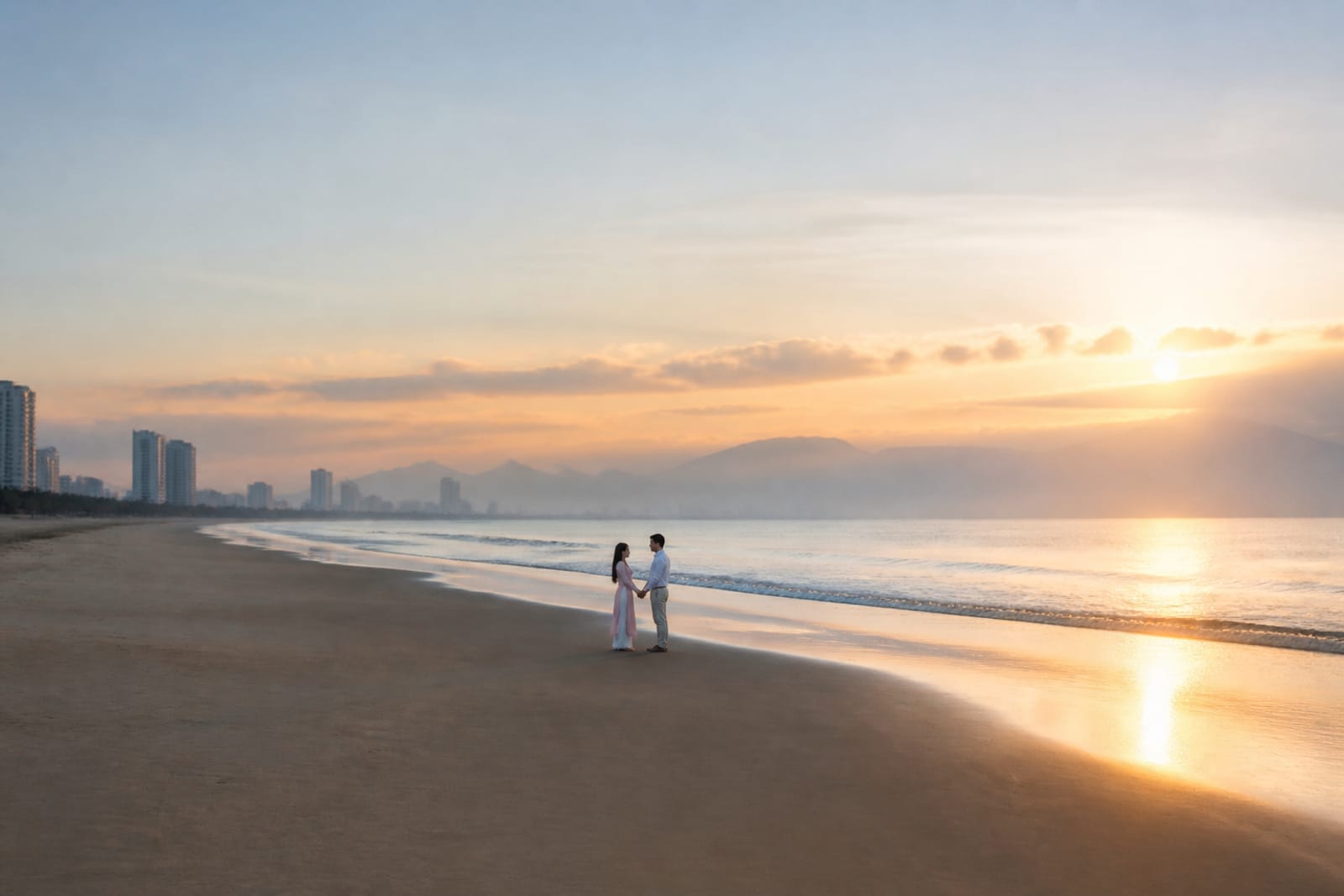
A skilled Da Nang pre-wedding photographer working these spots knows that crowds peak between 8:30–10:30 am and spike again at sunset. They arrive early (you in makeup by 5:00 am, on location by 5:45 am) to own the light and isolation. As clouds roll in or sun moves, they shift you: if backlight is available, they'll position you walking away from camera, fabric and hair catching rim light. If a crowd arrives, they move to secondary vantage—a lower angle, a detail shot of hands, a silhouette against the sea—or pause for 5–10 minutes.
At Linh Ung, they time your movement: you walk the courtyard in the soft early hour, rest during the hardest light (9:30–11:00 am), then walk the valley overlook in the late morning when clouds soften the sun. They do not ask you to stand and smile at the monument; instead, they direct you to walk toward each other, stop, look at the view, touch hands. That takes three takes, not one.
Managing 3–4 hours of shooting and outfit changes means knowing the heat, the light cycle and the location's quiet hours. A photographer who only shoots at midday or stays on location all day will waste your time and money. The best pre-wedding shoots at these sites run early, move by light, and finish by 11:00 am.
How do you find and vet a photographer if Cáo Studio doesn't shoot in Da Nang?
Cáo Studio operates in Hanoi, Ho Chi Minh City and Hoi An—not Da Nang. For a Son Tra or Linh Ung session, search for photographers on Instagram with tags like #DaNangPreWeddingPhotography or #SonTraPhotoshoot, then check three things:
- Local expertise: Do their galleries show multiple shots at the same location across different light hours? (A photographer who only shot once will miss light patterns and crowd timing.)
- Outfit and logistics: Can they arrange makeup at your hotel, provide outfit rental (ao dai, western dress), and coordinate transport, or do you hire three vendors separately? (One team shoots faster and more cohesively than stitched vendors.)
- Turnaround: How long for edited photos and any video? Ask for a sample gallery and ask what they edit (color, skin, shadows) so you know the style.
Questions to ask a Da Nang photographer:
- Do you shoot at Son Tra before 6:30 am, and have you worked with the lighthouse and tide?
- Are you familiar with Linh Ung's permit rules and monk courtesy?
- How many outfits can we change in 3–4 hours, and where?
- How many edited photos and what video deliverable?
- What happens if weather cancels the shoot—do we reschedule free?
For inspiration on how a full-team pre-wedding session works, see Cáo Studio's pre-wedding photoshoot page and lookbook. If you prefer a team that handles everything in one booking—outfit rental, hair, makeup, photography and same-day coordination—you'd need to travel to Hanoi or Ho Chi Minh City, where Cáo Studio can deliver the full vision in 48 hours.
---
What to check before you book a Da Nang photographer
- Light forecast: Request a sunrise and cloud-cover forecast 2 weeks before; reschedule if typhoon season hits (Oct–Nov).
- Outfit fit and transport: Confirm your ao dai (or dress) fits after a day of hiking; confirm the photographer or a support person carries a backup outfit in a weatherproof bag.
- Makeup and touch-ups: Ask if makeup is applied at the hotel (ideal) or on location (requires a private space). Bring blotting papers and lip color for reapply after sweat.
- Phone signal and emergency contact: Confirm your photographer has a backup phone and knows where to go if a location is suddenly closed (landslide, monk ceremony).
- Editing style and files: Ask for a sample of their editing (color, skin tone, shadow recovery) and what file formats they deliver (full-res JPEG, RAW, cloud link).
- Cancellation and weather policy: Get this in writing—many photographers reschedule free for weather; others charge a deposit.
---
FAQ
Can we shoot at both Son Tra and Linh Ung in one morning?
No. Son Tra alone takes 3–4 hours with outfit changes; Linh Ung adds 45 min travel time each way. Combine them only if you book 6–7 hours and sacrifice light at one location. Most couples choose one location and use the other as a save-date location.
What happens if it rains the morning of the shoot?
Ask your photographer before booking what their rain policy is. Some reschedule free; others charge a deposit. Morning drizzle at Son Tra can create moody, wet-rock shots; Linh Ung's marble becomes slippery. Thunderstorms close mountain roads. Confirm a reschedule date or deposit refund clause in writing.
Do we need a permit to shoot at Son Tra or Linh Ung?
Son Tra is public access; no permit required. Linh Ung is a functioning Buddhist pagoda; no formal permit, but you must follow temple etiquette (respectful dress, remove shoes, ask monks before photographing inside). Your photographer should confirm current access rules 2 weeks before.
How much does a pre-wedding session in Da Nang cost?
Pricing depends on hours, outfits, outfit rental, makeup coordination and editing deliverables. Ask your photographer for a quote and compare what's included. Cáo Studio does not operate in Da Nang, but for pricing examples in other regions, visit pricing or contact us on WhatsApp.
Should we do an engagement shoot first, or go straight to pre-wedding photos?
Both are common. An engagement shoot (casual outfits, lower stakes) is shorter and lets you practice posing; pre-wedding is formal and often includes ao dai. Many couples do one engagement shoot, then a full pre-wedding with multiple outfits and locations. Ask your photographer if they offer both.
What's the difference between shooting at Son Tra's lighthouse and the rocky coastline?
The lighthouse (white structure on the cliff) is photogenic from afar but closed to entry. Shoot it as a backdrop from the ground 30–50 meters away. Rocky coastline offers more intimate movement—you walk, pause, touch rocks, look at the sea. Lighthouse shots feel monumental; coastline feels tactile. Most couples use the lighthouse for a final or opening frame, then focus on the rocks and tide pools.
FAQ
Can we shoot at both Son Tra and Linh Ung in one morning?
No. Son Tra alone takes 3–4 hours with outfit changes; Linh Ung adds 45 min travel time each way. Combine them only if you book 6–7 hours and sacrifice light at one location. Most couples choose one location and use the other as a save-date location.
What happens if it rains the morning of the shoot?
Ask your photographer before booking what their rain policy is. Some reschedule free; others charge a deposit. Morning drizzle at Son Tra can create moody, wet-rock shots; Linh Ung's marble becomes slippery. Thunderstorms close mountain roads. Confirm a reschedule date or deposit refund clause in writing.
Do we need a permit to shoot at Son Tra or Linh Ung?
Son Tra is public access; no permit required. Linh Ung is a functioning Buddhist pagoda; no formal permit, but you must follow temple etiquette (respectful dress, remove shoes, ask monks before photographing inside). Your photographer should confirm current access rules 2 weeks before.
How much does a pre-wedding session in Da Nang cost?
Pricing depends on hours, outfits, outfit rental, makeup coordination and editing deliverables. Ask your photographer for a quote and compare what's included. Cáo Studio does not operate in Da Nang, but for pricing examples in other regions, visit [pricing](/pricing) or contact us on WhatsApp.
Should we do an engagement shoot first, or go straight to pre-wedding photos?
Both are common. An engagement shoot (casual outfits, lower stakes) is shorter and lets you practice posing; pre-wedding is formal and often includes ao dai. Many couples do one engagement shoot, then a full pre-wedding with multiple outfits and locations. Ask your photographer if they offer both.
What's the difference between shooting at Son Tra's lighthouse and the rocky coastline?
The lighthouse (white structure on the cliff) is photogenic from afar but closed to entry. Shoot it as a backdrop from the ground 30–50 meters away. Rocky coastline offers more intimate movement—you walk, pause, touch rocks, look at the sea. Lighthouse shots feel monumental; coastline feels tactile. Most couples use the lighthouse for a final or opening frame, then focus on the rocks and tide pools.
Ao dai, makeup, hair and a local photographer in Hanoi or Saigon — one WhatsApp message.