/pre-wedding-photoshoot
Pre-wedding poses & ideas for Mui Ne white sand dunes
Mui Ne dunes work best at sunrise (before 7am) when side light sculpts the sand and crowds are absent. Wear fitted, lightweight clothes — loose fabrics tangle in the wind and sand; pastels and jewel tones hold colour better than white. Bring a backup outfit (linen, structured piece) in case wind intensifies. A local photographer familiar with the dunes' microlight (east face catches first sun, west face glows 4–5pm) shoots stronger frames than a generalist. Cáo Studio operates from Hanoi and Saigon with a Hoi An team by appointment; for Mui Ne, we recommend booking a local photographer who knows the sand's texture, permits and season. Plan 90 minutes on the dunes, arrive 30 minutes early for light scout, and confirm transport to the site (sand gets hot by mid-morning).
The white sand dunes near Mui Ne town are one of Vietnam's driest, most predictable outdoor shoots — but light, wind and sand behaviour shift month to month. Pre-wedding couples often imagine golden-hour romance; the reality is harsher: direct midday sun flattens skin, backlight silhouettes wash out in JPEG, and strong winds (Nov–Mar) toss hair and clothing. The difference between a frame that stops a viewer and one that feels flat comes down to three things: arrival time, outfit structure, and a photographer who has shot sand before and knows how to meter for brightness.
This guide walks you through the poses and setups that work, which seasons suit which looks, and how to vet a local photographer for Mui Ne so your pre-wedding session lands frames you actually keep.
What time of day produces the strongest dune light?
Sunrise (5:45–7:15am depending on season) is non-negotiable for Mui Ne dunes. The sun rises from the east; the white dunes face that direction, so side light rakes across the sand, creating texture and depth. At 6:30am in winter (Nov–Feb), the sand is cool enough to stand barefoot, and shadows are long and directional. By 8am, the sun is higher, shadows flatten, and the dunes begin to glow uniformly — pretty at first, but lacks the modelling that makes a frame cinematic. Late afternoon (4:30–5:30pm) can work on the western face of the dunes if your photographer positions you against the light to rim-light your outline, but this demands precise metering; blown highlights are common. Midday is unusable: harsh shadows under eyes and nose, washed-out sand, and heat stress.
Conclusion: arrive 30 minutes before sunrise to scout sand texture and light angle with your team.
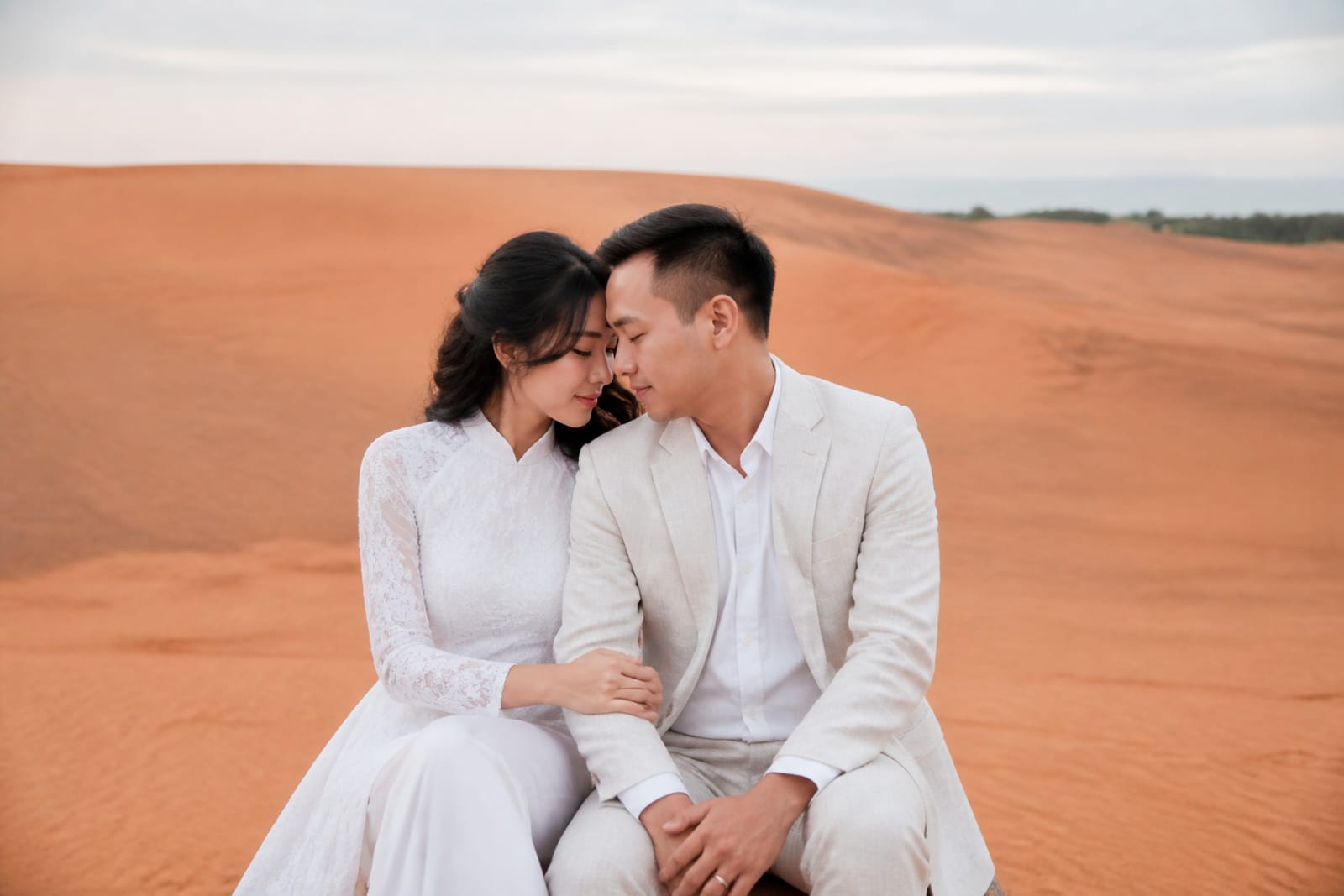
Do light and season change how you pose on sand?
Yes. Winter (Nov–Feb) brings cooler sand, longer shadows and lower sun angle — poses look more sculptural. Lean, walk, sit with legs extended. Summer (May–Sep) has hotter sand and higher sun; keep poses shorter and more active (walking toward camera, running, twirling) to avoid squinting and to move through heat faster. Rainy season (Sep–Dec, worst Oct–Nov) floods low dunes and makes sand wet and dark; only the upper dunes stay workable, and light is often diffuse. The dry season (Nov–Apr) is when Mui Ne dunes photograph best: predictable light, hard sand and minimal rain risk. If you must shoot May–Sep, choose very early morning (pre-6am) before heat intensifies and before afternoon downpours build.
Conclusion: book Nov–Apr for texture-rich light; if summer is your only window, plan dawn-only shoots and shorter stand times.
What should you wear to avoid sand cling and wind wreck?
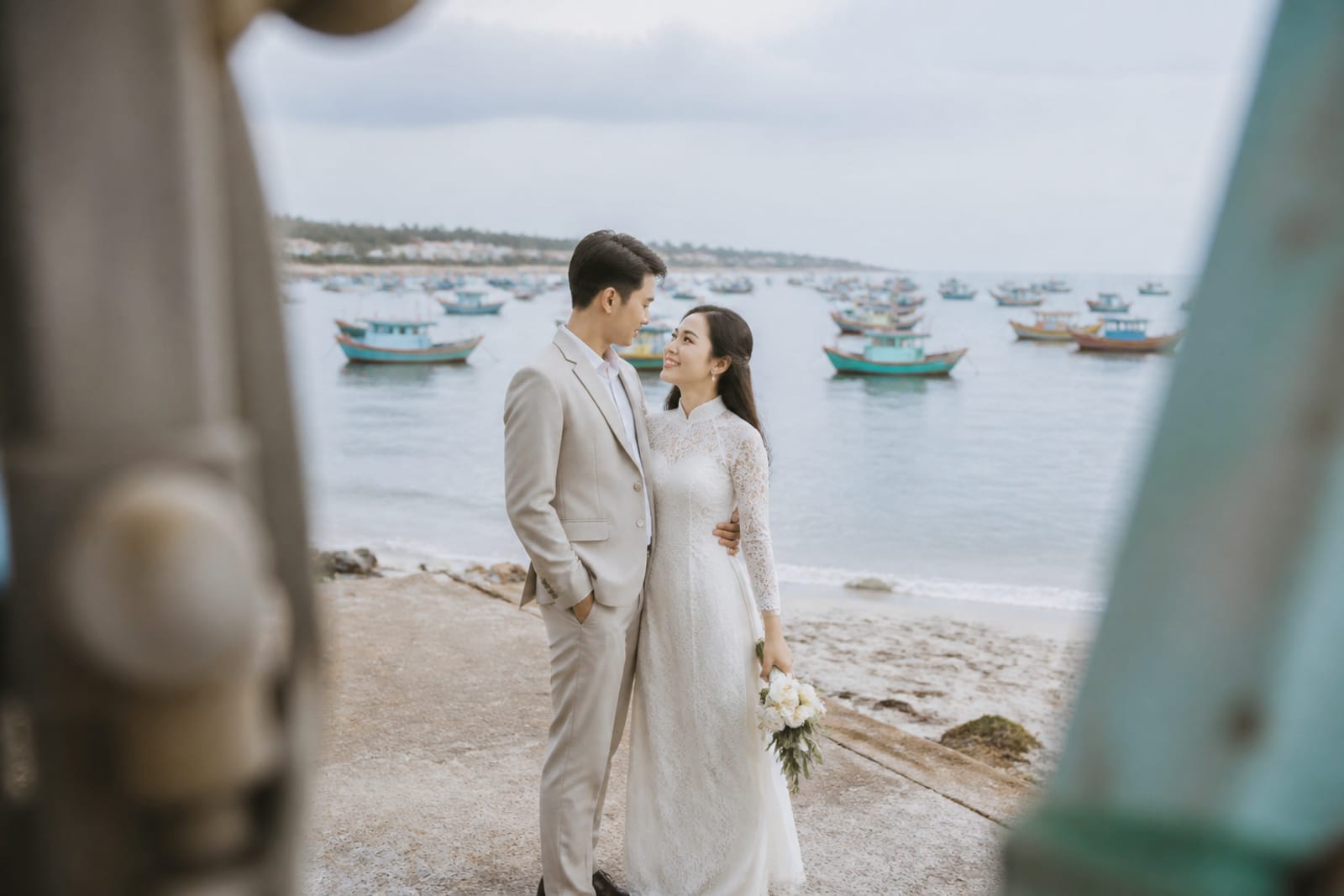
Fitted, structured fabrics hold their shape on sand and photograph crisply. Linen (heavy-weight, not gauze) works if it's woven tightly; silk chiffon and organza tangle, blow and cling to skin in wind. Pastels (blush, sage, champagne) and jewel tones (emerald, sapphire, wine) hold colour and contrast the white sand. Avoid white or cream (merges with sand, flattens the frame) and avoid oversized or tiered skirts (they tangle and ride up on wind gusts — common Nov–Mar). Bare feet photograph stronger than shoes; if you wear shoes, neutral leather (tan, caramel, black) or sandals photograph cleaner than bright white sneakers. Bring a second outfit for mid-shoot change — a structured linen shirt dress or a fitted jumpsuit gives variety without the wind liability of a gown. Hair: braids and low buns stay put; loose waves need a stylist on-site to reset after every pose.
Conclusion: layer fitted pieces; bring backup; hire hair and makeup who know sand shoots.
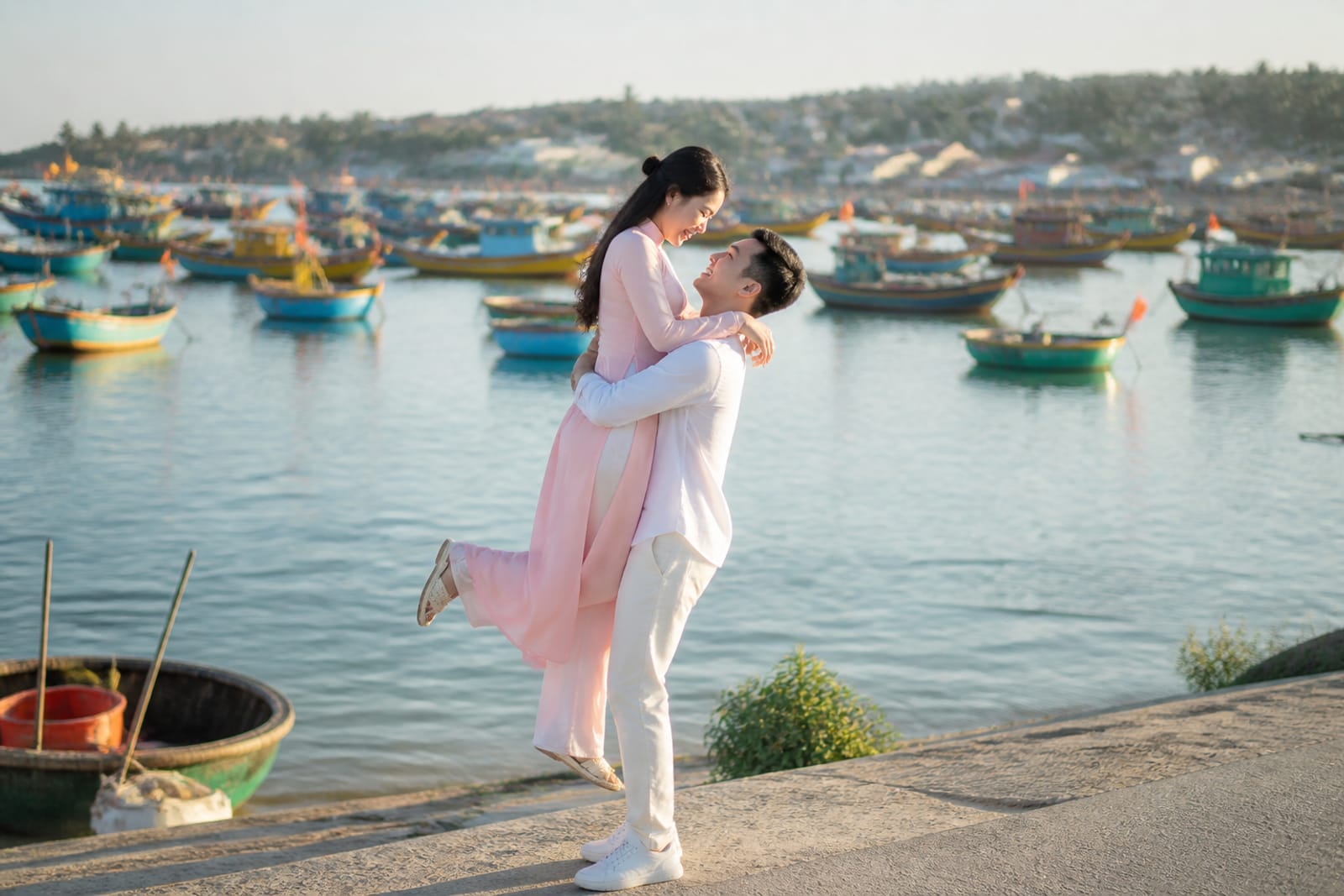
How do you frame poses that feel natural, not stiff?
The strongest dune frames have movement and direction: walk toward or away from camera, sit and look at each other while talking, stand hand-in-hand and let the photographer shoot while you take a step. Stillness reads as waiting. Have your photographer shoot in sequence: wide first (full body, sand and sky in frame), then medium (torso and face, sand texture visible), then detail (hands, profile, fabric texture). This tells a story and gives you a shot-list with a beginning, middle and end. Avoid standing parallel to camera with both faces toward the lens — it's frontal, stiff, and wastes the dunes' depth. Instead, position one partner slightly forward or turned, so the frame has angle and layering. If you're solo (engagement or self-portrait), walk, sit and gaze — don't pose. A good photographer will call quiet instructions ("take one more step left, let your eyes soften") rather than directing stiff positions.
| Pose type | Best for | Light window | Why it works |
|---|---|---|---|
| Walking (hand-in-hand, side-by-side) | Couples, movement-comfortable pairs | Any (dawn–late morning) | Avoids stiffness; camera catches natural rhythm and distance |
| Sitting (side-by-side, one behind) | Intimate moments, storytelling | Dawn–8am | Foreground interest; sand texture in frame; easier to reset hair |
| Standing facing out (away from camera) | Landscape-heavy, contemplative mood | Late morning–afternoon | Silhouette possible; avoids squinting; dress/outfit backlit |
| Solo walking or standing | Engagement, self-portrait mood | Any (prefer pre-7am for cool sand) | Ownership of the frame; active rather than posed |
Conclusion: movement and sequence shoot stronger than single-moment poses; let the photographer lead quiet direction.
Which photographer should you book for Mui Ne dunes?
Cáo Studio operates pre-wedding photoshoots in Hanoi and Ho Chi Minh City, with Hoi An shoots by appointment — ask on WhatsApp for Hoi An availability. Mui Ne is outside our primary base, so we recommend a local photographer who has shot the dunes 50+ times and knows the permit, wind patterns, sand condition by month, and how to expose for white sand without losing your face in backlight. When you vet a local photographer, ask: How many dune shoots have you done? Do you shoot RAW or JPEG? (RAW gives more latitude for sand exposure.) Can you show frames from Nov–Apr (dry season) and May–Sep (wet season) to show range? How do you handle wind and sand in hair/makeup? Do you have a makeup artist on your team, or do you recommend hiring separately? What's your backup plan if weather or permits prevent dawn access?
If you're based in Hanoi or Ho Chi Minh City and prefer a full pre-wedding experience (outfit, hair, makeup and photographer as one team), contact us on WhatsApp — we can connect you with trusted local partners in Mui Ne or recommend timing a session with us in Hanoi or Saigon instead.
📸 Book a Hanoi pre-wedding shoot | 💄 Makeup & hair at your hotel | 🌸 See couple poses in our lookbook
What to check before you book your Mui Ne dune shoot
Ask your photographer for their delivery timeline (48-hour edits, or longer?), because Mui Ne is remote and file transfer can be slow. Confirm whether they handle drone shots (permits required in Vietnam; not all photographers are licensed). Ask if they can advise on outfit transport (sand damages soft fabrics; how will they pack your clothes?). Check their cancellation policy: if weather closes access to the dunes, do you reschedule or forfeit fees? Verify they know the current entry and photography permits for the dune site — regulations change and some areas are restricted. Finally, ask if they've worked with your outfit rental vendor or hair stylist; coordination between teams prevents delays and mishaps on set.
📸 Book on WhatsApp — couple photoshoot | 🌸 Explore Hoi An dune options
---
FAQ
Can you shoot Mui Ne dunes in the wet season (May–Nov)?
Yes, but with constraints. Light is diffuse and wet sand is darker, muting colours. Oct–Nov brings flood risk; low dunes are impassable. Shoot very early (before 6am) to catch what little sun exists, and plan shorter sessions. Dry season (Nov–Apr) is far more reliable for texture and light.
Do you need a permit to photograph on Mui Ne dunes?
Yes, photography permits are required in Vietnam. Ask your chosen photographer whether they hold the correct permit or if you need to arrange it separately. Regulations vary by year; confirm current rules with your photographer before booking.
What happens if wind is too strong on the day?
Strong winds (Nov–Mar) tangle hair and sand clings to skin and fabric. Ask your photographer for a backup indoor or sheltered location. Some studios have studio setups in nearby hotels; others reschedule. Confirm this before you book.
Should I wear an áo dài on the dunes or a Western gown?
Both work if structured. An áo dài (fitted bodice, long tunic) reads cleaner on sand and avoids wind tangles. Western gowns (if not chiffon or overskirts) photograph well too, but linen or silk mikado hold their shape better than soft fabrics. Choose lightweight, breathable material; you'll be standing on hot sand.
How long does a dune shoot usually take?
Plan 60–90 minutes on the dunes, arriving 30 minutes early to scout light and sand condition. This allows time for two outfits, pose variety, and sand-cleanup between looks. Early arrival prevents rushed framing.
Do you offer Mui Ne pre-wedding shoots, or do I book a local photographer?
Cáo Studio's primary bases are Hanoi and Ho Chi Minh City, with Hoi An shoots by appointment. For Mui Ne, we recommend a local photographer with proven dune experience. Contact us on WhatsApp if you'd like partner recommendations or if you prefer booking a pre-wedding session in Saigon instead.
FAQ
Can you shoot Mui Ne dunes in the wet season (May–Nov)?
Yes, but with constraints. Light is diffuse and wet sand is darker, muting colours. Oct–Nov brings flood risk; low dunes are impassable. Shoot very early (before 6am) to catch what little sun exists, and plan shorter sessions. Dry season (Nov–Apr) is far more reliable for texture and light.
Do you need a permit to photograph on Mui Ne dunes?
Yes, photography permits are required in Vietnam. Ask your chosen photographer whether they hold the correct permit or if you need to arrange it separately. Regulations vary by year; confirm current rules with your photographer before booking.
What happens if wind is too strong on the day?
Strong winds (Nov–Mar) tangle hair and sand clings to skin and fabric. Ask your photographer for a backup indoor or sheltered location. Some studios have studio setups in nearby hotels; others reschedule. Confirm this before you book.
Should I wear an áo dài on the dunes or a Western gown?
Both work if structured. An áo dài (fitted bodice, long tunic) reads cleaner on sand and avoids wind tangles. Western gowns (if not chiffon or overskirts) photograph well too, but linen or silk mikado hold their shape better than soft fabrics. Choose lightweight, breathable material; you'll be standing on hot sand.
How long does a dune shoot usually take?
Plan 60–90 minutes on the dunes, arriving 30 minutes early to scout light and sand condition. This allows time for two outfits, pose variety, and sand-cleanup between looks. Early arrival prevents rushed framing.
Do you offer Mui Ne pre-wedding shoots, or do I book a local photographer?
Cáo Studio's primary bases are Hanoi and Ho Chi Minh City, with Hoi An shoots by appointment. For Mui Ne, we recommend a local photographer with proven dune experience. Contact us on WhatsApp if you'd like partner recommendations or if you prefer booking a [pre-wedding session in Saigon](/saigon) instead.
Ao dai, makeup, hair and a local photographer in Hanoi or Saigon — one WhatsApp message.